Drops begin during rain or thaw?
Treat the roof path as active until the drip is traced from above.
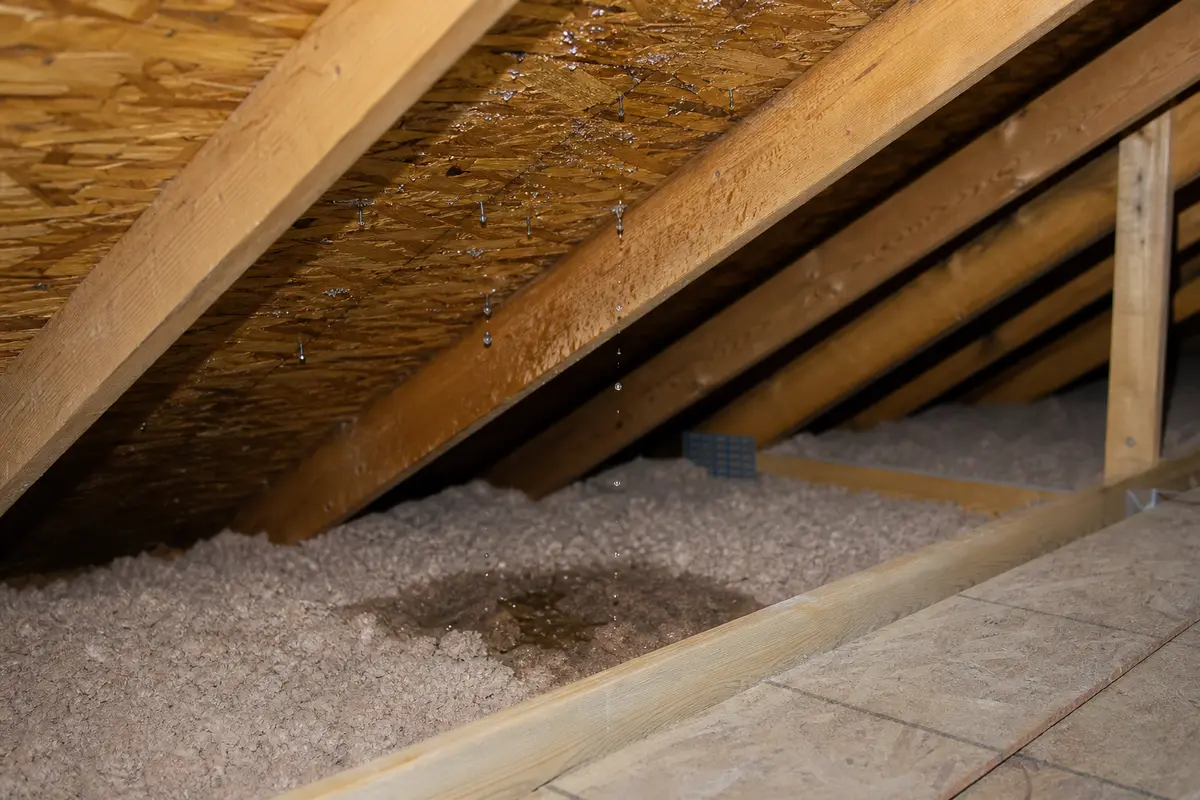
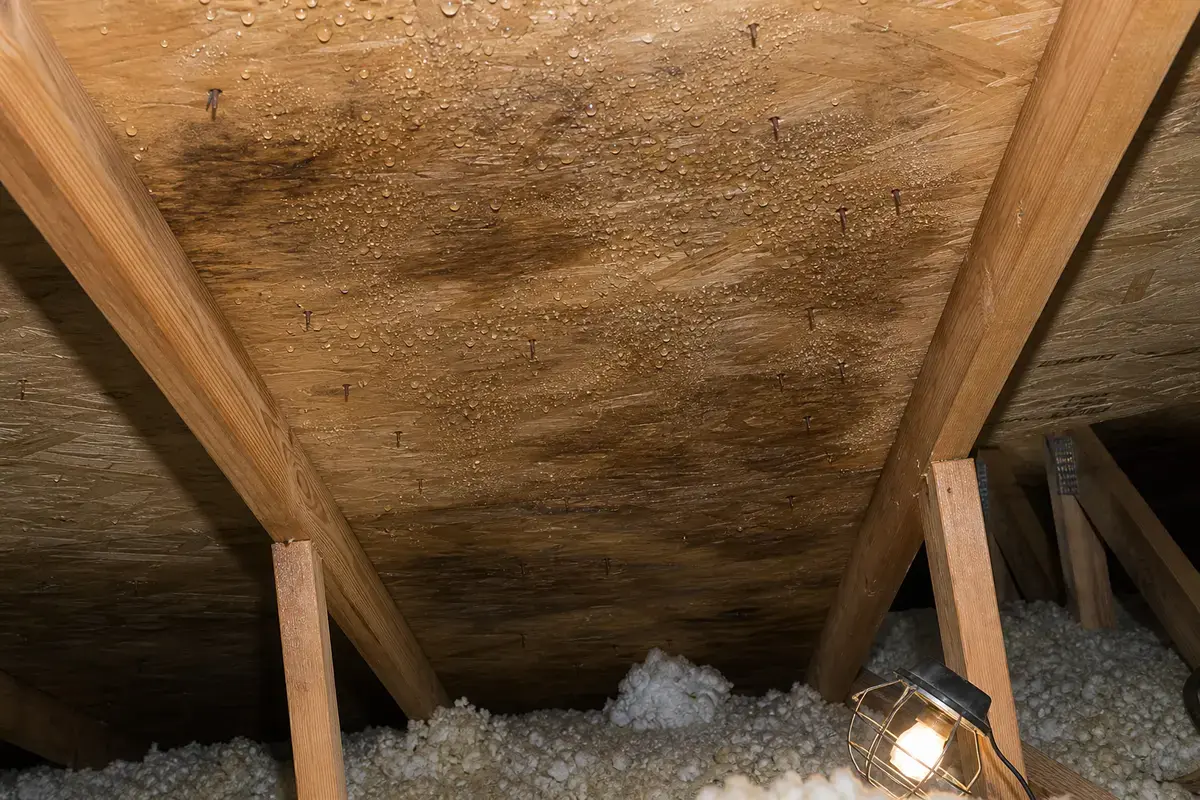
Water dripping onto insulation is a stop-and-sort symptom. If it follows rain, treat it as a roof leak path. If it appears after cold nights or humid indoor activity, condensation from cold sheathing or nail tips is more likely.
The strongest clue is timing. Cold-weather beads and nail-tip drips point toward condensation; rain-linked drops from one line or penetration point toward roof leakage.
Dripping is more urgent than a faint stain because insulation can hold water against framing and ceilings below. Protect the area, then identify the source before repairs.
Don’t start with: Do not cover the wet insulation, spray the wood, or throw more insulation over the area. Wet insulation hides damage and keeps the moisture problem active.
Treat the roof path as active until the drip is traced from above.
Look for frost melt from nail tips, ducts, or cold sheathing.
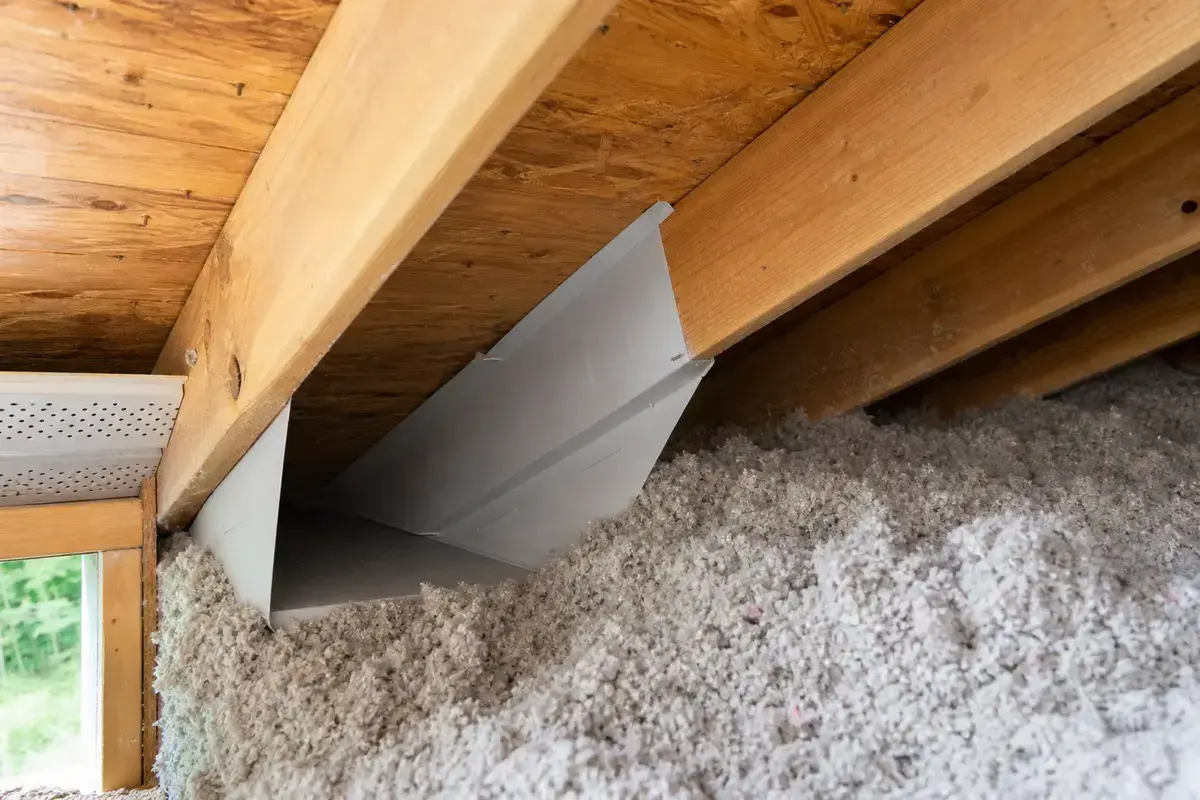
Clear the low intake path before adding ventilation parts.
Seal small non-hot gaps only after dripping stops and the material dries.
Photograph the drip, the insulation edge, and the ceiling below before service.
Connect the drop source above to the damp insulation below, then use timing to choose condensation or roof-leak next steps.
Buy only after the moisture pattern names the exact diagnosis. Match baffles to rafter spacing and soffit layout, sealant to a confirmed non-hot ceiling-plane gap, and hatch weatherstripping seal to the actual hatch closure, size, and compression gap. Do not use roof products unless rain timing and roof-track clues support a roof leak.
First check the timing, then match the wet surface to a visible clue: broad frost, nail-tip beads, one rain track, or wet insulation below.
The wrong first move can bury the wet edge and make the next drip harder to trace.
Use the drip start time and the wet insulation footprint before choosing roof repair, airflow work, air sealing, or cleanup service.
| What you see | Likely meaning | Next move |
|---|---|---|
| Drops appear during or after rain | Roof leak likely | Protect the ceiling below and call roof help if access is unsafe. |
| Drops appear after cold nights | Condensation or frost melt | Check air leaks, soffit intake, and indoor humidity. |
| Damp insulation under a bath fan duct | Exhaust leak | Fix the duct route before replacing insulation. |
| Wet area is broad and shallow | Condensation spread | Improve airflow and air sealing, then dry and reassess insulation. |
| Insulation is soaked, musty, or ceiling below stains | Cleanup and repair planning needed | Stop DIY disturbance and document the area. |
For insulation drips, follow the water down and the moist air path up before buying anything.
For a drip on insulation, buy only after the exact source is visible: blocked eave, dry air gap, or hatch leak.
Helps when: Use when the drip sits above an eave bay where blocked soffit intake is contributing to confirmed condensation.
Skip it when: Skip when the drip follows rain, the soffit bay is open, or flashing repair is the next step.
Compare attic ventilation baffles on Amazon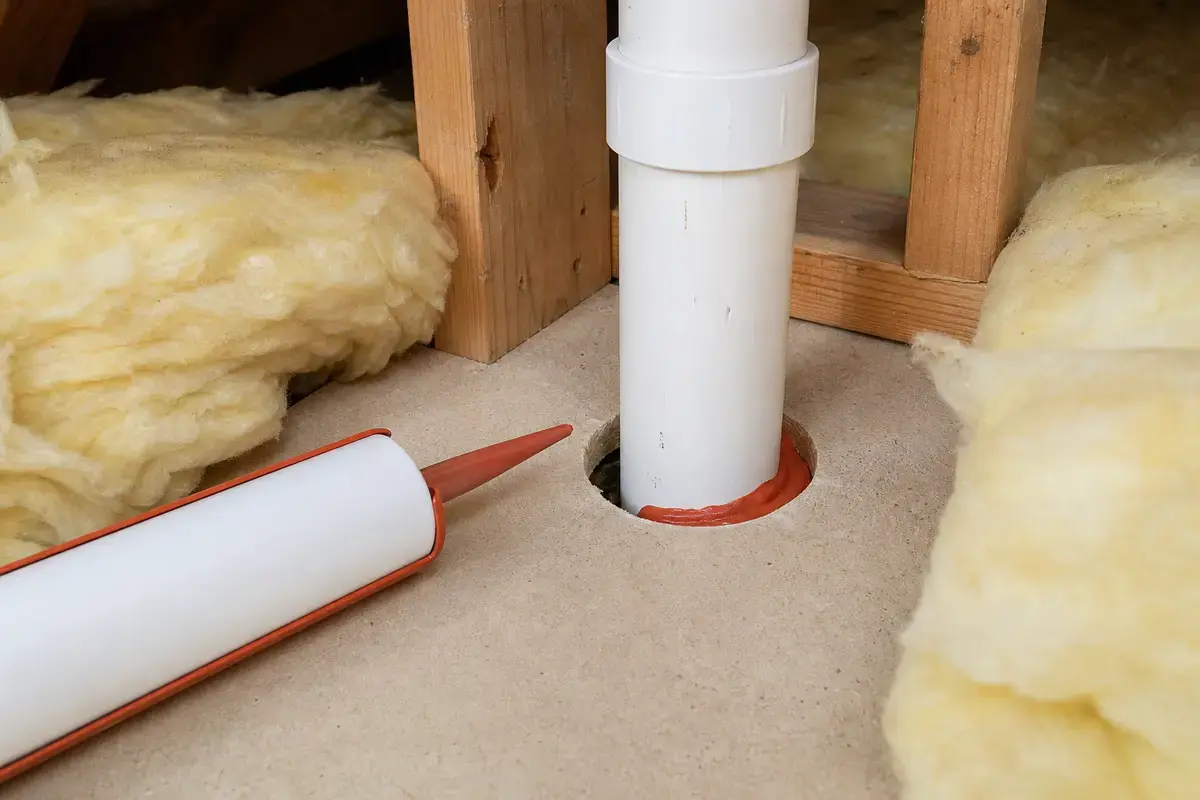
Helps when: Use for a small dry ceiling-plane gap only after roof leakage and active dripping are ruled out.
Skip it when: Skip for hot flues, wet framing, broad chases, roof leaks, or uncertain fireblocking details.
Compare fireblock sealants on Amazon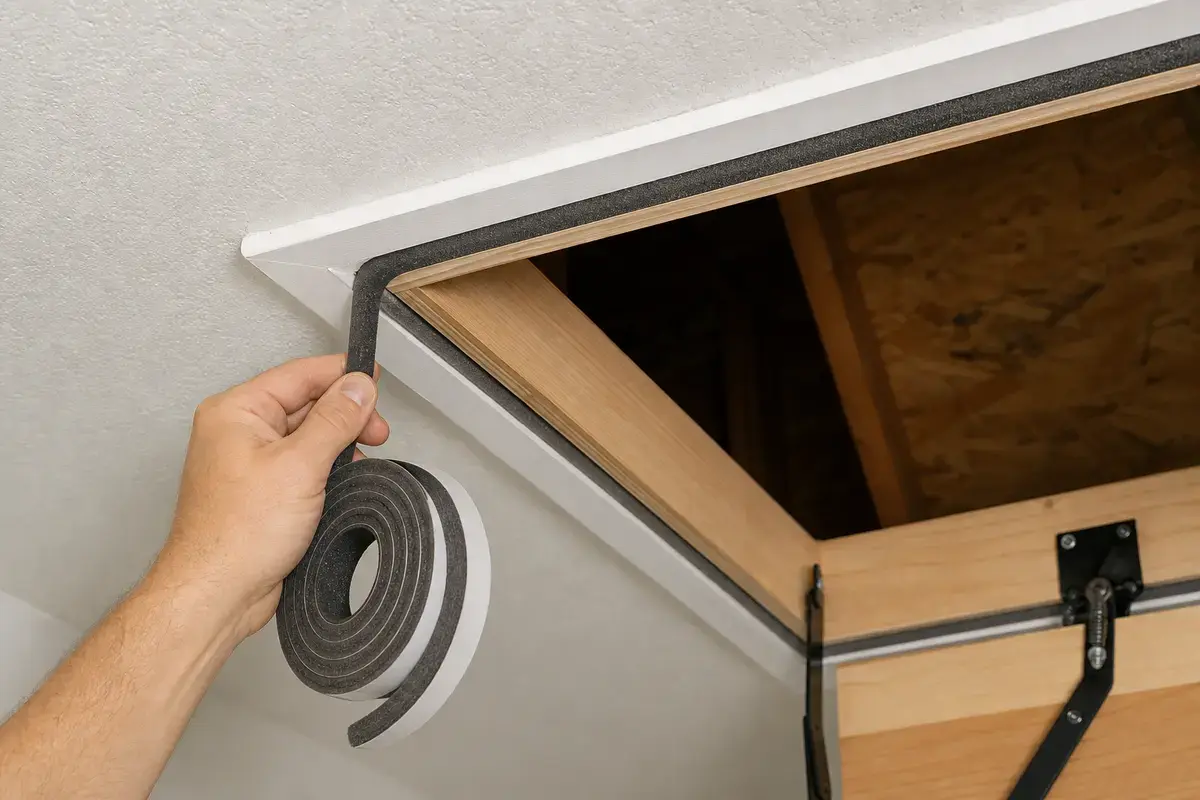
Helps when: Use when a leaky hatch feeds frost-melt drips rather than a rain-fed roof track.
Skip it when: Skip when the hatch needs carpentry or the drip is isolated below a roof penetration.
Compare attic hatch weatherstripping on AmazonAs an Amazon Associate I earn from qualifying purchases. Repair Riot may earn a commission at no extra cost to you.
Use these for inspection and documentation. They do not make unsafe attic access or roof work a DIY job.
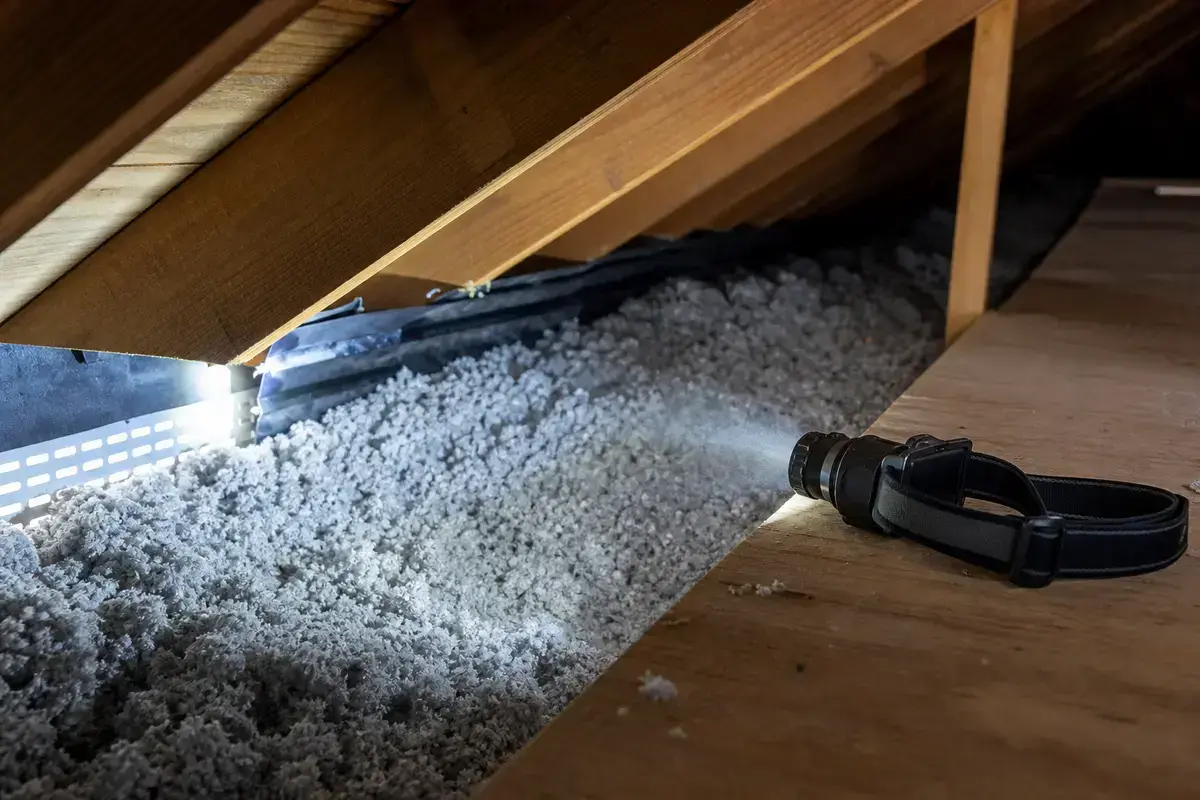
Helps when: Use to connect the drip point above to the wet insulation below without juggling a handheld light.
Skip it when: Skip attic entry if the walkway, wiring, contamination, heat, or access conditions are unsafe.
Compare headlamps on Amazon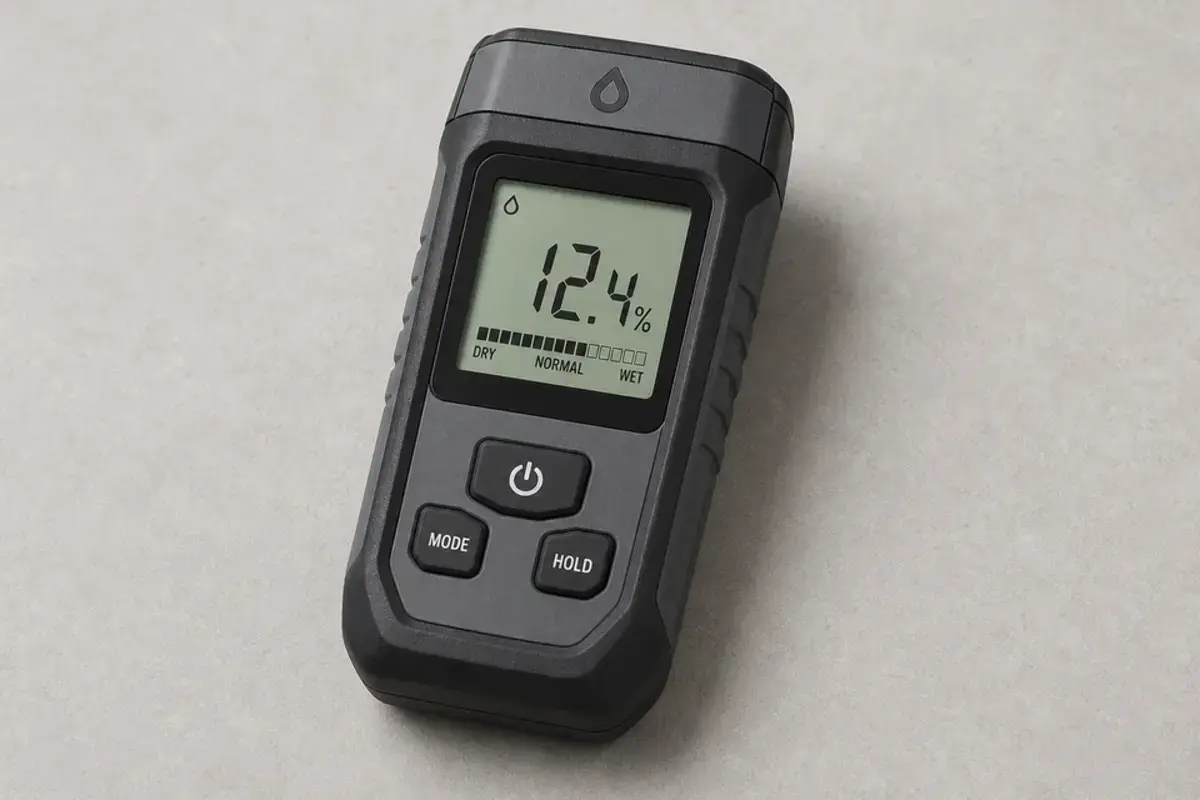
Helps when: Use to compare damp roof sheathing and the ceiling below the wet insulation.
Skip it when: Skip using readings alone; pair them with rain timing, drip marks, and visible frost.
Compare pinless moisture meters on Amazon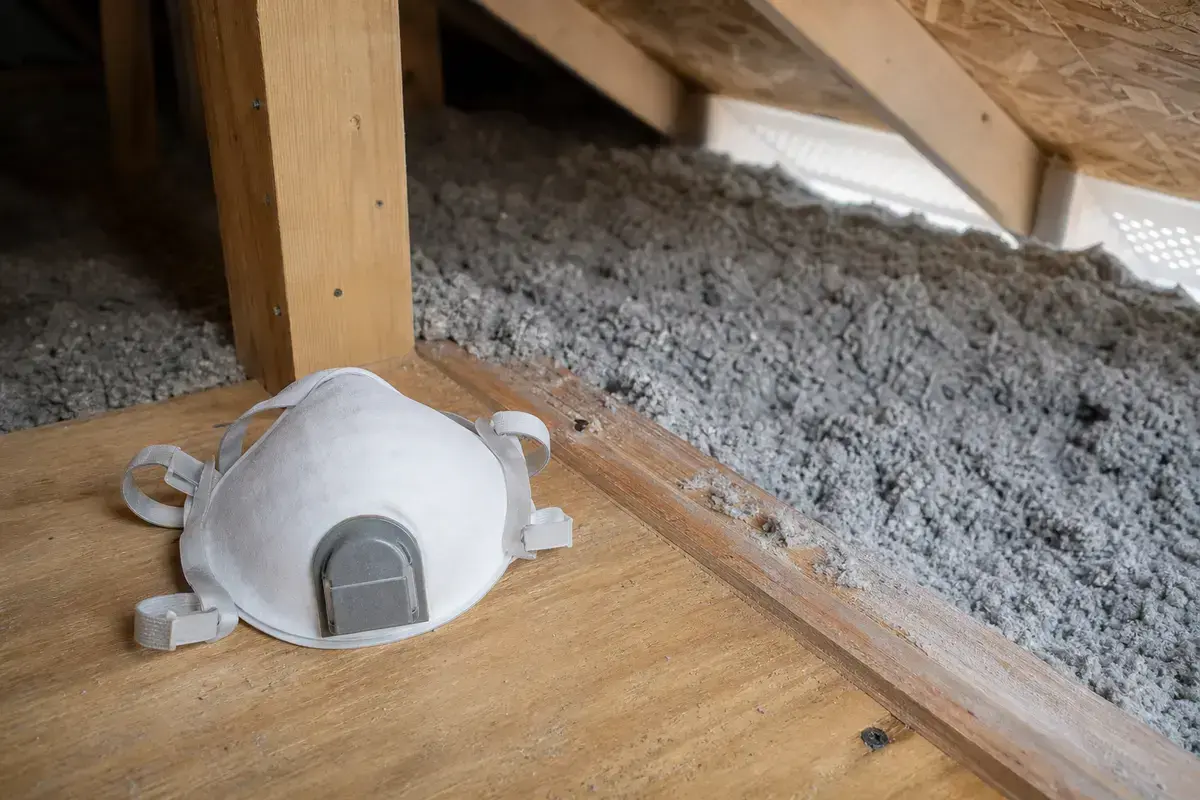
Helps when: Use when you need to inspect dusty bays or move a small amount of loose insulation around the moisture clues.
Skip it when: Call a pro for heavy mold, animal contamination, soaked insulation, wet wiring, or unsafe attic access.
Compare dust masks on AmazonAs an Amazon Associate I earn from qualifying purchases. Repair Riot may earn a commission at no extra cost to you.
It is usually either a roof leak or condensation dripping from cold sheathing, nail tips, or ducts. Timing is the fastest separator.
Yes. Frost can build on cold surfaces and then melt, dripping onto insulation even when the roof is not leaking.
Small damp spots can be documented and dried after the source is corrected. Soaked, musty, contaminated, or ceiling-staining insulation needs cleanup planning.
Use it on sheathing, framing, or ceiling surfaces for comparison. Loose insulation itself is not a reliable meter surface.
Stop. Keep the circuit area dry, avoid touching wiring, and call a qualified pro if electrical parts may be wet.
Call when dripping follows rain, tracks from a roof penetration, or requires roof access to confirm or repair.
Photograph the wet insulation edge, the suspected drip point above it, and any roof penetration nearby before moving material.
Only after the source is corrected and the area is electrically safe. Soaked or musty insulation usually needs removal planning, not just airflow.
Repair Riot built this page around homeowner-visible attic moisture clues: timing, roof-deck pattern, soffit airflow, ceiling-plane air leakage, wet insulation, and stop points before roof, electrical, or cleanup work.