Cold rectangle near hatch?
Check hatch closure, weatherstripping compression, and panel insulation first.
A cold ceiling below the attic usually means the house boundary is broken above that spot: missing insulation, attic air leakage, blocked soffit airflow, or a leaky hatch. Map the cold area before adding insulation.
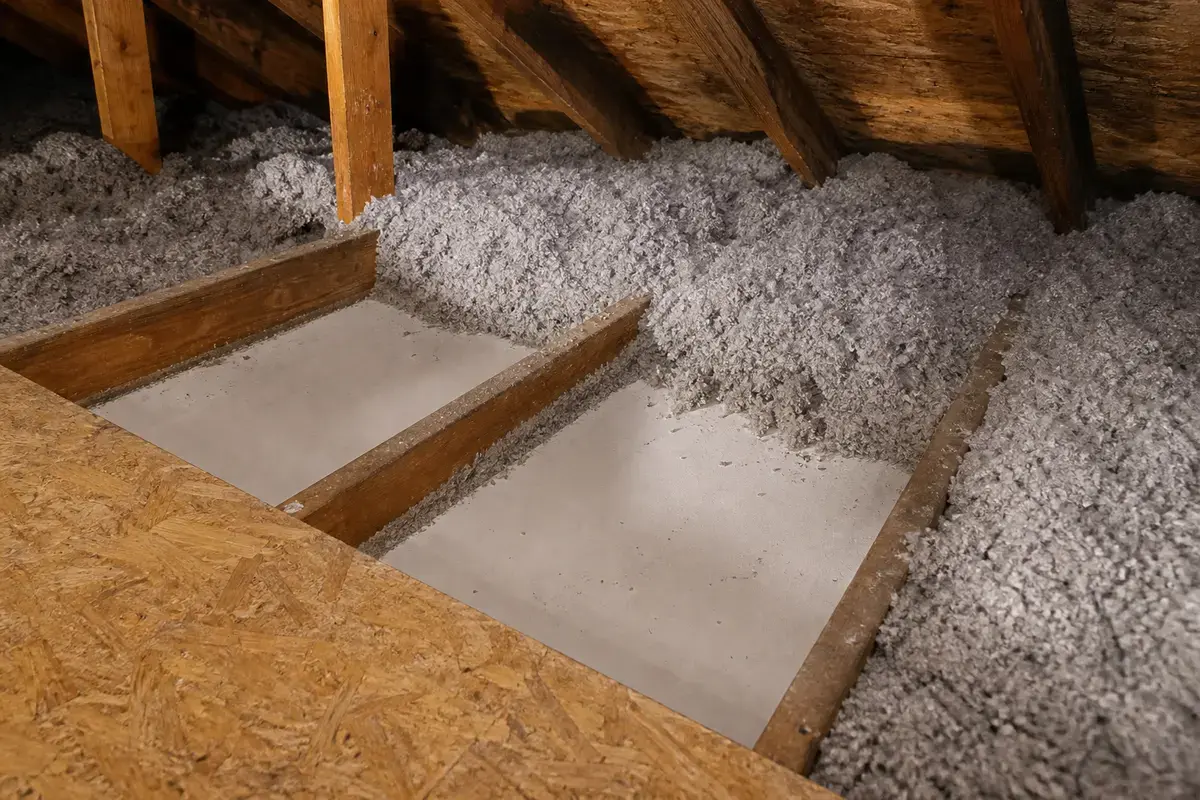
The most common clues are cold edges near exterior walls, a cold hatch panel, disturbed insulation, and packed eaves that block airflow above the ceiling.
Good clue: a narrow cold strip along an exterior wall often traces to the eave bay. Watch for stains because a cold surface can turn into condensation before it looks like a leak.
Don’t start with: Do not bury the eaves with more insulation, ignore moisture staining, or buy a powered fan. Prove the cold path first.
Check hatch closure, weatherstripping compression, and panel insulation first.
Inspect the matching eave bay for thin insulation or blocked airflow.
Use a moisture check before treating it as insulation only.
Compare insulation depth and air leaks across the room, not just one bay.
Trace disconnected or leaky ductwork before adding attic materials.
Temperature, insulation coverage, and eave airflow have to line up before the fix is obvious.
Match the exact diagnosis before shopping. Confirm whether the cold patch is a hatch leak, missing insulation, blocked eave airflow, or moisture. Measure the hatch and rafter bay before ordering parts.
The shape of the cold area tells you which attic-side branch deserves attention first.
More material in the wrong place can make the attic colder and wetter.
Use the ceiling map to inspect the matching attic area.
A cold edge fix fails when insulation blocks the eave path.
Use these only when the cold map points to the matching attic boundary problem.
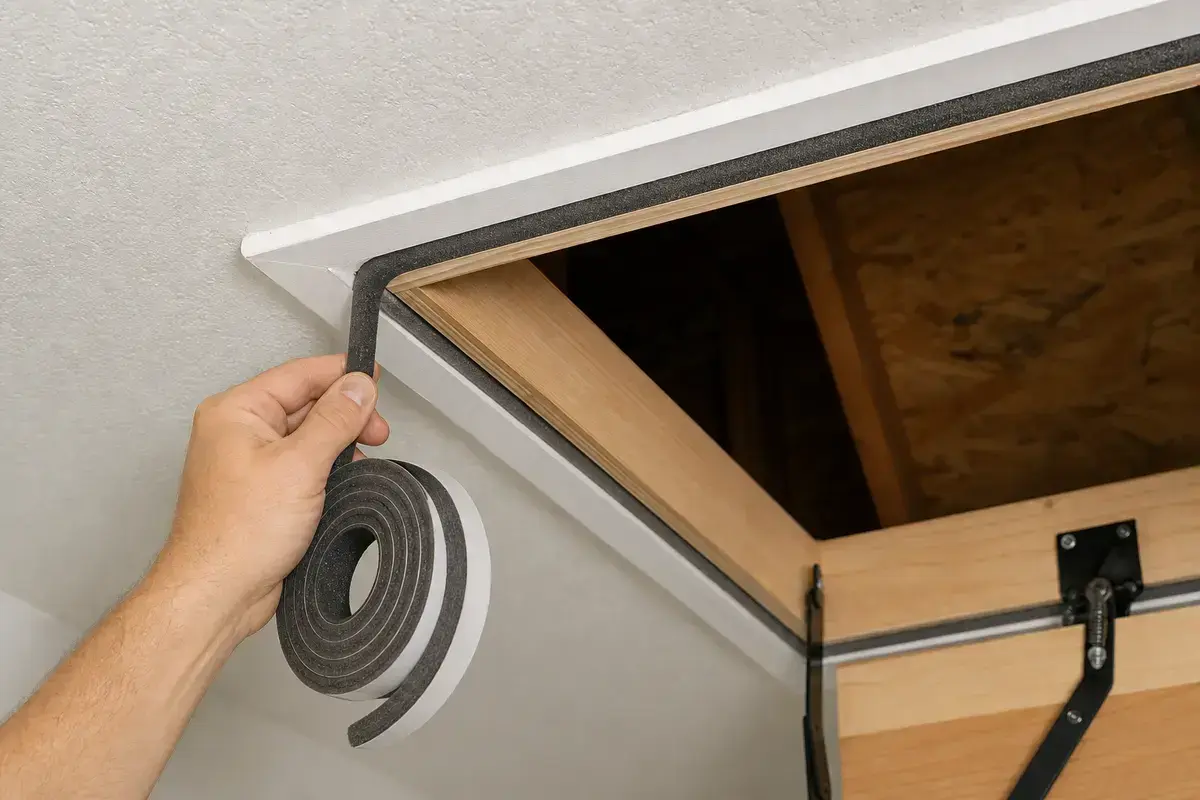
Helps when: Use when the cold area is near the hatch and dust lines show air moving through the frame.
Skip it when: Skip when the hatch is warped, unlatched, or too uneven to compress a seal.
Compare attic hatch weatherstripping on Amazon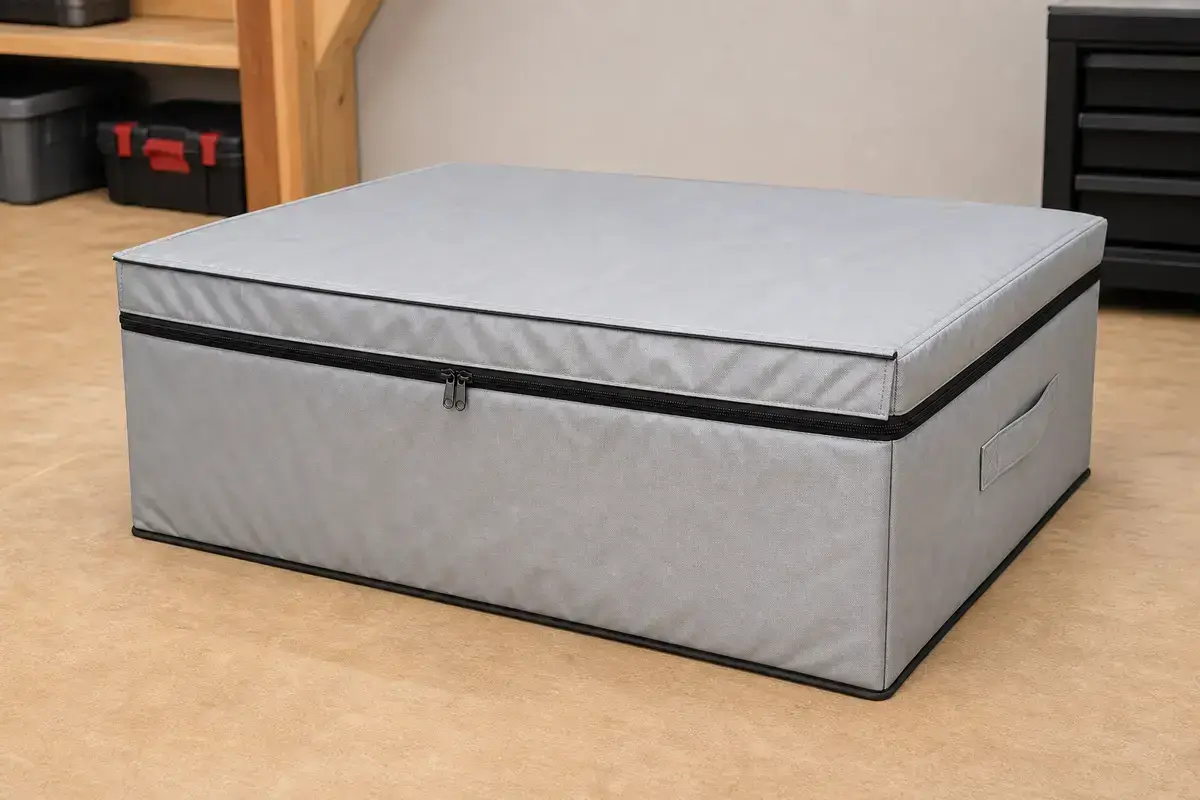
Helps when: Use after the hatch closes evenly but the access panel still reads cold in winter.
Skip it when: Skip until the perimeter leak is sealed and the hatch can sit flat.
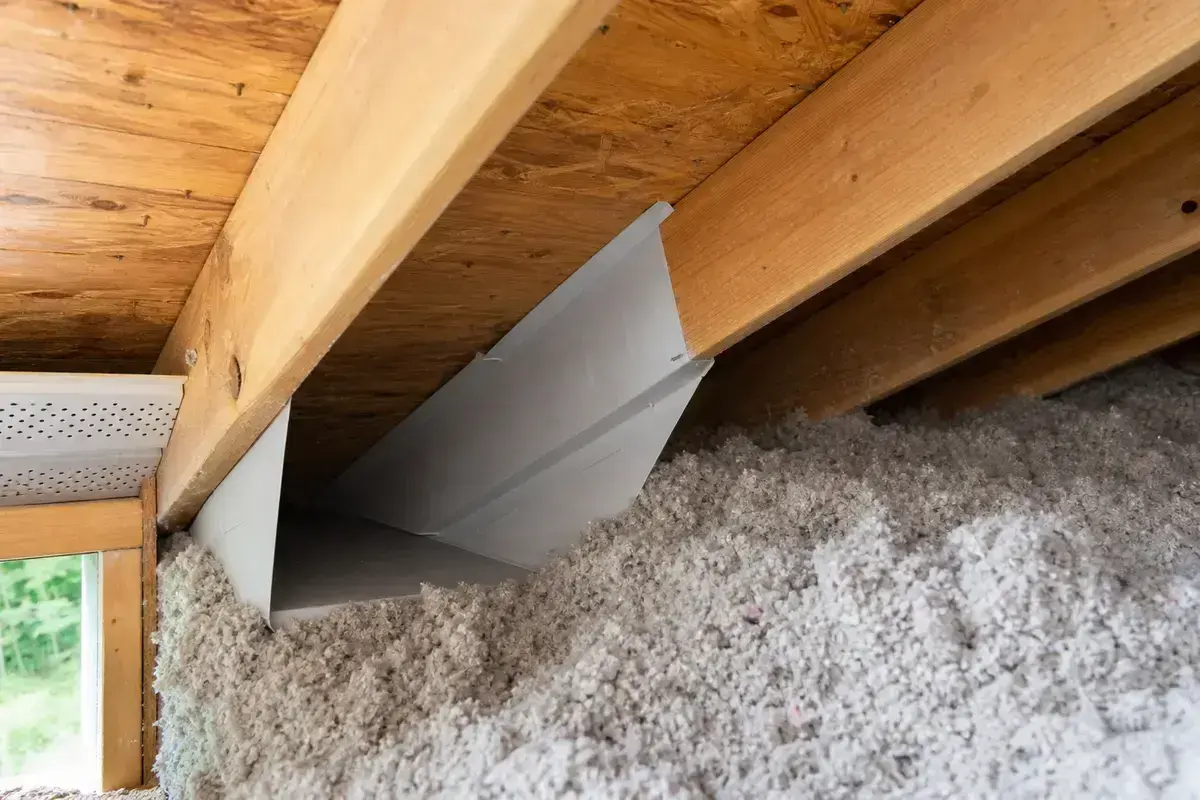
Compare attic hatch insulation covers on AmazonHelps when: Use when insulation has been pushed into the soffit bay and cold air cannot move above it correctly.
Skip it when: Skip when the eave path is already open or the cold spot is not near an exterior wall bay.
Compare attic ventilation baffles on AmazonAs an Amazon Associate I earn from qualifying purchases. Repair Riot may earn a commission at no extra cost to you.
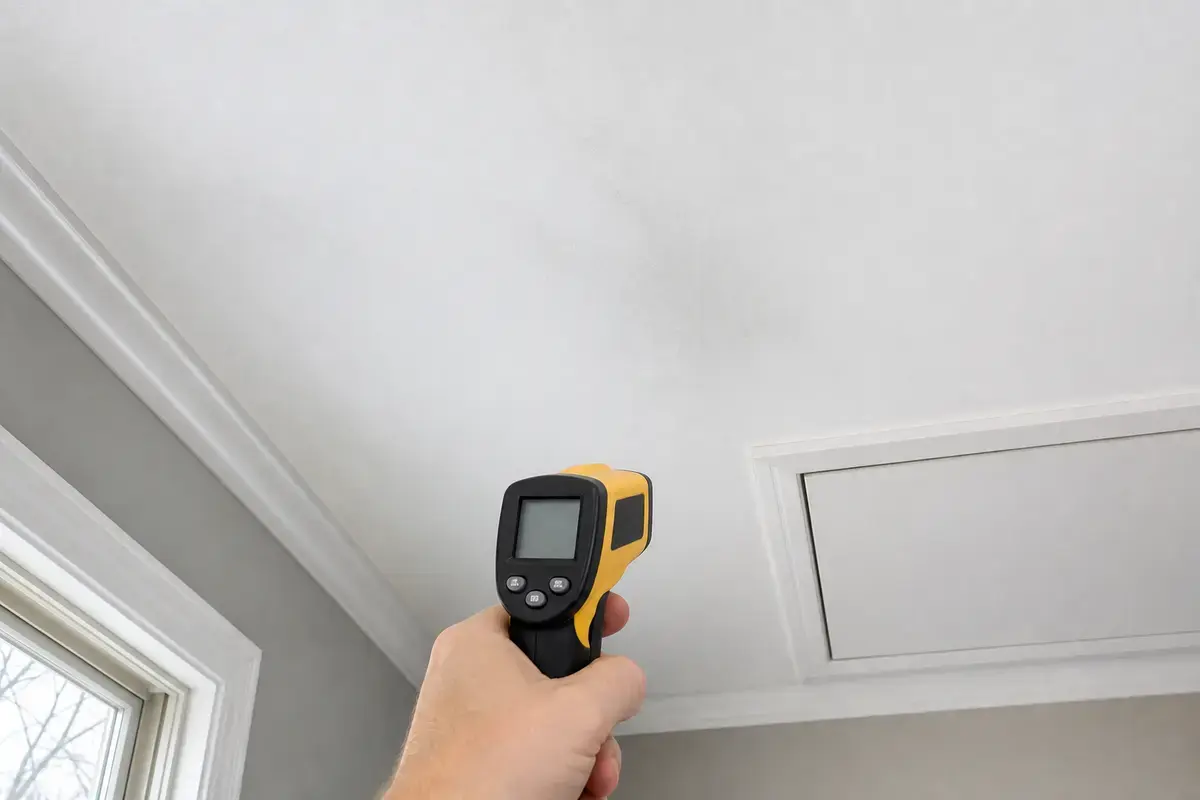
These help compare temperature and moisture before you disturb insulation or buy parts.
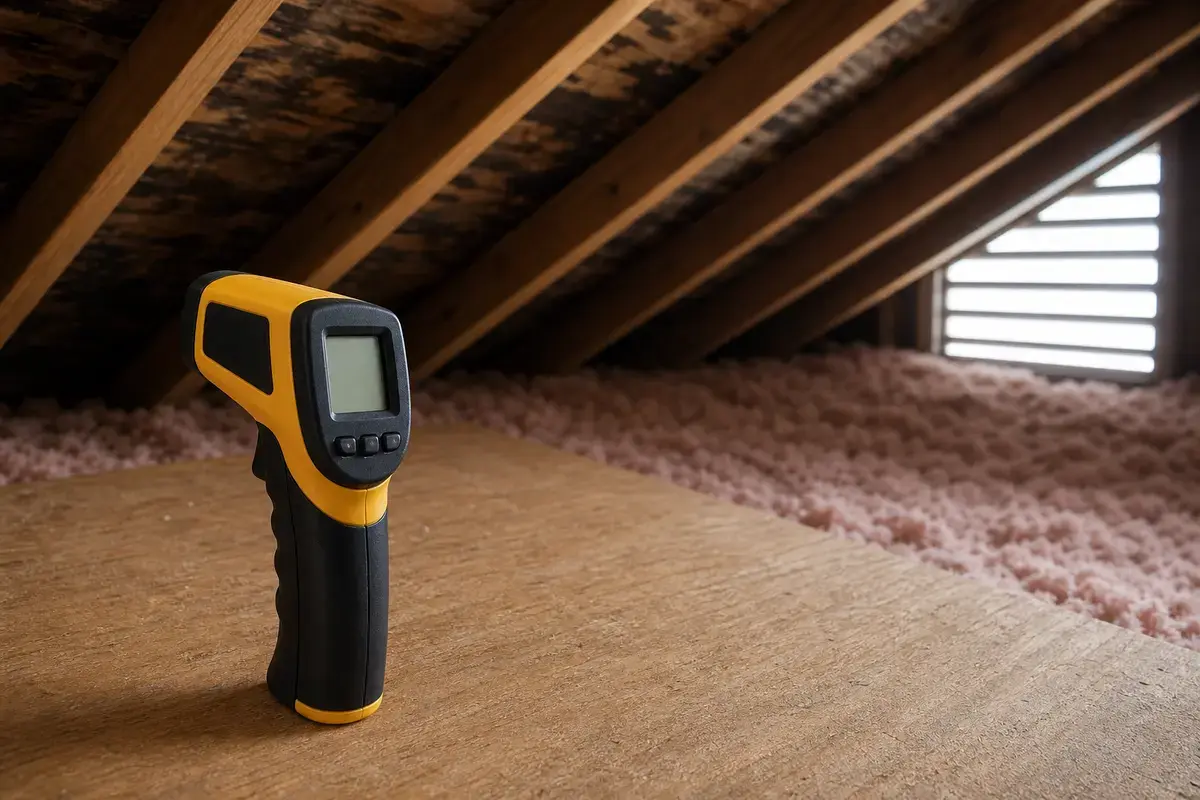
Helps when: Use to compare the cold ceiling patch, nearby ceiling, exterior wall edge, and attic hatch on the same day.
Skip it when: Skip treating one reading as proof without comparing the surrounding surfaces.
Compare infrared thermometers on Amazon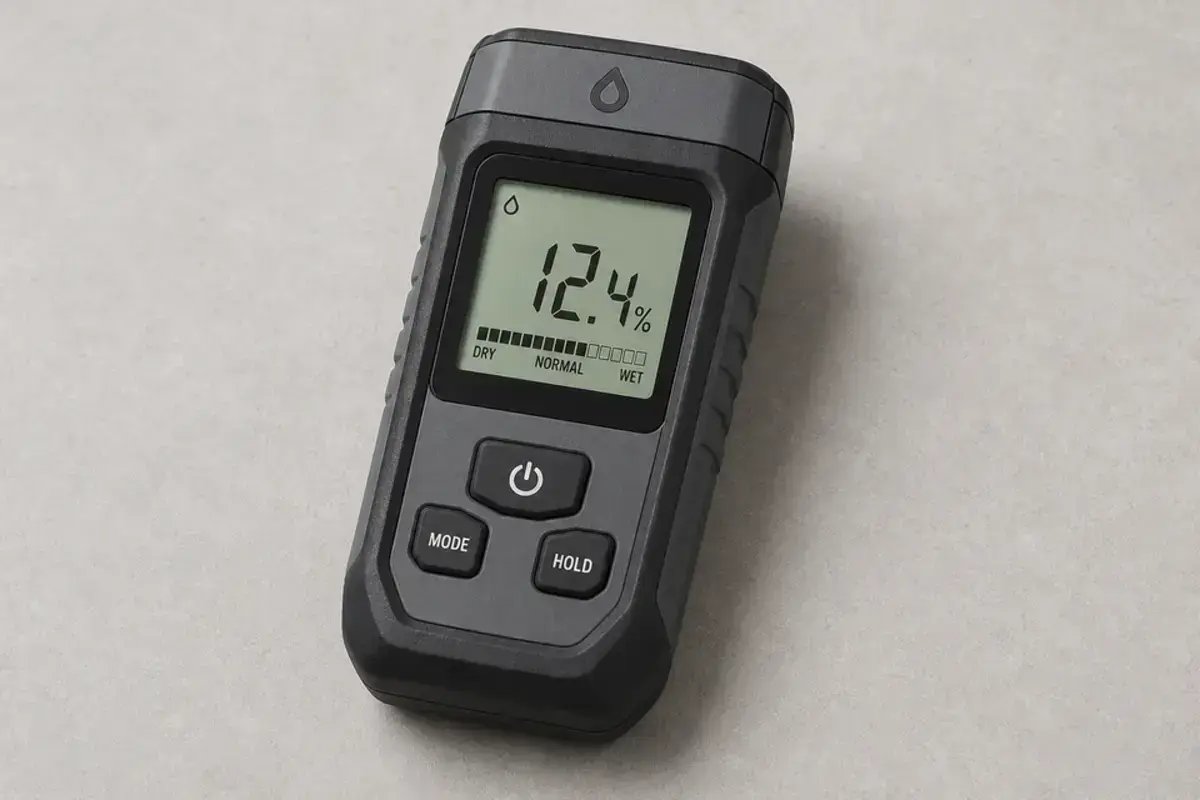
Helps when: Use when the cold patch has staining, damp paint, or a condensation question.
Skip it when: Skip probing or cutting if moisture readings are high, spreading, or near wiring.
Compare pinless moisture meters on Amazon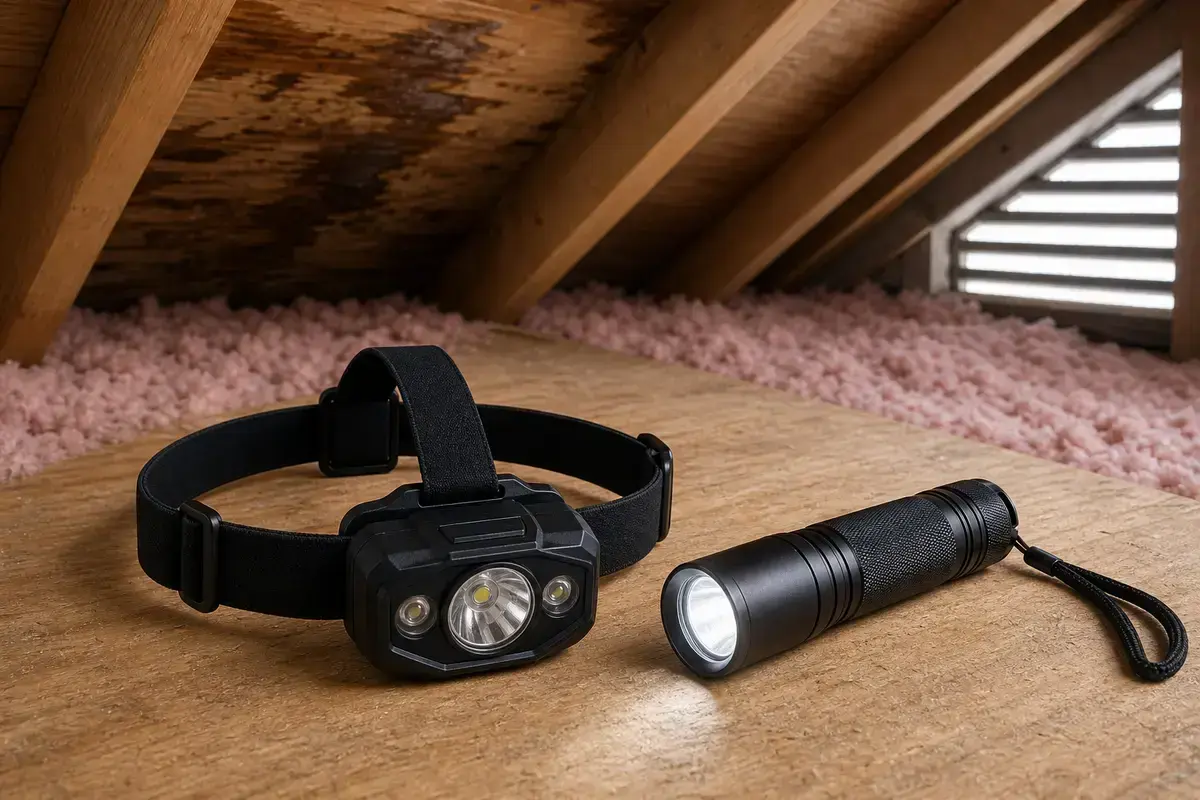
Helps when: Use to inspect the attic side of the cold ceiling from stable framing or a walkway.
Skip it when: Skip attic entry when heat, footing, wiring, insulation, or access is unsafe.
Compare headlamps on AmazonAs an Amazon Associate I earn from qualifying purchases. Repair Riot may earn a commission at no extra cost to you.
One cold patch usually means the attic-side boundary is different there: thin insulation, a hatch leak, air washing from an eave, or a nearby moisture problem.
Only after you know the air path. Adding insulation over an air leak or into a soffit channel can hide the problem and make moisture worse.
Check latch pressure, perimeter compression, dust lines, and the hatch panel insulation before buying broader attic materials.
Treat staining as a moisture clue first. A cold surface can collect condensation, but roof leaks and bath fan leaks need to be ruled out.
Baffles do not warm the ceiling by themselves. They keep soffit airflow open so insulation can cover the ceiling plane without blocking ventilation.
No. Working attic ventilation should stay open. The better fix is sealing house-air leaks and correcting insulation coverage.
Call for unsafe footing, wet wiring, active leaks, mold, suspected contaminated insulation, or any repair that requires roof access.
Recheck the same ceiling patch on a similar cold day. The cold area should shrink or match surrounding ceiling, and no new moisture should appear.
Repair Riot built this page around winter ceiling clues: hatch leakage, missing insulation, blocked soffit airflow, moisture staining, safe attic access, and temperature comparison.