Hum and no airflow?
Turn off and check visible filter, pan, and panel clues before blower diagnosis.
If the air handler hums but the fan does not start, turn it off before repeated attempts. Check filter restriction, pan water, float switch position, normal panel fit, and visible blower drag without reaching into the wheel.
Good clue: with hum and pan water, dry the pan and drain first. With hum plus no blower or hot smell, keep the unit off for service.
A hum means something is trying to start or hold. Repeated starts can turn a small clue into damage.
Don’t start with: If the blower hums without airflow, shut it off, keep hands out of the wheel, and leave hidden blower electrical parts for service testing.
Turn off and check visible filter, pan, and panel clues before blower diagnosis.
Clear water before judging the switch.
Install exact filter and check rack fit.
Do not touch the wheel; document and call service.
Keep off and call service.
A hum with no fan is a stop-and-inspect symptom, not a repeated-restart symptom.
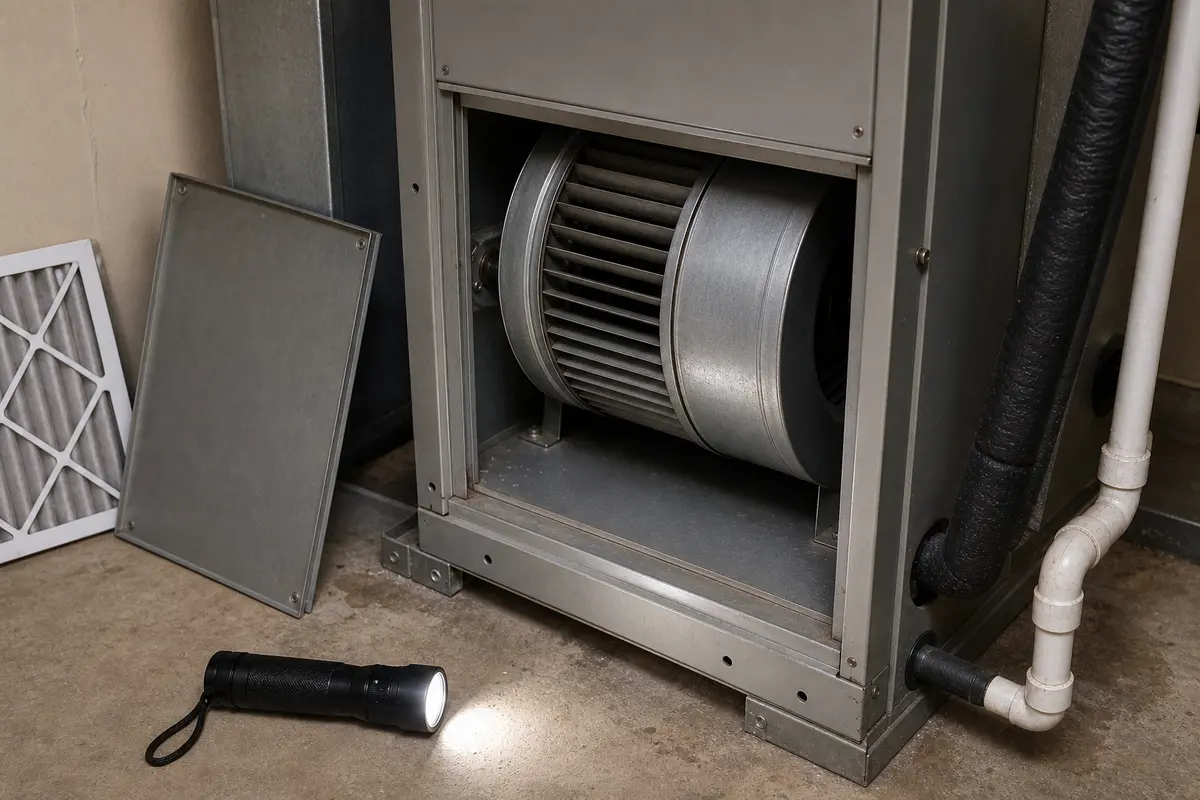
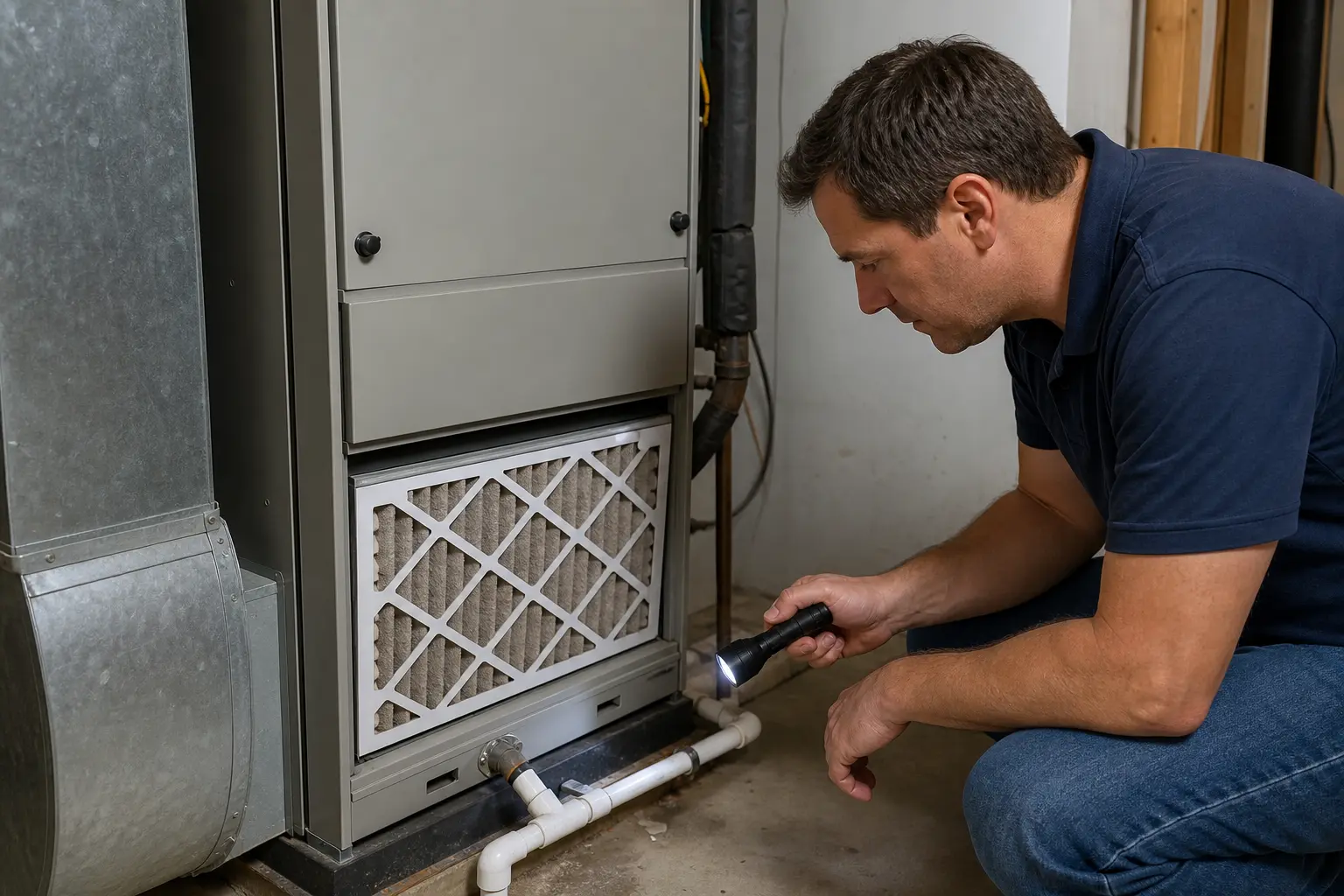
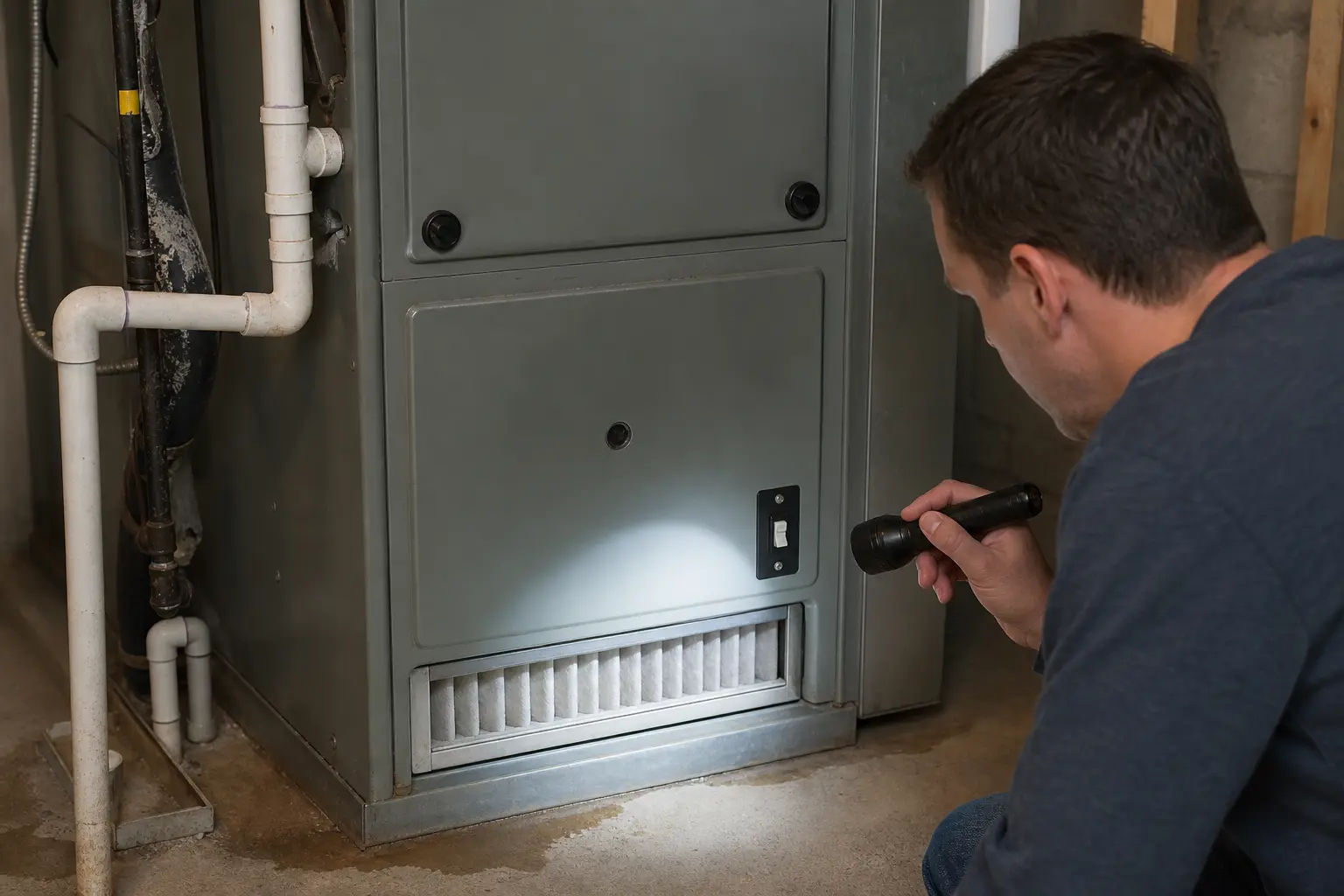
Buy only after the visible clue fits. A filter is reasonable when it is dirty, damp, collapsed, pulled inward, or wrong size. A float switch is reasonable only after the pan and drain are dry and the switch still sticks. Match the exact model, wiring, mounting style, filter size, and confirmed diagnosis before ordering anything.
Start by shutting the system off so a stalled blower is not overheated.
Avoid buying internal parts until the visible clues support it.
Use this table after one controlled check and any normal startup delay.
| Clue | Most likely cause | Next move |
|---|---|---|
| Hum and no airflow | Stalled blower, safety stop, or control issue | Turn off and check visible clues. |
| Pan water | Drain backup or float switch | Clear water before judging switch. |
| Collapsed filter | Airflow restriction or rack fit | Install exact filter. |
| Blower rub or drag | Wheel, housing, bearing, or motor issue | Do not touch the wheel. |
| Hot smell or breaker trip | Electrical or motor fault | Keep off and call service. |
These checks keep the diagnosis tied to what you can see or safely test.
Keep the cart narrow and buy only when the evidence points to that exact item.
These support safe visible checks, cleanup, and documentation.
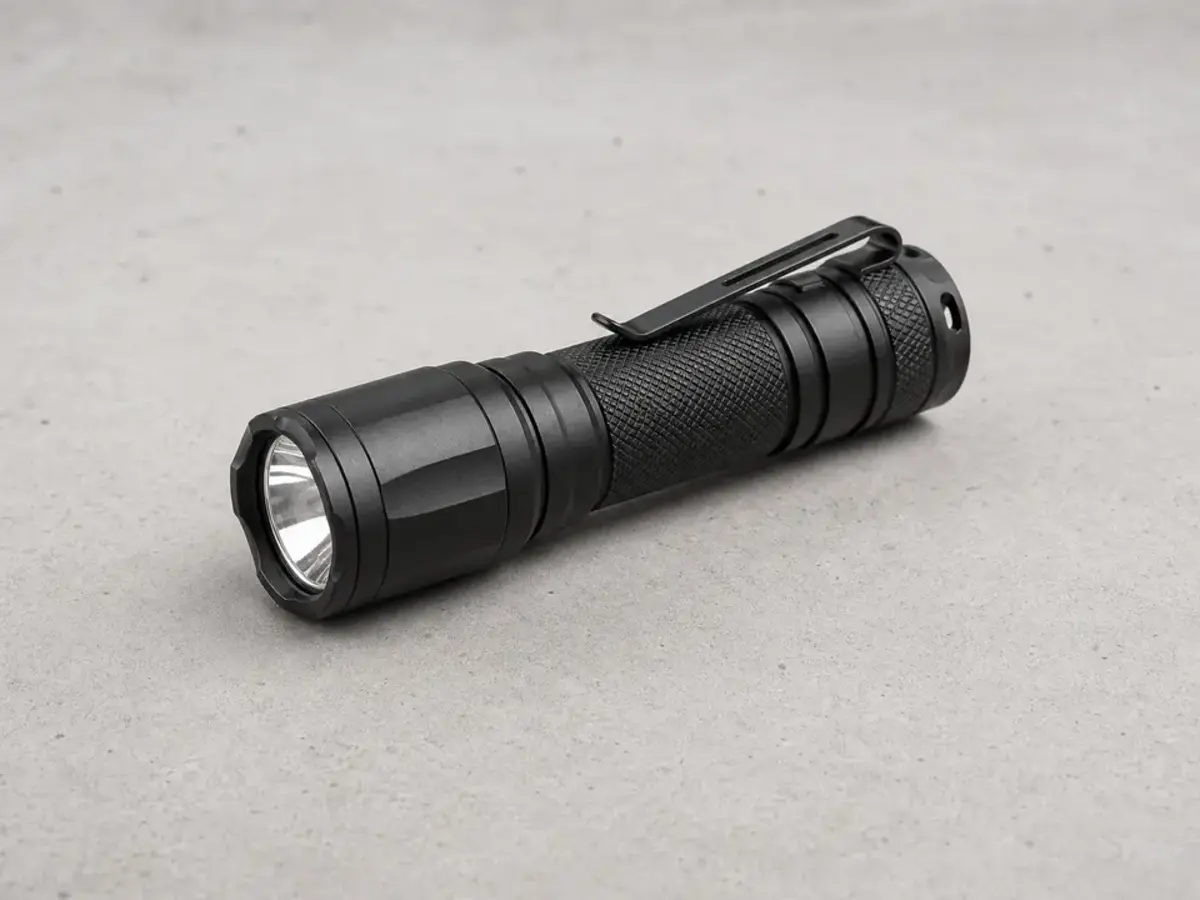
Helps when: Use it to inspect filter fit, pan water, float switch, panel fit, and visible blower rub clues.
Skip it when: Skip checks that require opening blower electrical compartments, reaching into the cabinet, or working near water and controls.
Compare inspection flashlights on Amazon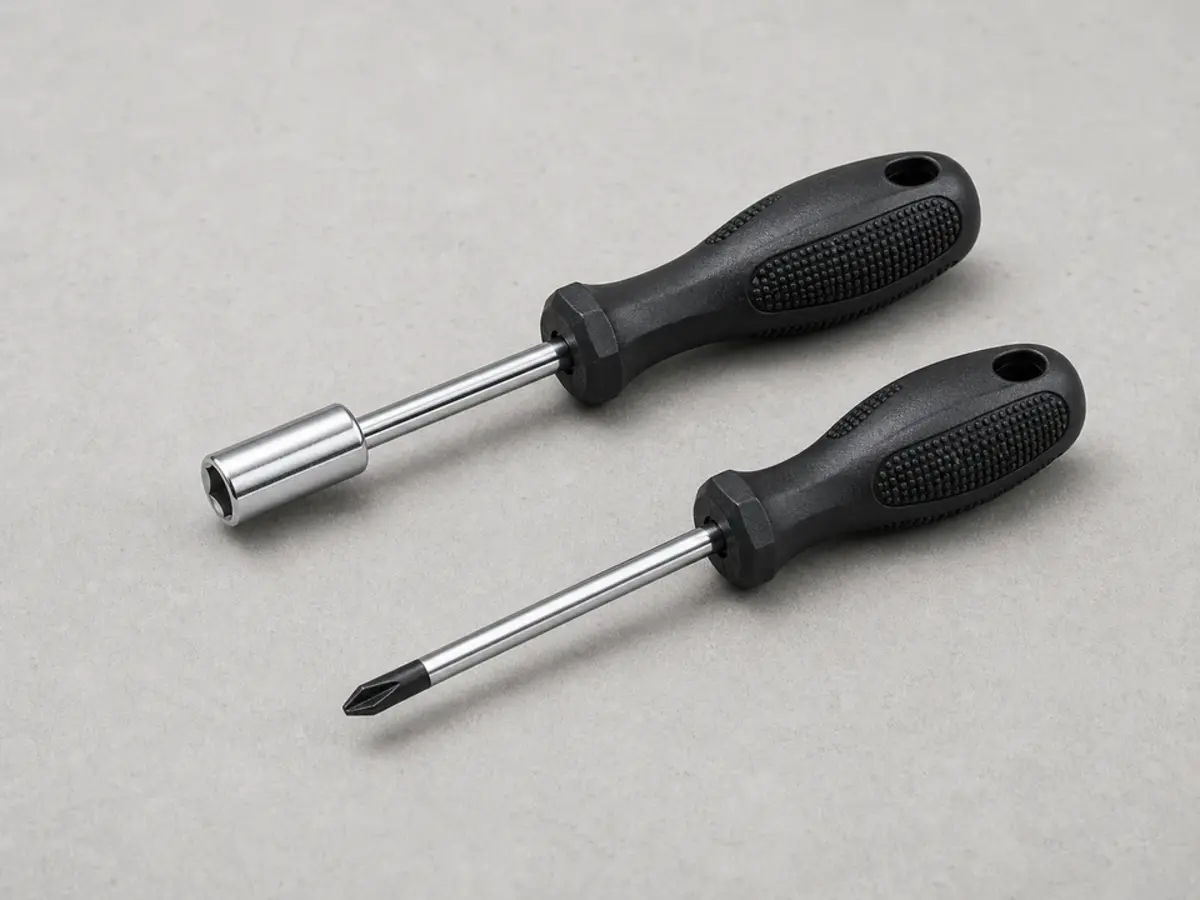
Helps when: Use it only on normal access-panel fasteners after air-handler power is off.
Skip it when: Skip electrical covers, sealed blower panels, damaged switches, or anything near exposed wiring.
Compare nut driver sets on Amazon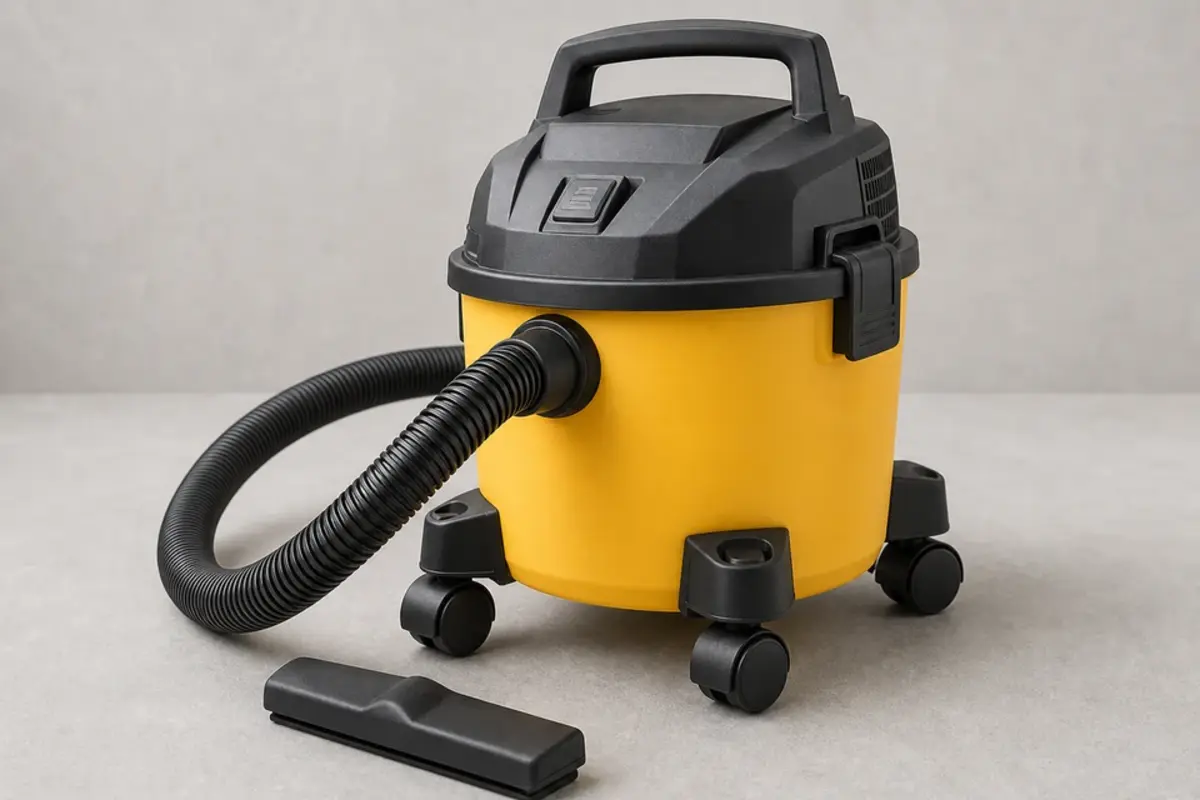
Helps when: Use it only at a known condensate outlet when pan water may be holding a safety switch open.
Skip it when: Skip it when the drain outlet is hidden, water is near electrical controls, or you cannot identify the condensate line.
Compare wet-dry vacuums on AmazonAs an Amazon Associate I earn from qualifying purchases. Repair Riot may earn a commission at no extra cost to you.
These are the only buy-first parts that fit the visible homeowner clues.
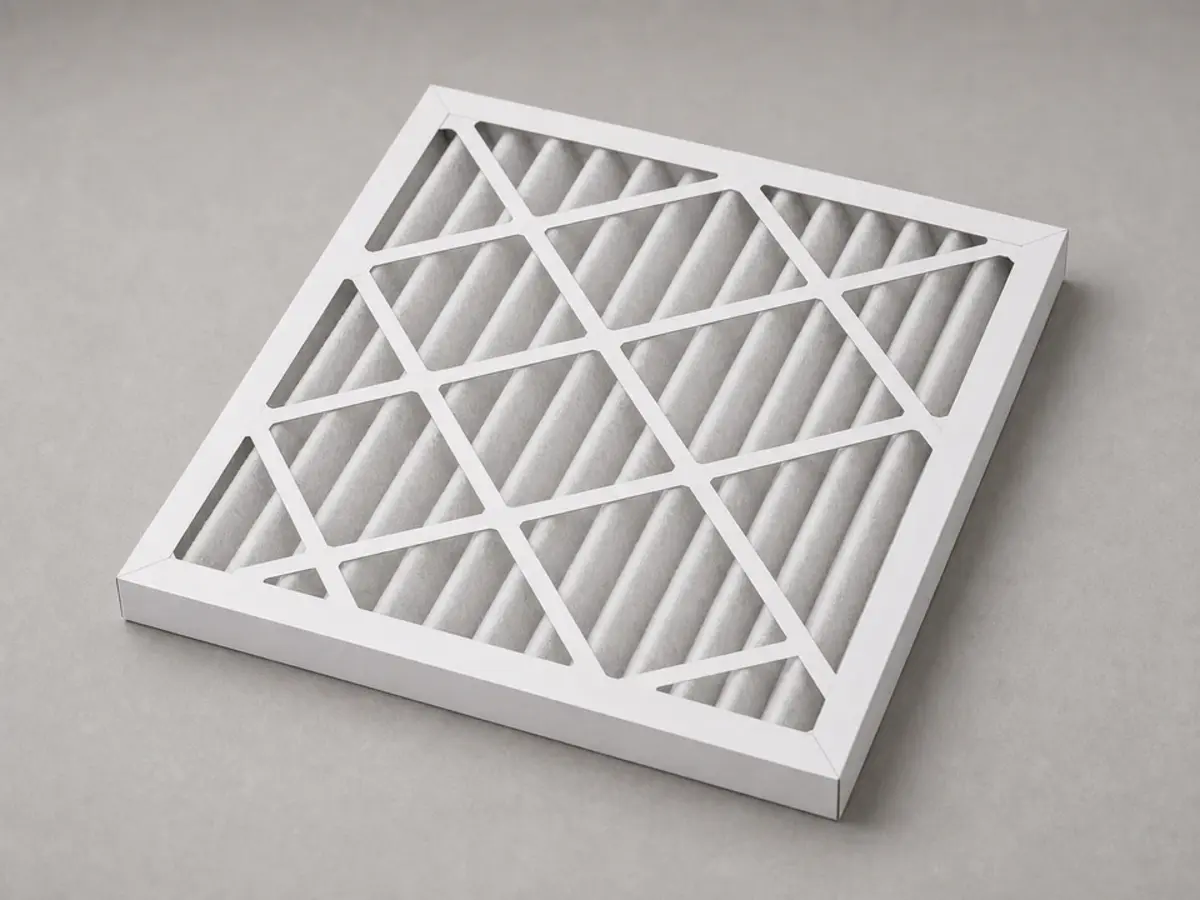
Helps when: Replace it when the installed filter is dirty, damp, collapsed, pulled inward, missing, or the wrong size.
Skip it when: Skip filters that do not match the air-handler rack size, thickness, airflow arrow, and supported restriction range.
Compare air handler filters on Amazon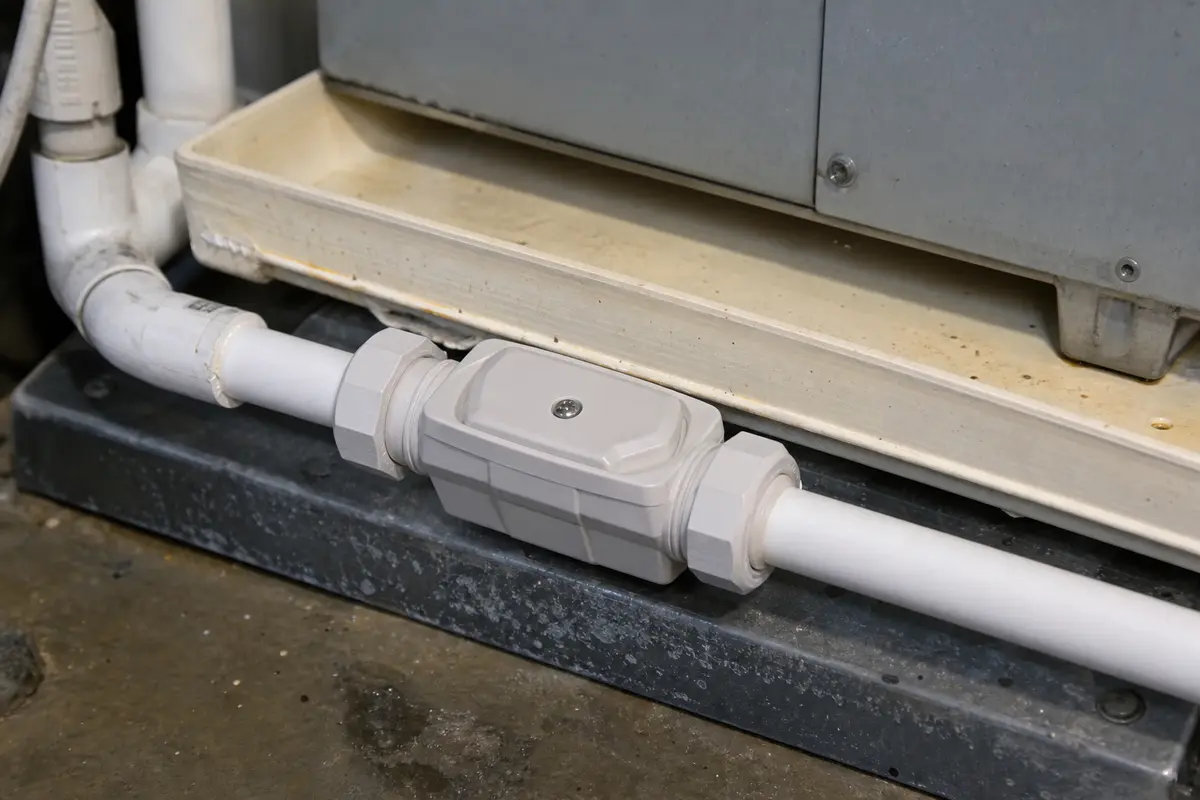
Helps when: Consider one only after the pan and drain are dry and the visible float switch is cracked, stuck, or will not reset.
Skip it when: Skip it when water is still lifting a working switch, the drain is not clear, or the mounting style does not match.
Compare air handler condensate float switches on AmazonAs an Amazon Associate I earn from qualifying purchases. Repair Riot may earn a commission at no extra cost to you.
Common clues include a stalled blower, filter restriction, pan water, float switch, blower drag, or an internal motor or control fault.
No. Repeated humming without airflow can overheat parts.
No. Do not reach into the blower wheel or motor area.
A dirty or collapsed filter can create airflow stress and can be part of the visible diagnosis.
Yes, if pan water is present. Clear the drain and pan before replacing the switch.
No. Keep the system off and let service test the hidden blower circuit before any exact part is ordered.
A correct-size filter, flashlight, nut driver, and wet-dry vacuum are reasonable when the visible clues fit.
Call for hot smell, breaker trips, sharp buzz, no airflow after visible checks, or any suspected blower motor fault.
Repair Riot built this page around visible homeowner checks. That includes thermostat demand, airflow, filter condition, water, condensate safety, blower sounds, outdoor clues, and clear stop points before internal electrical or refrigerant work.