Temperature holding near setpoint?
Long runtime may be normal during peak heat; use a room thermometer before buying parts.
If the AC compressor runs constantly, check whether the house is holding temperature, the thermostat is normal, the filter is clean, and the outdoor coil is clear. Nonstop runtime with rising indoor temperature usually points to airflow, coil dirt, heat load, or service-only capacity loss.
Good clue: long cycles during extreme heat can be normal if the room temperature holds; nonstop running while the temperature rises is the problem clue.
Confirm the outdoor unit is the part running, then compare room-temperature trend with airflow and condenser clues.
Don’t start with: Do not assume the compressor is bad, add refrigerant, or buy condenser electrical parts from run time alone.
Long runtime may be normal during peak heat; use a room thermometer before buying parts.
Check filter airflow, return grilles, outdoor coil dirt, and heat load.
Turn the system off at the disconnect or breaker and call service.
Replace the filter and clear returns before judging run time.
Stop after safe checks and schedule HVAC service.
Use temperature trend, filter airflow, and outdoor coil condition before blaming the compressor.
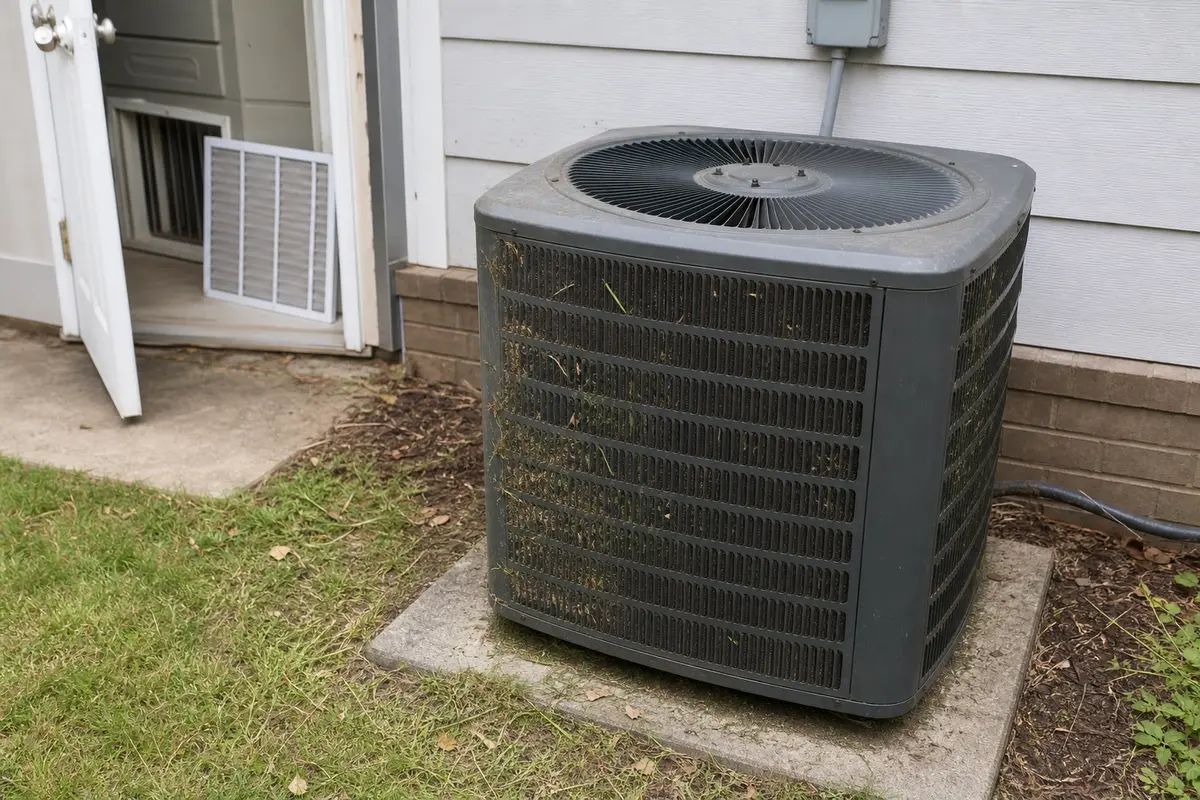
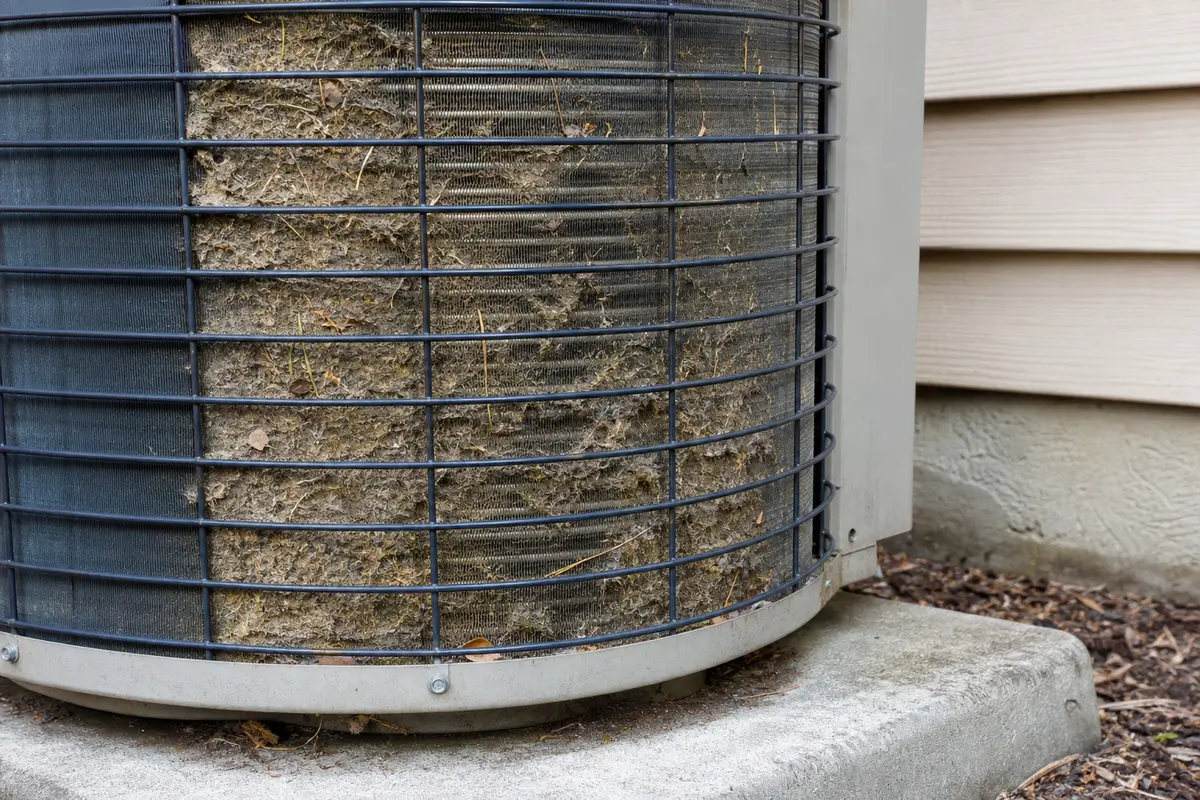
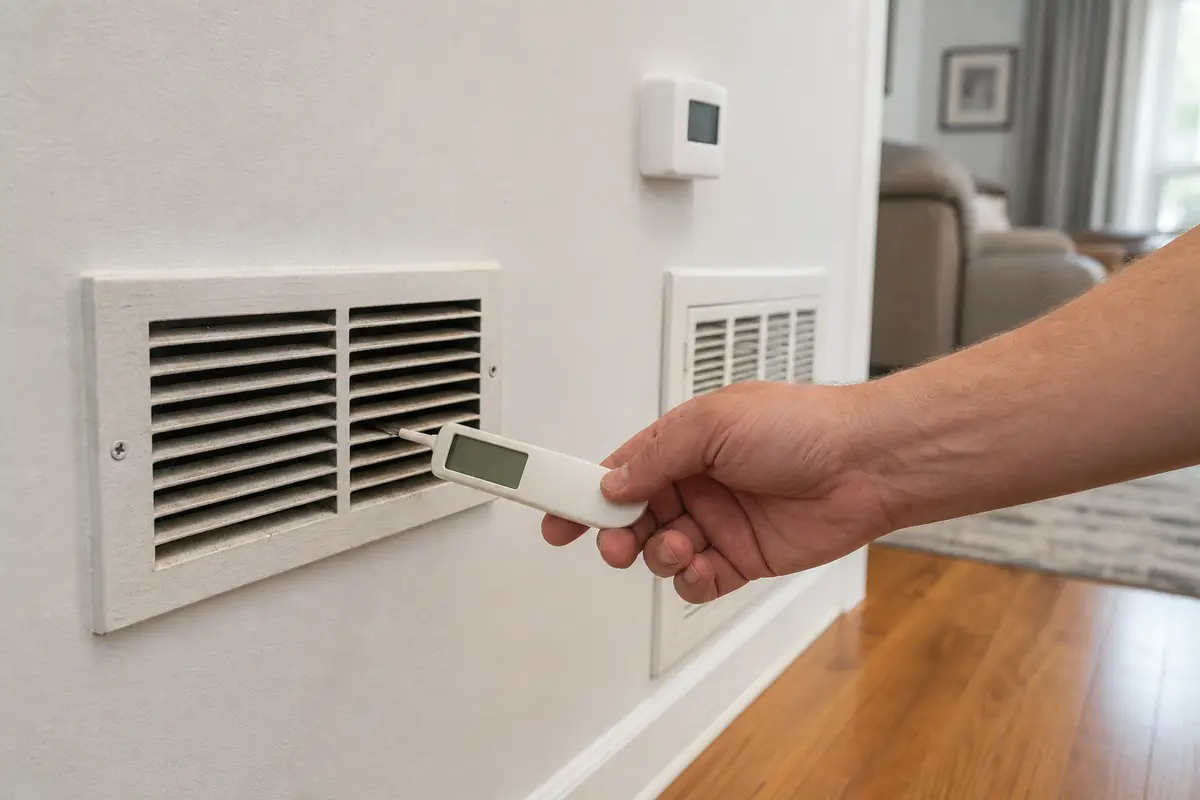
Buy only after the exact diagnosis fits: filter size and airflow restriction, measured room-temperature trend, visible condenser dirt, or a thermostat that fails a simple setpoint test. Match the exact model, filter size, wiring style, and visible clue before ordering anything.
A compressor can run for long stretches in extreme heat and still be doing its job.
Avoid the expensive shortcut until the visible clues support it.
Use this table after one controlled cooling call and the normal delay period.
| Clue | Most likely clue | Next move |
|---|---|---|
| Long run, temperature holding | Peak heat or normal load | Check with a room thermometer and avoid parts guesses. |
| Long run, temperature rising | Airflow, condenser dirt, heat load, or cooling-capacity problem | Check filter, returns, and outdoor coil. |
| Outdoor unit runs after thermostat off | Stuck control or wiring fault | Turn power off and call service. |
| Weak airflow | Filter, return, blower, or ice clue | Replace filter and look for ice. |
| Dirty outdoor coil | Poor heat rejection | Clean accessible surfaces with power off. |
These checks keep the diagnosis tied to field clues.
Buy parts only when the evidence points to that exact visible clue.
These support safe visible checks and cleanup.
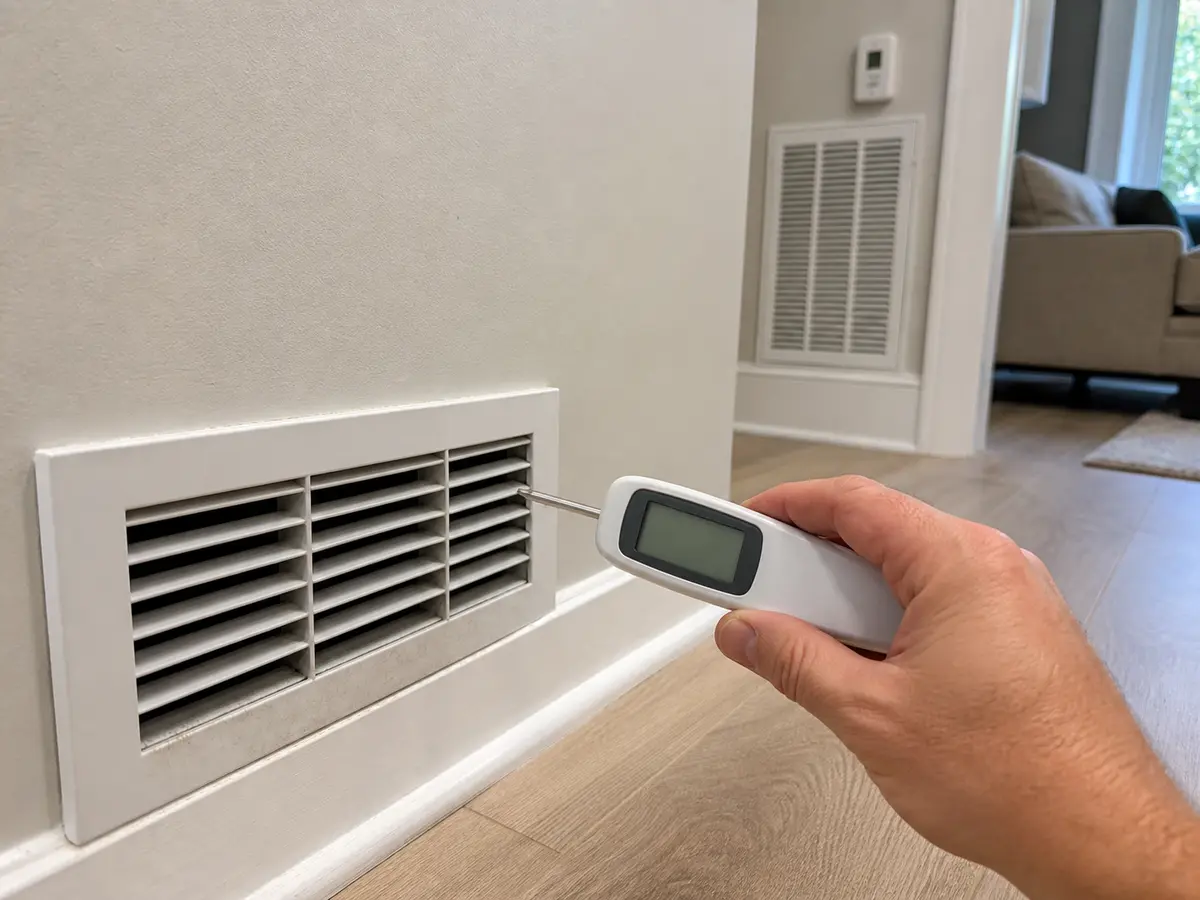
Helps when: Use it to prove whether the room temperature is holding, falling, or rising during the long run.
Skip it when: Skip guessing by thermostat display alone when a portable thermometer can show the trend.
Compare room thermometers on Amazon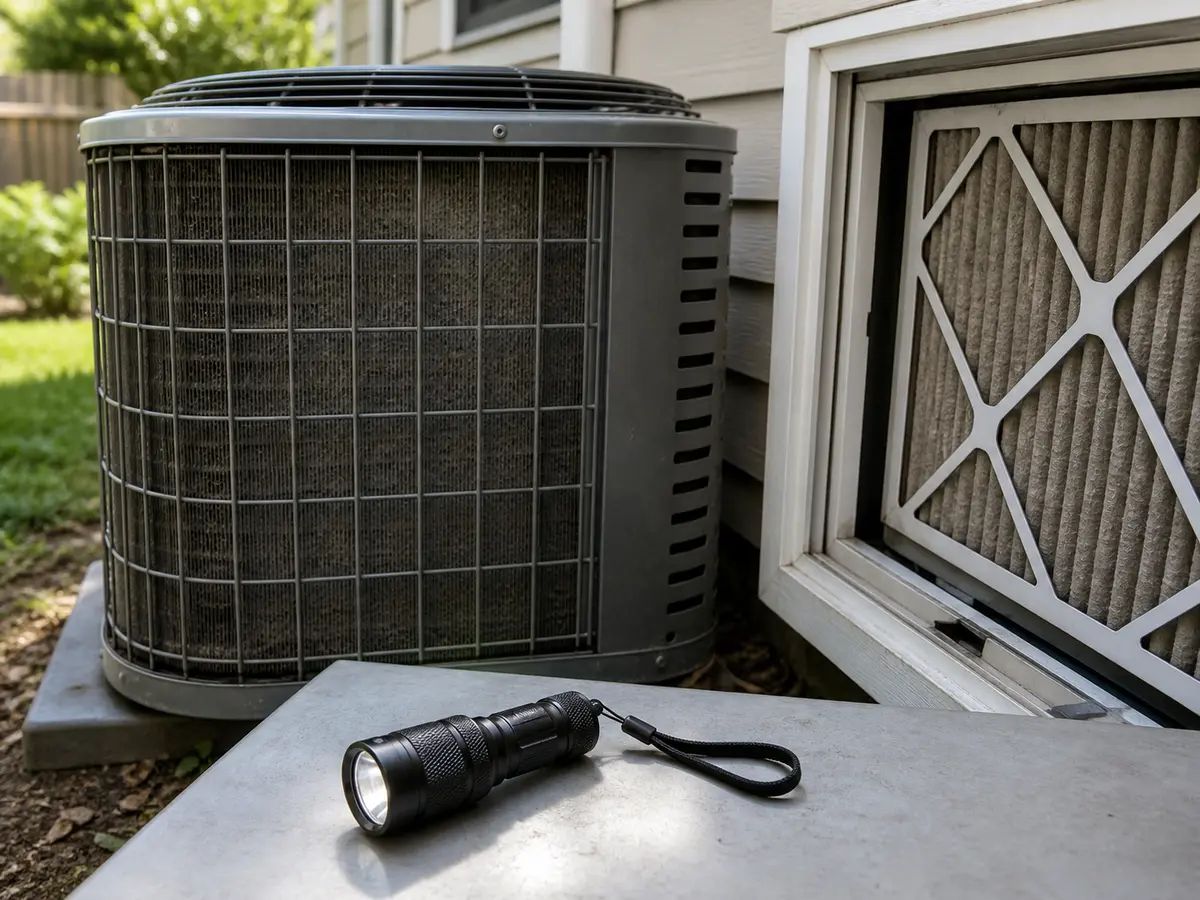
Helps when: Use it to inspect the filter rack, return grilles, refrigerant-line ice, and condenser coil dirt.
Skip it when: Skip it when the next step would remove condenser covers, expose wiring, or reach inside the fan grille.
Compare inspection flashlights on Amazon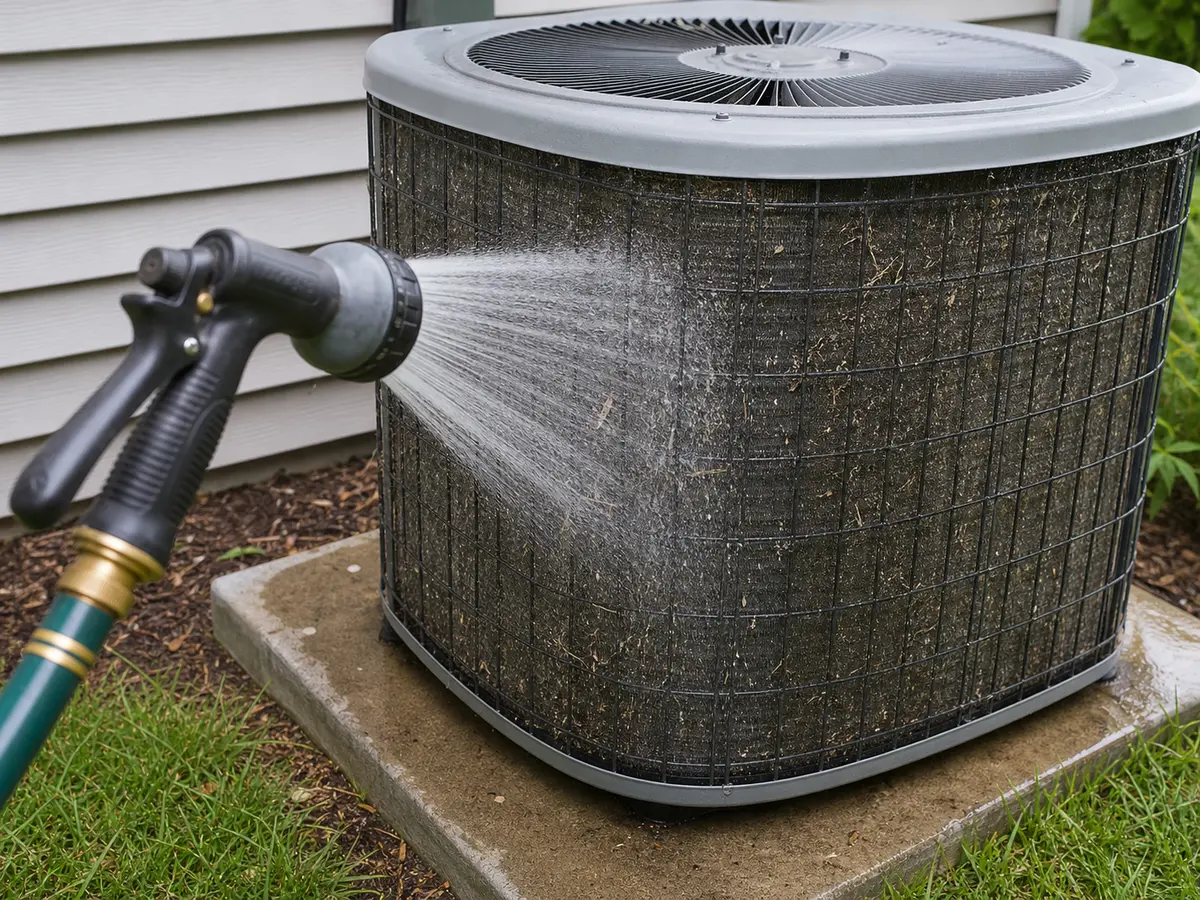
Helps when: Use it to rinse accessible condenser coil dirt after power is off.
Skip it when: Skip pressure washers and spraying near electrical covers.
Compare gentle hose nozzles on AmazonAs an Amazon Associate I earn from qualifying purchases. Repair Riot may earn a commission at no extra cost to you.
Keep the cart narrow and match the part to the actual diagnosis.
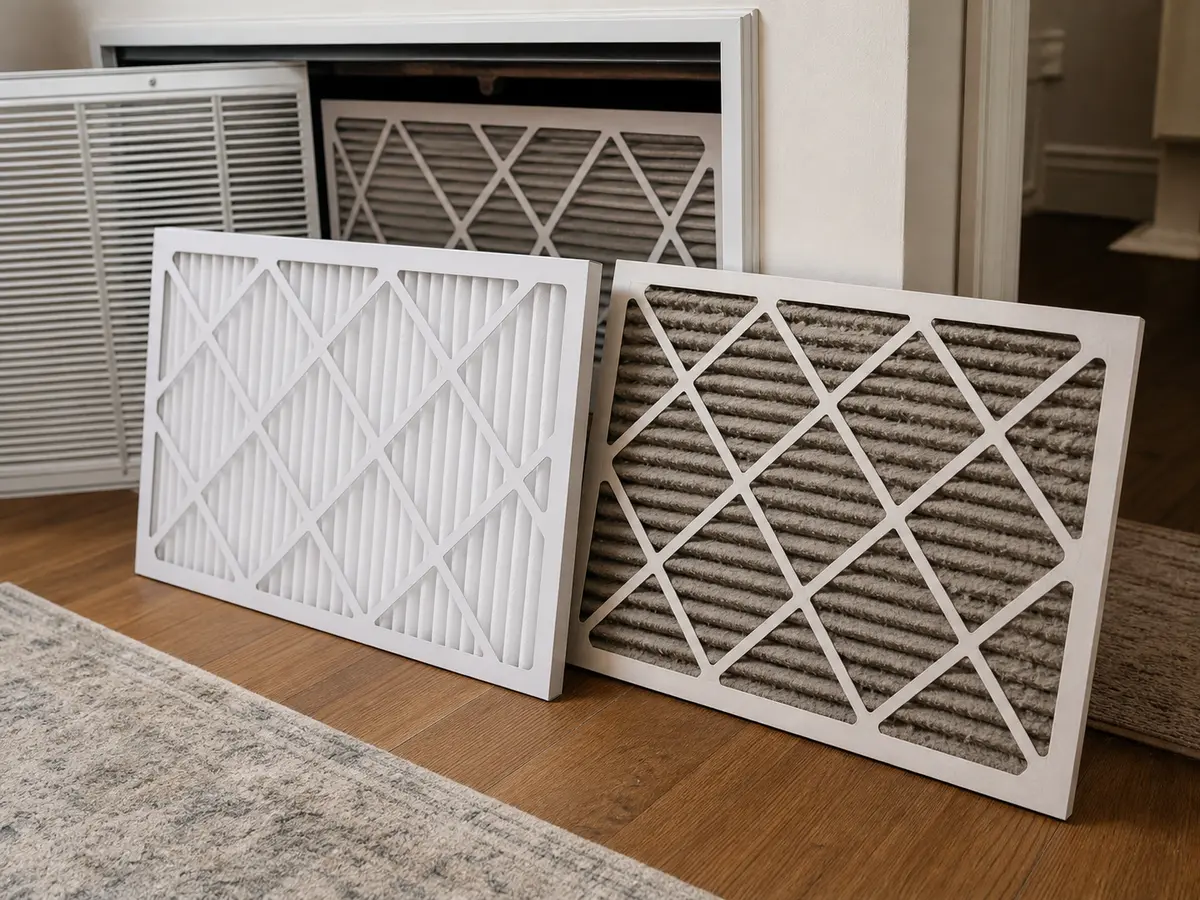
Helps when: Replace a dirty, wet, collapsed, missing, or wrong-size filter before judging compressor runtime.
Skip it when: Skip filters that do not match the printed size, thickness, airflow arrow direction, and filter-rack limits.
Compare AC filters on AmazonAs an Amazon Associate I earn from qualifying purchases. Repair Riot may earn a commission at no extra cost to you.
It can be normal during extreme heat if the room temperature holds near the setpoint. It is not normal when the house keeps getting warmer.
Stand near the outdoor condenser and listen for the fan plus the deeper compressor sound. If only the indoor blower runs, use the blower or thermostat fan path instead.
Yes. A restricted filter reduces airflow across the indoor coil, so the thermostat takes longer to satisfy.
Yes. A dirty condenser coil rejects heat poorly and can make the unit run longer during hot weather.
Turn the system off at the disconnect or breaker and call service. That points to a control fault, not normal long runtime.
Not first. Check setpoint, batteries, room-temperature trend, filter, returns, and condenser dirt before buying a thermostat.
It can, but low refrigerant belongs after airflow, filter, thermostat, and condenser checks. Refrigerant diagnosis is service work.
A correct-size filter, thermometer, flashlight, and gentle hose nozzle are reasonable when the clues fit. Hidden condenser parts need testing first.
Repair Riot built this page around safe homeowner checks: thermostat demand, airflow, filter condition, condenser behavior, condensate safety, duct distribution, and clear stop points before internal electrical or refrigerant work.