Outdoor AC no-start troubleshooting

AC Outdoor Unit Clicks Repeatedly? Check Power and Airflow First

Repeated clicking usually means the condenser is being asked to start but cannot settle into a normal run. Check thermostat demand, indoor airflow, the AC breaker, outdoor disconnect, and condenser blockage first.

Good clue: if the indoor blower stays on while the outside unit only clicks, the cooling call is probably reaching the system. Check the filter, AC breaker, outdoor disconnect, and visible condenser blockage before blaming a start component.

Use one cooling call to sort single click, click-and-hum, rapid chatter, or warm-air clicking.

Don’t start with: Do not open the condenser service panel, press the contactor, or replace a capacitor from sound alone. Capacitor talk only starts after clean airflow and power checks plus a click-and-hum or failed-start pattern.

Indoor blower runs but outside only clickscheck thermostat demand, filter condition, breaker position, and the outdoor disconnect before blaming a hidden part.
Click plus hum, hot smell, or breaker tripturn cooling off and call for HVAC service; repeated start attempts can overheat expensive parts.

Do this first

  • Turn cooling off if the outdoor unit clicks over and over, hums without starting, smells hot, or trips the breaker.
  • Use one breaker reset only when the breaker is clearly tripped and you can do it safely. If it trips again, leave it off.
  • Before touching the condenser cabinet, turn the thermostat off and shut off the outdoor disconnect and breaker.
  • Keep hands, tools, hoses, and sticks away from the fan guard while the system could restart.
  • Do not open the condenser service panel, press the contactor, discharge capacitors, or test energized wiring as basic DIY.
  • Call an HVAC tech for click-and-hum, rapid chatter inside the cabinet, burning smell, melted disconnect parts, ice on refrigerant lines, or any refrigerant-side work.
Last reviewed: 2026-06-28

One-minute clicking sorter

One click, then the fan and compressor run normally?

That can be normal startup. Let the AC complete a cycle and switch to weak-cooling checks only if the house still stays warm.

Indoor blower runs but the outdoor unit only clicks?

Check filter, return airflow, AC breaker, air-handler breaker, and outdoor disconnect. This pattern often means the call reached the system but the condenser did not start.

Click followed by a hard hum or short failed start?

Turn cooling off. A hard-starting fan motor or compressor can overheat while you wait, and capacitor or contactor testing belongs inside the condenser.

Rapid chatter instead of one clean click?

Look only at safe power and thermostat clues. If the chatter seems to come from inside the condenser, stop before opening the cabinet.

Breaker trips, disconnect looks hot, or there is a burnt smell?

Leave power off if the breaker trips, the disconnect looks heat-damaged, or you smell burning. Do not reset it again; call HVAC service or a licensed electrician because the fault may be in the circuit or condenser.

Read the outside clues before opening anything

The useful clues are visible with the cabinet closed: condenser airflow, fan-guard debris, the disconnect box, filter condition, and whether the unit hums after the click.
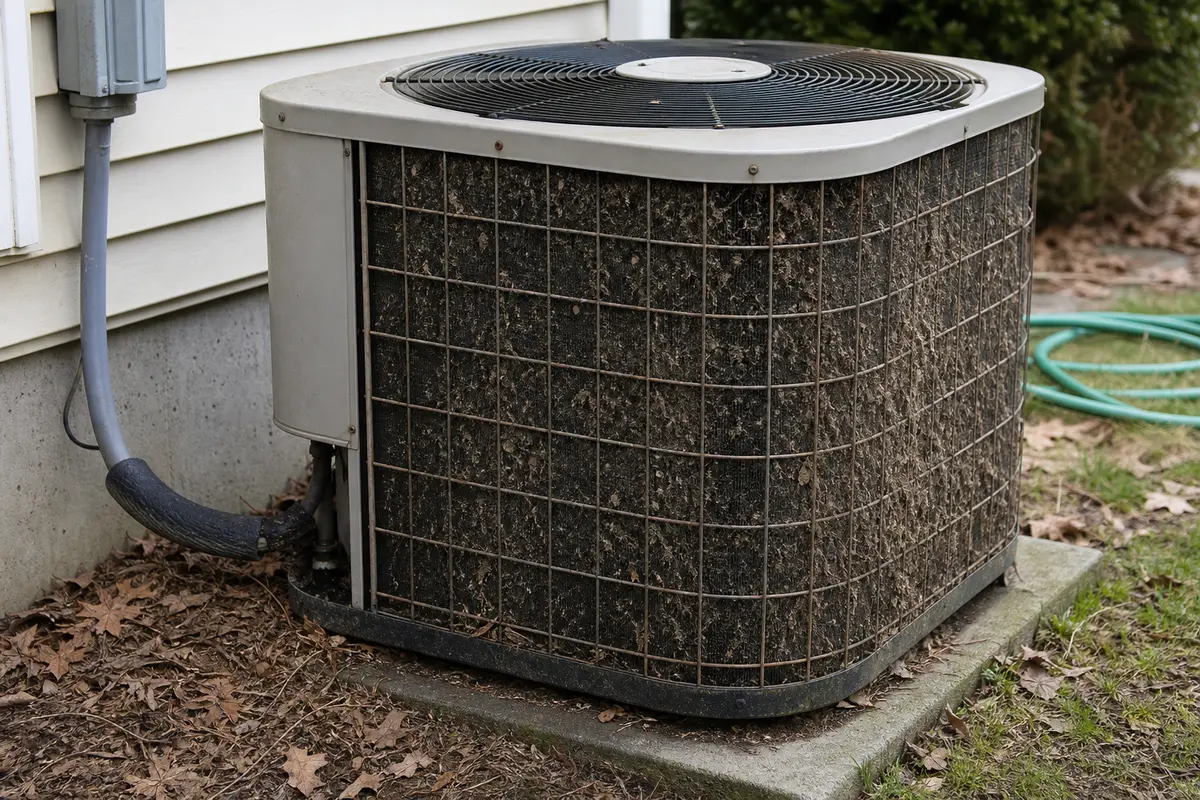
Outdoor air conditioner condenser with clogged coil during repeated clicking diagnosis
A matted condenser coil can make startup harder and heat the outdoor section quickly. Clear airflow before guessing at an internal electrical part.
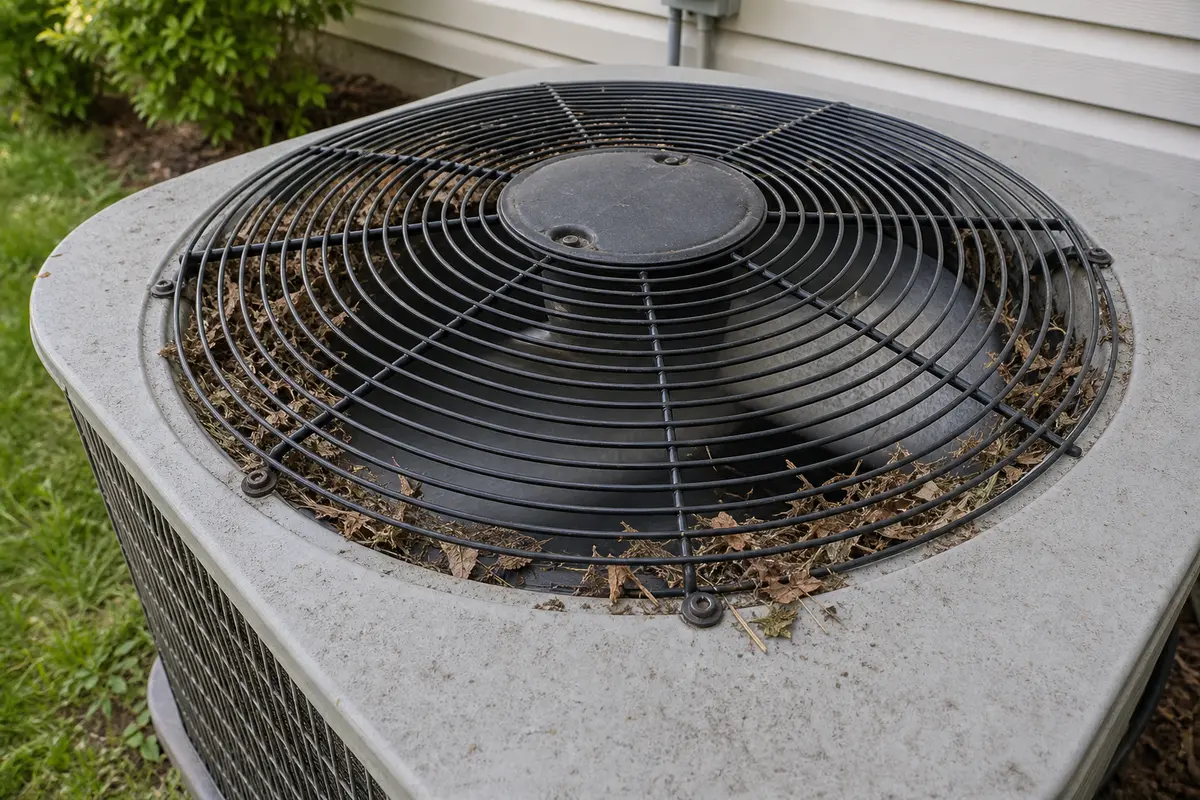
Leaves caught under outdoor AC fan guard while unit clicks and will not start
Debris at the fan guard is a power-off visual clue. Do not reach through the grille or move the blade while the unit can start.
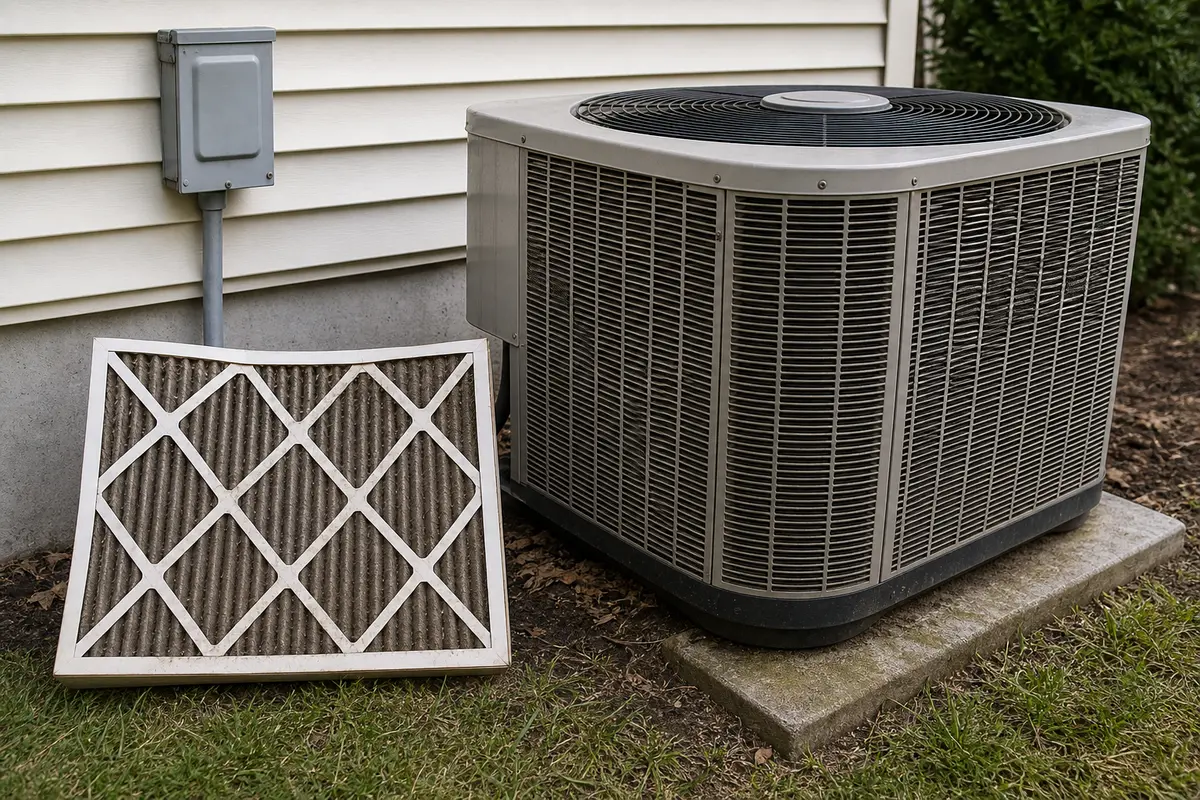
Outdoor AC condenser, disconnect box, and filter checked before capacitor diagnosis
Power and airflow checks come before capacitor talk: breaker, disconnect, filter, coil, and obvious blockage can change the whole repair path.

Before you buy anything

Do the closed-cabinet checks first. An air filter belongs in the cart only when the old one is dirty, wet, bowed, collapsed, overdue, or the wrong size. Skip capacitors, contactors, hard-start kits, fan motors, compressor parts, and refrigerant products until the exact outdoor unit model and a real diagnosis point there.

What is probably happening

A repeated click is a symptom, not a diagnosis. The condenser may be receiving the call for cooling, then stopping because airflow, power, controls, or a start component is not letting it run normally.

  • Normal startup uses one clean click. Repeated clicking means the outdoor unit is trying again, losing the call, or failing before the fan and compressor settle.
  • Restricted airflow can make a marginal system start hard. A packed filter, blocked return, or dirty condenser coil can raise heat and pressure before the homeowner ever sees a failed part.
  • A power problem can leave the low-voltage call present while the condenser lacks the power it needs to run. A half-tripped breaker, loose disconnect, or damaged disconnect is a common outside clue.
  • Thermostat or low-voltage control trouble can make the call drop in and out. The indoor blower starting and stopping with the clicks is the useful clue.
  • A weak run capacitor, worn contactor, fan motor problem, compressor hard-start condition, or wiring fault can all make clicking or click-and-hum behavior. Those are test-first repairs inside the condenser; leave the service panel closed and have an HVAC tech test them with power off.

What not to do first

Most bad outcomes start with forcing another startup or buying an electrical part too early. Keep the condenser closed until the pattern is clear.

  • Do not keep lowering the thermostat to force another start. One clear cooling call tells you enough.
  • Do not press the contactor or poke through the fan guard to make the unit run.
  • Do not reset a breaker again after it trips once. A repeat trip is a fault, not a stubborn switch.
  • Do not open the condenser service panel to look at the capacitor or contactor unless you are trained for that work.
  • Do not buy a capacitor just because the unit clicks. It belongs in the conversation only after clean airflow and power checks and a failed-start clue such as click-and-hum, late fan start, or a tech's test result.
  • Do not spray water toward the disconnect, open service compartment, or any wiring openings.

Read the click pattern

Use one short cooling call from a safe distance. You are sorting the branch, not proving the exact failed part.

  • Set the thermostat to COOL, fan AUTO, and a temperature a few degrees below room temperature.
  • Listen for the indoor blower, outdoor click, fan movement, hum, chatter, breaker trip, or short start-and-stop.
  • Turn cooling back off after you have the pattern, especially if the unit clicks more than once or hums without running.
What you hear or seeWhat it usually meansNext move
One click and steady outdoor runNormal startup is possible.Let the cycle finish and judge cooling output instead of parts.
Indoor blower runs, outdoor unit clicks onlyThe cooling call may be present while condenser startup fails.Check filter, return airflow, breaker, disconnect, and outdoor coil condition.
Click then hard humThe fan or compressor may be trying to start under strain.Turn cooling off and schedule HVAC service if airflow and power checks do not solve it.
Rapid chatterThe call or contactor may be unstable.Check thermostat batteries and safe power clues; stop before opening the condenser.
Breaker trip, heat, smoke, or burnt smellThis is an electrical stop point.Leave power off and call an HVAC tech or licensed electrician as appropriate.

Closed-cabinet checks homeowners can do

These checks can change the repair path without touching hidden electrical parts. Work dry, keep the cabinet closed, and stop if anything looks burned or damaged.
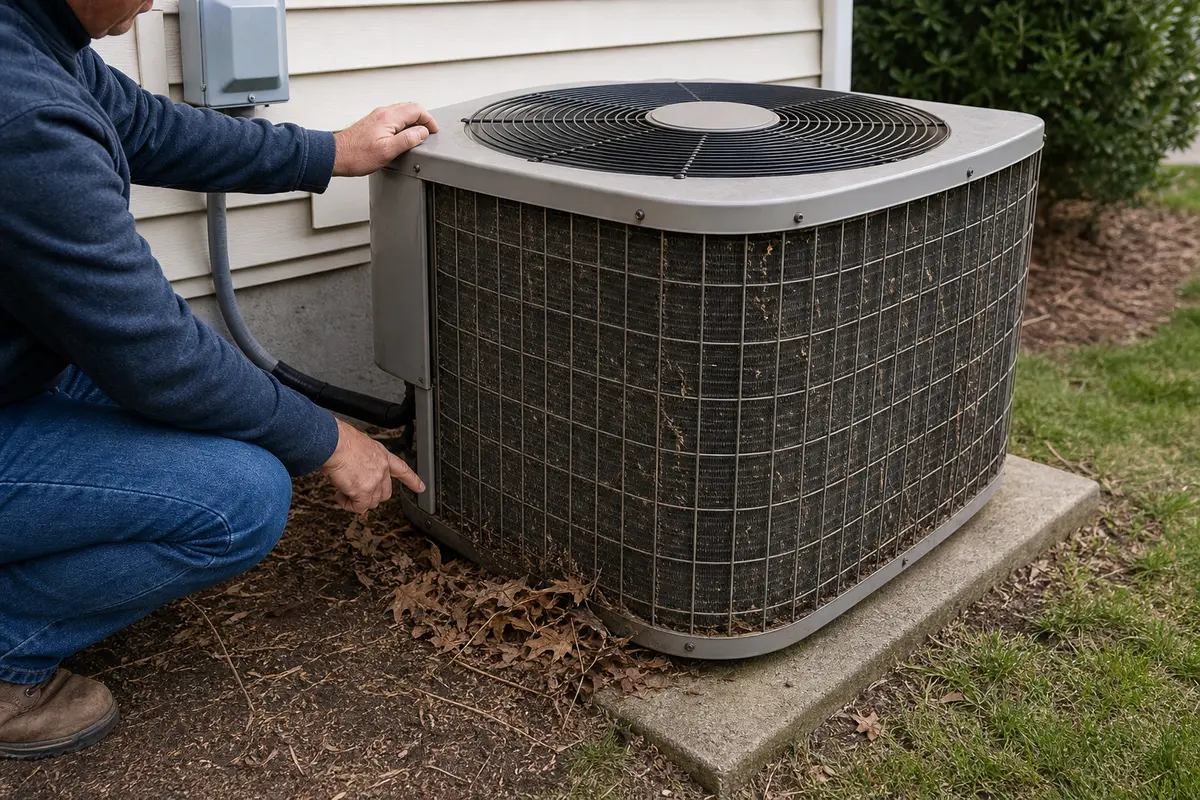
Outdoor AC condenser cabinet checked from outside during repeated clicking diagnosis
Keep the condenser closed while checking the visible clues: filter, airflow, breaker, disconnect condition, and obvious coil blockage.
  • Check the thermostat mode and set point. Use COOL, fan AUTO, and wait several minutes for built-in time delays before judging the outdoor unit.
  • Replace thermostat batteries if the display is weak, blanking out, or rebooting. A thermostat that drops the call can make outdoor clicking come and go.
  • Turn the thermostat off before pulling the filter. Replace the filter only if it is dirty, wet, bowed, collapsed, overdue, or the wrong size.
  • Open the main supply registers and keep return grilles clear. Poor indoor airflow can make the system struggle and can lead to ice.
  • Look at the outdoor coil and the space around the condenser. Clear leaves, grass, seed fluff, and stored items from the sides and top.
  • At the main panel, reset a clearly tripped AC breaker once if you can do that safely. If it trips again, leave it off.
  • At the outdoor disconnect, make sure the pull-out or handle is fully seated only if it is normal homeowner access. Stop for heat, cracks, scorch marks, water entry, looseness, or burning odor.

When capacitor or contactor diagnosis makes sense

Capacitors and contactors are common in no-start calls, but clicking alone does not name either one. They move up only after the filter, coil, breaker, and disconnect checks are clean. The remaining clue should be click-and-hum, rapid chatter, or a steady call that never becomes a normal outdoor run.

  • A capacitor clue is stronger when the fan or compressor hums, struggles to start, starts late, or tries briefly and quits with clean airflow and confirmed power. That still is not a DIY swap; leave the service panel closed and have the part tested with power off.
  • A contactor clue is stronger when the thermostat call is steady but the outdoor unit chatters, clicks without a clean start, or starts inconsistently.
  • A fan motor clue is stronger when the blade path is clear, the coil can breathe, and the fan hesitates, wobbles, runs rough, or will not reach speed.
  • A compressor or deeper power problem moves up when the unit hums hard, trips the breaker, starts briefly and stops, or still will not run after the safe checks.
  • Tell the tech the exact pattern: click only, click-and-hum, rapid chatter, breaker trip, indoor blower behavior, filter condition, disconnect condition, and whether the fan ever moved.

Tools You May Need

These are for observation, filter work, and exterior cleaning only. Skip anything that would expose wiring, a capacitor, a contactor, or refrigerant lines beyond normal visual checks.
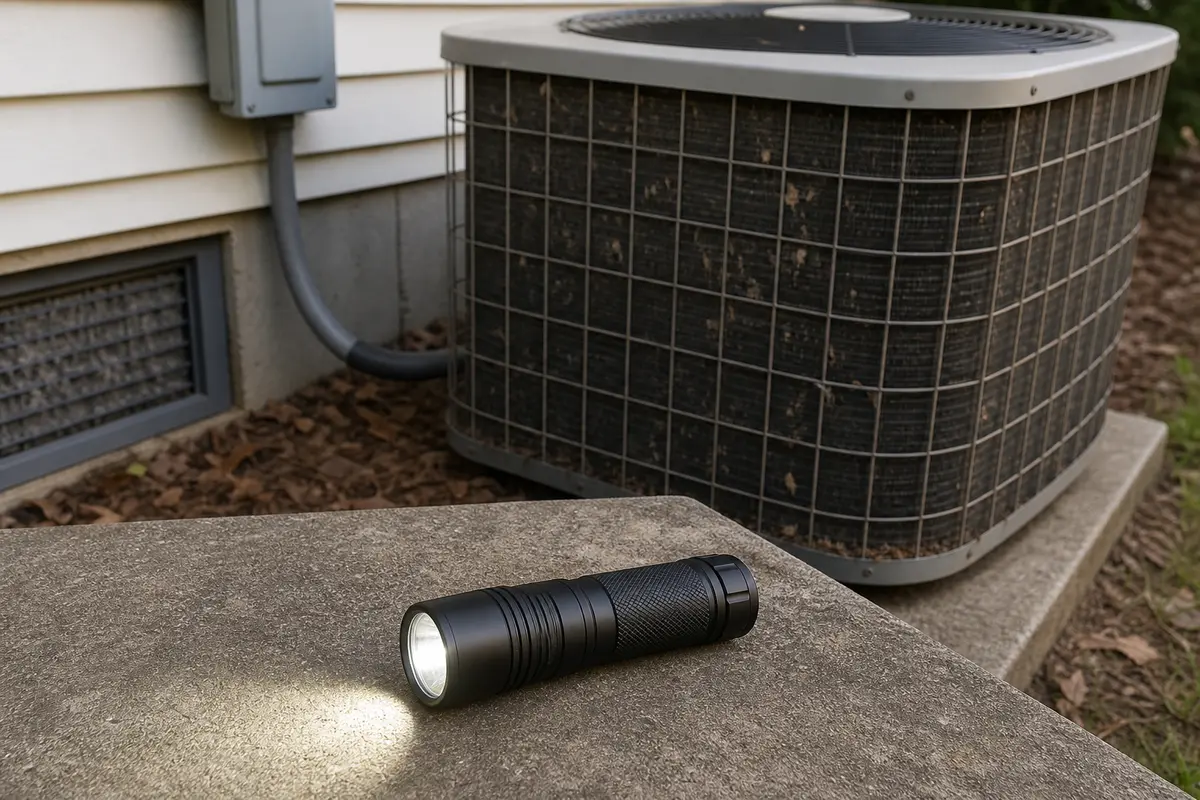
Inspection flashlight for AC outdoor unit repeated clicking checks

Inspection flashlight

Helps when: Use it to see breaker labels, the filter slot, disconnect condition, fan-guard debris, and condenser coil blockage without opening the service panel.

Skip it when: Skip deeper inspection when the next step would expose wiring, capacitor terminals, contactor parts, or damaged insulation.

Compare inspection flashlights on Amazon
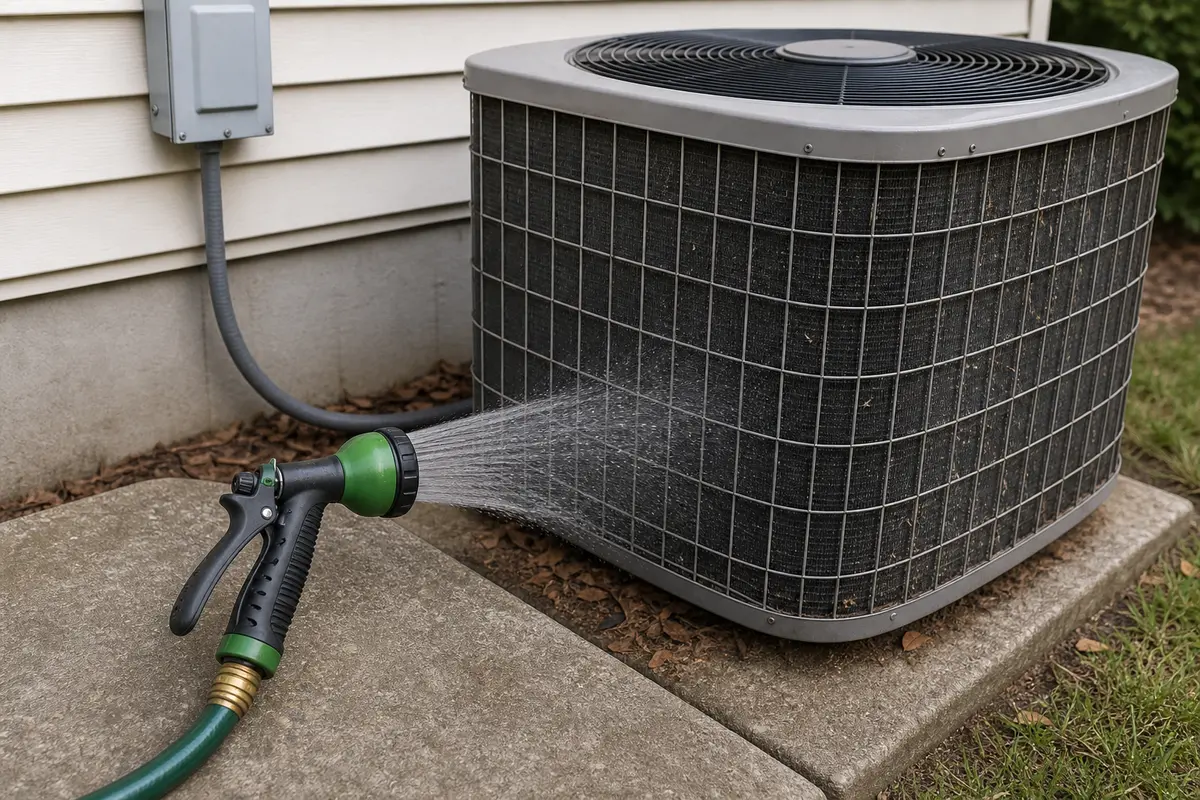
Gentle hose spray nozzle for outdoor AC condenser coil cleaning

Gentle hose spray nozzle

Helps when: Use light water pressure on exterior condenser fins after power is off and only when the service compartment stays closed.

Skip it when: Skip water when wiring looks damaged, the disconnect is hot or wet, the ground is unsafe, or only high pressure is available.

Compare hose spray nozzles on Amazon

As an Amazon Associate I earn from qualifying purchases. Repair Riot may earn a commission at no extra cost to you.

Replacement Parts

For this symptom, the only reasonable buy-first part is a filter that clearly fails inspection. Electrical and refrigerant parts need diagnosis before they belong in a cart.
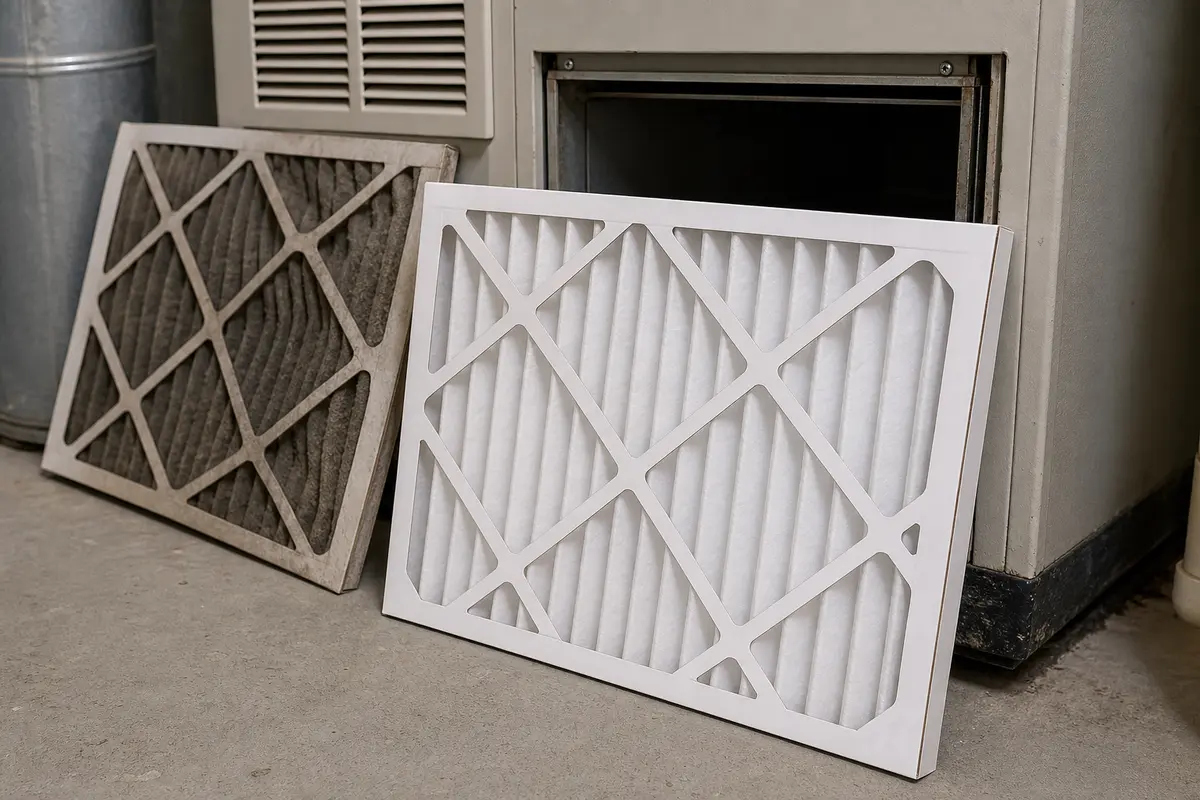
  • Air conditioner filter: buy only if the current filter is dirty, wet, bowed, collapsed, overdue, or the wrong size. Match the printed size, depth, airflow arrow, and filter style.
  • Run capacitor: skip as a homeowner guess. It must match rating and wiring, and it should be tested and handled with proper power isolation and discharge procedure.
  • Contactor: skip until a technician confirms contact wear, coil trouble, or a control problem. Chatter can come from more than the contactor itself.
  • Condenser fan motor: compare only after blade drag, coil blockage, and power clues are ruled out and motor testing points there.
  • Compressor, hard-start kit, refrigerant, and sealed-system parts: do not buy from a clicking symptom. Those are HVAC service decisions.
Correct-size air conditioner filter for repeated outdoor condenser clicking checks

Air conditioner correct-size filter

Helps when: Buy one only after you pull the return filter and it is dirty, wet, bowed, collapsed, overdue, or does not match the size printed for the slot. Match the printed size, depth, airflow arrow, and filter style.

Skip it when: Skip it when the filter is clean and the outdoor clue is click-and-hum, breaker trip, burnt smell, or a condenser that will not start.

Compare AC filters on Amazon

As an Amazon Associate I earn from qualifying purchases. Repair Riot may earn a commission at no extra cost to you.

FAQ

Why does my outside AC unit click but not turn on?

Usually the thermostat call is reaching the cooling system, but the condenser cannot complete startup. Check the filter, airflow, breaker, outdoor disconnect, and condenser coil condition first. If those look normal and the unit still clicks, the remaining checks are inside the condenser.

Is repeated clicking from the outdoor AC unit dangerous?

It can be. One startup click can be normal, but repeated clicking, hard humming, breaker trips, smoke, or a burnt smell means the unit should stay off until it is checked.

Can a dirty air filter make the outdoor unit click repeatedly?

A dirty filter can starve indoor airflow enough to make the system run hot or start under strain. Turn cooling off, pull the return filter, and replace it if it is packed, wet, bowed, collapsed, overdue, or the wrong size before chasing condenser parts.

Can a dirty outdoor condenser coil cause clicking?

A dirty coil can trap heat and make startup harder, especially on hot days or when another part is already weak. Clear obvious debris and surface dirt before you blame internal electrical parts.

Should I replace the capacitor myself if I hear clicking?

No, not from clicking alone. A weak capacitor is possible, but the same symptom can come from a contactor, motor, compressor, wiring, power, or control problem. Capacitors are inside the condenser service area and need safe testing.

What if the indoor blower runs but the outside unit only clicks?

That usually means the indoor side is responding while the condenser is not starting. Check filter airflow, the AC breaker, air-handler breaker, outdoor disconnect, and condenser airflow. If those are fine, stop at the cabinet.

Can I keep running the AC if it eventually starts after a few clicks?

It is better to shut it off and sort the cause. Delayed starts and repeated retries can overheat contacts, fan motors, or the compressor, especially if the unit also hums.

Why does the outdoor unit click and hum?

Click-and-hum often means the fan motor or compressor is trying to start but is not getting moving normally. Turn cooling off after that short observation, check filter, airflow, breaker, and disconnect clues, then call service if the hum comes back.

What should I tell the HVAC technician?

Report whether the sound is click-only, click-and-hum, rapid chatter, or start-then-stop. Add whether the indoor blower runs, whether the outdoor fan ever moves, whether the breaker tripped, and what the filter and disconnect looked like.

How this guide was built

Repair Riot built this page around homeowner-safe AC observations: thermostat demand, filter and return airflow, condenser airflow, breaker and disconnect condition, and clear stop points before electrical or refrigerant work.