Is FAN set to ON, CIRC, or circulate?
Change it to AUTO, cancel fan schedules or app circulation, and watch one complete cooling cycle.
If the AC blower stays on after the cooling cycle, start at the thermostat and a supply vent. Set fan to AUTO, turn off CIRC, then watch whether airflow stops after the outdoor unit shuts off.
A good clue is timing: a short, repeatable delay points away from a failed board; nonstop airflow in AUTO points toward thermostat command or indoor fan control.
Use the first cycle to separate normal delay from a blower that ignores AUTO and OFF.
Don’t start with: Do not start inside the air handler. Relays, boards, capacitors, and fan controls are not good guess-and-buy parts.
Change it to AUTO, cancel fan schedules or app circulation, and watch one complete cooling cycle.
That is often normal blower off-delay. Make a note of the timing and do not chase parts.
The cooling call ended. Focus on fan mode, thermostat command, and indoor fan control instead of refrigerant parts.
A thermostat setting, schedule, or command is still high on the list. Recheck holds, app settings, and fan programs.
Treat those as a cooling or drain problem too. Check the filter, return grilles, and visible condensate area.
That points toward an indoor fan relay, board, or control problem. Leave the cabinet closed and call an HVAC tech.
This symptom is usually sorted from the thermostat, the vent, and the closed indoor unit area. Internal fan controls come later.
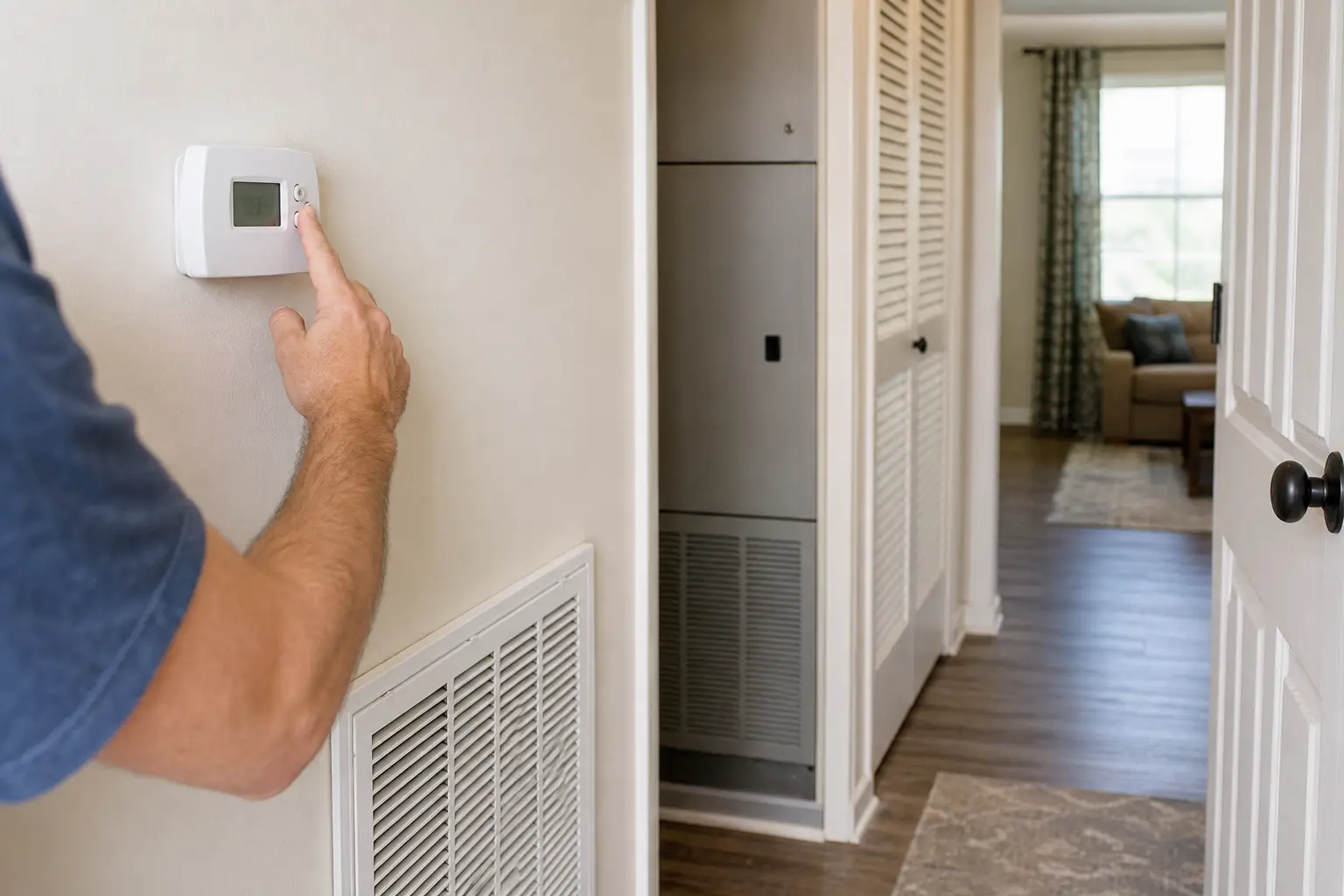
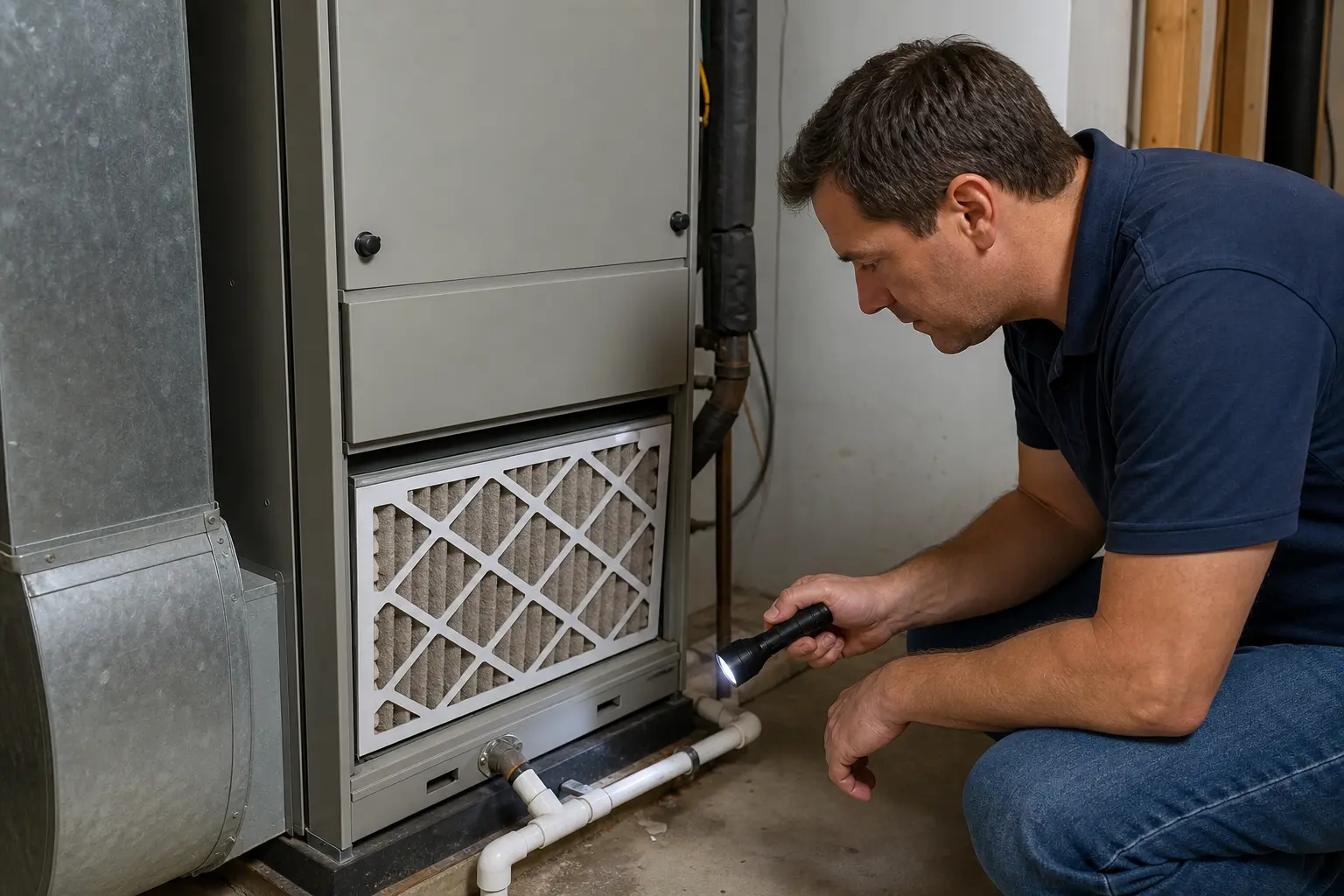
Do not buy a thermostat, relay, board, or blower part until the exact diagnosis supports it. Copy the thermostat model and indoor unit model number, match system type and terminals, and keep internal electrical parts out of the cart unless a technician has tested them.
The useful split is simple: the blower is either being told to run, finishing a normal delay, or being held on by the indoor controls.
This is a poor symptom for guess-buying electrical parts. The early checks should happen at the thermostat, vent, filter slot, and closed indoor unit area.
Start here because this check is safe and it solves a lot of blower run-on complaints without opening the equipment.
| Thermostat clue | What it means | Next check |
|---|---|---|
| FAN is ON | The thermostat is asking for continuous indoor airflow. | Set FAN to AUTO and wait through one full cycle. |
| CIRC or fan schedule is enabled | The blower may run between cooling calls by design. | Disable the fan program while diagnosing. |
| Fan is AUTO and no cooling call is active | The thermostat should let the blower stop after any normal delay. | Time the delay and then try thermostat OFF. |
| Thermostat screen is blank or erratic | The control signal may not be reliable. | Stop if power checks are not familiar. |
A clock tells you more than a parts list here. Time the indoor airflow from the moment the outdoor condenser stops.
| What you see | Best read | What to do next |
|---|---|---|
| Airflow stops after a short, similar delay each cycle | Likely normal blower off-delay. | Keep the thermostat on AUTO and monitor it. |
| Blower stops after CIRC or fan schedule is turned off | A thermostat setting was causing the run-on. | Leave the setting corrected or adjust the schedule intentionally. |
| Blower runs many minutes or never stops in AUTO | Thermostat command or indoor fan control is more likely. | Try thermostat OFF and note the result. |
| Outdoor unit keeps running too | This is not only a blower run-on problem. | Use the broader AC running constantly or not cooling path. |
| Only indoor power stops the blower | A stuck indoor fan control is a strong clue. | Leave the cabinet closed and call for service. |
After fan settings and run time are clear, the next question is whether the thermostat is still asking for fan or the indoor unit is ignoring it.
Filter, return, and condensate checks do not prove a fan relay is good or bad, but they catch the safe problems that make AC behavior confusing.
These help with safe outside checks only. They are not for live electrical testing inside the air handler or furnace.
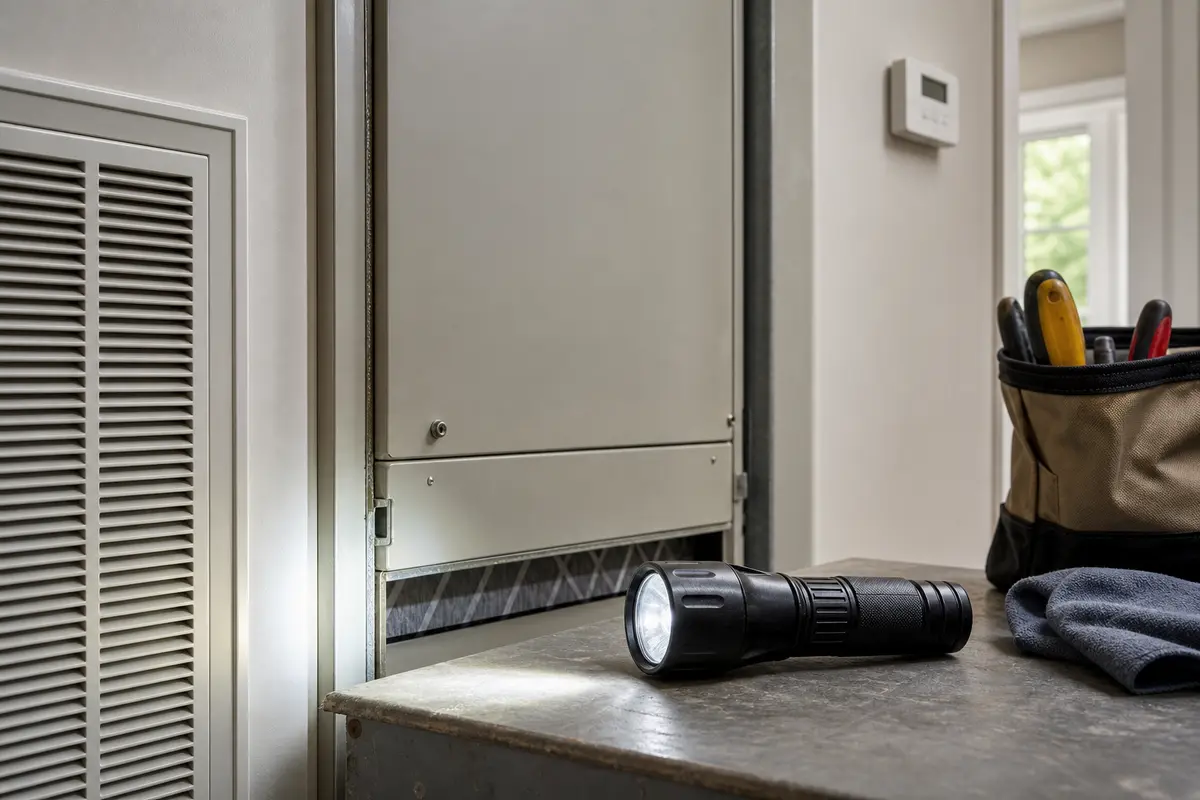
Helps when: You need better light at the thermostat, return grille, filter slot, drain pan area, or closed indoor unit cabinet.
Skip it when: There is burning smell, water near wiring, ice on the coil area, or a panel must come off to continue.
Compare inspection flashlights on Amazon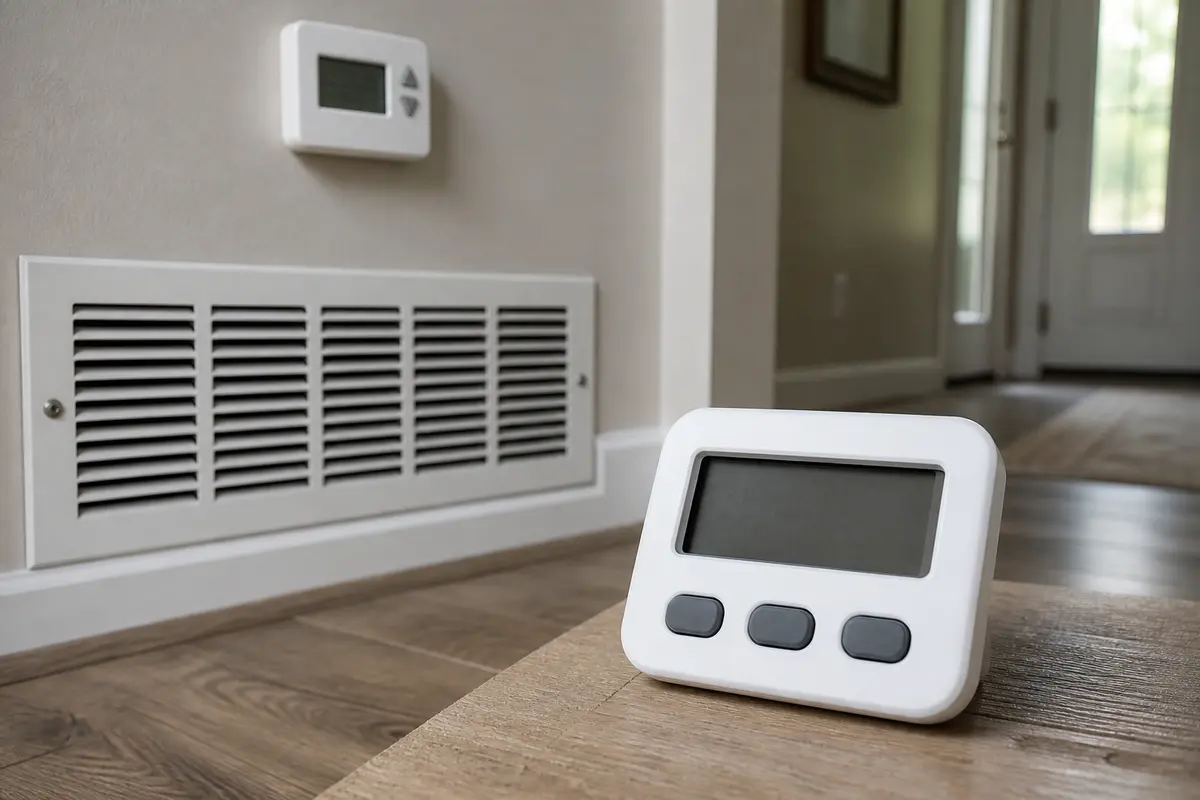
Helps when: You want a dedicated timer to prove whether the blower stops after a short repeatable delay or keeps running far too long.
Skip it when: The blower is already showing electrical smells, buzzing, breaker trouble, ice, or standing water.
Compare digital timers on AmazonAs an Amazon Associate I earn from qualifying purchases. Repair Riot may earn a commission at no extra cost to you.
Parts belong after the clue points there. A blower that runs too long is not automatic proof that a board, relay, or thermostat has failed.
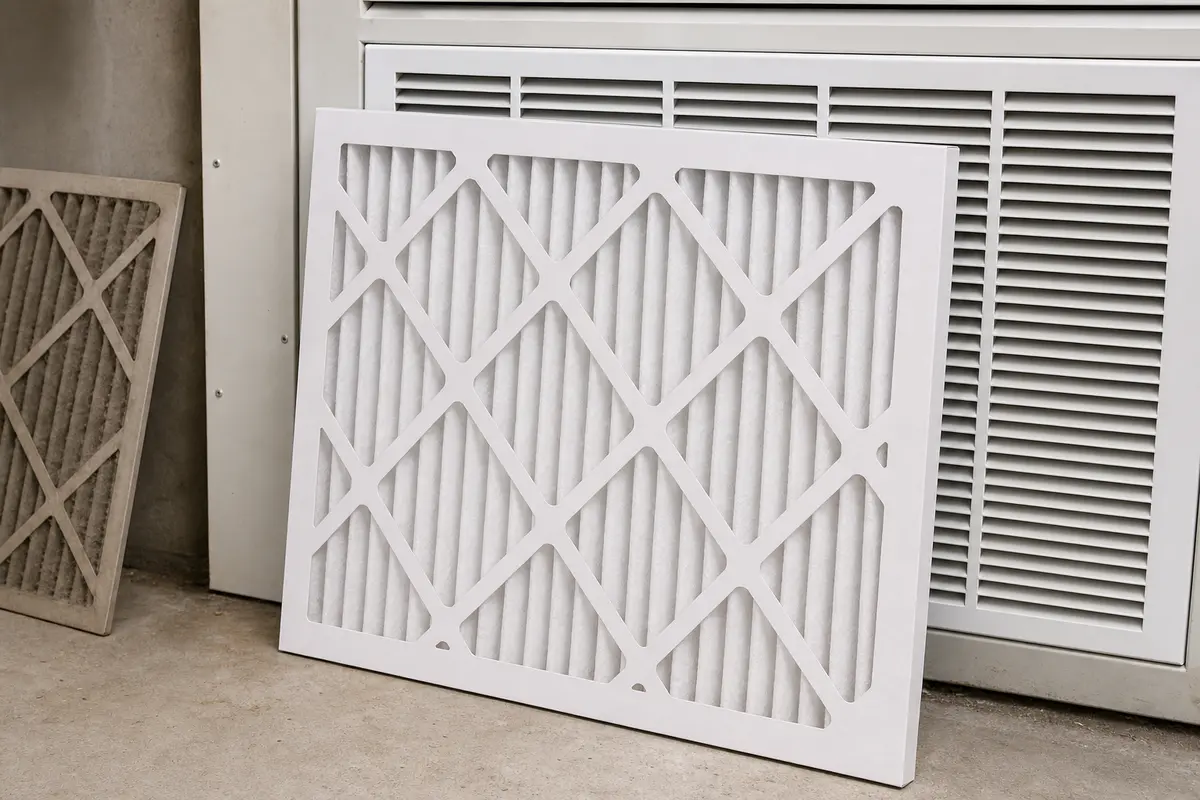
Helps when: The old filter is dirty, damp, collapsed, bowed, or the wrong size, and airflow is weak or noisy.
Skip it when: The filter is clean and fitted correctly, or the blower ignores AUTO and OFF with no airflow restriction clue.
Compare air conditioner filters on Amazon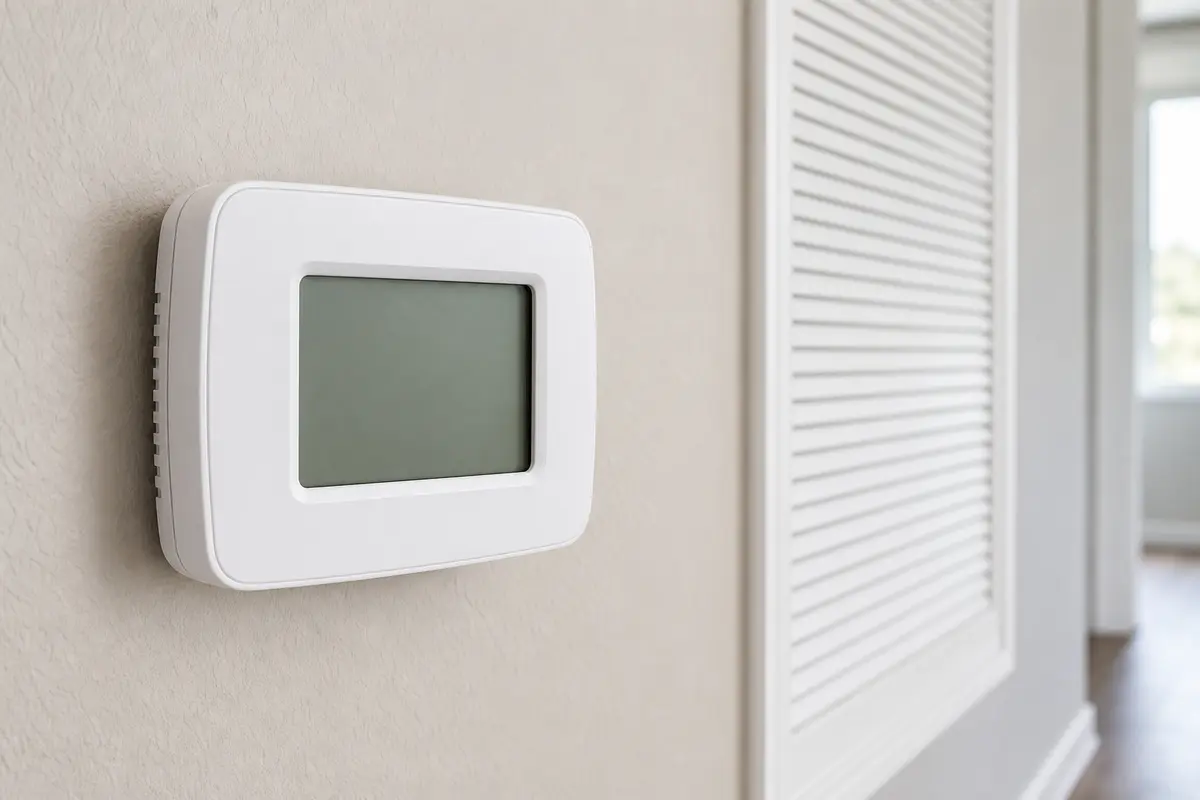
Helps when: Fan settings will not hold, CIRC or schedules keep returning, or the blower behavior changes when a removable thermostat face is taken off.
Skip it when: Only cutting indoor unit power stops the blower, wiring is scorched or confusing, or the indoor control board may be holding the fan on.
Compare low-voltage thermostats on AmazonAs an Amazon Associate I earn from qualifying purchases. Repair Riot may earn a commission at no extra cost to you.
Yes, if it stops after a short, repeatable delay. Some systems keep the indoor blower on briefly after the outdoor unit stops. A blower that runs for many minutes, runs nonstop, or ignores AUTO and OFF needs more checking.
The usual first checks are fan ON, CIRC or circulate mode, and fan schedule settings. If the thermostat is set to AUTO and the blower still runs after a normal delay, look for a thermostat command problem or an indoor fan control fault.
CIRC or circulate mode runs the blower between heating or cooling calls to mix air through the house. It can look like a blower fault if you did not mean to turn it on. Turn it off while diagnosing this symptom.
That points away from normal off-delay. If the blower keeps moving air with the thermostat OFF and fan AUTO, and only stops when indoor unit power is shut off, the indoor controls or thermostat wiring need service.
A dirty filter usually does not command the blower to stay on by itself. It can restrict airflow, stretch cooling cycles, and make the system act odd, so it is still worth checking before you blame controls.
Only if the evidence points there. A thermostat makes sense when fan settings will not hold, schedules keep returning, or the blower stops after the thermostat face is removed on a model designed for simple face removal.
Not from the symptom alone. A stuck fan relay or board is possible when the blower ignores AUTO and OFF, but confirming that usually means electrical testing inside the indoor unit. That is HVAC technician work.
Do not ignore it. If cooling is normal and there are no heat, water, ice, breaker, or burning-smell clues, you can use the thermostat settings while arranging service. Shut the system down if the blower runs with electrical smells, water in the cabinet area, ice, or breaker trouble.
Time two complete cycles. A short delay that is about the same each time is usually normal. A delay that runs many minutes, never ends, or changes only when you cut power is a stronger fault clue.
Repair Riot built this page around safe homeowner observations: fan mode, off-delay timing, thermostat command clues, filter and drain checks, and the point where internal fan-control diagnosis belongs with an HVAC technician.