Warm air with weak airflow?
Check the filter, return grilles, closed registers, and ice first.
If your air conditioner is blowing warm air, start with Cool mode, Fan Auto, the air filter, return airflow, visible ice, outdoor condenser operation, and outdoor coil dirt. Those clues separate simple airflow issues from service-only refrigerant or compressor problems.
The common homeowner-level causes are thermostat settings, a packed filter, an iced coil, a dirty condenser, or an outdoor unit that is not actually running.
Warm air is a symptom, not a part diagnosis. First find out whether airflow is weak, the outdoor unit is off, or the coil has iced up.
Don’t start with: Do not add refrigerant, open condenser electrical covers, or buy major AC parts from warm air alone.
Check the filter, return grilles, closed registers, and ice first.
Check whether the outdoor condenser is running and whether the outside coil is dirty.
Check thermostat demand, breaker, disconnect, and drain safety before assuming compressor failure.
Look for dirty coil, airflow restriction, extreme heat load, or refrigerant-side trouble.
Stop after safe checks and call for service.
Use these visible clues to separate airflow, outdoor-unit, and service-only causes.
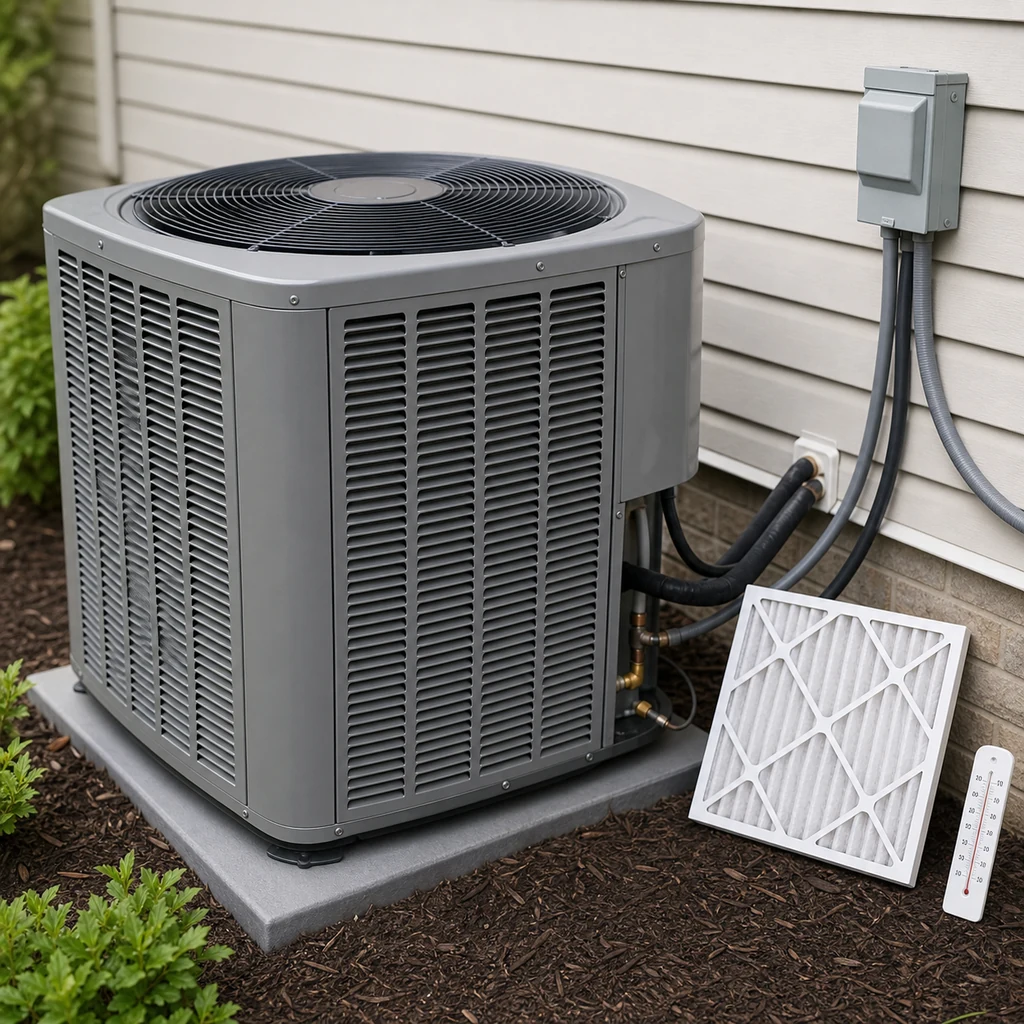
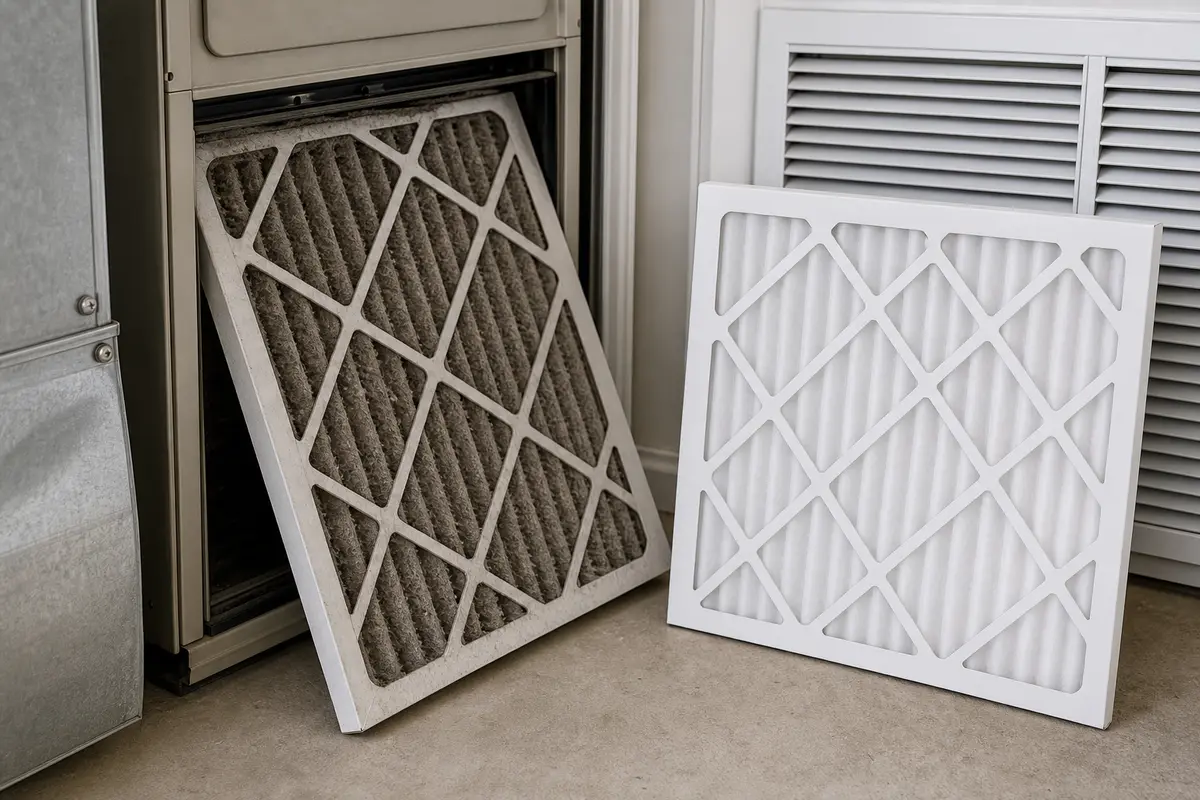
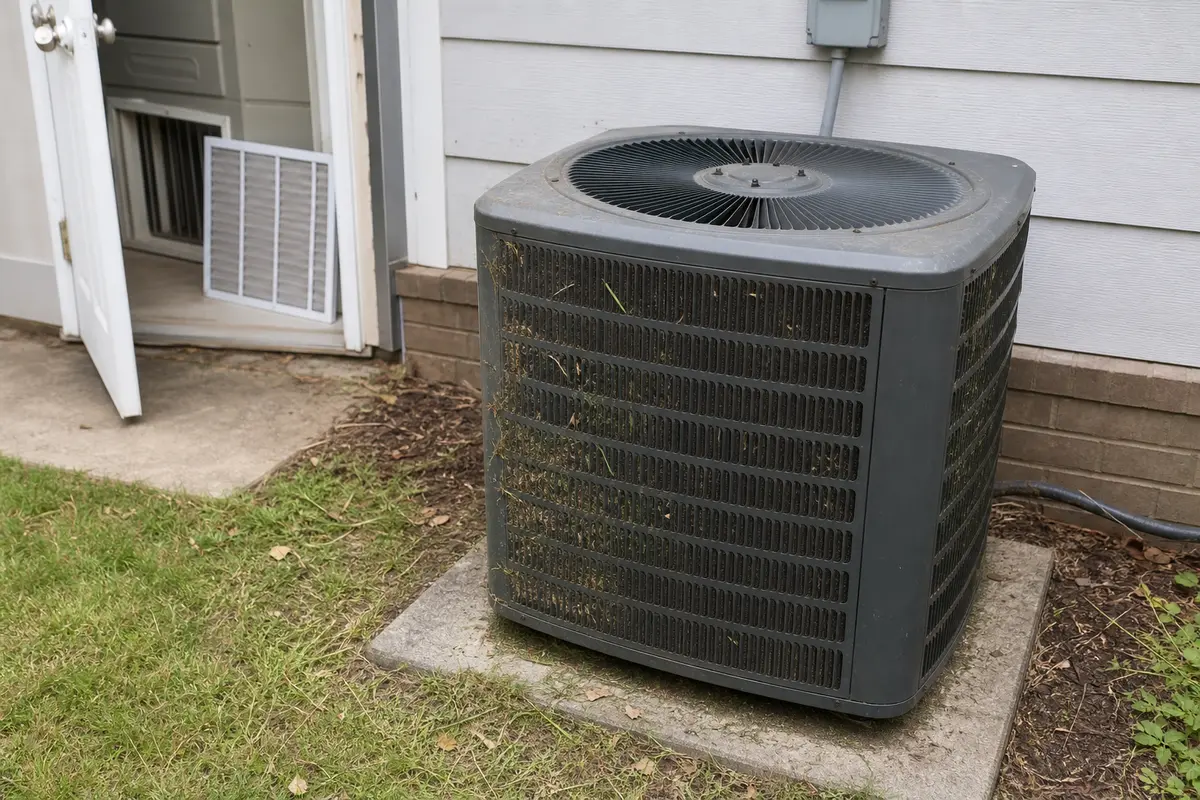
A filter is the right buy only when the old one is dirty, collapsed, missing, wet, or the wrong size. A thermostat buy fits only after settings, delay, batteries, and power checks point there. Match the exact model, filter size, thermostat wiring, and diagnosis before ordering anything. Refrigerant, capacitor, contactor, and compressor parts are not warm-air guesses.
Warm air does not automatically mean the refrigerant is low. It means the system is not moving heat out of the house at that moment.
The wrong early move can turn a simple airflow problem into a more expensive call.
Use this after one cooling call with the normal delay period complete.
| Clue | Most likely branch | Next move |
|---|---|---|
| Fan runs, outdoor unit off | Power, disconnect, thermostat call, drain safety, or condenser no-start | Check accessible switches and stop at no-start symptoms. |
| Weak airflow | Filter, return restriction, blower issue, or ice | Restore airflow and thaw before judging cooling. |
| Strong airflow, outdoor unit running | Dirty condenser, heat load, refrigerant, or compressor performance | Clean accessible coil surfaces and call if warm air continues. |
| Ice visible | Airflow or refrigerant-side problem | Turn cooling off, thaw, replace filter, and call if ice returns. |
| Breaker trips | Overload or electrical fault | Reset once only, then stop. |
These checks solve or clarify many warm-air complaints.
The condenser must run and breathe for cold air to return indoors.
Match the purchase to the evidence you found.
These support safe diagnosis and exterior cleaning only.
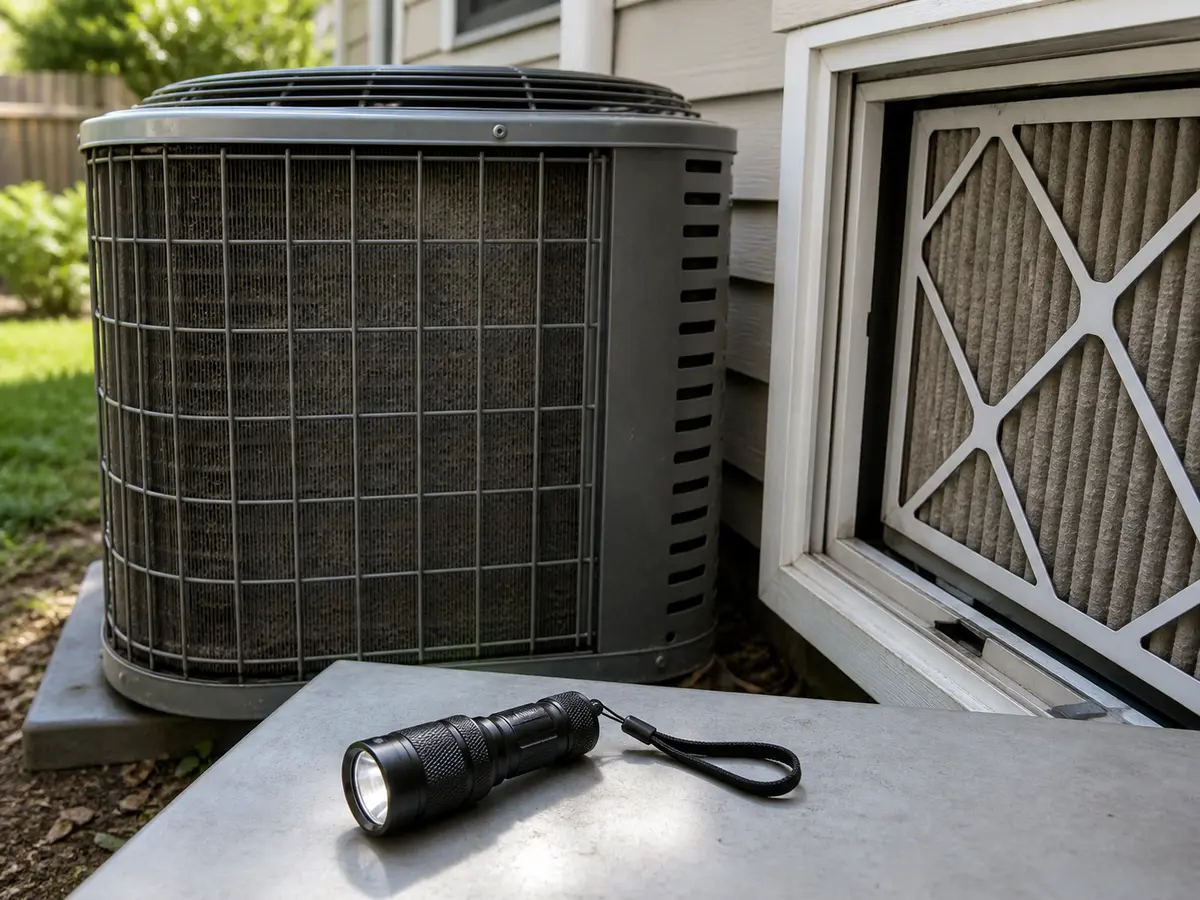
Helps when: Use it to inspect filter condition, ice clues, pan water, and outdoor coil debris.
Skip it when: Skip any inspection that requires opening condenser electrical covers.
Compare inspection flashlights on Amazon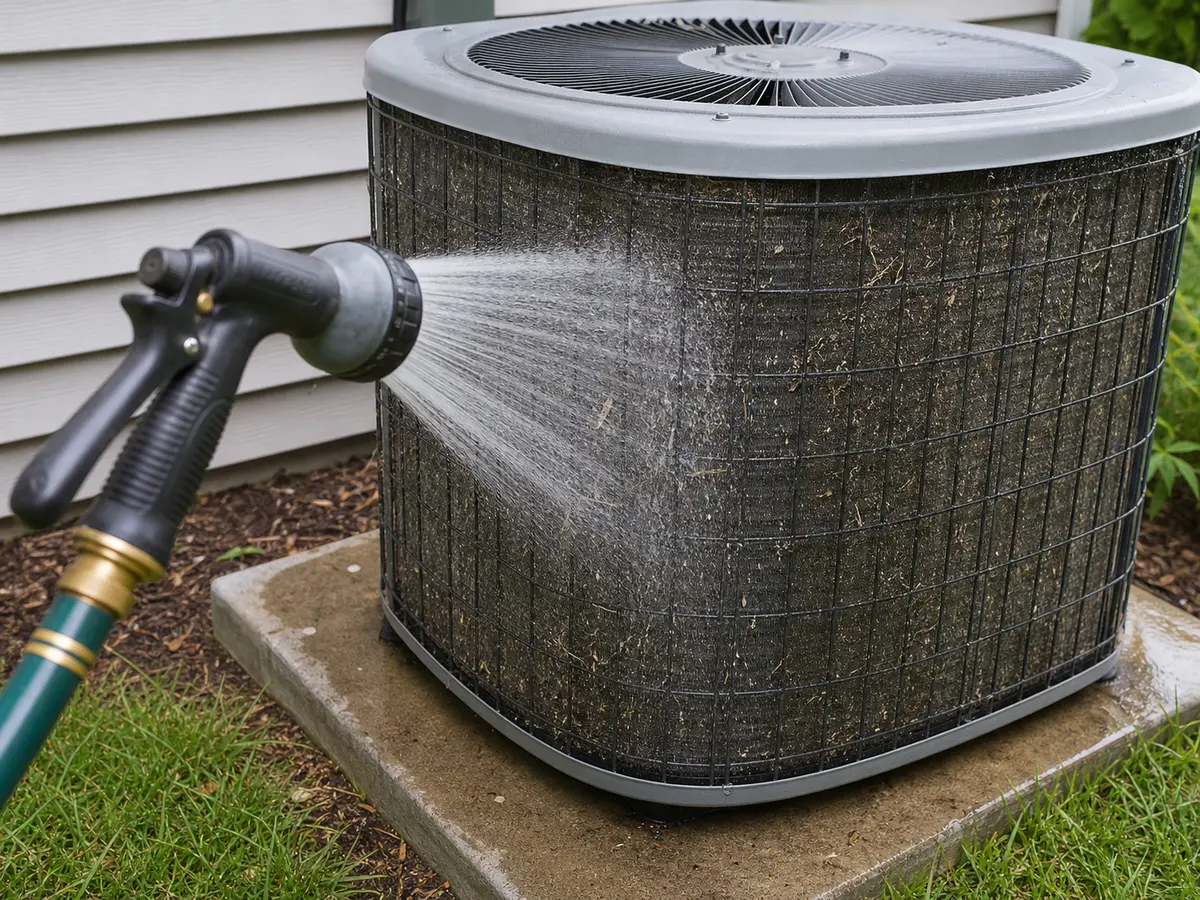
Helps when: Use it to rinse accessible condenser coil dirt after power is off.
Skip it when: Skip pressure washers and chemical cleaners unless your equipment manual calls for them.
Compare gentle hose nozzles on Amazon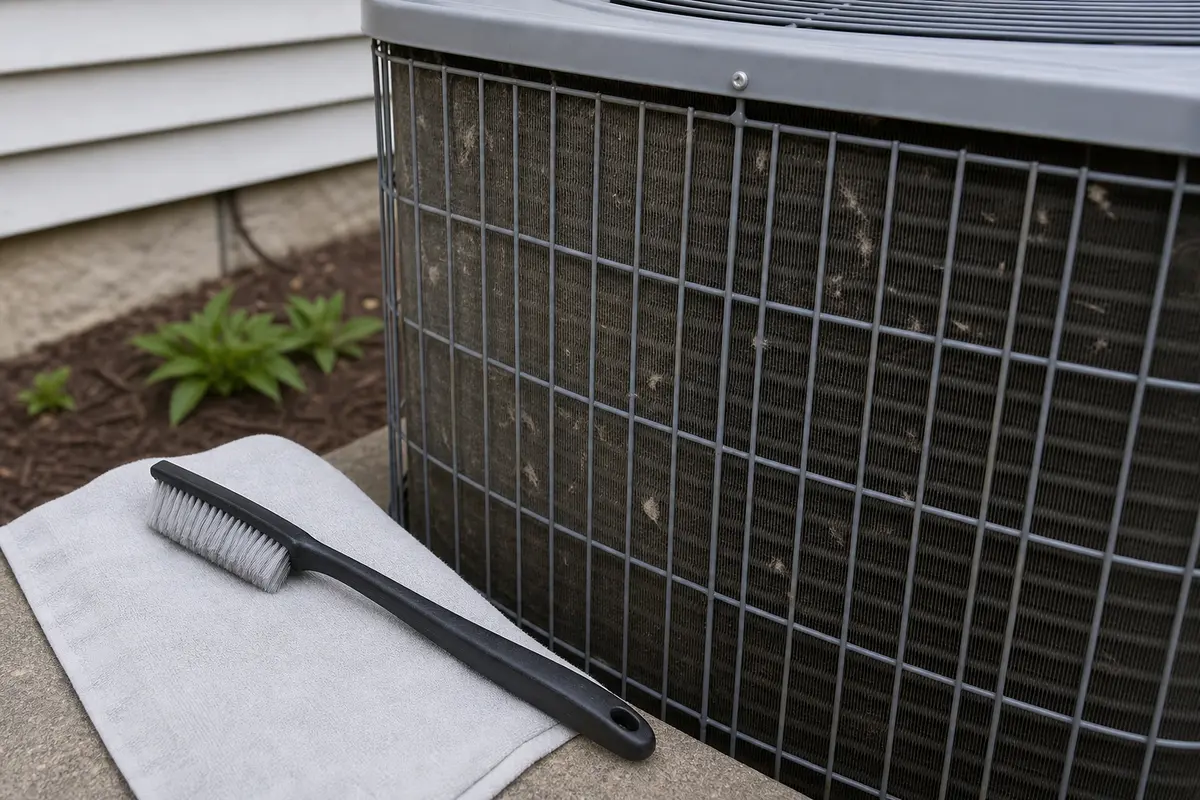
Helps when: Use it for light lint or cottonwood on the outside of the condenser.
Skip it when: Skip brushing damaged fins or reaching inside the cabinet.
Compare soft condenser brushes on AmazonAs an Amazon Associate I earn from qualifying purchases. Repair Riot may earn a commission at no extra cost to you.
The useful buys are a correct filter and, only with proof, a compatible thermostat.
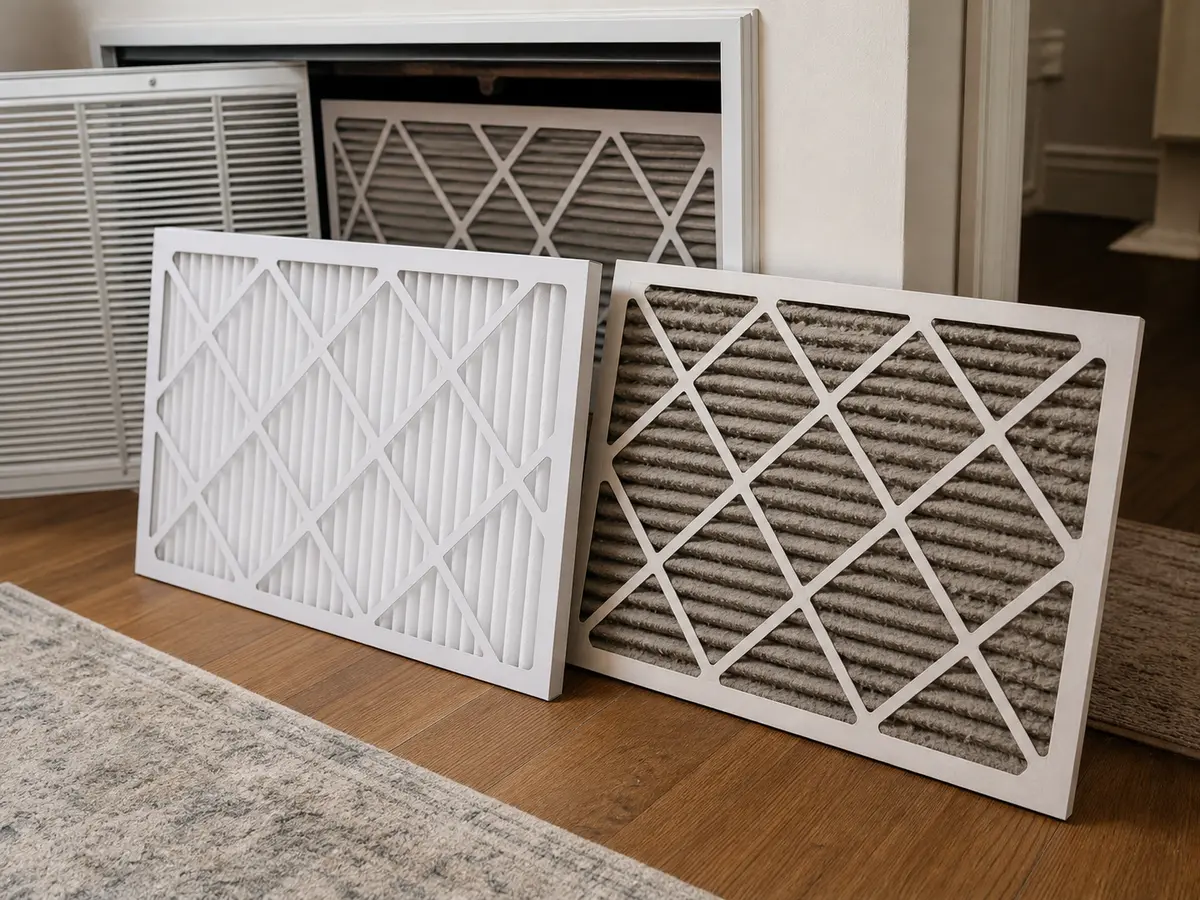
Helps when: Replace a packed or wrong-size filter before judging the cooling system.
Skip it when: Skip filters that do not match the printed size, thickness, and airflow direction.
Compare AC filters on Amazon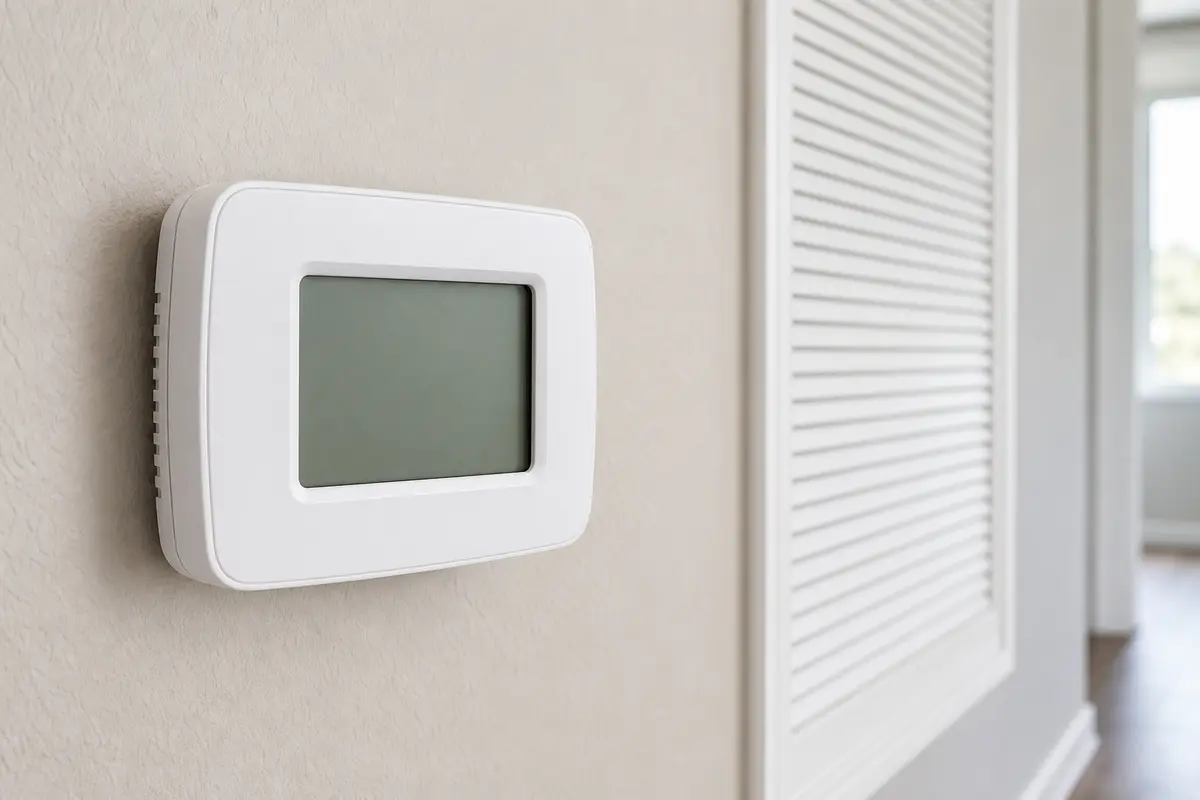
Helps when: Use this only when the thermostat cannot hold a cooling call after safe checks.
Skip it when: Skip it when the outdoor unit hums, clicks, trips, or the system has ice.
Compare compatible thermostats on AmazonAs an Amazon Associate I earn from qualifying purchases. Repair Riot may earn a commission at no extra cost to you.
Common causes are wrong thermostat settings, Fan On mode, a dirty filter, a frozen coil, a dirty outdoor condenser, an outdoor unit that is not running, or a refrigerant-side problem.
Turn cooling off if airflow is weak, ice is visible, or the coil may be frozen. Run Fan On to thaw, then restart only after airflow is restored.
Yes. A restricted filter can starve the evaporator coil, cause ice, and leave the blower moving air without real cooling.
Check thermostat mode, breaker, disconnect, and condensate safety. Stop if it clicks, hums, trips, or stays off after accessible checks.
It can be, but low refrigerant is not the first assumption. Rule out thermostat, airflow, ice, and condenser problems first.
You can remove loose debris and gently rinse accessible coil surfaces after power is off. Do not pressure wash or open electrical covers.
That pattern often points to dirty filter, dirty condenser coil, high heat load, weak airflow, or a system that needs service under peak load.
Call if the breaker trips again, ice returns, the condenser clicks or hums, the outdoor unit will not start, or warm air continues after filter and condenser checks.
Repair Riot built this page around safe homeowner checks: thermostat demand, airflow, filter condition, outdoor condenser behavior, condensate safety, and clear stop points before internal electrical or refrigerant work.