Weak airflow upstairs only?
Check upstairs registers, dampers, return path, and accessible duct damage.
If the AC cools downstairs but not upstairs, start with airflow and control checks: filter condition, upstairs supply registers, return grilles, thermostat location, and any manual or zone dampers. One cool floor usually points to distribution, not a sudden outdoor-unit failure.
Good clue: weak upstairs airflow with normal downstairs cooling points to vents, returns, ducts, dampers, or total airflow.
A small upstairs temperature gap can be normal. Several hot rooms upstairs while downstairs is comfortable means the air is not reaching or controlling that floor well.
Don’t start with: Do not add refrigerant, close a pile of downstairs vents, or buy outdoor-unit parts because one floor is warm.
Check upstairs registers, dampers, return path, and accessible duct damage.
Start with the filter, blower, ice, and total airflow path.
Check thermostat schedule, zone call, and accessible damper position.
Measure both floors and look for duct balance or thermostat-location trouble.
Use the no-cold or leaking AC guide instead.
The useful clues are register airflow, return path, thermostat location, and dampers.
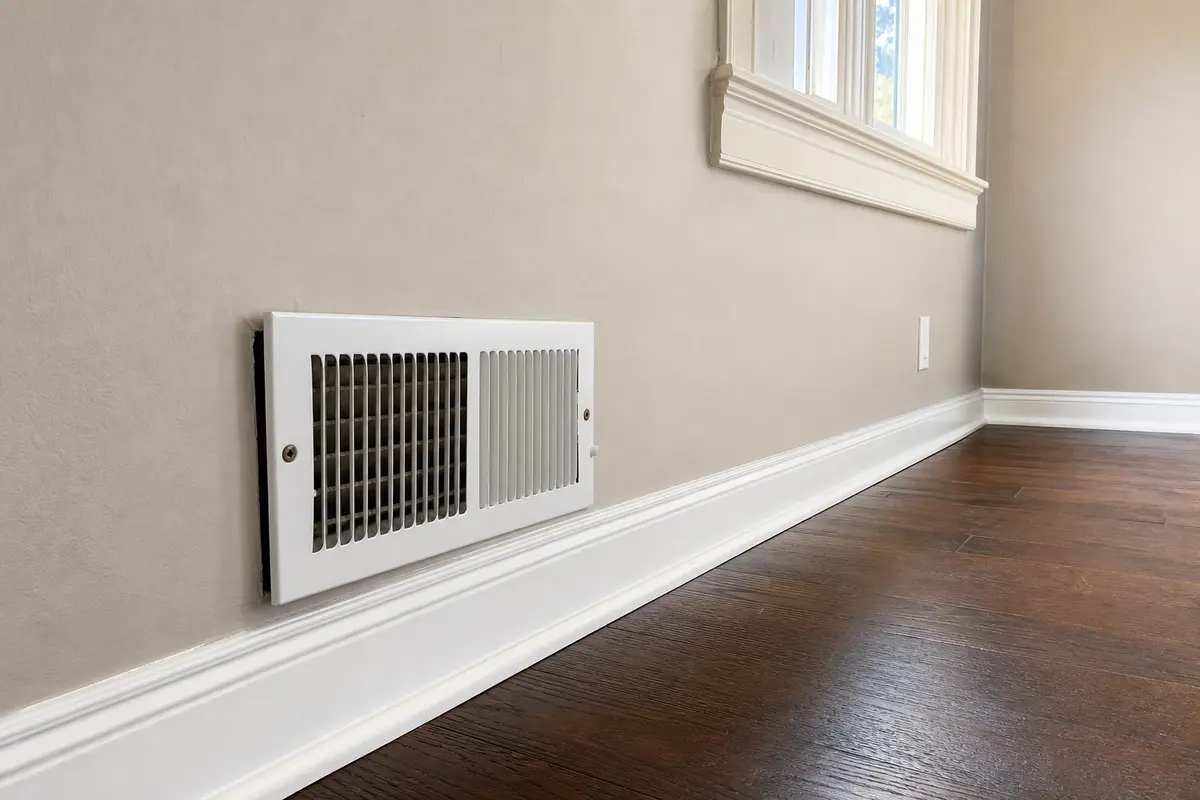
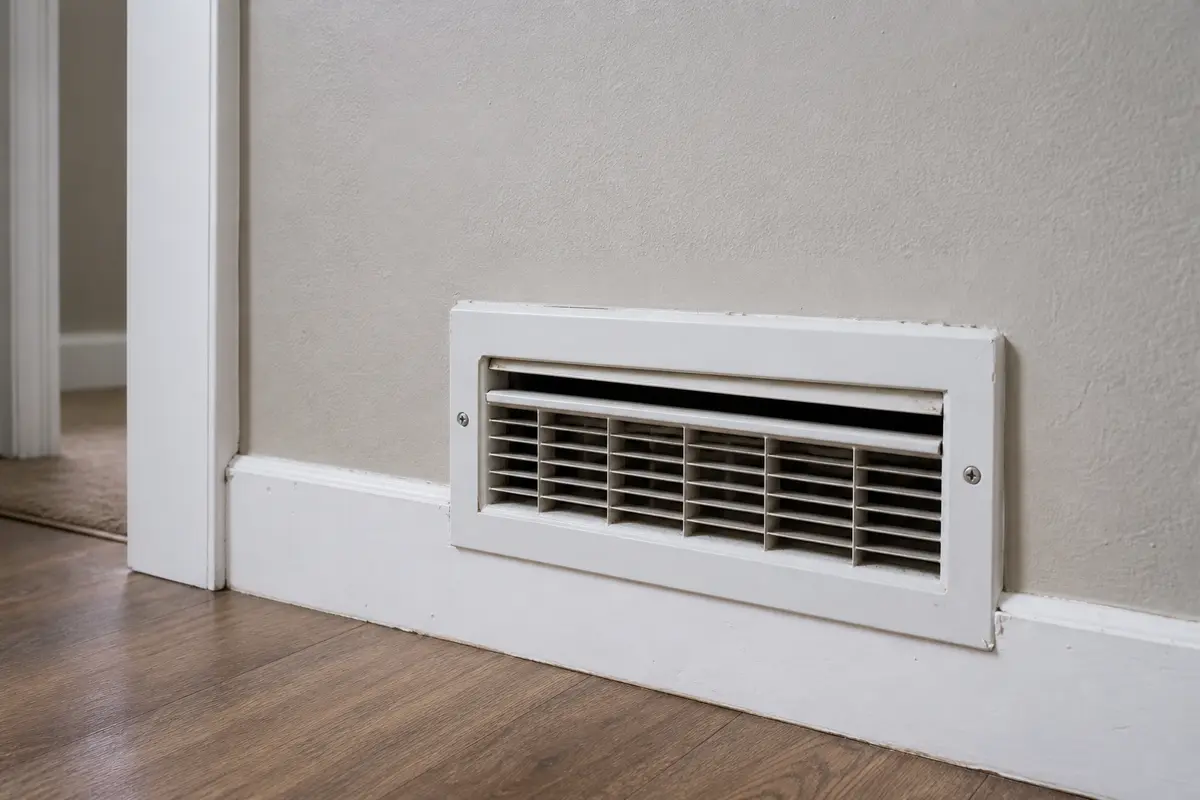
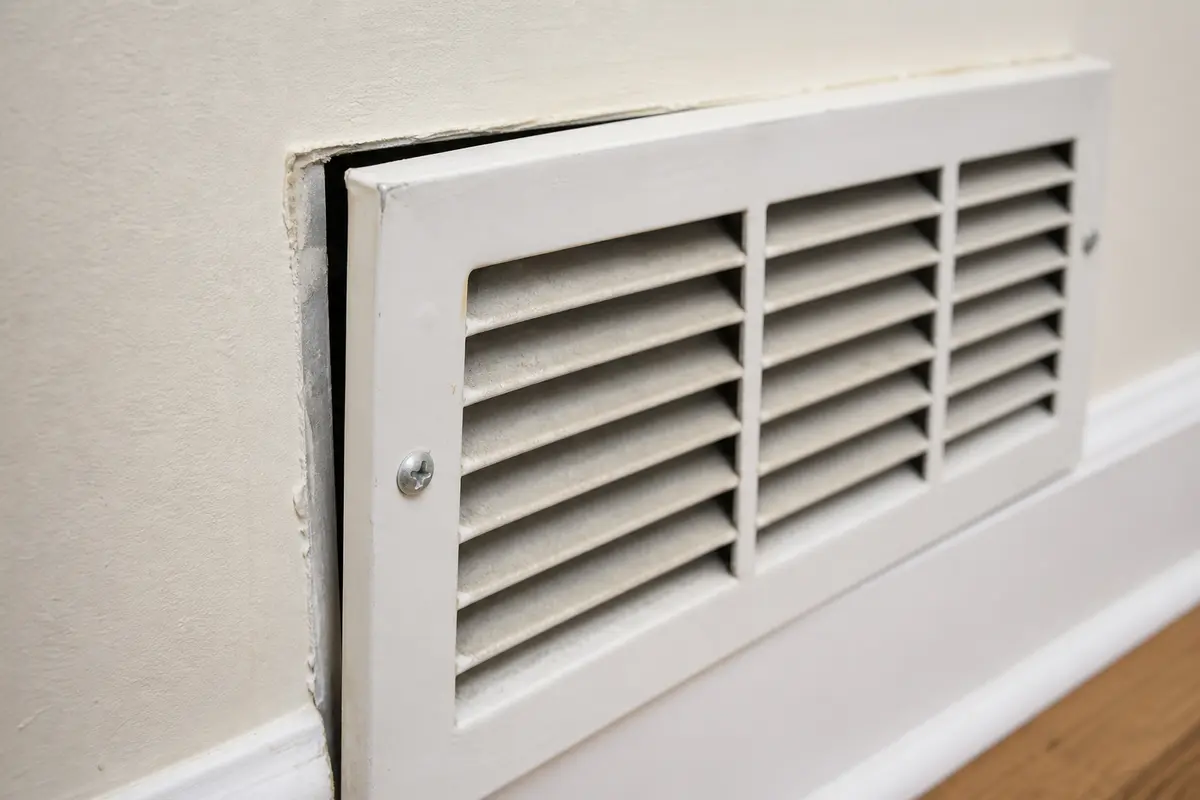
Buy only when the exact diagnosis fits: a dirty filter, a matched manual damper, or a thermostat/control issue proven by room-temperature readings. Match the exact duct size, filter size, thermostat wiring, and visible clue before ordering anything.
The outdoor unit normally serves both floors, so one warm floor points indoors first.
Avoid the expensive shortcut until the visible clues support it.
Use this table after one controlled cooling call and the normal delay period.
| Clue | Most likely clue | Next move |
|---|---|---|
| Upstairs airflow weak | Register, damper, duct, or return-air clue | Open registers and check accessible dampers. |
| Airflow weak everywhere | Filter, blower, ice, or total restriction | Replace filter and check for ice. |
| Downstairs cold, upstairs hot | Balance, thermostat location, roof/sun load, or duct loss | Measure both floors and compare run times. |
| Zoned upstairs not calling | Zone thermostat or damper issue | Check schedule, mode, and accessible damper position. |
| Warm air everywhere | Cooling-capacity clue | Use the warm-air diagnostic path. |
These checks keep the diagnosis tied to field clues.
Buy parts only when the evidence points to that exact visible clue.
These support safe visible checks and cleanup.
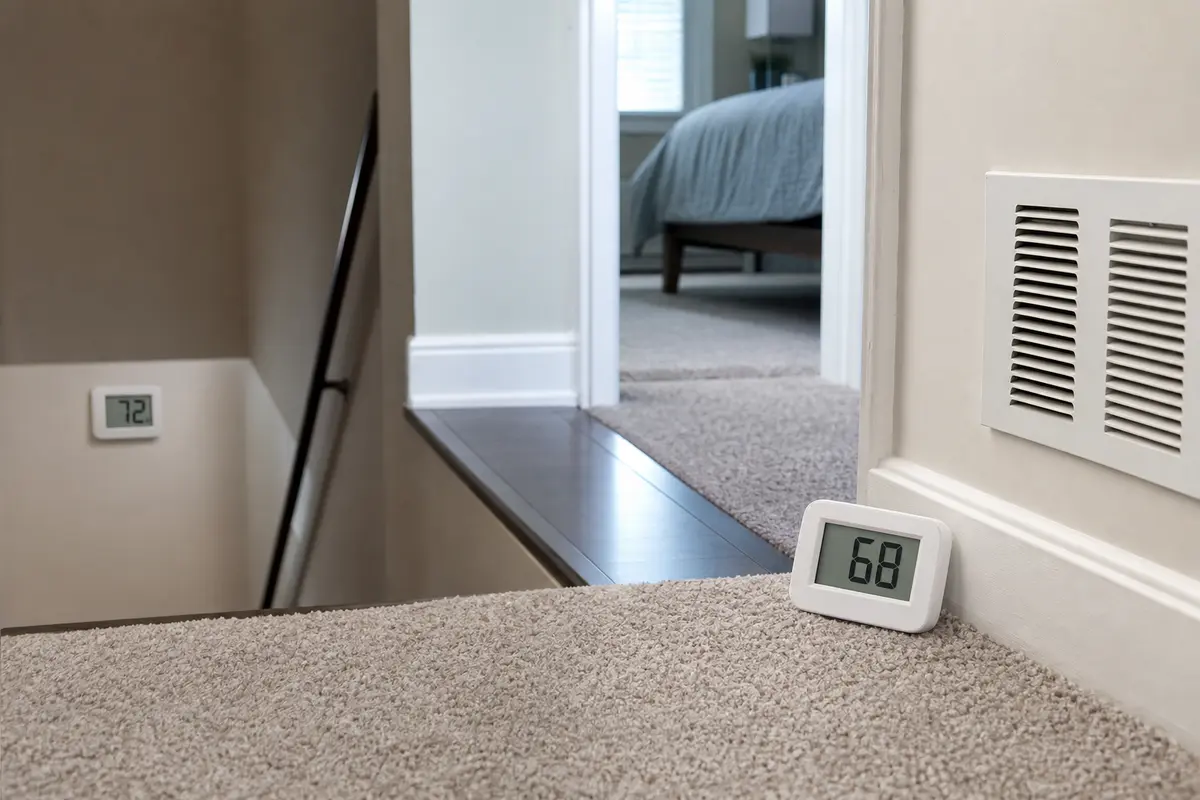
Helps when: Use it to compare upstairs and downstairs temperatures during the same cooling call.
Skip it when: Skip guessing by feel when a thermometer can show the real floor-to-floor gap.
Compare room thermometers on Amazon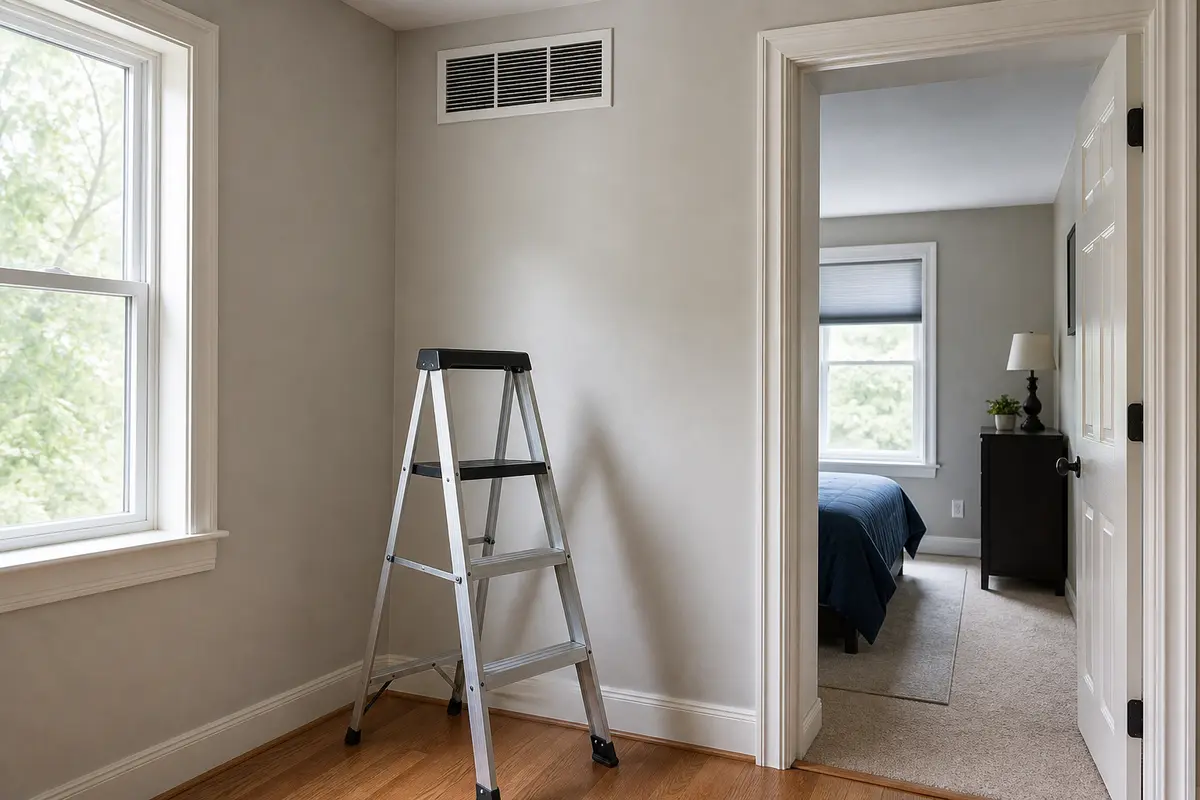
Helps when: Use it to reach ceiling registers and high returns safely.
Skip it when: Skip attic or high-register work if the ladder setup is unstable.
Compare stable step ladders on Amazon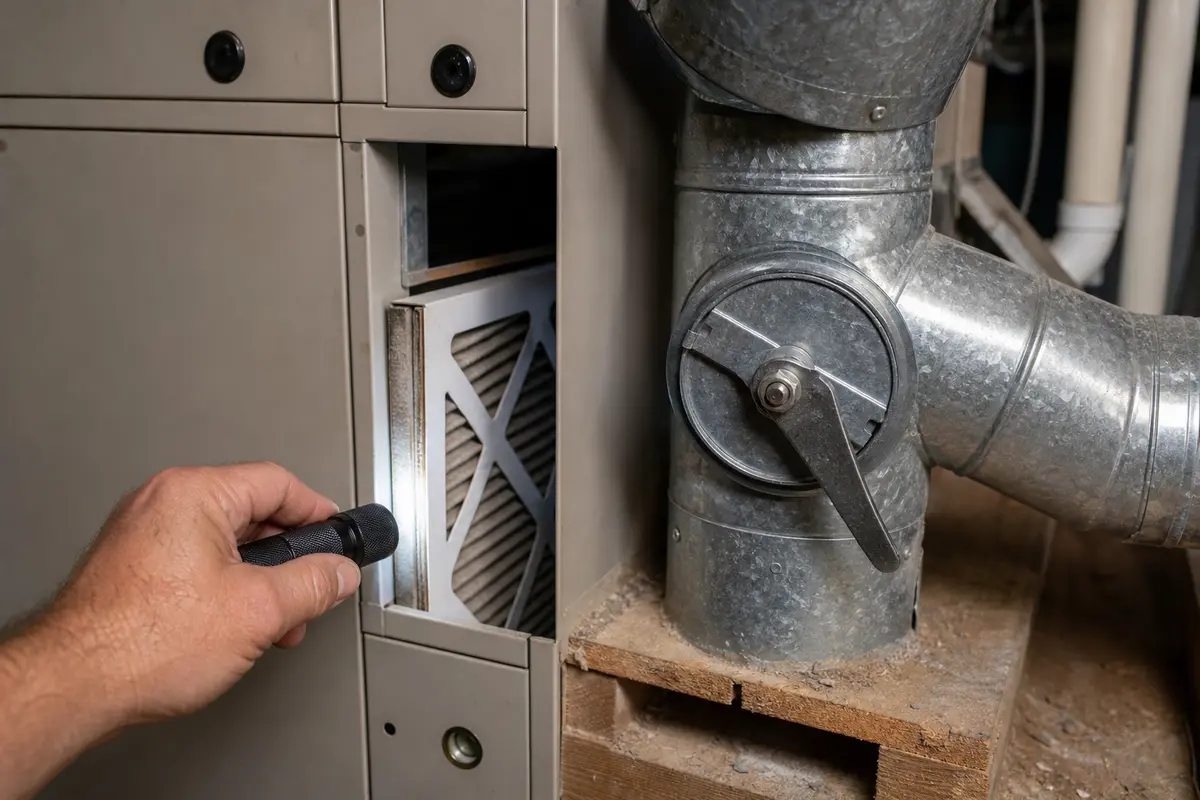
Helps when: Use it to inspect registers, return grilles, and accessible duct or damper labels.
Skip it when: Skip hidden duct work in unsafe attic, crawlspace, or electrical areas.
Compare inspection flashlights on AmazonAs an Amazon Associate I earn from qualifying purchases. Repair Riot may earn a commission at no extra cost to you.
Keep the cart narrow and match the part to the actual diagnosis.

Helps when: Replace a dirty or wrong-size filter when upstairs airflow is weak and the longest runs suffer first.
Skip it when: Skip filters that do not match the printed size, thickness, airflow arrow direction, and filter-rack limits.
Compare AC filters on Amazon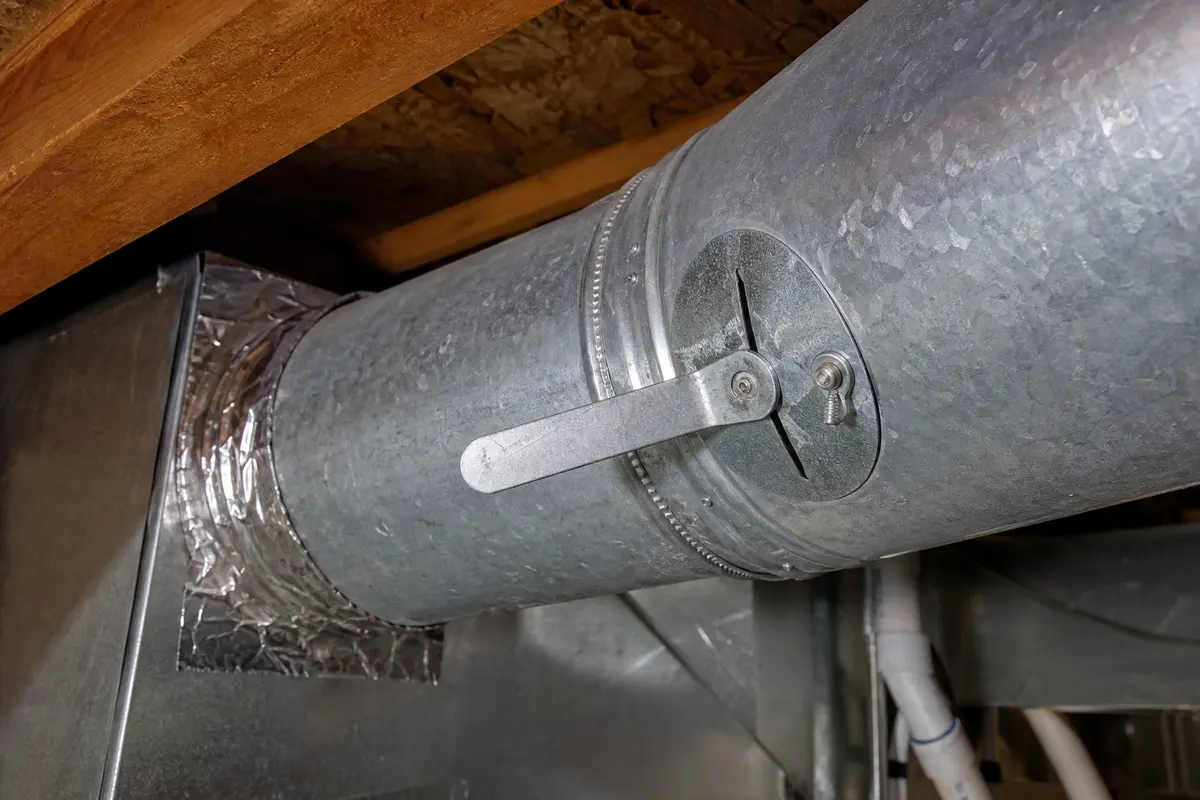
Helps when: Use this only when an accessible matching damper is broken, missing, or will not hold its position.
Skip it when: Skip damper parts when ducts are hidden, sealed, or controlled by a zoning board.
Compare manual duct dampers on AmazonAs an Amazon Associate I earn from qualifying purchases. Repair Riot may earn a commission at no extra cost to you.
The upstairs is usually getting less usable airflow or different control, while the outdoor unit is still cooling the downstairs.
A small difference can be normal, but several hot rooms upstairs with a comfortable downstairs needs airflow, duct, damper, or control checks.
Do not close many downstairs vents. That can raise static pressure and reduce total airflow.
Yes. The longest, hardest duct runs often suffer first when total airflow drops.
Check the upstairs thermostat schedule, mode, and whether the zone damper is actually opening.
Low refrigerant usually affects the whole system, not only one floor. Check distribution first.
A correct-size filter, thermometer, ladder, and matching manual damper are reasonable only when the clues fit.
Call when airflow does not change after filter and register checks, ducts are hidden or damaged, zoning does not respond, or warm air appears everywhere.
Repair Riot built this page around safe homeowner checks: thermostat demand, airflow, filter condition, condenser behavior, condensate safety, duct distribution, and clear stop points before internal electrical or refrigerant work.