Airflow weak at the vents?
Start with the filter, return grilles, closed registers, and possible coil ice.
When the indoor blower runs but the air is not cold, first separate an airflow problem from an outdoor-unit problem. Check Cool mode, Fan Auto, the filter, return airflow, ice, outdoor condenser operation, and condensate safety.
The common safe wins are a packed filter, blocked returns, a frozen coil, a dirty condenser coil, or an outdoor unit that never starts.
The blower can move air even when the cooling side is doing very little. Use the filter, ice, and outdoor-unit split before guessing at parts.
Don’t start with: Do not add refrigerant, open condenser electrical covers, or buy a capacitor just because the blower still runs.
Start with the filter, return grilles, closed registers, and possible coil ice.
Check whether the outdoor condenser is running and whether the coil outside is packed with debris.
Stop after thermostat, breaker, disconnect, and drain-safety checks; the condenser needs service testing.
Turn cooling off, run Fan On to thaw, replace the filter, and call if ice returns.
Treat it as a condensate safety shutdown and clear the water problem before buying parts.
The useful clues are visible: filter condition, outdoor condenser behavior, ice, and condensate safety.
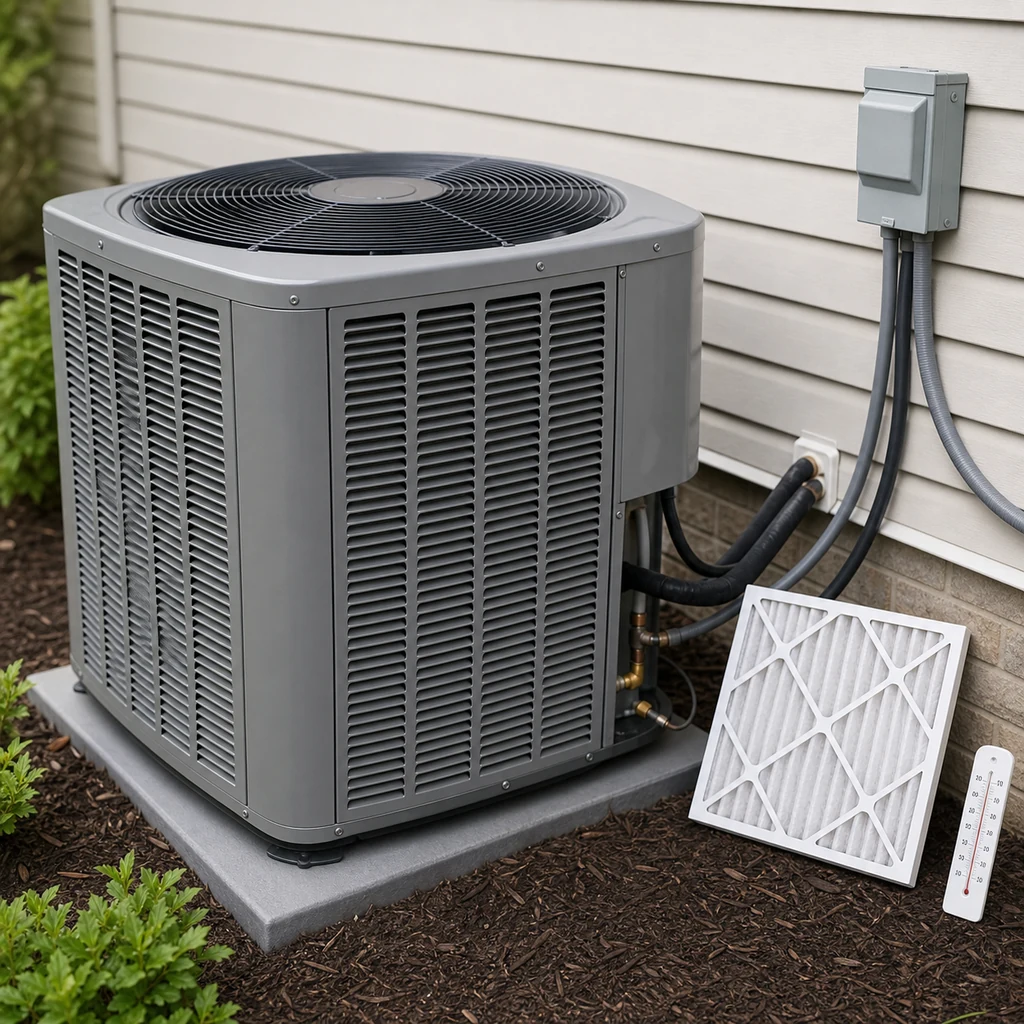
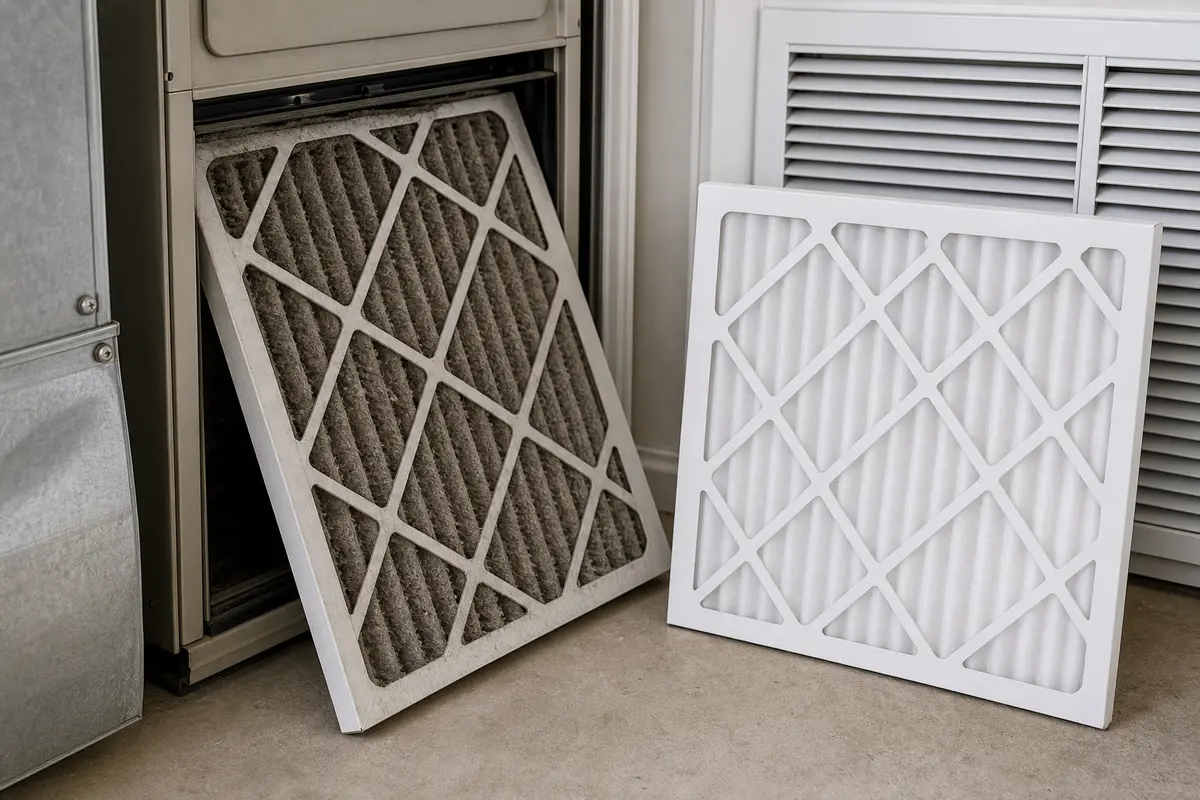
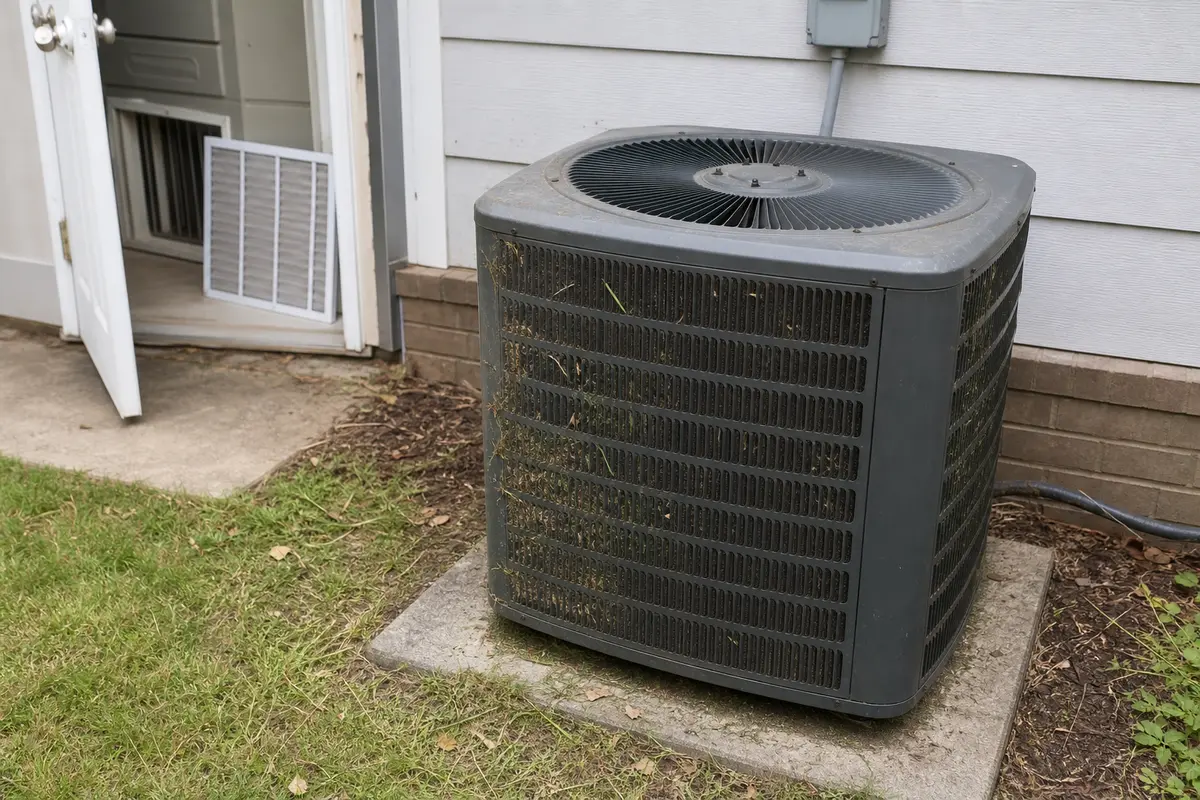
A filter buy makes sense only when the installed filter is dirty, collapsed, wet, missing, or the wrong size. A float switch buy fits only after the drain is clear and the visible switch sticks or will not reset. Match the exact model, filter size, switch style, and diagnosis before ordering anything. Thermostat, capacitor, contactor, refrigerant, and compressor parts need clearer proof than blower-only airflow.
The blower only proves that the indoor fan can move air. It does not prove the thermostat is calling correctly, the coil is transferring heat, or the outdoor unit is running.
This symptom tempts people into the wrong cart. The safe checks are more useful than part guessing.
Use this after one controlled cooling call and a normal delay period.
| Clue | Most likely branch | Next move |
|---|---|---|
| Weak airflow | Filter, return restriction, blower issue, or ice | Replace the filter, open returns, and check for ice. |
| Strong airflow, warm air | Outdoor condenser or heat-transfer problem | Check outdoor operation and condenser coil condition. |
| Outdoor unit silent | Breaker, disconnect, thermostat call, drain safety, or condenser control issue | Check only accessible power and safety points. |
| Ice visible | Airflow restriction or refrigerant-side problem | Thaw, restore airflow, and call if ice returns. |
| Water in pan | Condensate safety interruption | Clear the water issue before replacing the switch. |
Airflow problems are the most common homeowner-fixable reason the blower runs but cooling fades.
A running indoor blower with a dead or struggling condenser is a different problem.
The right purchase depends on the branch, not the page title.
These support inspection, airflow cleanup, and safe condenser exterior cleaning.
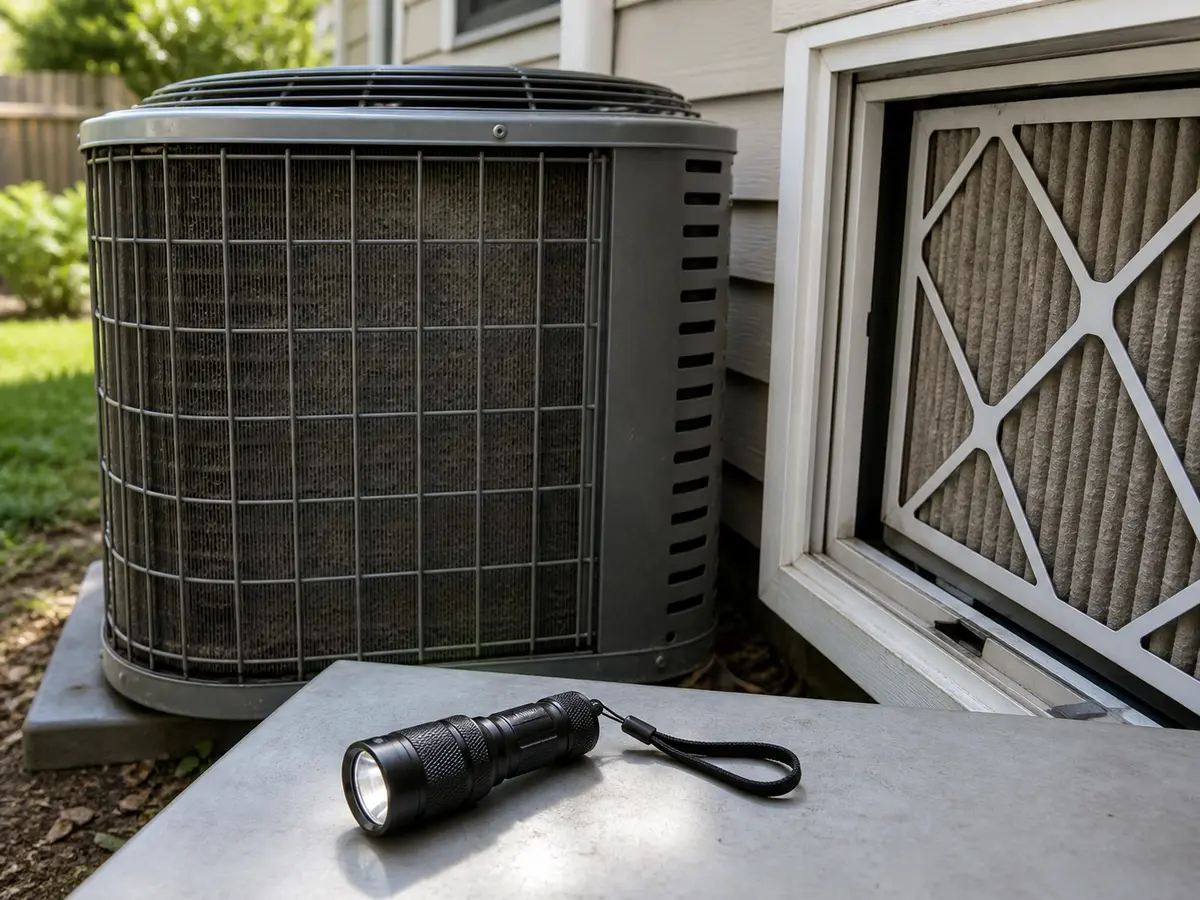
Helps when: Use it to inspect the filter slot, return grilles, drain pan, float switch, and outdoor coil.
Skip it when: Skip internal cabinet inspection when covers expose wiring or refrigerant parts.
Compare inspection flashlights on Amazon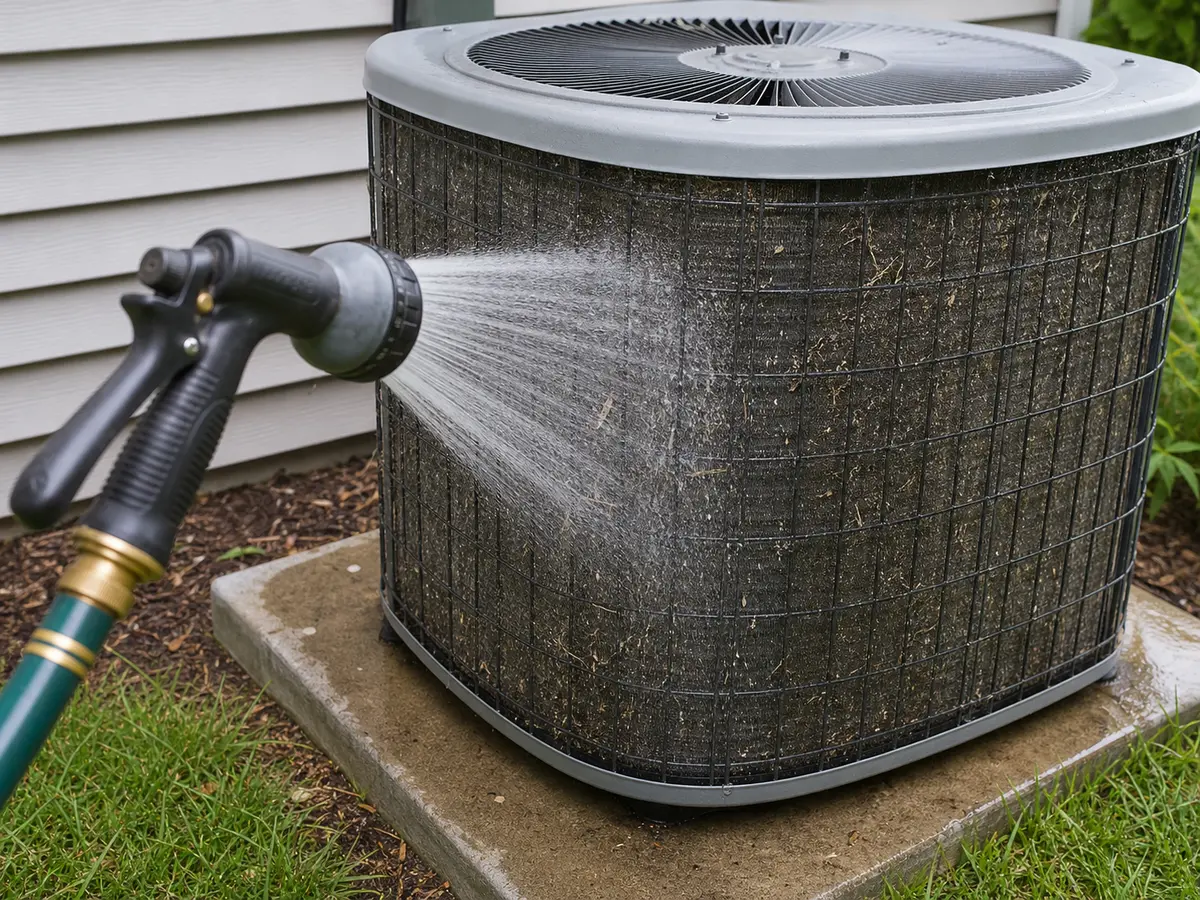
Helps when: Use it to rinse accessible condenser coil dirt after power is off.
Skip it when: Skip pressure washing or spraying near electrical covers.
Compare gentle hose nozzles on Amazon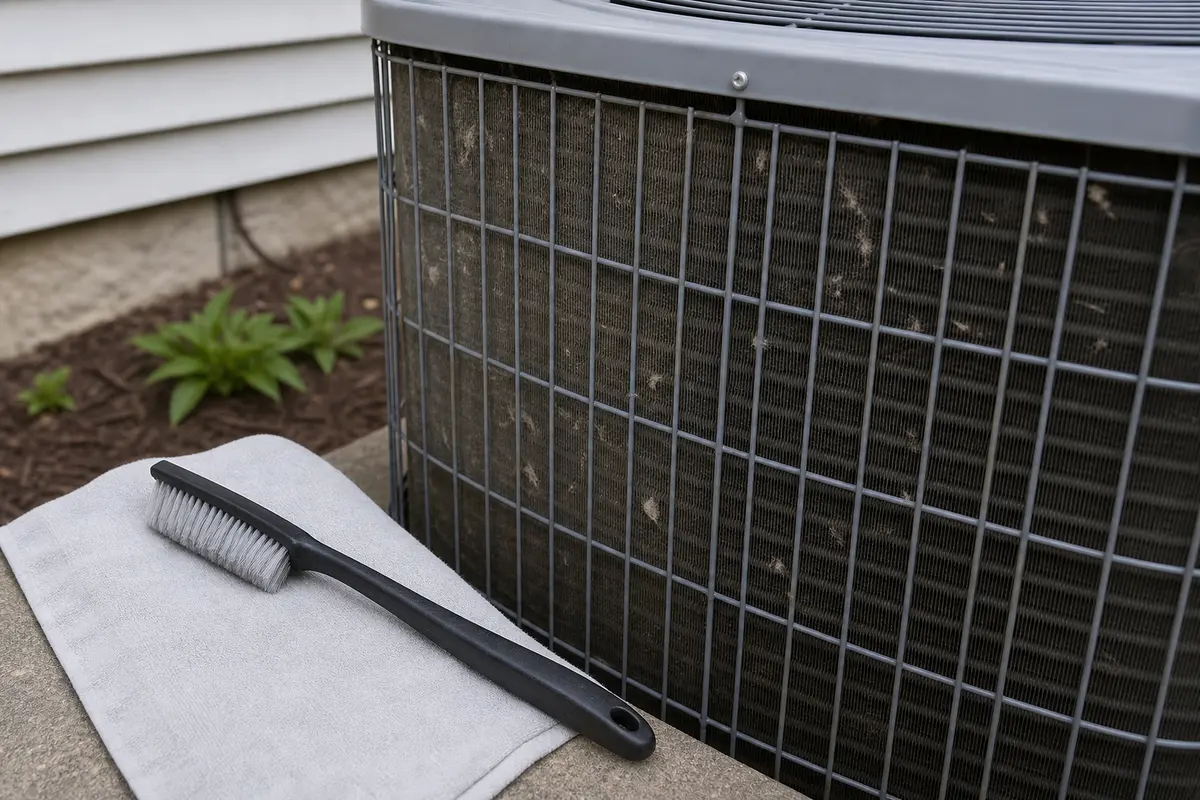
Helps when: Use it to loosen light lint or cottonwood on the outside of the condenser coil.
Skip it when: Skip brushing crushed fins or opening panels to reach hidden coil surfaces.
Compare soft condenser brushes on AmazonAs an Amazon Associate I earn from qualifying purchases. Repair Riot may earn a commission at no extra cost to you.
The reasonable homeowner purchases are narrow: filter first, and float switch only with matching evidence.
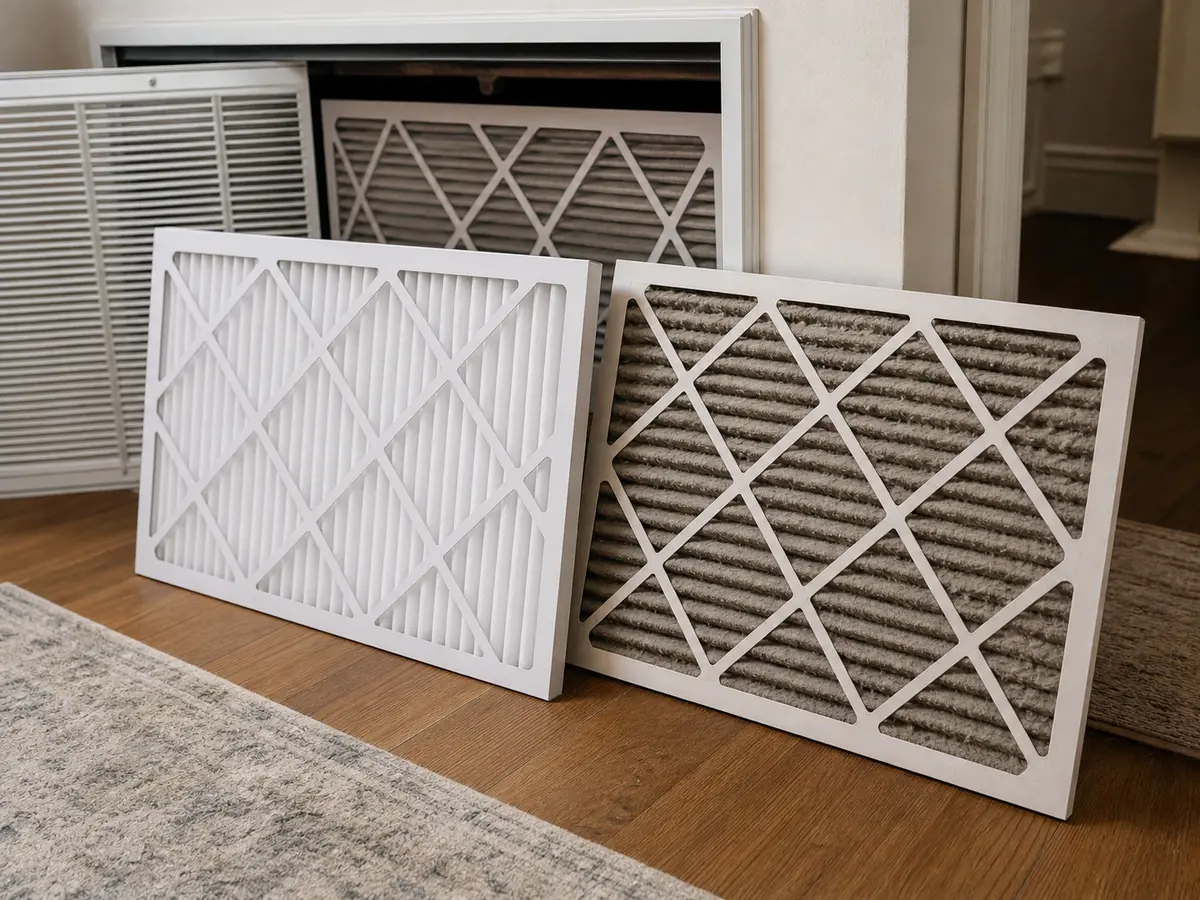
Helps when: Replace a packed, wet, collapsed, missing, or wrong-size filter before judging cooling.
Skip it when: Skip guessing at a different thickness or restriction rating.
Compare AC filters on Amazon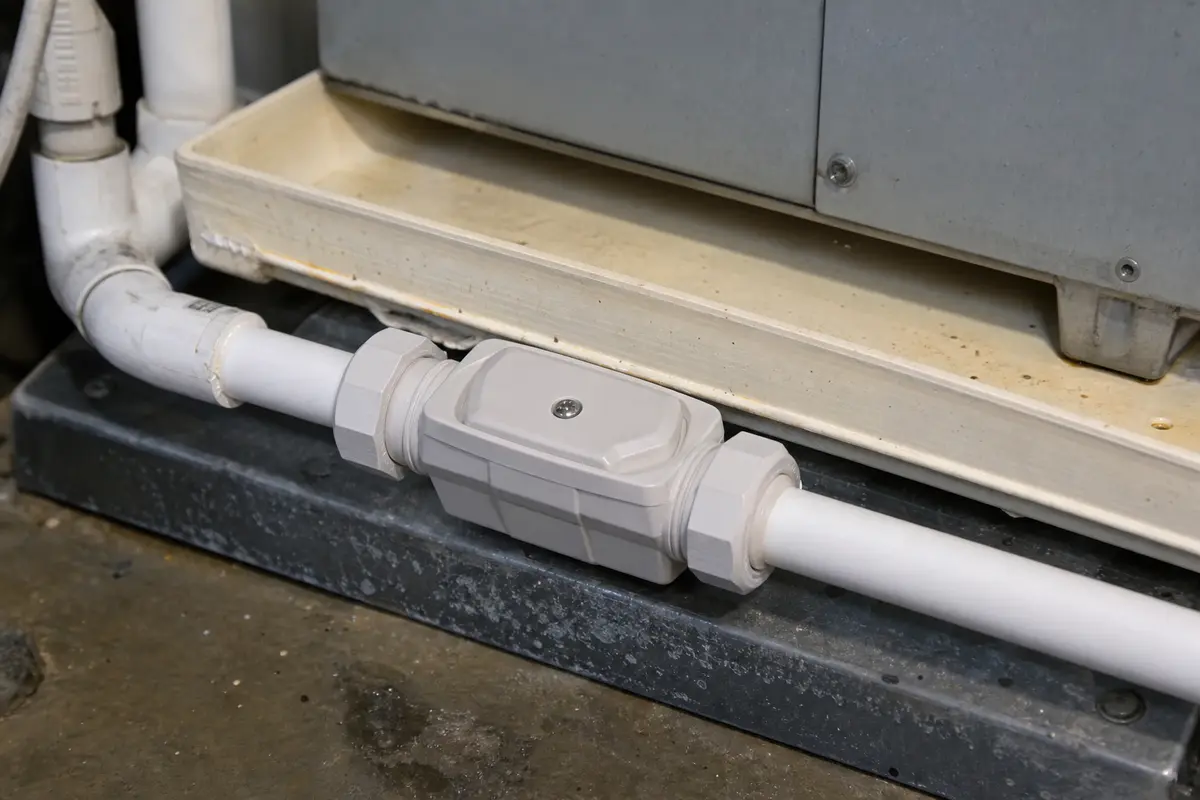
Helps when: Use this only when a clear drain still leaves the visible switch stuck or unreliable.
Skip it when: Skip it when pan water or a clogged drain is still lifting a working switch.
Compare AC condensate float switches on AmazonAs an Amazon Associate I earn from qualifying purchases. Repair Riot may earn a commission at no extra cost to you.
The blower can run from fan mode or an indoor call while the cooling side is blocked by airflow, ice, outdoor condenser trouble, drain safety, or a thermostat-control issue.
Yes, if the filter is dirty, wet, collapsed, missing, or the wrong size. A restricted filter is one of the simplest reasons cooling disappears while the blower keeps running.
Check thermostat mode, breaker, disconnect, and drain-safety clues. If the condenser clicks, hums, trips, or stays silent after safe checks, schedule HVAC service.
Yes. Once the indoor coil is iced, the blower may move air across ice instead of a working heat-transfer surface, and cooling can fade or stop.
Plan on several hours with cooling off and Fan On. Replace the filter before restarting, and call for service if ice returns.
Yes. A full pan or backed-up drain can lift a float switch and interrupt cooling to prevent water damage.
Not usually as a first assumption. Filter, airflow, thermostat, outdoor power, drain safety, and dirty condenser clues come first.
Stop when a breaker trips again, the outdoor unit clicks or hums without starting, ice returns, water keeps filling the pan, or the next step would expose internal electrical parts.
Repair Riot built this page around safe homeowner checks: thermostat demand, airflow, filter condition, outdoor condenser behavior, condensate safety, and clear stop points before internal electrical or refrigerant work.