Only the indoor blower is running?
Set the thermostat fan from ON to AUTO. If the outdoor unit shuts off, this is a fan-setting or blower complaint, not a constantly running compressor.
Usually, a constantly running AC compressor is trying to make up for weak airflow, a dirty condenser coil, thermostat confusion, or low cooling output. Start with fan AUTO, the filter, open returns, and the outdoor coil before blaming the compressor.
A good clue is whether the outdoor unit runs while the house stays warm. Dirty filters, blocked returns, and debris-packed condenser fins make a healthy compressor run longer than it should.
Long run time can be normal in hard heat. Weak cooling, ice, breaker trips, or a stalled condenser fan are not normal.
Don’t start with: Do not start with a compressor, capacitor, contactor, or refrigerant guess. Those parts sit behind electrical and sealed-system work that needs proper testing.
Set the thermostat fan from ON to AUTO. If the outdoor unit shuts off, this is a fan-setting or blower complaint, not a constantly running compressor.
Turn the system off at the thermostat, look at the filter, open main supply registers, and clear blocked return grilles.
Shut power off, clear loose debris, keep foliage back, and rinse the coil gently without spraying electrical areas.
Long run time may be normal during extreme heat. Keep airflow clear and watch the next hot afternoon for the same pattern.
Stop the AC and call an HVAC tech. Those clues point past safe homeowner maintenance.
The useful clues are visible from safe places: the return filter, the outdoor condenser coil, and the temperature difference at a supply vent.
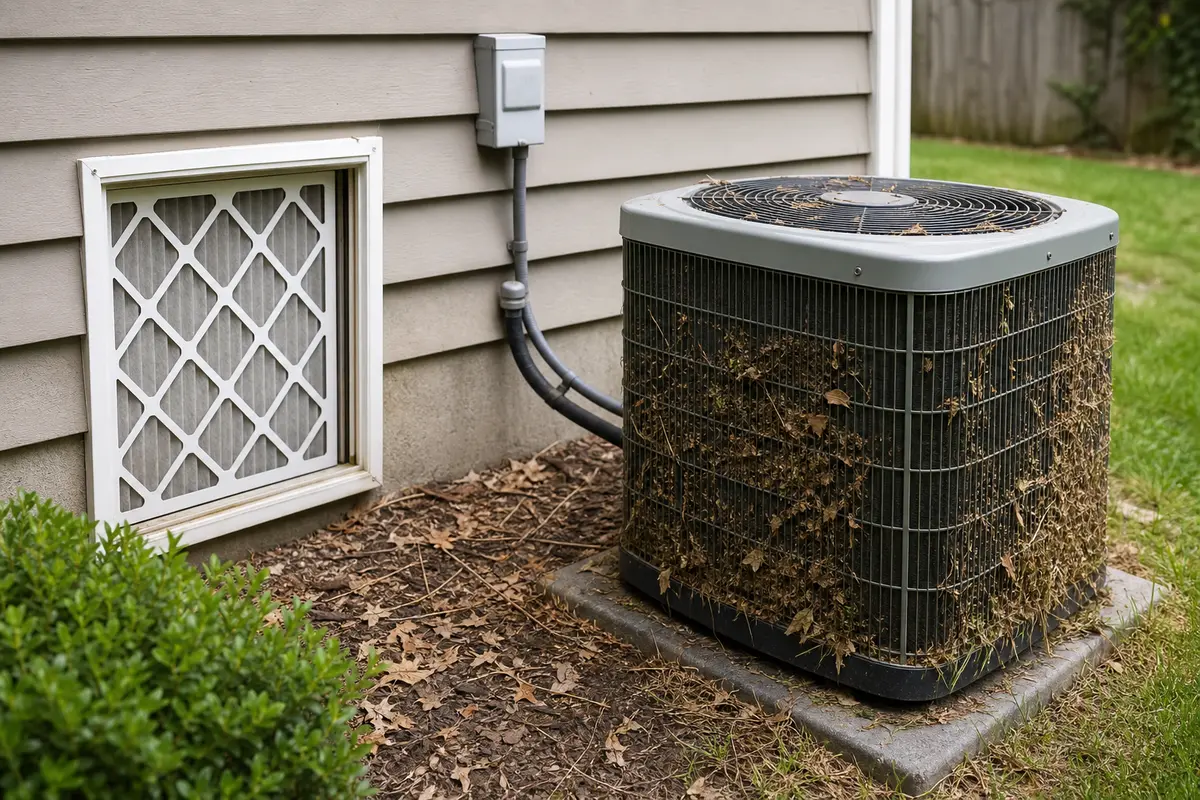
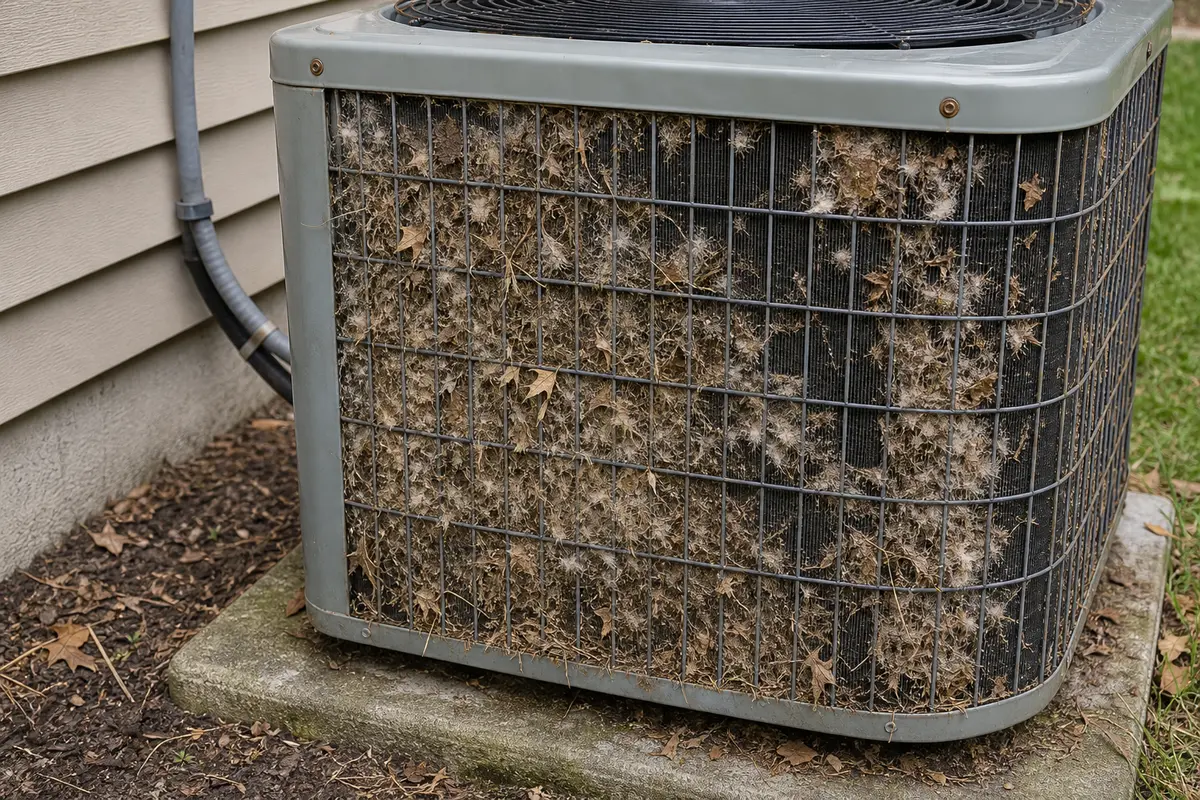
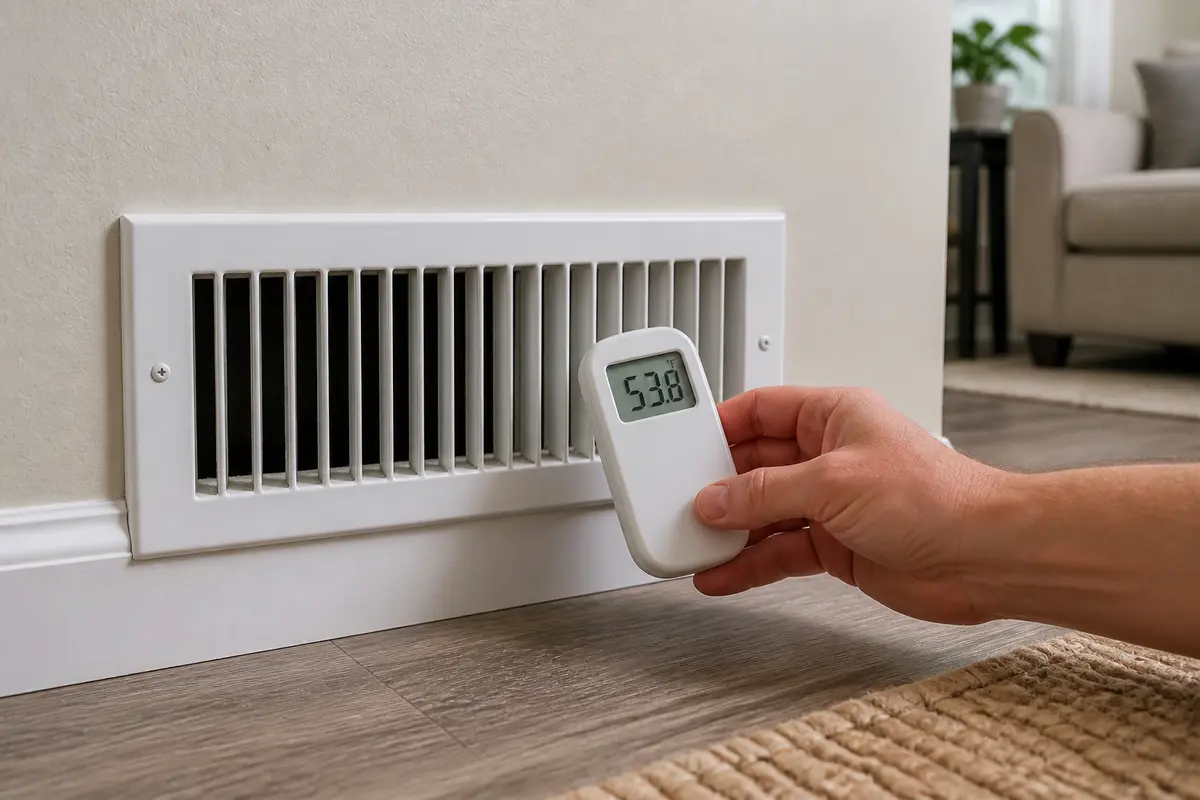
Buy only what the evidence supports. Put a filter in the cart only if it matches the exact printed size, depth, and airflow arrow and the old filter is dirty, collapsed, wet, or overdue. If airflow and cooling do not improve after the filter and condenser checks, stop before capacitor, contactor, fan-motor, refrigerant-kit, or compressor shopping; those parts need model-specific diagnosis.
A compressor that seems to run nonstop is usually reacting to high load, restricted airflow, or weak cooling. First check whether only the indoor blower is on, then compare return air with a supply vent after 10 to 15 minutes.
The costly mistake is treating long run time as proof that the compressor is bad. Start outside the cabinet and keep the risky parts covered.
Use one normal cooling call to gather clues. You are not proving the exact failed part; you are deciding whether the safe checks are enough or service needs to take over.
| What you find | What it usually means | Next move |
|---|---|---|
| Indoor blower runs but outdoor unit is off | The thermostat fan setting or blower operation is making it sound like the compressor never stops. | Set fan to AUTO and troubleshoot the blower path if air still runs nonstop. |
| Dirty filter or weak return airflow | The indoor coil is not getting enough warm air across it, so cooling output drops. | Replace the exact-size filter and clear returns before judging the compressor. |
| Condenser coil is packed with lint, grass, or cottonwood | The outdoor unit cannot reject heat well, so run time stretches out. | Shut power off, clear debris, rinse gently, and keep plants back from the cabinet. |
| Vent air is clearly cooler and the house slowly catches up | The AC may be working near its limit during peak heat. | Keep airflow clear and compare performance again after the hottest part of the day. |
| Vent air is barely cooler, humidity stays high, or ice appears | Refrigerant, coil, metering, electrical, or compressor-side diagnosis may be needed. | Stop at homeowner checks and schedule HVAC service. |
| Breaker trips, hot smell, hard buzz, or condenser fan will not run | This is an electrical or motor stop point. | Leave the unit off and call an HVAC tech or electrician as appropriate. |
Poor airflow can make a good compressor look tired. Work from the filter and returns before you spend time at the outdoor unit.
Outdoor coil dirt is one of the few long-run causes a homeowner can safely correct. Stay on the exterior of the cabinet and keep water away from electrical areas.
A correctly sized AC can run nearly nonstop during the hottest stretch of the day. Normal long running still has signs of progress.
These tools support safe observation, filter work, and exterior cleaning. Skip any step that requires opening wiring covers or reaching into moving equipment.
Paid links. As an Amazon Associate I earn from qualifying purchases. Repair Riot may earn a commission at no extra cost to you.
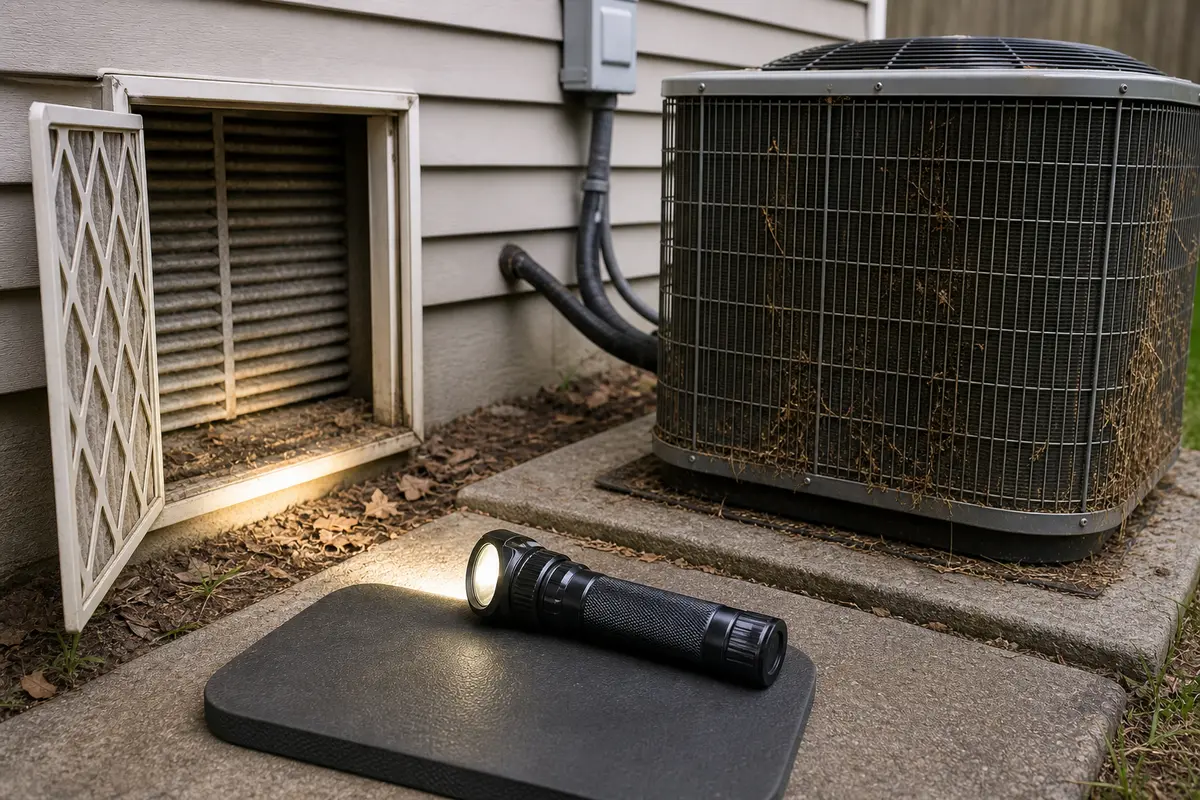
Helps when: Use it to see the filter slot, return grille, condenser fins, and debris at the cabinet base without opening electrical covers.
Skip it when: Stop there if the only next step is removing a service panel or reaching near wiring. Do not remove covers or work near wiring to use a flashlight.
Compare inspection flashlights on Amazon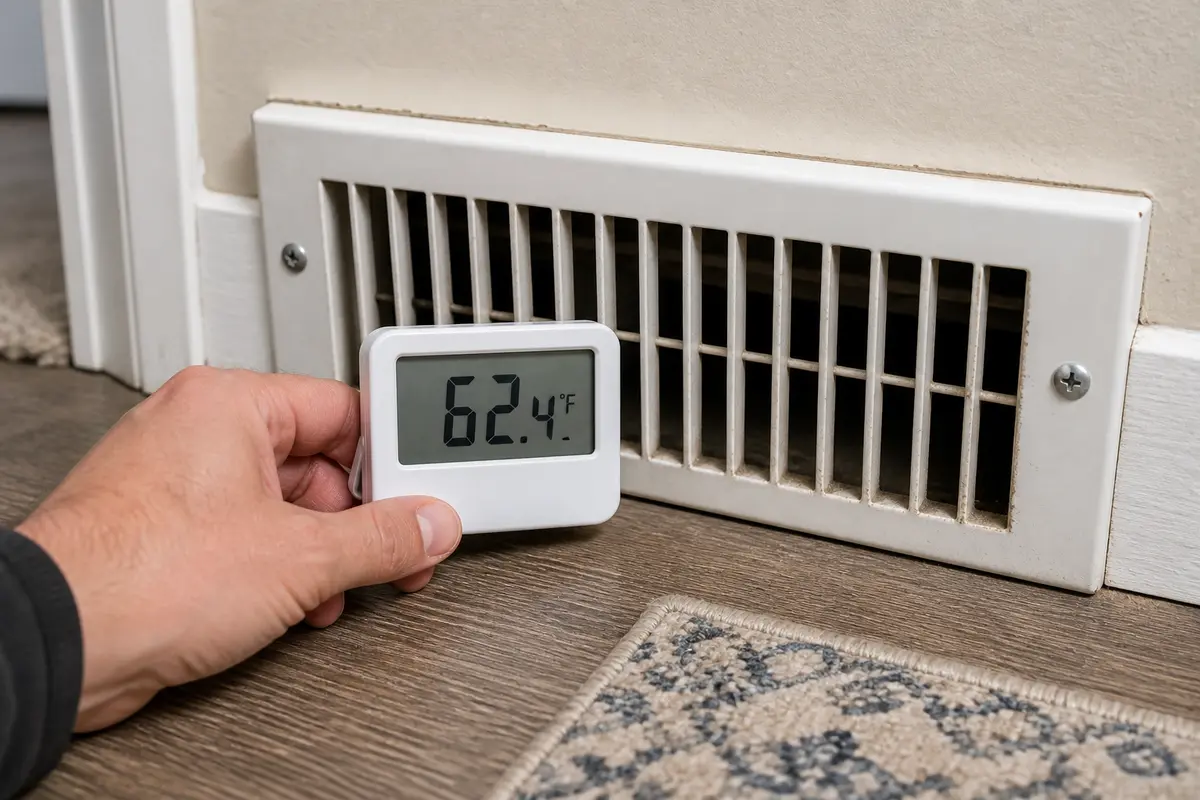
Helps when: Use it to compare room air and supply vent air after the AC has run for 10 to 15 minutes.
Skip it when: Skip it if the unit is buzzing, tripping, iced, or blowing warm air after the basic airflow checks.
Compare digital thermometers on Amazon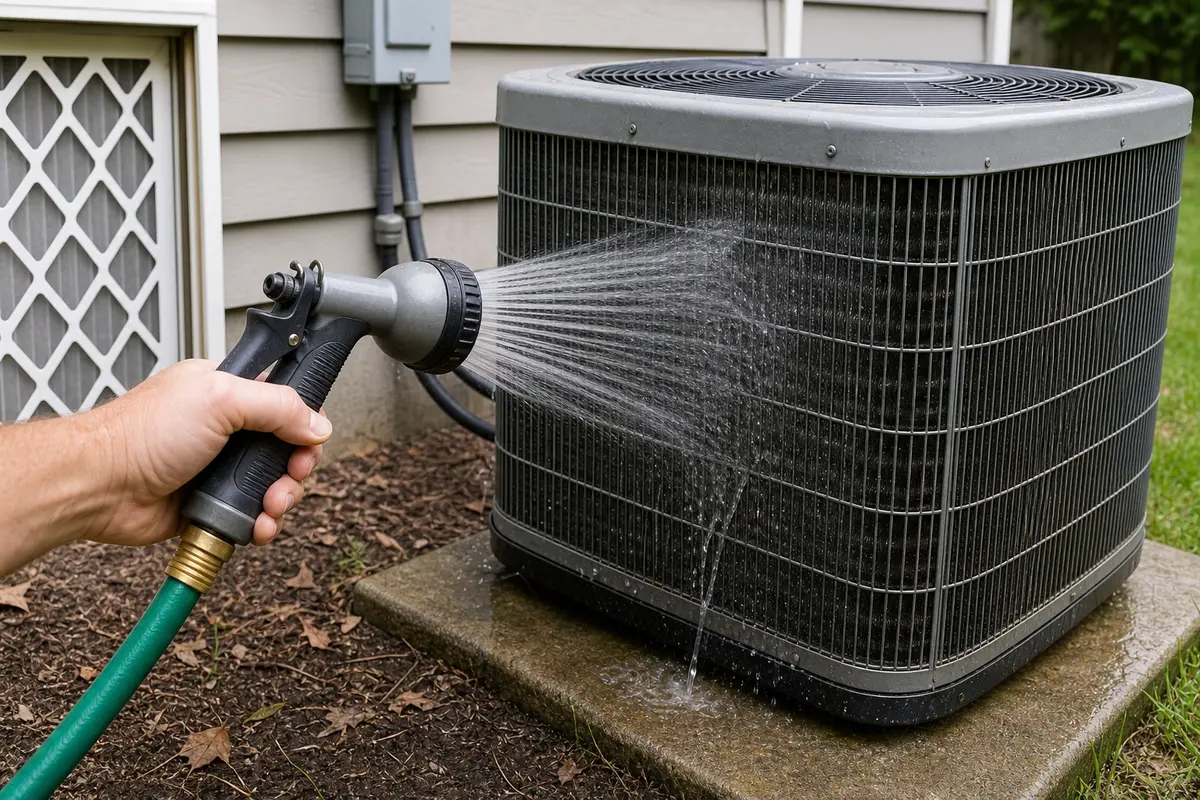
Helps when: Use light water pressure to rinse loose dirt from condenser fins after power is off and debris is cleared.
Skip it when: Do not use it on electrical compartments, crushed fins, damaged wiring, or a condenser on wet unsafe ground.
Compare hose spray nozzles on AmazonThe filter is the only reasonable homeowner buy-first part for this symptom. Everything hidden in the condenser needs diagnosis before it belongs in a cart.
Paid links. As an Amazon Associate I earn from qualifying purchases. Repair Riot may earn a commission at no extra cost to you.
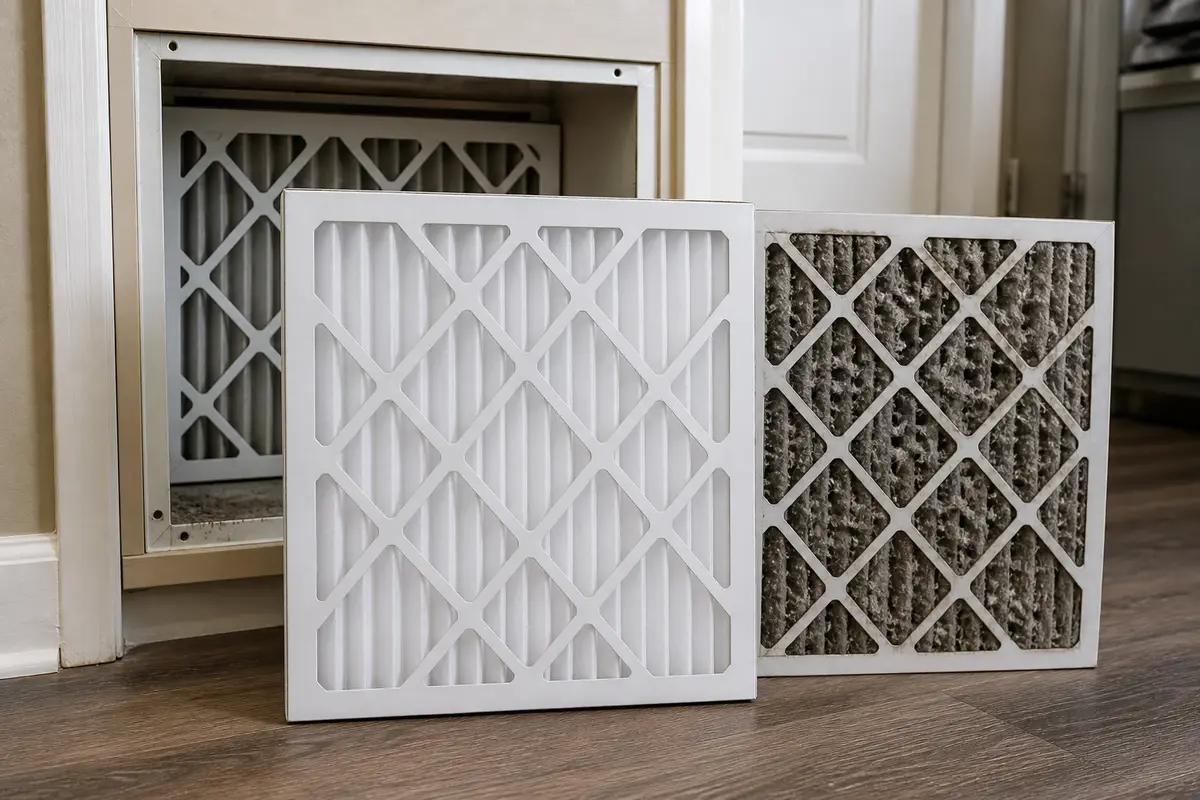
Helps when: The existing filter is dirty, collapsed, wet, overdue, or pulled out of shape, and the replacement matches the printed size and airflow arrow.
Skip it when: The filter is clean and seated flat, or the real clue is ice, warm air, breaker trips, or a stalled condenser fan.
Compare AC filters on AmazonSometimes. During a hot afternoon, a working AC may run for long stretches and still cool the house a little at a time. Check the filter and supply airflow when the thermostat never moves toward the set temperature, humidity stays high, airflow feels weak, or the same weather used to cycle normally.
Look outside during a cooling call. When the outdoor condenser is off but air still moves indoors, the thermostat fan may be set to ON. Switch the fan to AUTO and see whether the indoor blower shuts off after the call ends.
Yes. A loaded filter can cut airflow enough that the indoor coil removes less heat, so the outdoor unit runs longer. Replace it with the exact printed size and airflow direction before judging the compressor.
Yes. When condenser fins are packed with grass, lint, cottonwood, or leaves, the outdoor unit cannot shed heat well. Clean only the exterior with power off and gentle water pressure.
No. A lower set point usually makes the system run longer; it does not make a standard central AC remove heat faster. Set a reasonable target and look for airflow or cooling-output clues instead.
Keep it running only if it is cooling clearly, the fan spins normally, the breaker holds, and no ice is forming. Turn it off for warm air, ice, harsh buzzing, hot smell, breaker trips, or a stalled condenser fan.
No, not from run time alone. Capacitors and contactors are hidden electrical parts. This symptom points first to airflow, condenser dirt, thermostat settings, or weak cooling performance.
Afternoon heat adds load to the house and the outdoor coil. If the system cools at night but struggles only in peak heat, start with filter airflow, condenser clearance, and coil dirt before suspecting a major part.
Call when the outdoor unit runs but cooling stays weak. Also call for barely cooler supply air, iced refrigerant lines, breaker trips, a failed condenser fan, hot smells, or harsh sounds. Those are not good DIY next steps.
Repair Riot built this page around homeowner-safe observations: thermostat fan mode, filter and return airflow, outdoor coil condition, supply-air temperature, and stop points for electrical or refrigerant work. The sources below support the maintenance and certification boundaries.