Warm, buzzing, sparking, burnt, or flickering when touched?
Turn the breaker off and stop. Heat damage, sparks, or a loose connection belong with a licensed electrician.
A toggle that will not stay up or down usually has a worn internal latch. Before opening the box, feel for warmth, listen for noise, and look for scorch marks or flicker. If you notice clues or a burnt smell, turn the breaker off and call an electrician.
A soft, springy, or middle-position toggle with no heat, noise, odor, or flicker usually points to a worn switch. Compare its feel with a nearby good switch before you buy anything.
Sort the failure before opening the box: danger clues first, then switch type, then mounting or wall-plate binding. Parts come after that.
Don’t start with: Do not force the handle or move wires with power on. Use outside checks first: look at the control style and note whether another switch runs the same light. Buy a part only after you know the switch type.
Turn the breaker off and stop. Heat damage, sparks, or a loose connection belong with a licensed electrician.
If one switch controls the light, check the feel of the toggle. A worn single-pole switch is likely when it feels weak or will not latch and there is no warm plate, noise, smell, scorch mark, or flicker.
Treat it as a 3-way setup. Do not install a standard single-pole switch just because the toggle looks similar.
With power off, check the plate and device alignment before blaming the internal switch mechanism.
Use the device type and load compatibility as the path. Specialty controls fail differently from plain toggles.
Stop swapping parts. The fault may be wiring, box connections, load compatibility, or circuit condition.
The outside clues decide whether this is a simple worn switch, a binding plate, a wrong replacement type, or a stop-and-call electrical problem.
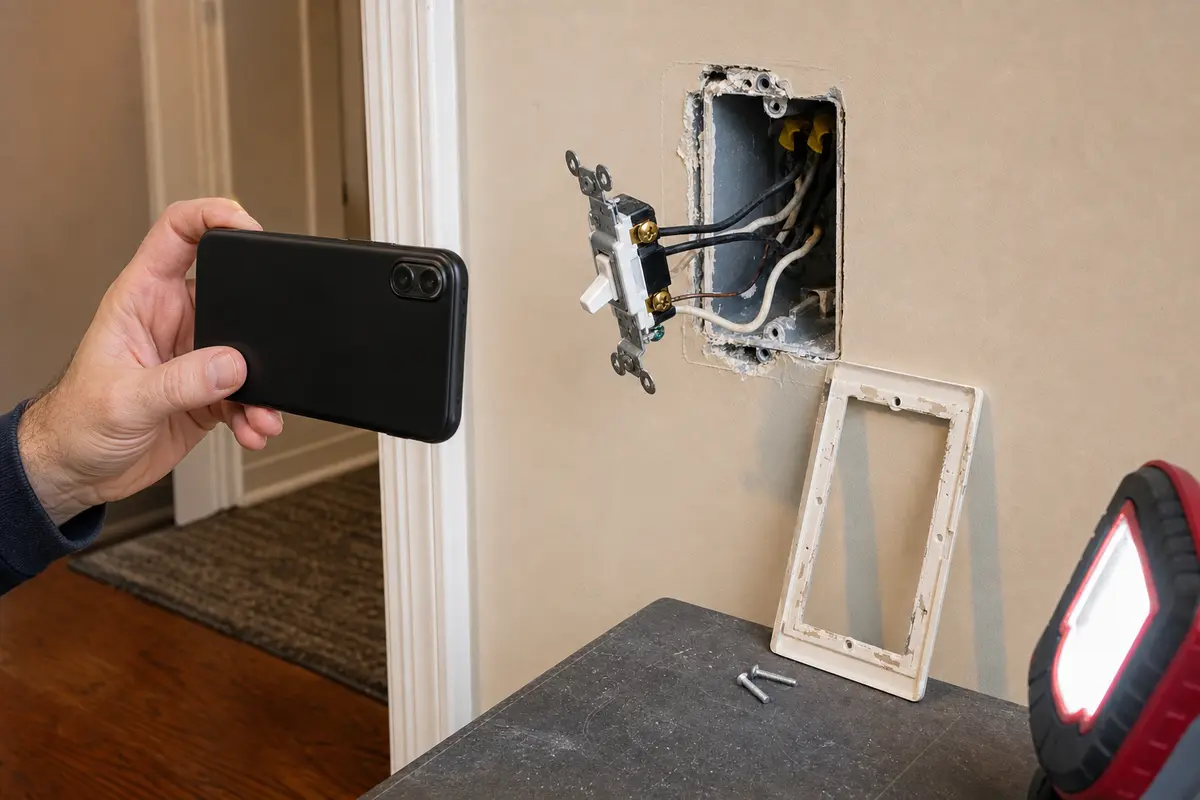
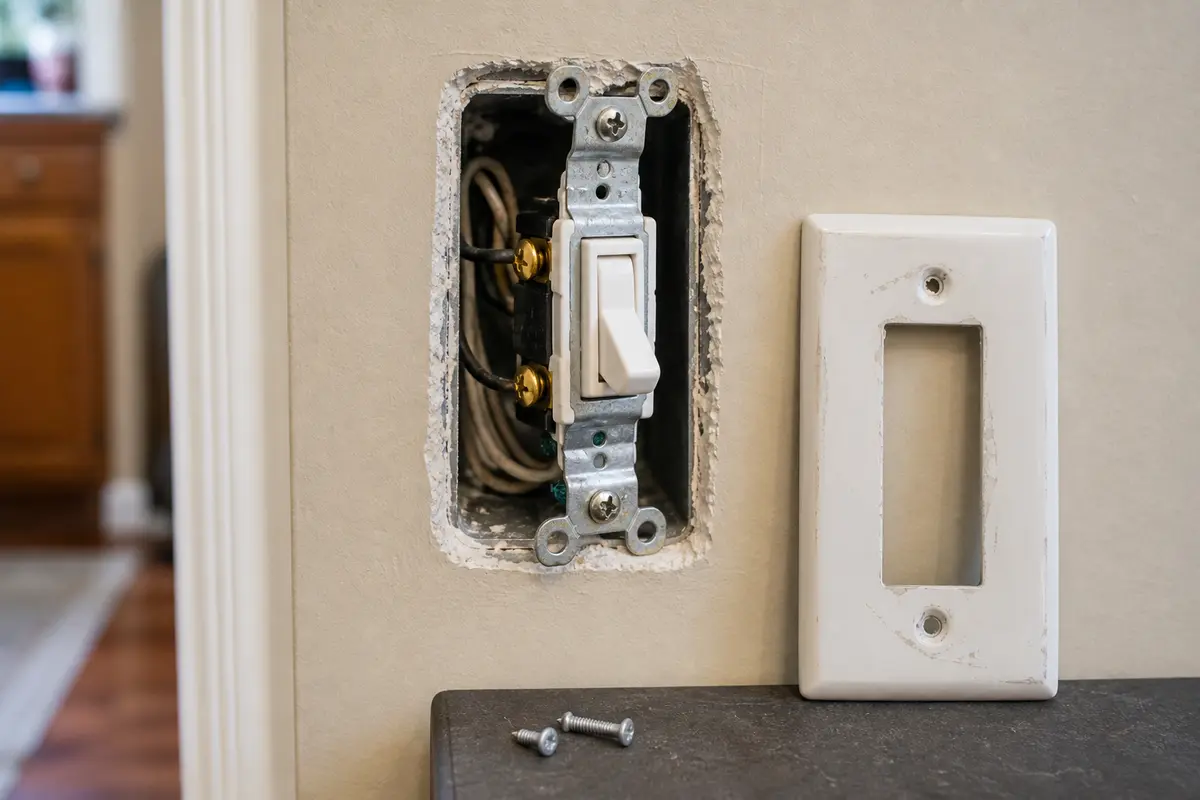
Buy a switch only after the symptom and control type agree. Match the exact function first: single-pole, 3-way, dimmer, timer, smart control, or fan/light combo. Dimmers and smart switches also need the right load type, wiring requirements, rating, and wall-plate opening. Damaged box or unclear wiring means the cart waits and an electrician takes over.
Start with the safety split. Feel for a warm plate, listen for noise, and look for scorch marks or melted plastic. If those clues are absent and the toggle feels sloppy or springy, the switch is usually failing mechanically.
Bad guesses show up fast on switch work. Treat the box as de-energized only after you have shut off the breaker and checked it, then let the visible clues guide the next step.
Start with checks that do not require touching wiring. Open the box only after the breaker is off and the switch tests dead.
Use the result of each check to decide the next move. A good diagnosis narrows the job before any part is ordered.
| What you find | What it usually means | Next move |
|---|---|---|
| Toggle feels mushy, springs back, no heat or noise | The internal switch mechanism is worn | Replace with the same switch type after power is off and verified |
| Light works only while the toggle is held | The contacts or latch inside the switch are failing | Confirm switch type, photograph wires, then replace like-for-like |
| Switch works with the plate removed | Wall plate, mounting depth, or device alignment is binding the handle | Mount the switch squarely and replace a warped or cracked plate |
| Same light has another wall switch | This is probably a 3-way control | Use a 3-way replacement and keep traveler/common positions documented |
| Warmth, buzzing, scorch marks, odor, sparks, or flicker | Possible loose connection, sparks, or heat damage | Leave breaker off and call a licensed electrician |
| Matching new switch still acts wrong | The issue is no longer just the switch body | Stop parts swapping and have the wiring or circuit diagnosed |
Use these steps only after the outside checks point to a plain worn switch. The toggle feels weak, the switch type is clear, and there is no warm plate, noise, burnt smell, flicker, or visible damage. Stop as soon as the box does not match what you expected.
These tools support basic homeowner checks and a like-for-like switch replacement with power off. They are not a reason to work live or troubleshoot damaged wiring.
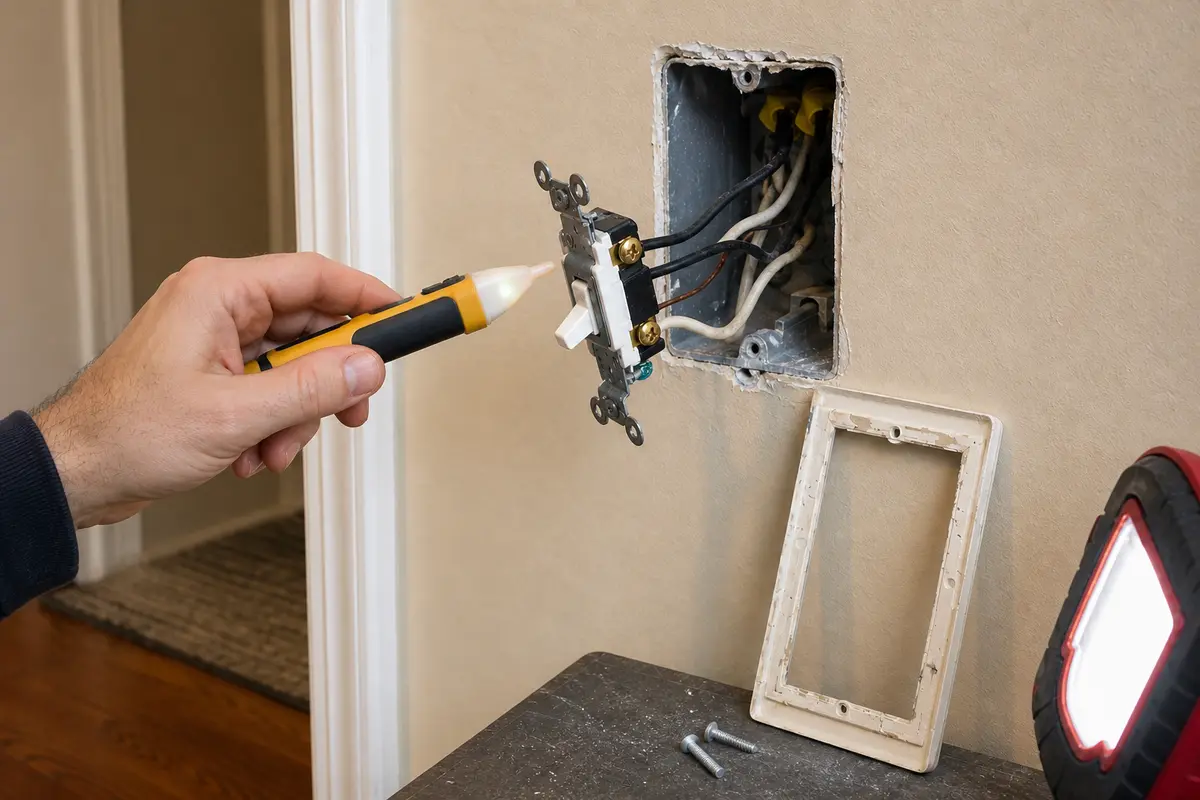
Helps when: Use it before touching switch terminals or conductors after the breaker is off.
Skip it when: You need live-voltage diagnosis, panel work, or exposed wiring judgment.
Compare voltage testers on Amazon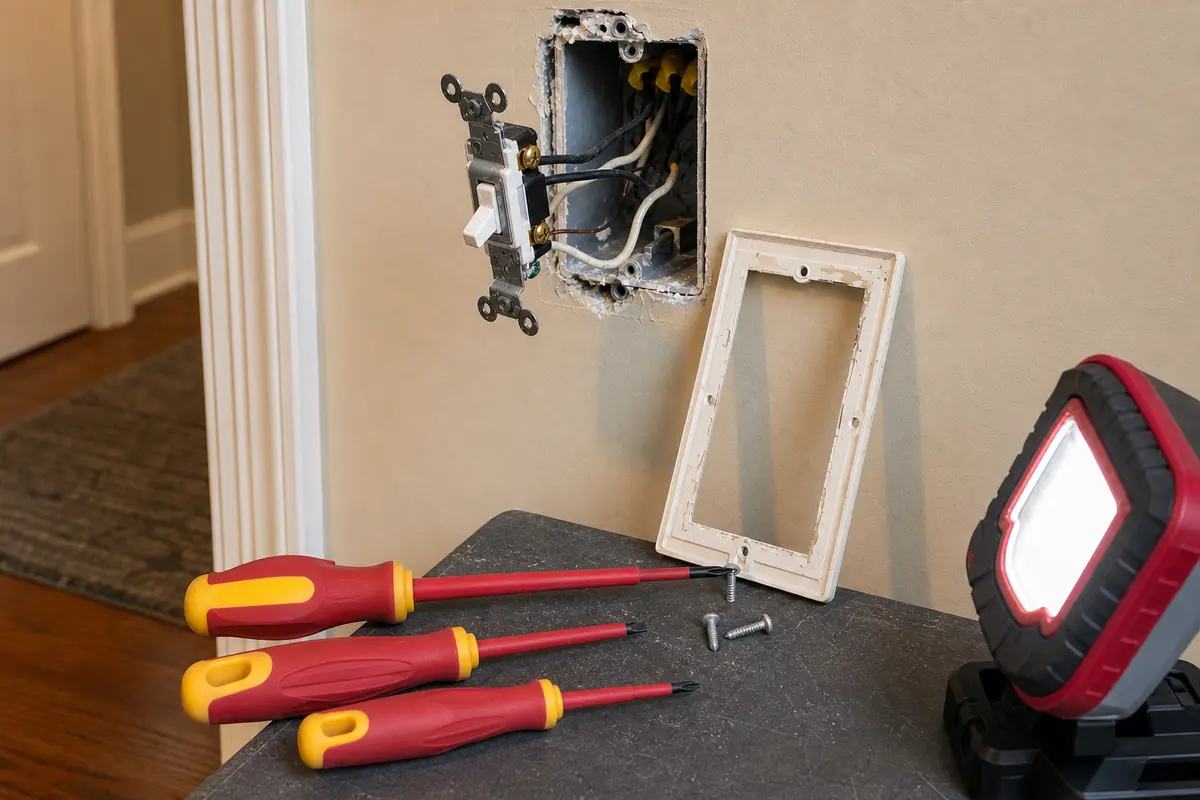
Helps when: Remove the wall plate and device screws after power is off and verified.
Skip it when: The switch is hot, scorched, buzzing, or the box wiring is damaged.
Compare insulated screwdrivers on Amazon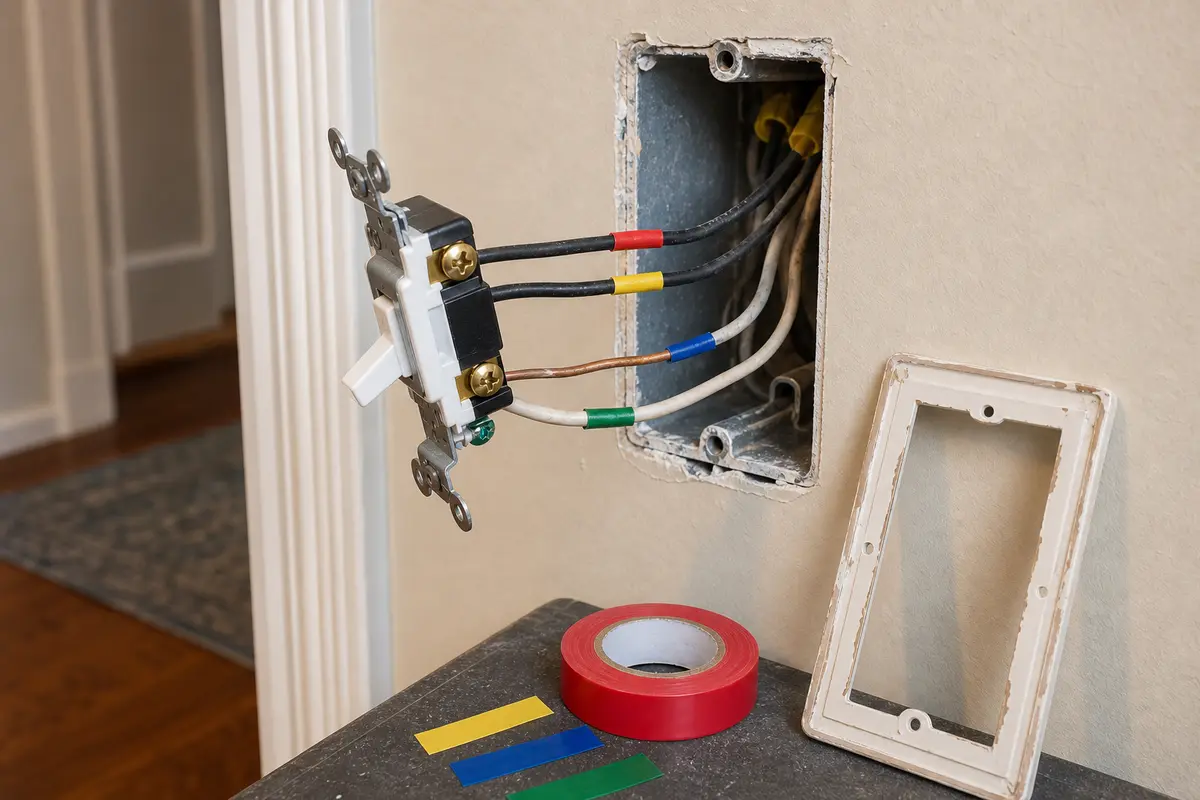
Helps when: Mark wires on a 3-way or specialty control before moving anything. A phone photo is still the first record.
Skip it when: You are unsure what the terminals mean or the wiring does not match the replacement instructions.
Compare wire labels on Amazon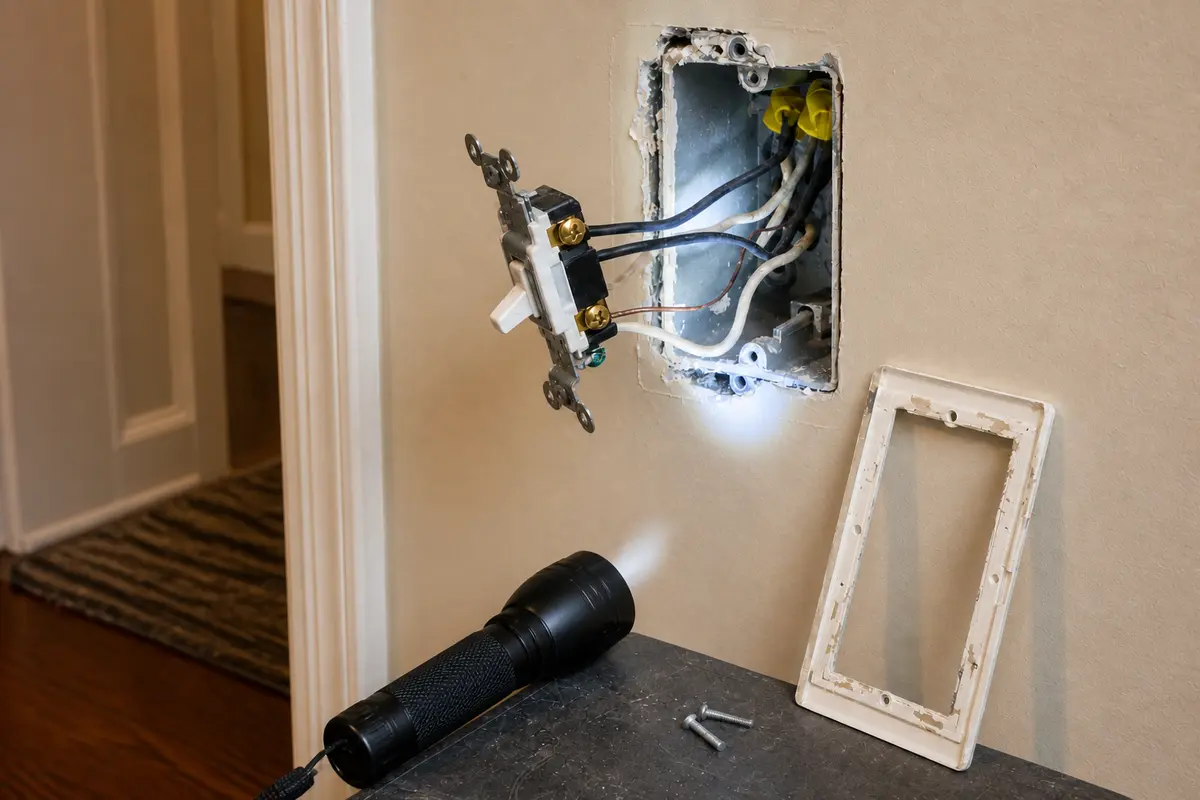
Helps when: See terminal labels, scorch marks, cracked plastic, and whether the box or plate is misaligned.
Skip it when: Better lighting still leaves you unsure whether the circuit is off or the wiring is safe.
Compare inspection flashlights on AmazonAs an Amazon Associate I earn from qualifying purchases. Repair Riot may earn a commission at no extra cost to you.
Compare parts only after the switch type is clear and the danger checks are clean. A cheap switch is still the wrong part if the circuit is 3-way, dimmed, smart-controlled, or heat damaged.
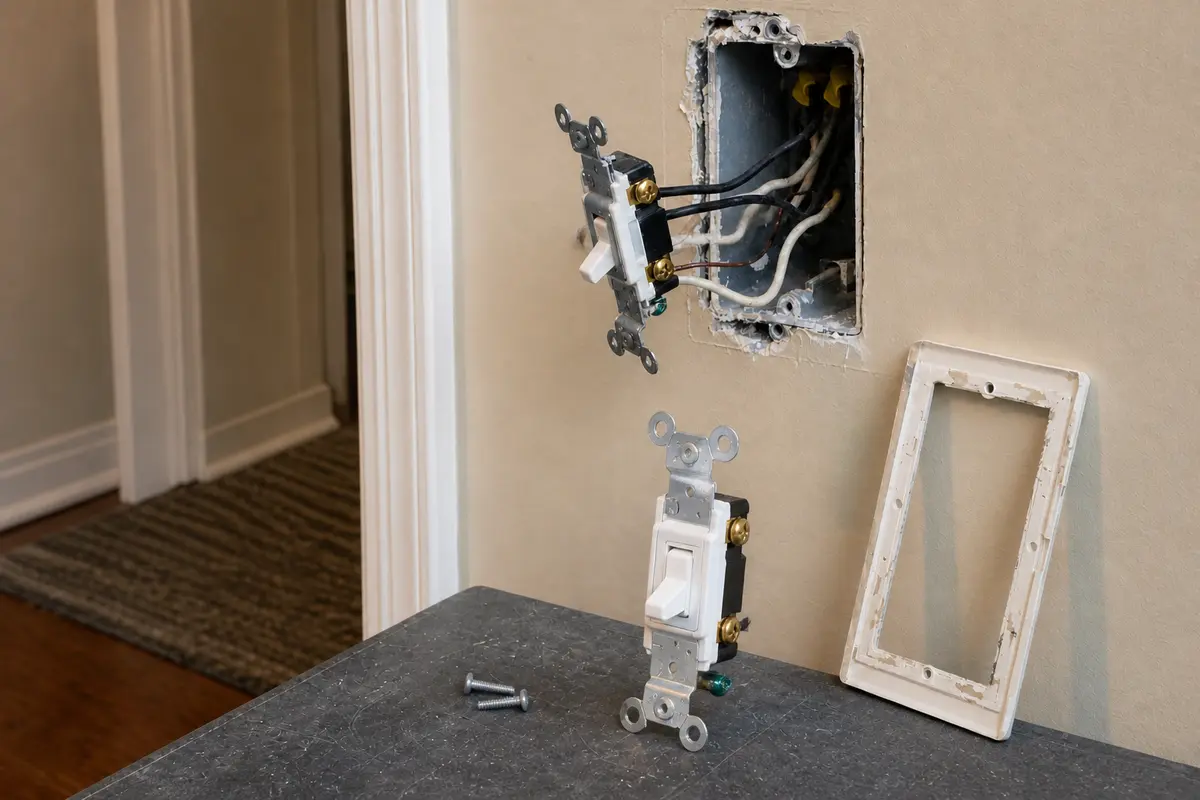
Helps when: One wall switch controls the light, the toggle will not latch, and no heat, noise, odor, scorch marks, or flicker are present.
Skip it when: Another switch controls the same light, or the device is a dimmer, timer, smart switch, or fan/light control.
Compare single-pole switches on Amazon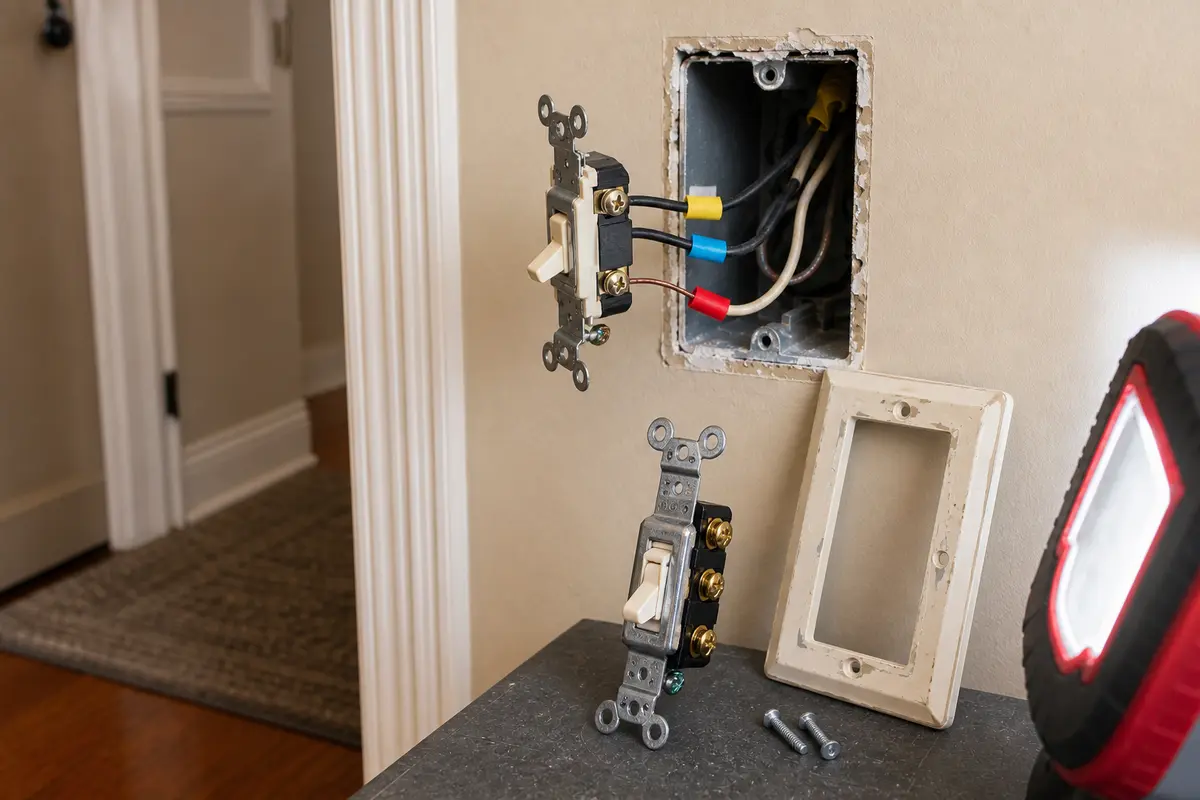
Helps when: The same light is controlled from two wall locations and the failed control is a mechanical 3-way switch.
Skip it when: You cannot identify the common and traveler wires from the old switch photo or labels.
Compare 3-way switches on Amazon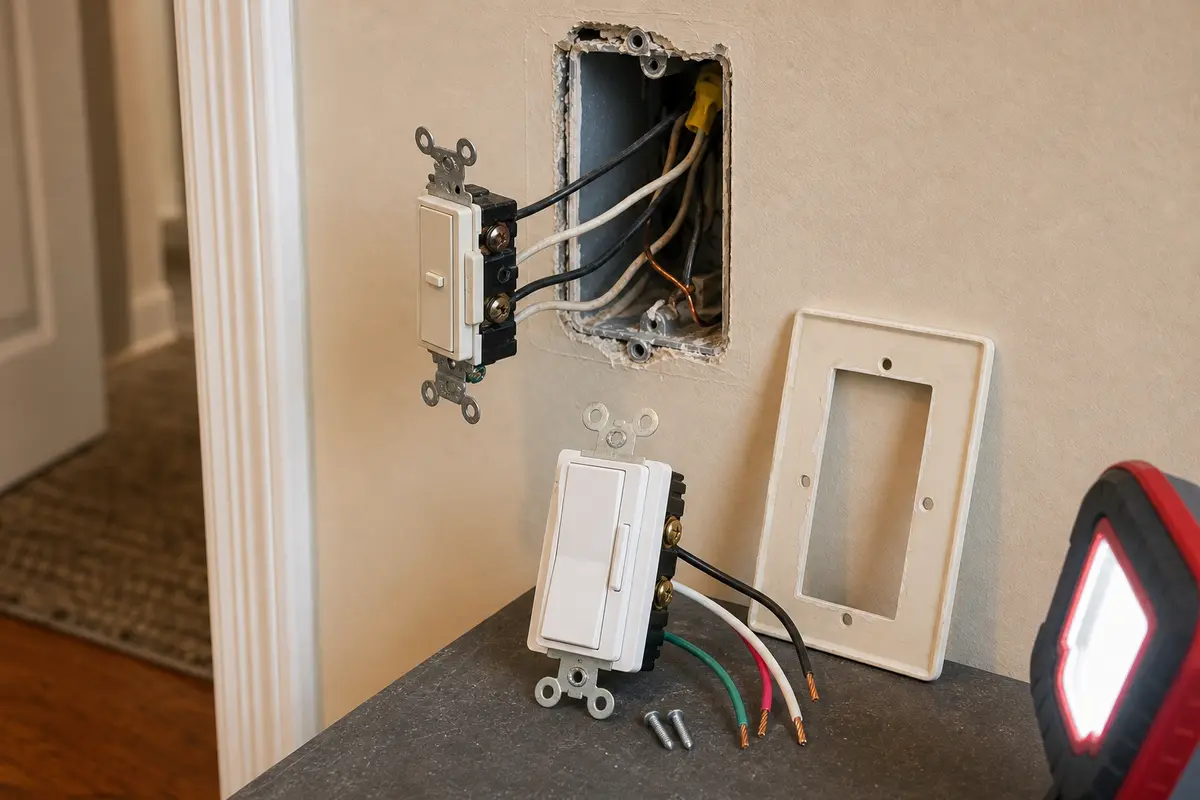
Helps when: The failed control is a dimmer and the lights, load type, rating, and wiring match the replacement dimmer instructions.
Skip it when: The symptom is heat, buzzing, flicker after replacement, unknown wiring, or incompatible bulb/load type.
Compare dimmer switches on Amazon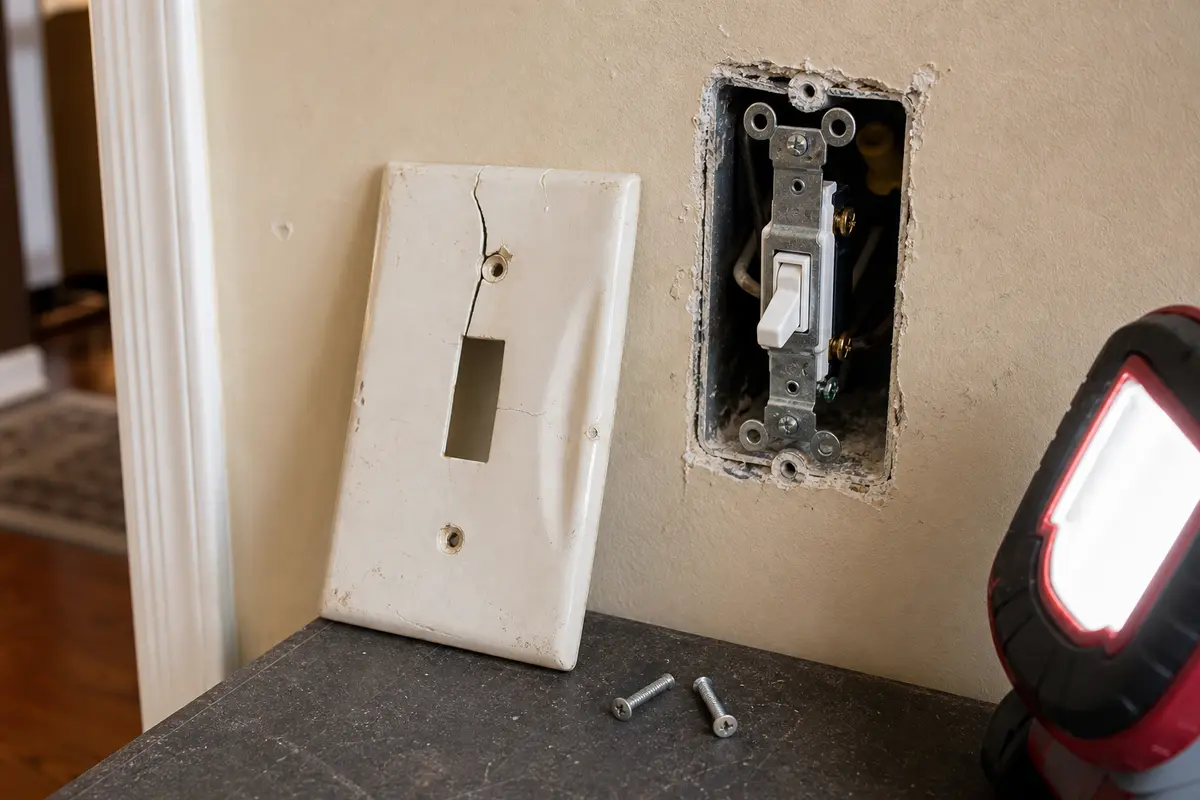
Helps when: The switch works normally with the plate removed, or the old plate is cracked, warped, crooked, or pinching the toggle.
Skip it when: The switch still will not latch with the plate off and the device mounted straight.
Compare wall plates on AmazonAs an Amazon Associate I earn from qualifying purchases. Repair Riot may earn a commission at no extra cost to you.
Usually the latch or spring inside the switch has worn out. The toggle may feel soft, sloppy, or spring back. Check for heat, buzzing, odor, scorch marks, and switch type before replacing it.
It can be. A plain mechanical failure is different from a switch that is warm, buzzing, sparking, flickering, or burnt-smelling. For those clues, leave the breaker off and call a licensed electrician.
No. Match the function. A single-pole switch, 3-way switch, dimmer, timer, smart switch, and fan/light control are not interchangeable just because they fit the same wall box.
If another wall switch controls the same light, treat it as a 3-way setup. Many 3-way toggles have no clear ON/OFF markings, so flip the other switch and watch whether this handle position changes what the light does.
First feel for a warm plate, listen for buzzing, and look for scorch marks or flicker. If those danger clues are absent and the light works only while you hold the toggle, the internal switch mechanism is the likely failure. Match the switch type before replacing it like-for-like.
Yes. A cracked, warped, crooked, or overtightened plate can pinch the toggle. With power off, remove the plate and see whether the handle moves normally before buying a switch.
Not for a switch that physically will not stay in position. A bulb or fixture can explain no-light or flicker symptoms, but a toggle that springs back or refuses to latch points you back to the switch mechanism and switch type.
A dimmer can fail mechanically or electronically, and compatibility matters. Match the dimmer to the lighting load and wiring setup. Stop if it gets warm, buzzes, flickers badly, or wiring is unclear.
Photograph the old switch before removing wires, including each terminal, screw color, wire position, and any labels. This matters most on 3-way, dimmer, smart, timer, and fan/light controls.
Call for heat, buzzing, sparks, burning smell, scorch marks, brittle or melted insulation, aluminum wiring, a breaker that trips again, unknown wiring, or a replacement that still behaves wrong.
Repair Riot built this page around the visible decision points a homeowner can check without live wiring work: heat clues, buzzing, scorch marks, switch type, wall-plate binding, and like-for-like replacement. Public safety sources below support the stop points for buzzing, breaker trips, sparking, and panel work.