Warmth, buzz, sparks, burning smell, flicker when touched, or breaker trips?
Turn the breaker off and stop. Those clues point toward heat, arcing, a loose connection, or a circuit fault.
Start with the breaker, a known-good bulb, and the exact switch pattern: one side works, one combination works, or the fixture stays dead. If the trouble began right after replacement, turn the breaker off and compare the common wire to the old photo before moving anything.
A single bad 3-way switch, lost power, a failed fixture, or a common wire on the wrong terminal can all make both locations act wrong.
A 3-way setup is diagnosed by pattern: works from one side, works only in one switch combination, or stays dead from both locations.
Don’t start with: Do not swap wires while power is on, replace both switches before one switch feels loose or dead, or trust wire color instead of the common terminal and traveler pair.
Turn the breaker off and stop. Those clues point toward heat, arcing, a loose connection, or a circuit fault.
Suspect the common wire first. With power off, compare the old photo or labels before buying another switch.
The dead-feeling switch is the first suspect, but check for recent miswiring and loose mounting before calling it failed.
That pattern usually means a failed 3-way switch or the common conductor landed on a traveler terminal.
Check the bulb, breaker, fixture, GFCI if one feeds the area, and nearby power loss before opening either switch box.
Stop parts swapping. The remaining fault may be a loose splice, fixture wiring, lost feed, or a 3-way pair that needs tracing.
A 3-way switch can look simple until the common conductor lands on the wrong screw. The useful photo is the one taken with power off, before anything is disconnected.
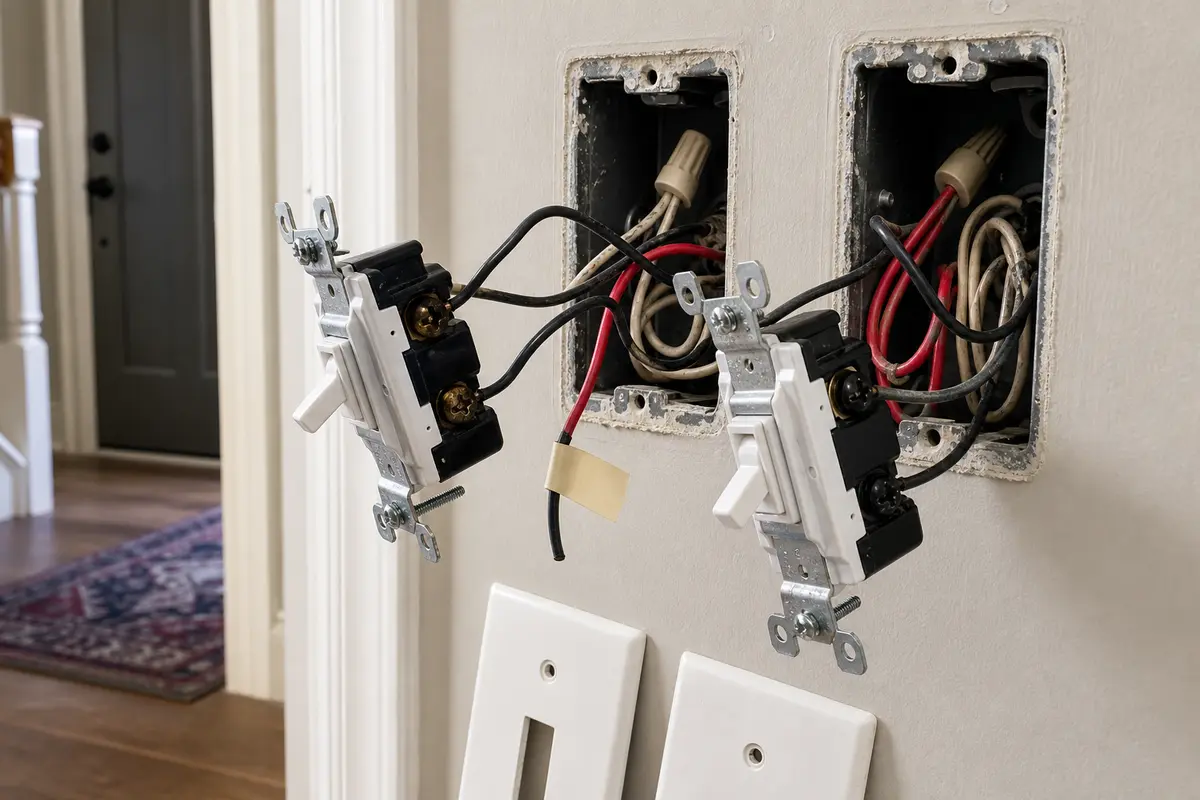
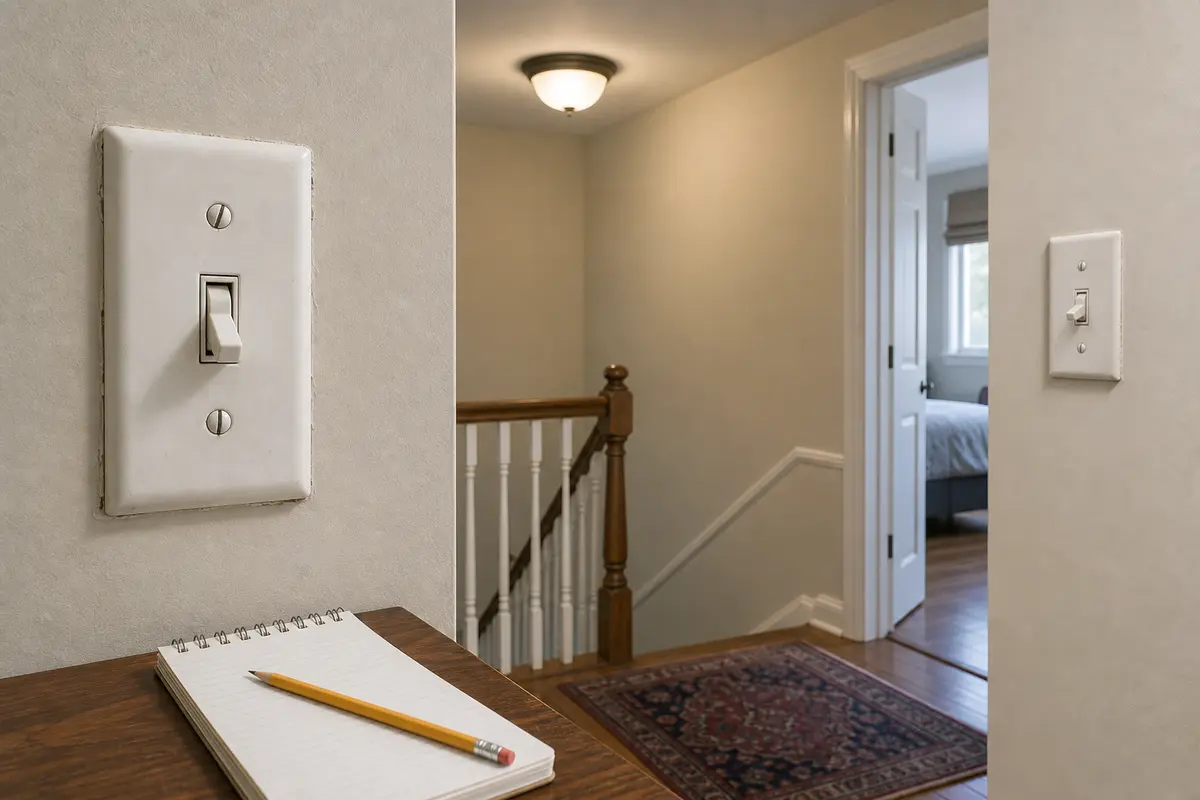
Match the part to the exact diagnosis, not the symptom name. If one switch feels worn and the other still controls the light, a 3-way switch may belong in the cart. When both switches are dead, check the bulb, breaker, GFCI if present, and fixture first. Heat, scorch, buzzing, brittle insulation, unknown wiring, or no marked common wire means no parts yet.
A 3-way circuit has two switches controlling one light. One terminal on each switch is the common, and the two others are travelers. When the common wire is misplaced or one switch fails internally, the whole pair can act wrong.
Most bad 3-way repairs come from moving too many wires too soon. A good clue is when the trouble started: old switch wear points one way, and a brand-new switch problem points toward terminal placement.
From the room, try every normal switch combination before opening a box. If the fixture stays dead, check the bulb, breaker, and nearby power. If the problem started after replacement, check the common wire. If one switch feels loose or does nothing, start there.
| What you find | What it usually means | Next move |
|---|---|---|
| One switch works, the other never changes the light. | One 3-way switch may be failed, or the recent replacement box may be miswired. | Start with the non-responsive location, power off, and old wire photos. |
| The light works only when one switch is left a certain way. | A common conductor may be on a traveler terminal, or a switch contact has failed. | Check whether a switch was recently replaced before buying parts. |
| Both switches do nothing and the fixture stays dark. | Lost power, a failed bulb or fixture, or a loose upstream connection may be involved. | Check the bulb, breaker, GFCI if present, and nearby lights or outlets. |
| The problem started after changing the switch. | Question the common wire first. | Turn power off, compare photos, and do not move wires by color alone. |
| The plate is warm, buzzing, scorched, or crackles. | Possible arcing, heat damage, or loose connection. | Keep the breaker off and call a licensed electrician. |
| A matching new switch still behaves wrong. | The fault may be in the other switch, fixture box, splice, or feed. | Stop swapping parts and have the circuit traced. |
A dead light from both switch locations is not automatically a switch failure. Rule out the simple circuit and fixture checks before pulling either device forward.
A new 3-way switch can be perfectly good and still fail the room test if the common wire moved to the wrong screw. Slow down before adding another part.
Use this path only when the room test narrows the problem to one worn switch. The toggle feels loose or gritty, one location stops changing the light, and the box has no warm plate, scorch marks, buzzing, or brittle insulation. Before any wire moves, shut off the breaker and mark the common wire.
These tools support power-off checks and documentation. They do not make live switch work safe.
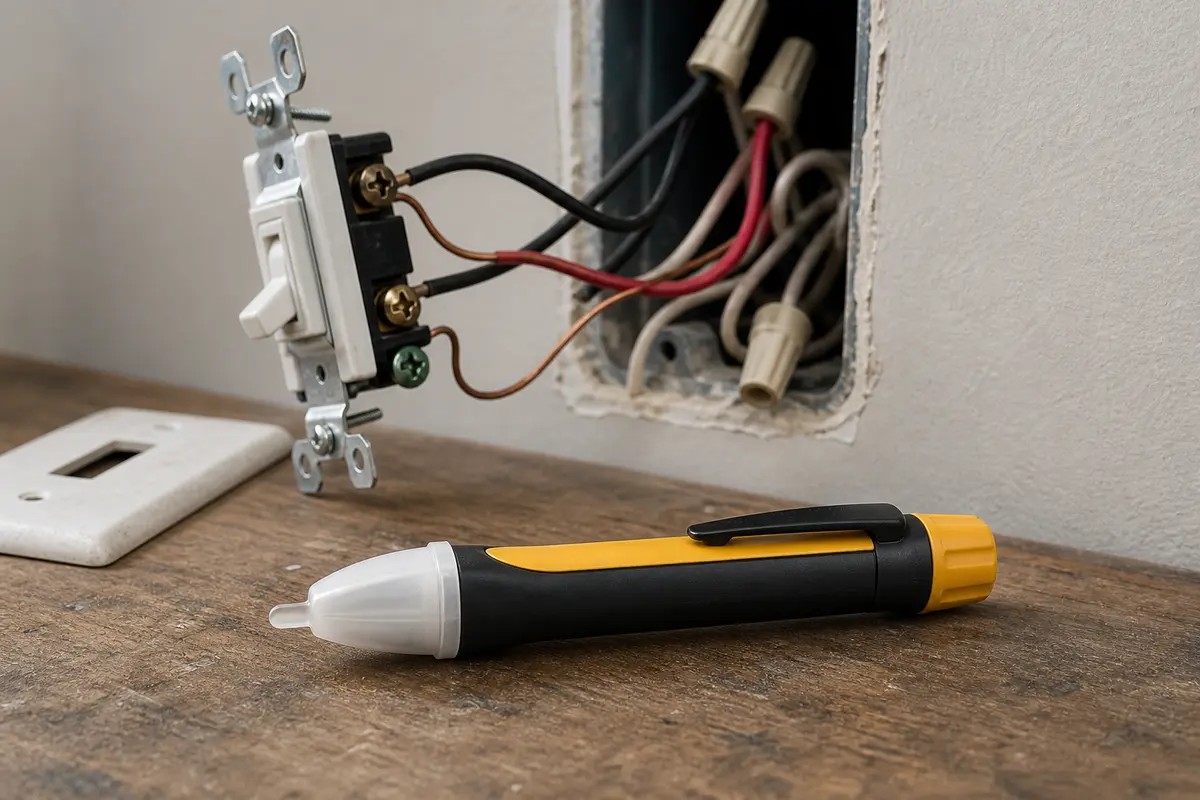
Helps when: Use it after the breaker is off, before touching switch terminals or conductors during a basic power-off check.
Skip it when: You need live testing, panel work, or tracing through unknown wiring.
Compare voltage testers on Amazon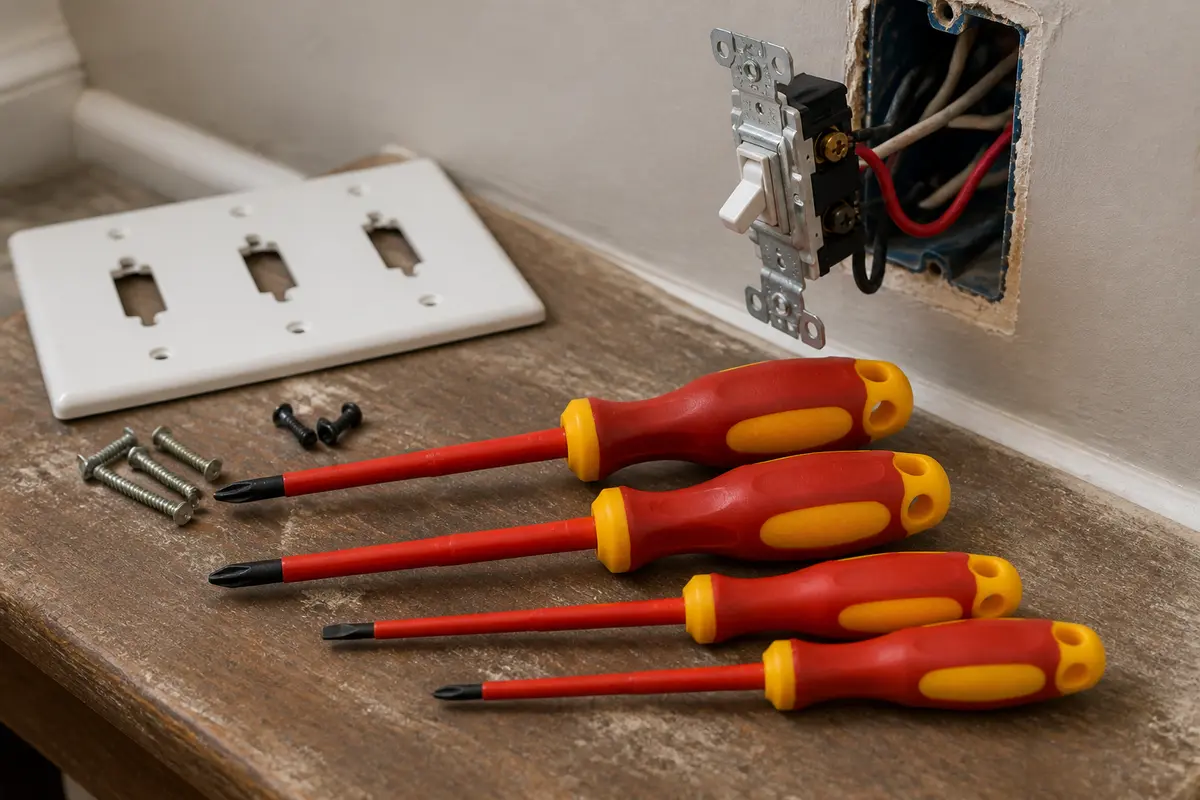
Helps when: Use it to remove the wall plate and device screws after the circuit is off and checked.
Skip it when: The switch is warm, scorched, buzzing, or the box wiring is damaged or unfamiliar.
Compare insulated screwdrivers on Amazon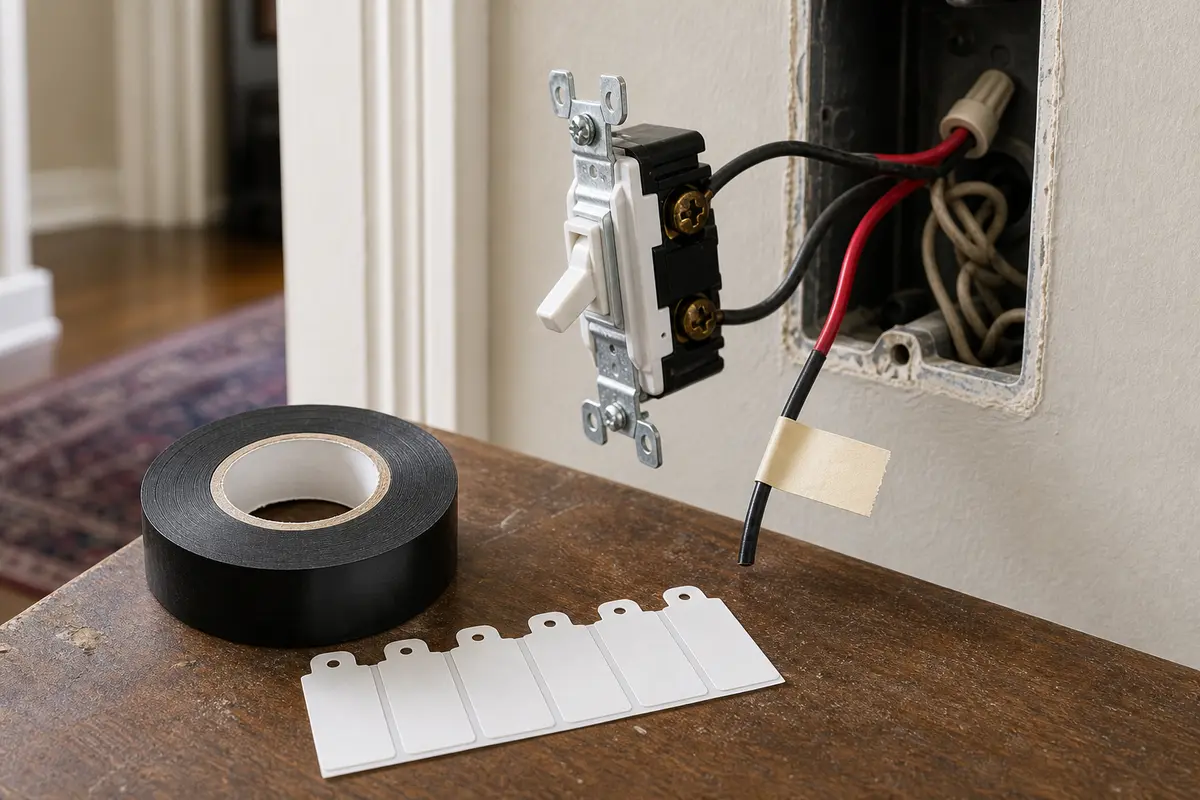
Helps when: Use it to mark the common wire before the old 3-way switch is disconnected.
Skip it when: You cannot identify which wire is common or the previous switch was removed without photos.
Compare wire labels on AmazonAs an Amazon Associate I earn from qualifying purchases. Repair Riot may earn a commission at no extra cost to you.
Part shopping comes after the diagnosis. A good clue is one worn-feeling switch while the other location still has some control. A fully dead fixture needs power and bulb checks first.
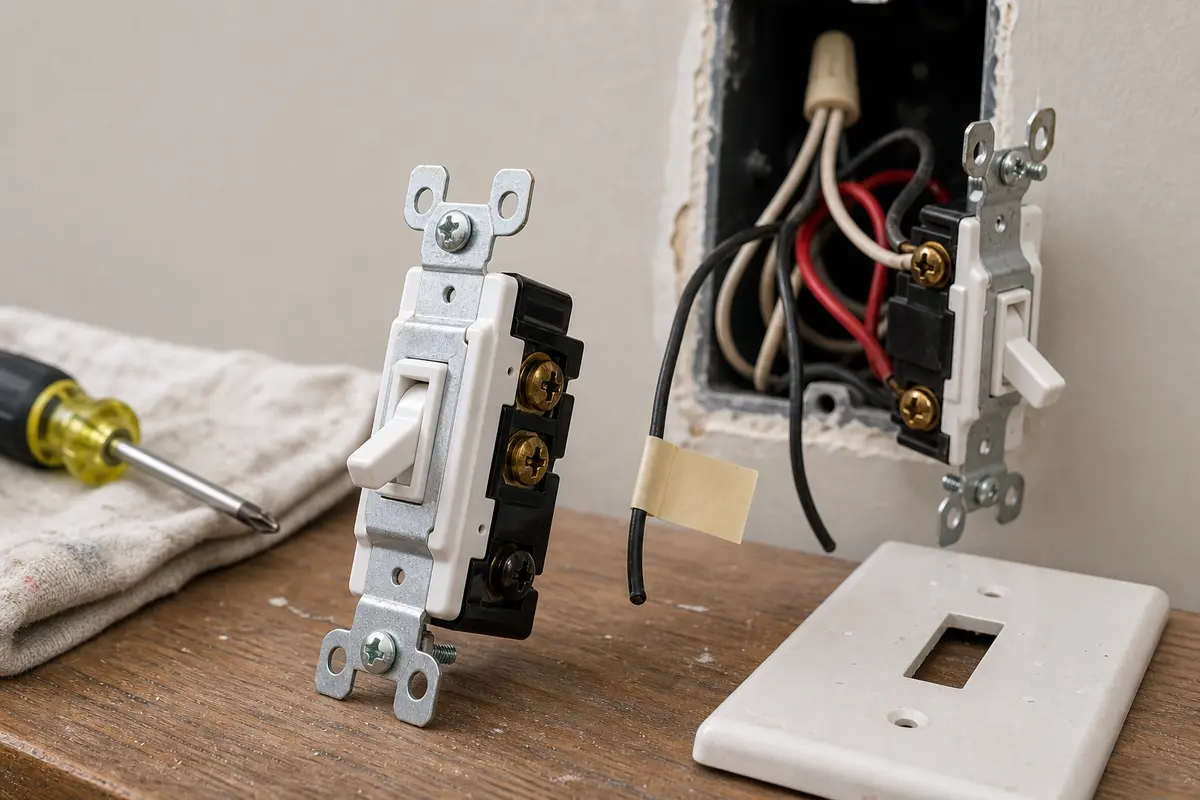
Helps when: One switch feels loose, gritty, or non-responsive during the room test, the box has no heat, scorch, buzzing, or damaged insulation, and the common wire is marked before removal.
Skip it when: Both switches are dead with no power checks done, or the box has heat, scorch marks, buzzing, damaged insulation, or unknown wiring.
Compare 3-way switches on Amazon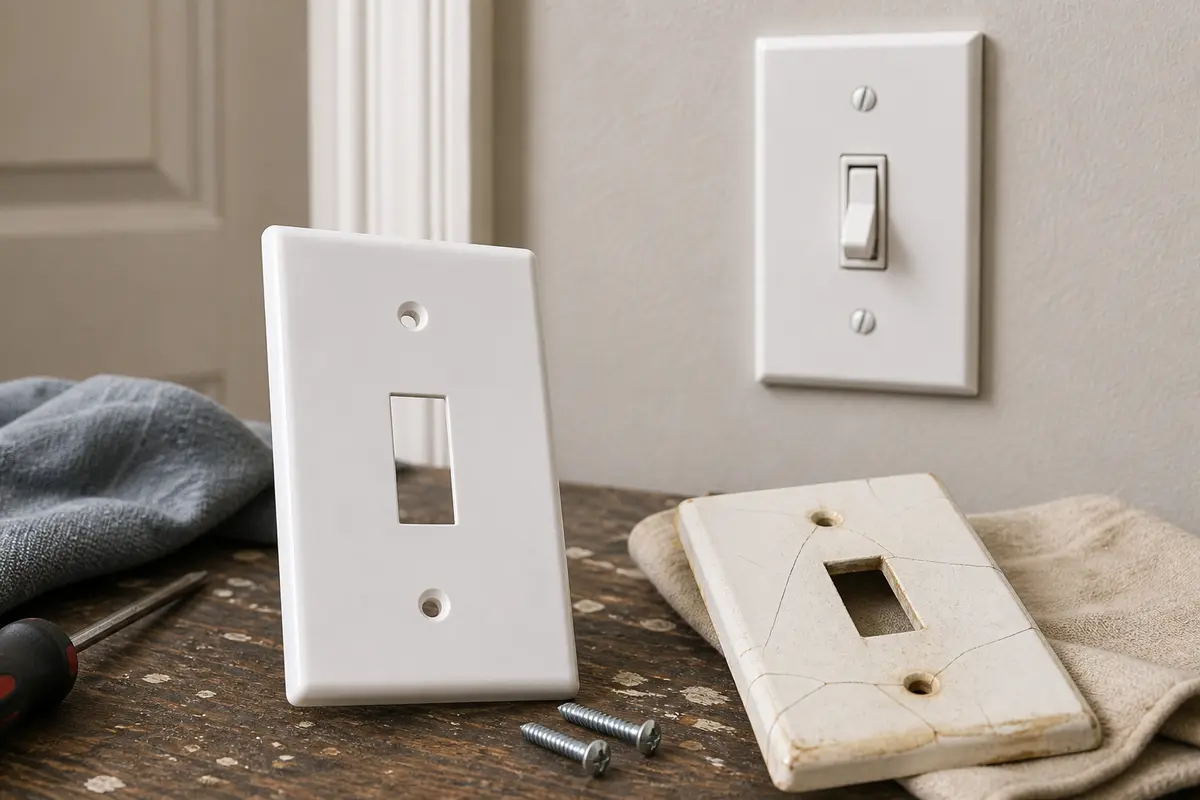
Helps when: The switch repair is done, but the old plate is cracked, warped, heat-stained, or pinching the toggle.
Skip it when: The switch still behaves wrong with the plate removed or the plate shows scorch marks from an unresolved electrical fault.
Compare wall plates on AmazonAs an Amazon Associate I earn from qualifying purchases. Repair Riot may earn a commission at no extra cost to you.
The strongest clue is the control pattern. One switch may stop changing the light, or the light may work only when the other switch is left in one position. A worn switch may also feel loose, gritty, or inconsistent. Check the bulb, breaker, fixture, and power loss first when both locations are completely dead.
Yes. One failed 3-way switch can interrupt the traveler path and make the whole setup act wrong. That is why the exact switch pattern matters before buying parts.
A moved common wire may be sitting on a traveler terminal. On a 3-way switch, the common terminal has to receive the correct conductor. Wire color is not enough to prove that.
Usually no. Replacing both switches at once erases the best clue if every wire position is not photographed and labeled. Replace one suspect switch only if the room test points to that location, the switch feels loose or non-responsive, and the common wire is marked.
Yes. A dead bulb, failed fixture, loose fixture connection, or lost circuit power can make both switches look dead. Rule out the bulb, breaker, nearby power loss, and fixture clues before blaming the switches.
It is the conductor that belongs on the common terminal of the 3-way switch. The common screw may be a different color than the traveler screws. Before disconnecting the old switch, take a photo and mark that wire. That record matters most when a recent replacement left the light working in only one switch combination.
No. Color alone can mislead you because 3-way layouts vary. Match the common terminal and the traveler pair from the old switch position, labels, and photos.
If the breaker trips when either switch moves, stop resetting it. Leave the breaker off and do not open the box to check further. Tell the licensed electrician which switch action caused the trip, because it can mean a short, damaged wiring, fixture fault, or miswire.
Stay with simple checks and a power-off, like-for-like replacement only when the wiring is clear and the diagnosis points to one worn switch. Heat, buzzing, sparking, breaker trips, damaged insulation, unknown wiring, or live testing belongs with a licensed electrician.
Repair Riot built this page around homeowner-safe observations: switch pattern, recent replacement history, bulb and breaker checks, and common-wire documentation. The stop points cover heat, arcing, breaker trips, damaged insulation, and live tracing. Public electrical-safety sources below support those warnings.