Snow is below a gable vent?
Check louver angle, loose frame, missing screen, and wind direction.
Snow blowing in through an attic vent usually means wind is driving powder through a gable, ridge, roof, or soffit opening. Start by mapping the snow footprint below the vent, then check for a broken louver, lifted flange, or wrong vent style.
Common clue: snow is concentrated below one vent while nearby insulation stays dry, which points to wind entry more than roof leakage.
The snow footprint shows the entry path; cleanup comes after the vent path is documented.
Don’t start with: Do not seal the vent shut. The fix is to stop wind-driven snow while preserving attic airflow.
Check louver angle, loose frame, missing screen, and wind direction.
Document the ridge area and use roof service if the vent product is wrong or damaged.
Check soffit vent style and baffle placement before moving insulation.
Stop cleanup and get service before disturbing insulation.
Use weather-rated repair details, not blocked openings.
Use the snow location to separate wind-driven entry from a roof leak or general condensation.
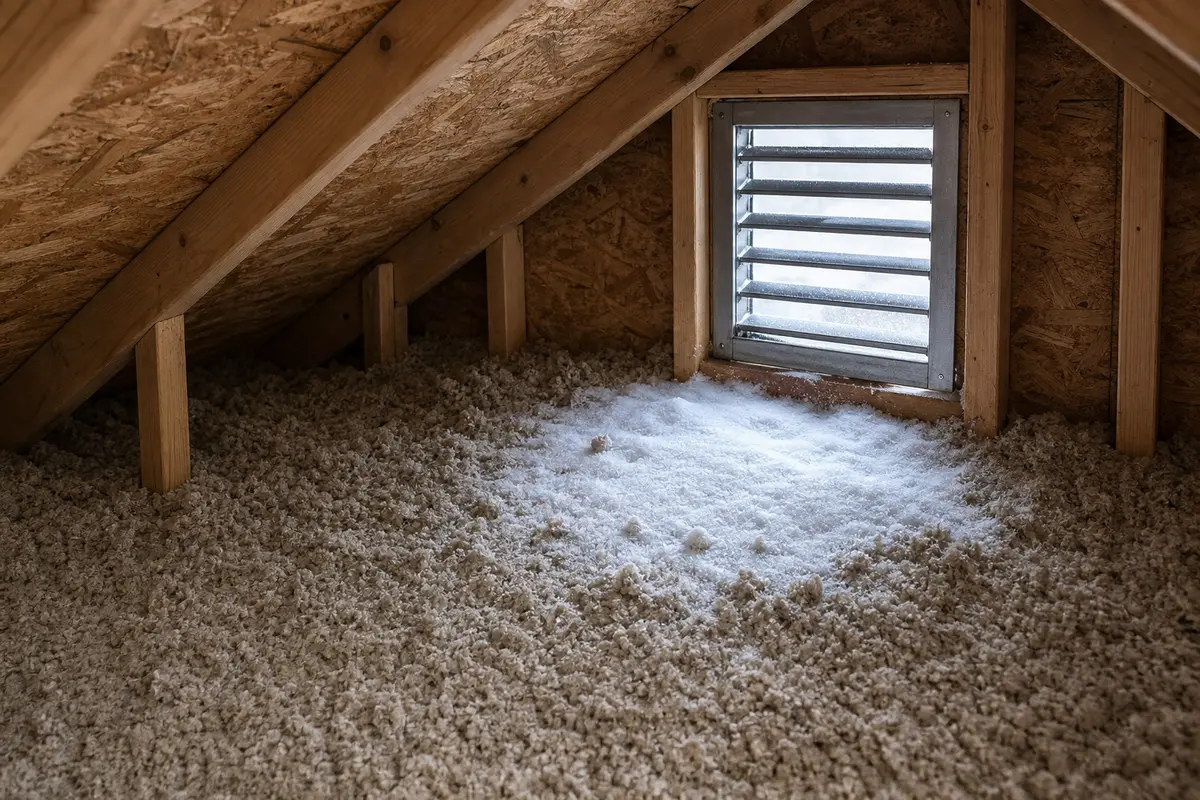
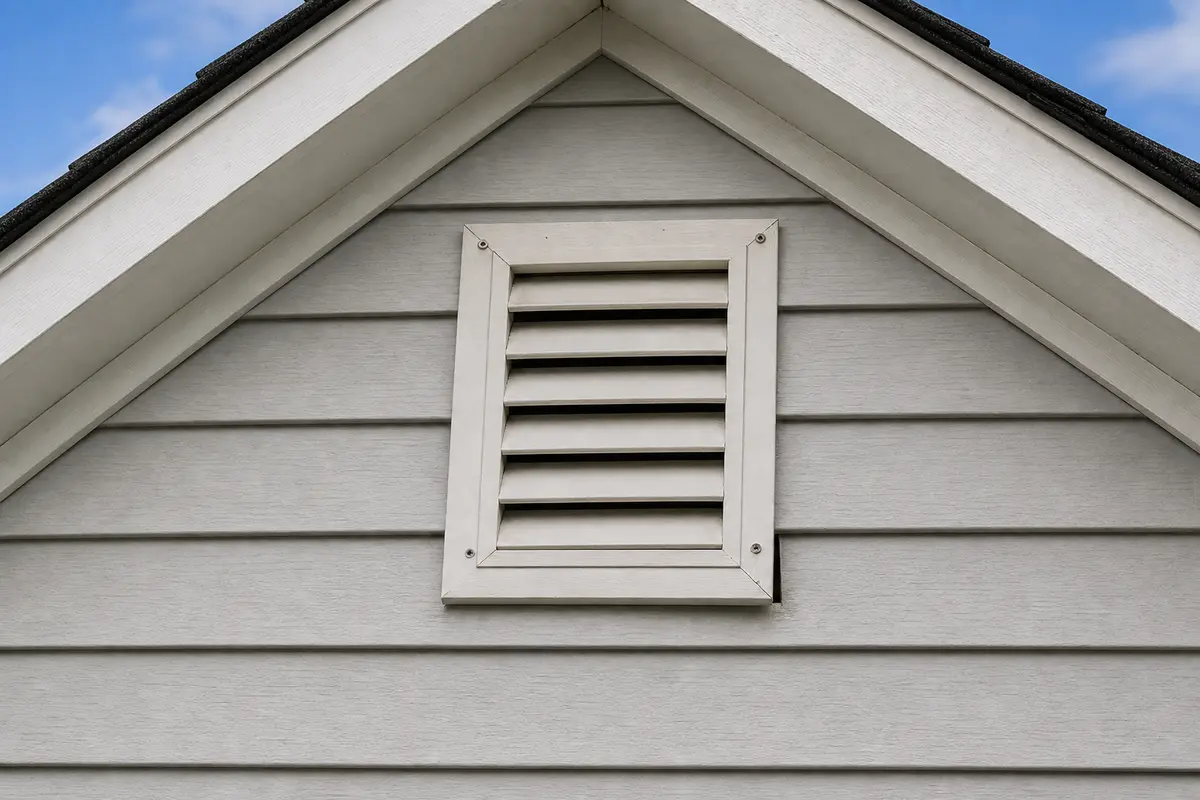
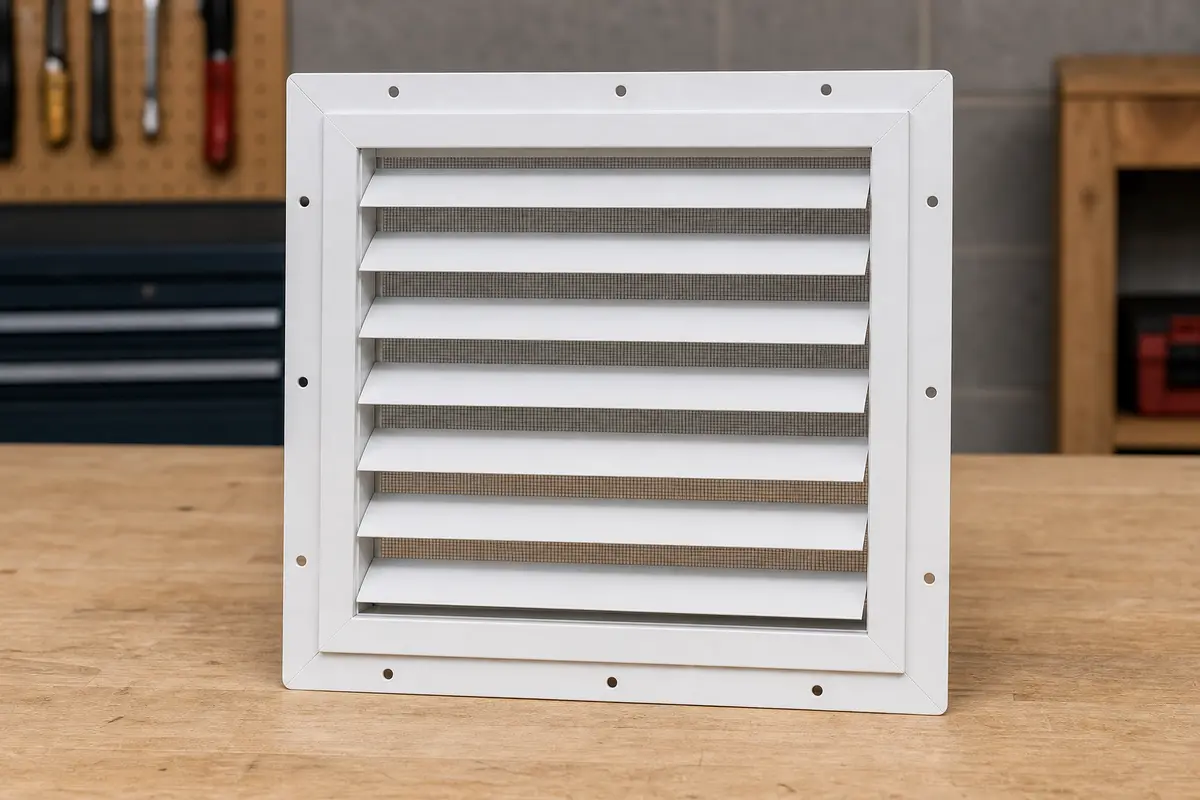
Match the exact entry path, vent style, opening size, and exterior access before buying anything. A broken gable louver, loose flange, roof ridge issue, and soffit snow problem use different parts and different stop points.
Wind-blown snow is a weather-entry clue, not the same thing as attic condensation.
Cleanup before documentation can erase the entry path.
Use snow location, vent type, and wind direction before choosing parts.
| What you see | Likely meaning | Next move |
|---|---|---|
| Snow directly below gable vent | Wind through louver or loose frame | Check exterior flange, louver angle, and screen. |
| Snow below ridge line | Ridge vent weather issue | Document and call roof service. |
| Snow at eave edge | Soffit vent or baffle issue | Check eave details and keep airflow open. |
| Snow mixed into insulation | Melt risk at ceiling below | Protect the ceiling and dry only after entry path is known. |
| Vent frame pulled away | Fastener or backing failure | Secure sound backing before small weather sealing. |
The repair should reduce wind-driven snow while leaving the attic ventilation path open.
Use these only when the visible entry path matches the part.
Helps when: Use when snow or wind enters through a cracked, warped, missing, or loose gable vent louver.
Skip it when: Skip if surrounding trim or sheathing is soft, the opening is custom-sized, or access requires unsafe ladder work.
Compare gable vent louvers on Amazon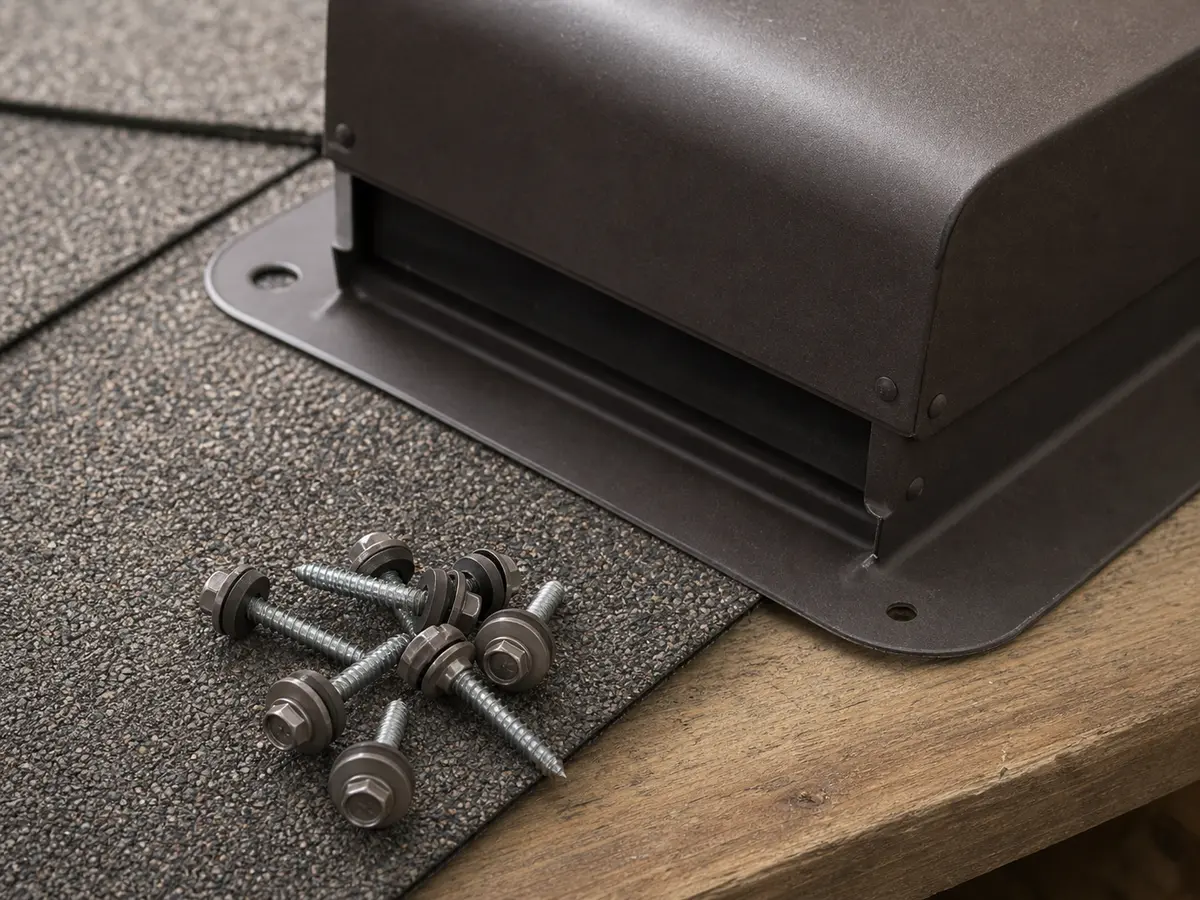
Helps when: Use when a sound vent flange, cap, or screen retainer needs exterior-rated fasteners to sit flat.
Skip it when: Skip if the frame is cracked, the wood is soft, the vent still moves when snug, or access is unsafe.
Compare exterior screws on Amazon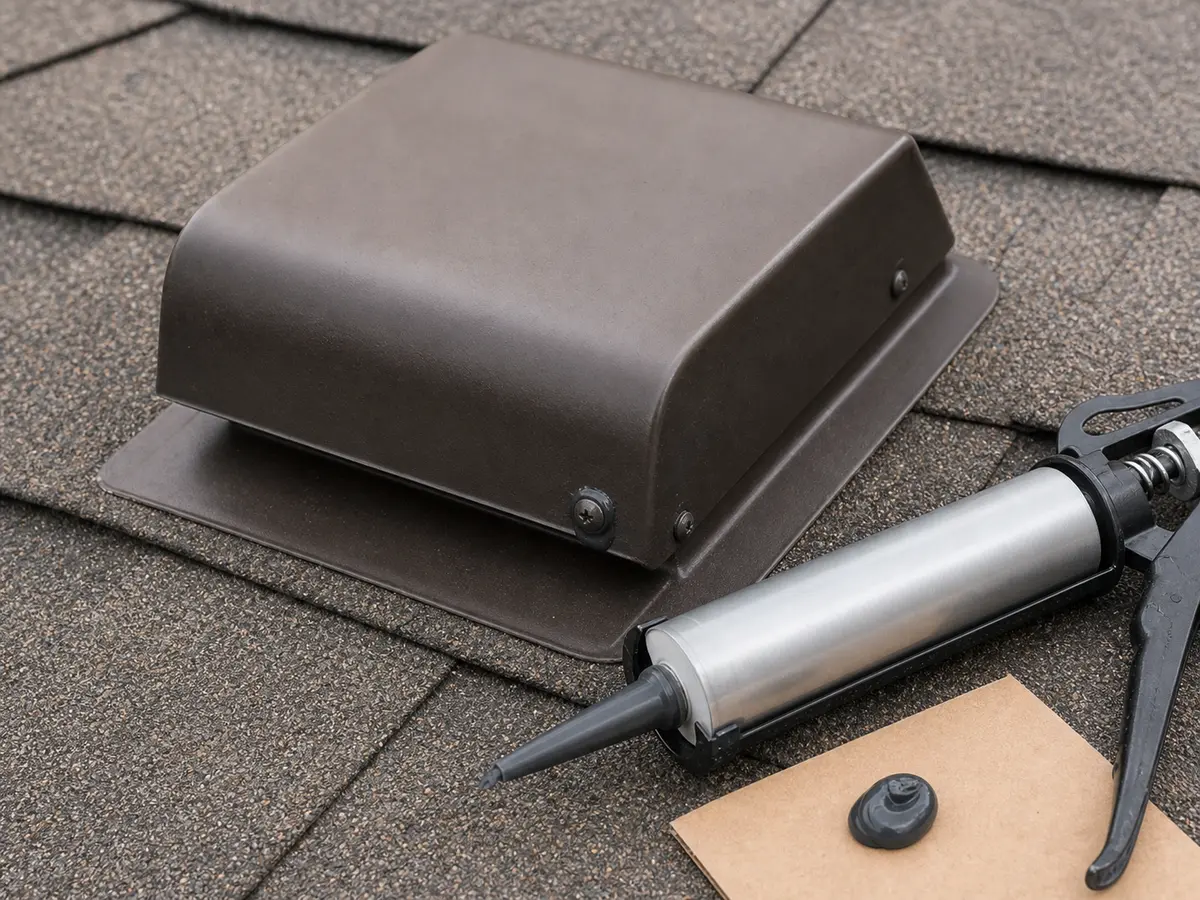
Helps when: Use for a small dry weather gap only after the vent is mechanically secured and still ventilates.
Skip it when: Skip using sealant as the main fastener, over wet material, or anywhere it would block intended airflow.
Compare exterior sealants on AmazonAs an Amazon Associate I earn from qualifying purchases. Repair Riot may earn a commission at no extra cost to you.
These support safe inspection and light documentation; they do not make roof or high-ladder work safe.
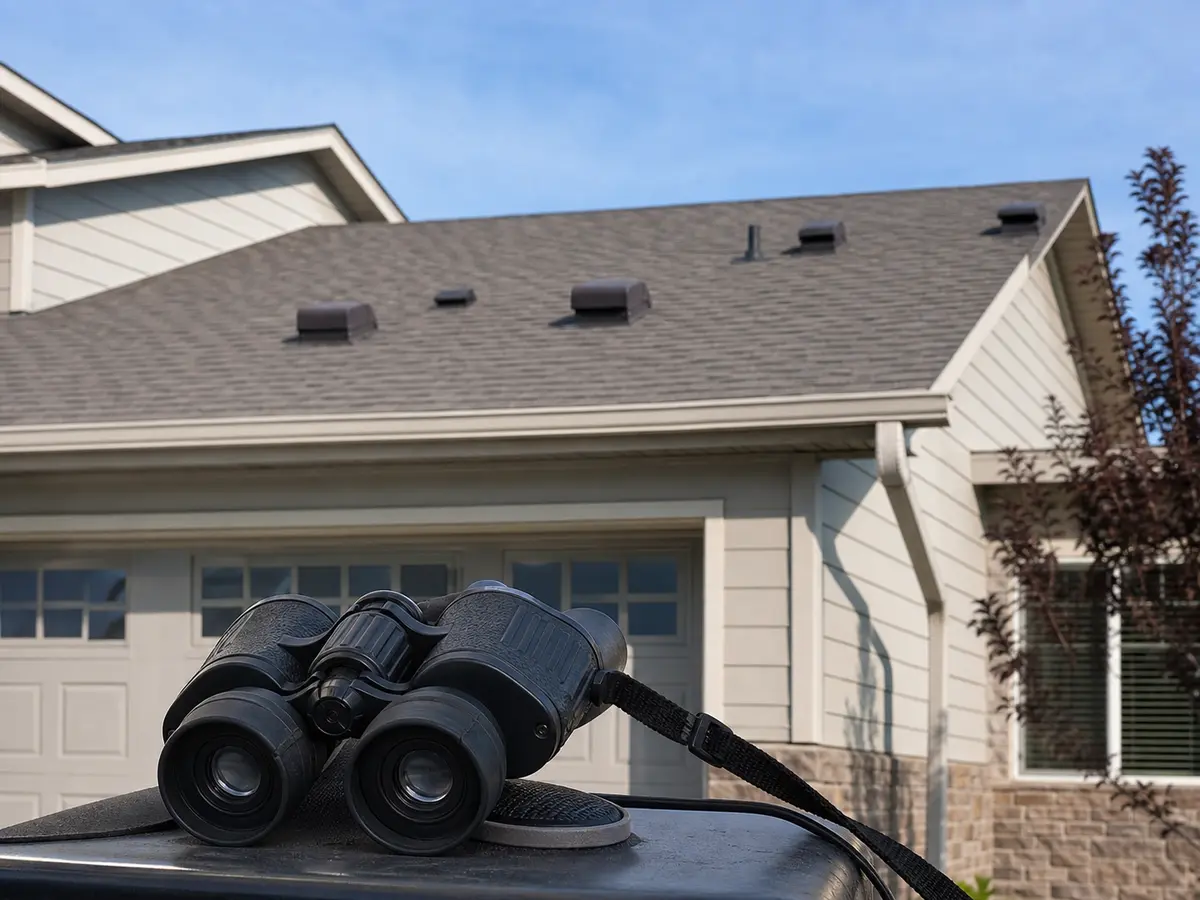
Helps when: Use from the ground to identify a bent louver, lifted flange, loose screen, missing cap, or snow stain before access is considered.
Skip it when: Skip if the vent is hidden by roof geometry or the clue needs close inspection by a pro.
Compare inspection binoculars on Amazon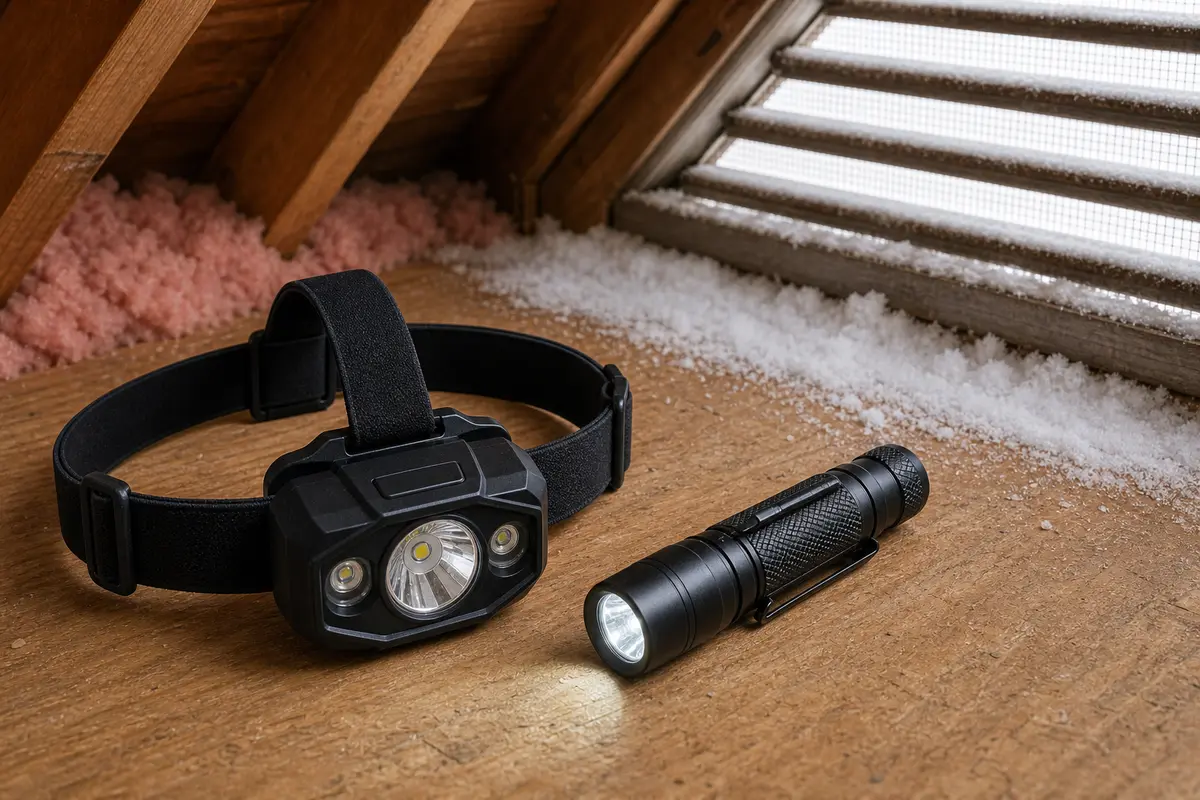
Helps when: Use inside the attic to see vent paths, eave bays, dust tracks, screen edges, and wet or snowy footprints while keeping hands free.
Skip it when: Skip attic entry if the walkway, wiring, contamination, heat, or access conditions are unsafe.
Compare headlamps on Amazon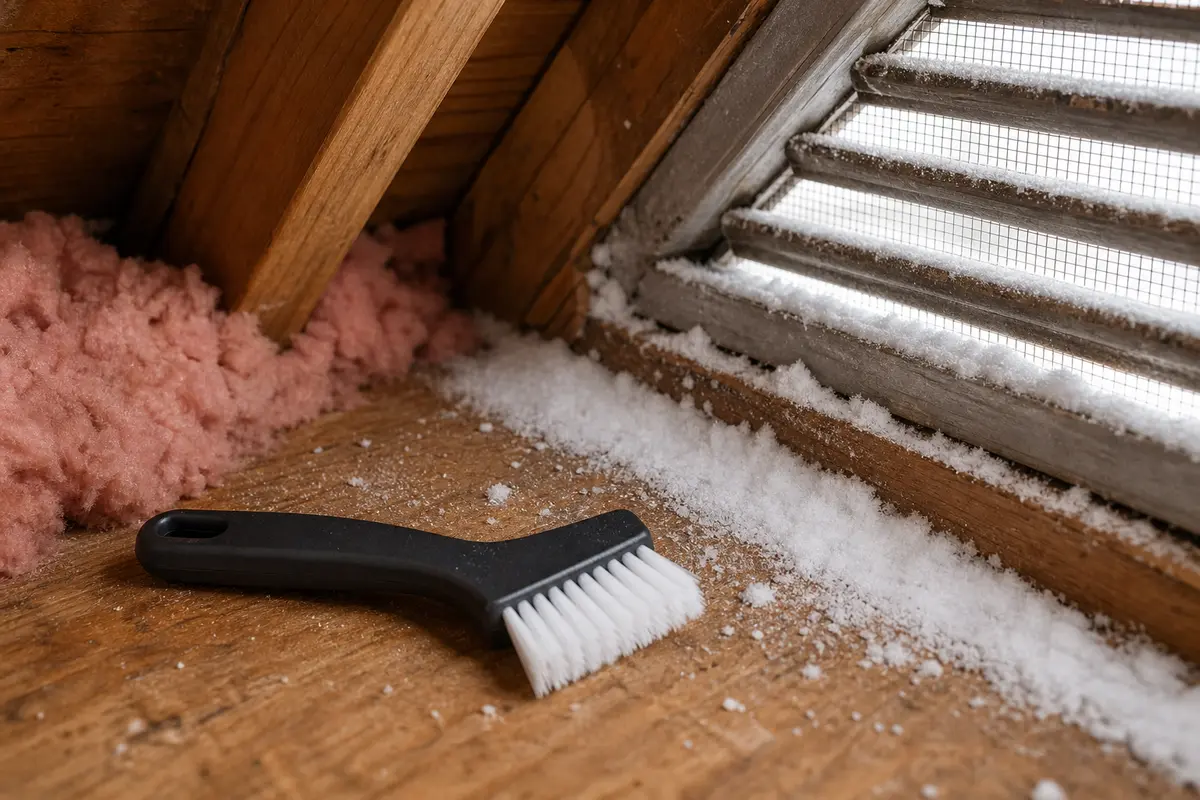
Helps when: Use only from a safe attic walkway to move a light dusting off plastic sheeting or a protected surface.
Skip it when: Skip brushing wet insulation, deep snow, active leaks, wiring areas, or any spot you cannot reach safely.
Compare soft snow brushes on AmazonAs an Amazon Associate I earn from qualifying purchases. Repair Riot may earn a commission at no extra cost to you.
No. Blocked attic vents can create moisture problems. Repair the louver, flange, hood, or roof-side detail while preserving airflow.
No. A dry powder footprint below a vent usually points to wind-driven entry. Rain or melt tracking from above points more toward leakage.
Only light loose snow from a safe walkway and away from wiring. Photograph it first and stop if insulation is wet or access is unsafe.
Document the area and call roofing service. Ridge vent weather details are roof-side work.
Only a small dry weather gap after the vent is secure. Sealant should not close the louver or ventilation opening.
Replace it when louvers are broken, the frame is warped, the screen is missing, or it cannot fasten flat.
Yes. Meltwater can mat insulation and stain the ceiling below, especially if the snow is not removed or dried after the entry path is fixed.
Recheck after the next windy snow to confirm no new powder footprint appears below the vent.
Repair Riot built this page around visible snow-entry clues: footprint shape, vent type, wind direction, exterior damage, wet insulation, and stop points before blocking ventilation.