Duct ends openly in the attic?
The fan is exhausting indoors. Route it to a dedicated exterior cap.
When a bath fan exhausts into the attic, start by tracing the duct path, not by adding vents. A disconnected duct, missing exterior cap, loose collar, or duct aimed at a soffit usually explains damp insulation or frost after showers.
Most failures show up next to the duct first: insulation is damp under the open end, collar tape has loosened, or the roof or wall cap is missing.
Sort open duct, loose joint, missing cap, and wet insulation separately. Each pattern points to a different fix and stop point.
Don’t start with: Do not start by adding more attic vents, covering stains, or aiming the duct at a nearby attic vent. Fix the wet exhaust source first.
The fan is exhausting indoors. Route it to a dedicated exterior cap.
Reconnect it with a clamp and foil HVAC tape after confirming the cap is outdoors.
Choose a proper bath fan roof or wall cap; roof work belongs with a pro if access is unsafe.
Dry and inspect the area after the exhaust source is fixed.
Check broader attic condensation and ventilation causes too.
The useful images are the open duct end, the loose joint, and the dedicated exterior cap the duct should reach.
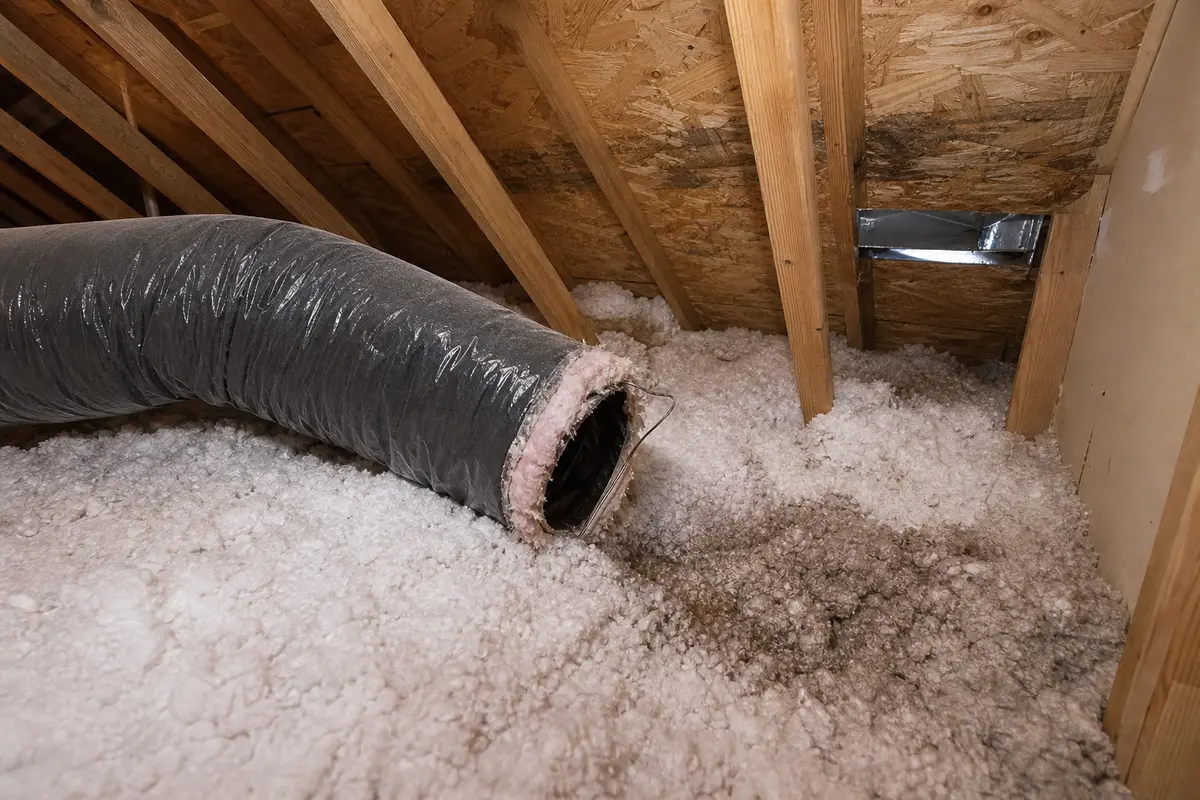
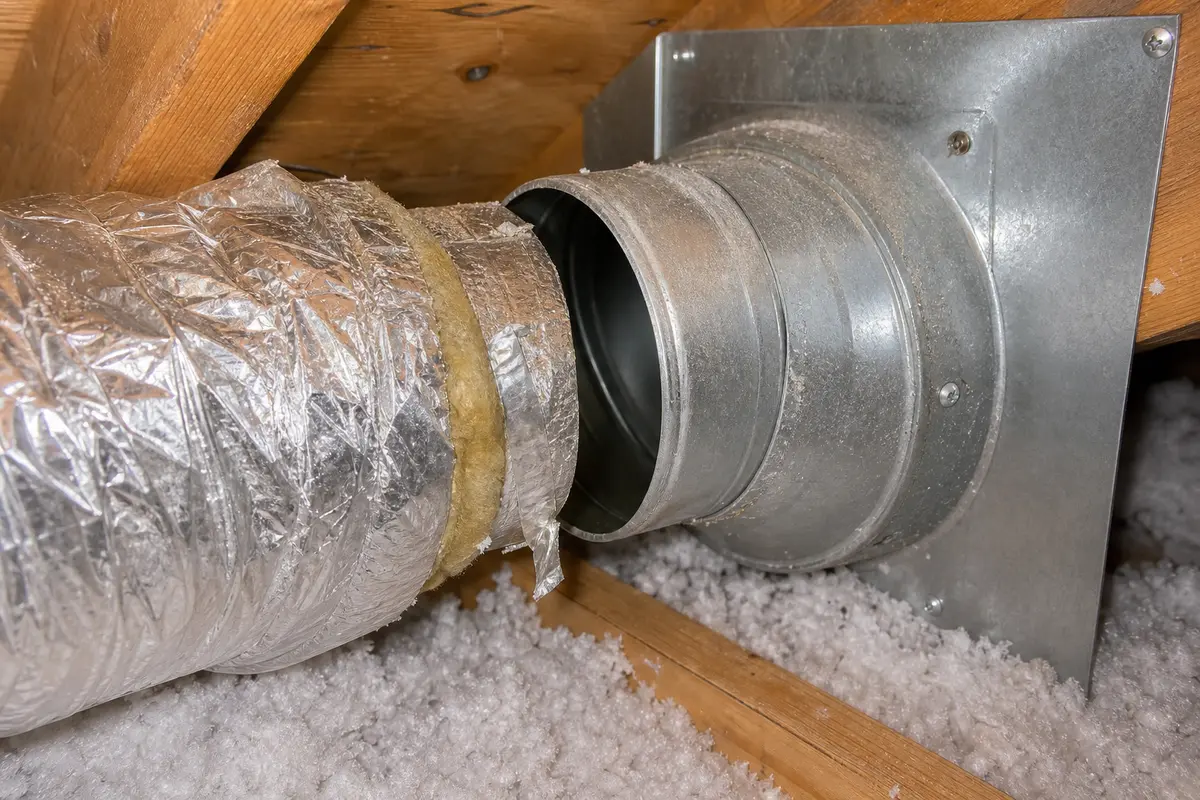
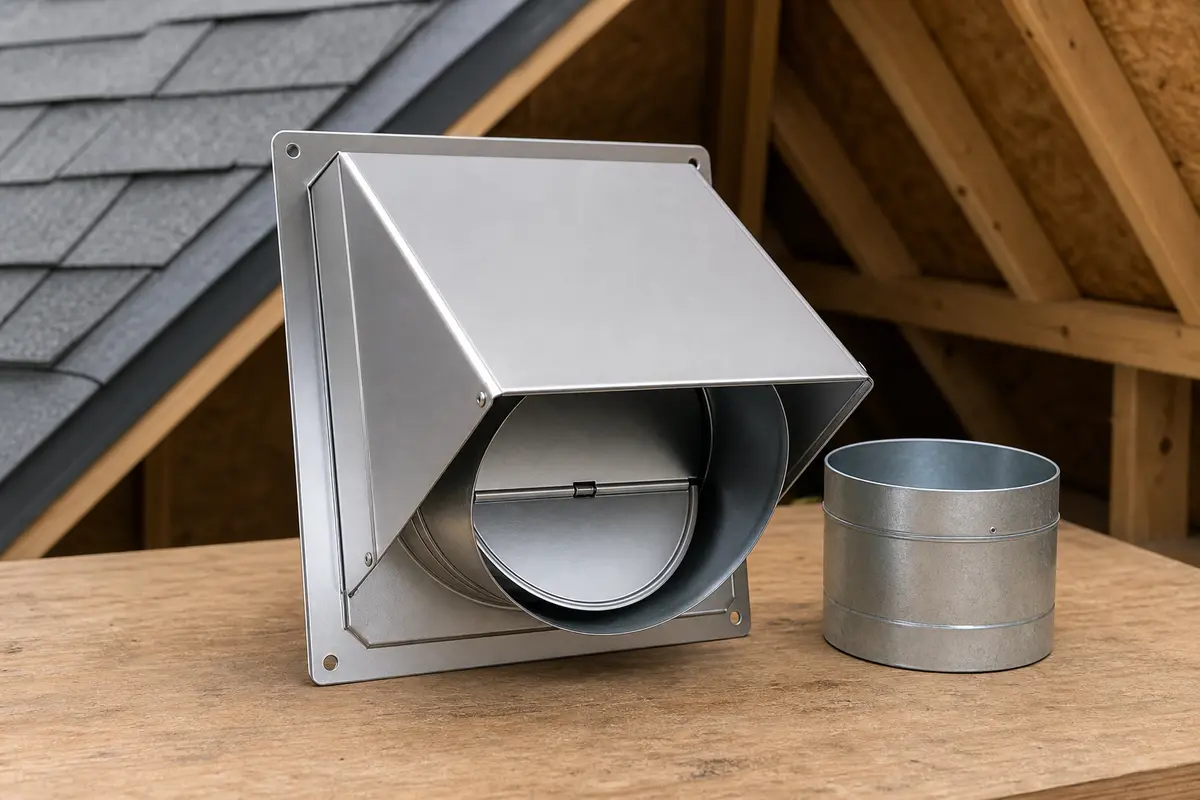
Buy only after the visible failure matches the part. Match the exact fan model or outlet size, duct diameter, cap collar, roof or wall assembly, damper, insulation need, and code detail. Use a vent cap for a missing or broken termination, duct for a missing or damaged run, and clamps or foil tape only for sound joints.
Bathroom exhaust is a moisture source. If it ends in the attic, every shower can add water to insulation, framing, and roof sheathing.
The wrong first move is trying to ventilate around a direct moisture dump.
Use this map after the fan is off and the attic access is safe.
| What you see | Likely meaning | Next move |
|---|---|---|
| Open duct end in insulation | Fan exhaust is entering the attic | Route duct to a dedicated roof or wall cap. |
| Duct close to cap but not clamped | Joint leak | Reconnect with a collar, clamp, and foil HVAC tape. |
| No roof or wall cap | No outdoor termination | Install a proper bath fan termination or hire roof/HVAC help. |
| Water stains near duct only after showers | Bath fan moisture source | Fix duct path, dry insulation, and recheck. |
| Widespread frost away from duct | Broader attic humidity issue | Check bath fans, air leaks, soffit intake, and roof leaks. |
The duct route decides what belongs in the cart.
Buy parts only for the failure you can see. The goal is a short, supported duct run connected to a dedicated exterior cap.
Helps when: No dedicated exterior termination exists, the old cap is broken, the damper sticks, or the collar cannot hold the duct securely.
Skip it when: Skip if the existing cap is intact, outdoors, sized correctly, and the failure is only a loose indoor joint.
Compare bath fan vent caps on Amazon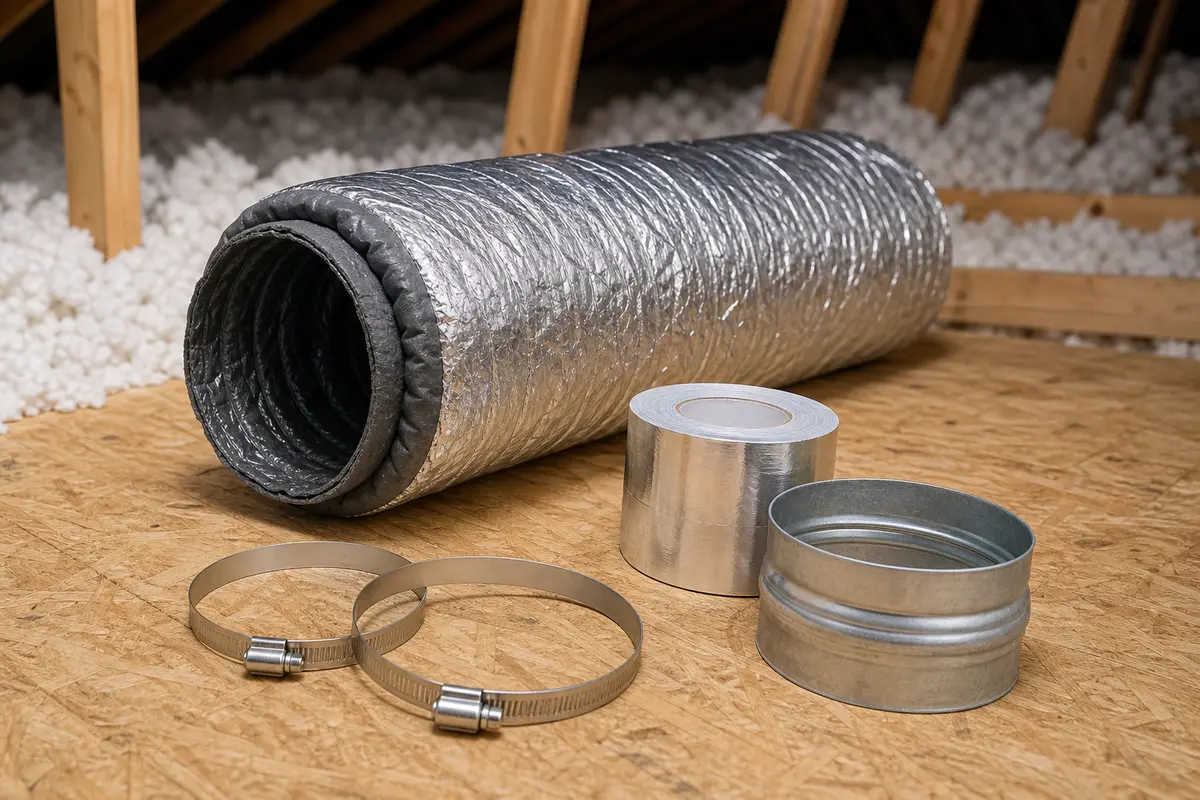
Helps when: The attic duct is missing, torn, crushed, uninsulated through cold attic space, or too short to reconnect without strain.
Skip it when: Skip if the duct is intact, insulated, supported, and can be clamped securely to the existing cap.
Compare insulated bath fan duct kits on Amazon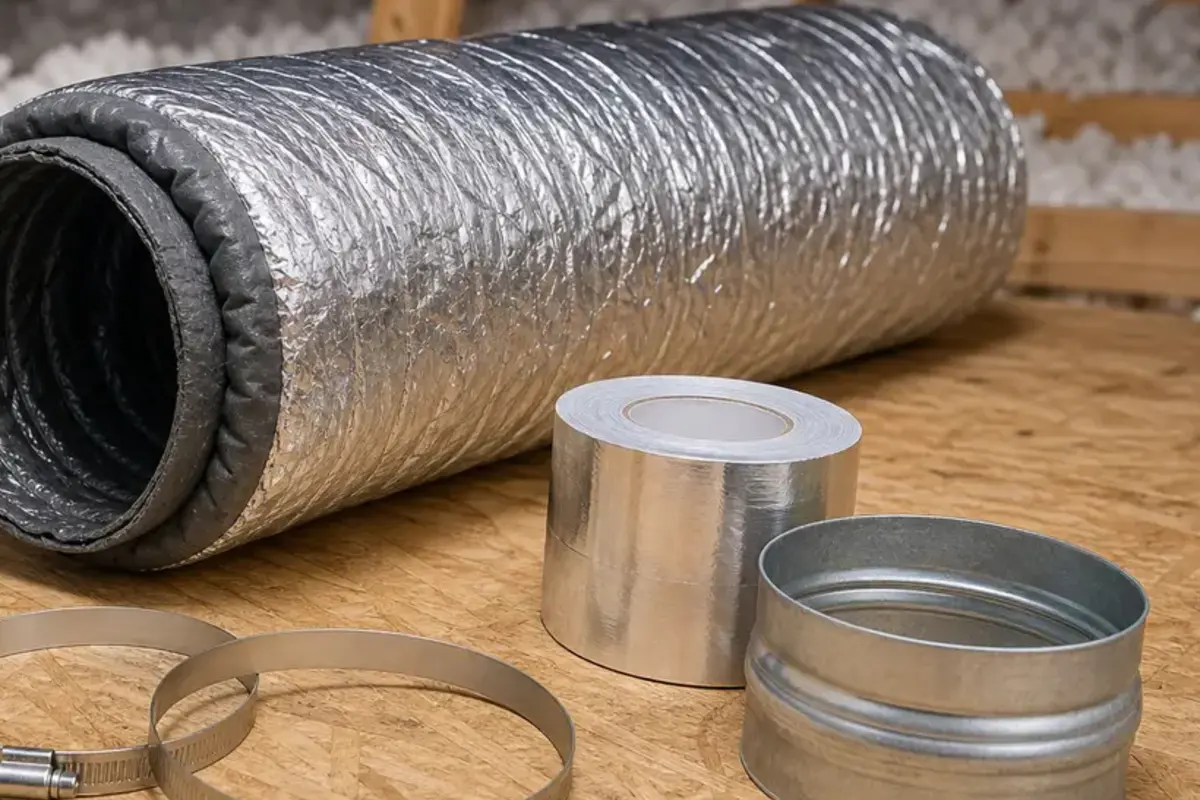
Helps when: A sound duct and collar are present but the joint is loose, leaky, or missing a mechanical clamp.
Skip it when: Skip if the duct is missing, crushed, torn, wet inside, or has no outdoor cap to connect to.
Compare foil HVAC tape and clamps on AmazonAs an Amazon Associate I earn from qualifying purchases. Repair Riot may earn a commission at no extra cost to you.
These tools support inspection and safe handling in an attic. Skip the work if access or roof details are unsafe.
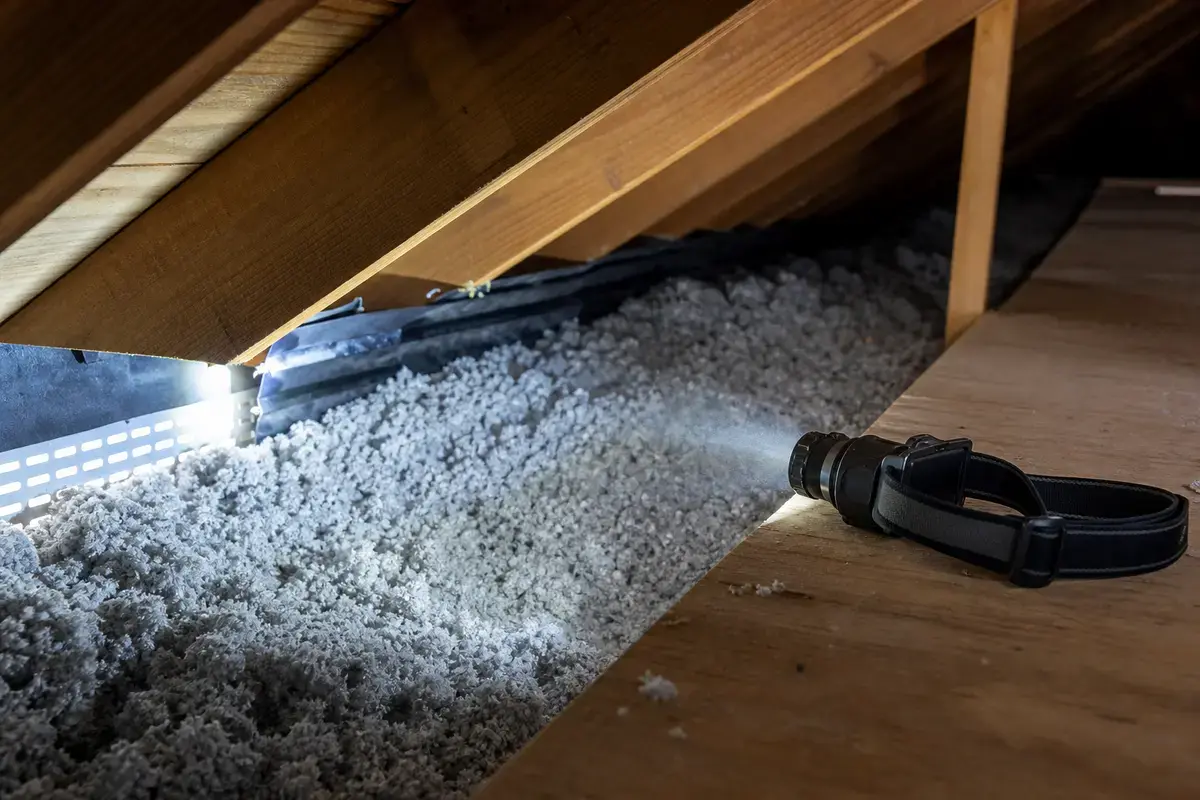
Helps when: You need both hands free while tracing the duct path, checking collars, and spotting damp insulation.
Skip it when: Skip attic entry if the walkway, access, or electrical area is unsafe.
Compare headlamps on Amazon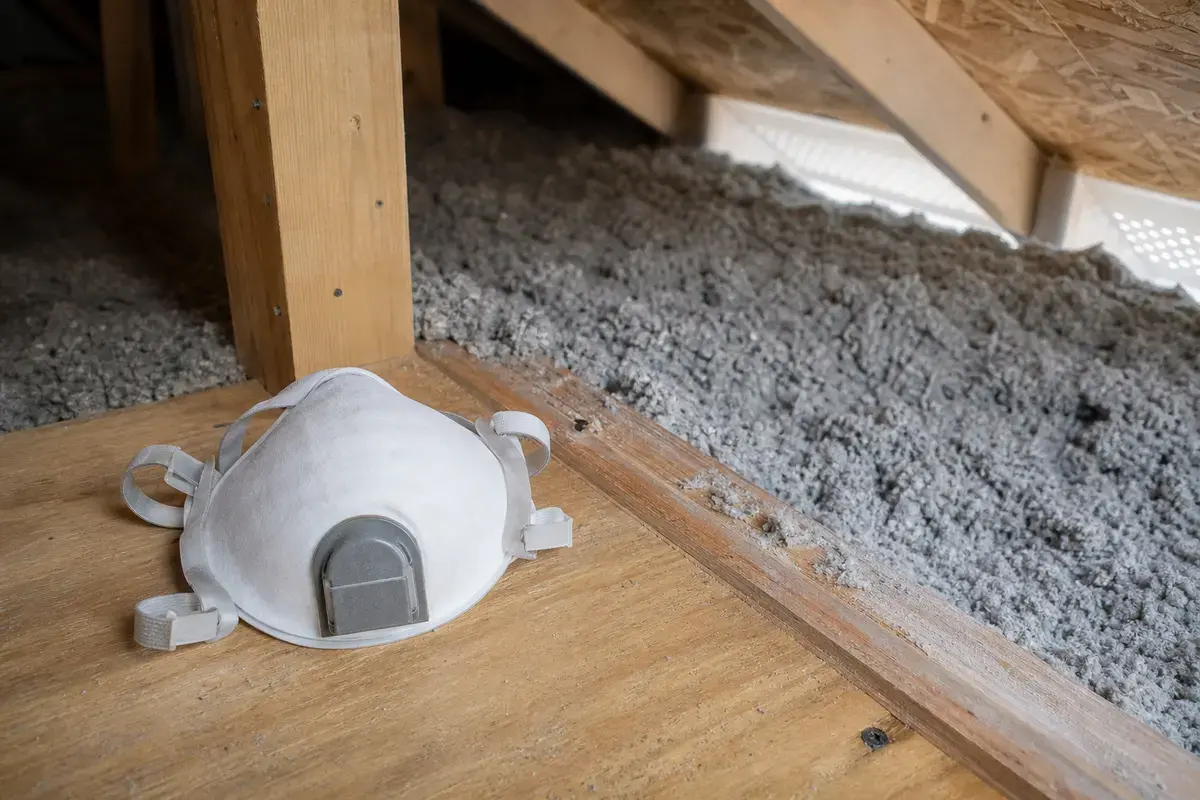
Helps when: You are moving near insulation dust, old duct jackets, and damp attic material during inspection.
Skip it when: Skip DIY cleanup for heavy mold, animal contamination, or soaked insulation.
Compare dust masks on Amazon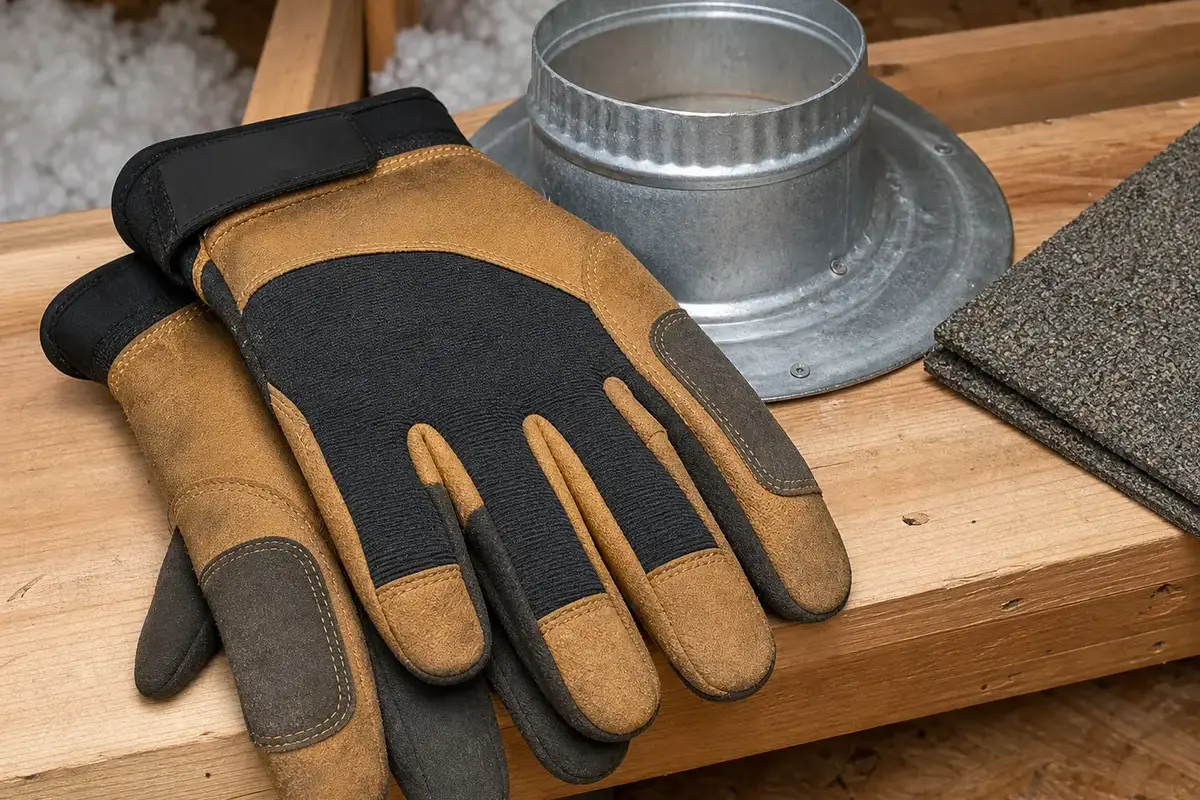
Helps when: You need to handle duct collars, clamps, rough framing, and sharp sheet-metal edges.
Skip it when: Skip if the duct is wet near wiring, roof work is needed, or access is unstable.
Compare work gloves on AmazonAs an Amazon Associate I earn from qualifying purchases. Repair Riot may earn a commission at no extra cost to you.
No. It should exhaust outdoors through a dedicated roof or wall cap, not into attic insulation or near a soffit vent.
No. The duct needs a real exterior termination so moist bathroom air leaves the building envelope.
Warm shower air can leak into a cold attic and freeze on sheathing, framing, or the duct jacket.
Not first. More attic ventilation does not fix a bath fan that dumps moisture indoors.
Only if the existing duct is missing, crushed, torn, uninsulated through cold attic space, or too short to reconnect correctly.
Use foil HVAC tape with a mechanical clamp where the joint is otherwise sound. Cloth duct tape fails quickly in attics.
Replace insulation that stayed wet, smells musty, is compressed, or will not dry after the duct path is fixed.
Call for roof penetrations, unsafe attic access, electrical hazards, soft sheathing, heavy mold, or a route you cannot support and terminate correctly.
Repair Riot built this page around visible attic moisture clues: timing, duct path, air leakage, wet insulation, sheathing condition, and stop points before roof, electrical, or unsafe attic work.