Problem started right after filter change?
Check direction, size, thickness, and restriction rating first.
If the AC cools slowly right after a filter change, start with the new filter: direction arrow, exact size, thickness, seal, and restriction rating. A wrong, backward, or too-dense filter can reduce airflow enough to make cooling fade.
Good clue: cooling changed the same day as the filter, especially with weaker vent airflow or longer run times.
Treat the filter change as the first test result. If airflow changed, the cooling problem likely started at the filter rack.
Don’t start with: Do not add refrigerant, buy hidden AC parts, or upgrade to an even denser filter before checking airflow.
Check direction, size, thickness, and restriction rating first.
Try the correct less-restrictive filter style and clear returns.
Thaw the coil, restore airflow, and call if ice returns.
Check outdoor condenser airflow and heat load.
Switch to the outdoor no-start or breaker path.
A filter swap can expose size, direction, restriction, and return-air problems.
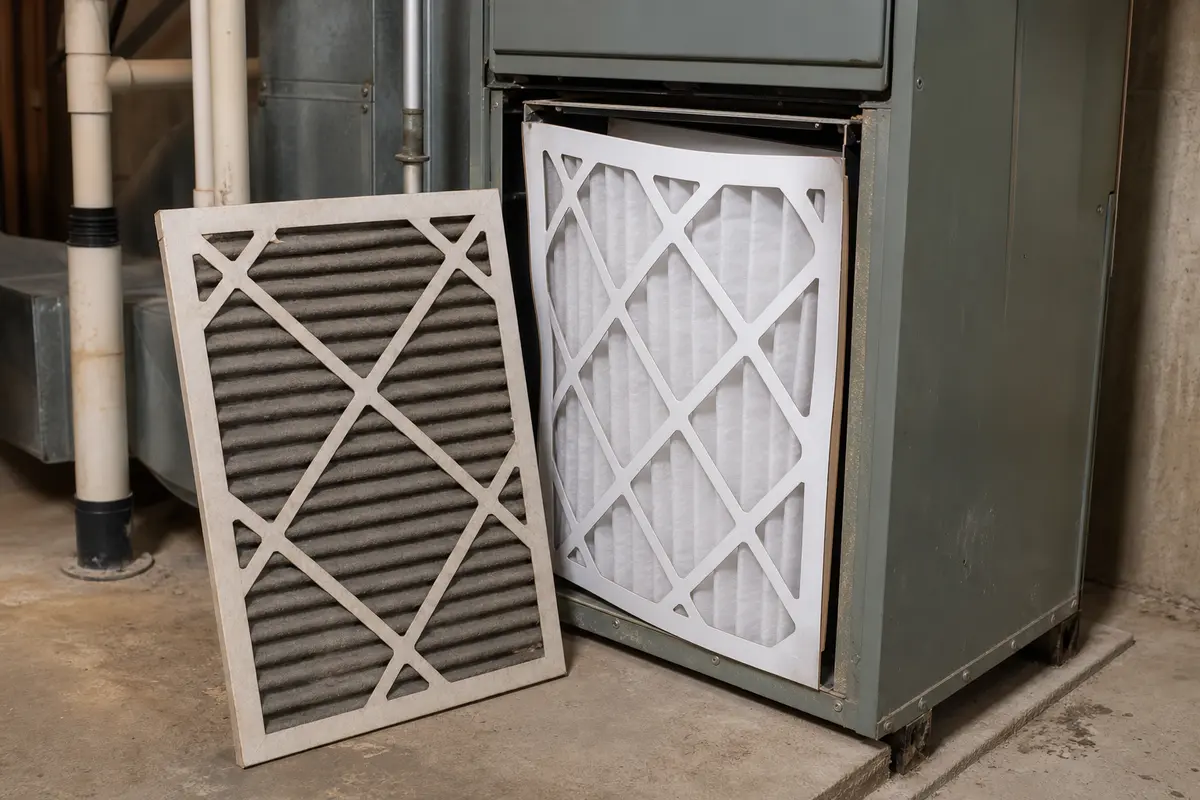
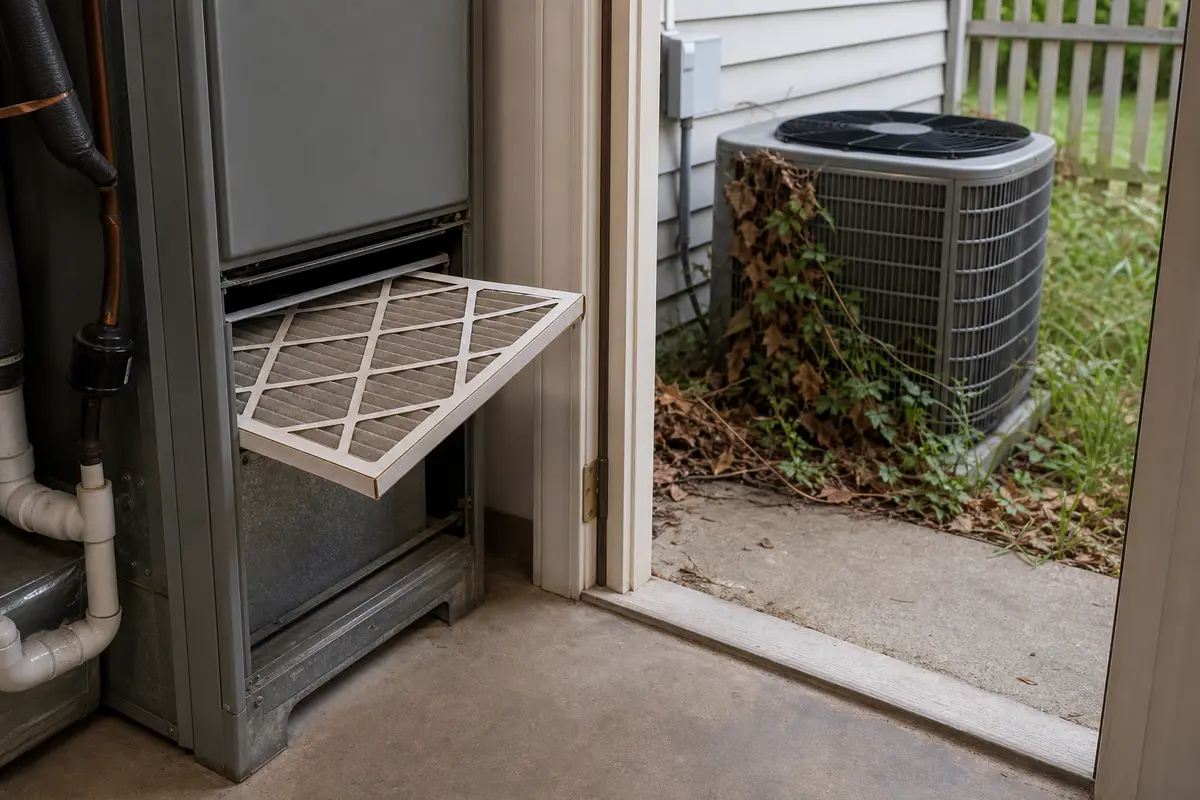
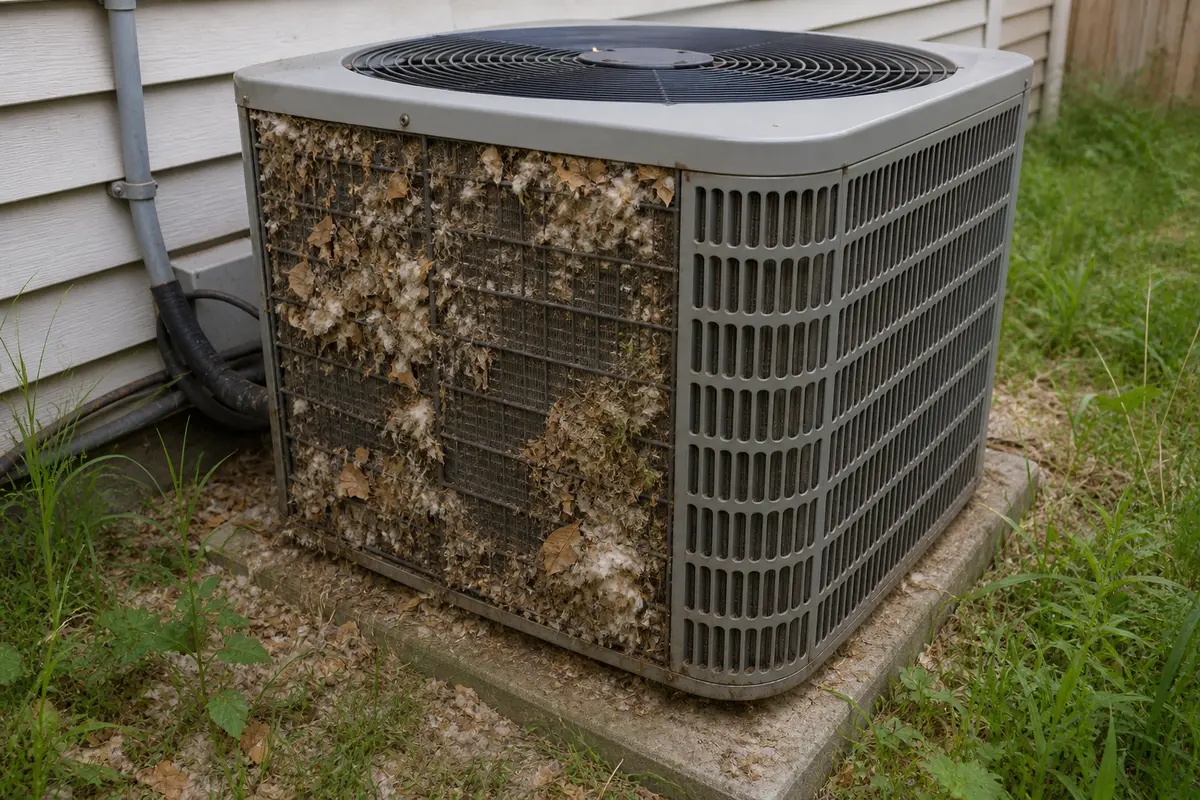
Buy only after the exact diagnosis fits: the new filter is the wrong size, wrong thickness, installed backward, or too restrictive for the system. Match the exact filter size, airflow arrow, MERV range, and visible clue before ordering anything.
A filter change is a real clue when the symptom starts the same day.
Avoid the expensive shortcut until the visible clues support it.
Use this table after one controlled cooling call and the normal delay period.
| Clue | Most likely clue | Next move |
|---|---|---|
| Filter backward | Airflow restriction | Reinstall with the airflow arrow pointed correctly. |
| Filter too thick or dense | High static pressure | Use a filter style the system handled well. |
| Filter loose or wrong size | Bypass or rack blockage | Buy the exact printed size. |
| Ice after filter change | Airflow restriction or refrigerant-side issue | Thaw and call if ice returns. |
| Airflow normal, cooling slow | Outdoor coil, heat load, or service issue | Check condenser airflow next. |
These checks keep the diagnosis tied to field clues.
Buy parts only when the evidence points to that exact visible clue.
These support safe visible checks and cleanup.
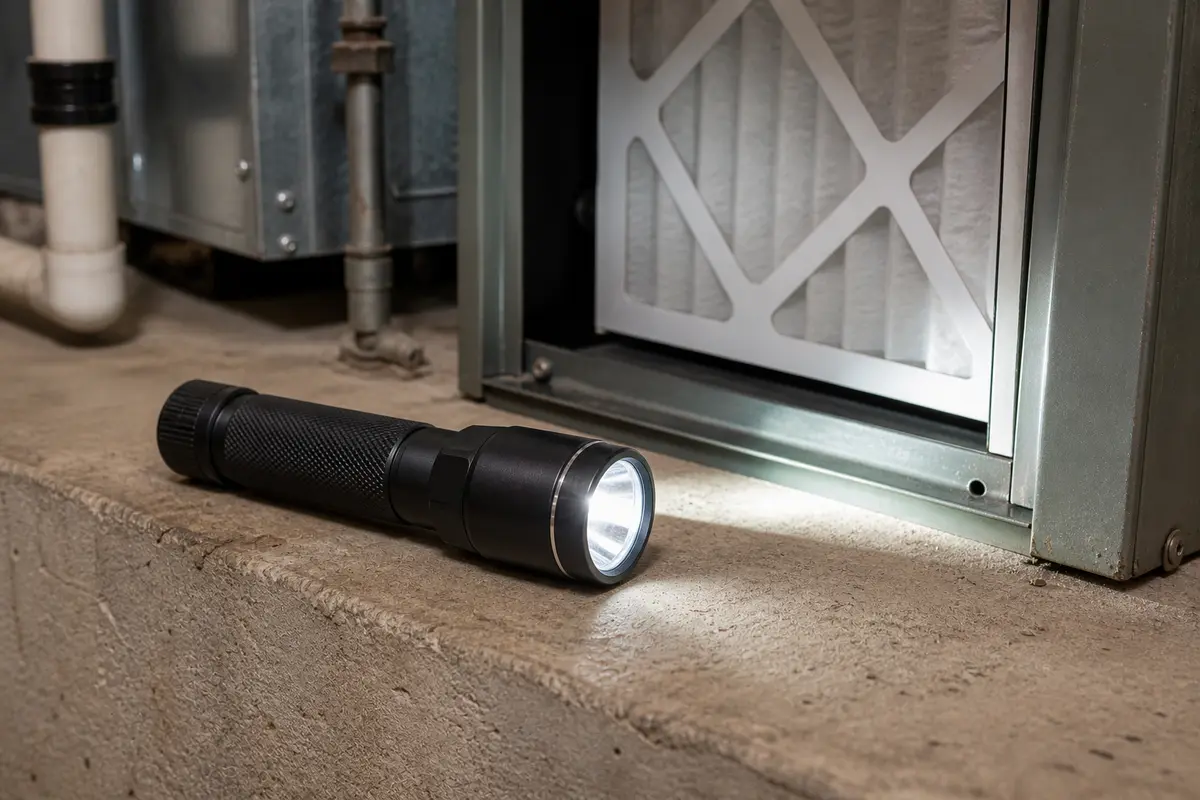
Helps when: Use it to read the filter arrow, check rack fit, and look for ice or water near the indoor unit.
Skip it when: Skip it when the next check would open sealed panels, expose wiring, or reach past the filter access area.
Compare inspection flashlights on Amazon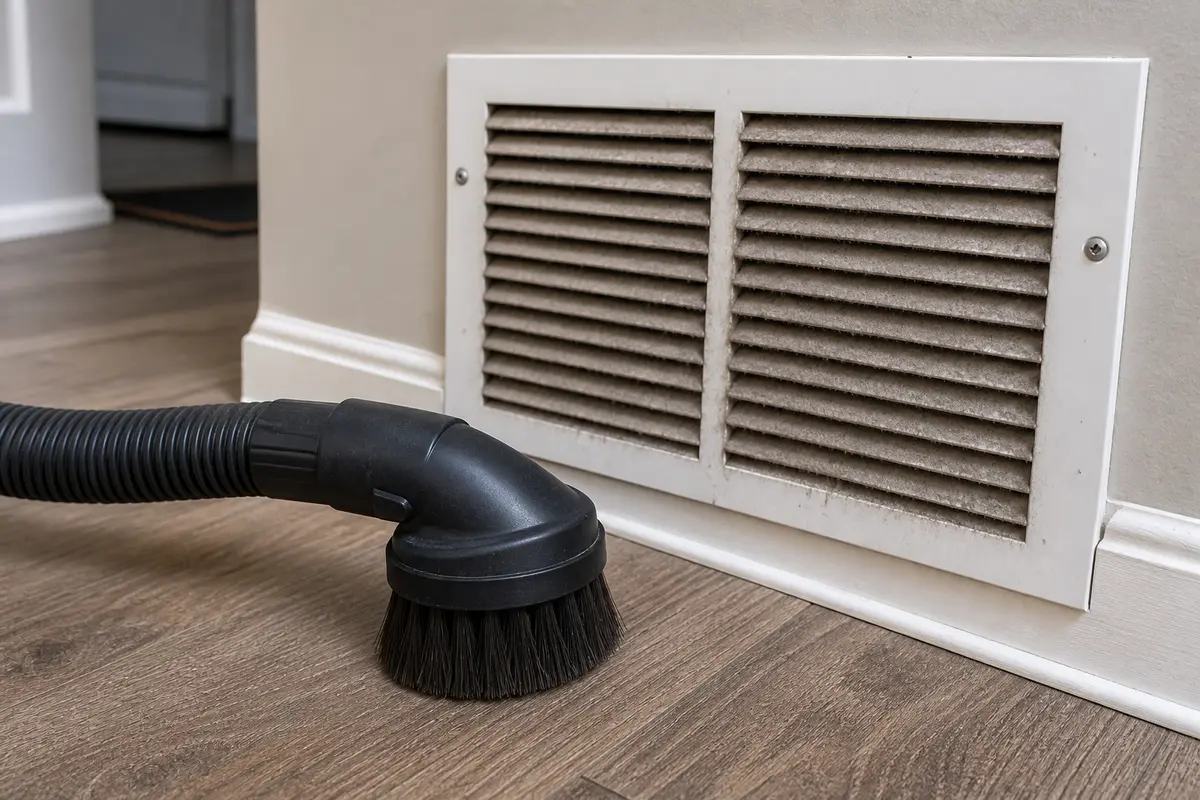
Helps when: Use it to clean dusty return grilles that can compound a restrictive filter.
Skip it when: Skip pushing debris into ducts or removing grilles that expose wiring.
Compare vacuum brush attachments on Amazon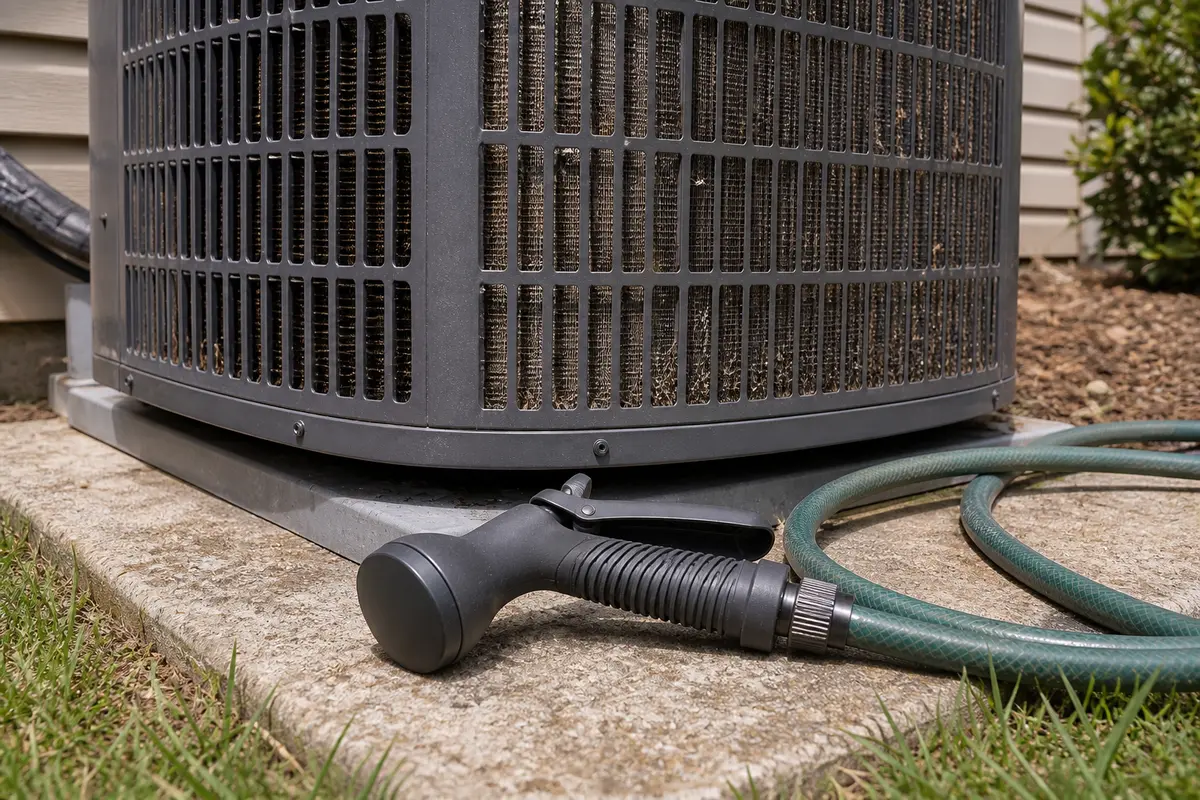
Helps when: Use it to rinse accessible condenser coil dirt after the filter clue checks out.
Skip it when: Skip pressure washers and spraying near electrical covers.
Compare gentle hose nozzles on AmazonAs an Amazon Associate I earn from qualifying purchases. Repair Riot may earn a commission at no extra cost to you.
Keep the cart narrow and match the part to the actual diagnosis.

Helps when: Use this when the new filter is the wrong size, backward, damaged, or too restrictive for normal airflow.
Skip it when: Skip filters that do not match the printed size, thickness, airflow arrow direction, and filter-rack limits.
Compare AC filters on AmazonAs an Amazon Associate I earn from qualifying purchases. Repair Riot may earn a commission at no extra cost to you.
Yes. A backward, wrong-size, or overly restrictive filter can reduce airflow and slow cooling.
Only for a very brief diagnostic check. Do not run normally without a filter.
Use the size and restriction range your system can handle. If a dense filter caused the slowdown, return to a less restrictive style that fits correctly.
Yes. Any airflow restriction can contribute to coil icing.
Check blocked returns, closed registers, indoor ice, and outdoor condenser airflow.
Usually no. The timing points to airflow first, not sudden compressor failure.
Yes. If the filter clue is clear, condenser dirt can still slow cooling during heat.
Call if airflow stays weak, ice returns, cooling remains slow with the correct filter, or the outdoor unit trips, clicks, or hums.
Repair Riot built this page around safe homeowner checks: thermostat demand, airflow, filter condition, condenser behavior, condensate safety, duct distribution, and clear stop points before internal electrical or refrigerant work.