Is water spilling or still rising?
Use bypass if you can do it safely, protect the floor, and see whether refill water is still entering the tank.
Place the softener in bypass if the brine tank is rising or spilling, then inspect the brine well float, salt bridge or mush, brine line, and drain line before blaming the control head.
Most overflows come from a stuck float, blocked brine draw path, or restricted drain line. Internal valve trouble moves up only after those checks pass.
Mark the water level, wait 10 minutes, and watch whether it rises, sits high, or drops during brine draw.
Don’t start with: Do not add more salt, force brittle float parts, or order a control head before you prove where the water is entering and whether brine is drawing down.
Use bypass if you can do it safely, protect the floor, and see whether refill water is still entering the tank.
The softener likely refilled but did not draw brine back out. Move next to the float, salt condition, brine line, and drain run.
Clean the brine well and salt buildup first. Replace the float assembly only if it still sticks or is damaged.
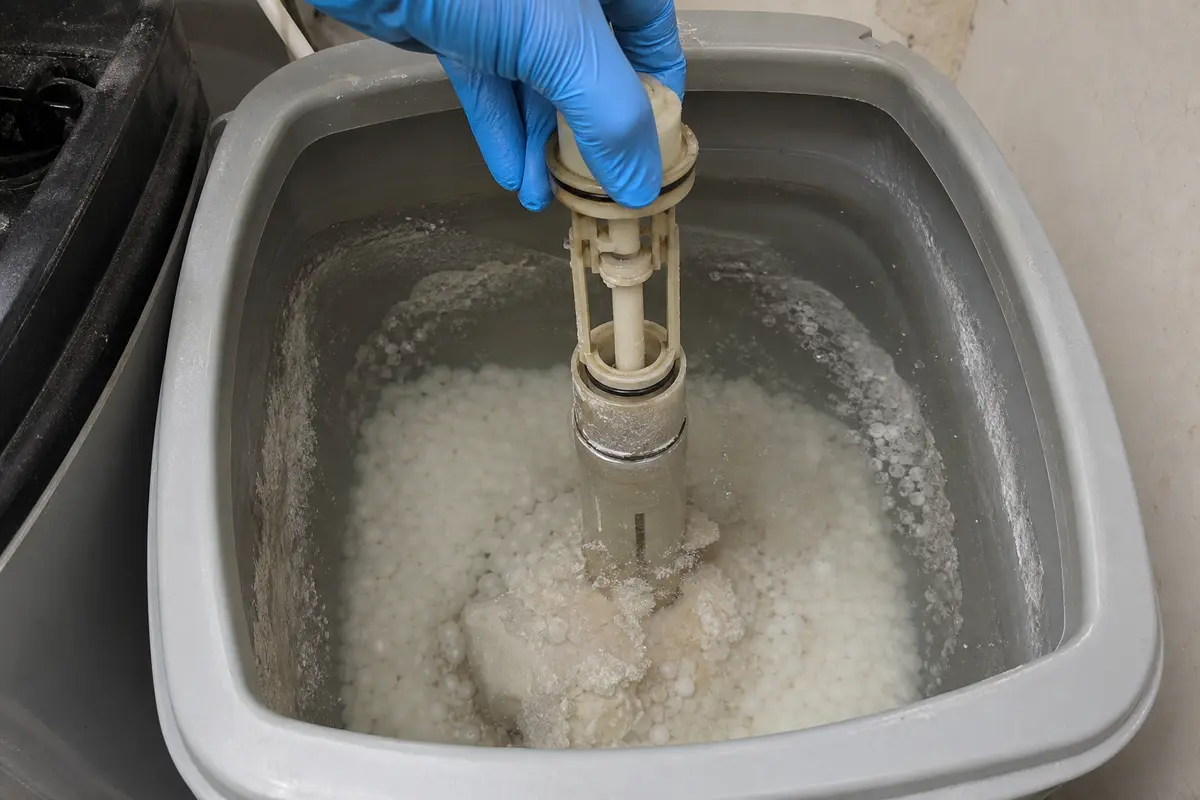
Break up the bridge with a blunt handle, scoop out heavy mush, and keep the pickup area clear before judging the valve.
A dropping level means the draw path works at least partly. No drop points to blocked tubing, restricted drainage, or an internal valve issue.
Leave the softener isolated and schedule service for the injector, valve seals, or control head. That is a poor guess-and-buy repair.
Use the tank, float, and drain line together. A high brine level by itself does not tell you whether the fault is refill, draw, salt condition, or drainage.
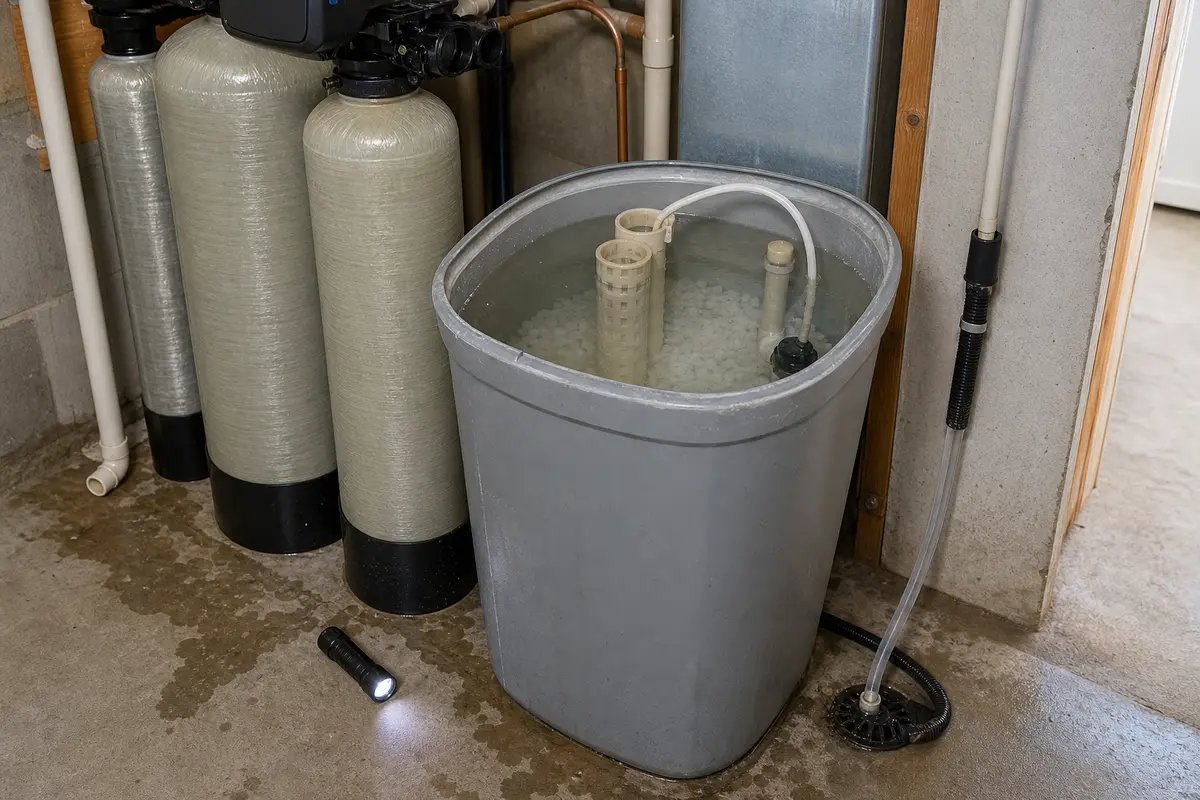
Do not buy a control head, seal kit, brine line, or float assembly until the clue points there. Copy the full model number, prove whether the tank is filling too long or failing to draw down, and match any part to the exact valve and brine-well design.
An overflow means the brine side has lost control of water level. Either refill kept feeding water, the float failed to stop it, or the softener could not pull brine back out during regeneration.
The fastest way to waste money is to treat every overflow like a bad control head. Keep the first pass mechanical, visible, and reversible.
Mark the current brine level with tape or a grease pencil. Wait about 10 minutes, then compare what the level does before you touch parts.
| What you see | What it usually means | Next move |
|---|---|---|
| Level rises while the softener is idle | Refill water is still entering, or the float/valve is not stopping it. | Use bypass, inspect the float and brine well, and get valve service if water continues. |
| Level stays high after regeneration | The unit refilled but did not draw brine back out. | Inspect salt bridge, salt mush, brine tube, drain line, and the visible drain connection. |
| Level drops during brine draw | The draw path works at least partly. | Look for an overlong refill, float shutoff problem, or model setting issue. |
| No drop during brine draw | The softener is not making suction or the path is blocked. | Inspect the brine tube and drain line; service the injector or valve if those are clear. |
| Water reaches wiring or leaks at the valve under pressure | The job has moved beyond a tidy tank cleanup. | Leave the unit isolated and call a pro. |
The float is the first real repair clue because it lives inside the mess. Salt crust and sludge can make a simple float act like a failed valve.
A brine tank can look flooded when the salt has bridged above an empty pocket or turned to mush around the pickup. Clear the tank condition before you judge the valve.
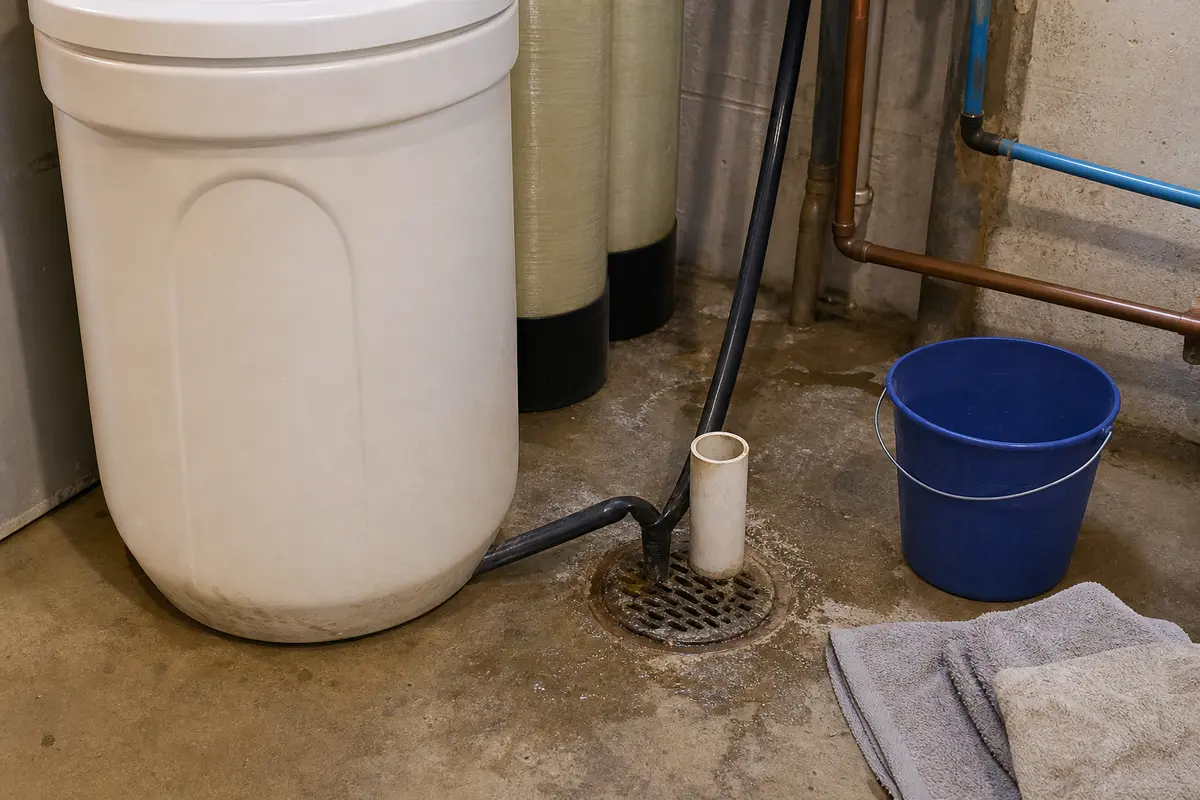
A softener can only pull brine if the draw path and drain path are open enough. This is the split that separates a tank cleanup from a valve service call.
These tools support the homeowner-level checks on this page. Skip tool work if water is near electrical parts, a pressure fitting is leaking, or the next step means opening the control valve.
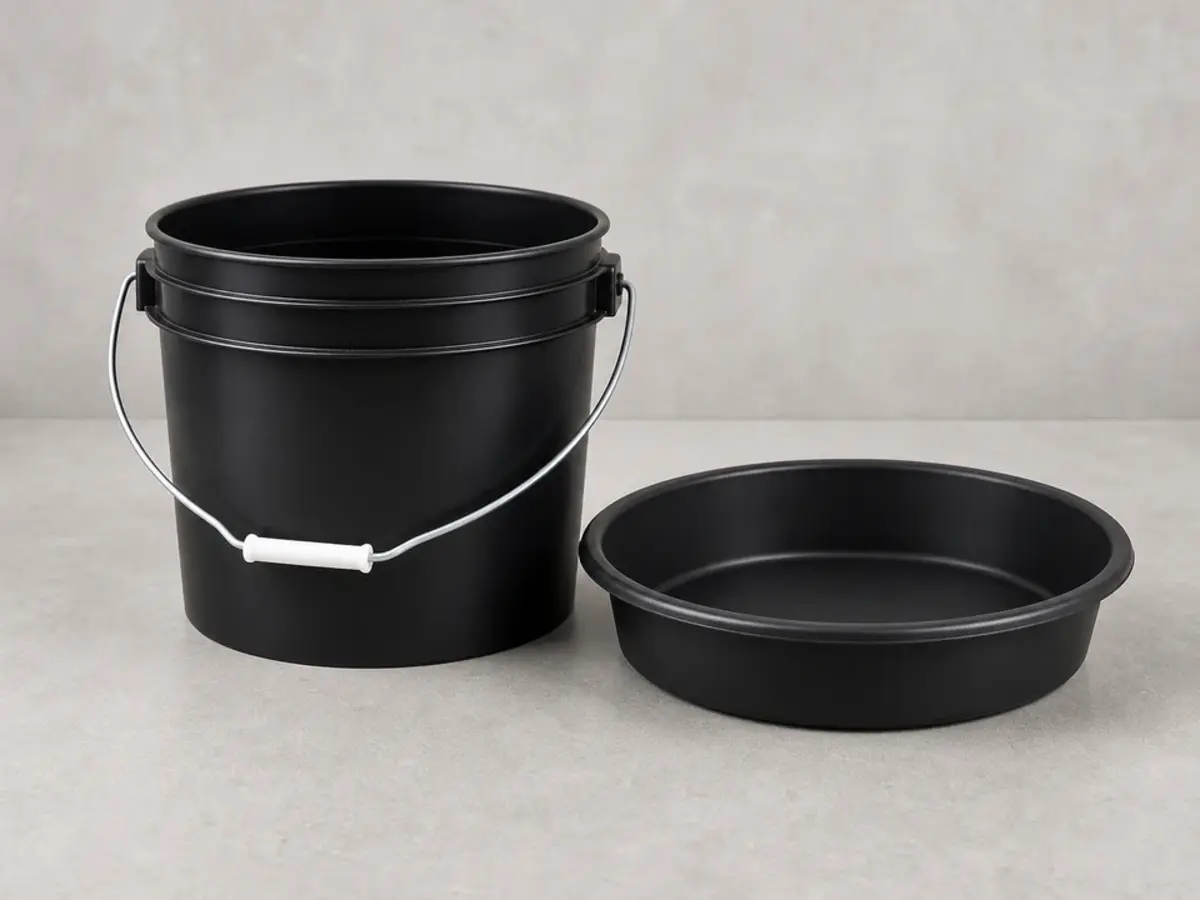
Helps when: Catches brine water while you protect the floor or disconnect only an accessible, non-pressurized tube.
Skip it when: Water is near outlets or the bypass or valve body is leaking under pressure.
Compare buckets on Amazon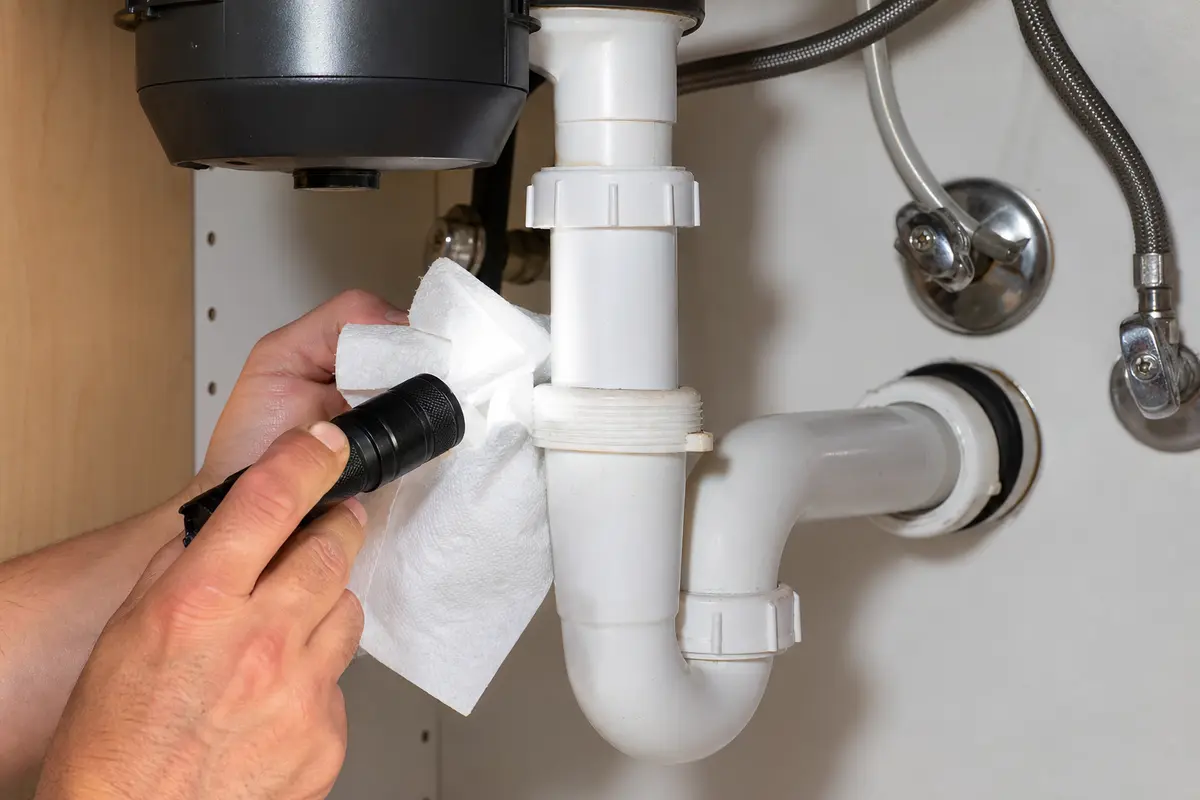
Helps when: Shows the float rod, crust inside the brine well, wet tubing, and the drain line path.
Skip it when: The only remaining inspection is inside a sealed control head or hidden plumbing.
Compare inspection flashlights on Amazon
Helps when: Protects your hands from wet salt, sharp plastic edges, and crusted mineral buildup.
Skip it when: You need to handle electrical plugs, wiring, or pressurized valve parts.
Compare work gloves on Amazon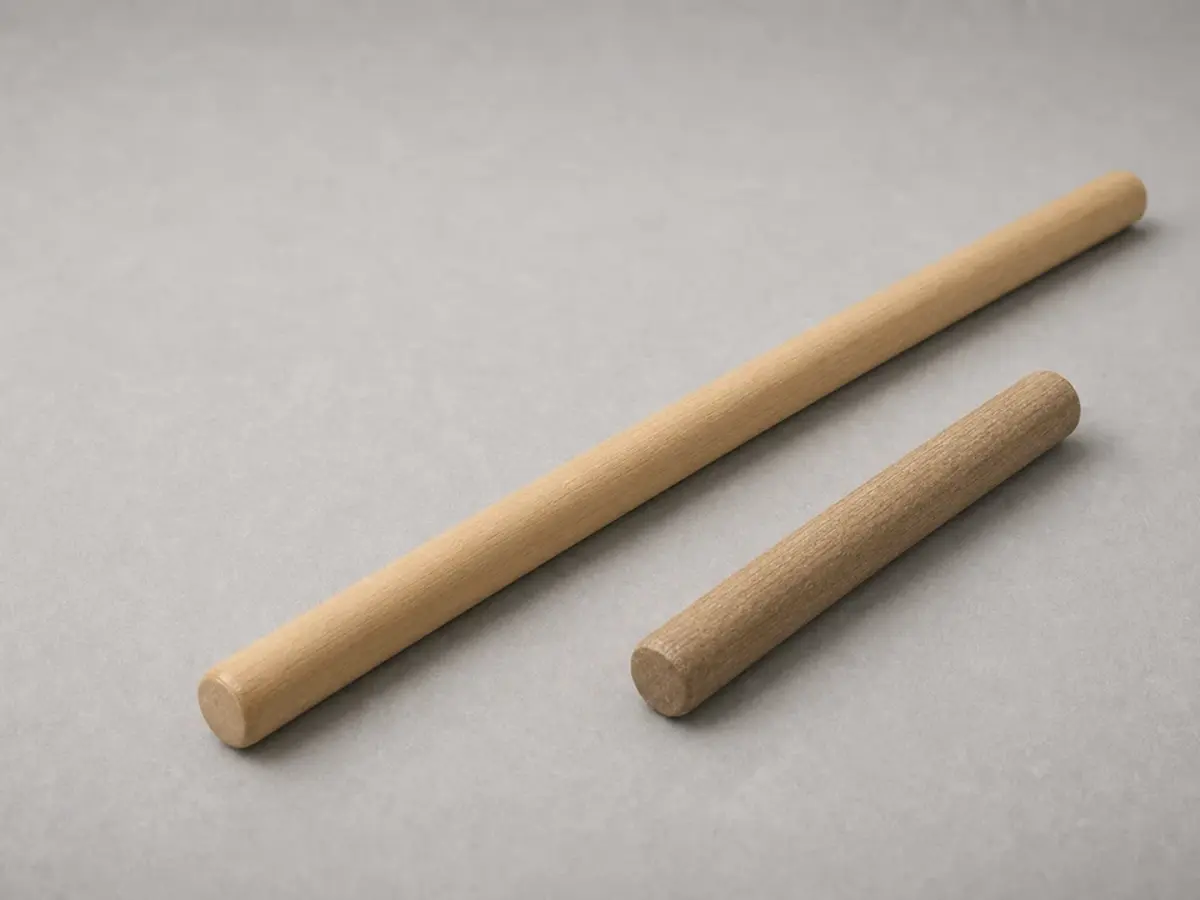
Helps when: Breaks a salt bridge without stabbing the brine tank wall.
Skip it when: The tank flexes, cracks, or the salt is packed so tight you would need to force it.
Compare blunt dowels on AmazonAs an Amazon Associate I earn from qualifying purchases. Repair Riot may earn a commission at no extra cost to you.
Parts come after the clue. Use the full model number and match the existing brine-well, tubing, and valve design; water-softener parts that look similar often fit differently.
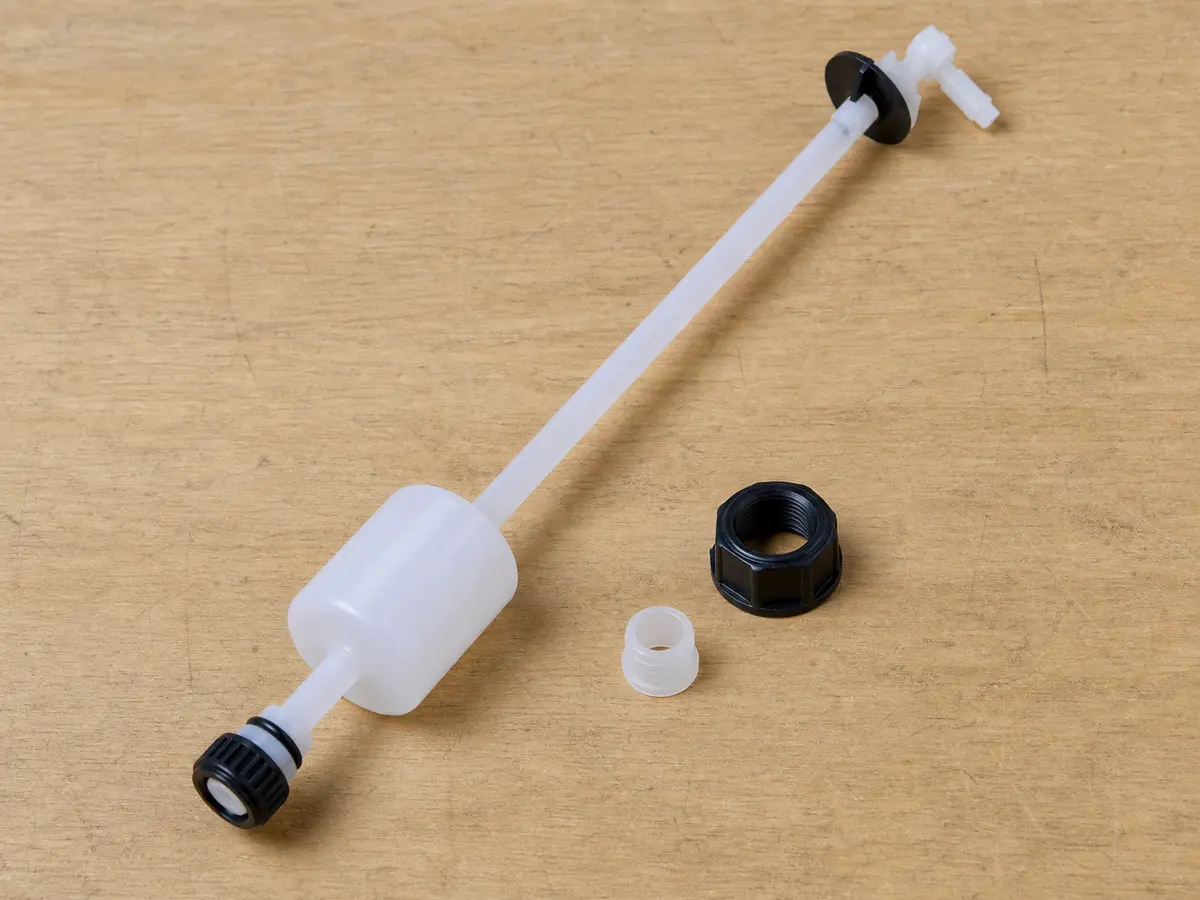
Helps when: The float sticks, hangs up, is cracked, or will not move reliably after the brine well and salt mush are cleaned.
Skip it when: The float moves freely and the tank fails only during brine draw.
Compare brine float assemblies on Amazon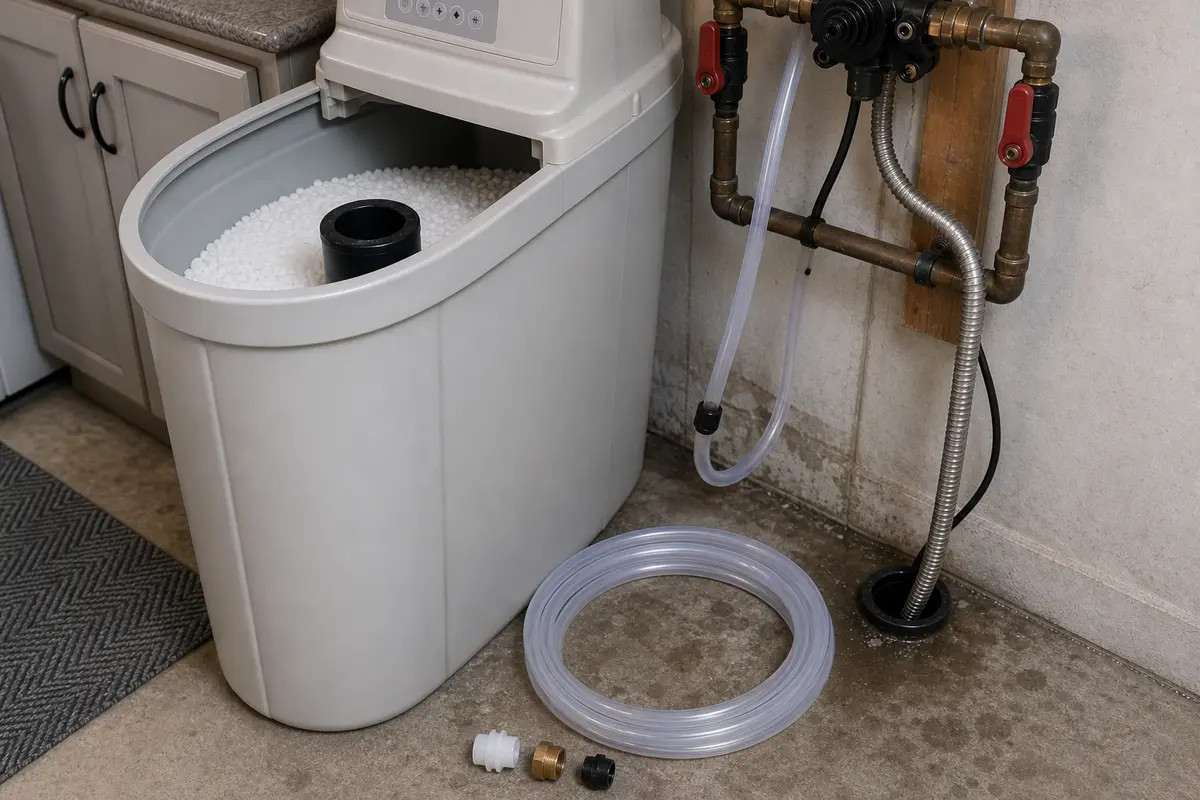
Helps when: The brine tube is kinked, cracked, brittle, leaking, or still blocked after cleanup.
Skip it when: The tubing is clear and the trouble is inside the valve, injector, or drain connection.
Compare brine line tubing on Amazon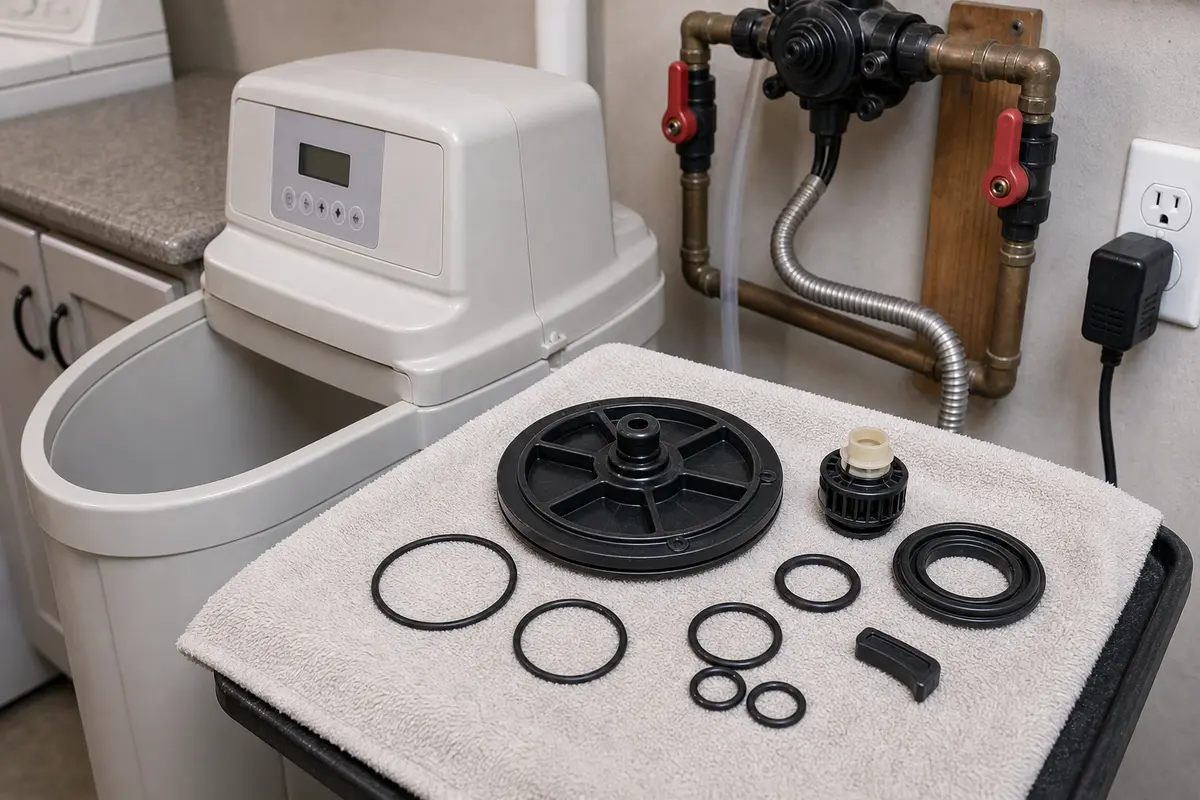
Helps when: The float, brine tube, and drain line are sound but the valve still overfills or will not draw brine.
Skip it when: You have not copied the model number or confirmed that your control valve uses a serviceable seal kit.
Compare seal kits on AmazonAs an Amazon Associate I earn from qualifying purchases. Repair Riot may earn a commission at no extra cost to you.
It depends on the model and settings, but the water should not be near the rim or spilling out. A level that keeps creeping upward, sits unusually high after regeneration, or covers the salt more than normal deserves diagnosis.
Usually the softener added refill water but did not pull brine back out. A stuck float, salt bridge, salt mush, blocked brine tube, restricted drain, or internal valve issue can all create that pattern.
In many homes, placing the softener in bypass lets the house use water while the softener is isolated. Do not keep letting the softener regenerate normally while the brine tank is spilling.
No. More salt can hide the float, bury the pickup area, and make a bridge or mush layer worse. Fix the water-level fault first, then refill with the salt type and amount your unit calls for.
A rising idle level points toward active refill, a stuck safety float, or valve water leaking into the brine tank. Put the softener in bypass if needed and do not buy parts until the entry point is clear.
Move to brine draw and drain clues. A clear-moving float does not help if the drain is restricted, the brine tube is blocked, or the valve cannot create suction during the draw stage.
Yes. A softener needs drain flow during regeneration. A kink, frozen section, blocked connection, or crushed drain run can keep the unit from drawing brine out correctly.
Replace it only when it sticks, hangs up, cracks, or will not move reliably after warm-water cleaning and salt cleanup. Match the model, brine well size, rod length, and tubing connection.
Call when water reaches electrical parts, the bypass or valve body leaks under pressure, the drain connection is hidden or hard-plumbed, or the remaining fault appears to be inside the control valve.
Repair Riot built this page around visible overflow clues: rising water, high water after regeneration, float movement, salt condition, brine draw, and the visible drain run. The links below support softener operation and maintenance context; the diagnostic sequence is original Repair Riot guidance.