Is the water level still rising?
Use bypass, protect the floor, and treat this as an active overfill before doing any diagnosis.
A Kinetico brine tank full of water usually means the softener is not drawing brine during regeneration or cannot discharge through the drain. Use bypass if the level is rising, then check the drain line, brine float, and brine line before parts.
The best first clue is outside the control head: a kinked drain route, stuck float, salt bridge, or brine-line air leak.
Some bottom water is normal. Water above the salt, water near the rim, or no draw-down after a cycle is the problem.
Don’t start with: Do not tear into the Kinetico valve head or buy a control assembly while the brine tank is high. First confirm the float moves, the drain route is open, and the brine line is not kinked, cracked, or loose.
Use bypass, protect the floor, and treat this as an active overfill before doing any diagnosis.
Look for a salt bridge or jammed float first. Kinetico salt guidance expects salt or regenerant above normal water, not a tank that keeps filling.
Watch the drain route and brine line. Weak drain flow, a kink, or an air leak can stop brine draw.
A float that scrapes, hangs, or sits in salt sludge is a better first clue than the control head.
Now the diagnosis moves toward internal valve seals or Kinetico dealer service, not random parts.
A full brine tank is easier to sort when you can see the water level, the brine well, and the drain path. These are the checks that come before the control head.
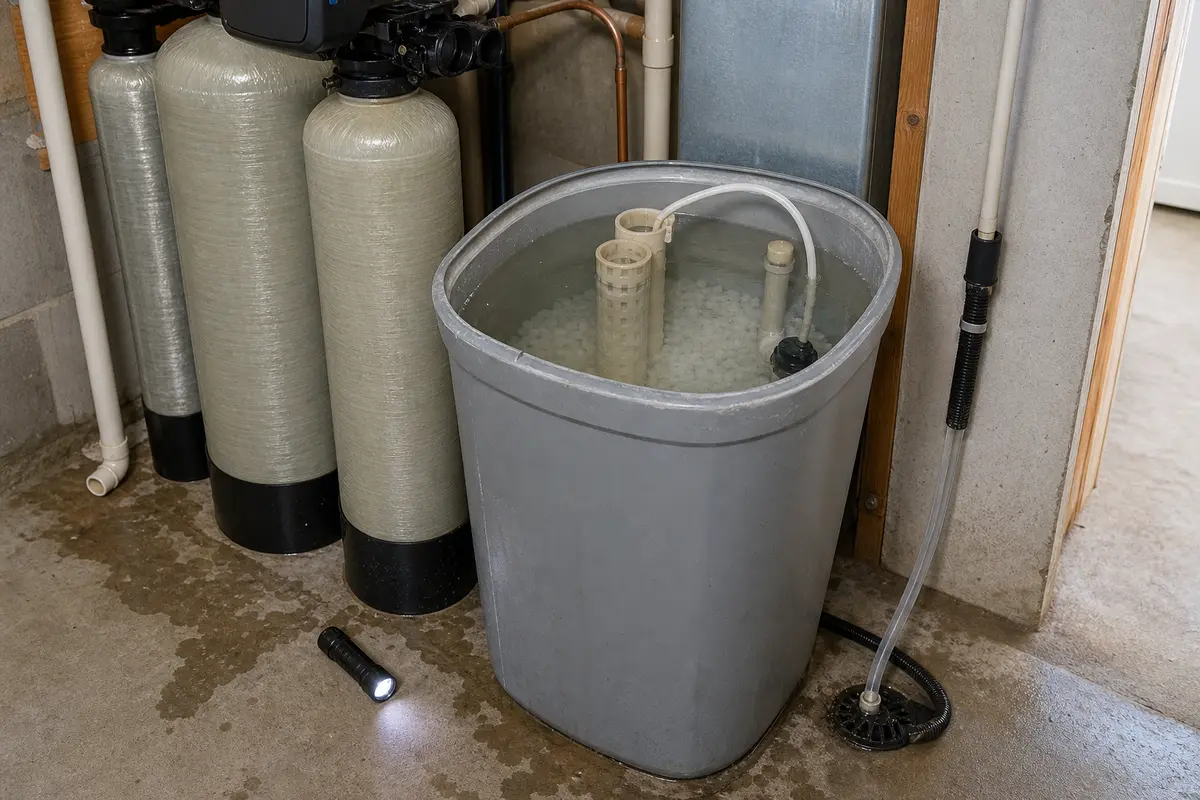
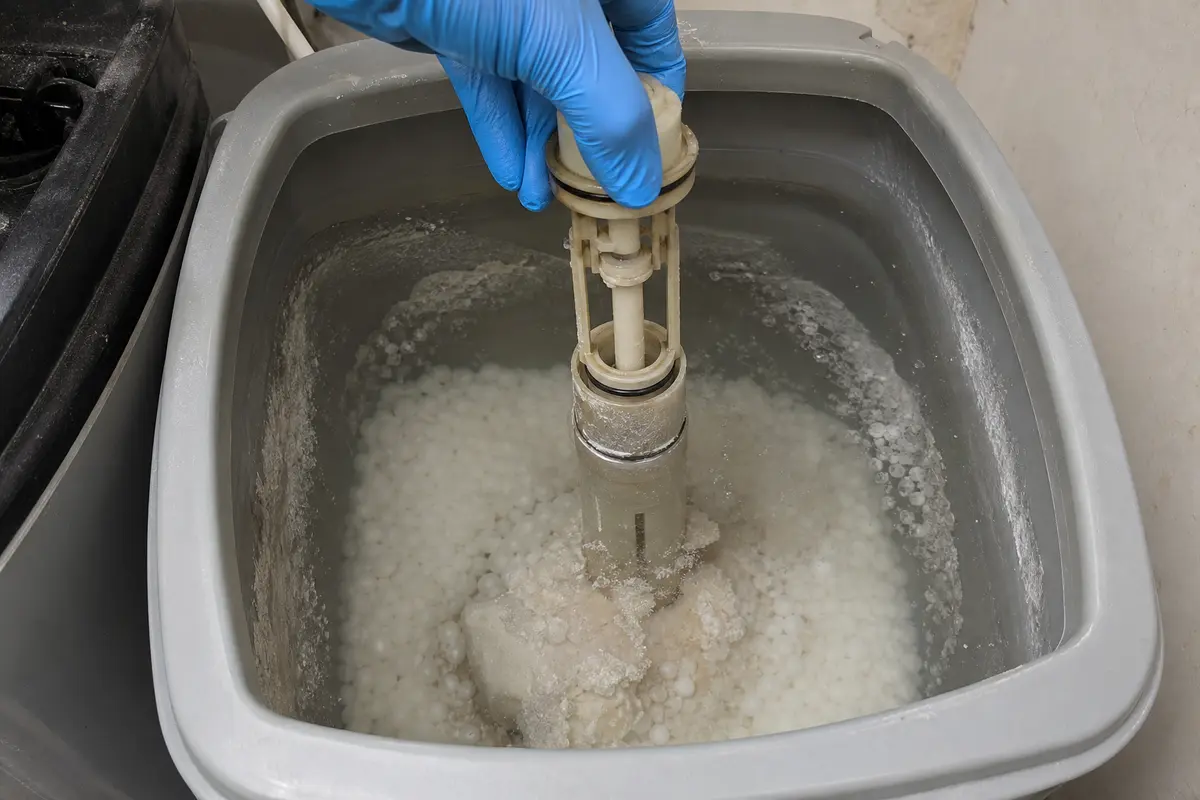
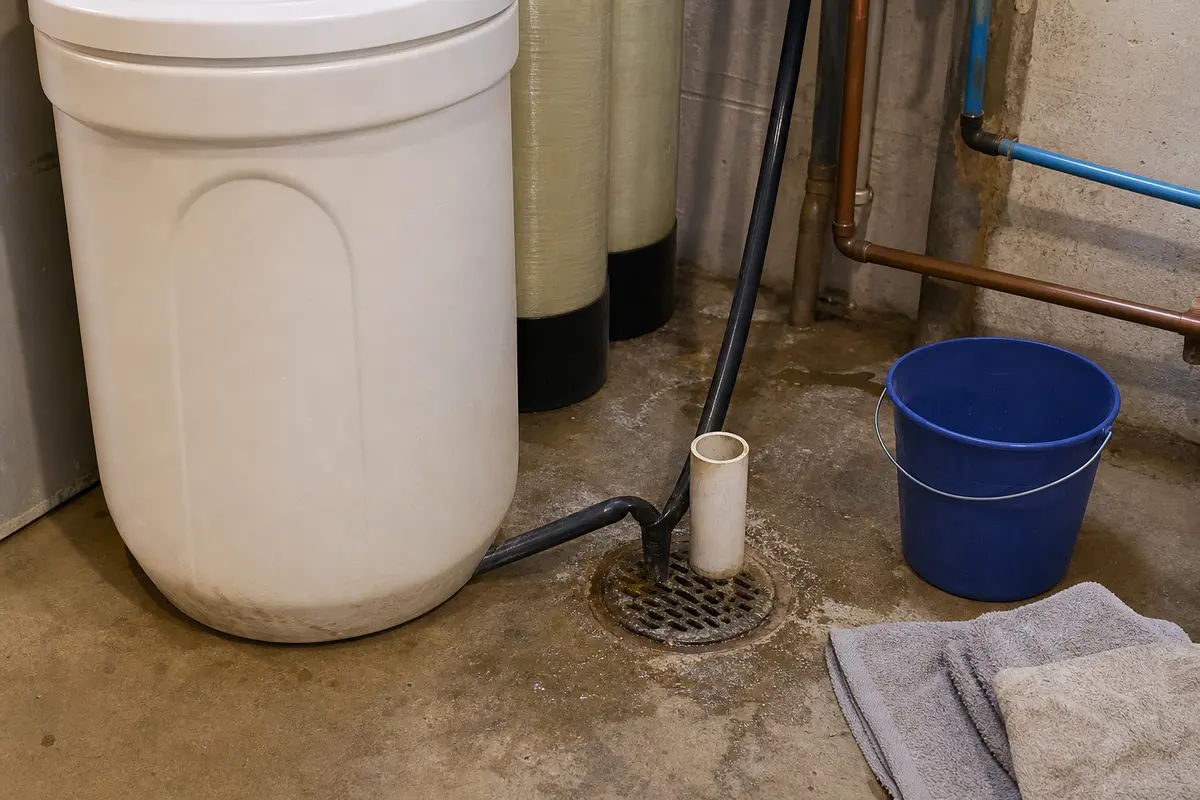
Copy the exact Kinetico model and serial numbers. Then write down the water level, drain flow, float movement, brine-line condition, and whether the tank draws down during a watched cycle. Kinetico parts and adjustments are model-sensitive, and many control-head repairs belong with a dealer.
A brine tank that stays high is usually a water-movement problem. If the level sits above the salt or does not drop during regeneration, check whether brine is being pulled through the line and whether discharge can leave through the drain path.
A common costly detour starts inside the Kinetico head before the outside clues have had a chance to speak.
Work from the outside in. These checks keep water controlled and leave model-specific valve work for the point where it actually makes sense.
The level pattern tells you where to spend the next minute. Use the result before touching another part.
| What you see | What it usually means | Next move |
|---|---|---|
| Water is near the rim or still rising. | Active overfill or uncontrolled fill. | Use bypass and protect the floor before more checks. |
| Float scrapes, hangs, or sits in salt sludge. | Float or brine valve restriction. | Clean loose sludge, free the float gently, then recheck level control. |
| Drain flow is weak, absent, or the hose is kinked. | Restricted discharge path. | Correct the visible drain route and watch the next regeneration. |
| Drain flow looks strong but brine level never drops. | No brine draw or internal valve/seal trouble. | Check brine-line fittings, then plan model-specific service if the line is sound. |
| Level drops during regeneration and stops at a normal resting level. | External blockage or float problem was likely corrected. | Keep watching through the next day for a fresh rise or hard-water return. |
A Kinetico page should not read like a generic cabinet-softener manual. The brand details mostly affect parts and stop points.
These are for basic inspection and spill control. They are not permission to force fittings or open the Kinetico head.
Paid links. As an Amazon Associate I earn from qualifying purchases. Repair Riot may earn a commission at no extra cost to you.
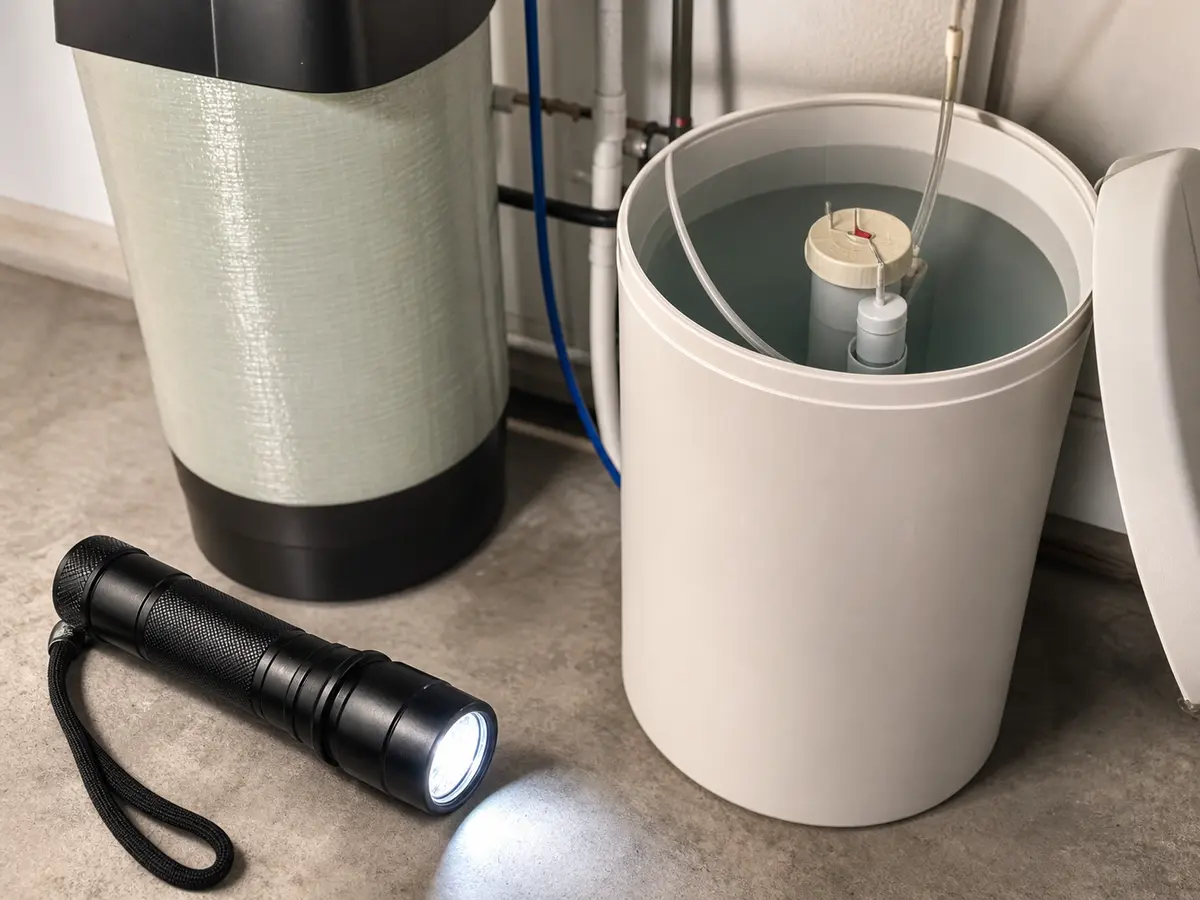
Helps when: The water level is high and you need to see salt crust in the brine well, float movement, tubing routes, or a kink behind the softener.
Skip it when: Water is already near electrical equipment or the check requires opening a powered control area.
Compare inspection flashlights on Amazon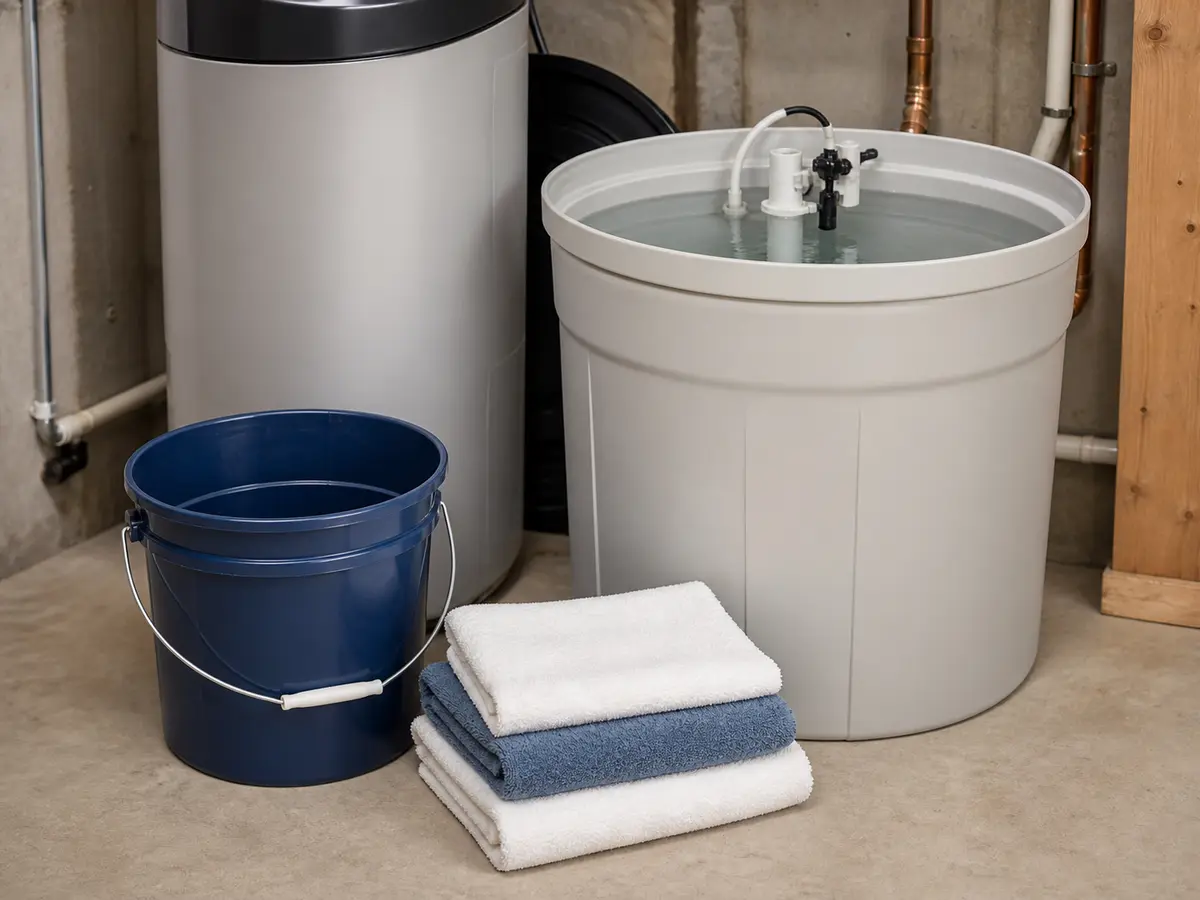
Helps when: You are catching a small brine spill, drying the floor beside the tank, or keeping salt water away from nearby finishes.
Skip it when: Water is spraying, the tank is actively overflowing, or a cracked fitting needs service now.
Compare cleanup supplies on Amazon
Helps when: You need to probe for a salt bridge without reaching into brine or striking the tank wall.
Skip it when: The float assembly is exposed, loose, cracked, or positioned where a stick could damage it.
Compare wooden handles on AmazonParts come after diagnosis. Kinetico parts are model-sensitive, and some repairs are better handled through a dealer.
Paid links. As an Amazon Associate I earn from qualifying purchases. Repair Riot may earn a commission at no extra cost to you.
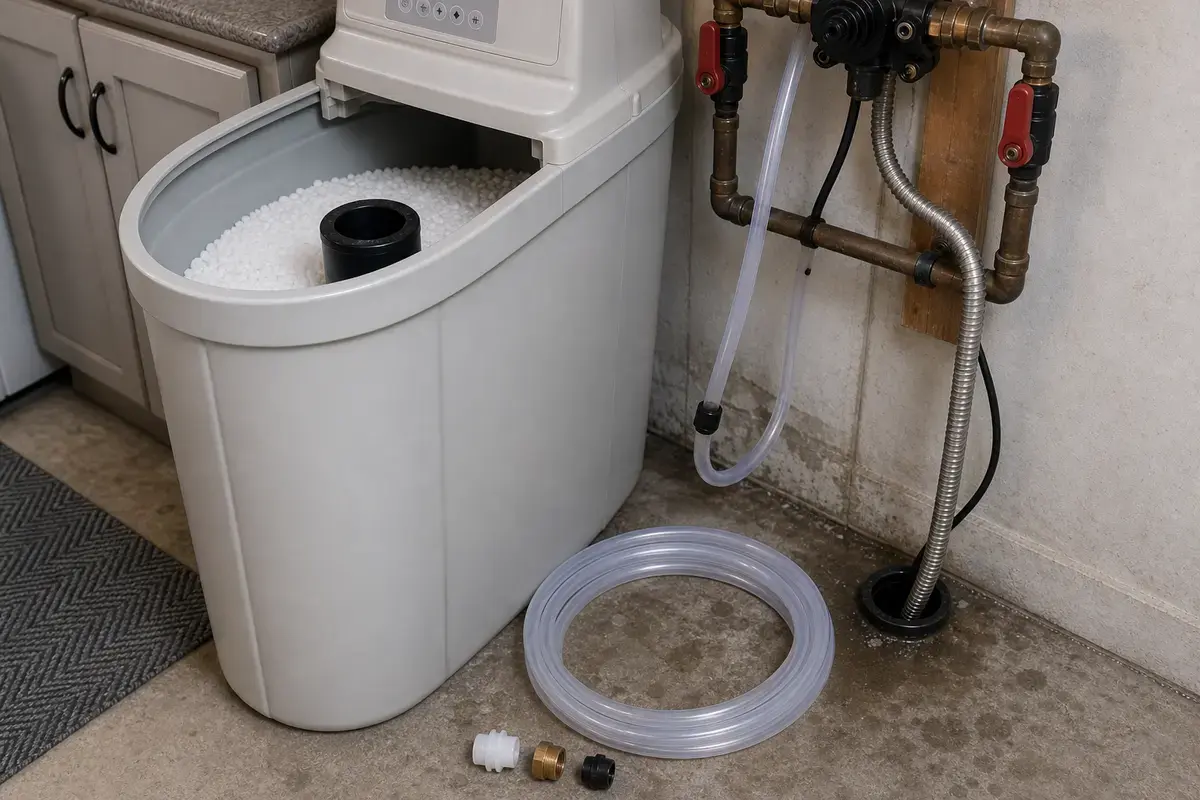
Helps when: The tube is cracked, kinked, brittle, loose at a fitting, or leaves salt trails where air can leak in.
Skip it when: Inspection shows the brine line is not cracked, kinked, loose, or leaving salt trails, and the remaining clues point to the float assembly, drain route, or internal valve.
Compare brine lines on Amazon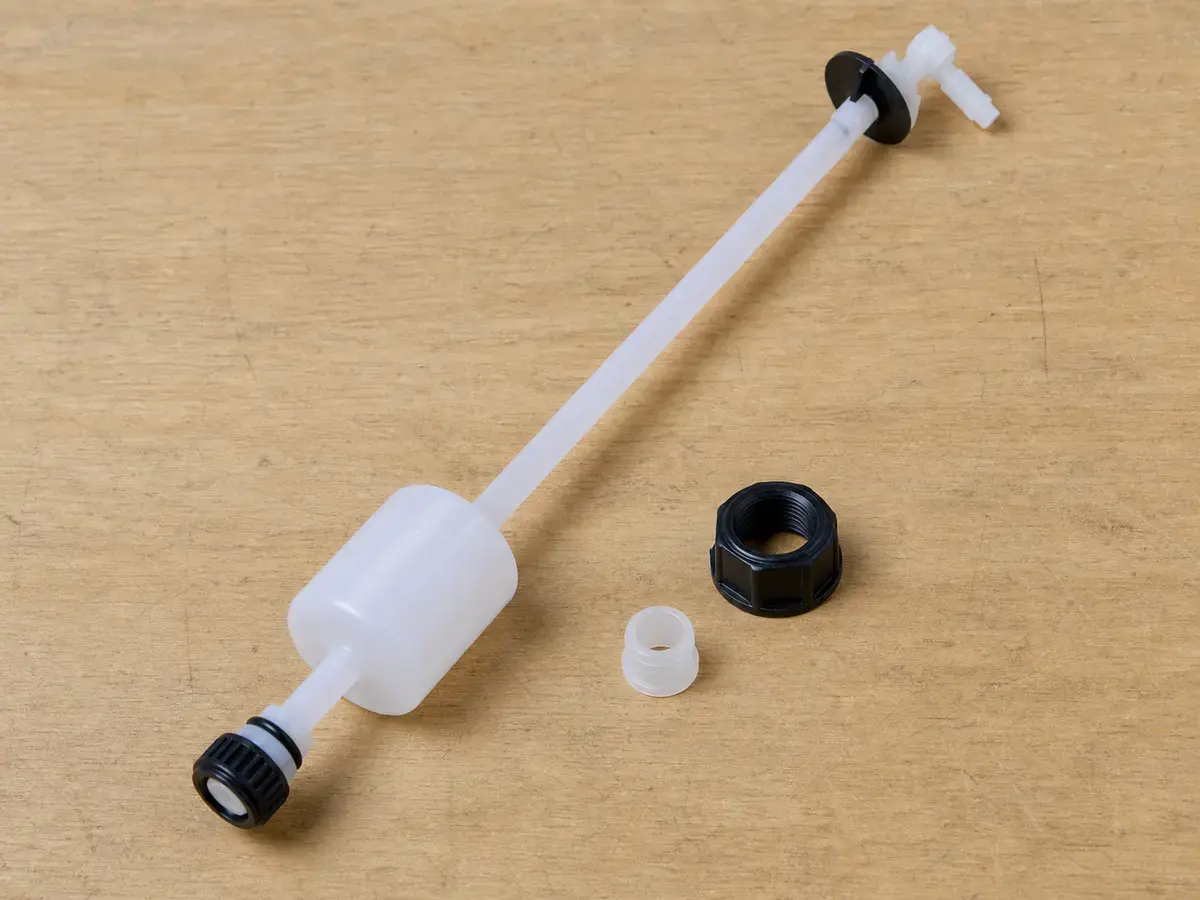
Helps when: The float scrapes, hangs, cracks, or will not move after loose salt sludge is cleaned away.
Skip it when: The float moves freely and the tank still does not draw down during regeneration.
Compare brine float assemblies on Amazon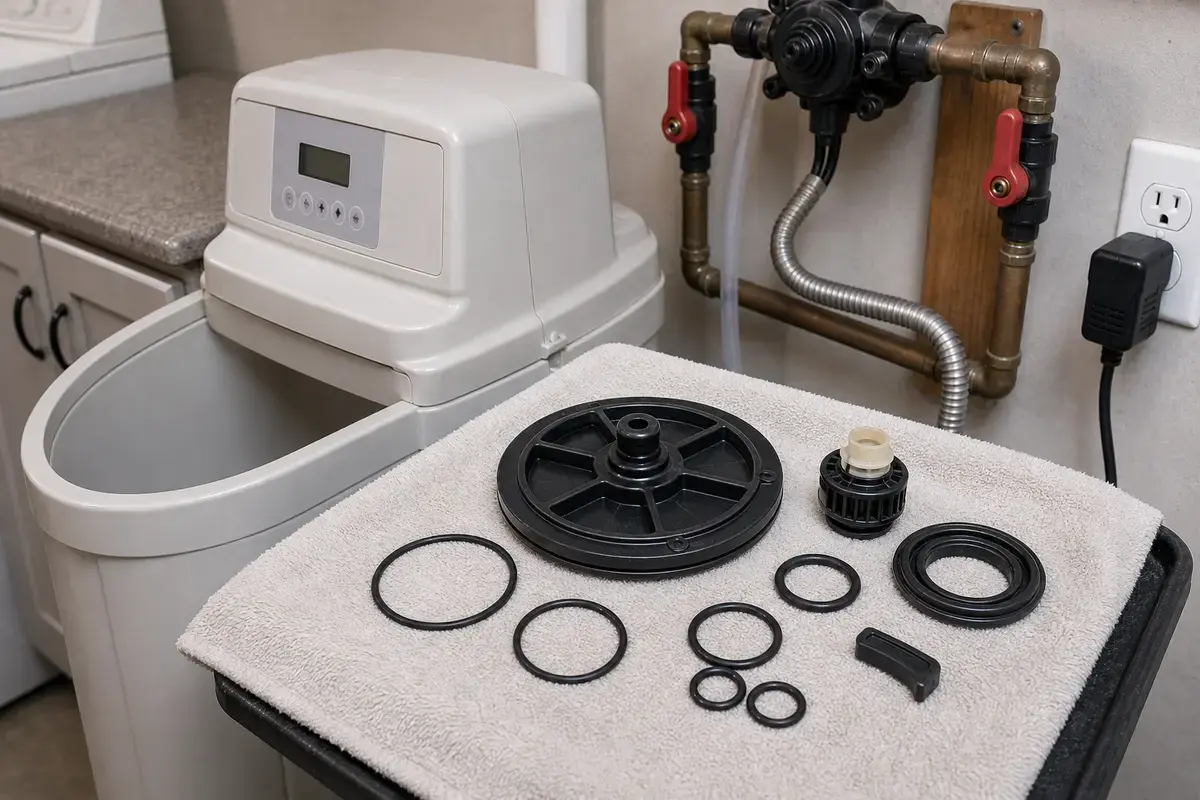
Helps when: Drain, float, and brine-line checks are clean, the unit still will not draw down during a watched cycle, and the kit is matched from the exact model information.
Skip it when: You have not copied the exact model and serial numbers, or the outside checks still point to the brine line, float assembly, drain route, or dealer-only valve service.
Compare softener seal kits on AmazonYes. Some water at the bottom of the brine tank can be normal. The concern is water above the salt or regenerant, water near the rim, a level that keeps rising, or a level that does not drop during regeneration.
A softener can make normal cycling sounds without pulling brine correctly. A restricted drain route, a loose or blocked brine line, a salt-jammed float, or an internal seal issue can leave the tank full.
Add salt or potassium chloride only when the tank is simply low on regenerant and the water level is not rising or near overflow. Do not bury an active overfill under more salt. Sort the float, drain, and brine line first.
Empty only enough water to protect the floor. Keep the bucket away from outlets, transformers, extension cords, and other electrical equipment, and stop if a fitting has to be forced. Then check the drain hose, brine line, and float again; removing water only buys time.
Move the diagnosis inside the softener head only after you watch a cycle and see steady drain flow with no brine draw. The float should move freely, the drain route should be open, and the brine line should be intact first. Stop guessing at parts, write down the model and serial numbers, and use model-specific service.
Often, yes. Without a proper brine draw, the resin cannot regenerate correctly. If hard water, spotting, or poor soap lather shows up after the tank stays high, watch the next regeneration for drain flow and a dropping brine level.
Yes. The softener has to discharge water during regeneration. A kinked, pinched, plugged, or poorly routed drain line can keep the cycle from moving water where it belongs.
Open the brine well, then look down the tube with a flashlight before moving anything. Check the float and brine valve by lifting the float gently; it should rise and fall without scraping, hanging, or sitting in salt crust. Stop if the assembly is cracked, brittle, or will not come apart without force.
Yes. A hard salt shelf can hide a wet pocket underneath and trap the float area. Probe gently with a blunt handle, away from the float assembly, instead of jabbing into the tank.
Call when the brine tank is actively overflowing, fittings are seized, or you cannot isolate the softener. Also call after clean drain, float, and brine-line checks still leave no draw-down.
No. Match the exact model and serial numbers before ordering anything. Brine lines, float assemblies, seals, and valve parts can look similar while fitting differently.
Repair Riot built this page from visible homeowner checks: water level, salt condition, float movement, drain route, and brine-line condition. The stop point is where Kinetico-specific service beats guessing.