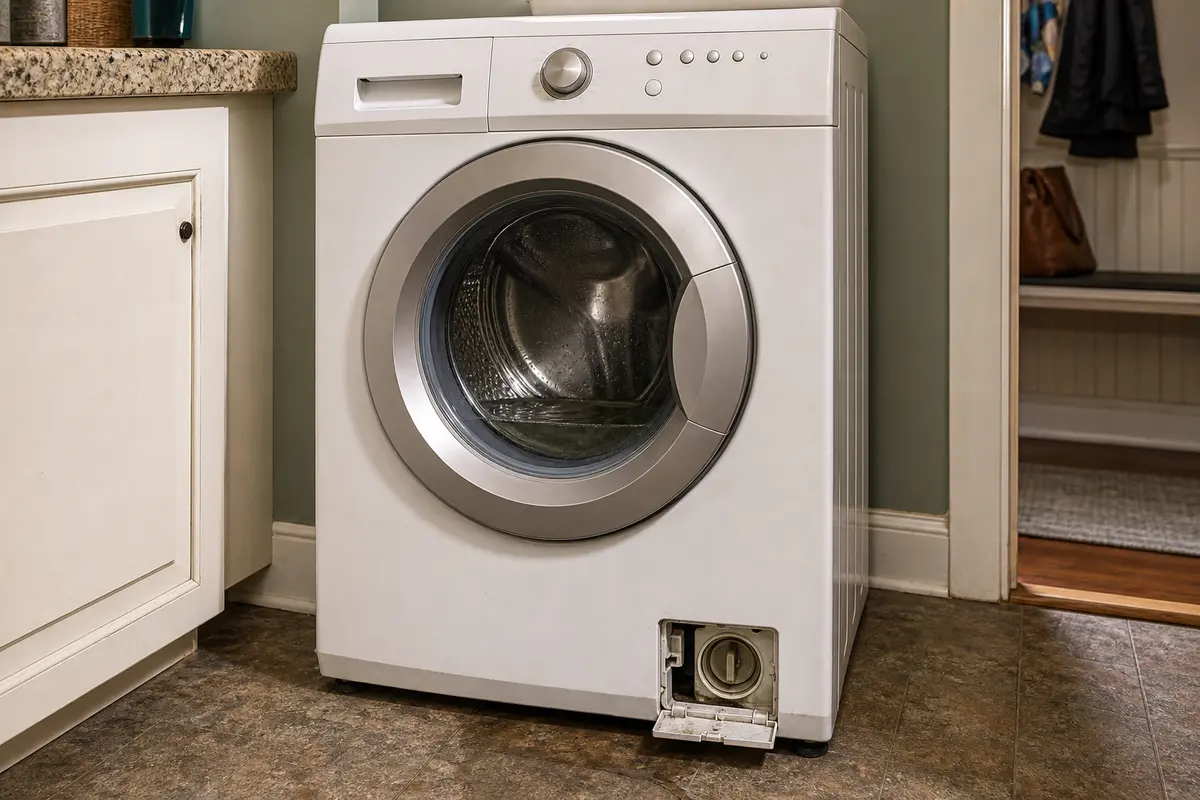
Washer door stuck closed

GE Front Load Washer Door Won’t Unlock

Direct answer: A GE front load washer door usually stays locked because the cycle never fully finished, water is still sitting in the tub, or the washer door latch did not release. Start by figuring out whether the machine is still full of water or just stuck locked with an empty drum.

Most likely: The most common real-world cause is a drain problem that leaves water in the tub, so the control keeps the door locked for safety.

Front-load washers are supposed to hold the door locked until the machine knows the spin is done and the water level is safe. If yours clicks but won’t open, or the cycle looks over but the lock light stays on, separate the wet-tub problem from the dry-tub latch problem first. Reality check: a locked washer door is often a drain issue wearing a latch disguise. Common wrong move: forcing the door open and turning a simple diagnosis into a broken handle and boot seal.

Don’t start with: Don’t start by prying on the door, yanking the handle, or ordering a control board. That breaks trim and misses the usual cause.

If you still see water in the drumTreat it like a draining problem first, not a bad latch.
If the drum is empty and the lock never releasesTry a full power reset, then focus on the washer door latch.
Last reviewed: 2026-04-28

What the stuck door is telling you

Door stays locked and water is visible

You can see water at the bottom of the drum or hear sloshing when you push the basket.

Start here: Start with the drain path and pump cleanout area before blaming the latch.

Cycle looks finished but lock light stays on

The display is done or idle, but the door lock indicator never goes out.

Start here: Unplug the washer for a full reset, then listen for the latch trying to release when power returns.

You hear a click but the door will not open

The machine makes one or two lock-release sounds, but the door stays caught.

Start here: Check whether the door is under tension from laundry bunching against the glass or a slightly misaligned strike.

Washer stopped mid-cycle and is unresponsive

The machine froze during wash or spin, and the door remained locked afterward.

Start here: Check for standing water and basic power recovery first, because a stalled cycle often leaves the lock engaged.

Most likely causes

1. Water did not drain out of the washer

Front-load washers keep the door locked when the control still sees water in the tub. A partial clog, pump issue, or kinked drain hose can leave just enough water to hold the lock.

Quick check: Look through the glass for water at the bottom and listen for a weak hum or no drain sound when you try Drain/Spin.

2. The washer never fully reset after the cycle

A brief power glitch or interrupted cycle can leave the control hanging with the door still locked even though the tub is empty.

Quick check: Unplug the washer for several minutes, restore power, and see whether the lock clicks open after the machine wakes back up.

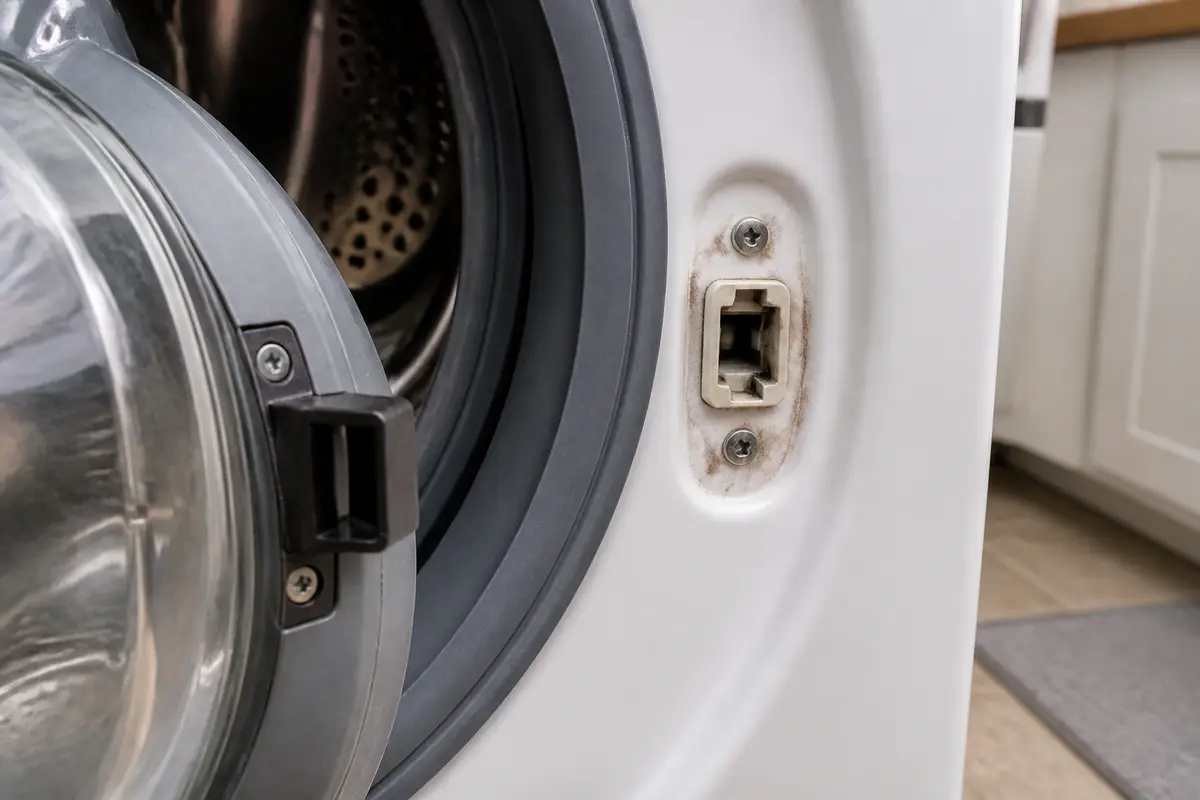
3. The washer door latch assembly is sticking or failed

If the drum is empty and the machine repeatedly clicks without releasing, the latch mechanism or lock sensor may be hanging up.

Quick check: Press inward on the door near the latch while starting and canceling a cycle. If the sound changes but it still will not release, the latch is suspect.

4. The door strike or door alignment is binding

A sagging door, loose hinge area, or clothes pinched in the opening can keep the latch from releasing cleanly.

Quick check: Lift gently on the open-side edge of the door while pulling the handle. If it suddenly frees up, alignment or strike wear is part of the problem.

Step-by-step fix

Step 1: Check whether the washer is still holding water

This is the cleanest split in the diagnosis. If water is still in the tub, the locked door is usually doing exactly what it is supposed to do.

  1. Look through the door glass for standing water at the bottom of the drum.
  2. Push the basket lightly by hand through the glass and listen for sloshing.
  3. Run a Drain/Spin cycle if the controls respond.
  4. Listen for a strong drain sound, a weak hum, or no pump sound at all.
  5. Check the washer drain hose behind the machine for a hard kink or crush point.

Next move: If the washer drains and the door unlocks a minute or two later, the problem was likely a temporary drain stall or hose restriction. If water remains in the tub or the machine only hums, move to the drain cleanout and blockage check next.

What to conclude: A wet tub points to a drain problem first. An empty tub with a locked door points more toward reset, latch, or alignment trouble.

Stop if:
  • Water is leaking onto the floor.
  • The washer is making a loud grinding noise from the pump area.
  • You cannot safely move the washer enough to inspect the drain hose.

Step 2: Do a full power reset and let the lock time out

A front-load washer can hold the lock after a stalled cycle or control hiccup. A real reset is quick and costs nothing.

  1. Unplug the washer or switch off power to it.
  2. Leave it off for at least 5 minutes; 10 minutes is better if the lock has been stuck a while.
  3. While power is off, press and hold the Start/Pause button for a few seconds to help discharge the control.
  4. Restore power and wait quietly near the door for a release click.
  5. Try a short Drain/Spin or Rinse/Spin cycle, then cancel it and wait for the lock to release.

Next move: If the door unlocks after the reset, keep using the washer but watch for repeat stalls or drain trouble on the next load. If the tub is empty and the lock still stays engaged, keep going and check for a binding door or failing latch.

What to conclude: A reset that fixes it once suggests a control hang or interrupted cycle. A reset that never changes anything makes a mechanical latch issue more likely.

Step 3: Relieve pressure on the door and check for a simple bind

A front-load door can stay caught even when the lock tries to release, especially if laundry is packed against the glass or the door has dropped slightly.

  1. Press inward on the door near the latch side, then pull the handle normally.
  2. If that does not work, lift very gently on the outer edge of the door while pulling the handle.
  3. Look around the door opening for fabric, a drawstring, or a small item pinched between the boot and door.
  4. Check whether the door looks lower on the latch side than it should.
  5. Do not pry between the door and front panel with a screwdriver or putty knife.

Next move: If the door opens with light pressure or a slight lift, inspect the strike and hinge area for looseness or wear before the problem gets worse. If the door still will not release and the tub is empty, the washer door latch assembly is the leading suspect.

Step 4: Check the drain cleanout area if water is trapped

When water is visible, the next useful move is clearing the most common blockage point. Coins, lint, and small clothing items often stop the pump from emptying the tub.

  1. Disconnect power before opening any lower access or service area.
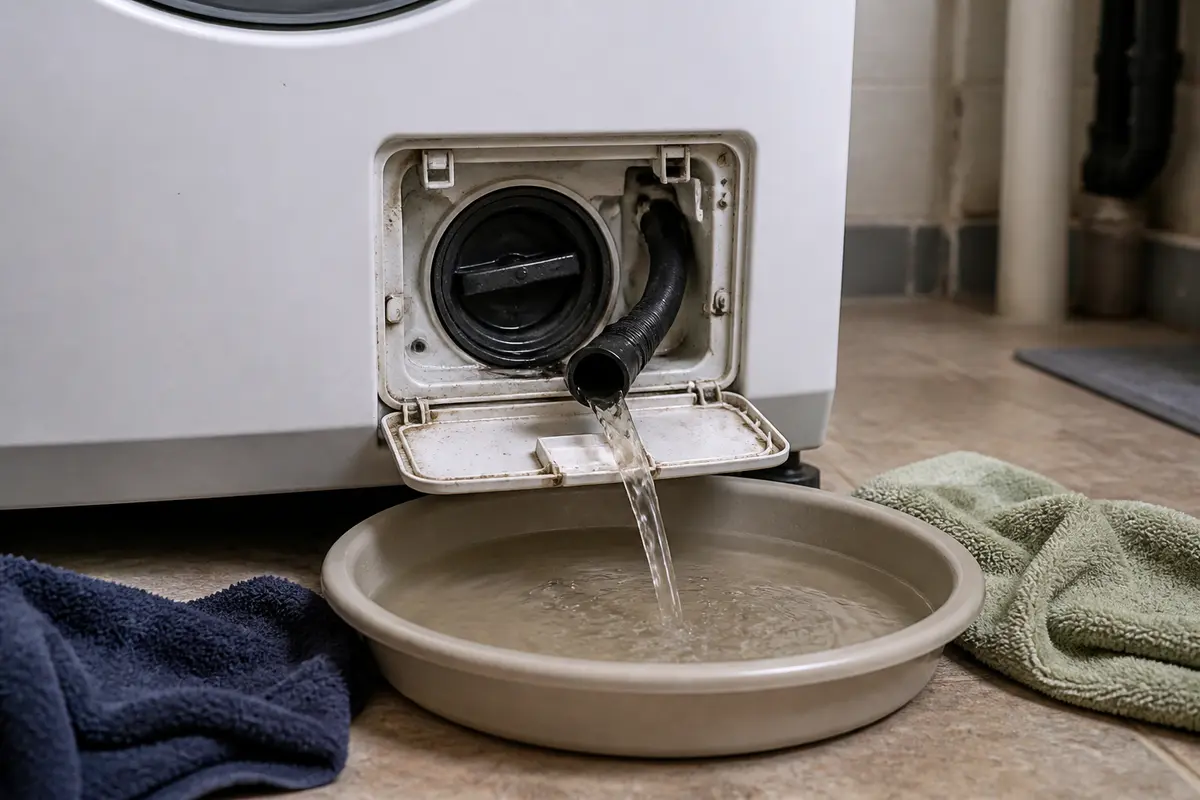
  2. Place towels and a shallow pan at the front of the washer because trapped water may come out fast.
  3. Open the pump cleanout access if your washer has one and slowly drain any water you can safely control.
  4. Remove lint, coins, hair pins, and small debris from the cleanout and inspect the pump inlet for obstructions you can reach safely.
  5. Reassemble, restore power, and run Drain/Spin again.

Next move: If the washer drains fully and the door unlocks, the blockage was the reason it stayed locked. If the cleanout is clear but the washer still will not drain or unlock, the drain pump may be failing or the machine may need deeper diagnosis.

Step 5: Replace the washer door latch if the tub is empty and the lock will not release

Once you have ruled out trapped water, reset issues, and a simple bind, the latch becomes the most likely repair. This is the main part-failure path on an empty-drum stuck-lock complaint.

  1. Use the washer model information to match the correct GE front load washer door latch assembly before ordering.
  2. Inspect the door strike for cracks or wear at the same time, because a damaged strike can keep a new latch from working right.
  3. If the latch area shows heat damage, melted plastic, or burnt wiring, stop and have the wiring checked before replacing parts.
  4. After replacing the washer door latch assembly, run a short cycle and confirm the door locks, unlocks, and opens normally at the end.
  5. If the latch and strike look good but the machine still never sends a release signal, schedule service for control or wiring diagnosis rather than guessing at expensive electronics.

A good result: If the new latch locks and releases normally through a full test cycle, the repair is complete.

If not: If a confirmed-fit latch does not change the symptom, the problem is likely in the wiring or control side and is no longer a smart guess-and-buy repair.

What to conclude: An empty tub plus repeated clicking or no release usually supports a failed washer door latch assembly. No change after latch replacement points upstream to wiring or control issues.

Replacement Parts

Repair Riot may earn a commission from qualifying purchases, at no extra cost to you.

FAQ

Why is my GE front load washer door still locked after the cycle ended?

Most often, the washer still thinks water is in the tub or the door latch did not get the release signal it expected. Check for standing water first, then try a full power reset before assuming the latch has failed.

Will unplugging the washer unlock the door?

Sometimes, yes. If the control is hung up after a stalled or interrupted cycle, a 5 to 10 minute power reset can let the lock time out and release. If water is still in the tub, unplugging alone usually will not solve it.

How do I know if it is a drain problem or a bad latch?

If you can see water in the drum or hear sloshing, treat it as a drain problem first. If the drum is empty and the machine clicks at the door but never opens, the washer door latch assembly is more likely.

Can I force the washer door open?

You should not force it. Prying on the door often breaks the handle, trim, or boot seal and still does not fix the real problem. Relieve pressure on the door gently, then diagnose the drain or latch issue instead.

What part usually fixes a front-load washer door that won’t unlock?

On an empty-drum stuck-lock complaint, the washer door latch assembly is the most common repair part. If the washer is still full of water, the real fix is often clearing a blockage or replacing a failed washer drain pump after diagnosis.