Is the cup over the fill line?
Remove the excess and run the next load under the max mark. Overfill can leave softener behind or send it into clothes too concentrated.
If fabric softener stays in the washer dispenser, start at the cup or drawer. Residue, overfill, a loose siphon cap, or no rinse-water flush usually explains the symptom before a bad inlet valve does.
The first useful clue is what the cup looks like after the load: thick softener, cloudy film, pooled water, or a dry compartment point to different checks.
Clean, reseat, run one normal rinse, then decide whether the fault is the insert, the cycle setting, or water flow.
Don’t start with: Do not order a water inlet valve or open the cabinet until the dispenser is clean, seated correctly, and still lacks a rinse flush.
Remove the excess and run the next load under the max mark. Overfill can leave softener behind or send it into clothes too concentrated.
Shake the product if the label allows it, use the measured amount, and dilute only when your washer manual or dispenser design allows room below the fill line.
With power disconnected, remove the loose dispenser pieces, wash them with warm water and mild soap, and clear small openings with a soft brush.
A cap that sits crooked can break the siphon path. Reseat it before you judge the next cycle.
A strong flush with leftover softener points back to the cup, cap, or product use. A dry or weak flush points toward cycle selection, supply restriction, or internal water routing.
Check supply valves and hose kinks first. If supply basics are sound and the softener flush is still weak, stop guessing and use model-specific valve diagnosis.
The dispenser tells you where to go next. Residue and pooled softener send you to cleaning and seating checks; a clean dry cup sends you to rinse-flow diagnosis.
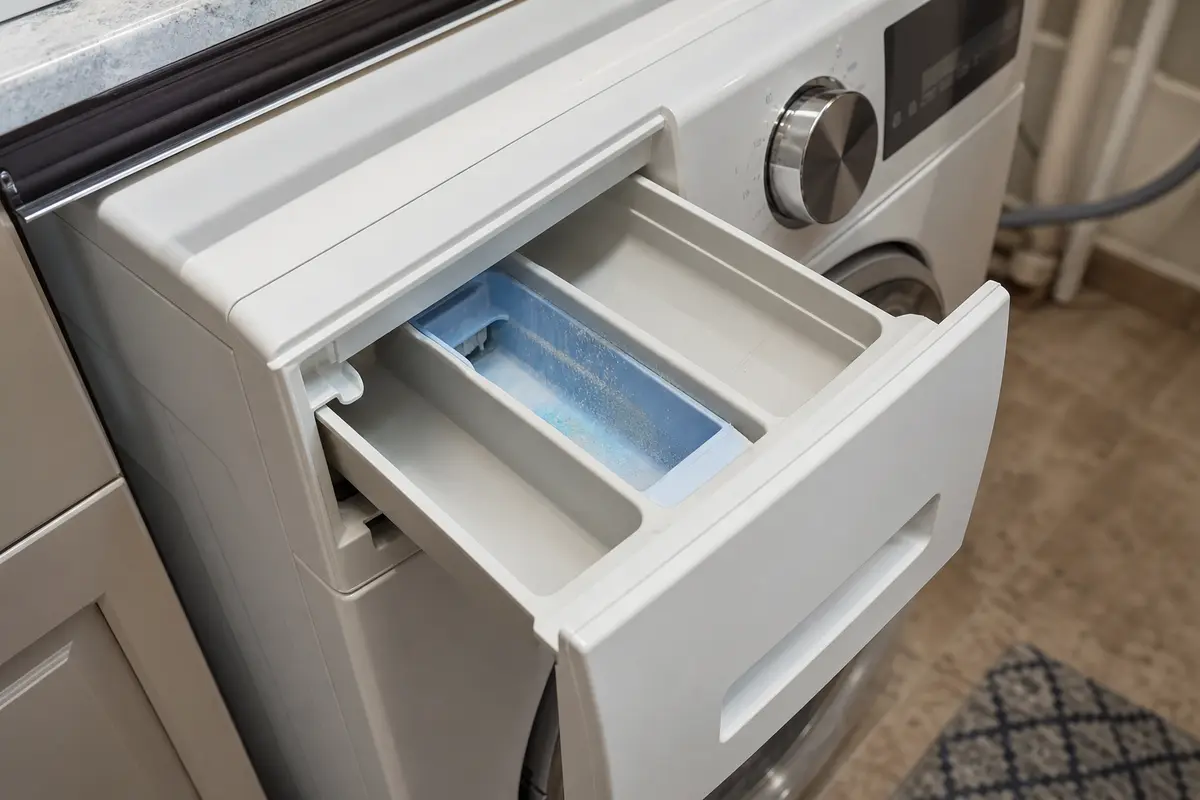
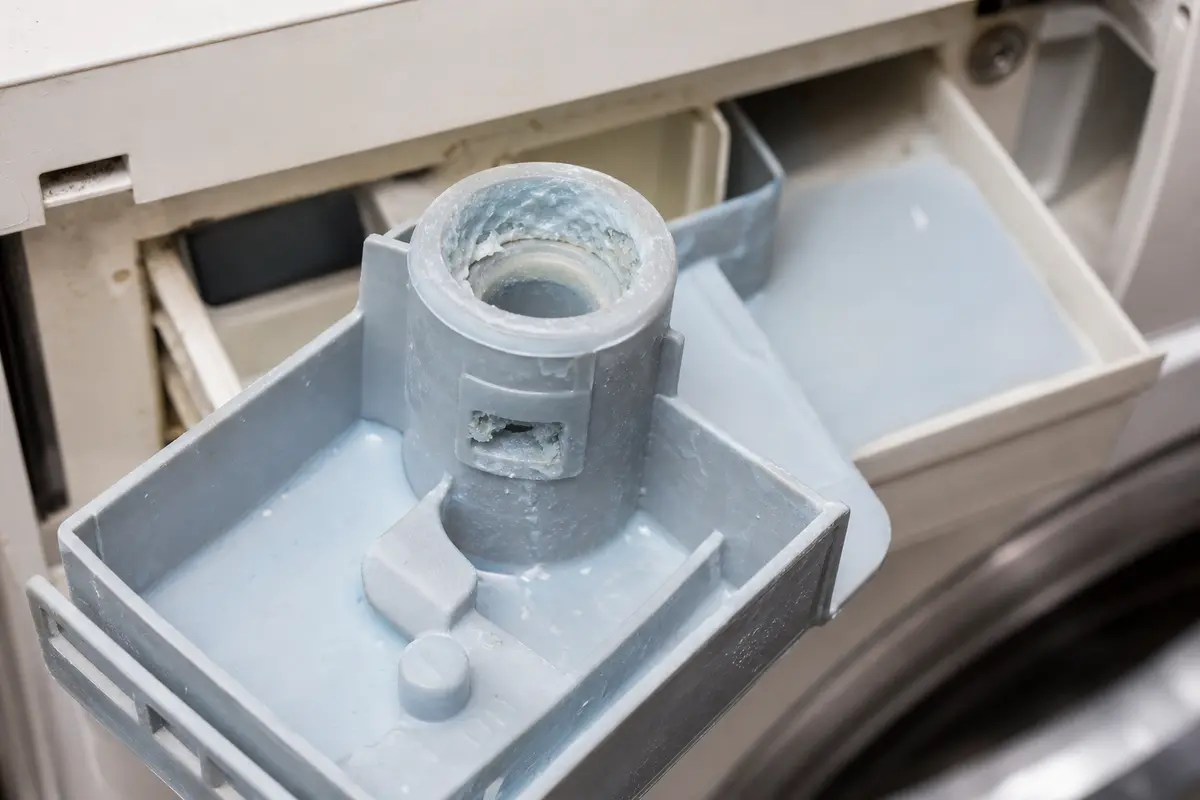
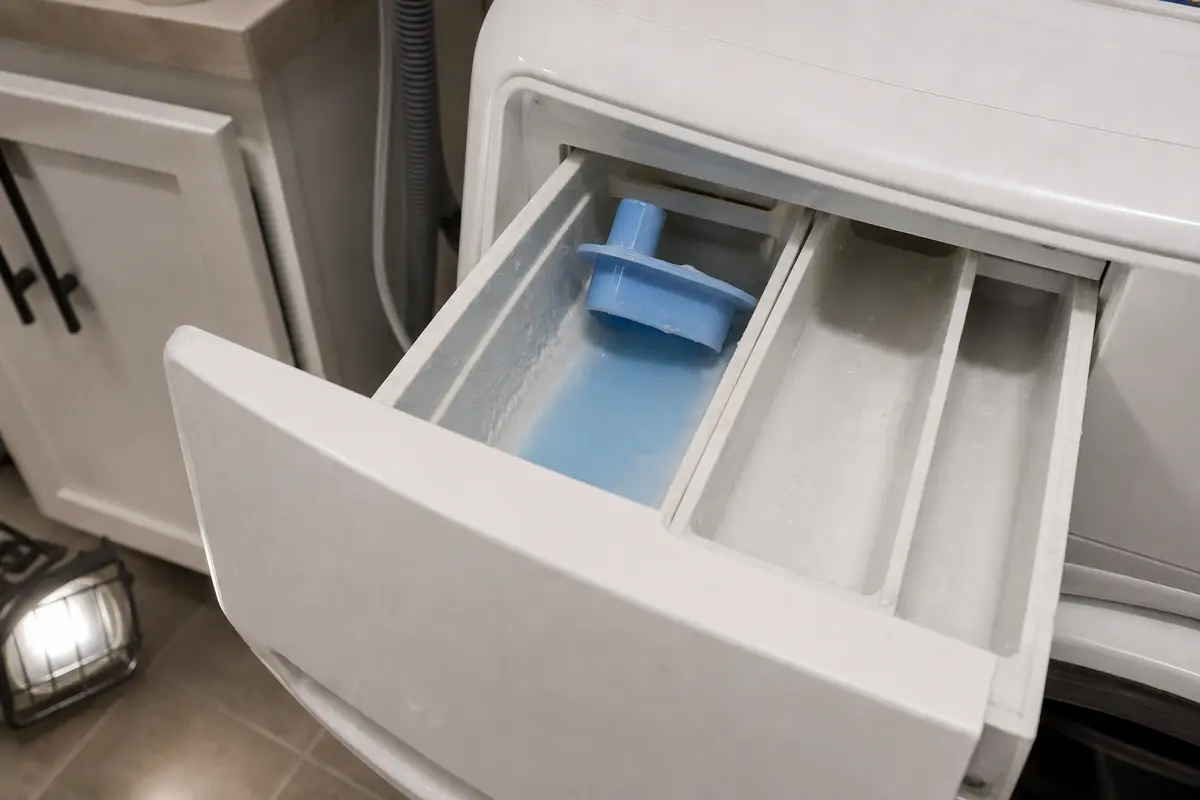
Copy the full model number from the washer tag and prove the failure point first. A softener insert or drawer belongs in the cart only when it is cracked, warped, missing a cap, or still fails after cleaning and a good rinse flush. A water inlet valve comes later, after supply valves, hoses, cycle settings, and dispenser parts check out.
Softener leaves the drawer only when the cup is assembled right, the cycle calls for softener, and rinse water reaches that small compartment. A good clue is what remains after the rinse: thick softener, diluted water, or a dry cup.
A softener cup problem can get expensive fast if the first move is a valve, board, or cabinet teardown.
This homeowner check usually fixes softener-cup complaints without buying anything. Watch for residue under the cap and in the small openings, not just in the open cup.
Run one normal cycle that should use softener. Listen for the rinse fill and watch for a real flush if the design lets you observe it safely.
| What you see | What it usually means | Next move |
|---|---|---|
| Cup empties after cleaning. | Residue or a loose insert was blocking the siphon. | Keep the dispenser clean and stay under the fill mark. |
| Strong rinse flush but softener remains. | The insert, cap, or product use is still the better clue. | Recheck seating, damage, fill level, and product thickness. |
| Cup is clean but stays dry. | The washer may not be sending water through the softener path. | Check cycle options and supply basics before parts. |
| Rinse flow is weak everywhere. | House supply, hose kinks, or inlet screens may be restricting fill. | Turn off water before inspecting hoses or screens. |
| Drawer splashes or leaks during fill. | The drawer may be misseated, blocked, or overfilled. | Stop the cycle and fix the leak path before another load. |
| Softener spots clothes. | Softener may be concentrated, overfilled, or released at the wrong place. | Clean the cup and use a measured amount in the right compartment. |
The same symptom can come from different dispenser hardware. Use the washer style to choose the next safe check.
These are for cleaning and safe observation, not for live electrical diagnosis or forced disassembly.
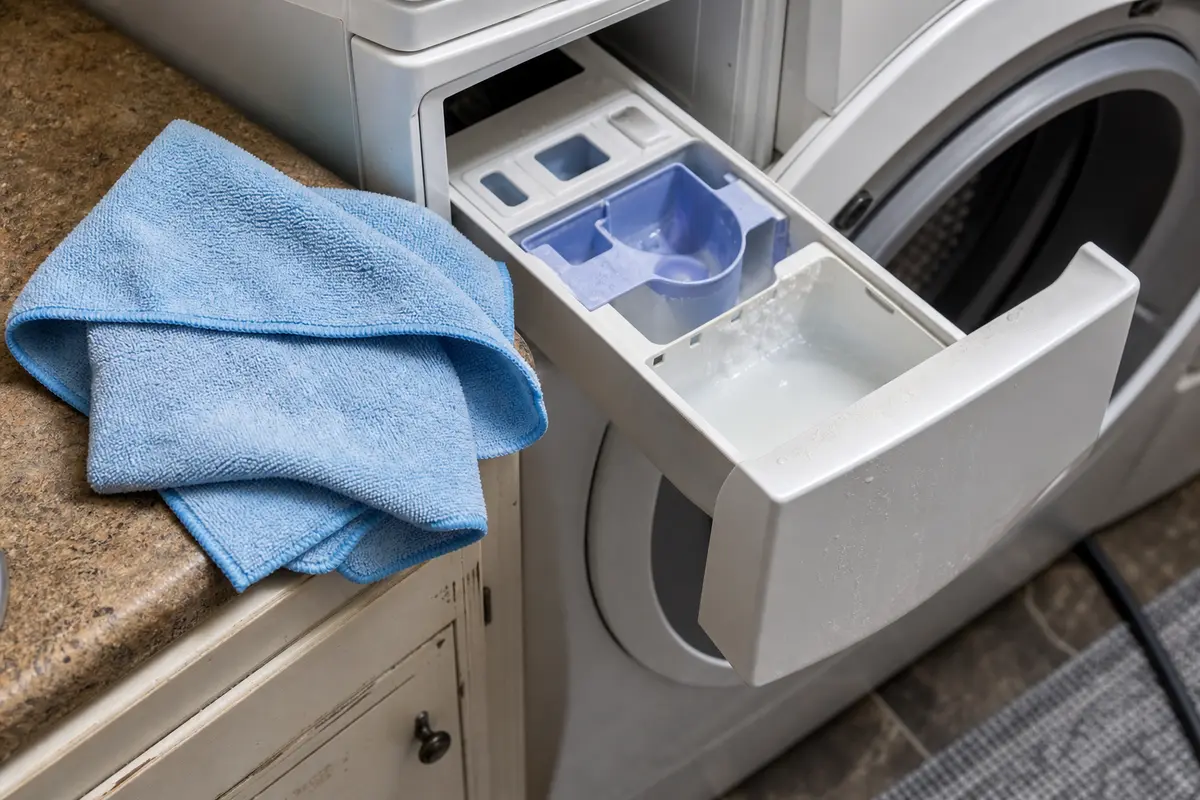
Helps when: You need to wipe waxy softener film from the cup, drawer face, and housing without scratching plastic.
Skip it when: The residue is inside a part that is not meant to be removed or reached by hand.
Compare soft cloths on Amazon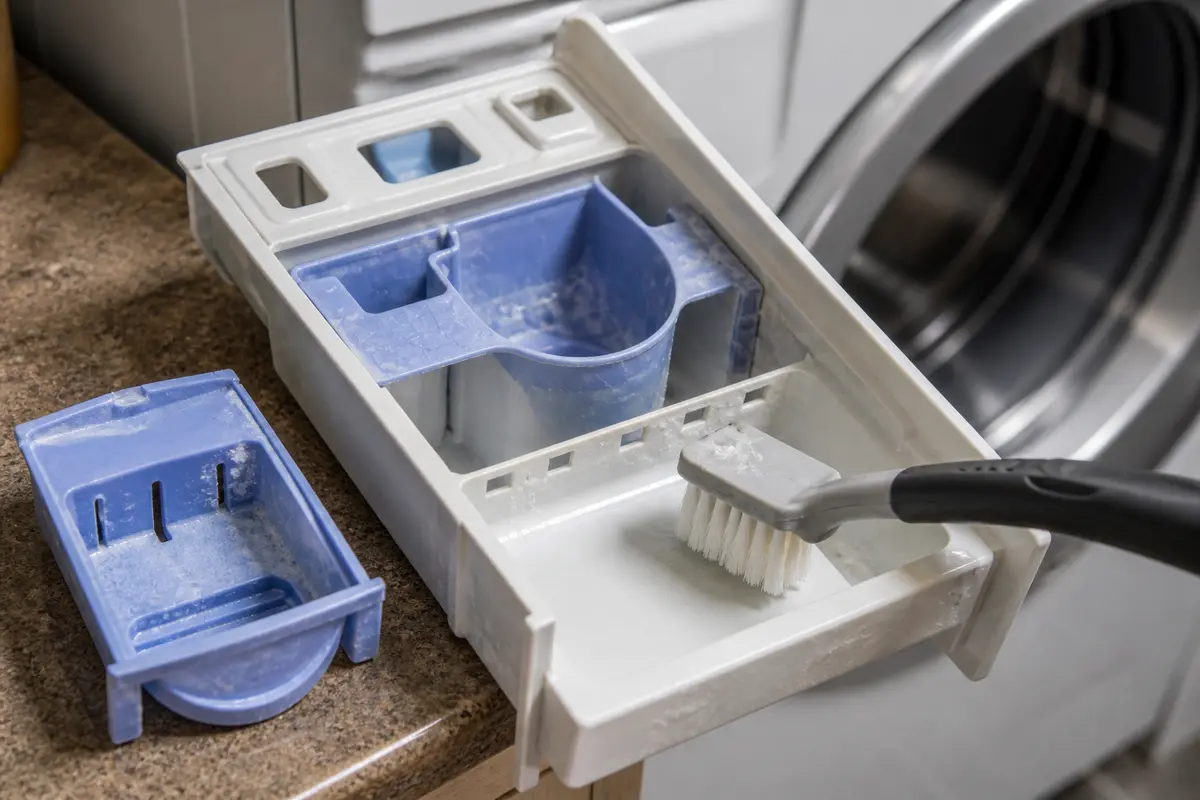
Helps when: Small slots, cap undersides, and drawer corners need gentle scrubbing after a warm-water rinse.
Skip it when: You are tempted to use a knife, drill bit, metal pick, or anything that can gouge plastic.
Compare soft brushes on Amazon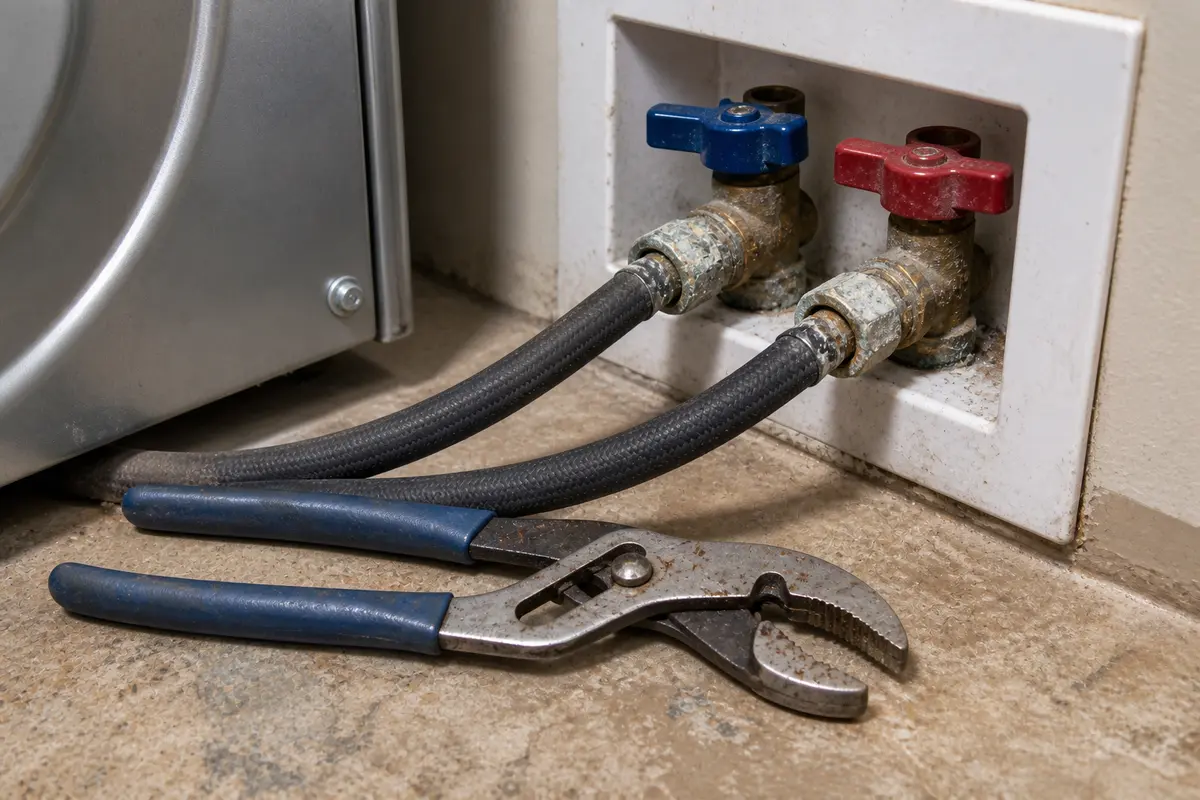
Helps when: You choose to inspect fill hoses or inlet screens after shutting off water and unplugging the washer.
Skip it when: The fittings are corroded, seized, leaking, or likely to crack when moved.
Compare slip-joint pliers on AmazonAs an Amazon Associate I earn from qualifying purchases. Repair Riot may earn a commission at no extra cost to you.
Parts should match a proved failure, not just leftover softener. A good clue for the insert is strong rinse flow paired with a clean cup that still will not siphon. Copy the model number before comparing anything.
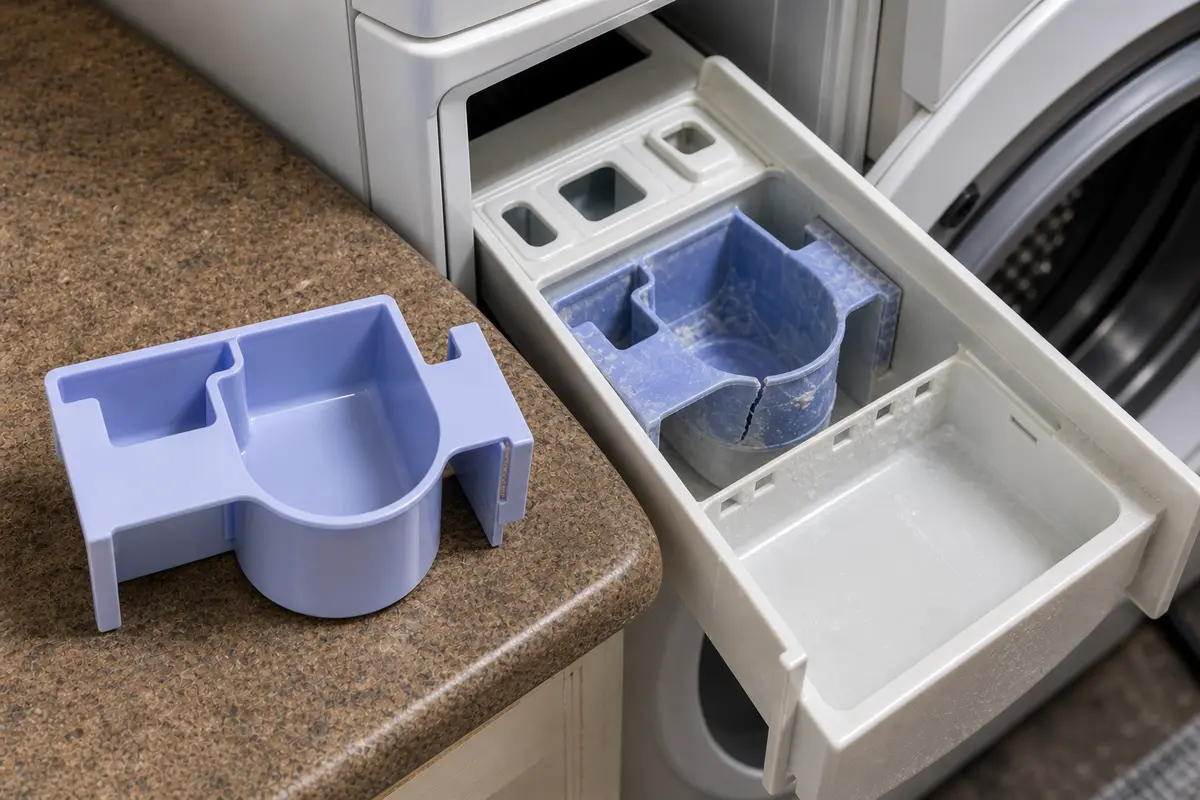
Helps when: The insert, siphon cap, or cup is cracked, warped, missing, or still fails with strong rinse flow after cleaning.
Skip it when: Residue is still present, the cap was not seated, or rinse water never reached the softener section.
Compare softener inserts on Amazon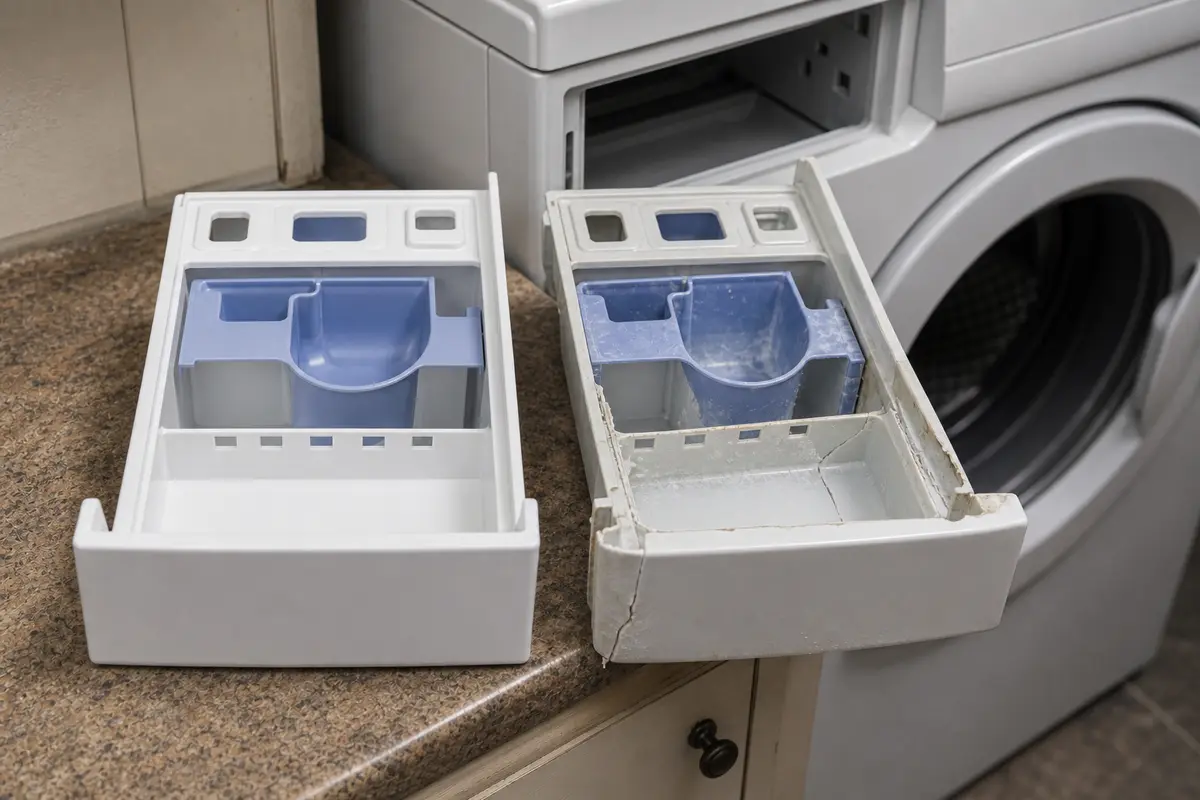
Helps when: The drawer is cracked, warped, leaking, or will not slide fully home after the removable pieces are clean.
Skip it when: Only the removable insert is dirty or damaged, or the drawer problem is really weak water flow.
Compare washer dispenser drawers on AmazonAs an Amazon Associate I earn from qualifying purchases. Repair Riot may earn a commission at no extra cost to you.
Residue under the insert or siphon cap is the first thing to check. Overfill, very thick softener, a crooked cap, or a cycle that did not flush the softener section can leave liquid behind too.
Do not use that as a normal workaround unless your washer manual gives a timed manual-add method. Concentrated softener can spot fabric when it lands directly on clothes.
It can, but it should not be the first part you buy. Move toward valve diagnosis only after the dispenser is clean, assembled correctly, the cycle calls for softener, and rinse flow to that compartment stays weak.
Only do that when the product label and washer dispenser leave room below the fill line. Extra liquid above the mark can cause the same leftover-cup symptom.
The softener may be too concentrated, overfilled, added to the wrong place, or released without enough rinse water. Clean the dispenser and use the measured amount before blaming the washer.
First disconnect power. Remove only the insert, cap, or drawer pieces meant to come out, rinse with warm water, wash with mild soap, clear small openings with a soft brush, and reinstall everything squarely.
Check cycle options and household water supply basics next. A dry or weak softener flush after those checks points toward model-specific water routing or inlet valve diagnosis.
Replace it when it is cracked, warped, missing the siphon cap, will not seat squarely, or still fails after cleaning while a strong rinse flush is reaching the cup.
Repair Riot wrote this page around visible homeowner checks: residue, fill level, cycle timing, rinse-water flow, and model-specific dispenser parts. Manufacturer support and manual pages are used for model lookup, dispenser handling, cycle options, and service boundaries.