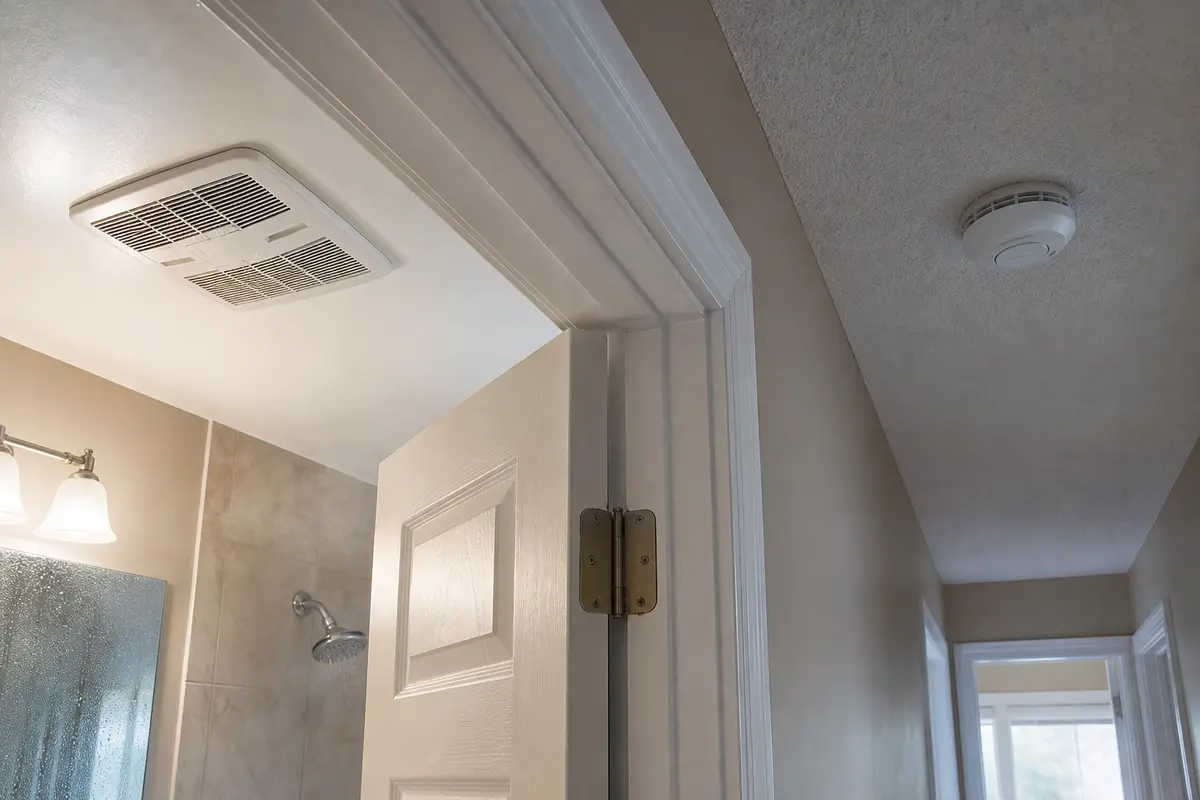
Bathroom-adjacent false alarm

Smoke Detector Goes Off When Shower Runs? Check Steam First

If the alarm sounds during a hot shower or just after the door opens, rule out smoke, CO wording, and other sounding units first. A good clue is one hallway detector that quiets as the air dries; then test the fan, door, dust, and date before replacing anything.

Steam rolling out of the bathroom and into a hallway detector, especially one that is dusty, old, or mounted close to the door.

Watch for the pattern. Shower-only alarms point toward nuisance steam; CO wording, burnt smells, multiple units, or alarms away from shower time come first.

Don’t start with: Do not pull the battery, cover the detector, or assume every shower alarm is harmless. Sort the alert type first.

Only during hot showers?Use the fan and door test before buying a detector.
CO wording or no reset?Get to fresh air and treat it as a safety event.

Do this first

  • If you smell smoke, see haze, hear several alarms, or the unit says carbon monoxide, get everyone out and call emergency services or the gas utility from outside.
  • Do not remove the battery, unplug a hardwired unit, or cover the detector to get through showers.
  • Use hush or silence only after you have looked for smoke, burning smells, and CO wording.
  • Keep water, cleaners, and sprays out of the detector vents.
  • Turn off power before removing a hardwired detector; call an electrician or alarm pro if you are unsure.
  • Replace missing or disabled protection the same day. Do not leave the hallway unprotected.
Last reviewed: 2026-04-06

60-second shower alarm sort

Does the unit say carbon monoxide, gas, or fire?

Leave the house first. Do not diagnose a nuisance alarm until the smoke or CO alert is clearly ruled out.

Does one nearby detector alarm only during or just after hot showers?

Steam is the usual path. Run the fan, manage the door, and watch whether the same shower stays quiet.

Does better ventilation stop the alarm?

Treat moisture control and detector condition as the repair path before replacing parts.

Are the vents dusty, painted, yellowed, cracked, or near 10 years old?

Clean first if the unit is serviceable. Replace it when age, damage, failed testing, or repeated nuisance alarms point there.

Is it chirping or showing a fault instead of a full alarm?

Read the label and manual. Battery trouble, end-of-life behavior, or humidity inside an aging unit may be the better clue.

Do alarms happen away from shower time or across multiple units?

Stop calling it a shower-steam problem. Treat the detector system, wiring, or a real hazard as the next diagnosis.

See the steam path before you blame the detector

The useful clue is where moist air travels. A detector just outside the bathroom can see a shower cloud before the room has a chance to dry.
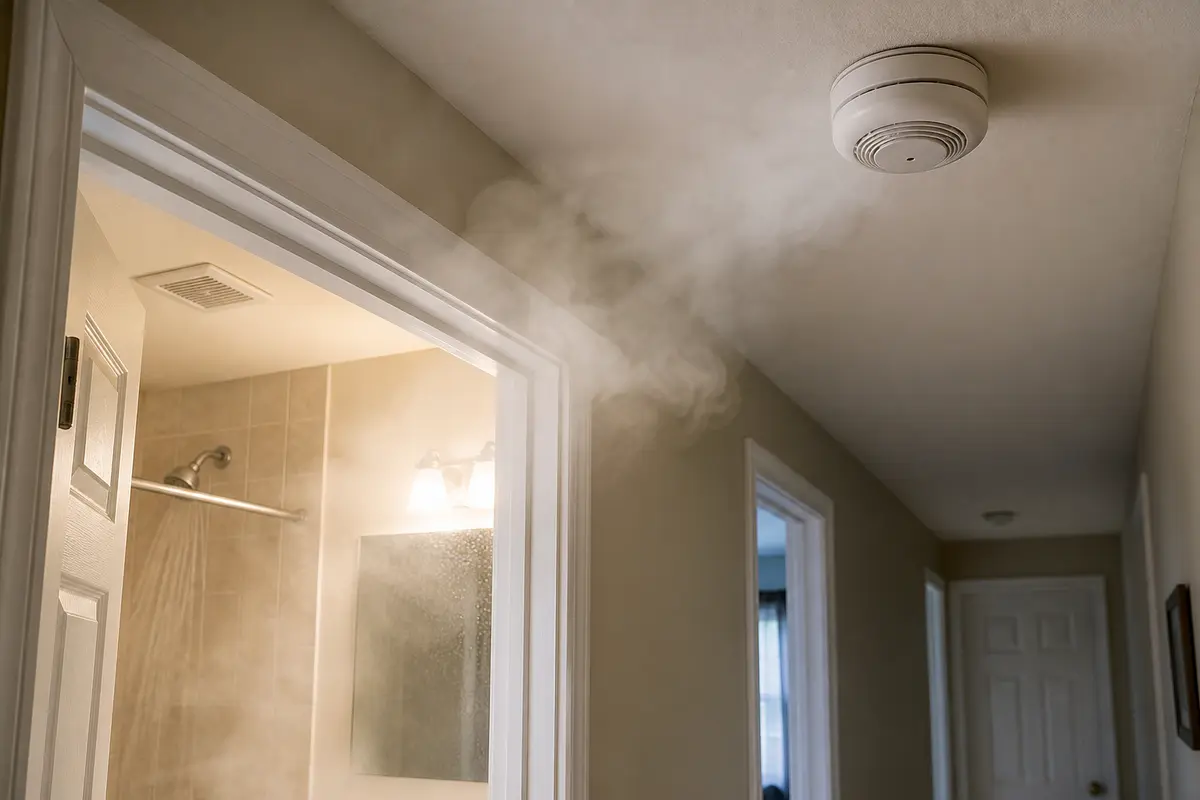
Steam drifting from a bathroom doorway toward a nearby hallway smoke detector
A hallway detector near the bathroom door can nuisance alarm when steam rolls out after a hot shower.
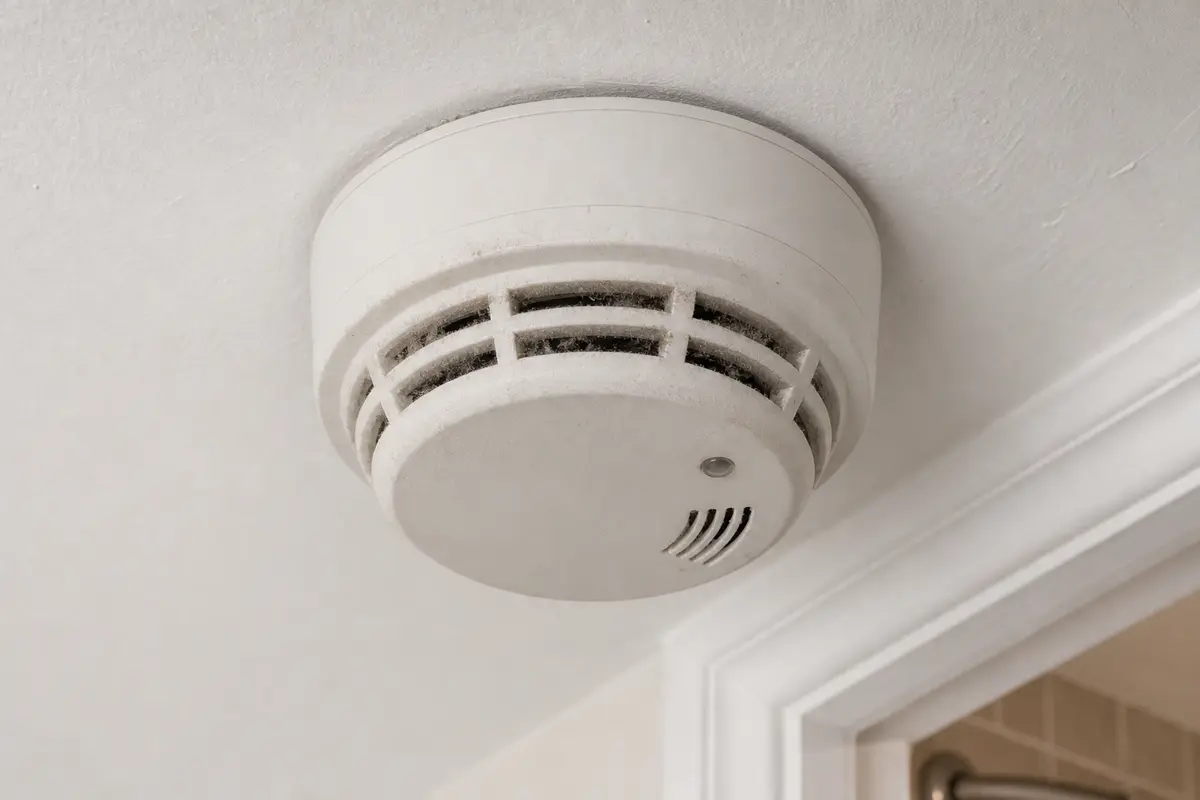
Dusty smoke detector mounted near a bathroom doorway after shower steam exposure
Dusty vents make humidity trouble more likely. Clean the exterior vents before deciding the alarm itself has failed.
Bathroom fan and partly closed door used to keep shower steam away from a smoke detector
The fan-and-door test is useful because it changes only the steam path. A quiet alarm after this test points toward moisture control.

Before you buy a detector

Before you shop, take a label photo and look for smoke-only versus smoke/CO, battery versus hardwired, interconnect, manufacture date, and model family. A replacement makes sense only after the fan test, vent cleaning, age check, or alert wording points there.

What is probably happening

When the pattern is hot shower, door opens, steamy hallway, one nearby alarm, then quiet as the air dries, check moisture before parts. Test one normal shower with the fan running early before you blame wiring or a failed detector.

Bathroom steam drifting into a hallway toward a nearby smoke detector
Watch where the steam goes when the door opens. If fan timing and door control keep the hallway alarm quiet, stay with ventilation and exterior vent cleaning before you price a detector.
  • Steam path: warm humid air leaves the bathroom and reaches the sensing chamber before the exhaust fan clears the room.
  • Dust plus humidity: dust around the detector vents can make a normal steam cloud look more like smoke to the alarm.
  • Age: a smoke alarm near the end of its service life may nuisance alarm from conditions it used to ignore.
  • Placement: a detector just outside the bathroom door gets hit with the whole steam burst when the door swings open.
  • Wrong alert type: a combo smoke and CO alarm can make the timing look shower-related even when the message is a CO warning.

What not to do

The common bad fixes all make the house less protected. A nuisance alarm still needs a working detector in the right place.

  • Do not leave the battery out after the shower.
  • Do not tape over the vents, wrap the detector, or cover it with a shower cap.
  • Do not move a detector farther away without knowing the smoke-alarm requirements for that location.
  • Do not downgrade a combo smoke and CO alarm to smoke-only unless a qualified pro confirms that protection belongs elsewhere.
  • Do not spray cleaner, air freshener, or water into the vents.
  • Do not keep pressing hush every morning instead of fixing the steam path, dust, age, or placement issue.

Sort the alarm before anything comes apart

A good clue changes the next move. Use the alert behavior before you remove a detector or shop for a replacement.

What you noticeWhat it usually meansNext move
One hallway alarm sounds only after a hot showerSteam is reaching the detectorRun the fan early, keep the door mostly closed, and repeat one normal shower
The alarm says carbon monoxide or COThis is not a steam diagnosis yetGet people to fresh air and follow the alarm instructions
The detector chirps after humid showersBattery, fault, or end-of-life behavior may be showing up with moistureRead the label, replace the correct battery if allowed, and check the age
Dust is visible in the ventsHumidity may be combining with dirt inside the openingsVacuum the exterior vents gently, then test the alarm button
The unit is around 10 years old or the date is missingReplacement moves higher than repeated cleaningMatch the same protection type and wiring style
Multiple alarms sound or alarms happen away from showersThe pattern is broader than bathroom steamStop the shower-focused troubleshooting and escalate the detector system

Step-by-step fix

Work from the air path to the detector. This keeps the repair simple and avoids replacing a good alarm for a bathroom ventilation problem.

Bathroom fan and partly closed door used to test whether steam reaches a hallway smoke detector
Change the steam path before buying anything. When the fan and door test stops the alarm, the detector may only need cleaning, better ventilation, or proper relocation.
  • Step 1: Read and listen before silencing. Look for CO wording, voice prompts, indicator lights, and whether more than one unit is sounding.
  • Step 2: Run the bathroom fan several minutes before the next shower. A good clue is a quieter alarm when the fan gets a head start.
  • Step 3: Keep the bathroom door mostly closed during the steamiest part of the shower, then open it slowly.
  • Step 4: Try one normal shower with slightly better ventilation. Do not change several things at once if you want a clean result.
  • Step 5: Vacuum the detector's exterior vents with a soft brush. Do not open the sensing chamber or use liquid cleaners.
  • Step 6: Read the manufacture date. Near 10 years, missing date, cracked plastic, paint, failed test button, or repeat nuisance alarms all point toward replacement.
  • Step 7: For hardwired or interconnected alarms, match the required type and connector family or bring in a qualified electrician or alarm installer.

Clean and judge the detector

Dusty vents are a common reason a detector gets touchy around humidity. Cleaning is worth trying when the alarm is in good condition and not at end of life.

Dust buildup in smoke detector vents near a bathroom doorway
If you see dust around the slots, clean the exterior vents before judging the alarm. That check is low-risk only when the unit is still within its service life and passes its button test.
  • Use a stable step stool and dry hands. For battery units, remove the battery only while cleaning and reinstall it right away.
  • For hardwired units, leave wiring alone unless power is off and you know how to verify the circuit is safe.
  • Vacuum the exterior vents with a soft brush attachment. Hold the nozzle near the openings instead of scraping the plastic.
  • Skip sprays and solvents. Residue around the sensor openings can create a new nuisance-alarm problem.
  • Press the test button after reinstalling power or battery. A detector that fails its own test should be replaced, not trusted.
  • Watch the next few showers. A clean detector that still alarms with better ventilation is giving you an age, placement, or failure clue.

Tools You May Need

You should not need electrical test gear for the homeowner checks here. The usual tools are for safe reach, gentle cleaning, and reading the label.

  • Step stool: use it only on a dry, level floor so both hands can stay free.
  • Vacuum with soft brush: useful for exterior vents where dust collects around the sensing openings.
  • Dry microfiber cloth: wipe the outside housing only; keep moisture away from slots and seams.
  • Small screwdriver: helpful for a mounting plate or battery door, but stop before handling hardwired conductors.
  • Phone camera: take a clear photo of the label, date, wiring style, and model family before shopping.

Replacement Parts

Look for proof before shopping. Buy a detector only after you see an old date, a failed test, damage, paint, or repeat shower alarms after ventilation and cleaning.
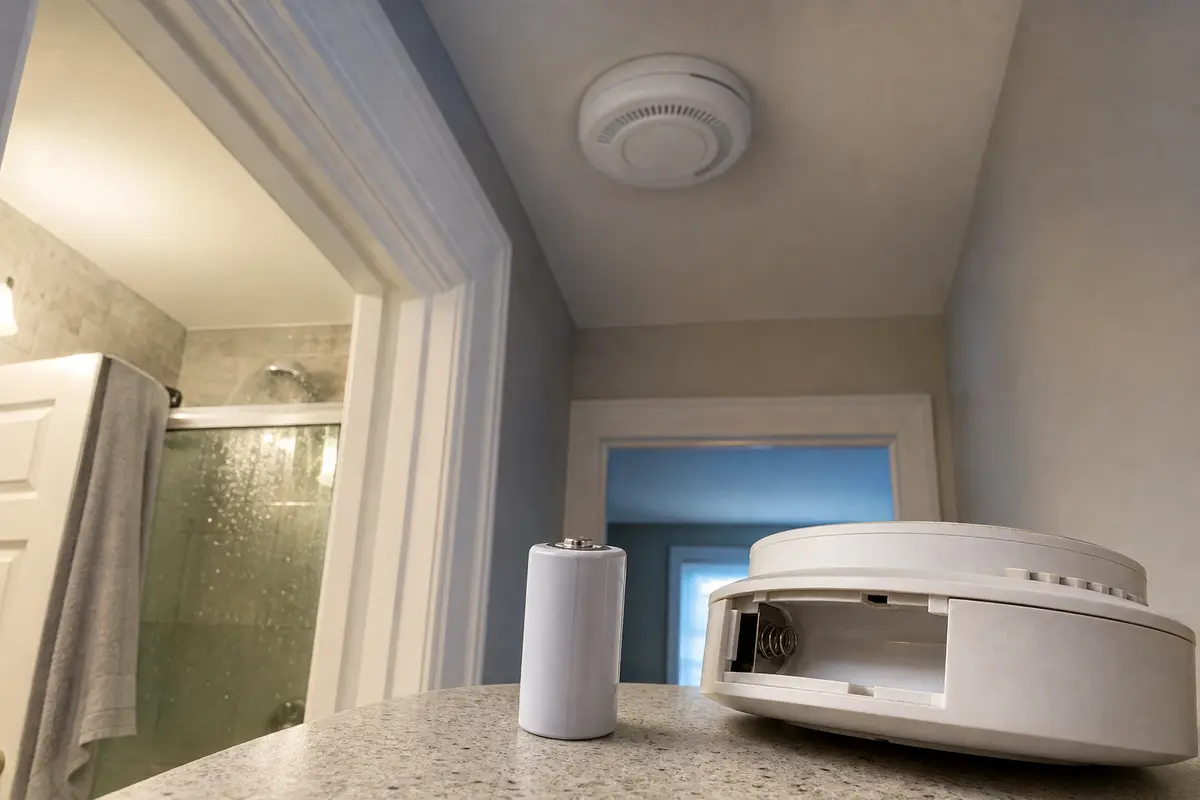
  • Battery: check the label first. A battery helps chirping or low-battery trouble, not a full alarm that only follows shower steam.
  • Detector unit: look for the date, cracked or painted housing, failed test button, or repeat nuisance alarms after the fan and cleaning checks.
  • Mounting plate: look for cracks, a loose fit, or a plate that does not match the replacement detector family.
  • Hardwired and interconnected alarms need compatible connectors, the same required protection type, and a stop point if wiring is uncertain.
Smoke detector battery shown in the repair area for smoke detector goes off when shower runs

Smoke detector battery

Helps when: The detector uses a replaceable battery and the current battery is weak, expired, missing, or tied to chirping after humidity changes.

Skip it when: The alarm is a sealed 10-year unit, announces CO, fails testing, or full-alarms only from shower steam after cleaning.

Compare smoke detector batteries on Amazon
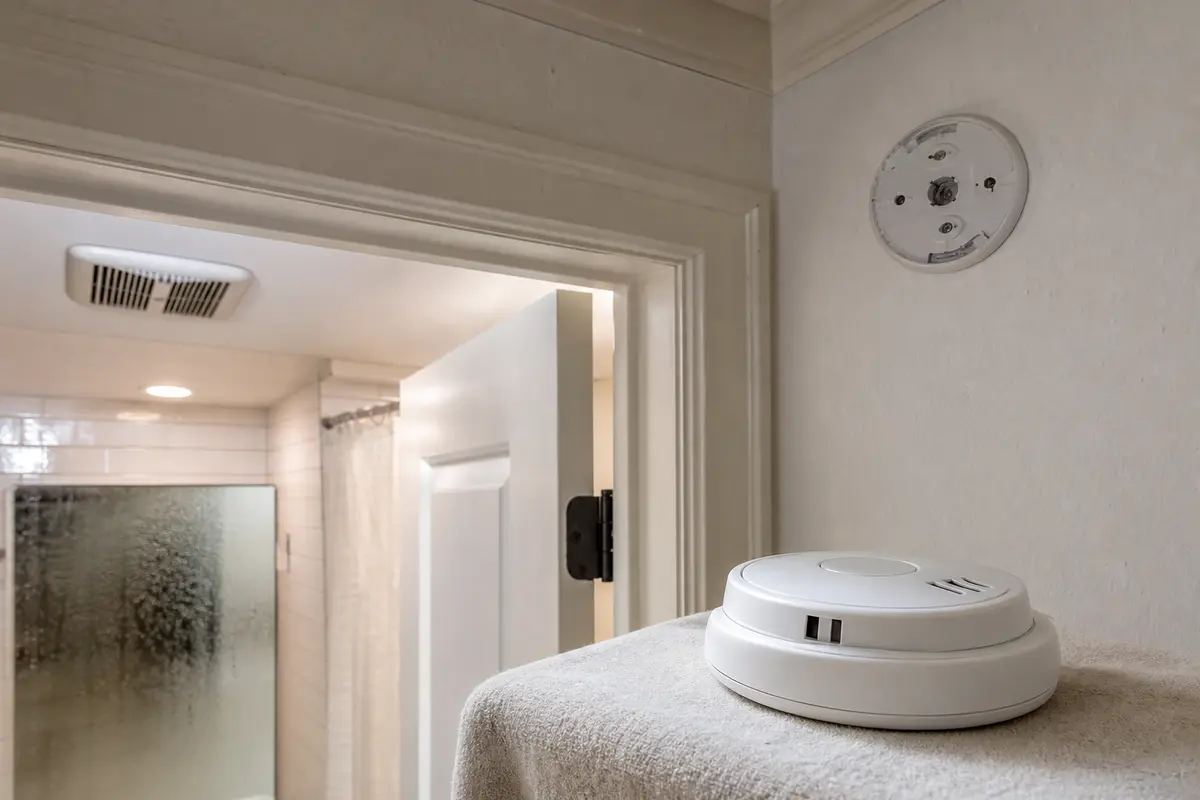
Replacement smoke detector unit shown before matching battery or hardwired alarm type

Smoke detector unit matched to the existing alarm type

Helps when: The alarm is near end of life, damaged, painted, fails its test, or still nuisance alarms after ventilation and cleaning.

Skip it when: You have not checked alert type, manufacture date, steam path, dust, wiring style, and required smoke-only versus smoke/CO protection.

Compare smoke detector units on Amazon
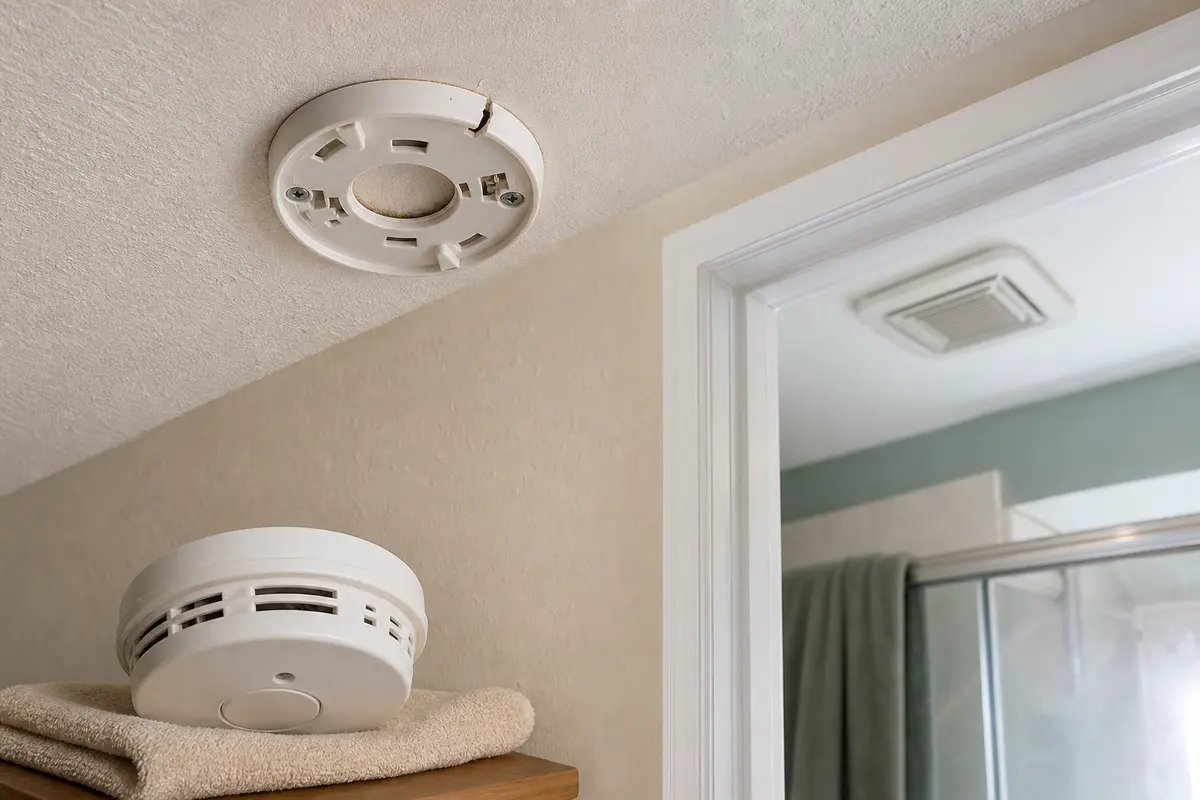
Smoke detector mounting plate shown in the repair area for smoke detector goes off when shower runs

Smoke detector mounting plate

Helps when: The old plate is cracked, loose, or incompatible with the replacement detector family you already matched.

Skip it when: The detector itself is working and the plate holds the alarm firmly against the ceiling.

Compare smoke detector mounting plates on Amazon

As an Amazon Associate I earn from qualifying purchases. Repair Riot may earn a commission at no extra cost to you.

FAQ

Why does my smoke detector go off only when I shower?

Steam is the usual trigger when one nearby alarm sounds during a hot shower or just after the door opens, then stops as the hallway dries. Run the fan early, keep the door mostly closed for one shower, and clean dusty exterior vents before shopping for parts.

Can shower steam really set off a smoke alarm?

Yes. Shower steam can cause nuisance alarms, especially when the detector is close to the bathroom door. A good clue is that better ventilation or slower door opening changes the result.

Should I move the smoke detector farther from the bathroom?

Possibly, but do not just remove it or guess at a new location. First prove the steam pattern, clean the detector, and read its age. For hardwired or code-location changes, use a qualified electrician or alarm pro.

Should I replace the detector or just clean it?

Clean it first when the unit is still within its service life, undamaged, and passes the test button. Replace it when it is around 10 years old, damaged, painted, fails testing, or still nuisance alarms after ventilation and cleaning.

What if my combo smoke and CO detector goes off when the shower runs?

Check the face label and listen for the voice prompt before blaming steam; you need to know it was the smoke alert, not CO. If it says carbon monoxide, follows a CO pattern, or will not clear, get to fresh air and treat it as a safety event.

Is it safe to use the hush button every time I shower?

No. Hush is temporary and belongs after you have looked for smoke, burning smells, and CO wording. A detector that needs hush every shower still has a steam-path, dust, age, or placement issue.

Why did the alarm start doing this after years of normal showers?

The fan may be weaker, the bathroom may be holding more humidity, or the detector may be dirtier or older than it was. A good first pass is fan timing, door control, exterior vent cleaning, and a date check.

Can I cover the detector while showering?

No. Do not cover a vent, pull the battery, or cut power; that leaves you unprotected if a real fire or CO event happens during a shower. Keep the detector working, then fix the steam path: run the fan, control the door, clean the vents, or replace the detector when the evidence points there.

Does a hardwired smoke alarm change the diagnosis?

Steam can trip a hardwired alarm the same way, but wiring changes the stop point. Leave conductors alone unless power is off and you can verify it. Interconnect faults, connector swaps, and relocation work belong with a qualified electrician or alarm pro.

How this guide was built

This page uses checks a homeowner can make before parts: look for alert wording, shower timing, steam path, visible dust, and detector age, then check whether the alarm clears as the air dries. The listed sources support smoke-alarm maintenance, shower-steam nuisance guidance, and carbon-monoxide stop points.