Is the damaged cable definitely coax?
Coax is round and has one center conductor with shielding under the jacket. If the cable type is unclear, stop and get an electrician or cable tech to identify it.
Start from safe footing and identify the cable before anyone handles it. Coax is round with a center conductor and shielding. A good clue is exposed braid, a crushed jacket, or a gnawed connector with TV or internet dropouts and no heat, smell, flicker, buzzing, or breaker trip.
Usually the cause is a rat route along framing, insulation, or a utility penetration. Look for more chew marks along the same visible path before a cable tech replaces only the easy spot.
If nearby house wiring, scorch marks, heat, buzzing, flicker, or breaker trouble appears, stop the coax repair path and call an electrician.
Don’t start with: Do not tape the bite marks, tug the cable through insulation, or assume every round attic cable is harmless.
Coax is round and has one center conductor with shielding under the jacket. If the cable type is unclear, stop and get an electrician or cable tech to identify it.
Treat it as possible house wiring damage. Leave the area and call a licensed electrician before anyone handles the run.
That points toward a coax signal failure. Photograph the chew points and call the provider or a low-voltage cable tech.
Do not ignore it. A nicked jacket or exposed braid can fail later, and the same rodent route may include other wiring.
Escalate the job. Mixed coax, ethernet, alarm wire, NM cable, or fixture wiring needs a wider inspection before repairs are priced.
Do not dig through it to keep tracing. Document where visibility stops and plan pest cleanup before anyone buries a new cable there.
The first look should separate a coax service problem from damaged house wiring. Stay on safe footing, use a light, and let the visible clues decide who should repair it.
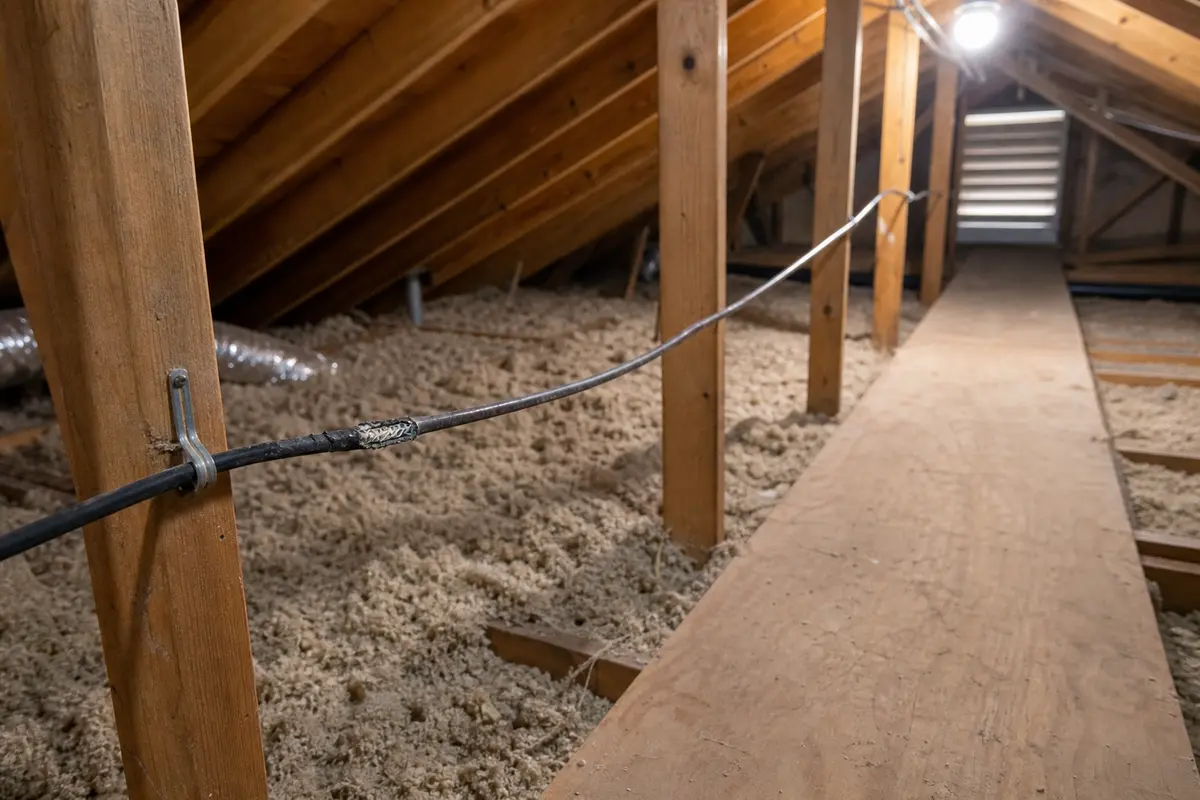
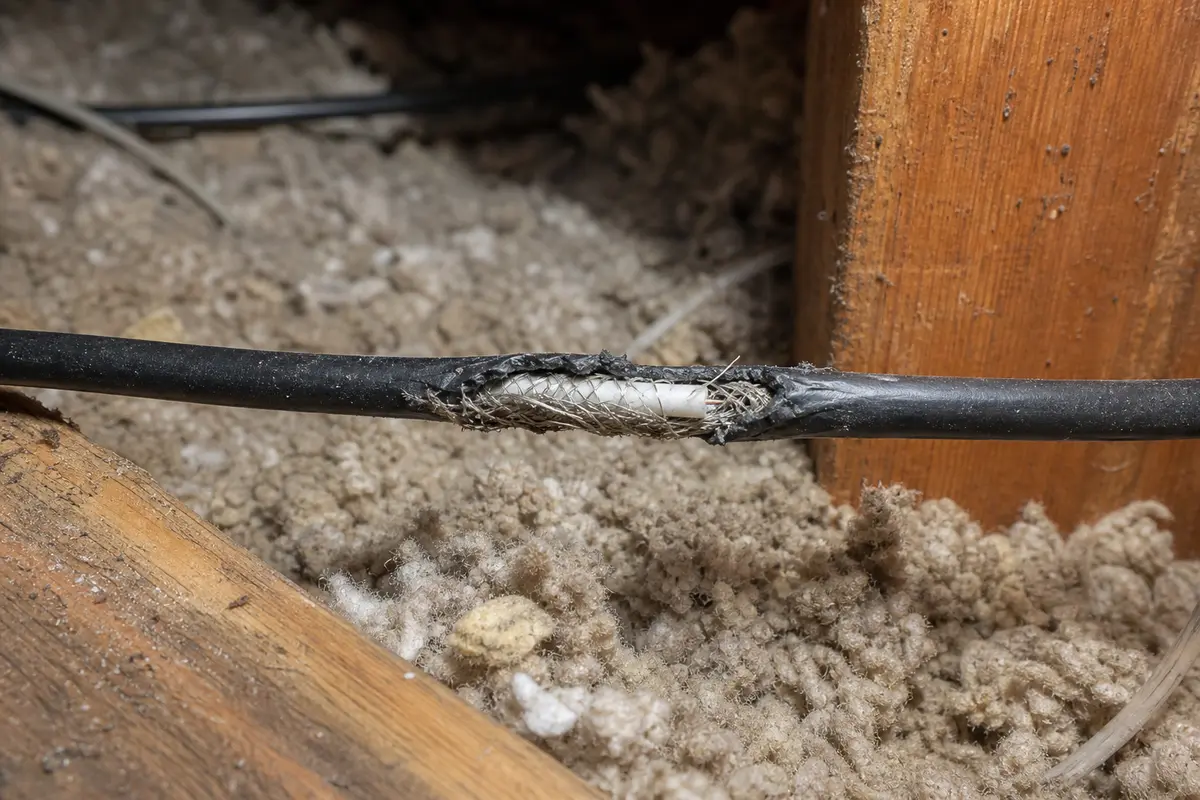
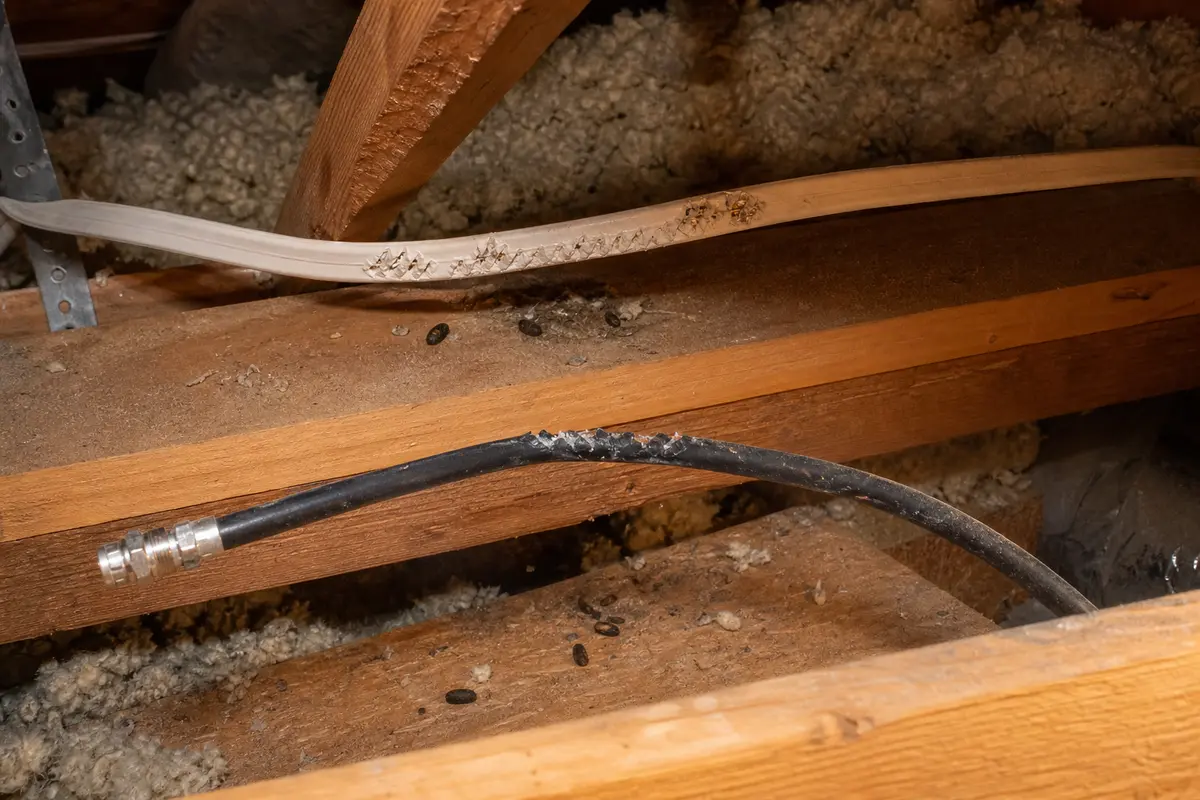
Do not buy splitters, compression fittings, cable, tape, or a modem from the chew mark alone. First identify the cable, look for electrical warning signs, and match any coax fitting or replacement cable to the exact diagnosis, cable type, connector type, and repair owner.
Look at the visible cable and match it to the symptom. A chewed coax jacket, braid, connector, or splitter usually points to TV or internet trouble; chewed house wiring, scorch marks, heat, flicker, or breaker trips moves the job to an electrician.
One clean bite mark is the exception. Rats tend to reuse travel paths, so the first spot may only be the easy one to see.
Use the first visible result to decide whether this is a service call, an electrical call, or both.
| What you find | What it usually means | Next move |
|---|---|---|
| Only the coax jacket or braid is chewed and no electrical warning signs are present | Likely coax signal damage, with lower immediate electrical risk | Document the run and call the provider or a low-voltage cable tech. |
| Nearby NM cable, fixture wiring, or junction-box wiring is chewed | The job has moved beyond coax service repair | Leave the area and call a licensed electrician. |
| Breaker trips, lights flicker, buzzing starts, or the attic smells hot | Active electrical fault or overheating is possible | Do not reset repeatedly. Leave the affected circuit off if you can identify it safely. |
| Multiple chew spots appear along the same run | The visible section is probably not the whole damage path | Plan for a wider attic inspection and expect replacement of more than one section. |
| Heavy droppings, nesting, or contaminated insulation blocks the cable path | The repair area is also a cleanup and pest-exclusion job | Pause cable work until the area can be cleaned and entry points are handled. |
This goes wrong when a rodent bite gets treated like a loose connector. Slow down until the risk is sorted.
Once you know what was chewed, the call gets simpler.
Use tools for seeing, documenting, and staying out of contaminated material. They do not make live or unknown wiring safe to handle.
Paid links. As an Amazon Associate I earn from qualifying purchases. Repair Riot may earn a commission at no extra cost to you.
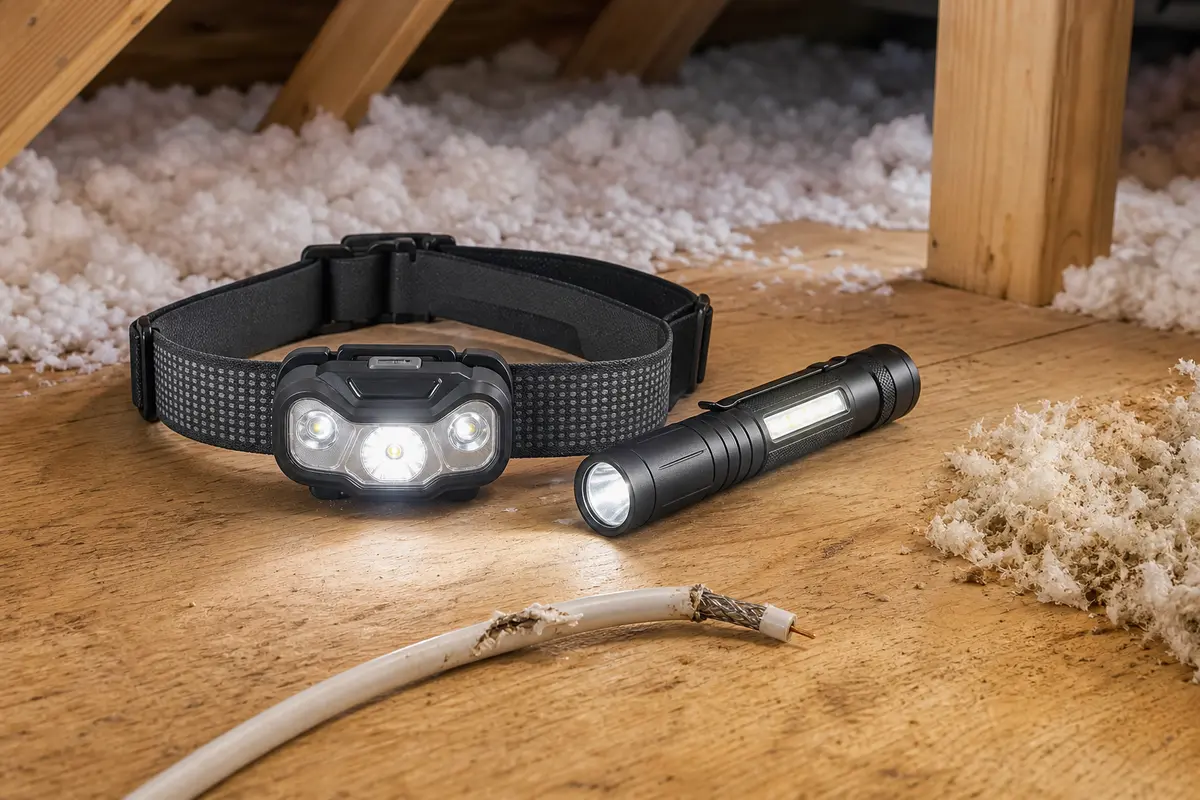
Helps when: Use it to identify cable shape, chew marks, droppings, and nearby boxes from safe attic footing.
Skip it when: Do not keep crawling if the cable disappears under loose insulation or near damaged house wiring.
Compare inspection lights on Amazon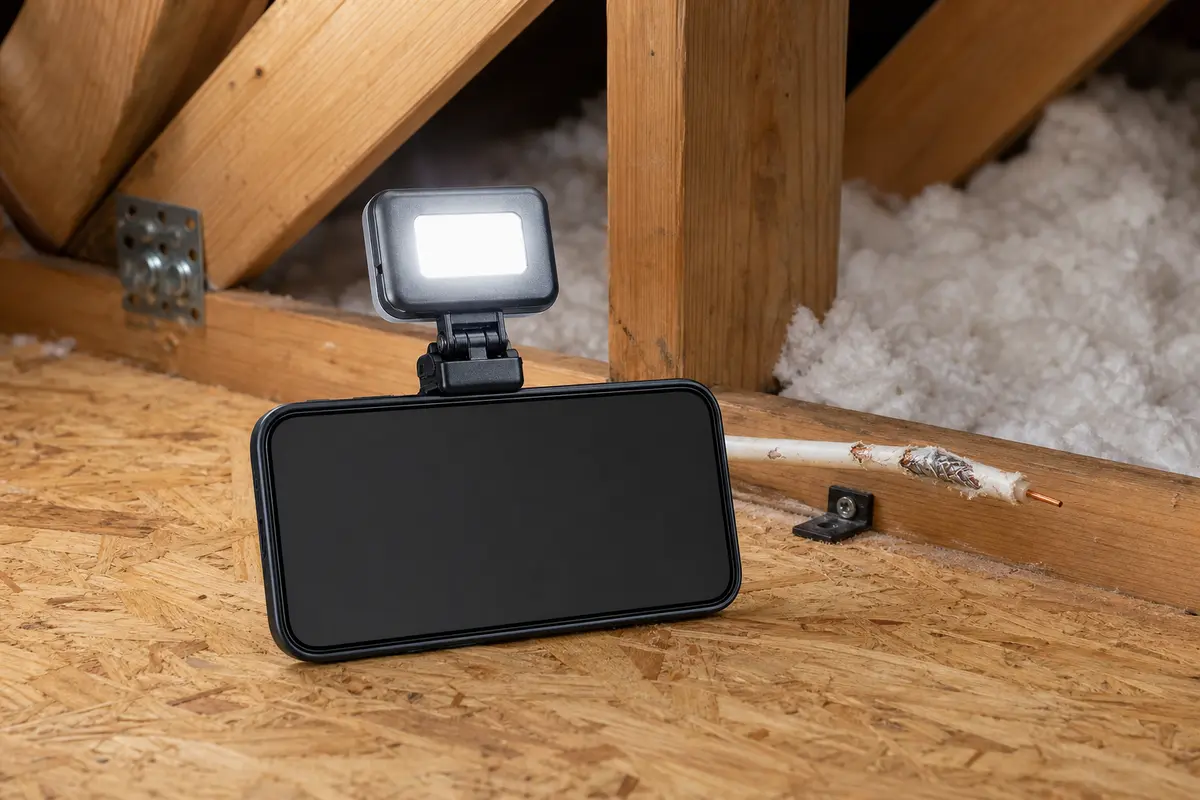
Helps when: Document chew points, cable direction, framing landmarks, and the point where the run disappears.
Skip it when: Skip buying cable parts from photos alone if the cable type or owner is still unclear.
Compare phone camera inspection helpers on Amazon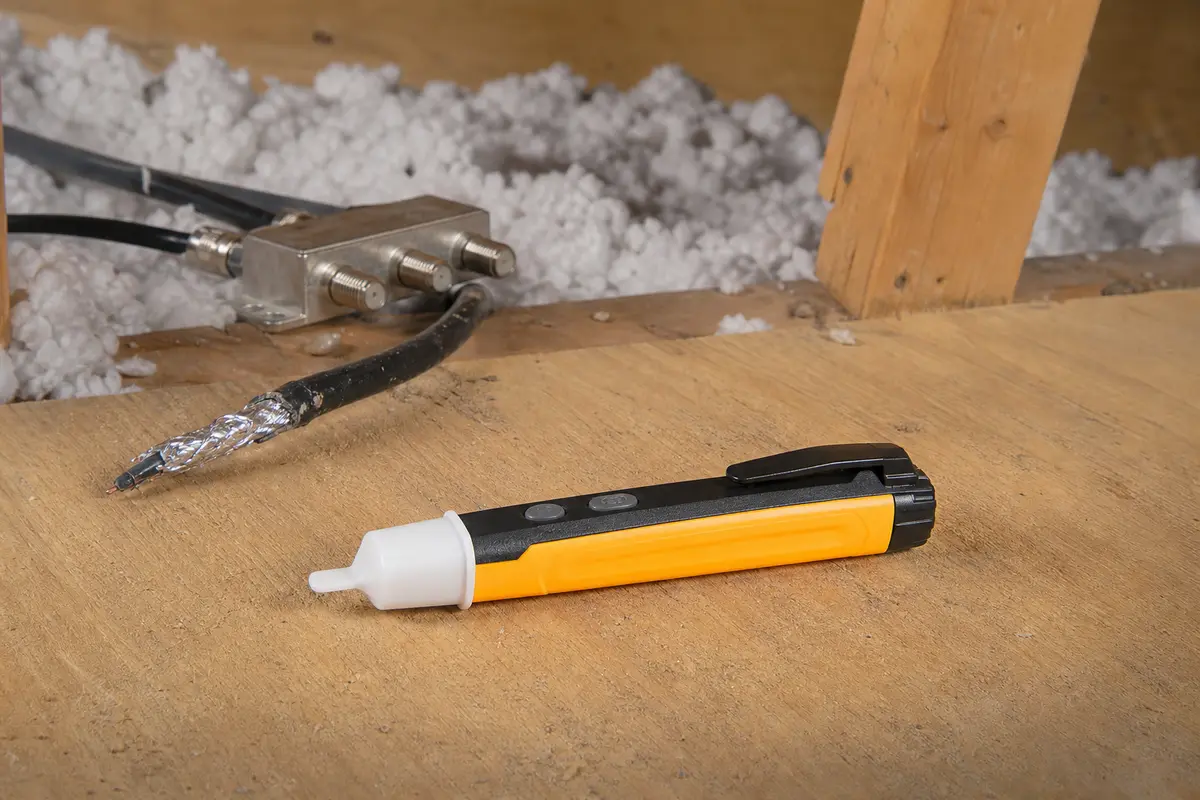
Helps when: Use it as a no-touch screen near exposed house wiring after the correct breaker is off.
Skip it when: Do not use it as proof that chewed coax or unknown wiring is safe to cut or handle.
Compare non-contact voltage testers on Amazon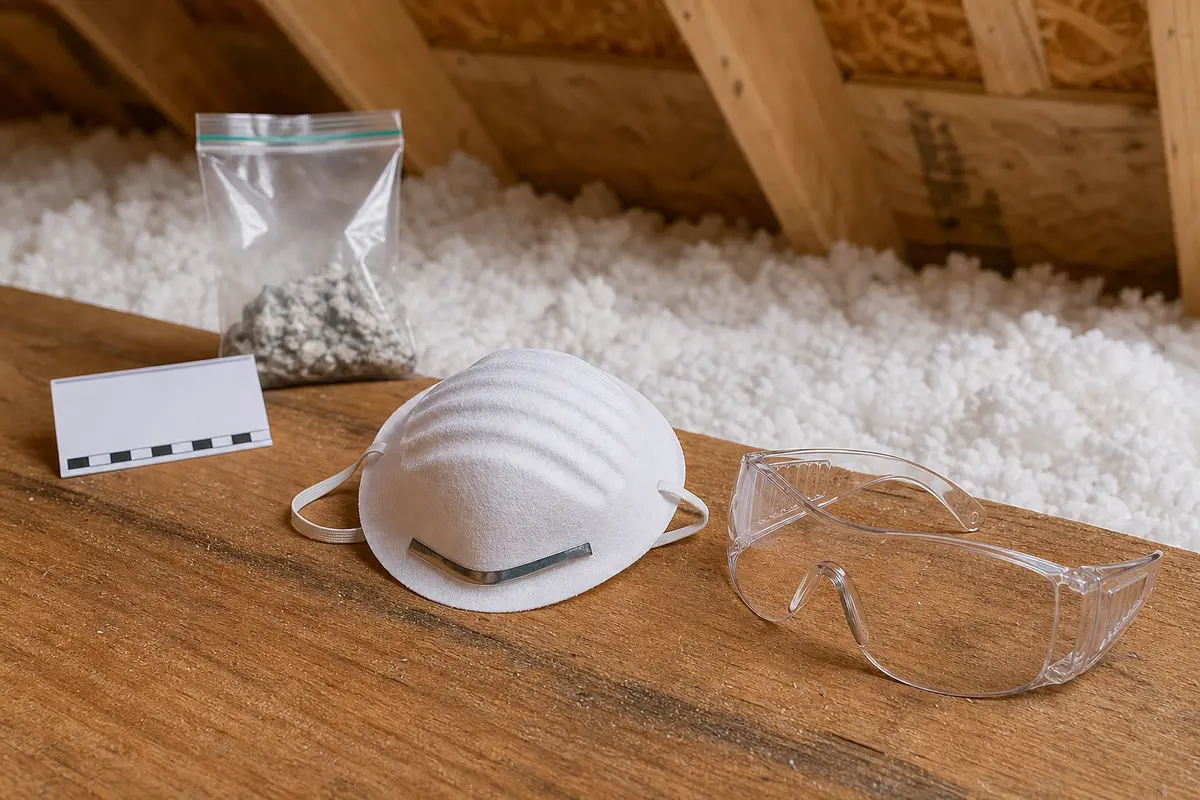
Helps when: Reduce exposure to insulation dust and light rodent debris while you document the visible cable path.
Skip it when: Heavy droppings, nests, or contaminated insulation need proper pest cleanup procedures instead of casual attic work.
Compare respirators for attic inspection on AmazonA restored modem light is only one part of the finish line. Make sure the attic clue that caused the failure is not still active.
A damaged coax line by itself is usually a service problem, not a house-power fire source. The fire concern is nearby electrical wiring, so look around the same route before anyone handles the run. If you see chewed NM cable, exposed copper, scorch marks, buzzing, heat, flicker, or breaker trips, stop and call a licensed electrician.
No. Tape does not restore coax shielding, weather resistance, or a damaged center conductor. It is also not a safe repair for house wiring. A chewed coax section needs a proper connector, splice, or replacement run by someone set up for coax work.
Coax is usually round and has one center conductor with foil or braided shielding under the jacket. House wiring is often flat or oval sheathed cable with multiple insulated conductors inside. If the cable type is not obvious from a safe look, do not handle it.
Call the provider or a low-voltage cable tech when the damage is clearly limited to coax and the electrical system has no warning signs. Call an electrician first if any house wiring may be chewed, the cable type is unclear, or you have breaker trips, flicker, buzzing, heat, or a hot smell.
Do not ignore it. Photograph the nicked jacket or exposed braid and check the same visible route for droppings, more chew marks, or nearby wiring damage. The line can keep passing signal for a while, then fail later from movement, corrosion, or more chewing.
Often, yes. From safe footing, trace the same visible run in both directions and look where it crosses framing, enters tight gaps, or passes nesting material. Stop where insulation or electrical gear blocks a safe view; that location note belongs in the service call.
Yes. A chewed shield, center conductor, connector, or splitter can show up as dropouts, pixelation, weak signal, or service that comes and goes. Check whether the symptom follows that damaged run, then give the cable tech your photos and where the run disappears from view.
Not from the chew mark alone. First identify the damaged run, look for nearby electrical warning signs, and see whether the service problem matches that cable path. Parts belong in the cart only after the failure points to that exact item.
Stop treating it as a simple cable repair until the nearby wiring is checked. Coax and house wiring can share attic routes. If the house wiring jacket is chewed, a box is damaged, or the area smells hot, an electrician should look before the cable is disturbed.
Do not vacuum or sweep droppings just to make the area look ready. If contamination is light, clean only with safe wet-cleaning guidance before anyone traces the cable or nearby wiring. If nesting or heavy droppings block the cable path, schedule pest cleanup first and document where the cable inspection stopped.
Yes. Repairing the coax only fixes the line you found. After the cable repair, check the roof edge, soffit, eave, vent, and utility penetrations for the entry path that let rats reach the attic cable. Until pest exclusion closes that route, the replacement run can be chewed again.
Repair Riot built this page around homeowner-visible clues: cable shape, service loss, breaker behavior, heat, rodent contamination, and the handoff between cable work, electrical work, and pest exclusion.