Heat, odor, sparks, crackle, flicker, or tripping?
Shut the circuit off and stop. Those clues point toward overheating, arcing, or a loose connection.
Buzzing in a wall is an electrical warning until proven otherwise. Start outside the wall, isolate whether a dimmer, outlet, fixture, or plug-in load changes the sound, and shut the circuit off for heat, odor, flicker, crackling, or breaker trouble.
Most homeowner-found buzzes come from a device box or fixture carrying sound through the wall. A good clue is pitch that changes with a light, fan, charger, or heavy appliance.
Identify the trigger without opening drywall. A mild dimmer hum and a load-sensitive wall buzz do not get the same next step.
Don’t start with: Do not cut drywall, pull devices live, tighten terminals, or keep cycling the load to make the sound happen.
Shut the circuit off and stop. Those clues point toward overheating, arcing, or a loose connection.
Leave that load off. The likely starting point is the switch box, fixture box, dimmer, or the wiring path serving that load.
Unplug the load and avoid that outlet. A good clue is a loose plug fit, warm receptacle face, or buzz that returns under load.
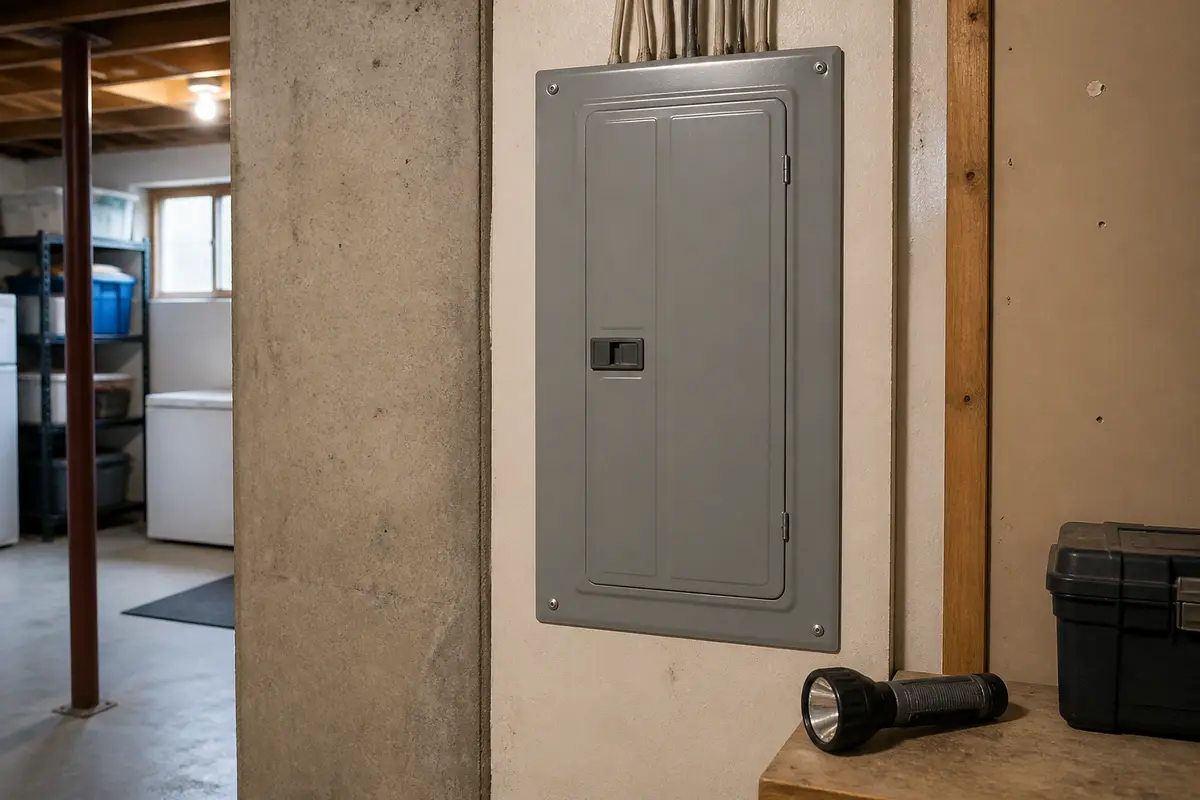
Do not remove covers. A noisy breaker or panel area is a licensed-electrician handoff.
Look for always-on equipment on that circuit, then stop if the source is not clear. Hidden splices are not a trial-and-error DIY search.
You found the circuit to leave isolated. Tell the electrician what load made the sound change and which breaker quieted it.
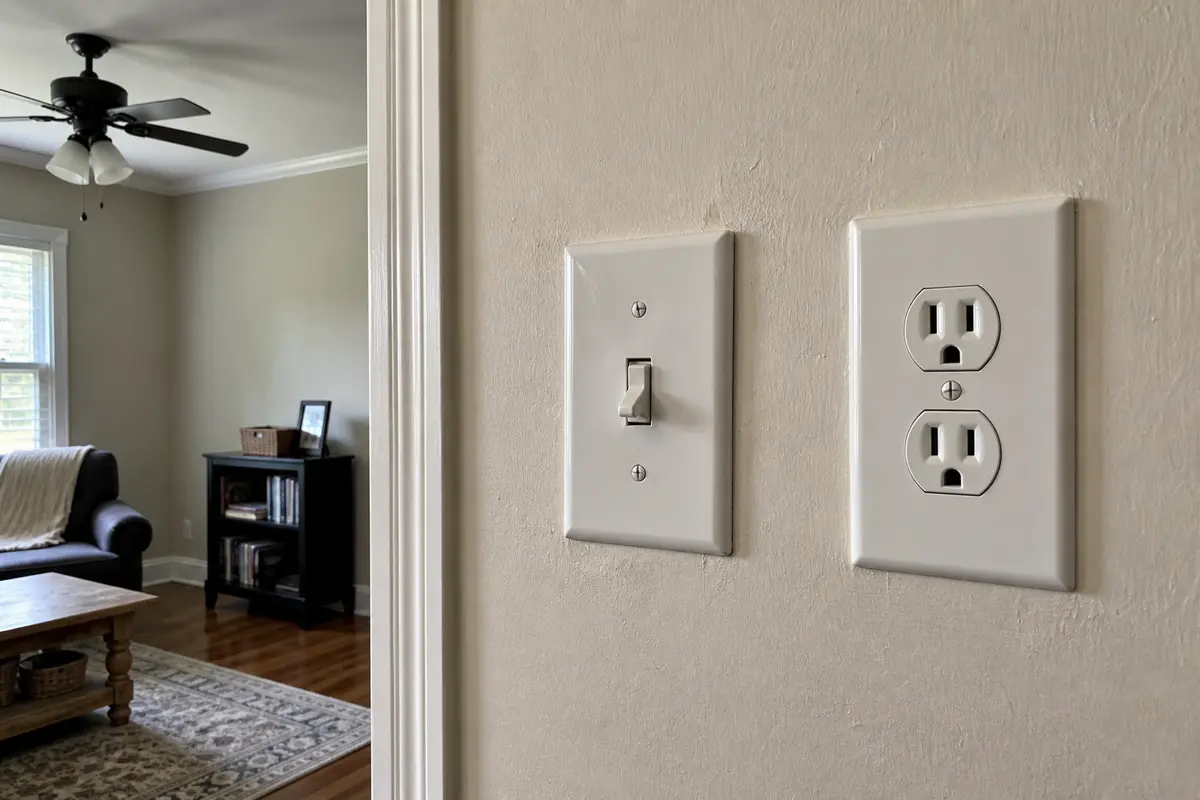
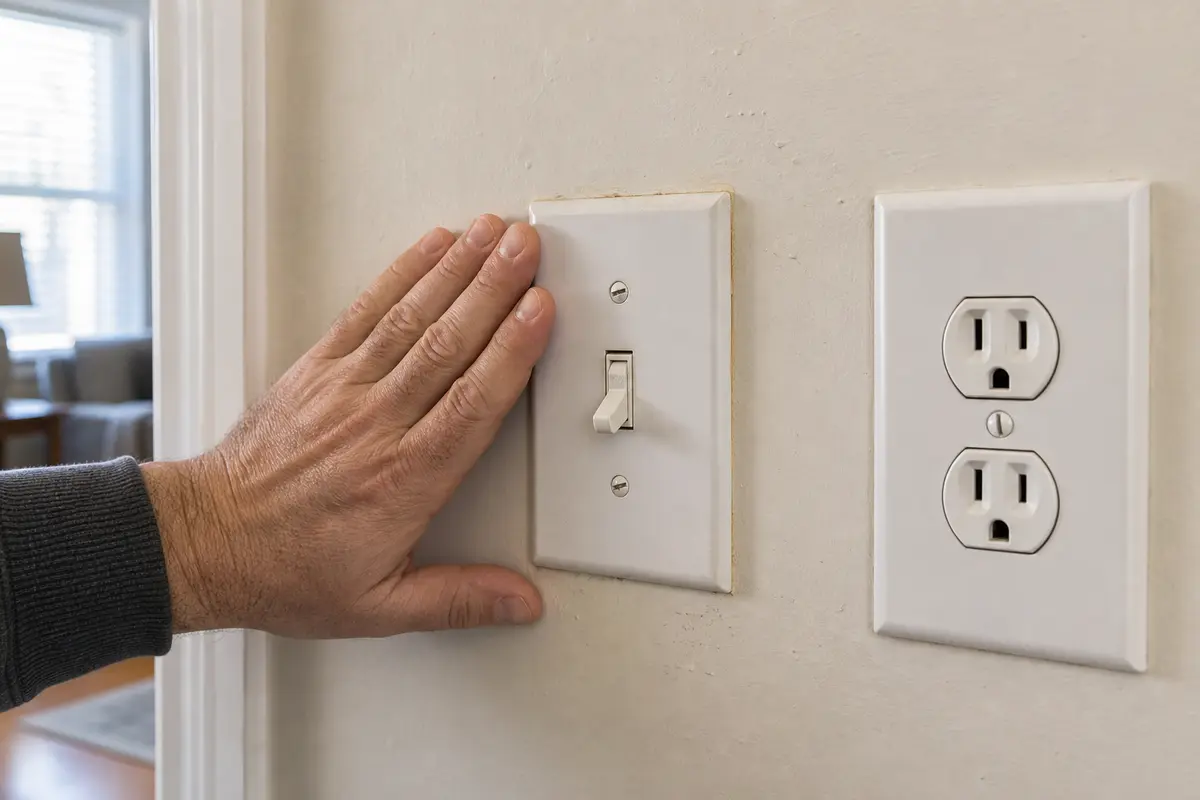
The first useful clues are visible from the room: the nearby switch, receptacle, fixture, plug-in load, and panel area.
Buy parts only after the exact device and diagnosis are clear. A dimmer, switch, outlet, breaker, fixture, driver, or transformer can all make a wall seem to buzz. Match the device type, rating, wiring method, and load. Heat damage, panel noise, hidden wiring, water history, or uncertain source means the cart waits and an electrician takes over.
A wall buzz usually starts at a switch, outlet, fixture, or load, not in a random stretch of cable. From the room side, listen for what makes the sound start, stop, or change pitch.
Buzzing is one of the electrical symptoms where restraint matters. The goal is to remove risk and gather clear clues, not to open more things.
Use one clue at a time. A short table beats a pile of guesses because each result leads to a different stop point.
| What you find | What it usually means | Next move |
|---|---|---|
| Buzz starts with one dimmer or light | Dimmer, switch box, fixture box, or lamp load is involved | Leave it off and inspect only after power is verified off, or call a pro |
| Buzz starts with a plug-in load | Outlet contact, device connection, or the appliance load is stressing the circuit | Unplug it and do not reuse that outlet for heavy loads |
| Plate, wall, or fixture base feels warm | Possible overheating at a connection or device | Turn the breaker off and call an electrician |
| Lights flicker or dim with the buzz | Loose connection or circuit loading is more likely than simple device hum | Stop using the circuit until it is checked |
| Buzz is strongest at the panel | Breaker or panel-side issue may be the source | Do not remove covers; schedule electrical service |
| Buzz stays with obvious loads off | Always-on equipment, hidden splice, or another circuit may be involved | Stop if you cannot isolate it from the room side |
Stay outside the boxes for the first pass. You want a clear trigger and a safe stop point before any conductor is touched.
A clear handoff is more useful than a half-done electrical repair. Give the electrician the symptom pattern and the stop clues.
These are for safe observation and verified power-off checks only. They do not turn a buzzing circuit into a live-work job.
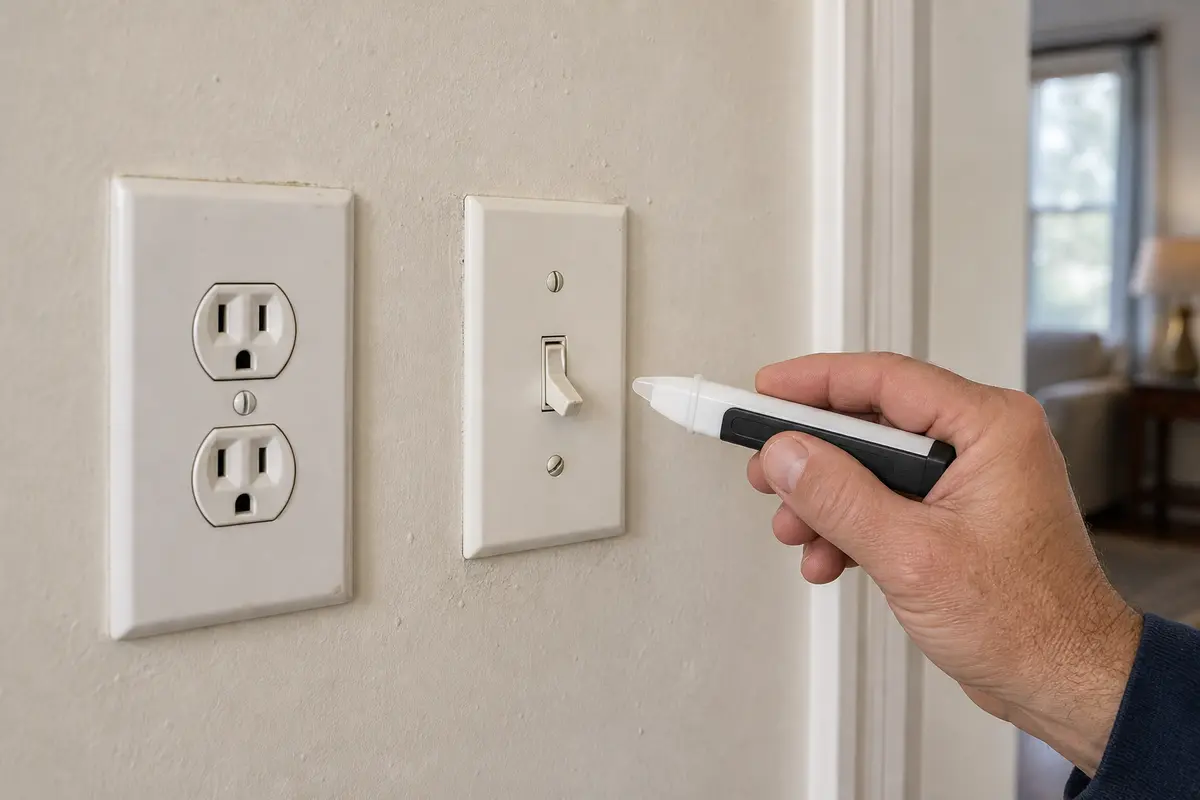
Helps when: Use a non-contact voltage tester only after the breaker is off, as a first screen near an accessible switch, outlet, or fixture.
Skip it when: Skip using it as proof a circuit is safe. Stop if the buzz points to the panel, heat, scorch marks, water damage, or wiring you cannot identify.
Compare non-contact voltage testers on Amazon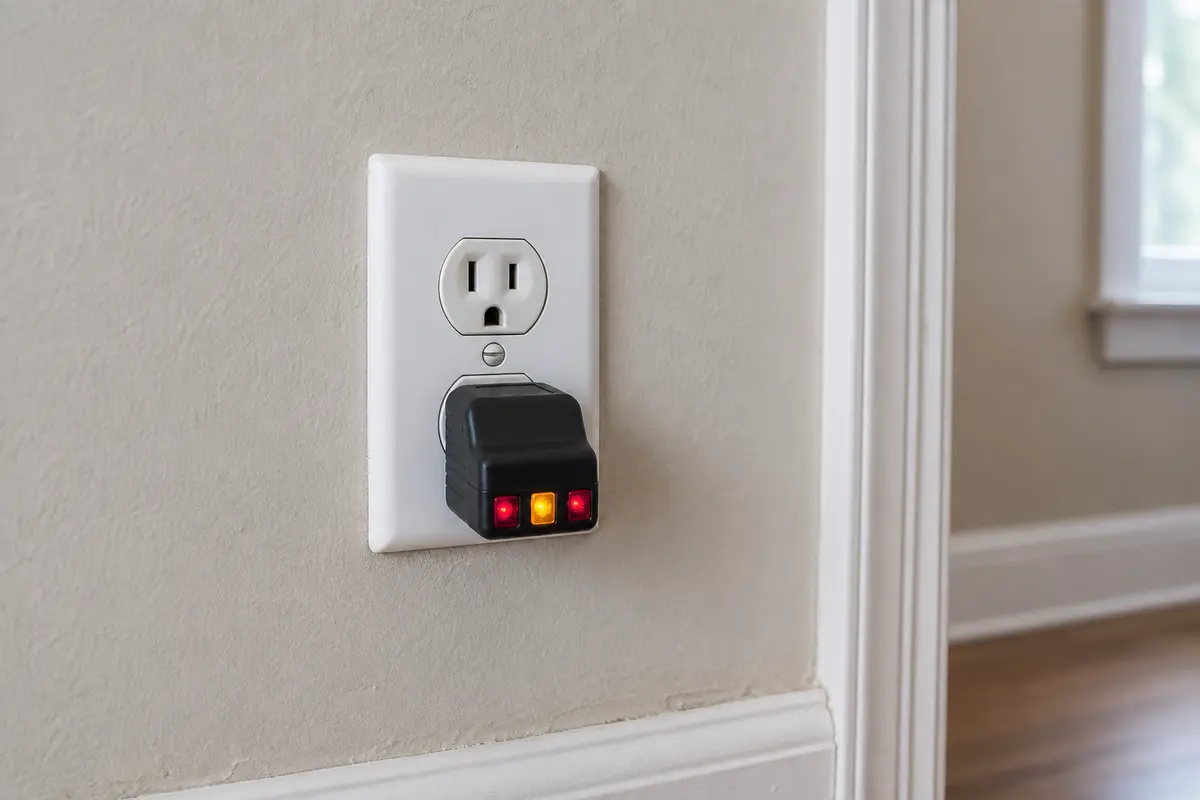
Helps when: Use a plug-in outlet tester on a dry, stable receptacle only after the sound stops with a plug-in load removed and there is no heat or odor.
Skip it when: Skip it if the outlet is warm, loose, buzzing under load, scorched, flickering, or tied to a tripping breaker.
Compare plug-in outlet testers on Amazon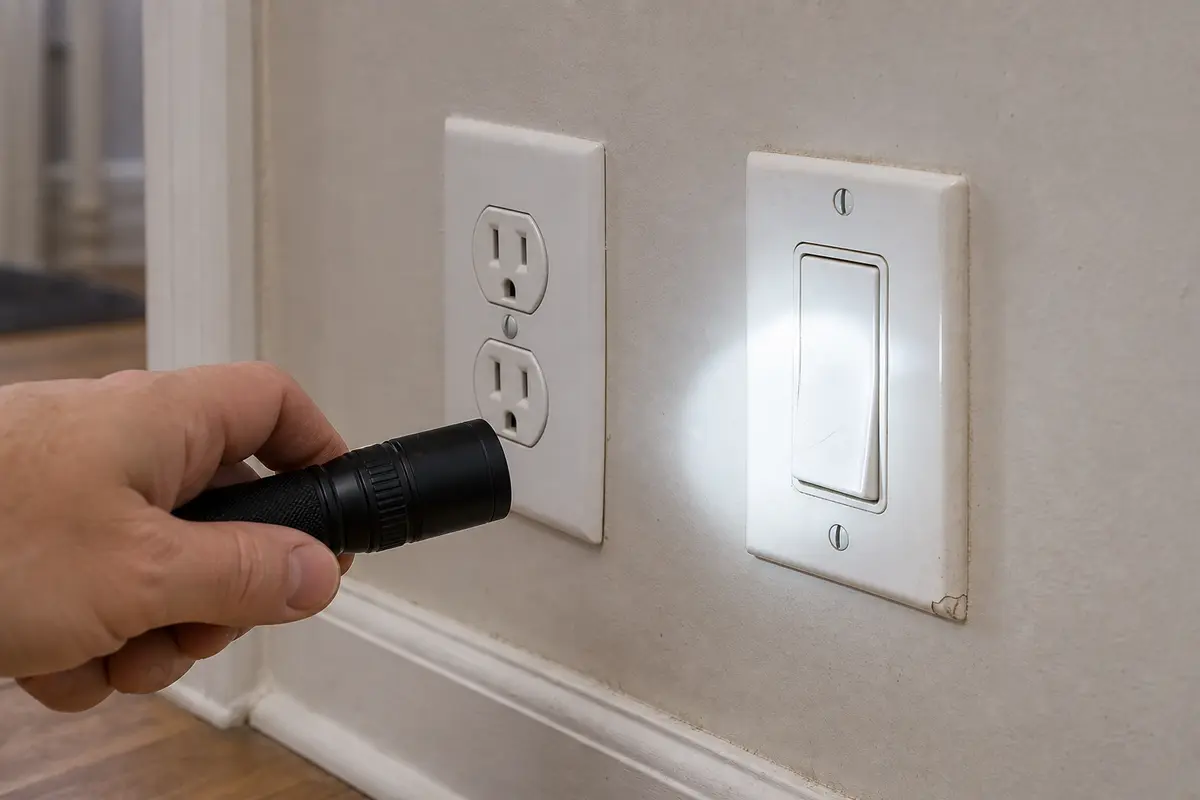
Helps when: Use an inspection flashlight to look for discoloration, cracked covers, loose plugs, or the device that matches the sound before anything comes apart.
Skip it when: Skip if better lighting still leaves the source unclear or the next step would be panel work, exposed wiring, or drywall cutting.
Compare inspection flashlights on AmazonAs an Amazon Associate I earn from qualifying purchases. Repair Riot may earn a commission at no extra cost to you.
Part shopping comes after the buzz points to one exact device and the danger checks are clean. Skip parts entirely when the source is hidden wiring, the panel, heat damage, water history, or an unclear circuit.
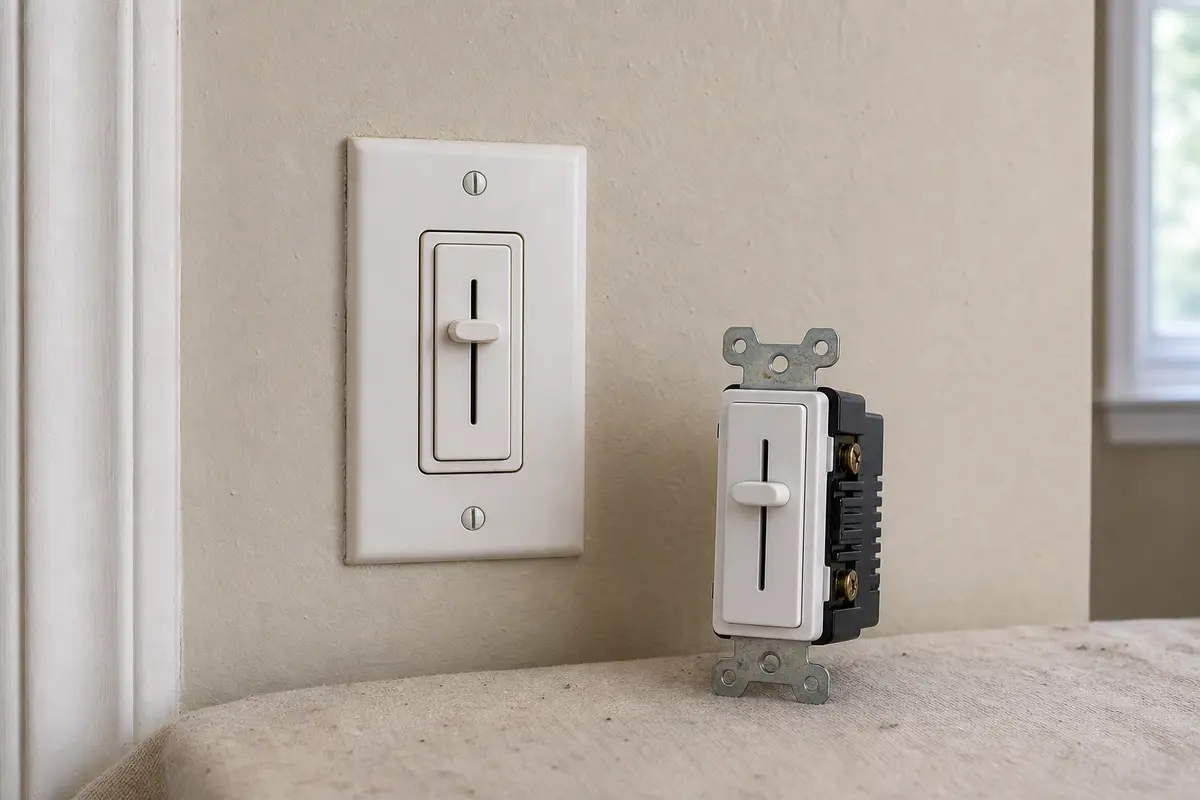
Helps when: Use an LED-compatible dimmer only when the buzz follows one dimmer, the load rating matches the bulbs, power is off, and there are no heat or scorch clues.
Skip it when: Skip dimmer shopping if the plate is warm, lights flicker, the panel buzzes, or the bulb and load rating are unclear.
Compare LED-compatible dimmer switches on Amazon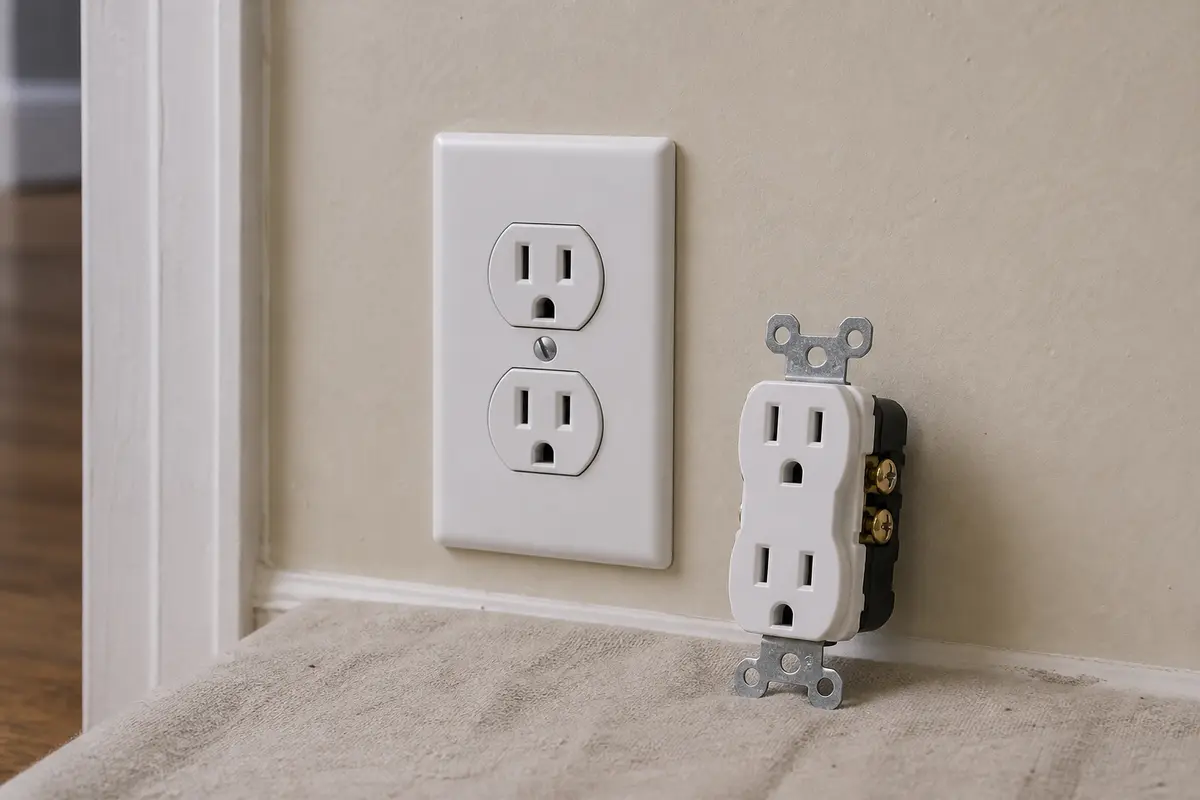
Helps when: Use a replacement receptacle only after a pro or verified power-off inspection confirms that the device is worn, loose, or damaged.
Skip it when: Skip it if the outlet buzzes under heavy load, feels warm, shows scorching, or the circuit has breaker trips or flicker.
Compare replacement outlet receptacles on Amazon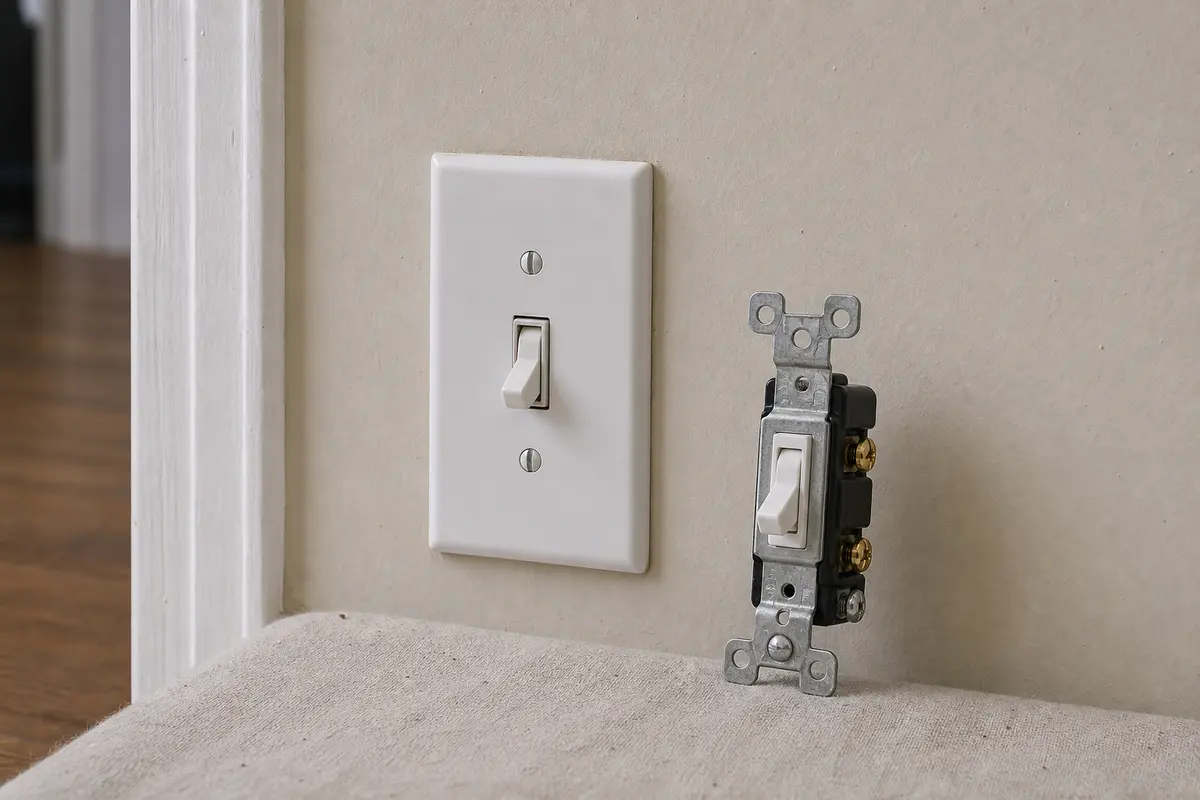
Helps when: Use a single-pole wall switch only when one plain switch is confirmed as the noisy device and the circuit is safely off.
Skip it when: Skip it if another switch controls the same light, the device is a dimmer or smart switch, or any safety clue points beyond a simple switch body.
Compare single-pole wall switches on AmazonAs an Amazon Associate I earn from qualifying purchases. Repair Riot may earn a commission at no extra cost to you.
No, but treat it as electrical until a safe check points elsewhere. A buzz that changes with lights, outlets, plug-in loads, flicker, or breaker behavior belongs on the electrical path first.
Yes. A dimmer or the fixture it controls can hum and pass that sound through the switch box and framing. Leave the dimmer off if the sound changes with its position.
A mild known dimmer hum is different from a sharp, new, load-sensitive buzz. Heat, odor, flicker, crackling, sparking, or breaker trips make it a shut-off-and-call symptom.
That is useful evidence, not permission to keep using the same outlet. The appliance may be noisy, but the receptacle or connection may also be struggling under that load.
No. Replace a device only after the sound is isolated to that exact device, power is verified off, and there is no heat damage or uncertain wiring in the box.
Yes, but working is not the same as safe. A buzzing breaker or panel area needs an electrician, especially with heat, odor, flicker, trips, or heavy-load timing.
Look for loads that run on a schedule: chargers, transformers, bath fans, HVAC equipment, or a heavy appliance starting. If the sound still seems to come from the wall or panel, stop using that circuit.
No. A non-contact tester is only a screening tool after the breaker is off. It does not diagnose loose splices, damaged conductors, overloaded circuits, or panel problems.
Repair Riot built this page around safe homeowner observations: when the sound starts, what load changes it, heat and odor clues, and when panel or hidden wiring work belongs to a licensed electrician.