Pressure Washer Troubleshooting

Pressure Washer Pull Cord Stuck? Do Not Yank It Harder

If the pressure washer pull cord is stuck, stop pulling harder. Bleed pump pressure at the gun, then check for hydro-lock before opening the recoil starter.

The first split is simple: a stiff hose points to trapped pressure, while a dead-stop rope after bleeding pressure points to liquid lock, recoil trouble, or engine drag.

Use short pulls only after the hose is unloaded and the spark plug wire is off.

Don’t start with: Do not yank harder, pry the flywheel, or open the recoil spring first. A stuck rope needs unloading and sorting before force.

Hard trigger, stiff hose:squeeze the spray-gun trigger with the engine off before touching the rope again.
Dead-stop rope:remove the spark plug and check for liquid in the cylinder before blaming the recoil starter.

Do this first

  • Shut the engine off and let the muffler and pump area cool before reaching around the shroud.
  • Disconnect the spark plug wire before pulling covers, touching the flywheel, or removing the spark plug.
  • Point the spray gun at bare ground and squeeze the trigger to bleed pressure before trying the starter rope again.
  • Keep your face, hands, and loose clothing away from the spark plug hole when checking for hydro-lock.
  • Stop if fuel leaks, oil sprays, the rope kicks back violently, or the engine will not rotate with the spark plug removed.
  • Do not rewind a loose recoil spring unless you know how to control spring tension safely.
Last reviewed: 2026-06-01

60-second decision tree

Does the spray-gun trigger feel hard?

Bleed pressure at the gun first. A hard trigger and stiff hose are good clues that the pump is still loaded.

Does the rope free up after pressure is bled?

The engine and recoil probably were not the problem. Reconnect only after the hose unloads and the rope pulls smoothly.

Does the rope still stop dead with the spark plug installed?

Pull the plug with the wire disconnected and check for water, fuel, or oil in the cylinder before more pulling.

Does liquid come out of the plug hole?

Treat it as hydro-lock. Correct the oil or fuel issue and do not restart until the engine turns freely by hand.

Does the engine turn but the recoil binds?

The recoil starter, pulley, pawls, rope path, or spring is the better suspect than the engine.

Is the engine still tight with the plug out?

Stop DIY diagnosis. Pump drag, internal engine damage, freeze damage, or metal-to-metal binding needs deeper repair.

Read the lock before buying starter parts

The rope can feel stuck for three different reasons: pressure trapped in the pump, liquid in the cylinder, or a recoil starter that is actually jammed. The photos follow that order.
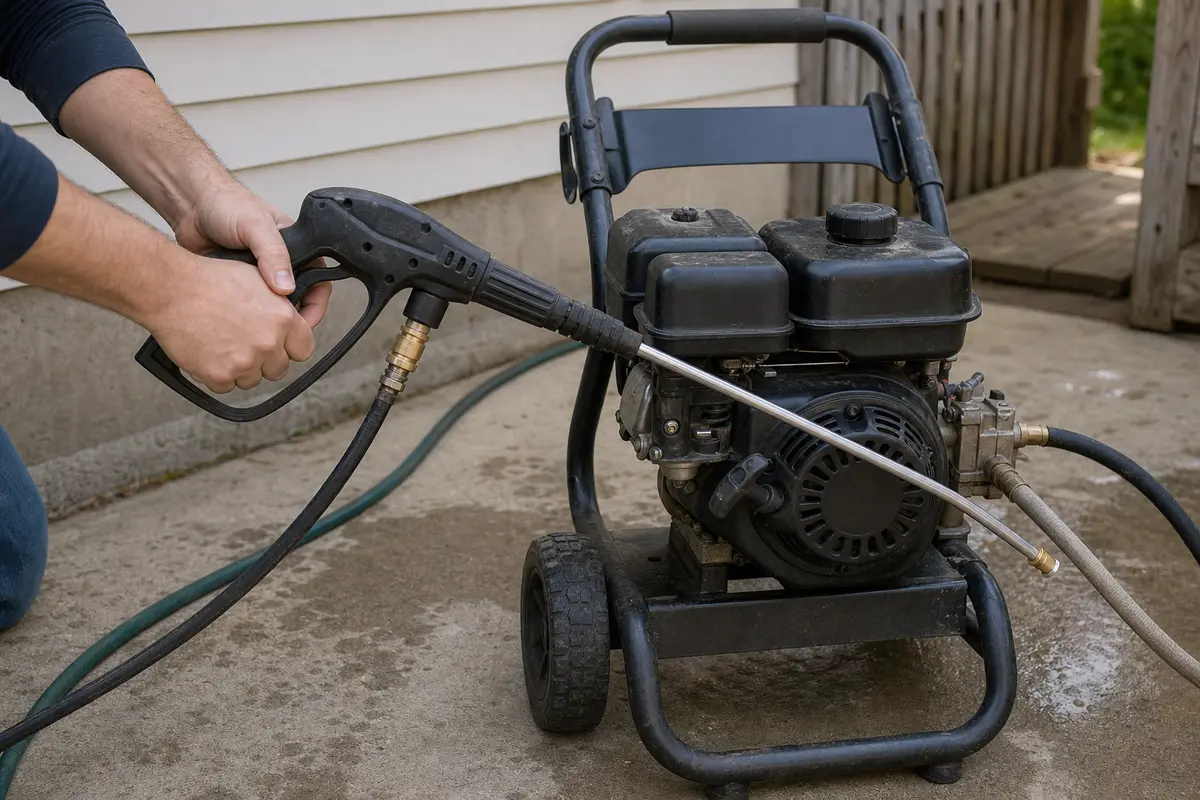
Pressure washer spray gun trigger being squeezed before pulling a stuck starter rope
A stiff hose and hard trigger are pressure clues. Bleed the gun first; a rope that frees up after this was not pointing at the recoil starter.
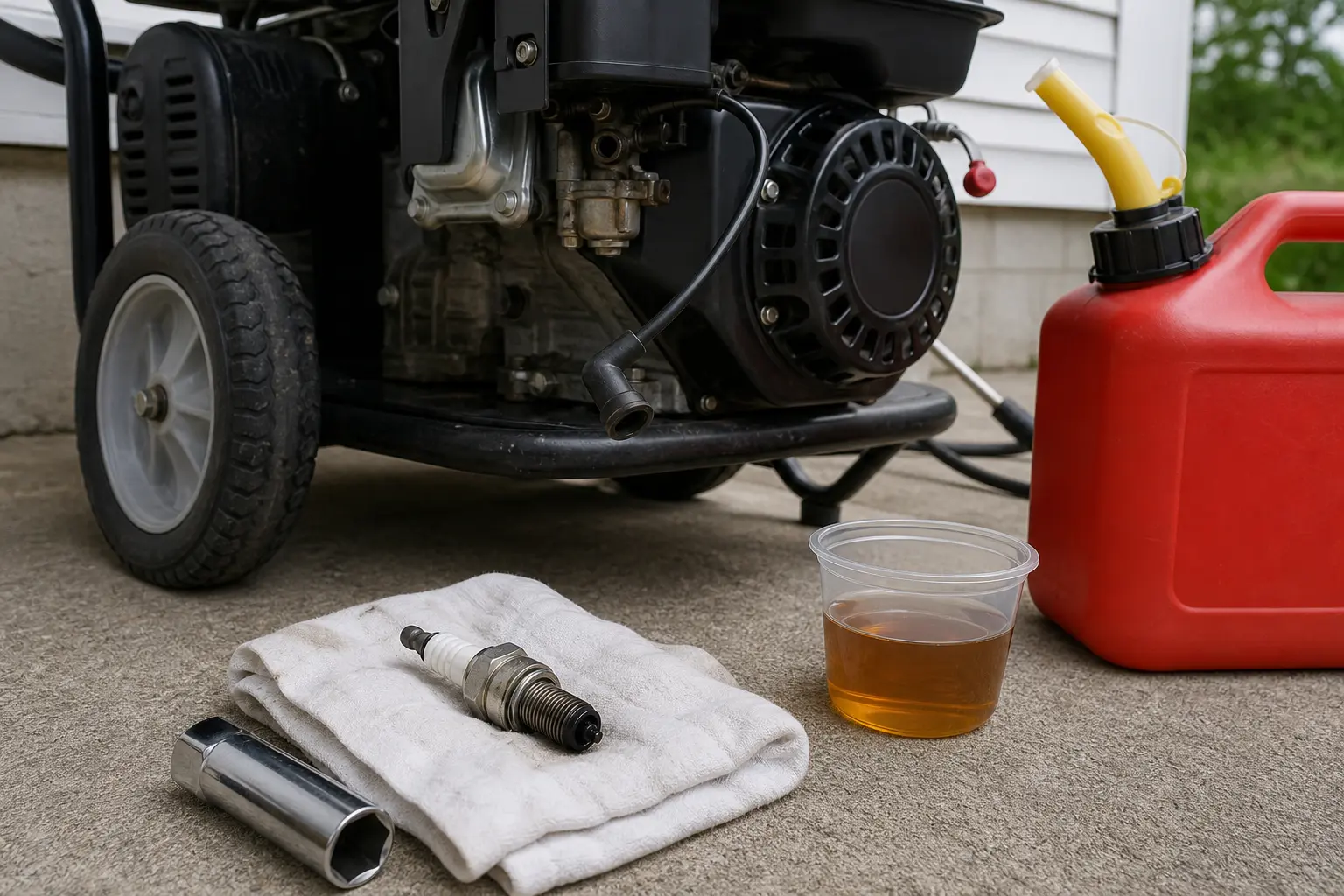
Pressure washer spark plug removed on a rag while checking for liquid lock
When pressure is gone and the rope still stops dead, remove the spark plug with the wire off. Watch for water, fuel, or oil before another pull.
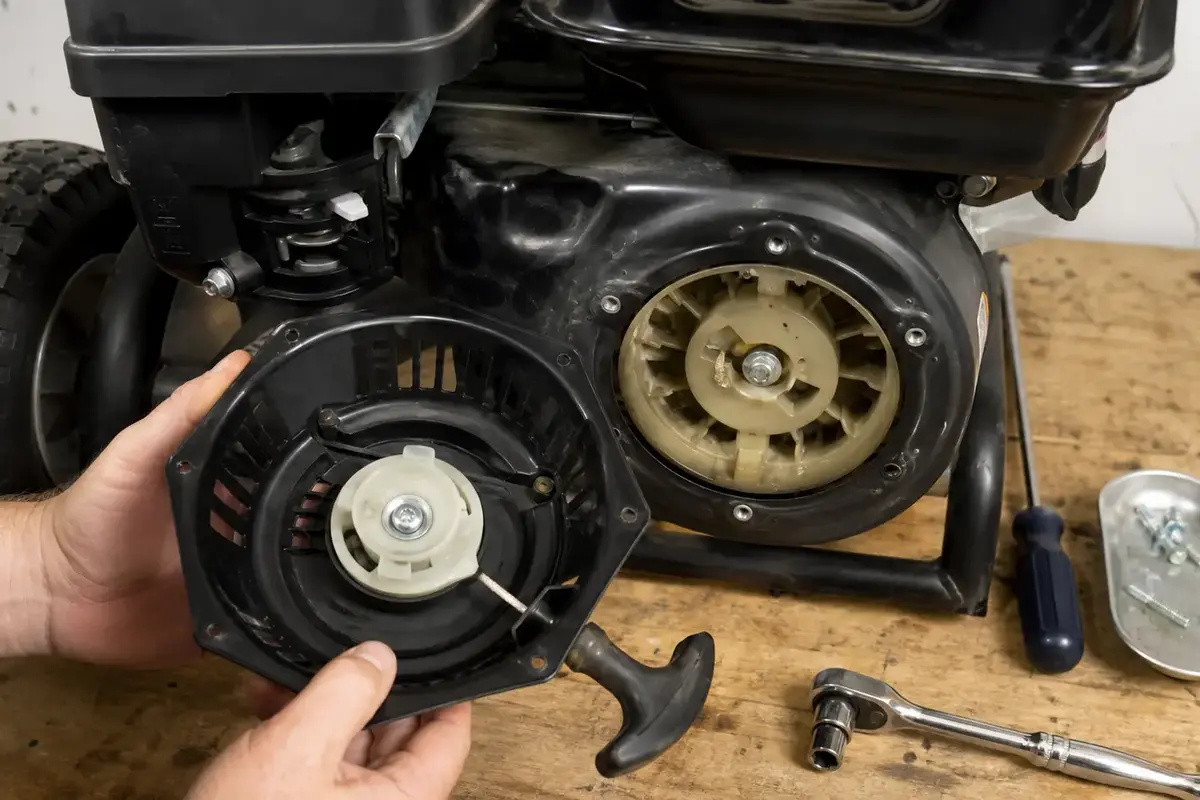
Pressure washer recoil starter housing removed to compare rope mechanism and flywheel movement
The recoil housing comes last. A free-turning engine with a jammed pulley or crossed rope points to the starter, not the pump.

Before you buy anything

Write down the pressure washer model, engine model, rope behavior, oil level, plug condition, and whether bleeding pressure changed the pull. Recoil starters, rope kits, and spark plugs need exact model and fit checks, not a guess from the symptom alone.

What is probably happening

A stuck pull cord is not one failure. The useful clue is what changes after the pump is unloaded and the spark plug is out.

  • Trapped pressure usually shows up right after shutdown. The hose feels stiff, the trigger may be hard to squeeze, and the starter rope suddenly feels heavier than it did minutes ago.
  • Liquid lock feels more abrupt. The rope stops hard because the piston is trying to compress water, fuel, or oil that does not compress.
  • A recoil starter problem usually shows itself after the engine can turn. Watch for a rope that pulls sideways, hangs loose, grinds, or will not rewind.
  • Engine or pump drag is the stop point. Grinding, metal scrape, cracked pump housing, freeze damage, or no movement with the plug removed is not a rope repair.

What not to do first

The wrong first move is force. A pressure-bound washer can feel like a seized engine, and a liquid-locked engine can be damaged by repeated hard pulls.

  • Do not yank the rope with both hands or brace a foot against the frame to break it loose.
  • Do not open the recoil spring as the first test. Spring tension can turn a simple diagnosis into a dangerous parts spill.
  • Do not pry against flywheel fins. They break easily and they are not a safe handle for a stuck engine.
  • Do not order a recoil starter because the rope stopped once. Prove the engine turns after pressure and plug checks.
  • Do not run the washer after oil, fuel, or water comes out of the spark plug hole until the oil level and source of liquid are handled.

Bleed pressure and read the rope

This check costs nothing and usually belongs first. Keep the spark plug wire off so a sudden free pull cannot start the engine while your hands are near the machine.

  • Set the washer on level ground, shut the engine off, and let hot parts cool.
  • Pull the spark plug wire away from the plug and keep it where it cannot snap back onto the terminal.
  • Point the spray gun at bare ground. Squeeze the trigger until the water pulse fades and the hose softens.
  • Try the rope with two short, controlled pulls. Smooth movement after bleeding pressure is a good clue that the pump was simply loaded.
  • A rope that still stops dead deserves the spark-plug check next, not more force.
What you feelWhat it usually meansNext move
Trigger was hard, hose relaxed, rope now pulls normally.Trapped pressure was loading the pump.Reconnect safely, start with water connected, and bleed pressure before future restarts.
Pressure is gone but the rope stops hard.Liquid lock or mechanical binding is still possible.Remove the spark plug and pull slowly with the plug hole aimed away.
Rope moves but grinds or will not rewind.The recoil rope, pulley, pawls, or spring may be binding.Inspect the recoil only after the engine turns freely.
Rope kicks back violently.The engine is not giving a normal starter feel.Stop pulling and check oil, plug condition, and engine rotation before another start.

Rule out liquid lock without forcing it

Hydro-lock is the check that protects the engine. A cylinder full of liquid can bend internal parts if you keep trying to pull through it.

  • Keep the plug wire disconnected and remove the spark plug with the correct socket.
  • Lay a rag nearby, keep your face away from the plug hole, and pull the starter rope slowly.
  • Water, fuel mist, or oil from the plug hole is the clue. The engine needs clearing and the cause of the liquid needs attention before it runs.
  • Check the oil level. Overfilled, milky, fuel-smelling, or glittery oil moves the repair out of a simple starter-rope problem.
  • A dry plug hole with the rope still stuck points away from hydro-lock and toward recoil trouble, pump drag, or internal engine binding.

Recoil starter checks that are worth doing

The recoil starter earns attention only after the engine can rotate. That order keeps a cheap rope part from hiding a locked engine.

  • Remove the starter housing only with the spark plug wire disconnected and the engine cool.
  • Look for a crossed rope, frayed section, knot under the pulley, cracked pulley, missing pawl, or plastic dust inside the housing.
  • Turn the starter pulley by hand if it is safe to reach. Smooth return is a good clue; grinding, hanging, or uneven spring pull is not.
  • With the housing off, turn the engine at the starter cup or flywheel area by hand without prying on fins.
  • A free engine and jammed recoil point to a starter repair. A tight engine with the recoil off means the rope was only reporting a deeper bind.

Pump drag, hard stops, and the pro line

A pump or engine that stays tight after the pressure and plug checks is no longer a simple rope problem. Watch for damage you can see or feel.

  • Freeze cracks, pump oil seepage, broken mounting ears, or a pump that binds at the same spot are stronger clues than the rope handle.
  • Grinding, metal scrape, glitter in oil, or no crankshaft movement with the plug removed is a stop point.
  • Disconnecting a pump is only a homeowner check when the coupling and bolts are obvious and accessible. Hidden couplers or forced fasteners belong with a repair shop.
  • A good repair leaves the rope smooth through a full pull, the trigger able to bleed pressure, and no fresh fuel, oil, or pump leak after a short water-connected start.
  • Before storage, shut the washer off, squeeze the trigger to unload the hose, keep oil at the right level, and protect the pump from freezing.

Tools You May Need

These are for diagnosis, not for forcing the rope. Skip any tool that would put your hands near hot parts, fuel vapor, or spring tension you cannot control.

Spark plug socket for pressure washer pull cord stuck

Spark plug socket

Helps when: You need to remove the plug squarely for a liquid-lock check without cracking porcelain or rounding the plug hex.

Skip it when: Skip it when the plug is buried under covers you are not comfortable removing or the engine is still hot.

Compare spark plug sockets on Amazon
Socket set for pressure washer pull cord stuck

Socket set

Helps when: You need to remove a recoil housing or accessible shroud fasteners after pressure and hydro-lock have been ruled out.

Skip it when: Skip it when fasteners are stripped, rusted solid, or hidden behind parts that require guessing.

Compare socket sets on Amazon
Work gloves for pressure washer pull cord stuck

Work gloves

Helps when: Gloves protect your hands around sharp shroud edges, wet hose fittings, and the frame while you keep the gun pointed safely.

Skip it when: Skip them if they make it harder to control small parts near the spark plug or recoil pawls.

Compare work gloves on Amazon

As an Amazon Associate I earn from qualifying purchases. Repair Riot may earn a commission at no extra cost to you.

Replacement Parts

Parts come after the result points there. Match the full washer or engine model, mounting pattern, rope diameter, thread reach, and old part markings before ordering.

Pressure washer recoil starter assembly for pressure washer pull cord stuck

Pressure washer recoil starter assembly

Helps when: The engine turns by hand, but the starter pulley, pawls, rope path, or return spring still binds or will not rewind.

Skip it when: Skip it when the rope frees up after bleeding pressure or the engine stays tight with the recoil housing removed.

Compare recoil starters on Amazon
Pressure washer starter rope kit for pressure washer pull cord stuck

Pressure washer starter rope kit

Helps when: The recoil mechanism works, but the rope is frayed, too short, kinked, or damaged at the handle end.

Skip it when: Skip it when the pulley or spring is broken, the engine is tight, or the rope stopped because pump pressure was trapped.

Compare starter rope kits on Amazon
Pressure washer spark plug for pressure washer pull cord stuck

Pressure washer spark plug

Helps when: The plug was fouled by fuel, oil, or water during the liquid-lock check and will not clean up or fire reliably.

Skip it when: Skip it when the old plug is dry, correctly gapped, and the rope problem is pressure, recoil, pump drag, or engine binding.

Compare spark plugs on Amazon

As an Amazon Associate I earn from qualifying purchases. Repair Riot may earn a commission at no extra cost to you.

FAQ

Why is my pressure washer pull cord stuck after I shut it off?

Usually the pump and hose are still holding pressure. Shut the engine off, pull the spark plug wire, point the gun safely, and squeeze the trigger until the hose relaxes before trying another short pull.

Can trapped pressure really make the pull cord feel completely locked?

Yes. A loaded pump can add enough resistance that a healthy engine feels seized. A good clue is a stiff high-pressure hose and a spray-gun trigger that will not move easily.

How do I know if the engine is hydro-locked?

With the plug wire disconnected, remove the spark plug and pull the rope slowly with the plug hole pointed away from you. Liquid blowing out of the hole and a freer rope point to hydro-lock.

What if the pull cord comes out but will not rewind?

That points more toward the recoil starter than trapped pressure. Look for a frayed rope, rope off the pulley, broken pawls, cracked pulley, or a recoil spring that no longer returns smoothly.

Should I keep pulling harder to break it loose?

No. Hard pulling can snap the rope, damage the recoil, or make a liquid-locked engine worse. Bleed pressure, pull the plug if needed, and stop when the engine feels mechanically tight.

Could a bad pump make the starter rope hard to pull?

Yes, but it sits lower on the list than trapped pressure. Freeze damage, cracked pump parts, oil seepage, or binding that stays after pressure and spark-plug checks can move the pump side up.

Why does the rope kick back instead of just feeling stuck?

Kickback is a different warning than a stiff hose. Stop pulling, check the oil level, plug condition, and engine rotation, and have the unit looked at if the rope snaps back violently.

Can overfilled oil make a pressure washer pull cord lock up?

Yes. Too much oil or tipping the washer the wrong way can put oil where the piston cannot compress it. Check the oil level and plug hole before trying to run the engine again.

When is a recoil starter worth replacing?

A recoil starter belongs in the cart only after the engine turns by hand but the rope, pulley, pawls, or spring still bind or fail to rewind. Match the engine model and mounting pattern.

How this guide was built

Repair Riot built this page around checks a homeowner can safely observe before buying parts: hose pressure, plug-hole liquid, recoil movement, and engine rotation. The links below anchor the model-specific and safety boundaries.