Is the starter rope hard to pull?
Bleed pressure at the trigger gun. If the rope still binds, stop treating it as a simple no-start; pressure lock, pump trouble, or engine damage may be involved.
If the starter rope pulls normally, start with fuel age, fuel valve, choke position, engine switch, spark plug wire, and oil level. If the rope is hard to pull, stop and relieve pump pressure before treating it as a basic no-start.
After storage, stale fuel and missed start controls are more likely than a failed pump or a dead engine.
First sort normal pull, hard pull, starts-then-dies, or electric-start click. That tells you whether to stay with fuel and spark or stop for pressure, engine, or battery diagnosis.
Don’t start with: Do not keep pulling on full choke after a few clean tries, and do not order a pump just because the engine stays quiet. A wet plug or strong raw-fuel smell points toward flooding; the pump moves up only when the rope feels locked or the washer runs but cannot make pressure.
Bleed pressure at the trigger gun. If the rope still binds, stop treating it as a simple no-start; pressure lock, pump trouble, or engine damage may be involved.
Work the basic engine path: fresh fuel, fuel valve, choke, engine switch, plug boot, oil level, and spark.
Suspect stale fuel, a restricted carburetor, a blocked fuel-cap vent, or an air filter problem before pump parts.
Treat it as flooded. Open the choke, keep ignition off while clearing the cylinder, dry or replace the plug, and restart with fewer pulls.
Charge or test the battery, clean cable connections, confirm safety controls, and make sure the engine itself can turn.
Before teardown, check the first clue: rope feel, control position, plug condition, or fuel age. Compare the photos with your machine, then reset the start setup, refresh old fuel, or stop for hard-pull diagnosis.
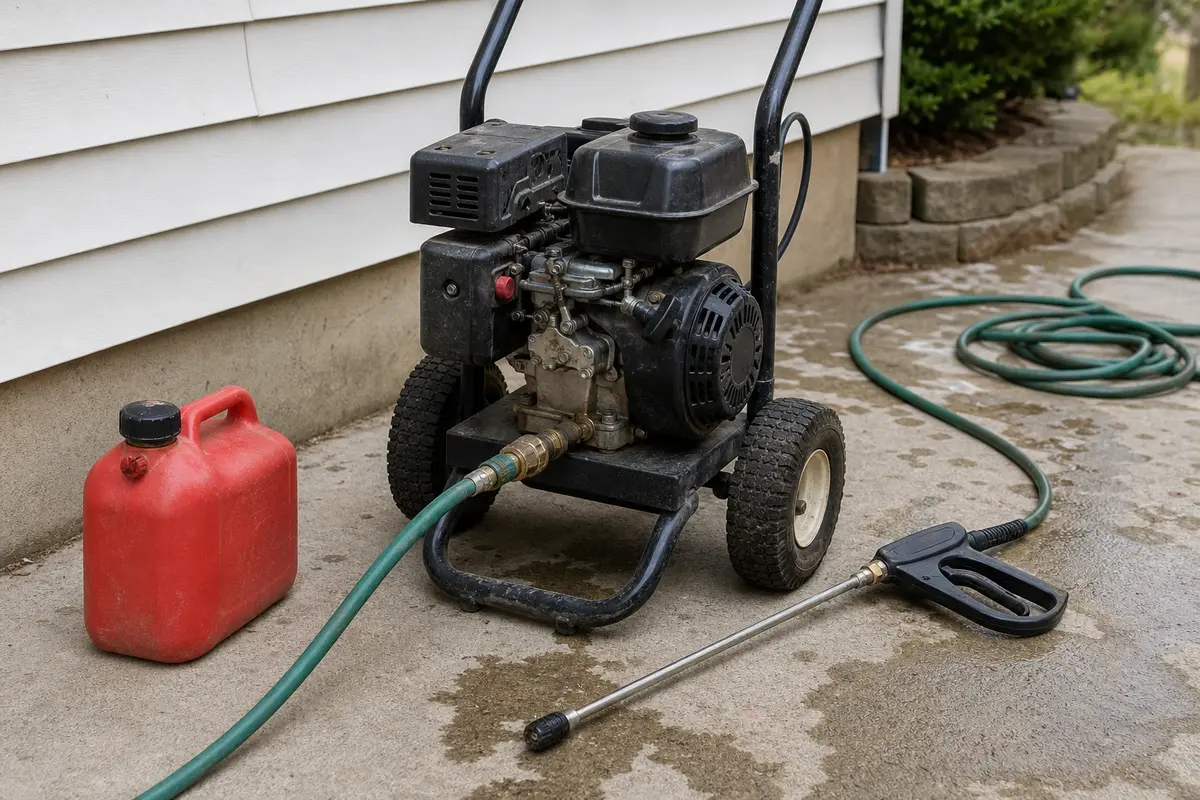
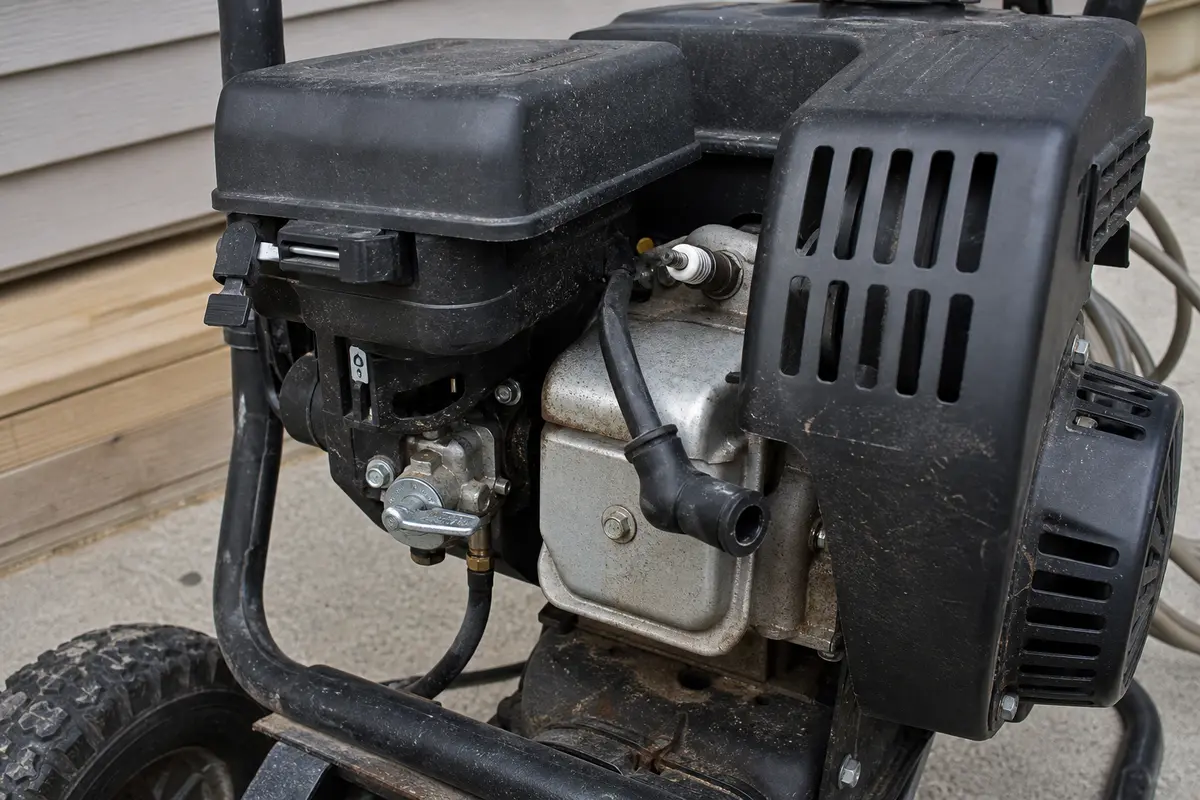
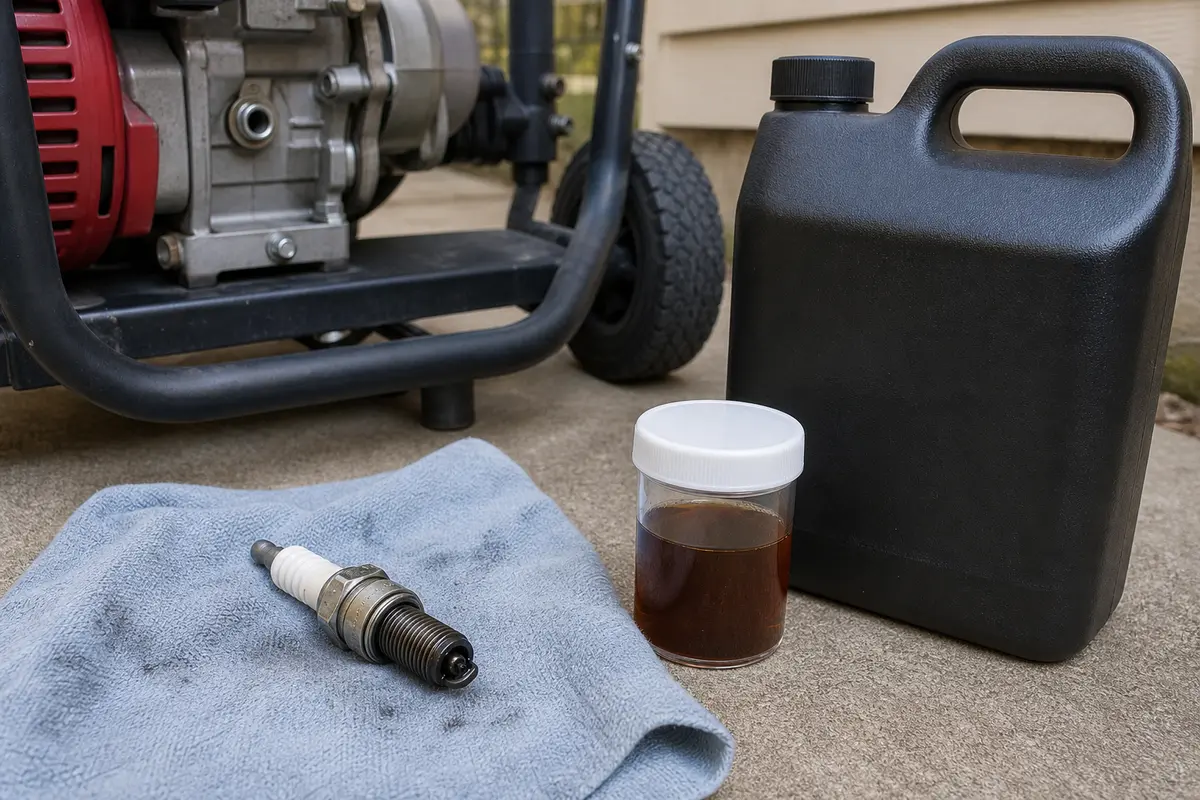
Write down the pressure washer model, engine model, what the rope or starter does, whether the plug is wet or dry, fuel age, oil level, and whether it only runs on choke. Spark plugs, filters, carburetors, batteries, and starters can look close and still fit wrong.
Most homeowner pressure washers that refuse to start are not dealing with a ruined pump. The useful clue is what happens at the starter before the engine ever runs.
On a seasonal no-start, stop after a few clean pulls and read the clue. A wet plug points to flooding, while a hard rope or pressure loss is the only reason to move the pump up the list.
When the rope feels normal, reset the simple controls and make one clean start attempt. This catches the easy misses without flooding the engine.
| What you see | What it usually means | Next move |
|---|---|---|
| Rope pulls normally and engine never coughs. | Fuel, spark, switch, choke, oil level, or plug boot is still the main path. | Refresh fuel if old, reseat the boot, verify controls, then inspect the plug. |
| Rope was hard, then frees up after squeezing the trigger. | Trapped pump or hose pressure was loading the starter. | Purge water and air correctly before another start attempt. |
| Rope stays hard after pressure is relieved. | This is no longer a basic no-start clue. | Stop and diagnose hard-pull, pump lock, or engine binding. |
| Engine fires once, then dies or only runs on choke. | Fuel delivery is weak or the carburetor is restricted. | Go to stale fuel, cap vent, air filter, and carburetor clues. |
Old fuel and flooding can feel the same from the handle: the engine refuses to catch, or catches once and quits. Stop if you smell gas or see leaking fuel. Let the engine cool, switch it off, pull the plug wire aside, then check whether the plug is wet or dry.
If fresh fuel and a clean start sequence do not change anything, stay with simple engine breathing and ignition clues before opening deeper repairs.
These tools support the basic diagnosis. They are not a reason to work around fuel leaks, hot parts, or unsafe spark testing.
Put parts in the cart only after the clue points there. The engine model matters more than the pressure washer color or online photo.
The driveway diagnosis should end with either a clean-running washer or a clear reason to stop. Do not keep running short tests through fuel leaks or hard mechanical symptoms.
Old fuel is the first suspect after winter storage. Stop before more pulls and check the tank: sour smell, dark fuel, or an engine that catches and quits points there. Fuel left in the tank or carburetor can leave deposits in small passages. Work outdoors, drain questionable fuel into an approved container, refill with fresh fuel, then check whether the plug is wet or dry.
Yes. Some small engines use low-oil shutdown. Set the washer level and read the dipstick or fill marks the way the engine manual says before chasing ignition parts.
That usually means fuel is reaching the cylinder but the engine is not lighting it, or repeated pulls have flooded it. Pull the plug after the engine cools. A wet tip is the clue to dry or replace the plug and restart with the choke open.
Usually no. If the rope feels normal and the engine never coughs, check fuel, spark, oil level, switch position, choke, and plug connection first. Think about the pump only when the rope stays hard after pressure is bled off or the engine runs but pressure is wrong.
Start with battery charge, cable connections, and safety controls. Then make sure the engine can turn freely. A weak battery or dirty cable is more common than a failed starter.
That is a good clue for restricted fuel delivery. Try fresh fuel if the gas was old, then check the fuel-cap vent and air filter. If it still dies as soon as the choke opens, the carburetor may need cleaning or correct-fit service matched to the engine model and linkage.
After a few clean pulls with the right choke and switch positions, stop and read the clues. More full-choke pulls can flood the engine and make the next diagnosis harder.
A wet plug usually points to flooding or fuel reaching the cylinder without spark. Let the cylinder air out, dry or replace the plug, confirm the boot is seated, and avoid repeated full-choke pulls.
Only after fresh fuel, a clear cap vent, clean air filter, good spark, normal rope pull, and correct oil level still leave the engine starting then dying or running only with choke. Match the exact engine model and linkage before ordering.
Repair Riot built this page around clues a homeowner can check before parts. That means rope pull, fuel age, choke setting, wet or dry plug, oil level, and whether the engine only runs on choke. The references below shaped the fuel-storage, model-lookup, and small-engine safety boundaries.