Burning smell, smoke, buzzing, heat, or blackened insulation?
Leave the area, shut off power if you can do it safely, and call a licensed electrician. These are active hazard clues, not inspection clues.
If mice chewed wires in your crawlspace, shut off the affected circuit before you inspect the cable. Look for exposed copper, cut inner insulation, scorch marks, melted jacket, buzzing, heat, or a breaker that trips again. Any of those signs means stop there and call a licensed electrician.
Usually the first useful clue is depth: look for exposed conductor, cut inner insulation, scorch marks, or chew damage near joists and entry holes.
Use the crawlspace check to answer one question: did the chew reach the conductors? Keep the circuit off until that answer is clear.
Don’t start with: Do not start by taping over chew marks, stuffing steel wool around live wiring, or resetting a tripped breaker over and over.
Leave the area, shut off power if you can do it safely, and call a licensed electrician. These are active hazard clues, not inspection clues.
Keep the circuit off. The damaged section needs proper electrical repair or replacement, and the rest of the visible run should be checked.
Do a power-off visual check in good light and document the spot. If you cannot clearly tell the damage is surface-only, treat it as unsafe.
Tie the symptom to the circuit before using it again. One repeat trip, flicker, odor, or dead section is enough reason to leave the breaker off.
Expect more than one chew point. Check the visible cable path from a safe distance and plan electrical repair plus rodent exclusion.
Stop the homeowner inspection there. Hidden damage needs tracing by a pro, especially when the circuit feeds finished rooms above.
Look for depth first: exposed copper, cut inner insulation, and scorch marks matter more than the number of bite marks. Check where the cable passes joists, entry holes, insulation edges, and rodent travel paths.
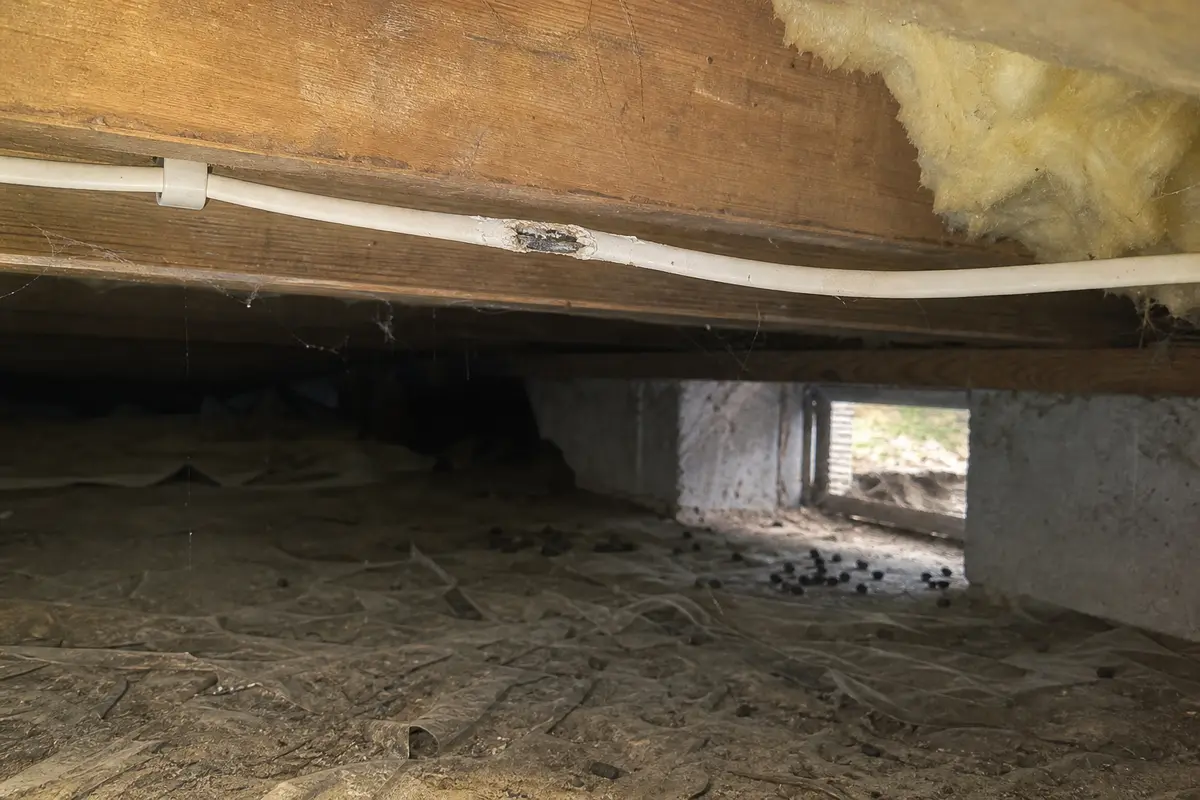
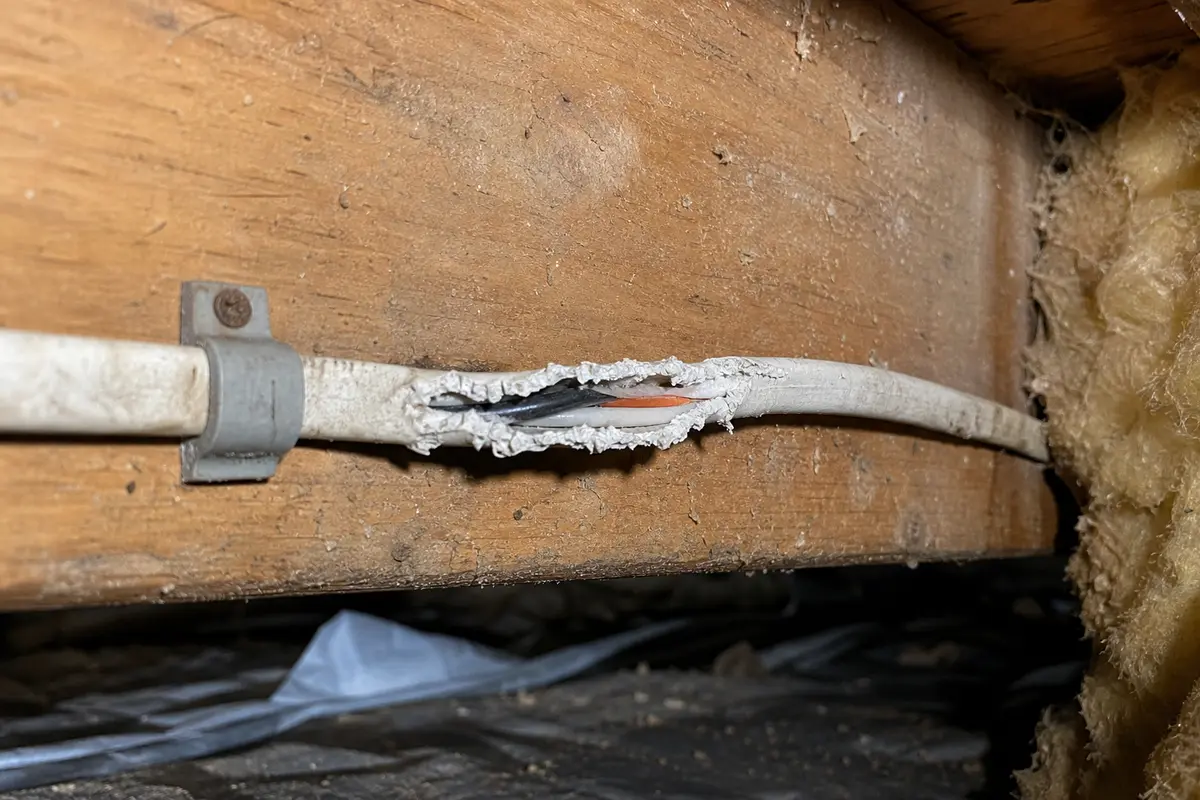
For chewed branch-circuit cable, shopping comes after diagnosis. First match the repair to the exact damage: surface tooth marks, split jacket, exposed copper, heat marks, breaker behavior, and any damage that disappears into a hidden route. Do not buy cable, connectors, or patch materials until the diagnosis and proper repair method are clear.
Mice do not have to chew a cable in half to make it unsafe. The problem is the depth of the bite and what the damaged cable can touch when the circuit is loaded.
Most bad outcomes start with trying to make the cable look fixed instead of making the circuit safe.
Once the affected breaker is off, use light and distance before hands. The first pass is about sorting visible clues, not repairing the cable.
Use the result, not the hope that the damage is small. This table keeps cosmetic marks separate from electrical stop points.
| What you find | What it usually means | Next step |
|---|---|---|
| Light tooth marks on outer jacket only | Possible surface damage, but depth still matters | Keep circuit off until the spot is documented and judged safe |
| Colored inner insulation visible | The outer cable jacket is breached | Leave the breaker off and schedule proper repair |
| Bare copper, blackening, melted jacket, or hot smell | Shock and fire risk from damaged conductor or arcing | Stop inspection and call a licensed electrician |
| Breaker trips again after one reset | The circuit may have a fault under load or damaged insulation | Leave the breaker off; do not keep testing |
| Droppings or nesting around several cable runs | The first damaged spot may not be the only one | Document the area and inspect visible nearby runs with power off |
| Damage enters a finished wall or floor cavity | Hidden cable condition cannot be checked from the crawlspace | Have the run traced before restoring normal use |
Chewed crawlspace wiring crosses into licensed repair when the clue is deeper than surface jacket marks. Stop if you see copper, nicked inner insulation, flicker, odor, heat, or a repeat breaker trip. Keep the circuit off and have an electrician trace any damaged run that disappears into a hidden route.
These tools support safe observation and documentation. They do not make damaged branch-circuit wiring a homeowner patch job.
Paid links. As an Amazon Associate I earn from qualifying purchases. Repair Riot may earn a commission at no extra cost to you.
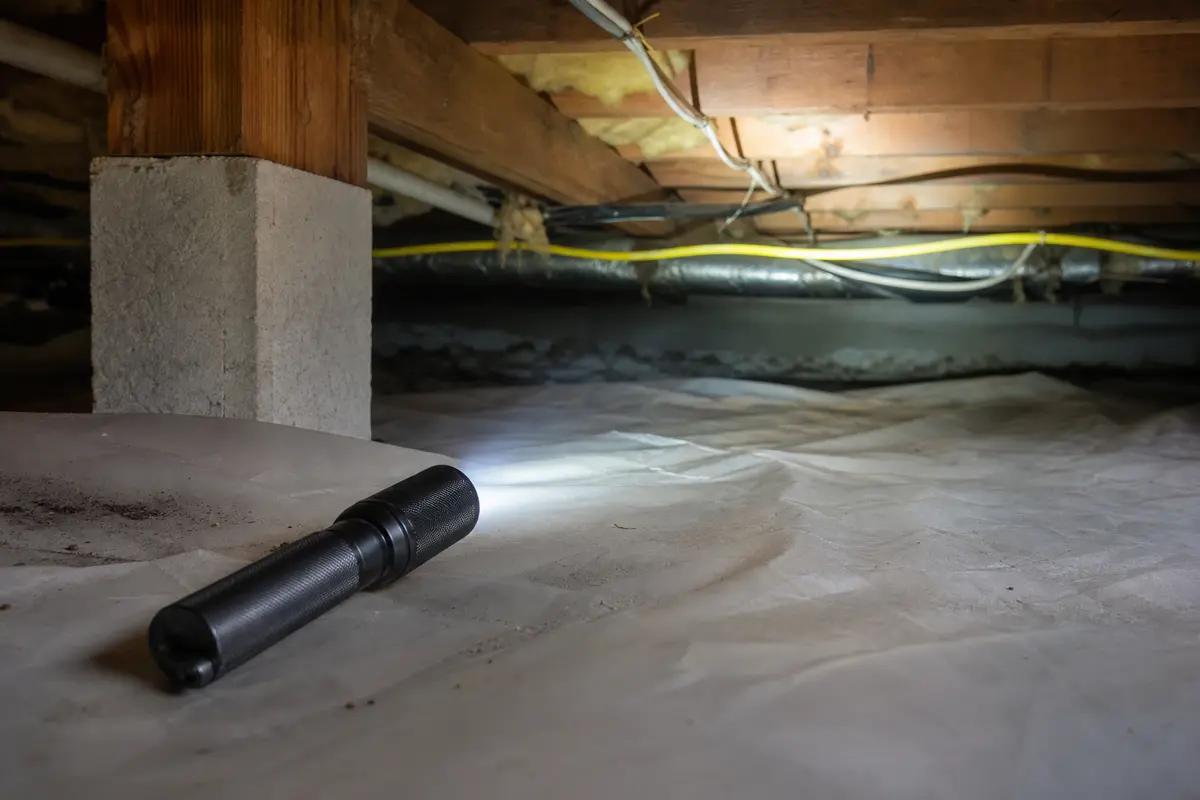
Helps when: Use it to see jacket splits, blackening, droppings, and cable routing without touching the wiring.
Skip it when: The crawlspace is wet, smoky, buzzing, or too tight to avoid contact with damaged cable.
Compare inspection flashlights on Amazon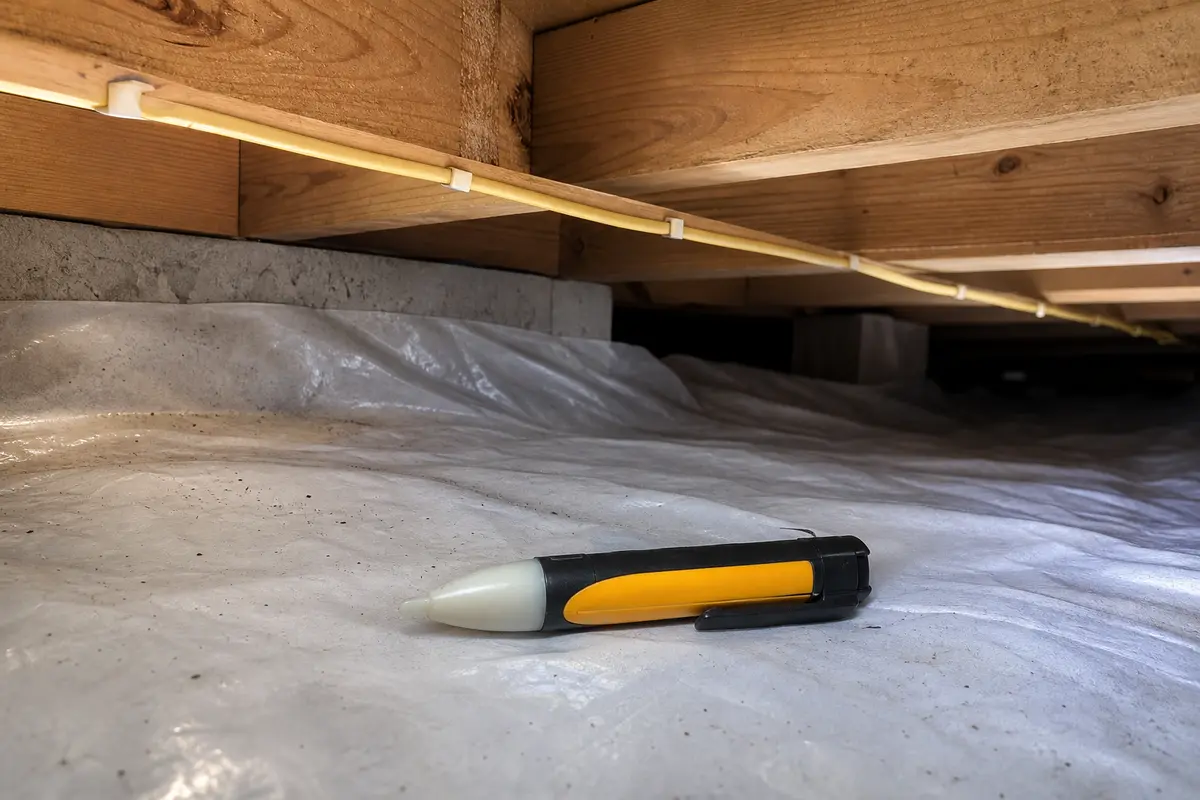
Helps when: Use it as a screening check around the suspected cable or nearby boxes after the breaker is off.
Skip it when: You cannot identify the circuit, the tester result conflicts with what you expect, or damaged wiring is exposed.
Compare voltage testers on Amazon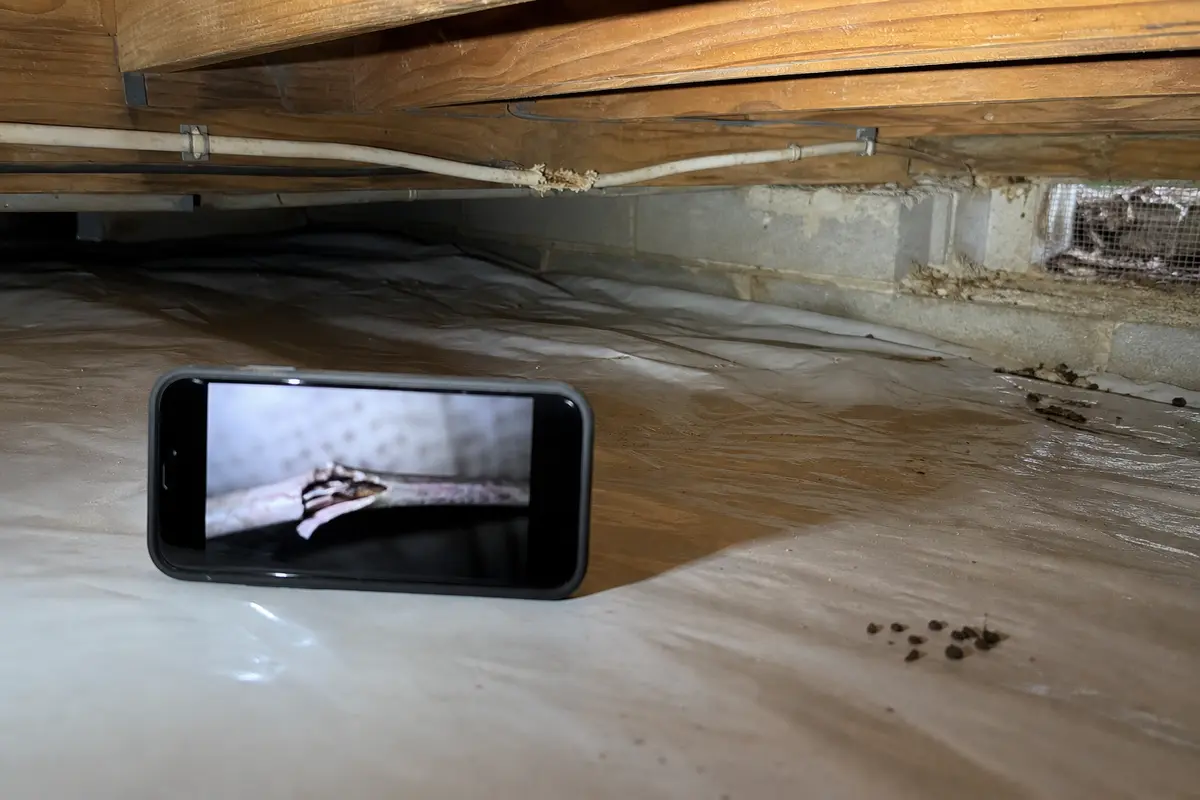
Helps when: Use it to document each damaged spot before repair. Include the cable route, breaker label, and nearby rodent evidence when you can photograph them safely.
Skip it when: Getting the photo would require touching the cable, crawling through water, or moving insulation around damaged wiring.
Compare inspection cameras on AmazonFor this problem, parts advice is mostly about restraint. The damaged cable and the local code requirements decide the repair, and that decision belongs with the person doing the licensed electrical work.
No. Tape is not a proper final repair for rodent-damaged house wiring. If the jacket is split, inner insulation is nicked, copper is exposed, or heat marks show, shut off the circuit and get a proper electrical repair.
Not necessarily. Chewed wiring can keep working and still arc or overheat later, especially when the circuit is under load. Working power does not rule out unsafe damage.
Only once, and only if you found no burn marks, smell, heat, or exposed conductor. If it trips again, leave it off. Repeated resetting is how small wiring damage turns into a bigger problem.
With power off and good light, look for a split sheath, missing chunks, colored inner insulation, bare copper, black specks, or melted jacket. Check a few feet of the same visible run too. If you cannot clearly see that the damage is only shallow surface marking, assume it needs professional evaluation.
If you see exposed copper, heat marks, odor, buzzing, or a breaker that will not hold, call the electrician first or at the same time. After the wiring is stabilized, handle exclusion and cleanup so the same run does not get chewed again.
Yes. Damaged insulation can let conductors arc, short, or overheat against wood, insulation, or debris. Crawlspaces are easy places for a problem to stay hidden until it gets worse.
Photograph the damaged cable from a safe distance, the nearby joist or entry point, any droppings or nesting material, and the breaker label if you know the affected circuit. Do not move the cable to get a better picture.
They can plan exclusion, but active electrical damage comes first. Keep the circuit off and have unsafe wiring stabilized before anyone packs material around cable, joists, or penetrations near the damaged run.
Repair Riot built this page around homeowner-safe triage. Shut power off, read visible cable damage, avoid improvised patches, and hand exposed or heat-damaged wiring to a licensed electrician.