Do you see soot, melted insulation, or bare copper?
Leave the breaker and disconnect off. This has moved past a homeowner check, even if the AC still ran earlier.
Start by turning cooling off at the thermostat, then shut off the outdoor disconnect and AC breaker if you can identify them safely. Leave the condenser off until the chewed wire is identified and repaired.
The common find is a small thermostat control cable chewed near the condenser base or line set. A short can also blow a low-voltage fuse or damage the contactor, so the visible bite mark may not be the whole repair.
Look for the split: thin exterior control cable, heavier whip or disconnect wiring, or burn, heat, soot, or breaker trouble. The last two are stop points.
Don’t start with: Do not wrap the chew mark with electrical tape and run a test cycle. Outdoor wiring gets wet and vibrates, and a taped nick can still short to metal or burn controls.
Leave the breaker and disconnect off. This has moved past a homeowner check, even if the AC still ran earlier.
Do not keep resetting it. A chewed conductor may be shorted to metal, another conductor, or a damaged component.
On a thin cable outside the cabinet, treat it as low-voltage condenser control wiring. With power off, look at the cable path, photograph the damage, and schedule an outdoor-rated repair and control-circuit check instead of a tape patch.
Treat it as line-voltage damage. Leave the system off and call a licensed electrician or an HVAC company that handles electrical repair.
A shorted or open control wire may have stopped the contactor signal or blown a low-voltage fuse. The wire repair comes before parts.
Assume the visible spot is not the whole problem. The service call should include hidden wiring checks around the cabinet base and control area.
Look at where the damage is before anyone restarts the AC. A thin control cable outside the cabinet is a different risk level than chewed whip, disconnect, or cabinet wiring.
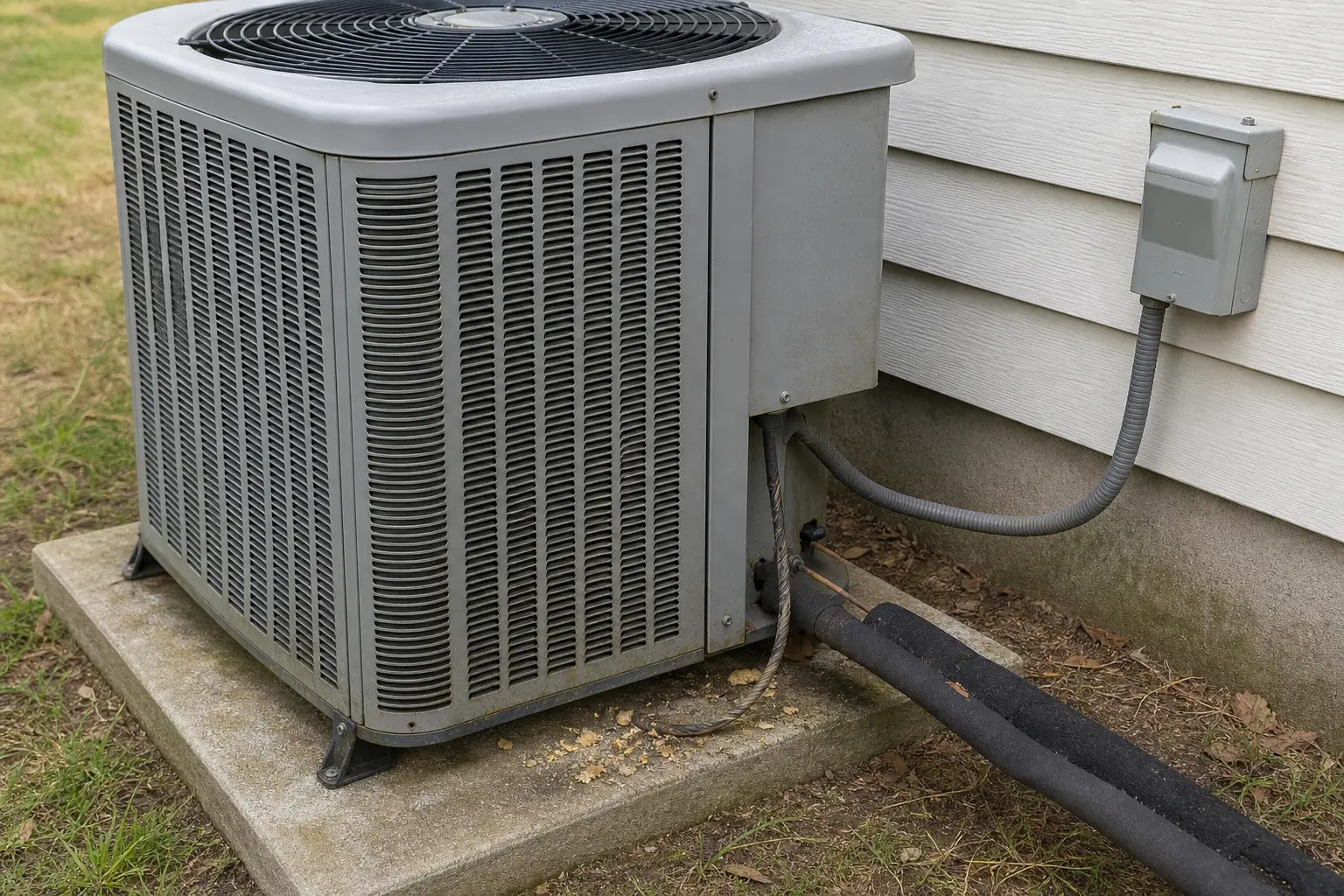
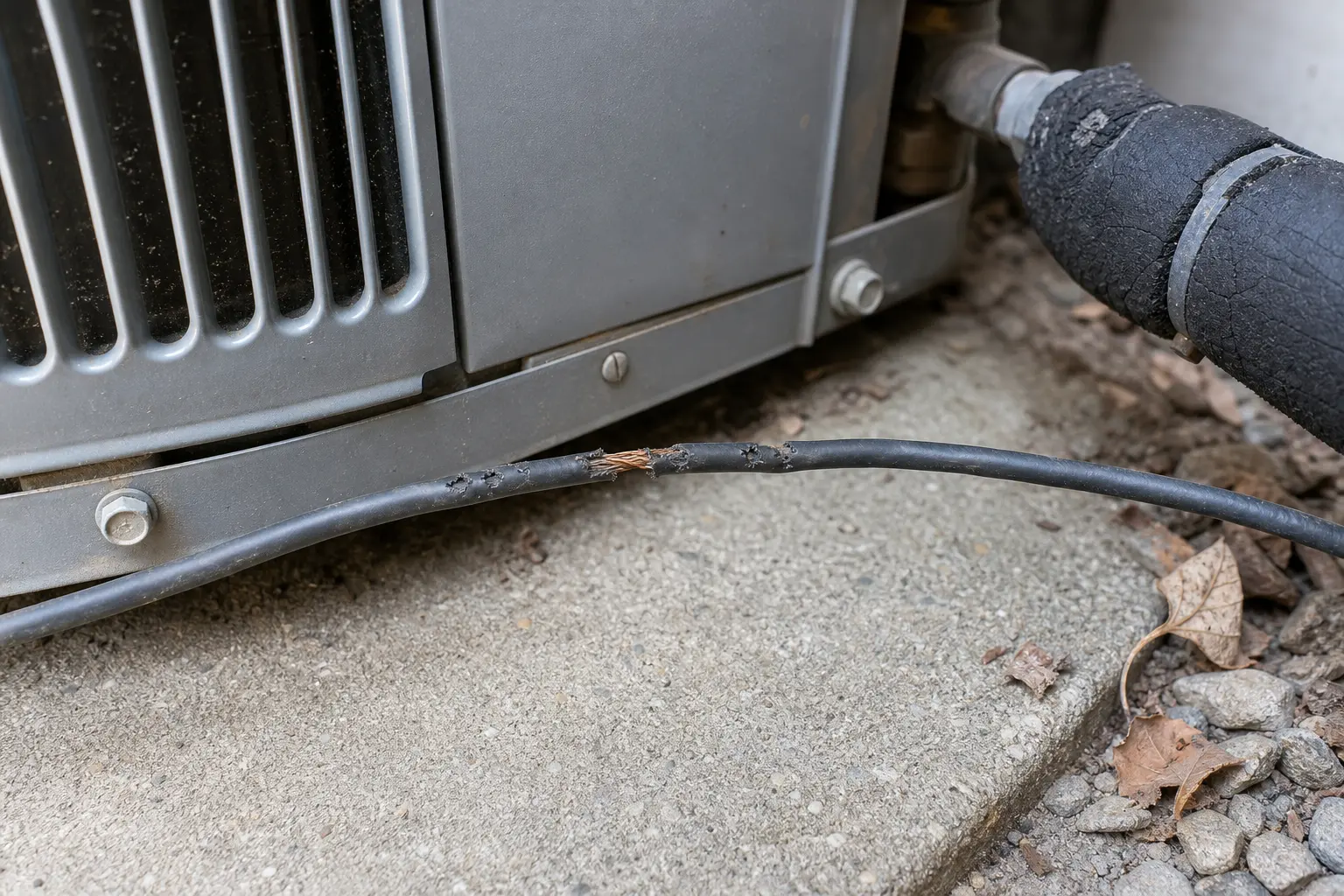
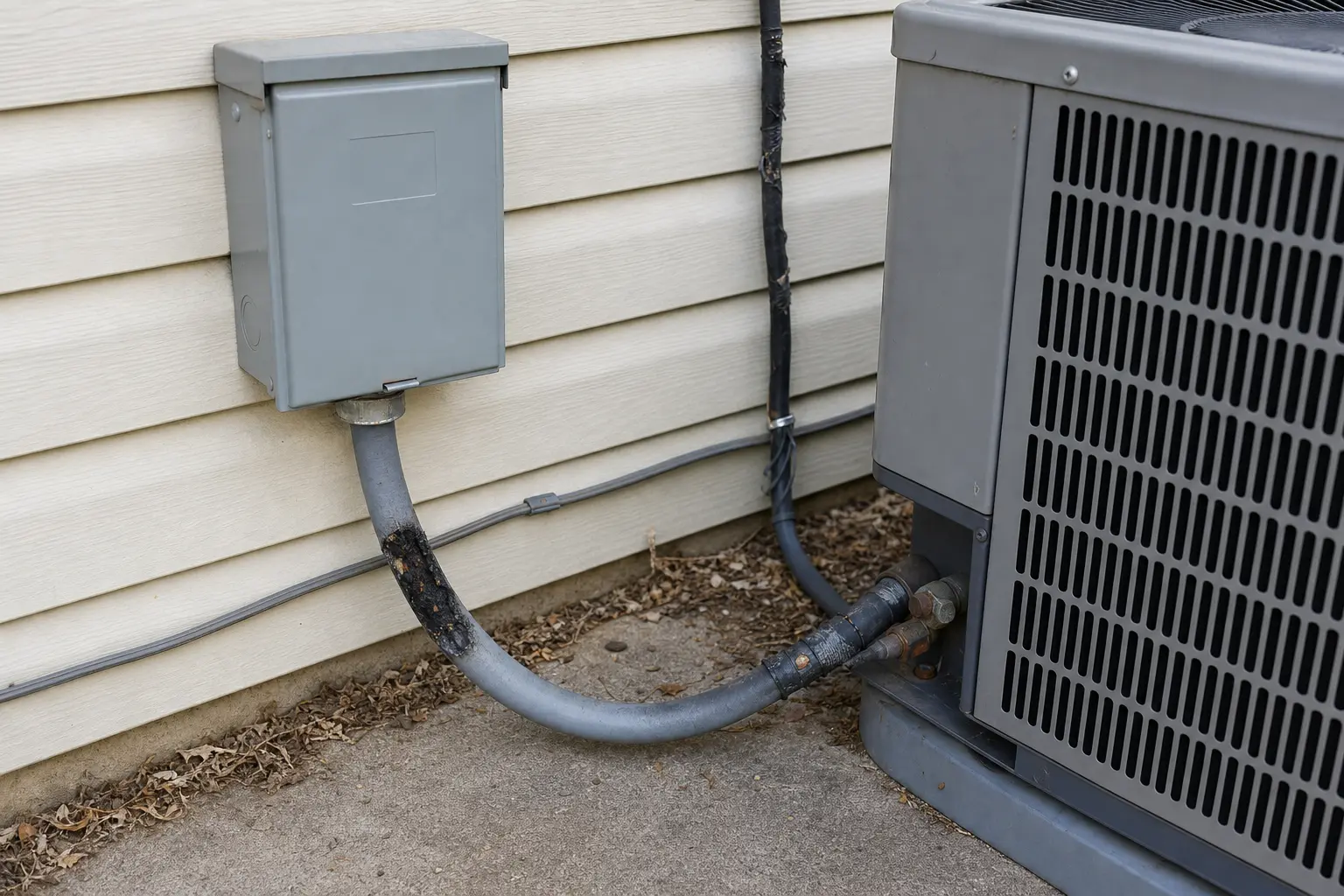
Start with the visible clue, not a cart: thin chewed control cable, tripped breaker, scorched jacket, damaged whip, or a condenser that stays dead after wire repair. Do not buy a thermostat, contactor, fuse, capacitor, or condenser whip until the damaged wire is repaired, the circuit is inspected, and the exact failed part is identified. For any wire or control part, match the equipment, voltage side, conductor count, outdoor rating, terminals, and routing.
Mouse damage at an outdoor condenser usually starts low and close to shelter: the line-set opening, the cabinet base, the disconnect whip, or the small control cable. Look there first with the condenser off, and note whether the damage is on thin control cable or heavier wiring.
The repair starts with stabilization, not with tape, parts, or a quick restart. The condenser can be quiet and still have live wiring inside or near the disconnect.
Use what you can see from outside the cabinet. The wire location changes both the likely failure and the safe next move.
| What you see | What it points to | Next move |
|---|---|---|
| Thin jacketed cable with small colored conductors | Low-voltage condenser control wiring | Keep power off, document the damage, and have the section repaired or replaced. |
| Outdoor unit dead while the indoor blower runs | Open or shorted control circuit | Repair the damaged cable first, then check fuse and contactor only if the condenser stays dead. |
| Flexible conduit, whip, disconnect, or thick conductors chewed | Possible line-voltage damage | Leave the breaker and disconnect off and call a licensed electrician or HVAC pro. |
| Soot, melted jacket, sharp electrical smell, or hot metal | Short, arcing, or heat damage | Stop the inspection. Do not reset the breaker or touch the damaged area. |
| Droppings, nesting, insulation scraps, or several chew marks | Damage may continue inside the cabinet or along the wire path | Ask for hidden wire and control-compartment inspection before any restart. |
These checks are visual and informational. They help you explain the problem without turning the repair into live electrical work.
Look at the damage before you call. Keep the condenser off. Tell the dispatcher whether it is thin control wiring, whip or disconnect damage, or a tripped breaker.
These tools support a visual-only check and cleanup around a powered-down condenser. They do not make splicing, live testing, or disconnect work safe.
Paid links. As an Amazon Associate I earn from qualifying purchases. Repair Riot may earn a commission at no extra cost to you.
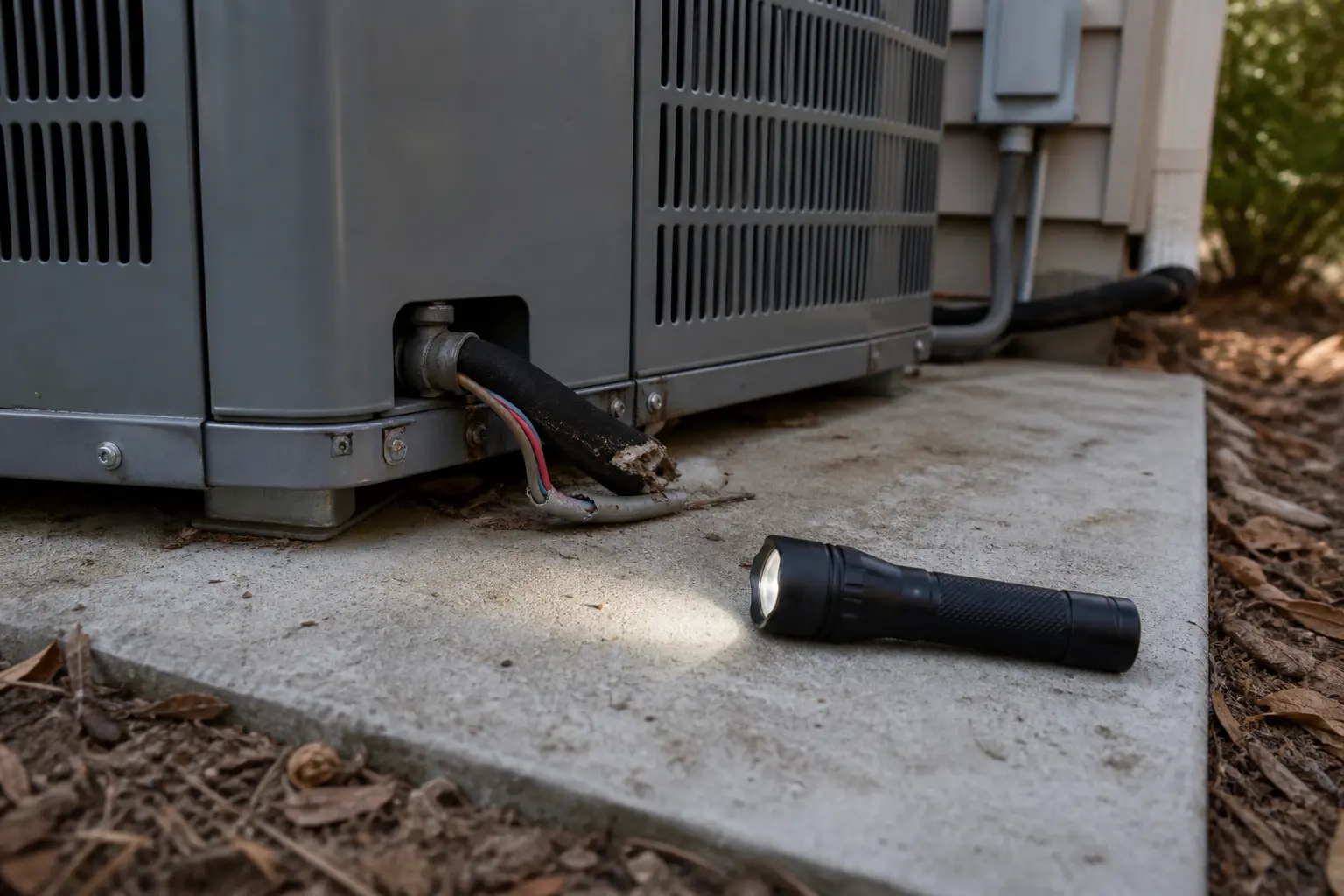
Helps when: Use it to see the condenser base, line-set entry, disconnect area, droppings, and chewed jacket without reaching by feel.
Skip it when: Skip deeper inspection when the next look would require opening the condenser electrical compartment or touching wiring.
Compare inspection flashlights on Amazon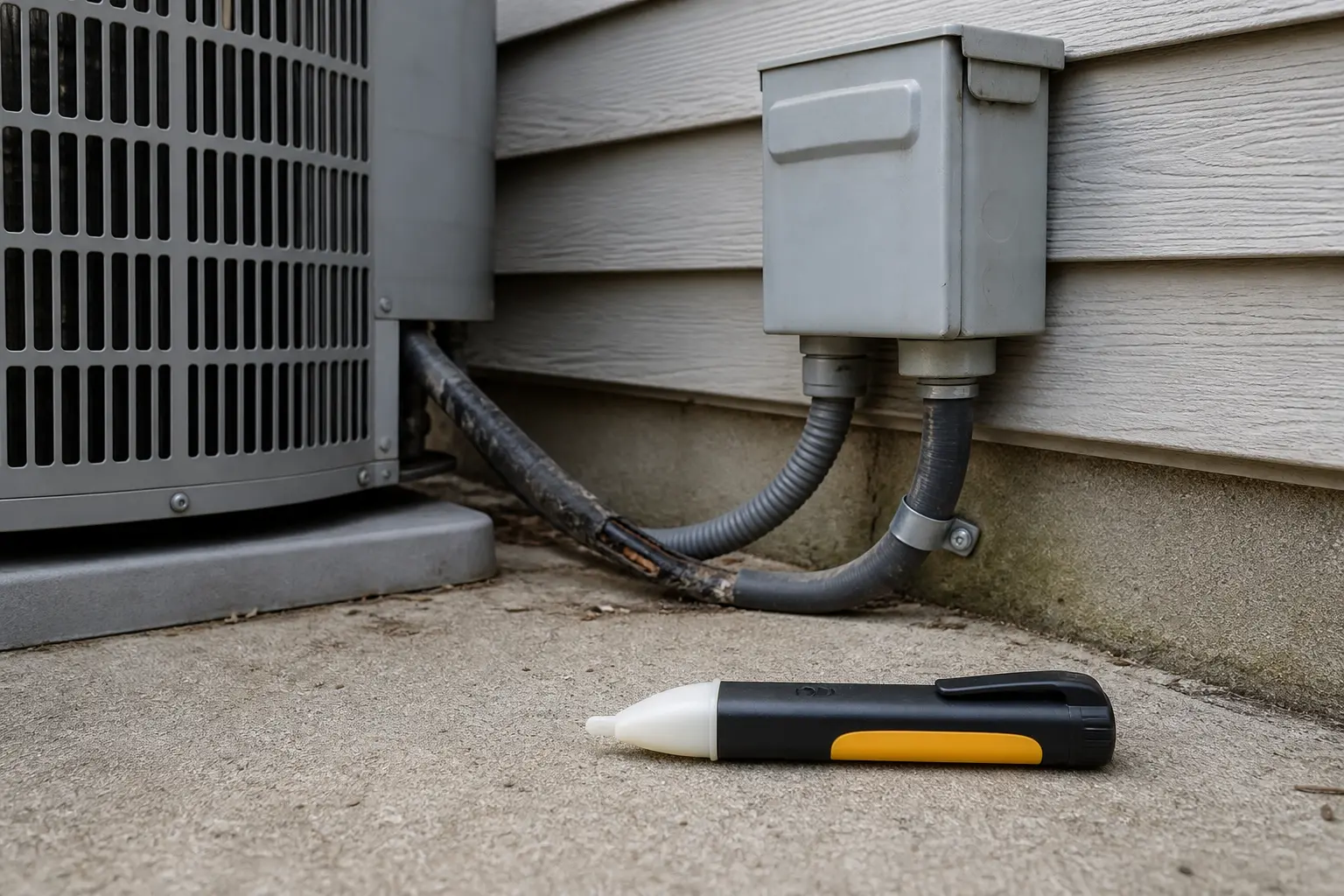
Helps when: Use it as a rough warning tool near accessible wiring after the breaker and disconnect are off.
Skip it when: Skip treating it as proof a wire is safe to repair. Damaged outdoor wiring still needs proper testing and repair methods.
Compare non-contact voltage testers on Amazon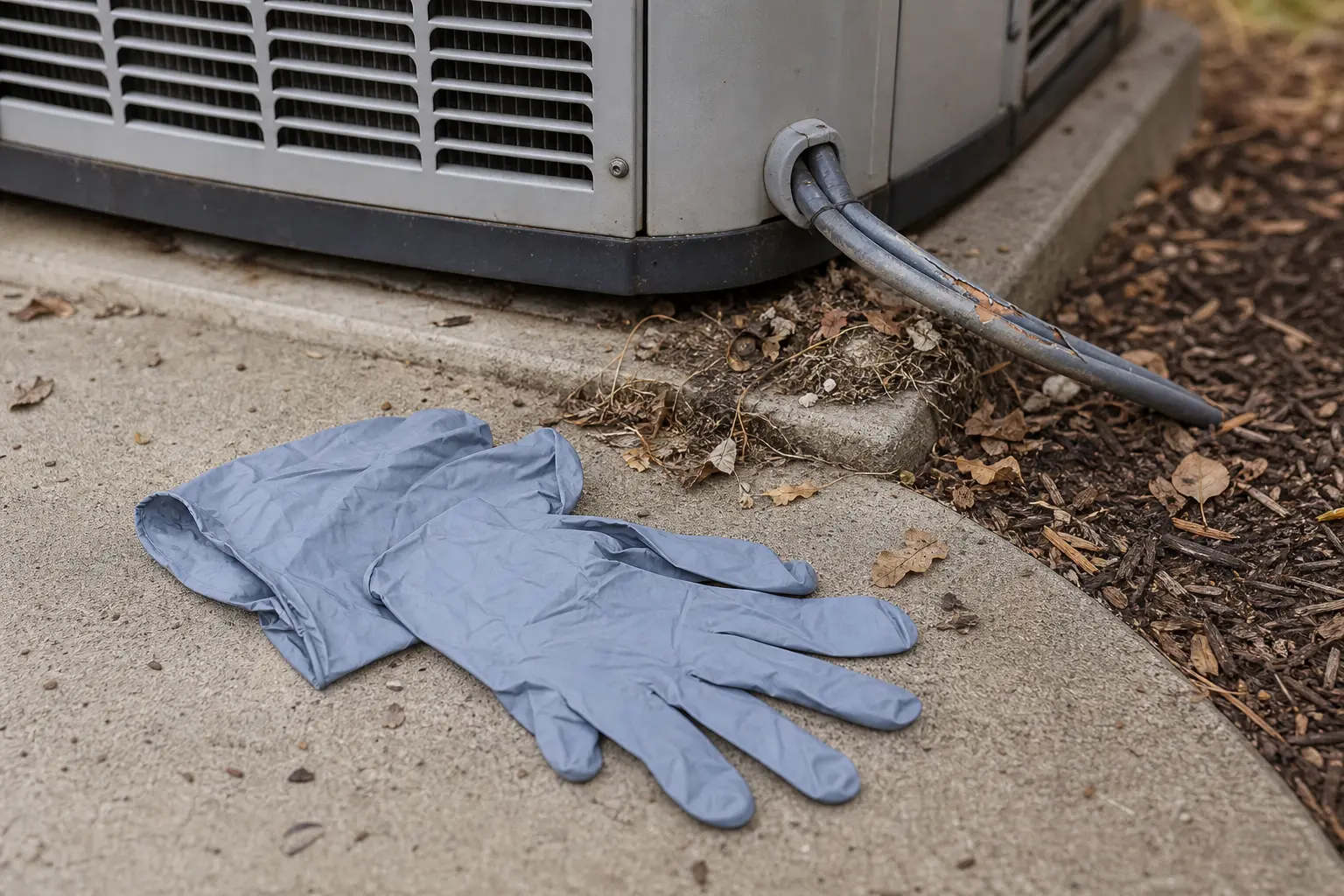
Helps when: Use them for dry debris handling after power is off, especially around rodent droppings, nesting material, and sharp cabinet edges.
Skip it when: Skip cleanup if wires are exposed, wet, warm, or still unverified. Electrical stabilization comes first.
Compare disposable gloves on AmazonCheck the visible clue before any parts list: thin chewed control cable, tripped breaker, scorched jacket, damaged whip, or a dead condenser after wire repair. Each clue points to a different repair path.
A repaired jacket is not enough. The condenser has to start cleanly, run normally, and stay protected from another chew path.
No. If you see nicked copper, a split jacket, or outdoor cable exposed to rain and vibration, tape is the wrong repair. Keep the condenser off. Have a pro check and repair the damaged wiring with an outdoor-rated method.
The common target is the small low-voltage thermostat or condenser control cable near the line set or cabinet base. Mice can also chew the whip, disconnect wiring, or internal cabinet wiring, which is a higher-risk condition.
The chewed wire may have opened the control circuit or shorted two small conductors together. If the indoor blower runs but the outdoor unit stays dead, repair the visible wire damage first. Then have a pro check the low-voltage fuse and contactor if the condenser still will not start.
HVAC service is often the right first call for clearly low-voltage condenser control wiring and follow-up contactor or fuse checks. A licensed electrician is the better call for the disconnect, whip, branch-circuit wiring, repeated breaker trips, or any wiring you cannot identify.
No. Testing chewed wiring can trip the breaker again, damage controls, or create a shock hazard. Restart only after the damaged wiring is repaired and the condenser has been inspected.
The short may have damaged another control part, or more hidden wiring may still be chewed. Keep the condenser off and tell the technician whether the breaker tripped, the indoor blower ran, or the outdoor unit stayed dead. The pro can check the low-voltage fuse, contactor condition, and control-circuit wiring.
Usually no. A thermostat can look guilty when the outdoor control wire is open or shorted. Repair the damaged wire path and check the low-voltage circuit before buying a thermostat.
Keep the unit off and have the cable inspected anyway. The conductor may be nicked under the jacket, moisture can enter the cable, and movement can turn a partial chew into a short later.
Yes. On many systems, a shorted low-voltage control wire can open a small control fuse at the furnace, air handler, or control board. Repair the damaged cable first. Then have the technician check the fuse before replacing it.
Remove cover and food sources near the condenser, seal nearby entry points, and ask the repair pro whether the control cable can be routed, secured, or protected better. The wiring repair and rodent exclusion need to happen together.
Repair Riot built this page around homeowner-safe triage: shut the equipment down, sort control wiring from power wiring, document visible damage, and stop before live testing or line-voltage repair. The source links below support AC maintenance context, damaged-wire safety boundaries, and rodent cleanup precautions.