Heat, burning smell, buzzing, crackle, smoke, or moisture?
Stop at the closed panel. Leave the main off if it is already off and call a licensed electrician.
If the main breaker is tripping, stop treating it like a nuisance reset. Check for heat, burning smell, moisture, and heavy loads first; then do one controlled reset only if the closed panel looks and smells normal.
The usual split is simple but important: either the house is drawing too much at once, or one circuit or appliance is pulling the main down.
A main breaker is the house disconnect, not a room breaker. Your job is to sort danger signs, reduce load, and isolate the trigger without removing the deadfront.
Don’t start with: Do not start by replacing the main breaker, opening the panel, tightening lugs, or resetting it until it finally holds.
Stop at the closed panel. Leave the main off if it is already off and call a licensed electrician.
Stop resetting. That points away from normal house load and toward the main breaker, panel, service equipment, meter area, or utility side.
Keep that breaker off and identify what the circuit feeds. If the main holds until that same circuit comes back on, check that circuit or connected equipment before blaming the main breaker.
Think load or major-appliance trouble first. Reduce simultaneous heavy use and have that appliance or circuit checked before normal use returns.
Treat the timing as a clue. Moisture, damaged cable, outdoor circuits, and newly disturbed wiring can make a main trip hard and need careful repair.
These are visual sorting clues, not instructions to open the panel. Stay at the closed-panel level and use the images to separate normal breaker operation from a stop-and-call condition.
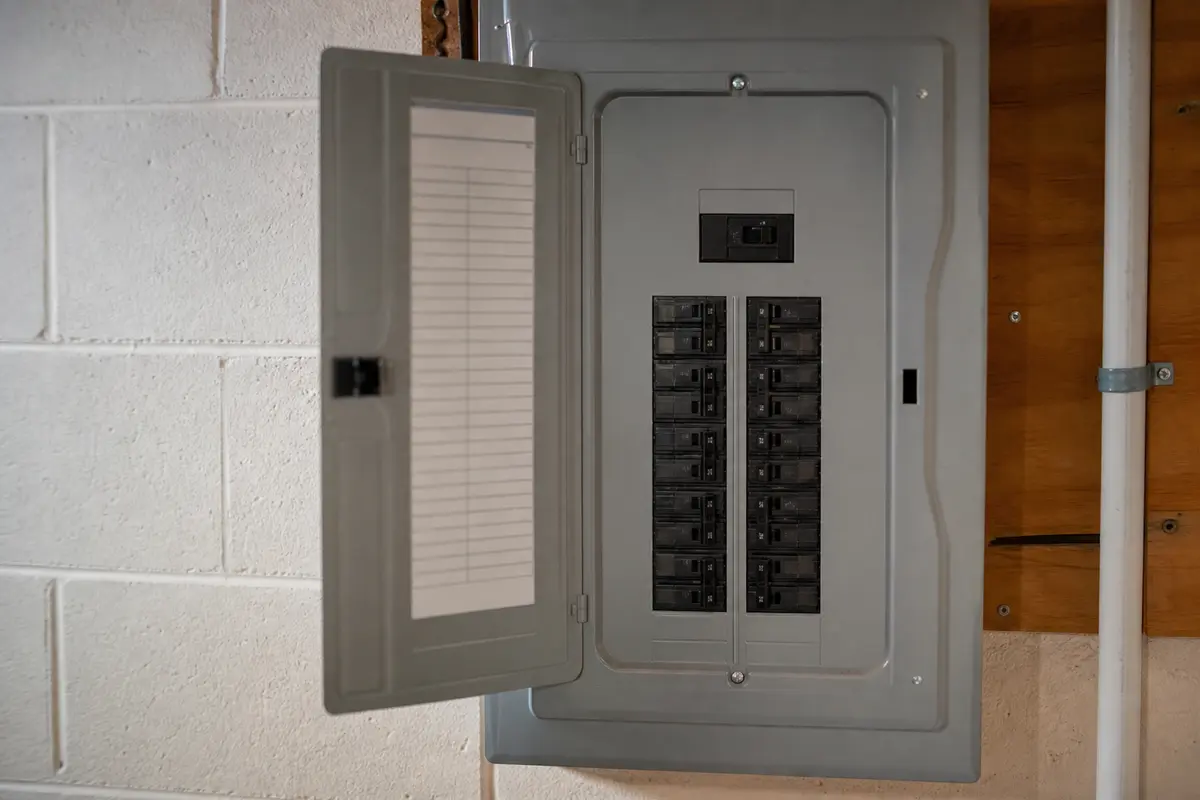
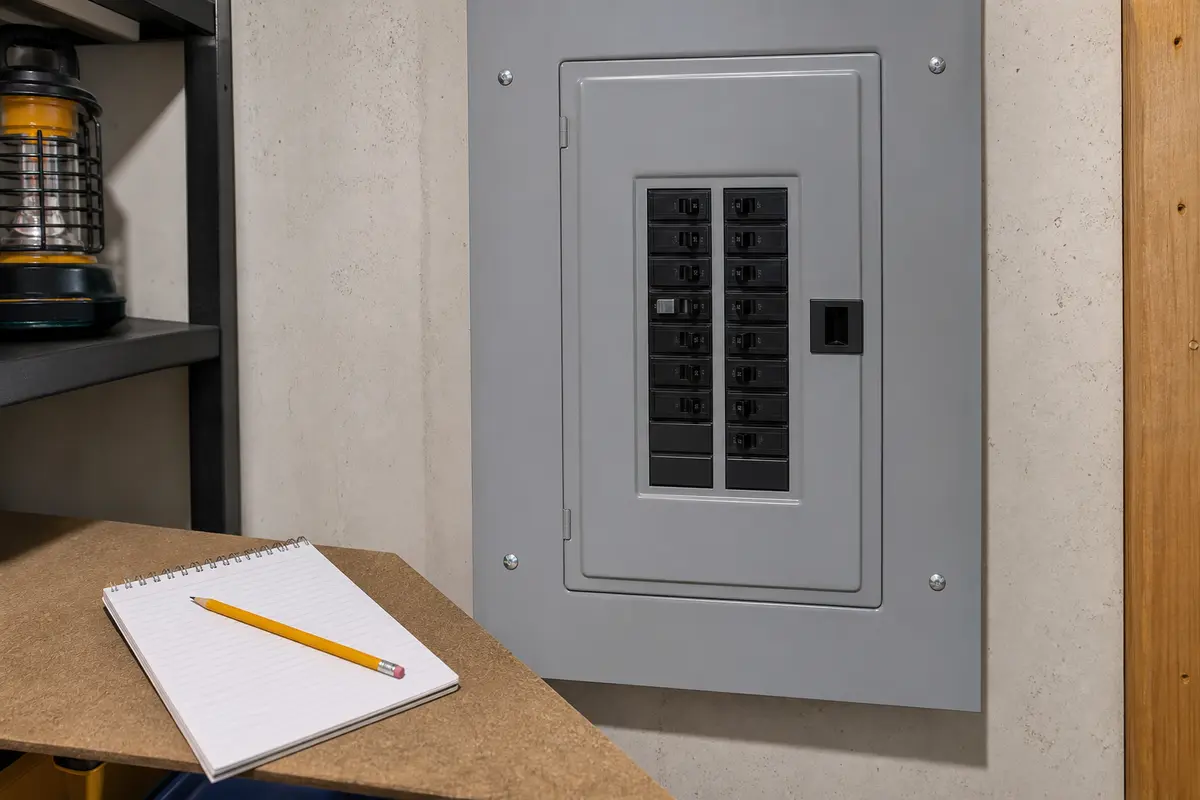
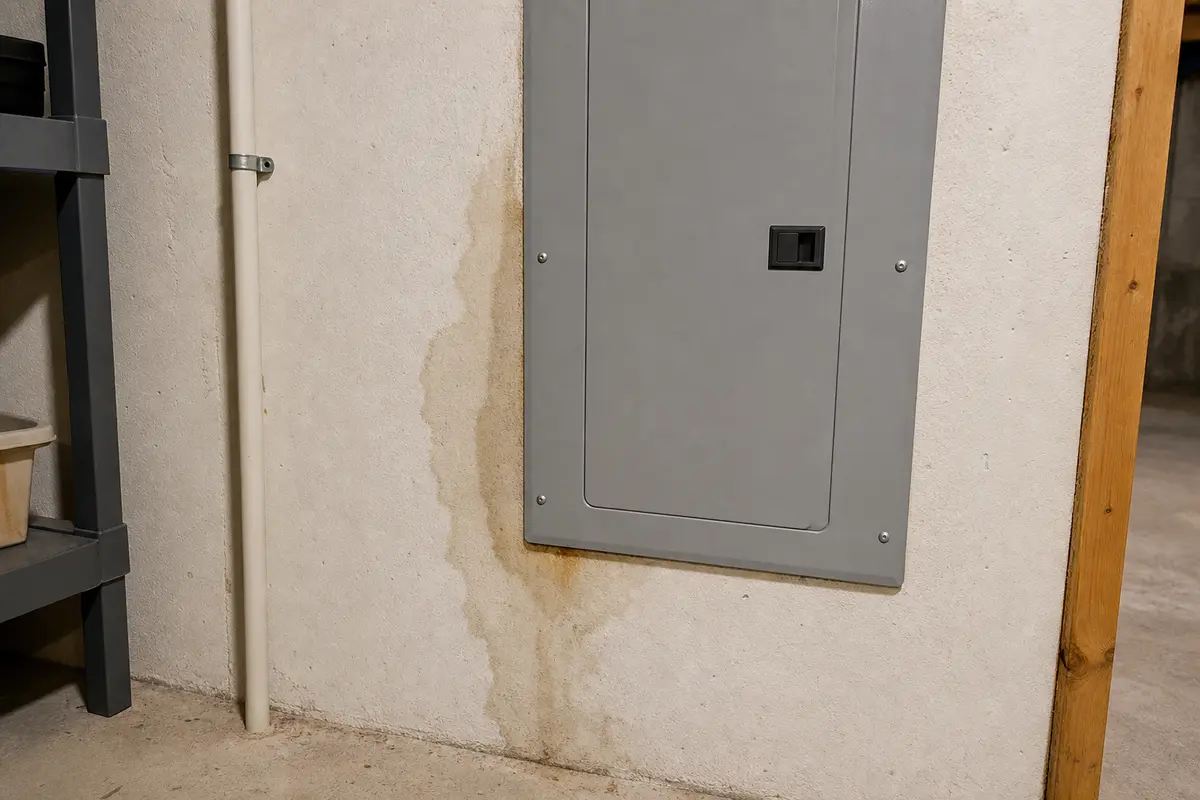
Do not buy a main breaker, panel part, or appliance part from the symptom alone. First prove the diagnosis: trips with all smaller circuits off, only under heavy load, or only when one circuit or appliance returns. For an appliance trigger, copy the full model number before parts shopping. Main breaker replacement is fitment-specific service work, not a guess-and-buy homeowner repair.
A main breaker trip means the protection device saw enough current or heat risk to shut down the house feed. Start with the clue you can observe: what was running, what smells hot, what looks wet, and which smaller breaker brings the trip back.
The wrong moves are the ones that erase clues or add heat to a failing connection.
This is the only panel inspection path for a homeowner. Keep the cover on, stand on a dry floor, and use your senses before your hands.
A controlled reset is not a repair. It is a one-time test that tells you whether the main can hold with load removed.
Use the pattern to decide whether this is load management, a bad circuit, major equipment, or a professional panel/service call.
| What happens | Most likely path | Next move |
|---|---|---|
| Main trips with all smaller breakers off | Panel, main breaker, service equipment, meter, or utility-side issue | Stop resetting and call an electrician; call the utility too if storm, meter, or service-drop trouble is possible |
| Main holds until one smaller breaker is restored | Fault or heavy load on that circuit | Leave that circuit off and identify what it feeds before repair |
| Main trips when AC, dryer, range, heater, or EV charger starts | Heavy appliance draw, starting load, or undersized/strained service pattern | Leave that load off and have the appliance or circuit checked |
| Main trips only when several big loads overlap | Whole-house overload pattern | Reduce simultaneous use and ask an electrician about service capacity if it repeats |
| Trip follows rain, outdoor outlets, wet basement, or panel moisture | Water-related fault or unsafe panel condition | Do not reset a wet panel; leave affected circuits off and get service |
| Trips are random with light loads | Loose connection, damaged equipment, failing breaker, or service-side trouble | Stop using the system normally and schedule electrical diagnosis |
These tools help you see, label, and document the pattern. They do not make inside-panel work safe.
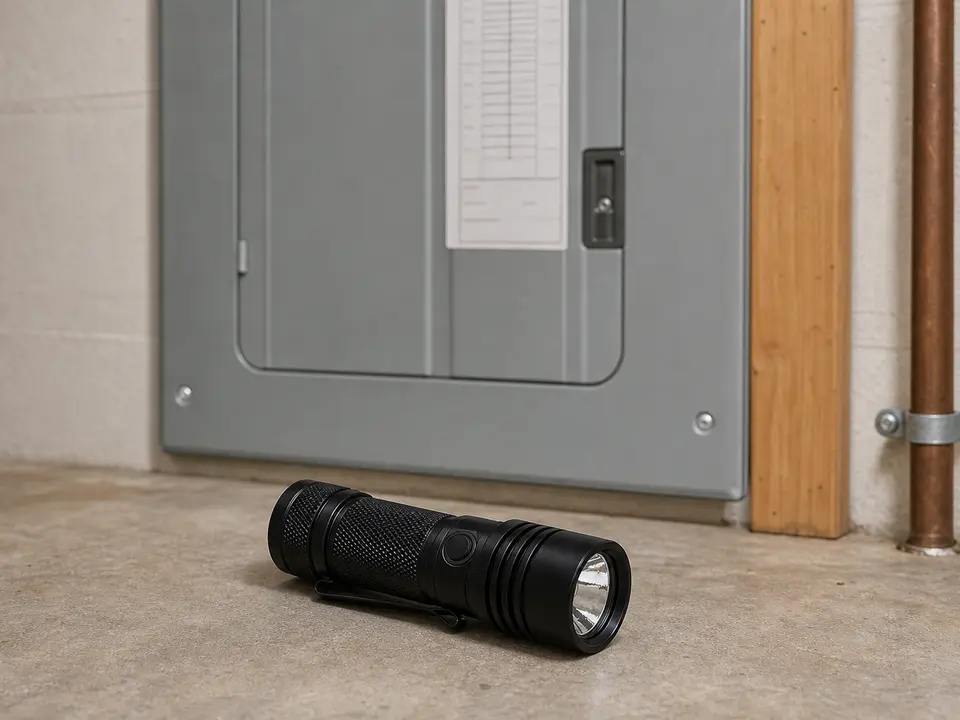
Helps when: Use it to read breaker labels and look for moisture, rust trails, discoloration, or a tripped handle without opening the panel.
Skip it when: The panel smells hot, buzzes, crackles, or is wet. Better light does not make that a homeowner inspection.
Compare inspection flashlights on AmazonHelps when: Use it to mark the circuit that made the main trip so nobody restores it casually.
Skip it when: You cannot identify the circuit confidently or the main trips with every smaller breaker off.
Compare breaker labels on Amazon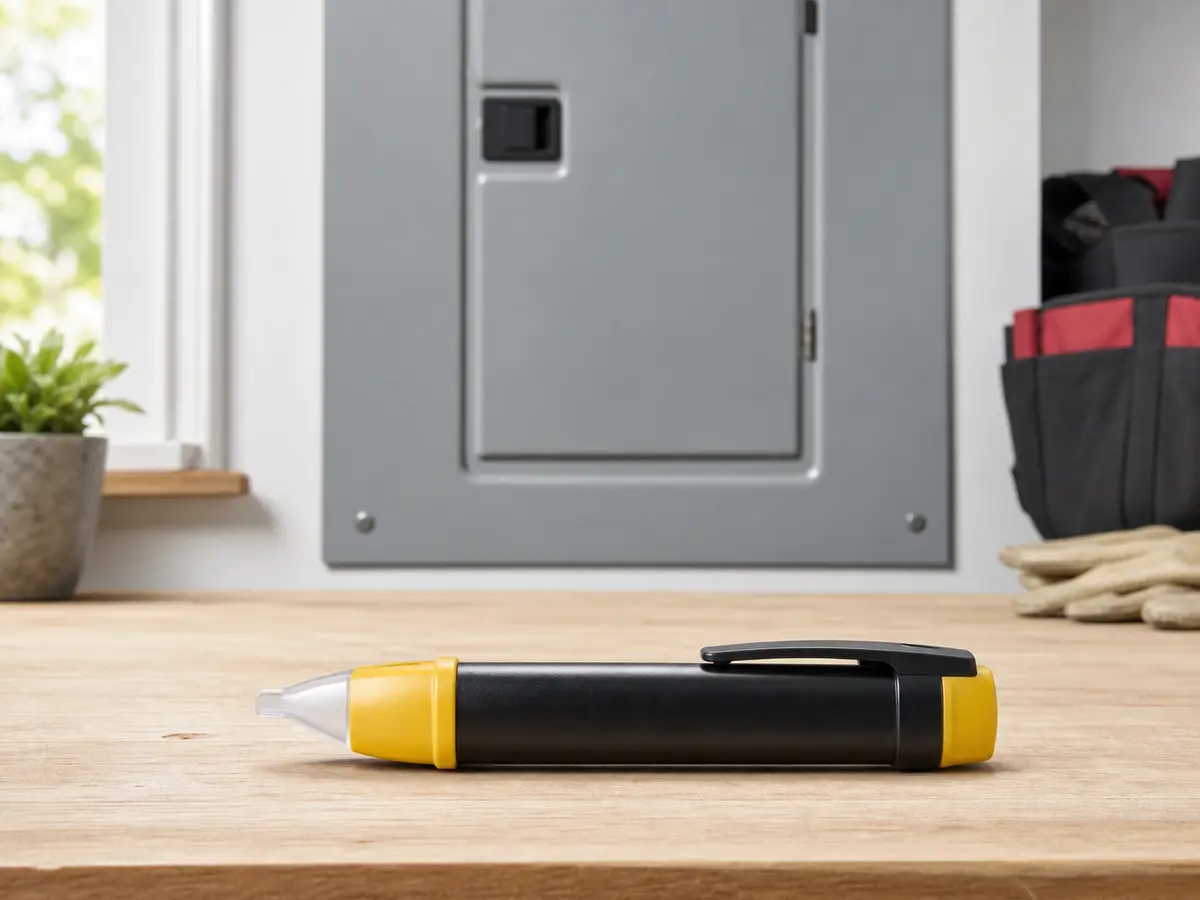
Helps when: After the problem circuit is off, use it at receptacles or cord-fed appliances. Check whether the outlet or cord is still energized without opening the panel.
Skip it when: Do not use this as permission to open the panel, touch service conductors, or work on hardwired equipment.
Compare voltage testers on AmazonAs an Amazon Associate I earn from qualifying purchases. Repair Riot may earn a commission at no extra cost to you.
There is no smart shopping shortcut for a tripping main breaker. Buy parts only after the failure point is known and the part is matched to the equipment.
Usually not. First look at the pattern: stacked heavy loads, one branch circuit that brings the trip back, or heat and odor at the panel. A bad main breaker is possible, but it is a later conclusion after those safer causes are checked.
One careful reset after reducing the load is reasonable if there are no danger signs. Turn off large loads first. If the breaker trips back, stop and trace the load or circuit instead of forcing it.
That can happen when the total house load gets too high, when a severe fault drags the service hard enough, or when there is trouble at the main breaker or panel connection itself. It is one reason this problem deserves more caution than a single room circuit trip.
That points first to heavy load or a failing major appliance drawing too much current at startup. Leave that load off and have the appliance or its circuit checked before you keep using it.
No, not as a standard homeowner repair. Main breaker replacement involves live service equipment and a breaker that must match the panel and service setup. Isolate the trigger if you can from the closed panel, then have a qualified electrician handle the repair.
Call the utility if the clue is outside the panel: storm damage at the service drop, meter trouble, or neighborhood power issues. Call an electrician for panel heat, burning smell, repeat trips, moisture at the panel, or a main that will not hold with branch breakers off.
Write down the sequence: main tripped with smaller breakers off, last circuit or appliance restored, and large loads running. Also note heat, odor, buzzing, moisture, flicker, or storm damage.
Sometimes, if the main holds normally, the panel shows no heat or odor, and one clearly identified circuit is left off and labeled. Do not use the rest of the system normally if the main trips with light load, trips with all smaller breakers off, or the panel shows any danger sign.
Repair Riot built this page around closed-panel triage: danger signs first, then load reduction, then one-circuit isolation. The references below shaped the safety boundaries and public electrical guidance.