Electrical

Breaker Trips During Rain? Start Outside Before the Panel

If a breaker trips during rain but holds in dry weather, start with water outside the panel. Turn the breaker fully off, unplug outdoor loads, and check rain-exposed covers, cords, lights, and boxes before any part shopping.

The first suspect is the outdoor item that actually gets rained on. Check a loose in-use cover, cord cap on a deck, damp light base, landscape-lighting splice, pump feed, or garage/patio receptacle.

If it trips again with outdoor loads unplugged, leave it off and call a licensed electrician.

Don’t start with: Do not start by replacing the breaker or opening the panel. A tripping breaker may be protecting you from a wet fault.

Trips only when it rains hardCheck exposed outlets, covers, fixture bases, and cord ends with the breaker off.
Trips even with everything outside unpluggedStop sooner. Fixed wiring, a wet fixture box, buried cable, or service equipment needs an electrician.

Do this first

  • Turn the tripped breaker fully off before touching any outdoor plug, cover, or fixture.
  • Keep hands away from wet receptacles, wet cords, standing water, and damp metal boxes.
  • Unplug outdoor loads only if you can do it from a dry, stable position.
  • Do not open the electrical panel cover or remove devices from boxes for this symptom.
  • If you see water near the panel, meter, service mast, or service disconnect, step back and call a licensed electrician.
  • If the breaker trips again after all reachable outdoor loads are unplugged, leave it off.
Last reviewed: 2026-06-01

60-second rain-trip sorter

Trips only during rain?

Treat moisture as the clue. Start outside with covers, cords, lights, and damp-area devices before blaming the breaker.

Holds after outdoor loads are unplugged?

One unplugged item, cord end, transformer, pump, charger, or string-light run is the likely path. Keep it disconnected until repaired or replaced.

Trips with everything reachable unplugged?

Leave the breaker off. A wet box, fixture, buried run, or hidden splice is not a homeowner disassembly job.

Wind-driven rain is the trigger?

Look at wall lights, weather-facing receptacles, loose cover gaskets, and top edges where water can blow in from the side.

Water is near the panel or meter?

Stop there. Do not touch the panel cover or service equipment; call a licensed electrician.

Will not reset the next dry day?

Do not force more attempts. Standing moisture, damaged insulation, or a failed device may still be on the circuit.

What to check before replacing anything

Use the rain pattern to separate wet outdoor loads from fixed wiring. Leave the panel closed and start outside with the breaker off.
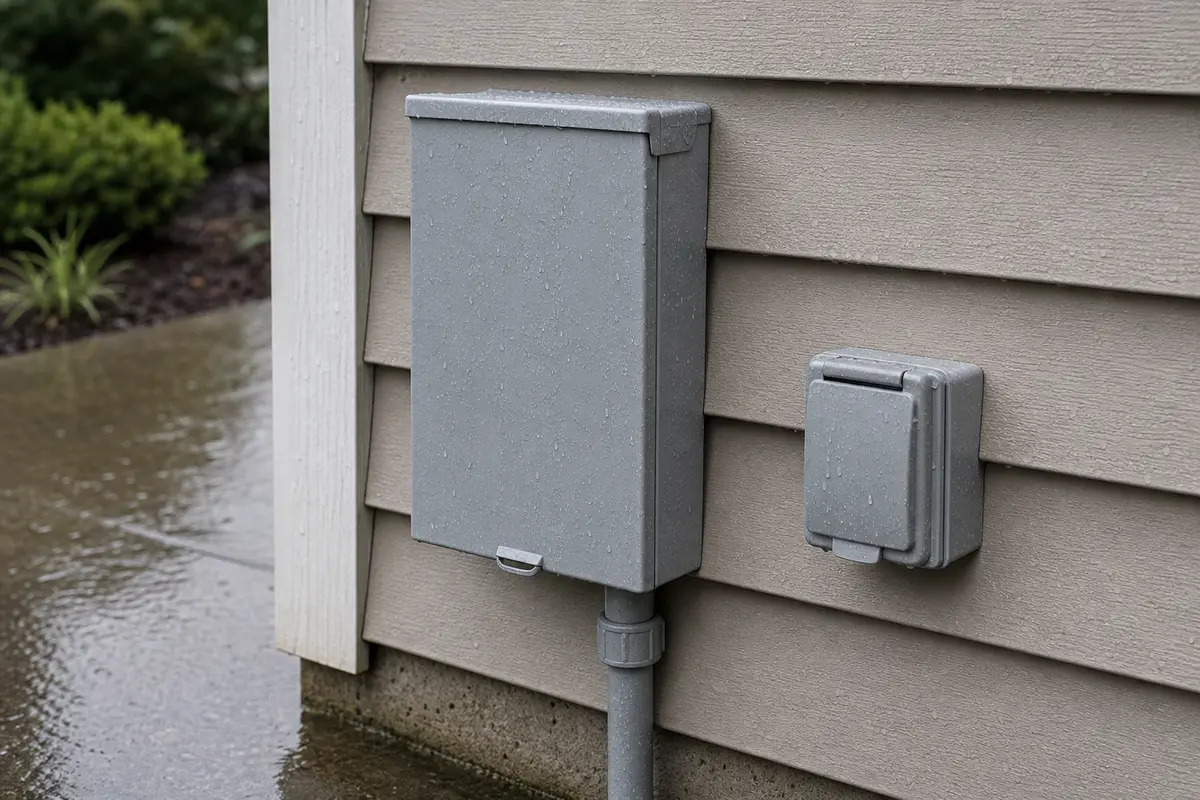
Outdoor breaker panel beside a rain-wet exterior receptacle cover
A rain-only trip usually points outside first. Do not open the panel; look for wet covers, cords, fixtures, and boxes.
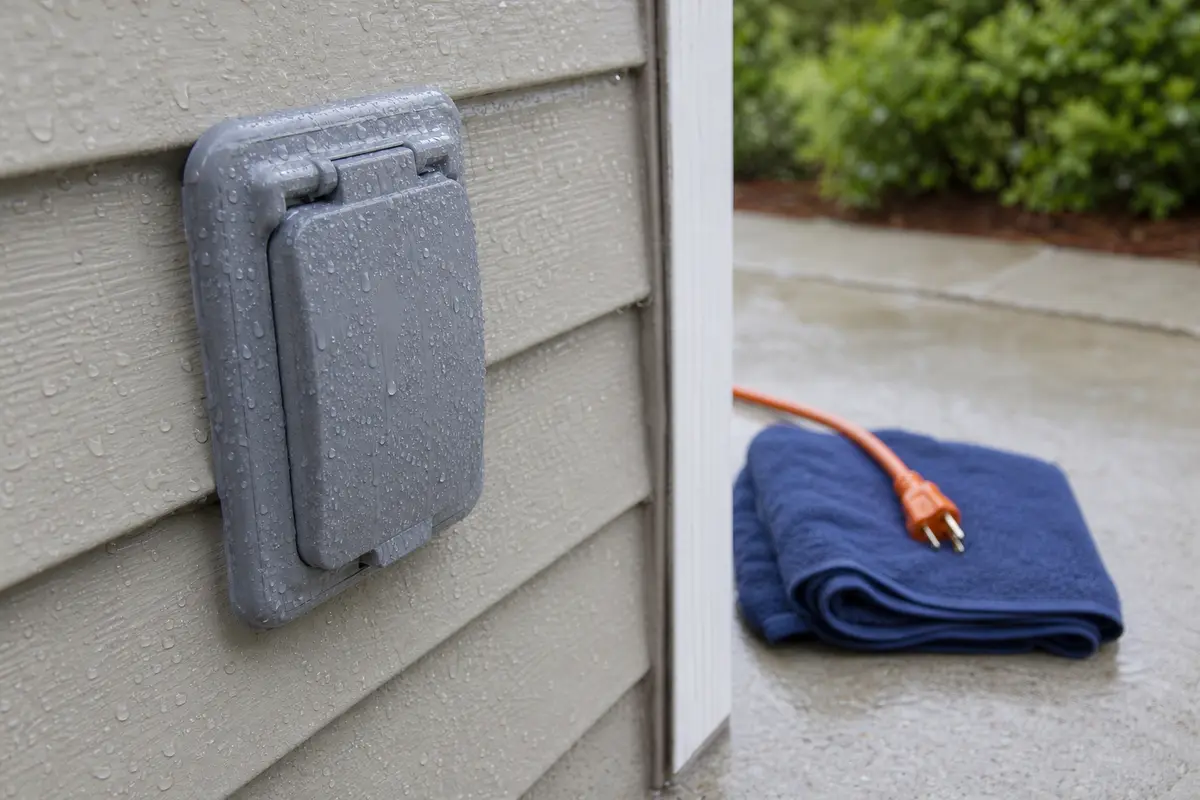
Wet outdoor GFCI cover with an unplugged cord after rain
Unplug cord-connected outdoor loads before any reset attempt. If the breaker holds after that, the load or cord deserves attention.

Before you buy anything

Do not buy a breaker, receptacle, GFCI, or cover from the rain pattern alone. First separate plug-in loads from fixed wiring, document the wet clue, and match any part to the exact diagnosis.

What the rain pattern means

A breaker that holds in dry weather and opens during rain is giving you a location clue. Start where water can reach electrical parts, not inside the panel.

  • Outdoor receptacles and in-use covers move to the top of the list when the trip follows rain.
  • A cord end lying on a patio, deck, mulch bed, or garage floor can trip the circuit even when the house wiring is fine.
  • Porch lights, flood lights, soffit lights, and exterior boxes can leak at the top edge, mounting screws, conduit entry, or cracked fixture body.
  • If all plug-in loads are removed and the breaker still opens, the problem is no longer a simple cord or appliance check.
  • Water near the panel, meter, service mast, or service disconnect is a stop point, not a clue to investigate closer.

What not to do first

Rain-related trips get expensive and risky when the first move is a guess.

  • Do not replace the breaker because the trip happens in bad weather.
  • Do not open the panel cover, remove a receptacle, or pull a hardwired fixture from the wall.
  • Do not tape a wet cover shut or seal a fixture in a way that traps water inside.
  • Do not dry energized electrical parts with a hair dryer, heat gun, air hose, or leaf blower.
  • Do not put a wet pump, charger, string-light run, or extension cord back in service because it worked before the storm.
  • Do not buy a GFCI, breaker, or cover until the symptom points to that exact part.

Rain-trip checks

Use one clean pass to split a wet plug-in load from fixed wiring.

What happensLikely meaningNext move
Breaker holds after every outdoor load is unpluggedOne disconnected load, cord, plug, transformer, or pump is the better suspectKeep those items out of service and inspect them dry before using them again.
Breaker opens with all reachable loads unpluggedThe fault may be in a wet receptacle, fixture box, buried run, hidden splice, or service-side areaLeave the breaker off and call a licensed electrician.
Trip starts only with one pump, charger, holiday-light run, or extension cordThat equipment or cord connection is getting wet or damagedDo not reuse it until the cord, plug, and equipment have been repaired or replaced.
Trip follows wind-driven rain more than light rainWater may be blowing past a side-facing cover, fixture base, wall penetration, or top seamCheck weather-facing walls and fixture bases with the breaker off.
Breaker will not hold the next dry dayMoisture, damaged insulation, corrosion, or a failed device may still be presentStop homeowner checks and document the pattern for the electrician.

Inspect covers and fixtures with power off

The useful homeowner check is visual and dry. You are looking for the place rain entered, not taking electrical parts apart.

  • Turn the breaker fully off before inspecting covers, cord ends, fixture lenses, and visible boxes.
  • Look for water droplets, rust stains, mineral tracks, dirt washed into the cover, missing screws, cracked plastic, or a cover that sits crooked.
  • Check the underside of in-use covers and the plug pocket where water can sit around a cord cap.
  • Look at exterior light lenses for fogging, pooled water, rust streaks, cracked housings, and loose mounting bases.
  • If a device box looks wet inside, burned, corroded, or saturated, leave the breaker off and stop there.

Call sooner for panel, meter, or hidden wiring clues

Some rain-trip clues are too close to service equipment or too hidden for homeowner troubleshooting.
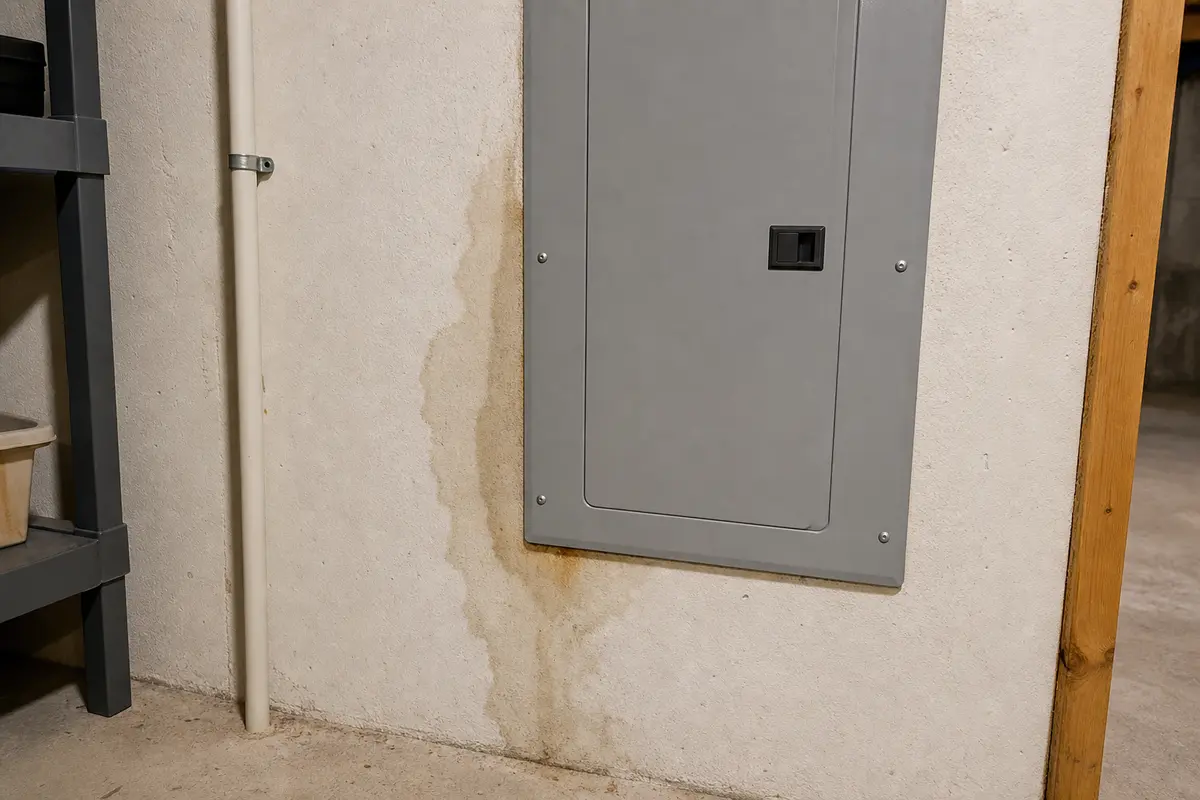
Closed electrical panel with water staining on the wall beside it
Water staining near a panel changes the job. Leave the cover closed and bring in an electrician before more reset attempts.
  • Call if the panel area, meter area, service mast, service disconnect, or wall around the panel is wet or stained.
  • Call if the tripping circuit feeds a detached garage, shed, buried cable, pond pump, gate opener, or landscape-lighting run you cannot fully see.
  • Call if you see scorch marks, melted plastic, buzzing, crackling, a hot breaker handle, or a burning smell.
  • Call if more than one breaker, the main breaker, or unrelated parts of the house are affected.
  • A licensed electrician can isolate the wet section and test the wiring instead of swapping visible parts.

Tools You May Need

These are for mapping and no-disassembly checks only. They do not make wet electrical work safe.

Inspection flashlight for breaker trips during rain

Inspection flashlight

Helps when: Use it to see water tracks, rust, cracked covers, loose fixture bases, and cord-end damage without touching wet equipment.

Skip it when: Skip the inspection if you would need to reach across standing water, open a box, or work near wet service equipment.

Compare inspection flashlights on Amazon
Non-contact voltage tester for breaker trips during rain

Non-contact voltage tester

Helps when: Use it as a no-touch check around an accessible dry receptacle after the breaker has been turned off.

Skip it when: Skip it if the device is wet, the box must be opened, or the reading would decide whether you work on wiring.

Compare voltage testers on Amazon
Circuit label kit for breaker trips during rain

Circuit label kit

Helps when: Use it after the problem area is identified so the outdoor circuit, GFCI location, and connected loads are easy to isolate next time.

Skip it when: Skip it until the fault is found; labels do not repair a wet circuit.

Compare circuit label kits on Amazon

As an Amazon Associate I earn from qualifying purchases. Repair Riot may earn a commission at no extra cost to you.

What to tell the electrician

Good notes shorten the service call and reduce parts guessing.

  • Which breaker trips and what loses power.
  • Whether the trip follows light rain, heavy rain, wind-driven rain, or the hours after a storm.
  • Every outdoor outlet, exterior light, garage receptacle, shed feed, pump, charger, and landscape-lighting transformer on the circuit.
  • Whether the breaker held after all reachable outdoor loads were unplugged.
  • Photos of water tracks, wet covers, fogged fixtures, damaged cords, and any panel-area staining.
  • Any heat, odor, buzzing, corrosion, or arcing you noticed before leaving the breaker off.

FAQ

Does a breaker tripping during rain mean the breaker is bad?

Usually no. A rain-only trip more often starts at a visible wet point. Look for droplets inside an in-use cover, rust at a light base, a cord cap on wet decking, or a pump or charger lead in damp soil.

Can I reset the breaker once to see what happens?

Only after you are dry, the area around the panel is dry, and you have unplugged reachable outdoor loads. If it trips again, leave it off. Do not use repeated reset attempts as a diagnostic method.

What if the breaker only trips when my outdoor lights or pump are plugged in?

That points to the item you just unplugged. Check its cord jacket, plug blades, cord cap, transformer case, pump housing, and the surface it was resting on. Leave it out of service until the wet or damaged part is repaired or replaced.

Why does it trip only in wind-driven rain and not every storm?

Sideways rain often leaves a track at the top hinge of an in-use cover, behind a porch-light base, along a conduit entry, or under a loose wall penetration. Those marks matter more than a cover that only looks dry after the storm.

Should I replace the outdoor outlet myself if I find water in the cover?

Not as a first move on a rain-trip circuit unless you are fully comfortable and the situation is straightforward. Water in the cover may be the whole problem, or it may be a sign of a deeper box, wiring, or sealing issue. If there is corrosion, heat damage, or uncertainty, leave the breaker off and call an electrician.

What if nothing outside is plugged in and the breaker still trips during rain?

Then the fault may be inside a fixed box, exterior fixture, hidden splice, buried cable, or service-side area you cannot inspect safely from the surface. Leave the breaker off and give an electrician your wet-location notes.

What if a GFCI outlet trips at the same time?

That still points toward a ground-fault path. Look for moisture at the receptacle pocket, the cord end, the cover gasket, or the downstream outdoor load; resetting the GFCI does not dry or repair that wet path.

Can a loose outdoor cover cause a breaker trip?

Yes. A cracked cover, missing gasket, warped in-use cover, or loose box can let rain reach the receptacle or cord connection. With the breaker off, look for droplets, rust, water tracks, insects, or a cover that will not close flat.

How long should I wait after rain before trying again?

Dry time is not a repair. If the breaker holds only after the weather clears, you still need to find the wet device or connected load. If it will not hold the next dry day, leave it off and call an electrician.

How this guide was built and sourced

Repair Riot built this page around visible rain clues: outdoor covers, cord-connected loads, exterior fixtures, hidden wiring stop points, and service-equipment moisture. These sources support the safety boundaries.