Does a full basin drain slowly or get louder as it empties?
Work under the sink first. Clean the strainer, disposal outlet if present, P-trap, and trap arm before chasing the vent.
A kitchen sink drain usually whistles when water pulls air through a narrowed or leaky drain path. Start under the sink with the strainer, disposal outlet, P-trap, slip-joint washers, and wall stub-out before blaming the roof vent.
Most of the time, grease and food film have narrowed the trap or the first run into the wall, especially if a full basin drains slower than it used to.
Release one full basin. Slow flow points to buildup, gurgling elsewhere points deeper, and a sharp joint hiss points to a loose or misseated fitting.
Don’t start with: Do not pour chemical cleaner into a noisy kitchen drain or buy a trap kit just because it whistles. Clean and inspect first; replace parts only when a crack, bad washer, or damaged cap shows itself.
Work under the sink first. Clean the strainer, disposal outlet if present, P-trap, and trap arm before chasing the vent.
The visible sink parts are less likely. Watch nearby fixtures and plan for drain-line or vent diagnosis if the clue repeats.
Dry the cabinet floor, run water, and inspect slip-joint washers, nuts, and any cleanout cap for a small air opening.
Revisit the pieces that moved. A crooked trap, backward washer, loose disposal outlet, or bumped hose can change the sound.
Stop the sink-level repair. That points beyond a normal trap cleanup and deserves a plumber before more water is run.
Use the cabinet view first. The trap, slip joints, wall stub-out, and first drain run tell you more than the sound by itself.
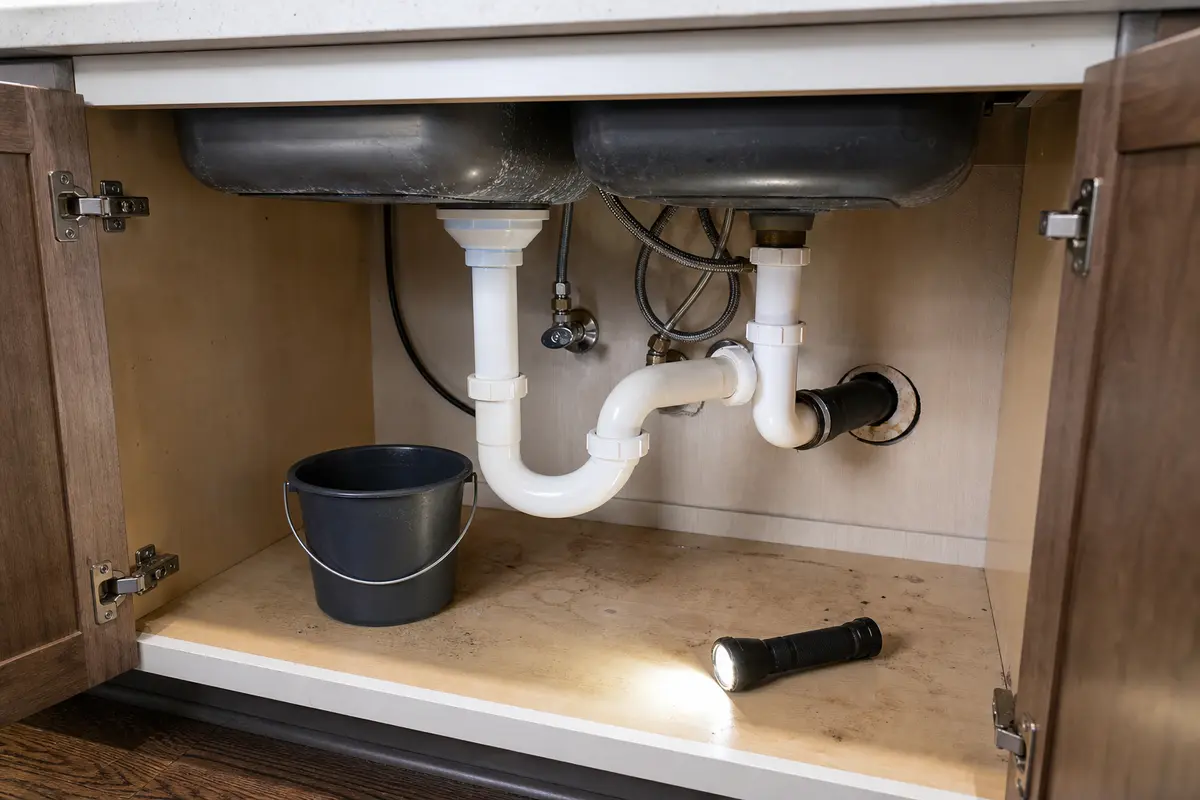
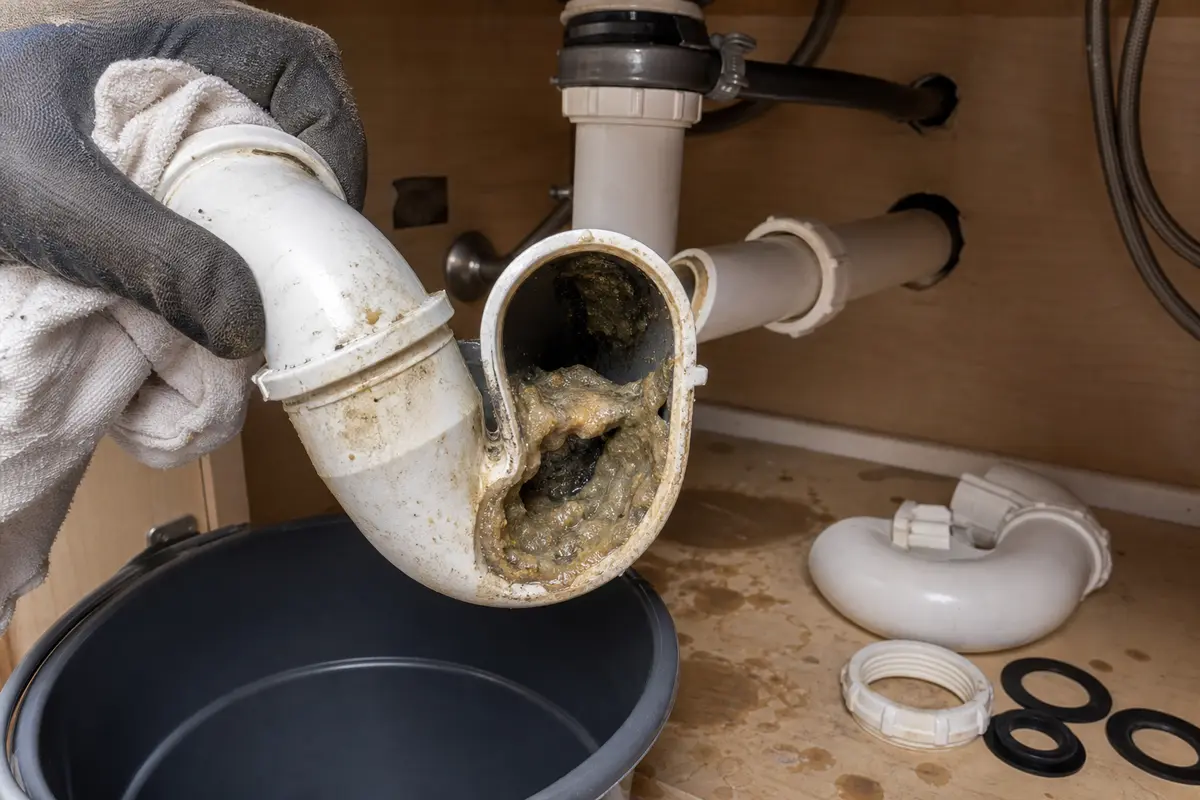
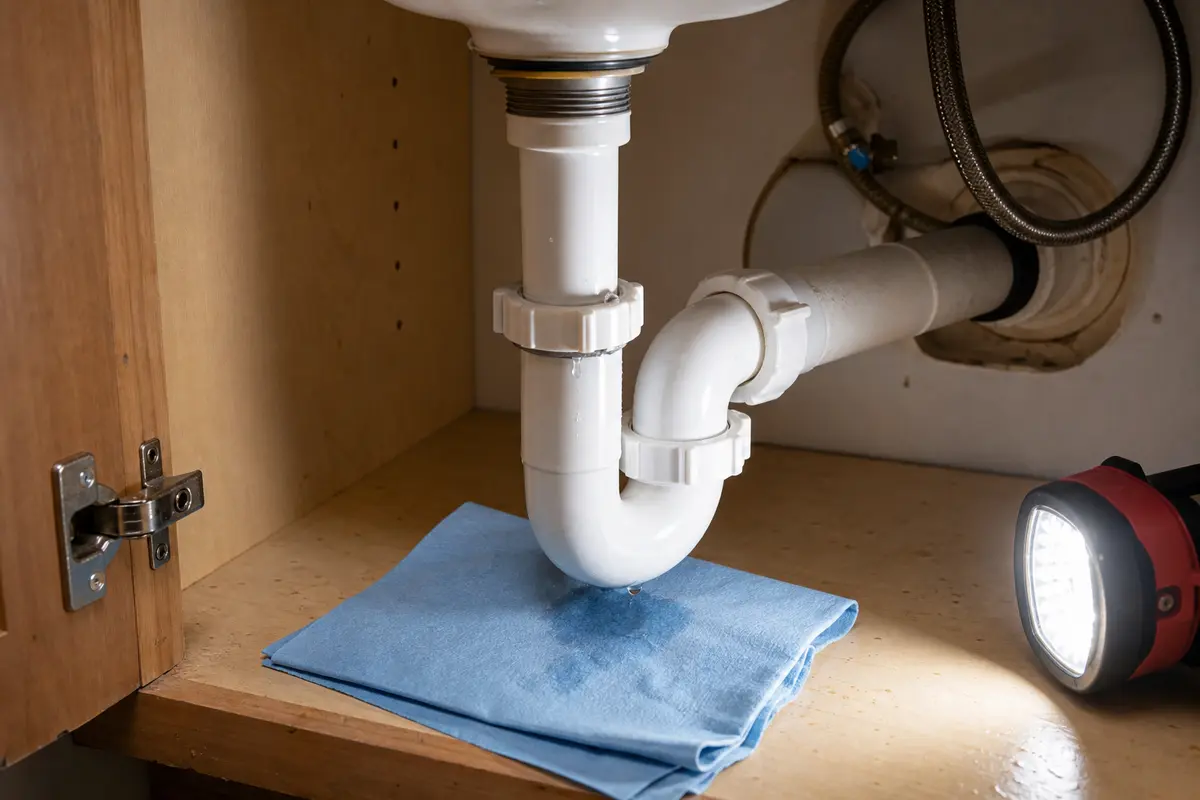
Do not buy a P-trap kit, cleanout cap, washer pack, or vent part until the diagnosis points to that piece. Clean the existing trap, prove whether flow changed, and match replacements to the exact existing pipe size, material, washer style, and cabinet layout.
A kitchen sink whistle is usually an air-and-water clue, not a part name. The drain is either narrowed, the trap assembly is letting air in at a small opening, or the drain system is not moving air well enough while water leaves the bowl.
The bad shortcuts all make the next step messier. Keep the first pass simple: listen, drain one full basin, clean what you can reach, and replace a piece only after the result points to that piece.
Fill the sink partway with hot tap water, then release it while the cabinet is open. Watch the bowl and listen at the trap, wall stub-out, and disposal outlet if you have one.
| What you see or hear | What it usually means | Next move |
|---|---|---|
| Slow drain and whistle grows louder | The trap or nearby drain run is narrowed by grease or food film. | Clean the strainer, disposal outlet, P-trap, and trap arm. |
| Normal drain speed but gurgling elsewhere | The visible sink parts are less likely to be the whole story. | Stop after local inspection and call for drain or vent diagnosis if it repeats. |
| Sharp hiss at a slip joint or cap | A washer, nut, or cap may be letting air in. | Dry the area, reseat the joint, and replace only damaged sealing pieces. |
| Whistle started after recent under-sink work | The trap, disposal outlet, or dishwasher tie-in may be misaligned. | Turn disposal power off, then inspect the parts that moved. |
| Sewer odor or dirty water appears | The issue may be an open drain connection or deeper blockage. | Stop running water and call a licensed plumber. |
Most kitchen sink whistles that come with slow flow are handled at the trap or just beyond it. Set up before opening anything, because the trap holds water, grease, and food debris even when the bowl looks empty.
A tiny air opening can make a sharp sound before it leaves a puddle. This is common after someone removes the trap, bumps the disposal outlet, or tightens a washer crooked.
A local repair should give a clear result. The sink should drain quietly, the cabinet should stay dry, and the bowl should not burp or tug at the trap water after the drain empties.
These tools support the homeowner-level checks on this page. Skip any tool if the drain has chemical cleaner in it, the fittings are breaking, or the clue has moved beyond the cabinet.
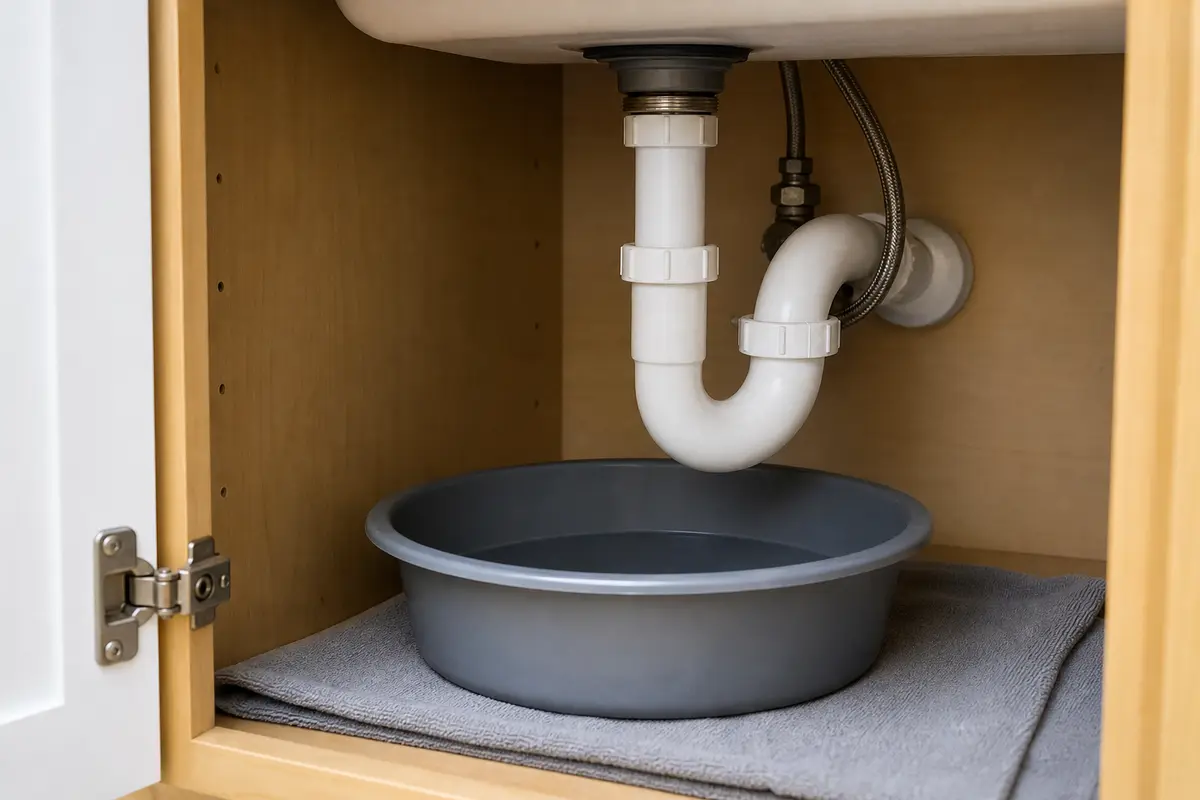
Helps when: Catches trap water and greasy sludge when the P-trap is removed under a tight sink cabinet.
Skip it when: The sink recently had chemical cleaner poured in or dirty water is backing up from another fixture.
Compare low buckets on Amazon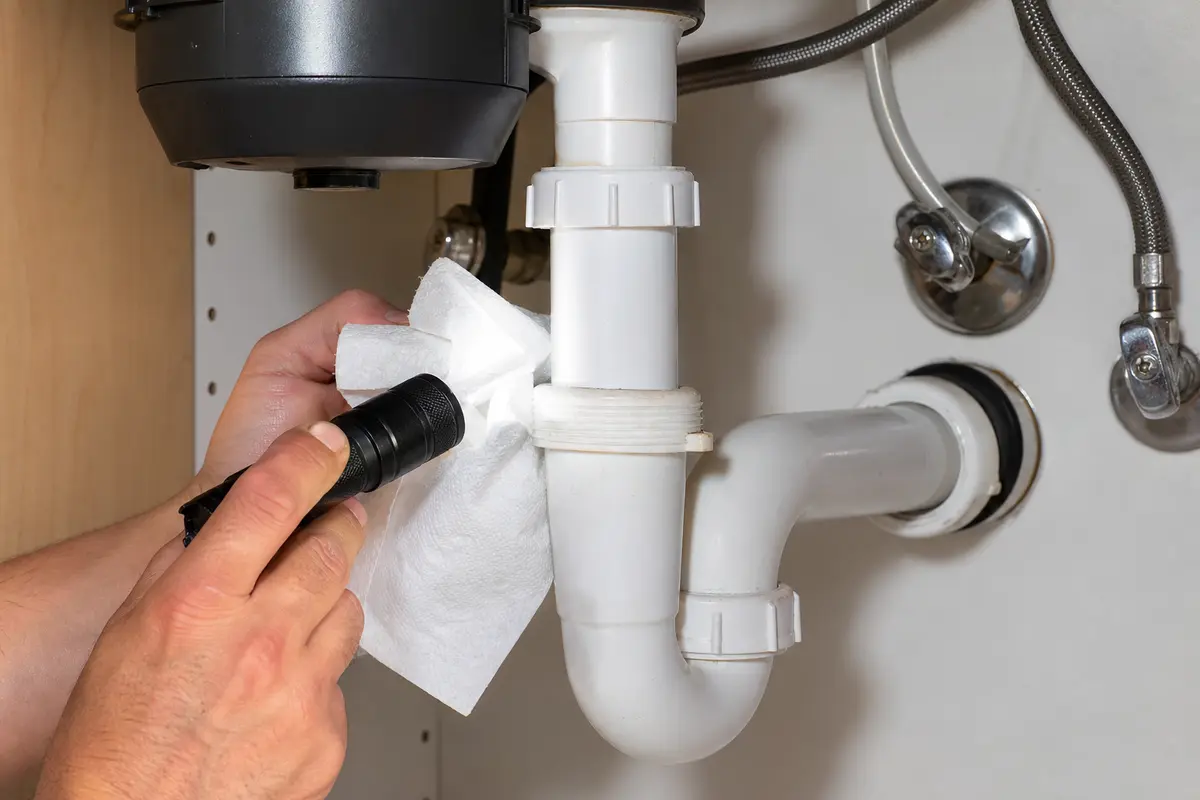
Helps when: Shows fresh damp rings, pinched washers, cleanout cap threads, and the spot where the sound is strongest.
Skip it when: The next inspection requires opening a wall, climbing to a roof vent, or working around unsafe wiring.
Compare inspection flashlights on Amazon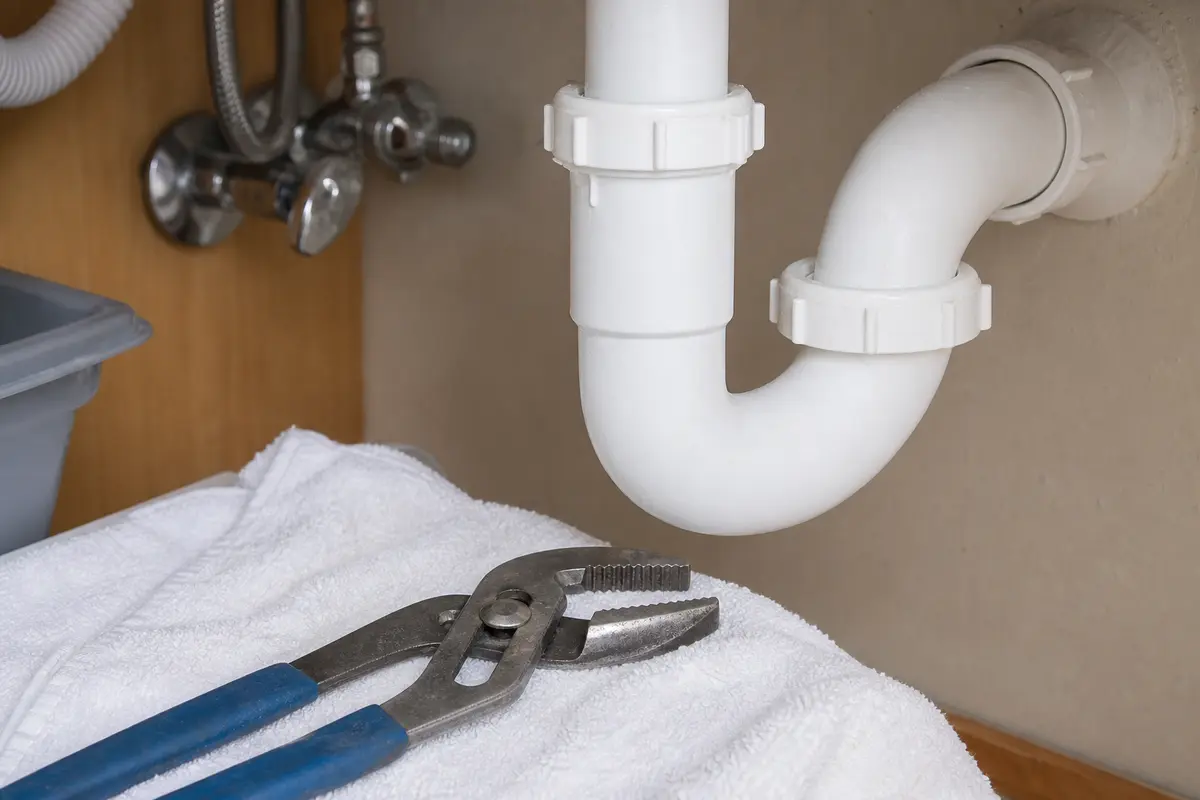
Helps when: Loosens a stubborn slip nut or cleanout cap when hand pressure is not enough.
Skip it when: Plastic fittings feel brittle, the nut is deforming, or extra force would crack the drain assembly.
Compare tongue-and-groove pliers on Amazon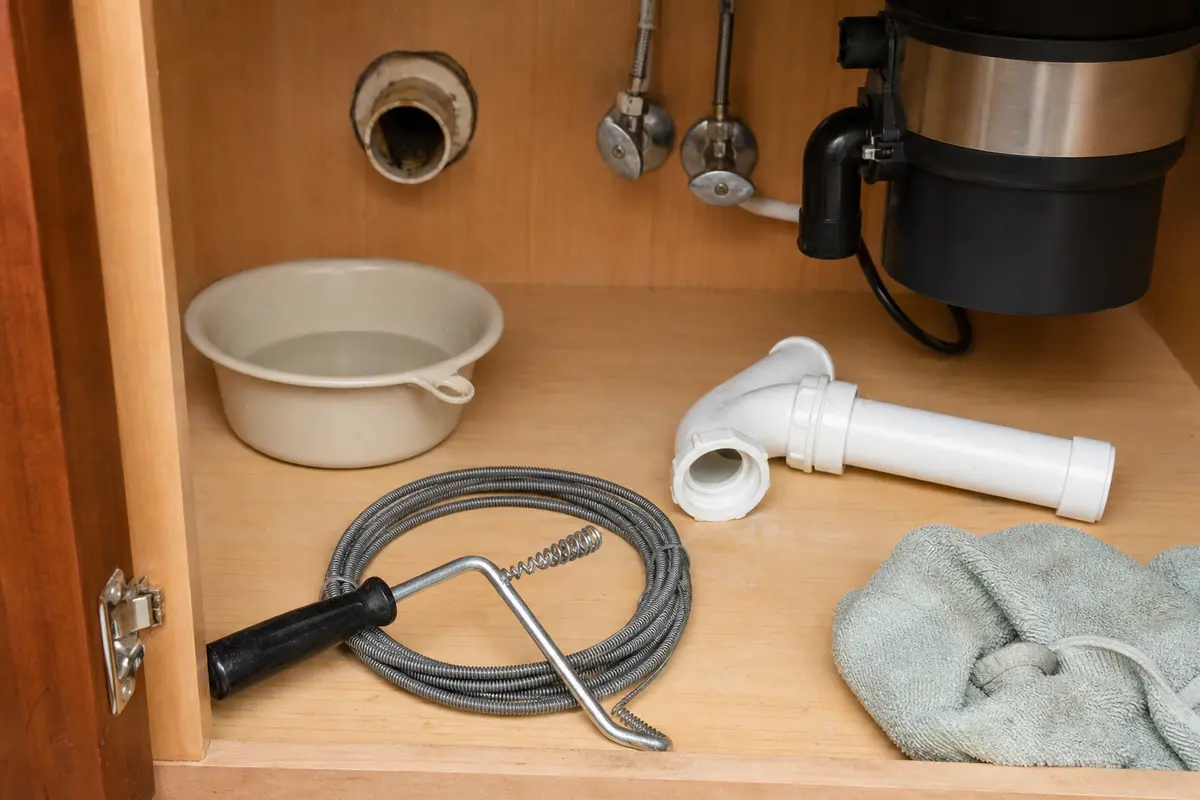
Helps when: Reaches the short drain run after the trap is removed and the trap itself is already clean.
Skip it when: The snake binds hard, water backs up elsewhere, or you are trying to feed it through a garbage disposal.
Compare hand drain snakes on AmazonAs an Amazon Associate I earn from qualifying purchases. Repair Riot may earn a commission at no extra cost to you.
Parts come after the clue, not before it. Match the existing pipe size, material, trap shape, washer style, and cabinet layout; plumbing parts that look close can still seal poorly.
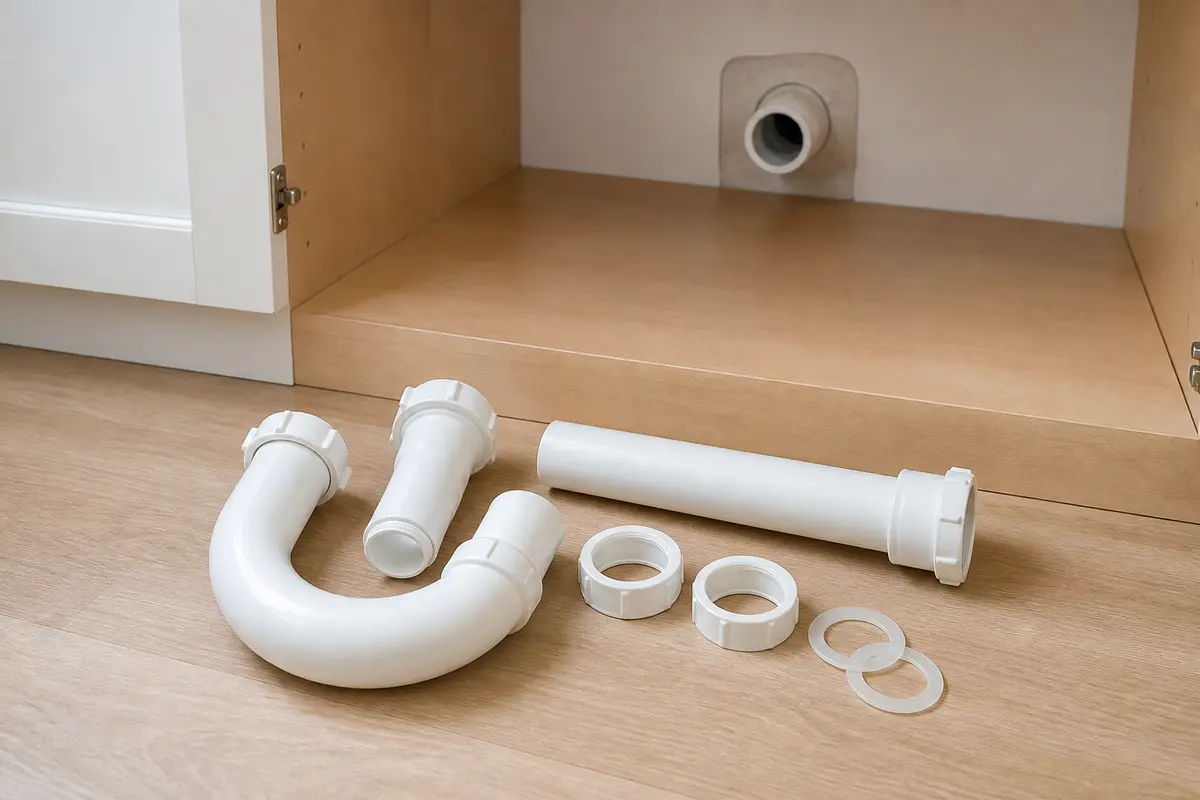
Helps when: The existing trap is cracked, misshapen, packed beyond cleaning, or will not seal after careful reassembly.
Skip it when: The trap is only dirty, the whistle remains after cleaning with normal flow, or other fixtures are involved.
Compare P-trap kits on Amazon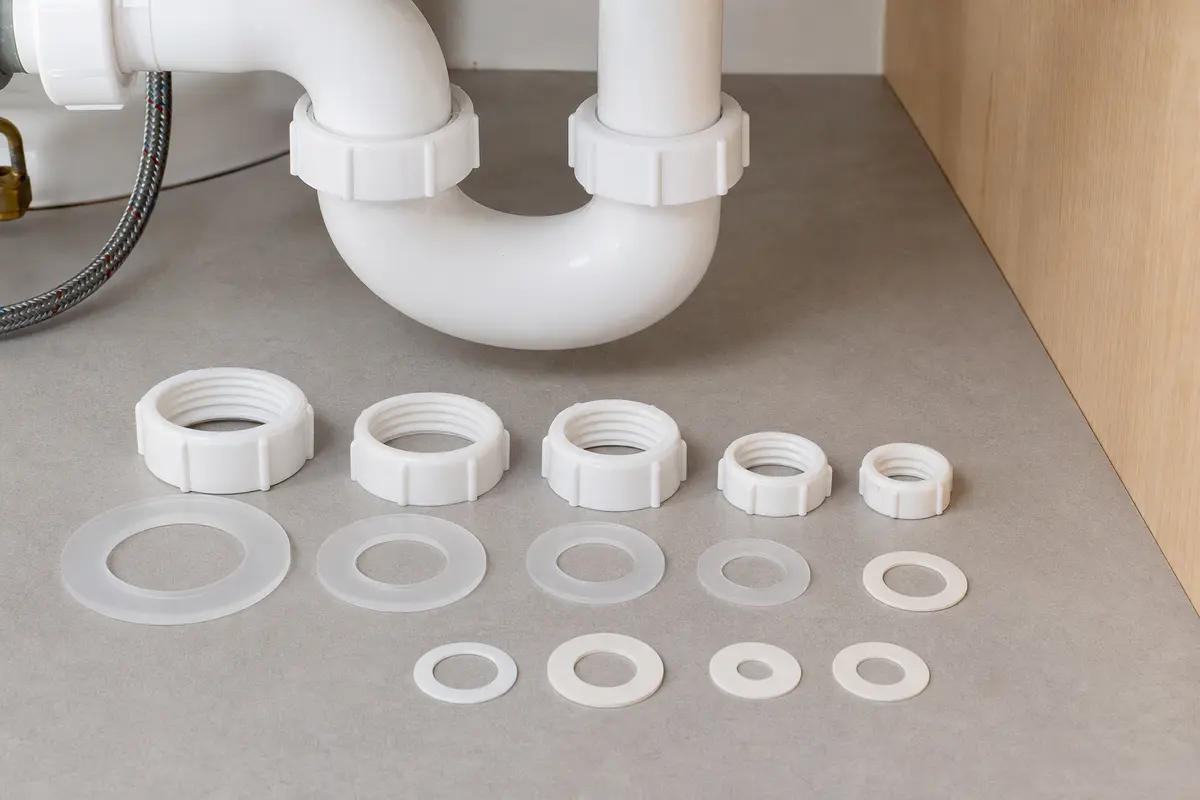
Helps when: A washer is missing, hardened, pinched, split, or no longer seals after the trap is aligned correctly.
Skip it when: The joints are dry and seated well, or the sound is coming from behind the wall instead of the cabinet.
Compare slip-joint washers on Amazon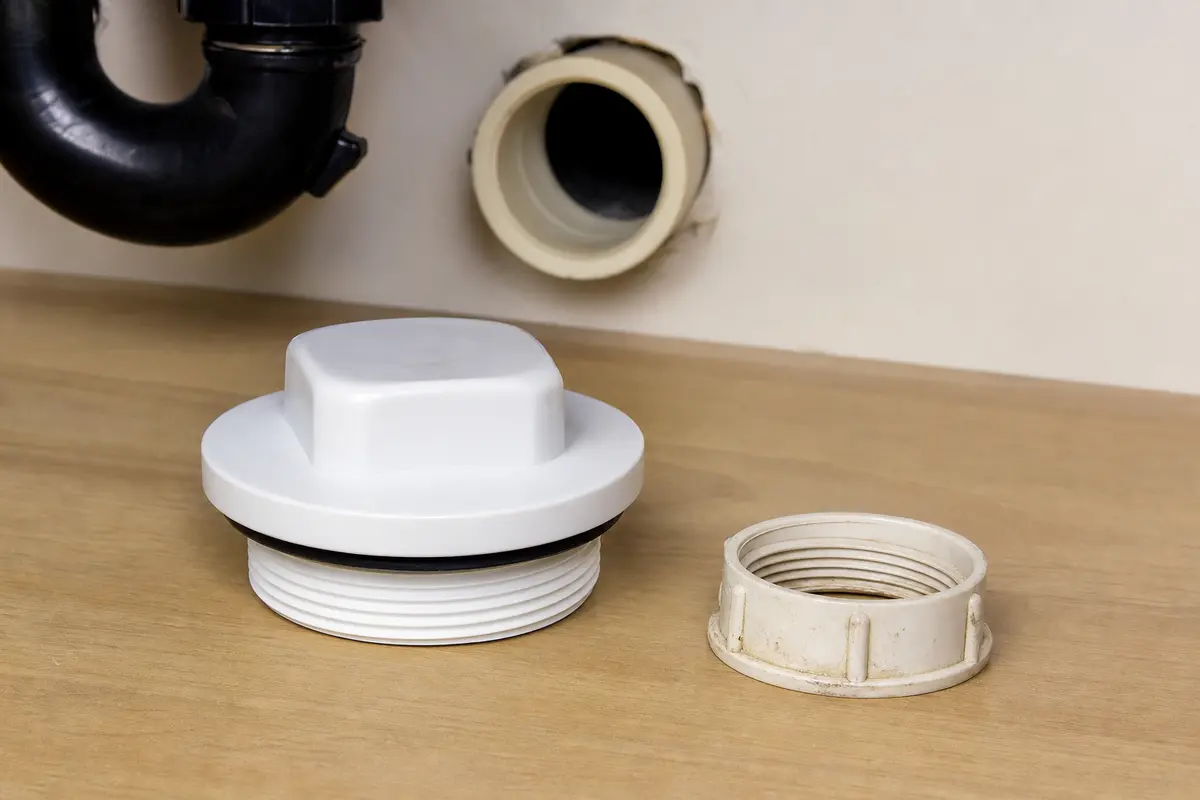
Helps when: A local cleanout cap is cracked, cross-threaded, leaking odor, or clearly hissing at its seal.
Skip it when: There is no local cleanout cap, the cap seats cleanly, or the drain issue points deeper than the sink cabinet.
Compare drain cleanout caps on AmazonAs an Amazon Associate I earn from qualifying purchases. Repair Riot may earn a commission at no extra cost to you.
Usually, water is pulling air through a narrowed or leaky drain path. In a kitchen sink, the first suspects are grease in the trap, buildup just past the trap, a loose slip joint, or a drain system that is not venting well.
Yes. The drain does not have to be fully blocked. A greasy or food-packed opening can be narrow enough to make noise while still letting water through.
No. A vent issue is possible, but slow flow usually points to the trap or the short drain run first. Venting moves up the list when the sink drains at normal speed, other fixtures gurgle, or the sound seems to come from inside the wall.
No, not as a first move. If the trap has to come apart, chemical cleaner can be sitting right where your hands and tools are working. Clean the trap and use a hand snake when the local drain run is the better clue.
It can contribute if food buildup is packed at the disposal outlet or if the outlet connection was moved during a repair. Turn disposal power off before reaching near the opening or outlet.
Look for a crooked trap arm, a backward or pinched washer, a slip nut that is loose or overtightened, or a trap pulled sideways to meet the wall pipe. The pipes should line up without strain.
Only if the trap is cracked, warped, packed beyond cleaning, or will not reseal after careful reassembly. A dirty but intact trap should be cleaned before it is replaced.
Dry the cabinet and listen for a hiss at slip joints or a cleanout cap. If the cabinet stays dry and nearby fixtures gurgle too, stop chasing visible sink parts and have the drain and venting checked.
Call when trap cleaning and a short hand-snake pass do not change the sound, when another fixture gurgles or backs up, when sewer odor stays, or when the next step would require vent work, wall opening, or cutting pipe.
Repair Riot built this page around visible homeowner clues: drain speed, trap buildup, slip-joint fit, odor, backup, and whether nearby fixtures react. The source links support grease, chemical-drain, trap, and vent safety context; the repair sequence is original guidance.