Is only one sink, tub, or shower affected?
Start local. Look for a stopper, strainer, trap, or short drain clog only if nearby fixtures stay normal.
If a sewer drain is backing up, stop adding water and look at the lowest drain first. One clogged sink is a local job; a floor drain, tub, or shower filling when another fixture runs is a service call.
Good clue: one sink, tub, or shower with nearby fixtures normal usually means a local clog. Check the stopper, trap, strainer, and short drain run first. If the lowest drain rises when another fixture runs, stop water use; the blockage is downstream.
Map the pattern before touching parts: one fixture, one room group, or the lowest drain reacting to water used elsewhere.
Don’t start with: Do not flush again, start the washer, open a wet cleanout, or pour chemical cleaner into the drain. More water or harsh cleaner can turn diagnosis into cleanup.
Start local. Look for a stopper, strainer, trap, or short drain clog only if nearby fixtures stay normal.
Stop adding water and compare that group with the rest of the house. A shared drain clog is more likely than a single bad part.
Stop the test. That is the main warning pattern for a downstream restriction and possible sewer backup.
Leave it closed. A cleanout can release wastewater fast if the line is backed up.
Retest with a small flow, then watch the lowest nearby drain. If it stays dry and quiet, the clog was probably local.
If the backup clears briefly and returns, or another fixture starts reacting, stop snaking and stop shopping for traps or caps. That pattern points past a fixture part; call sewer/drain service.
The floor drain, low shower, or first-floor tub tells you whether this is still a local clog or a sewer backup risk. If another fixture makes dirty water rise here, stop testing.
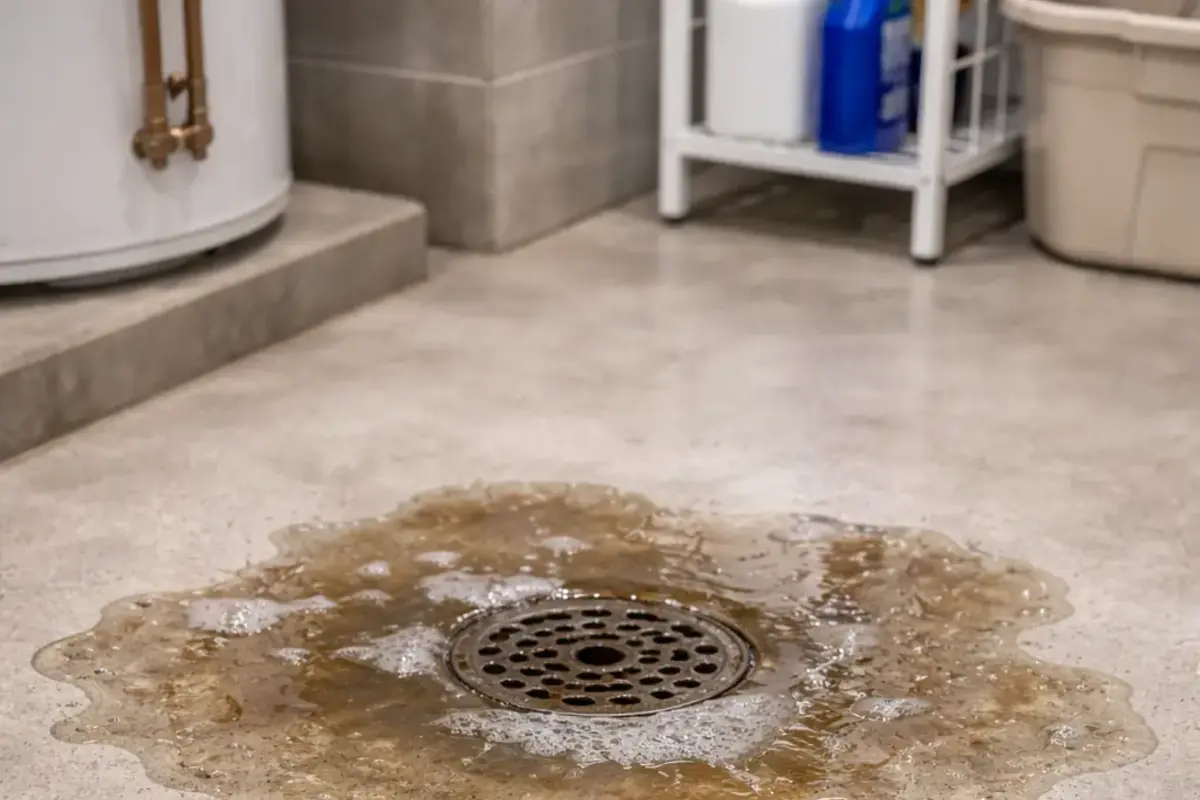
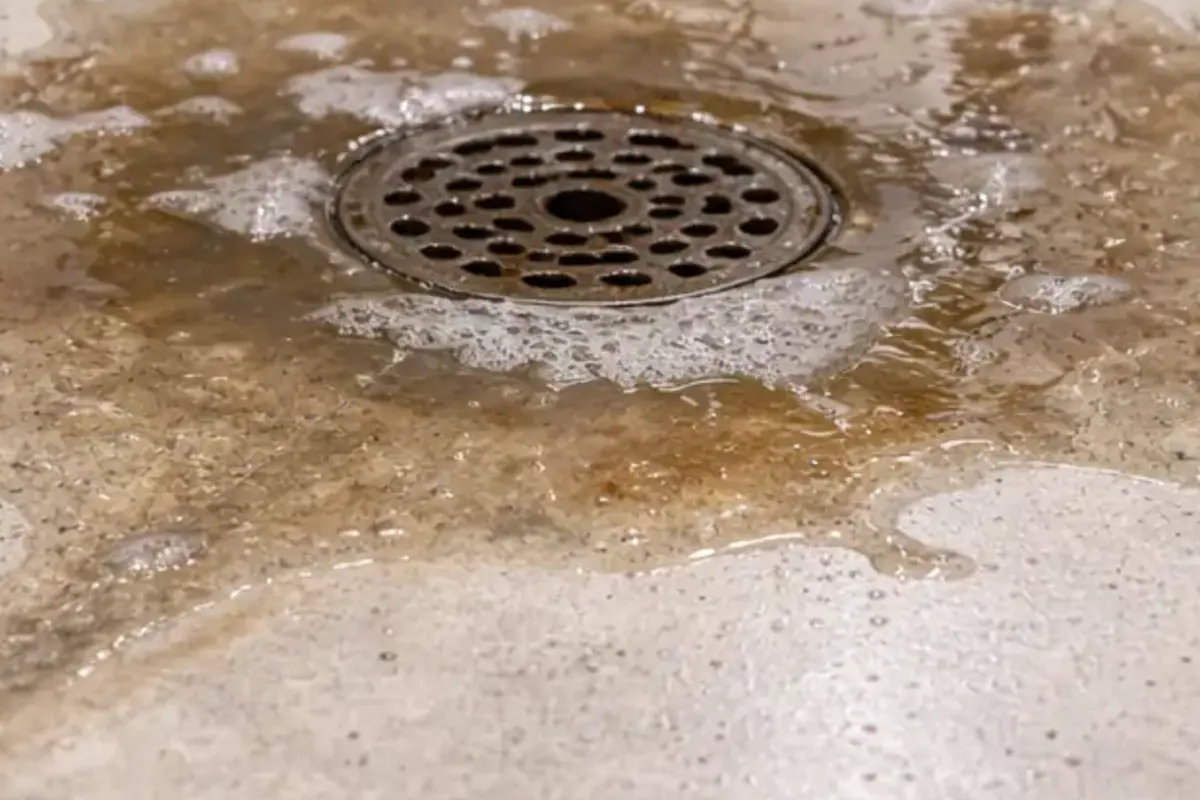
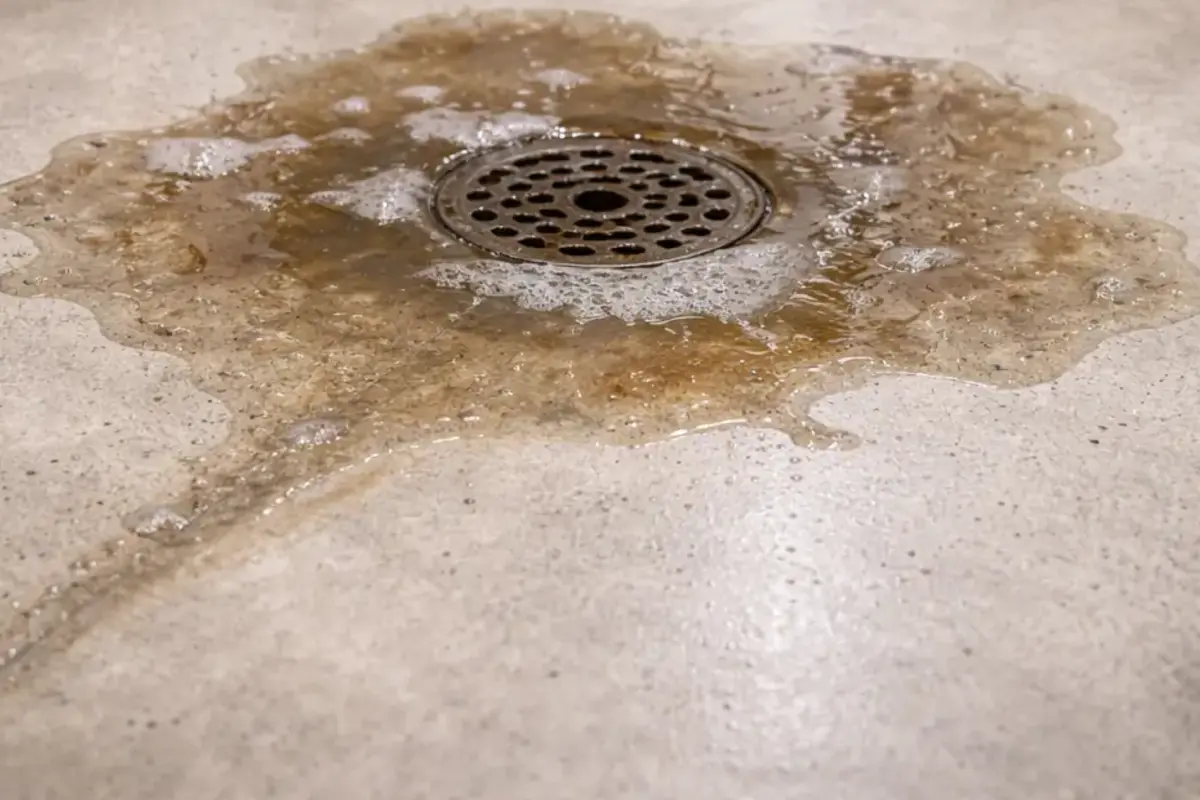
Most sewer backups need clearing and cleanup before parts. Match the exact diagnosis first: the drain runs normally, the backup stayed at one fixture, and the old P-trap or cap is actually damaged. Then match pipe size, thread, material, and connection style.
Wastewater is hitting a point where it cannot move forward. Start by watching the lowest drain: one isolated sink, tub, or shower can be a local clog, but a floor drain, tub, or shower rising when another fixture runs is service work.
The wrong first move can turn a small clue into a bigger cleanup. Keep the first pass quiet: observe, stop water use, and open nothing that may be under pressure.
Use the lowest drain as your warning point. If only one fixture is slow, inspect its stopper, trap, or strainer; if the lowest drain rises when another fixture runs, stop water use and call service.
| What you see | What it usually means | Next move |
|---|---|---|
| One fixture is slow or backed up | Local clog or short drain restriction | Inspect the stopper, strainer, trap, or local access point if it is safe. |
| One room group drains poorly | Shared drain restriction | Stop adding water and avoid buying fixture parts until the group pattern is clear. |
| Lowest drain rises when another fixture runs | Downstream sewer restriction | Stop the test and call sewer/drain service. |
| Cleanout cap is wet or seeping | Possible pressure or damaged cap | Leave it closed until the line is known to be clear. |
| Backup clears briefly and returns | Restriction remains farther down the line | Stop snaking and arrange professional clearing or camera diagnosis. |
Stay with homeowner tools only when the evidence stays small. A sink trap, visible tub debris, or a short local run is different from dirty water crossing fixtures.
A cleanout is useful access for a plumber, not a harmless inspection cap. If it is holding back wastewater, opening it can release the backup at floor level.
These tools are for safe observation and clearly local work. Skip them when dirty water is rising, several fixtures are involved, or any tool would need force at a drain or cleanout.
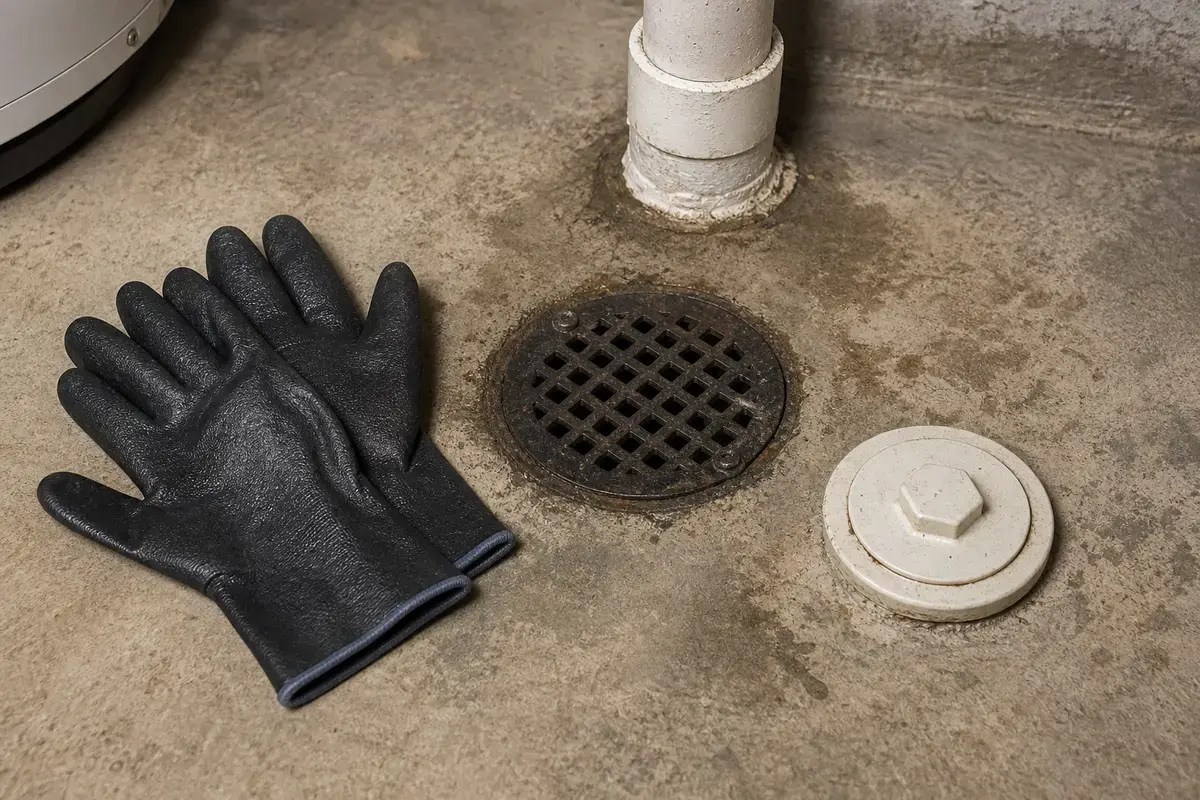
Helps when: Protects your hands when touching drain grates, traps, pans, towels, or parts that may have contacted wastewater.
Skip it when: Wastewater is actively rising or the area is near electrical equipment. Step back and call service.
Compare waterproof work gloves on Amazon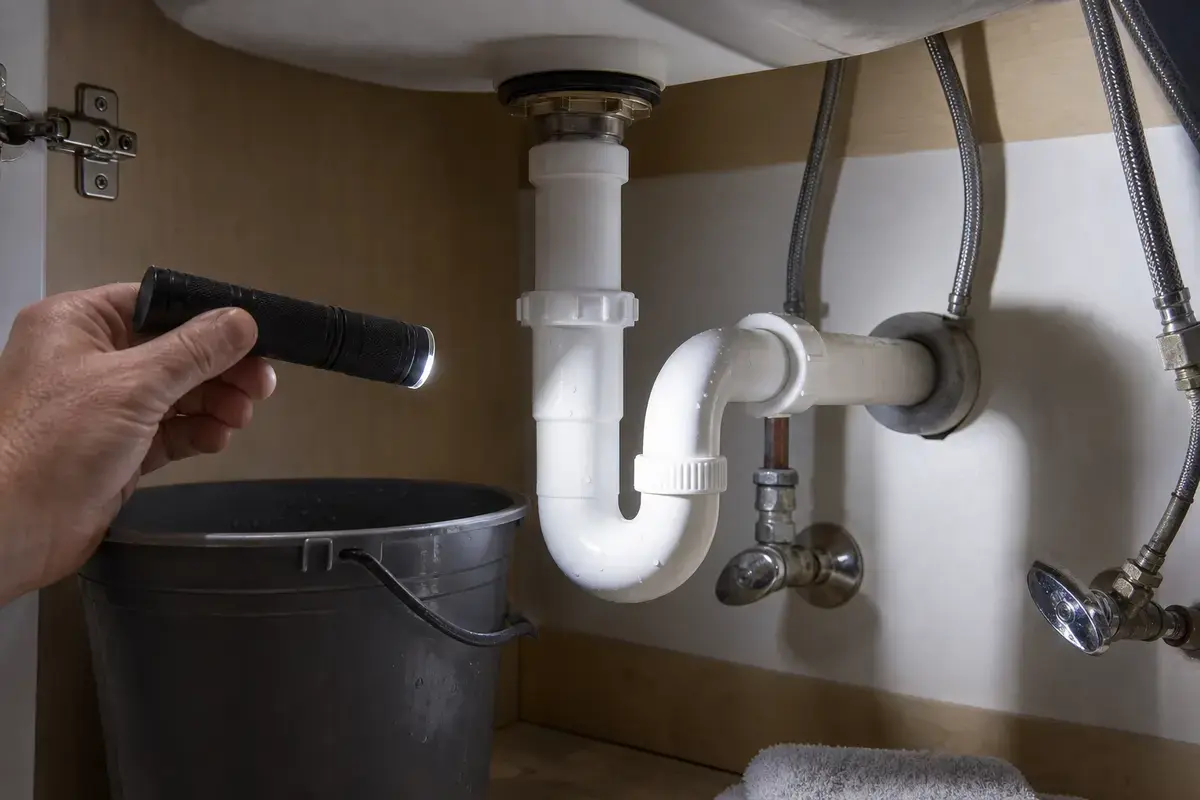
Helps when: Shows whether the lowest drain is wet, the cleanout cap is seeping, or a trap joint is stained before you touch it.
Skip it when: The inspection would require opening a wet cleanout or walking through wastewater.
Compare inspection flashlights on Amazon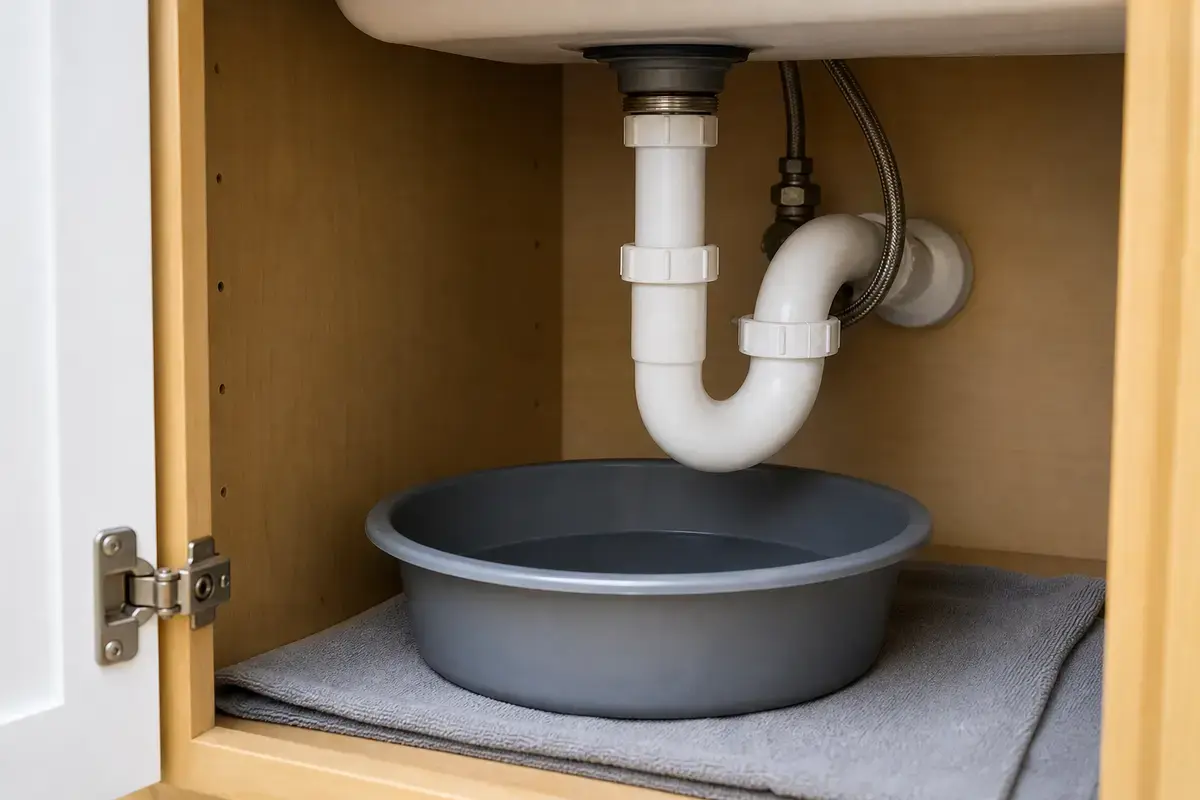
Helps when: Catches trapped water from a safe sink-trap check or a dry local access point.
Skip it when: A floor drain or cleanout is releasing sewage faster than a pan can contain. Step back, keep people out of the wastewater, and call service.
Compare shallow drain pans on Amazon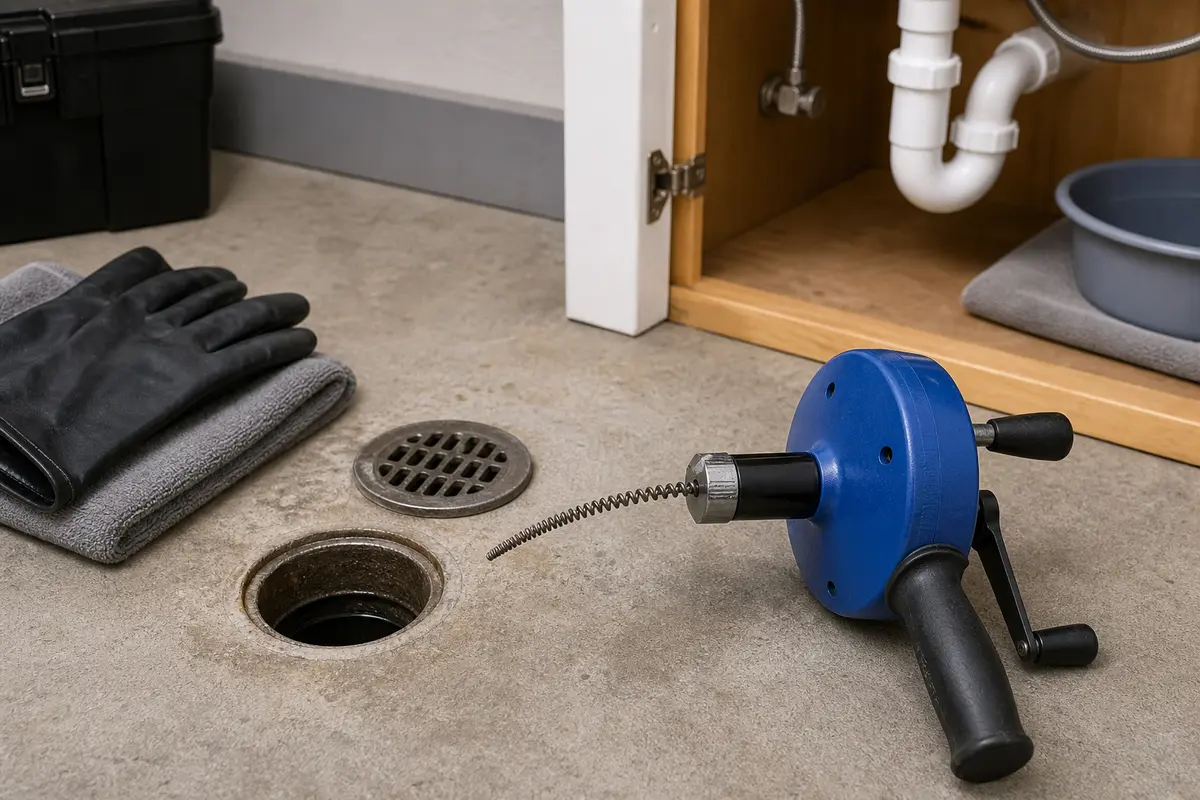
Helps when: Clears a nearby local clog after one fixture stays isolated and a safe access point is available.
Skip it when: More than one fixture is involved, the cable binds hard, or the lowest drain reacts.
Compare hand drain snakes on AmazonAs an Amazon Associate I earn from qualifying purchases. Repair Riot may earn a commission at no extra cost to you.
Parts come after the line drains and the local fitting is proven bad. A new trap or cap will not clear a main sewer restriction.
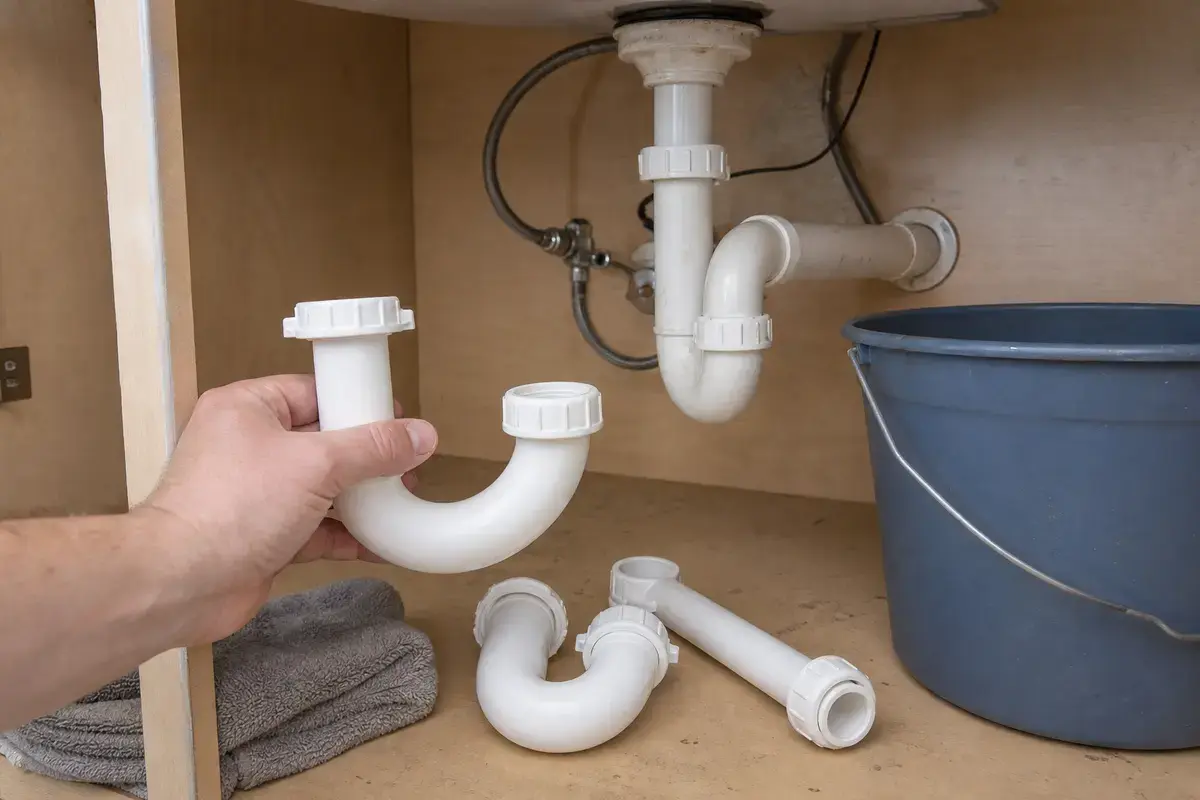
Helps when: A removable local trap is cracked, deformed, corroded, or still leaks after careful reassembly and the backup stayed at one fixture.
Skip it when: The lowest drain rises, several fixtures back up, or the old trap is not the failure point.
Compare drain P-trap kits on Amazon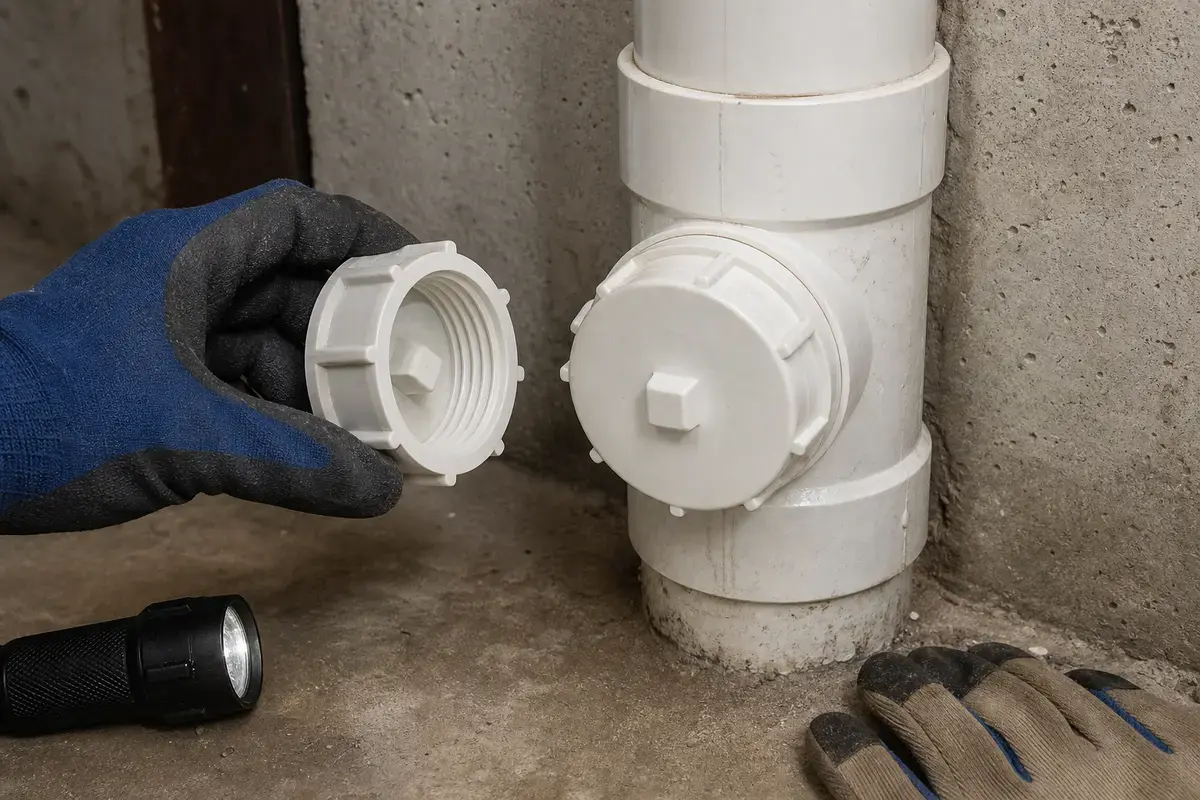
Helps when: A dry, accessible cap is cracked, stripped, missing, or still seeps after the line is confirmed clear.
Skip it when: The cap is wet from backup, nearby drains are rising, or you are unsure whether the line is pressurized.
Compare cleanout caps on AmazonAs an Amazon Associate I earn from qualifying purchases. Repair Riot may earn a commission at no extra cost to you.
A real fix stays quiet during small water use and does not push water into another opening. If the symptom moves around the house, the line is not cleared.
No. If one sink, tub, or shower is the only drain acting up, check the stopper, trap, strainer, or short drain run first. Treat it as a main sewer warning when several fixtures are involved or the lowest drain rises while water is used elsewhere.
The blockage is probably downstream of both fixtures. The tub shows it first because it is a lower opening than the toilet bowl, so stop flushing and watch whether any other low drain reacts before you open a trap or cleanout.
Stop adding water. Do not flush, run laundry, or open a cleanout. Keep people away from the wastewater and call sewer/drain service if the water rises, smells strong, or contains solids.
Not if the cap is wet, seeping, bubbling, hard to loosen, or near a drain that is backing up. A cleanout can release wastewater fast when the line is under pressure.
No. If dirty water is backing up or more than one fixture is involved, chemical cleaner usually will not solve it and can leave harsh liquid for the next hands-on step. Stop adding chemicals and move to the pattern check or a service call.
Check that the backup stayed at one fixture and that a normal access point is available before using a hand snake. Feed the cable gently. Retest with a small flow while you watch the nearby drain. Stop if the cable binds, the clog returns, or another fixture reacts.
Most sewer backups do not start as parts jobs. A P-trap or cleanout cap makes sense only after the line drains and that exact local fitting is cracked, stripped, missing, or leaking.
Yes. If backups or gurgling show up during or after heavy rain, watch the lowest drain and limit water use. The pattern may involve sewer overload, groundwater entering damaged piping, or septic stress, so get the line evaluated if it repeats.
Call when the lowest drain rises, more than one fixture backs up, a cleanout may be pressurized, sewage reaches finished space, or a local snake does not clear the issue cleanly.
Repair Riot built this page around visible homeowner clues: one fixture versus several drains, lowest-drain reaction, cleanout risk, wastewater contact, and restrained parts advice. The source links support sewer-overflow risk and drain-disposal context; the repair sequence is original guidance.