Does the duct jacket or collar get wet first?
Treat it as duct sweating. Check torn vapor jacket, bare cold metal, crushed insulation, loose foil tape, and air leaks at collars.
If an HRV duct is sweating, start by drying the jacket and cabinet, then watch where moisture returns first. Duct beads point to torn insulation, a loose vapor jacket, or air leaks; cabinet water points to the drain, filters, frost, or weak airflow.
A good clue is location: duct beads mean insulation or vapor-jacket trouble; cabinet water means drainage, airflow, or frost.
Dry the cabinet and duct, run it briefly only if safe, then watch for water on the jacket, collar, cabinet seam, or hose.
Don’t start with: Do not wrap over wet insulation, replace the core, or keep running the unit if water can reach wiring.
Treat it as duct sweating. Check torn vapor jacket, bare cold metal, crushed insulation, loose foil tape, and air leaks at collars.
Power off, then inspect the condensate outlet, hose slope, trap, filter condition, and accessible frost marks.
Clean washable filters only if the manual allows it. Replace disposable or damaged filters with the exact size and style.
Clean filters and open grilles are the first check. Heavy or repeated frost after that is service territory.
Look at room humidity and duct insulation more broadly. The HRV may be one cold surface in a damp mechanical room.
Leave power off, contain the water, and bring in service before more testing causes damage or shock risk.
Use the photos as a sorting aid. Duct-jacket moisture, cabinet water, and drain-hose trouble lead to different next checks.
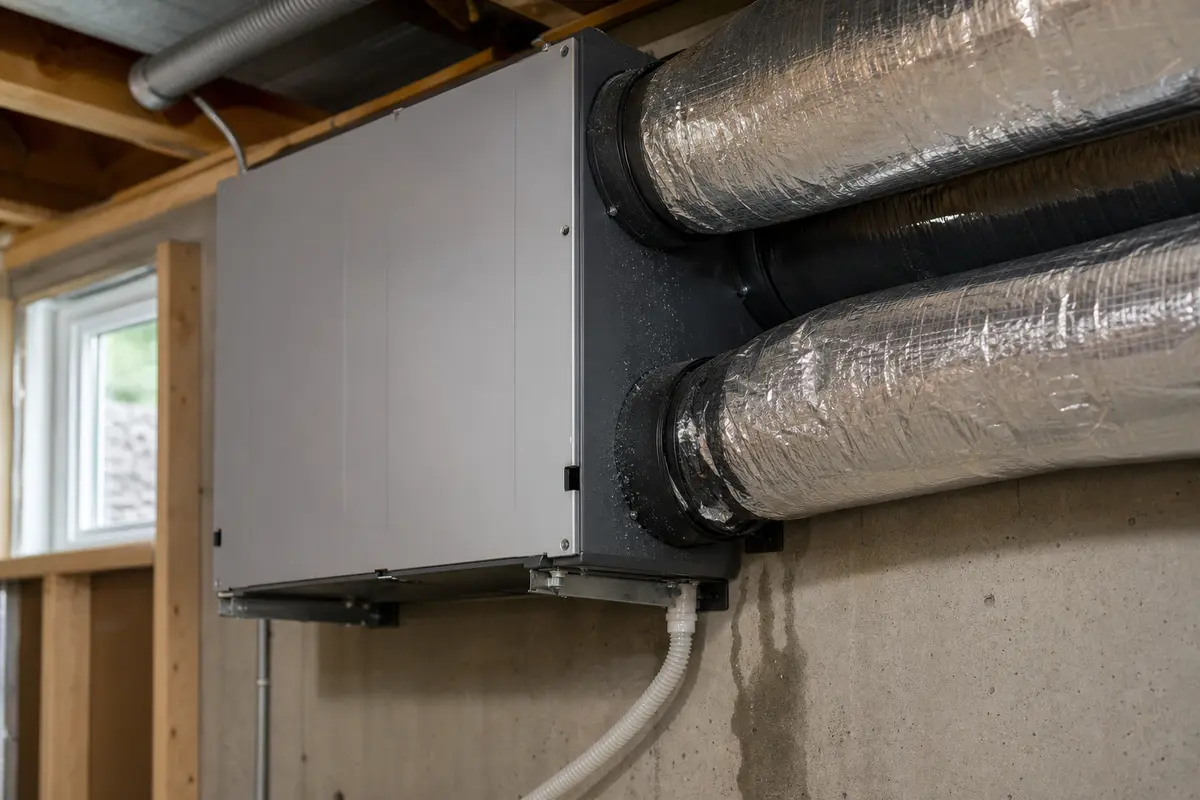
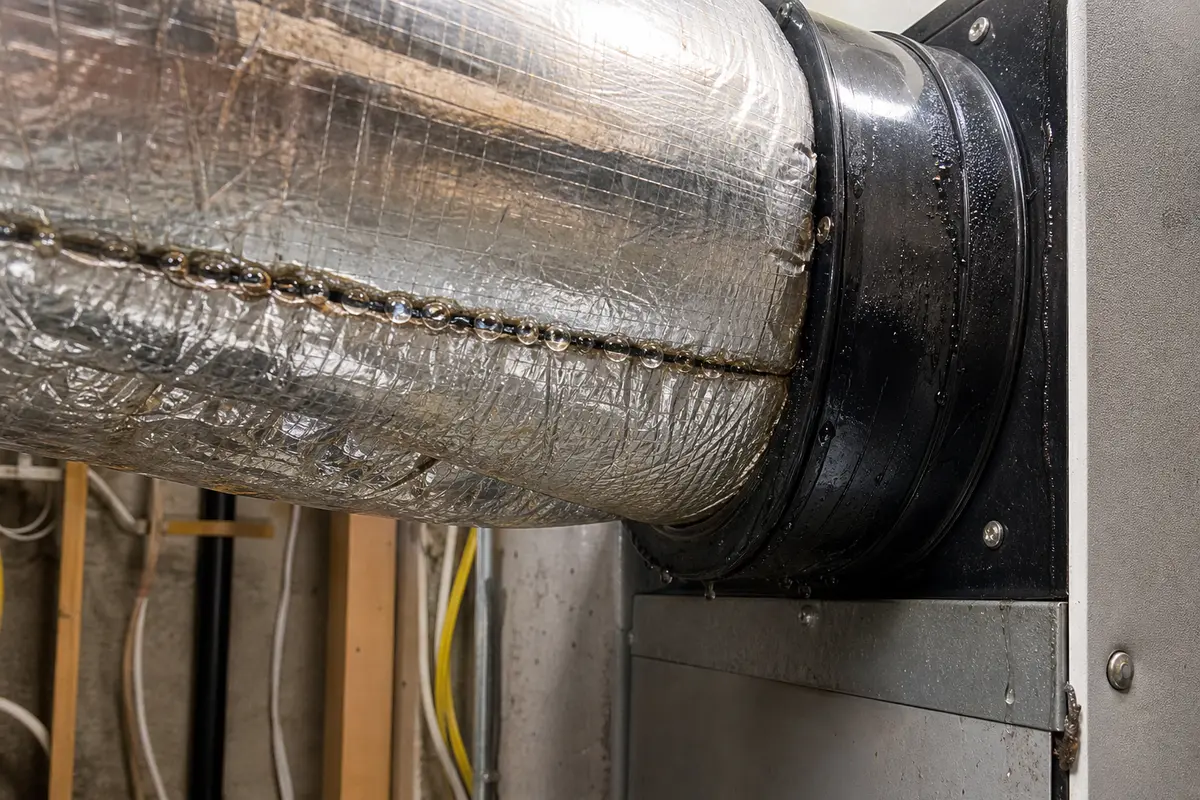
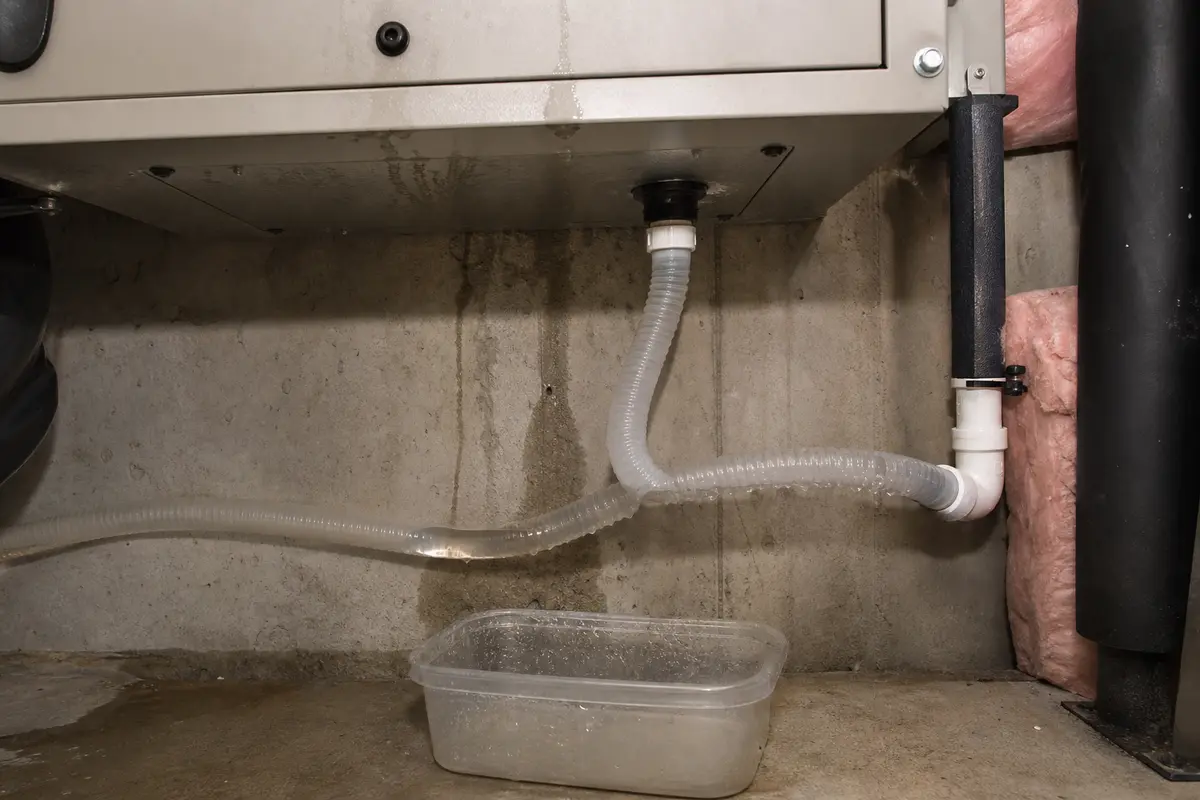
Do not buy an HRV core, fan motor, control board, drain kit, or insulation wrap until the wet spot points there. Copy the exact model number, prove whether water starts on the duct, cabinet, hose, or frost area, and match filters or tubing by size and manufacturer style.
HRV duct sweating is usually a surface-temperature clue, not proof that the ventilation unit failed. Dry the area and compare the first fresh wet spot: cold outdoor-air duct, humid room air, weak airflow, or a slow drain can all leave water nearby.
Dry the cabinet, duct jacket, collars, hose, and the floor below. If the unit can run safely, watch one short cycle and use the first new moisture as the clue.
| First place water appears | Likely path | Next check |
|---|---|---|
| Duct jacket or metal collar | Insulation gap, torn vapor jacket, cold exposed metal, or air leak. | Repair dry jacket seams, replace wet insulation, and seal collars after the area dries. |
| Cabinet bottom or side seam | Water is pooling inside before it reaches the drain. | Check hose slope, trap, filter condition, and accessible frost marks with power off. |
| Condensate hose or trap | Kink, sag, slime, dry trap, or disconnected hose. | Flush only removable hose sections with warm water away from the cabinet. |
| Core or filter area | Restricted airflow, frost, or a panel that is not seated. | Clean or replace filters and stop for heavy ice, fan trouble, or electrical wetting. |
| Several ducts in the room | High room humidity or broader duct-insulation trouble. | Lower the moisture source and inspect nearby cold duct insulation, not only the HRV. |
Poor airflow can make a good HRV act colder than it should. Check the service items that change airflow before you price a core or motor.
Most duct-surface sweating comes from humid air touching cold metal. The repair has to restore both insulation and the outer vapor jacket.
Cabinet water changes the repair path. A clear duct jacket with water below the unit usually sends you to the condensate hose, trap, filter restriction, or frost control.
The wrong shortcut traps moisture or turns a simple maintenance check into a parts guess. Keep the first pass visual, dry, and low-risk.
These tools support the safe checks on this page. Skip anything that would push you into live wiring, moving fans, unstable access, or hidden mold cleanup.
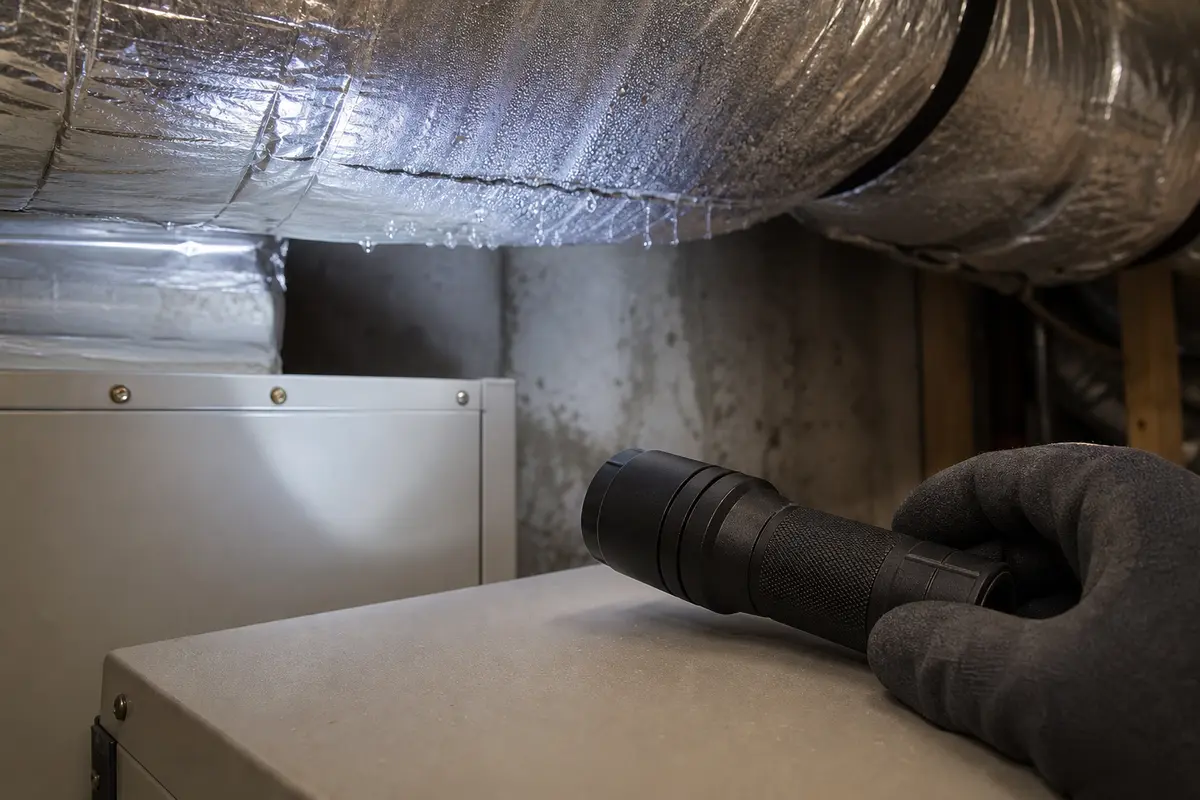
Helps when: You need to trace beads, mineral streaks, wet jacket seams, frost marks, or the first drip under the HRV.
Skip it when: The unit cannot be reached safely or the wet area is near wiring and should stay powered off for service.
Compare inspection flashlights on Amazon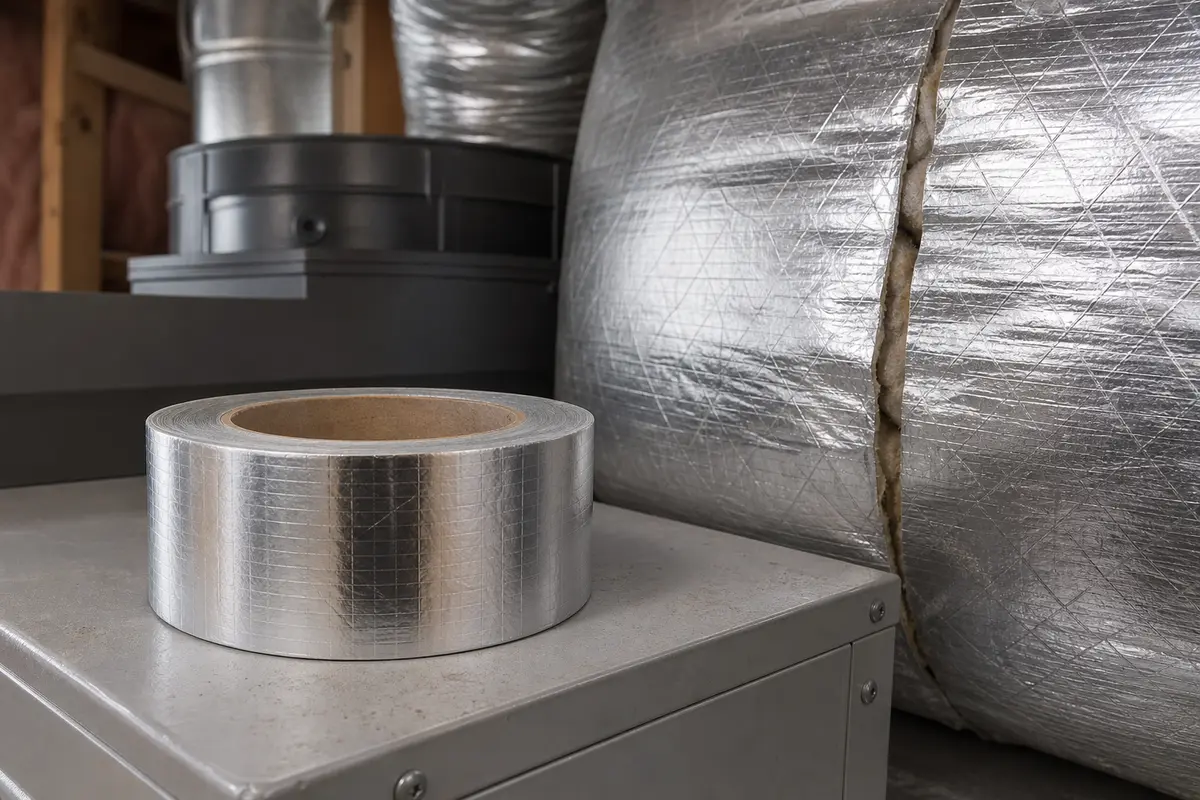
Helps when: A dry vapor jacket seam or small outer-wrap gap needs resealing after the moisture source has been found.
Skip it when: The insulation is soaked, moldy, missing, or the duct surface is still wet under the jacket.
Compare HVAC foil tape on Amazon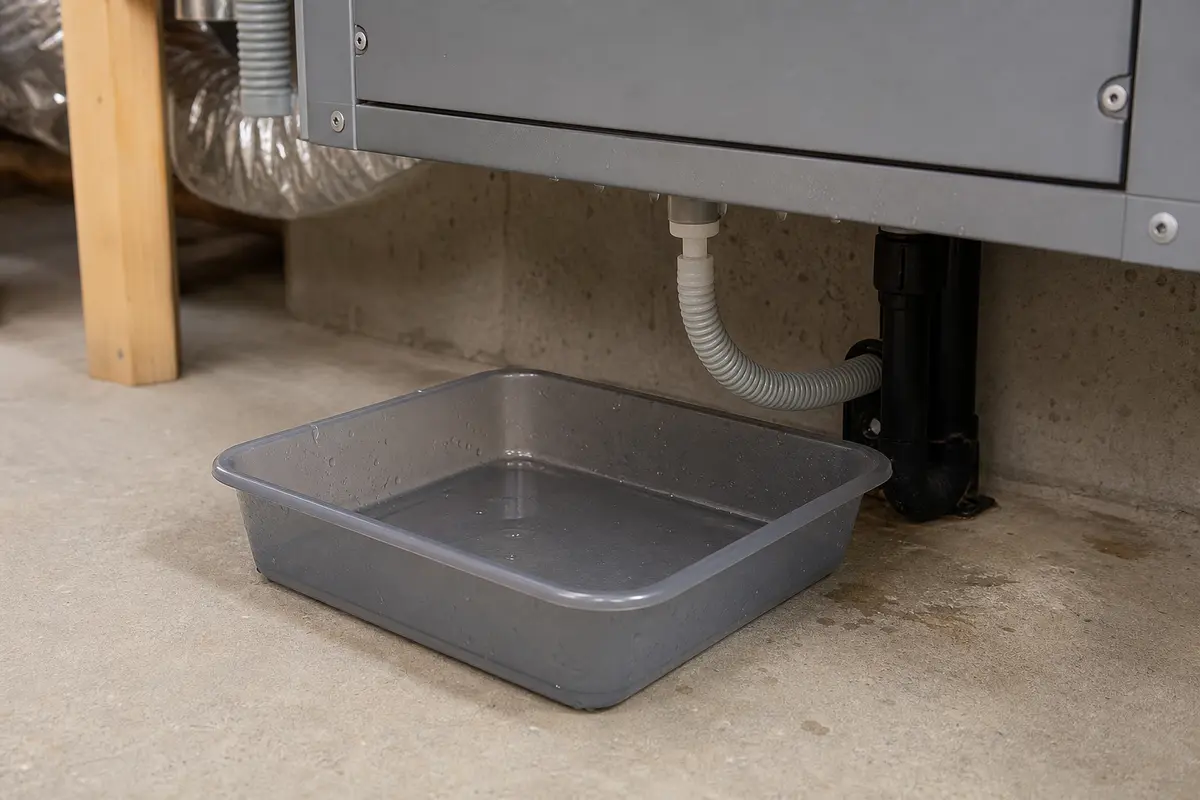
Helps when: An accessible drain hose or trap section can be disconnected safely and may release water during a warm-water flush.
Skip it when: The hose ties into plumbing, the cabinet fitting looks brittle, or water is close to electrical equipment.
Compare small catch pans on AmazonAs an Amazon Associate I earn from qualifying purchases. Repair Riot may earn a commission at no extra cost to you.
Buy parts only after you check where the wet spot starts and which item needs work: filter, hose, trap, or dry duct insulation. Match HRV filters, tubing, and insulation materials by model, size, and route. Keep fan motors, cores, and control boards out of the cart for duct sweat alone.
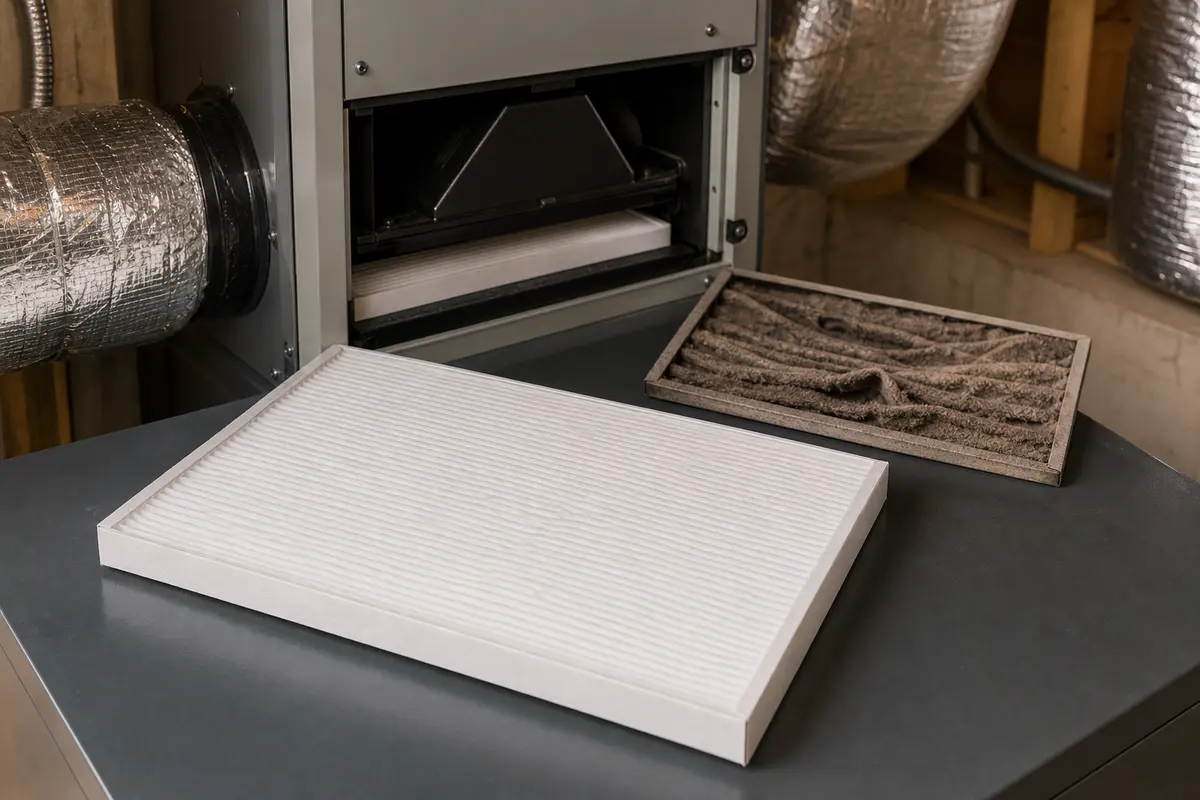
Helps when: The existing filter is disposable, torn, collapsed, packed with dust, or does not clean up according to the unit manual.
Skip it when: The filter is clean and the first wet spot is a duct jacket seam, drain hose, cabinet seam, or heavy internal frost.
Compare HRV replacement filters on Amazon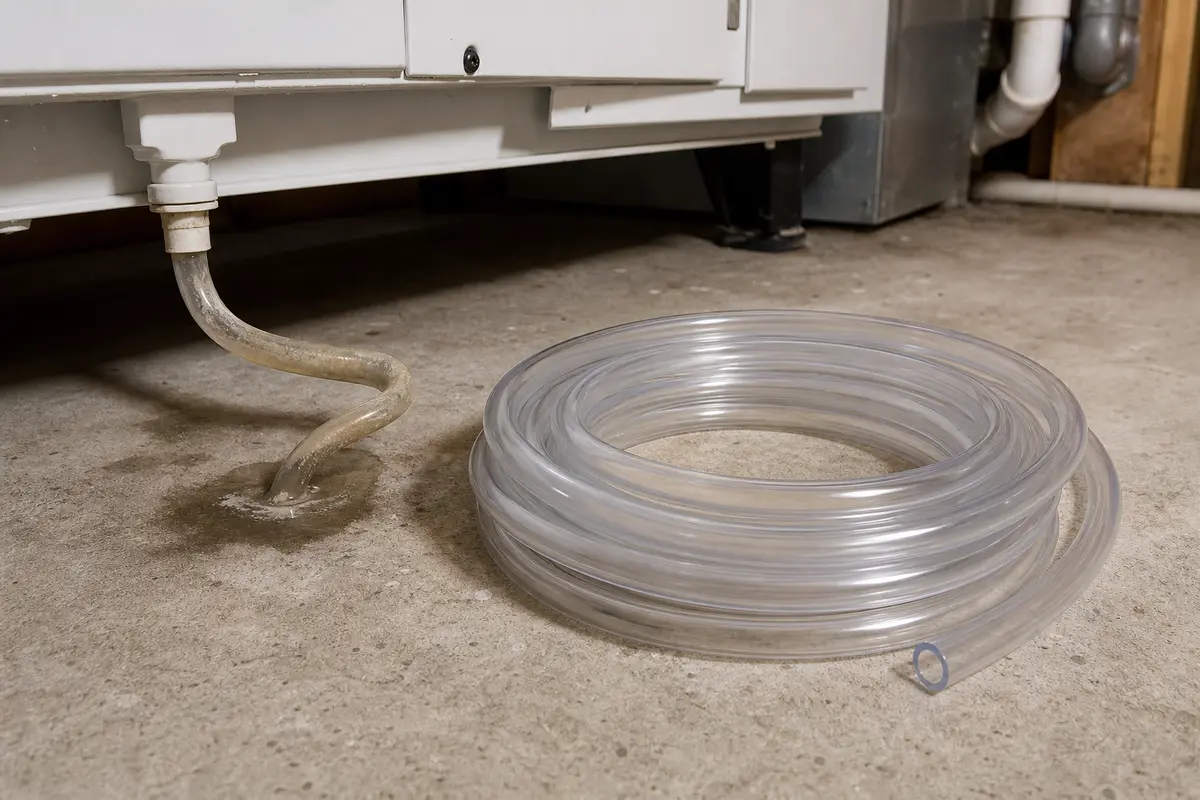
Helps when: The old tubing is kinked, slimed inside, cracked, or permanently sagged, and you can match the same diameter and route.
Skip it when: The cabinet drain fitting is cracked, the trap layout is unclear, or the drain ties into plumbing you should not alter.
Compare condensate drain tubing on Amazon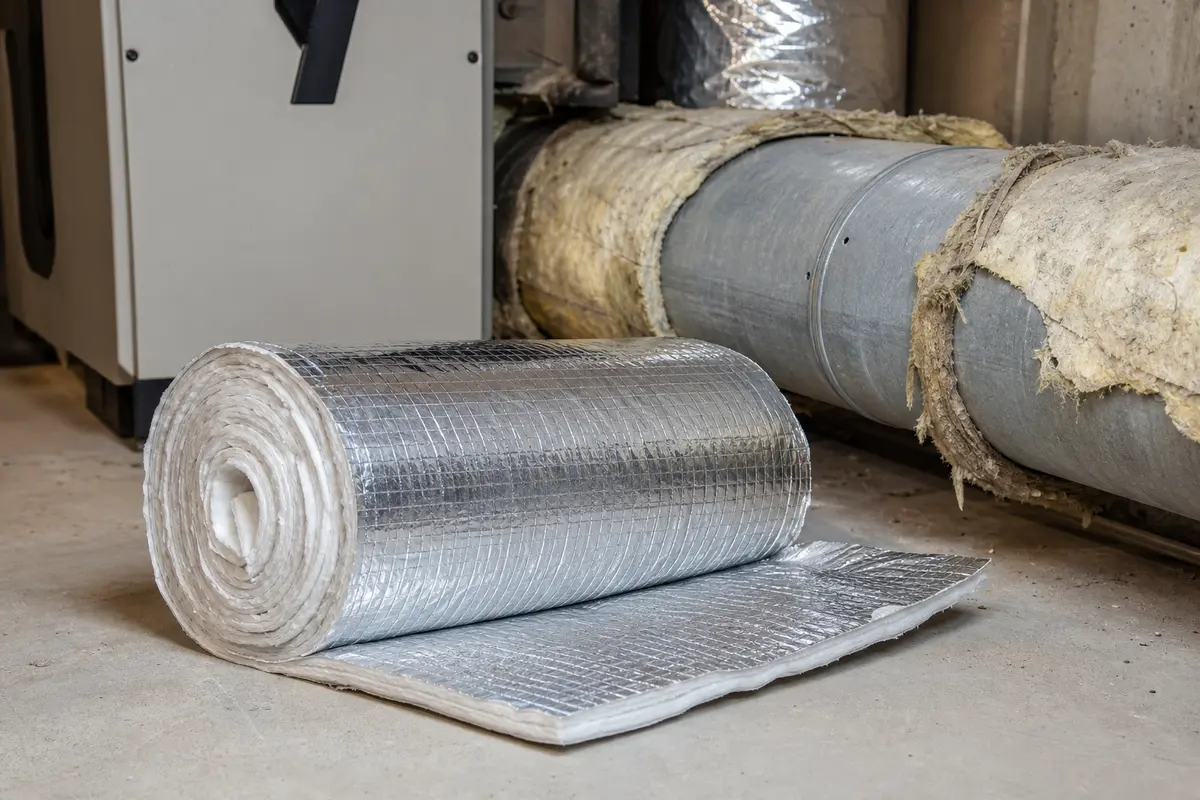
Helps when: The confirmed problem is missing or ruined insulation on a cold HRV duct, and the duct is dry before you rewrap it.
Skip it when: You have not fixed the air leak or the old insulation is wet, moldy, concealed, or spread through a larger area.
Compare foil-faced duct insulation on AmazonAs an Amazon Associate I earn from qualifying purchases. Repair Riot may earn a commission at no extra cost to you.
Warm humid room air is usually hitting a cold outdoor-air duct, metal collar, or damaged vapor jacket. Check torn insulation, exposed metal, loose foil tape, and air leaks before blaming the HRV core.
Dry the area and watch where fresh moisture forms first. Water beads on the outside of a duct point to insulation or air sealing. Water starting at the cabinet, drain outlet, or hose points to drainage, frost, or airflow checks.
Yes. A clogged filter can reduce airflow enough to make parts of the unit and ductwork run colder, which encourages surface sweating and sometimes frost.
Only after the duct and old insulation are dry and the air leak is fixed. Wrapping over wet insulation traps moisture and can leave the same drip hidden under a cleaner outer layer.
Cabinet water usually points more toward the condensate outlet, hose, trap, filter restriction, or frost melt. Turn power off and check those before buying a core, fan motor, or control board.
No. Compare the HRV duct with nearby cold ducts before blaming the unit. If they are sweating too, the room may be damp or the insulation may be poor, even while the HRV is working.
Turn it off if water can reach wiring, finished ceilings, insulation, or the cabinet interior. For light beads on an exposed cold spot, dry the area and watch where moisture returns; leave it off if the water is near electrical parts or damage-prone materials.
Not from condensation alone. Filters, airflow, insulation, air leaks, and the drain are much more common first checks. Price a core only after diagnosis points there.
Frost often follows restricted airflow, dirty filters, blocked grilles or hoods, drain trouble, or a defrost issue. With power off, check filters, grilles, hoods, and the drain path first. If frost returns after those checks, schedule HVAC service.
Call when the unit ices up repeatedly, one fan is not moving air, or the breaker trips. Also call if water reaches electrical equipment, hidden insulation is saturated, or cabinet water returns after filter and drain checks.
Repair Riot built this page around safe homeowner sorting: first wet spot, filter airflow, duct insulation, air leakage, condensate drainage, frost clues, and clear stop points. The links below support the ventilation and duct-insulation context; the repair sequence is original guidance.