Does either half still power the same lamp?
Test the dead outlet half with the same lamp, then check the wall switch. If the other half works and the lamp never turns on, trace the switch wiring or split outlet with power off.
A half-hot outlet usually fails in one of three places: the switched half, an upstream GFCI or breaker, or the split receptacle. Test both halves with the same lamp first; one live half points to the switch side or receptacle terminal, while two dead halves point upstream.
Start with the pattern: one dead half points toward switch control or split-receptacle wiring; two dead halves point back to a GFCI, breaker, or lost feed.
Use one known-good lamp to sort the outlet before touching wiring: top half, bottom half, nearby switches, then reset points.
Don’t start with: Replacing the receptacle, breaking tabs, or opening the box before you prove the pattern. Test both halves with the same lamp, try likely wall switches, and reset dry GFCIs or the breaker once; then turn the correct breaker off before cover removal.
Test the dead outlet half with the same lamp, then check the wall switch. If the other half works and the lamp never turns on, trace the switch wiring or split outlet with power off.
That may be normal half-hot behavior. Label the switch or lamp cord so the outlet does not get mistaken for a failed receptacle later.
Look for a tripped GFCI or breaker first, and see whether nearby outlets or lights are also out. Reset once only.
The outlet was probably downstream of protection. Do not replace the receptacle unless it is also loose, damaged, warm, or intermittent.
A worn switch, loose switch-leg connection, or changed tab wiring moves up the list. Keep cover removal power-off only.
Leave the outlet unused and keep the circuit off. Warmth, buzzing, scorch marks, loose fit, or flicker point to a loose or arcing connection. The next check is power-off only, and heat damage or wiring you cannot map belongs with a licensed electrician.
A split receptacle can look broken when it is waiting on a wall switch or a reset upstream. Use closed-device checks first; open the box only after power is off and verified.
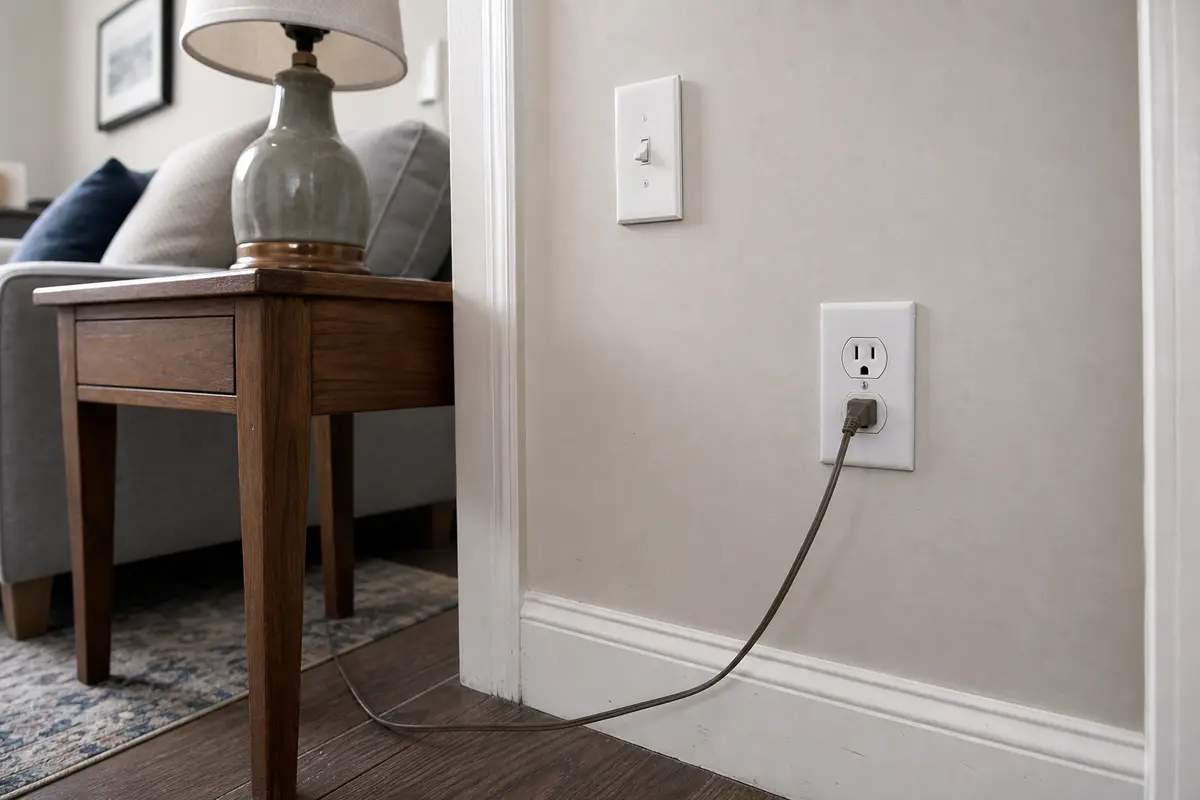
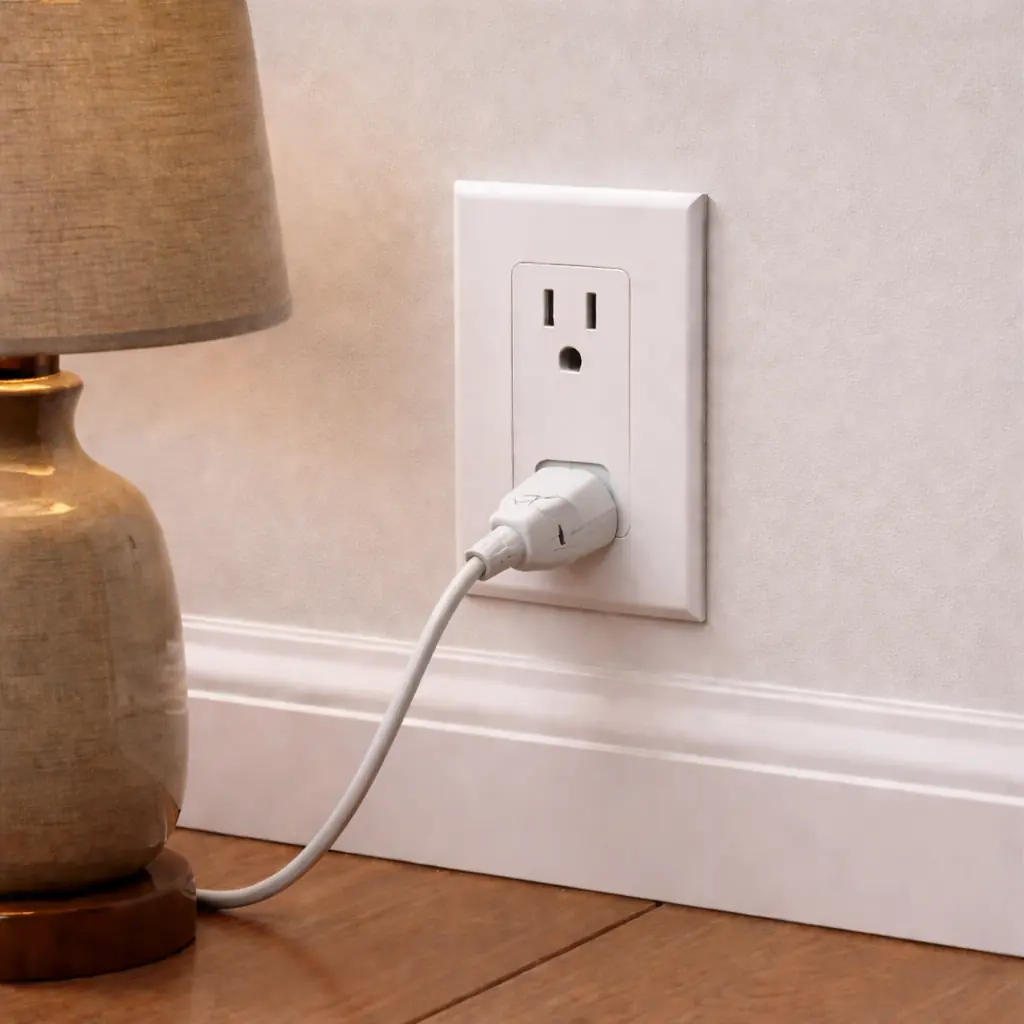
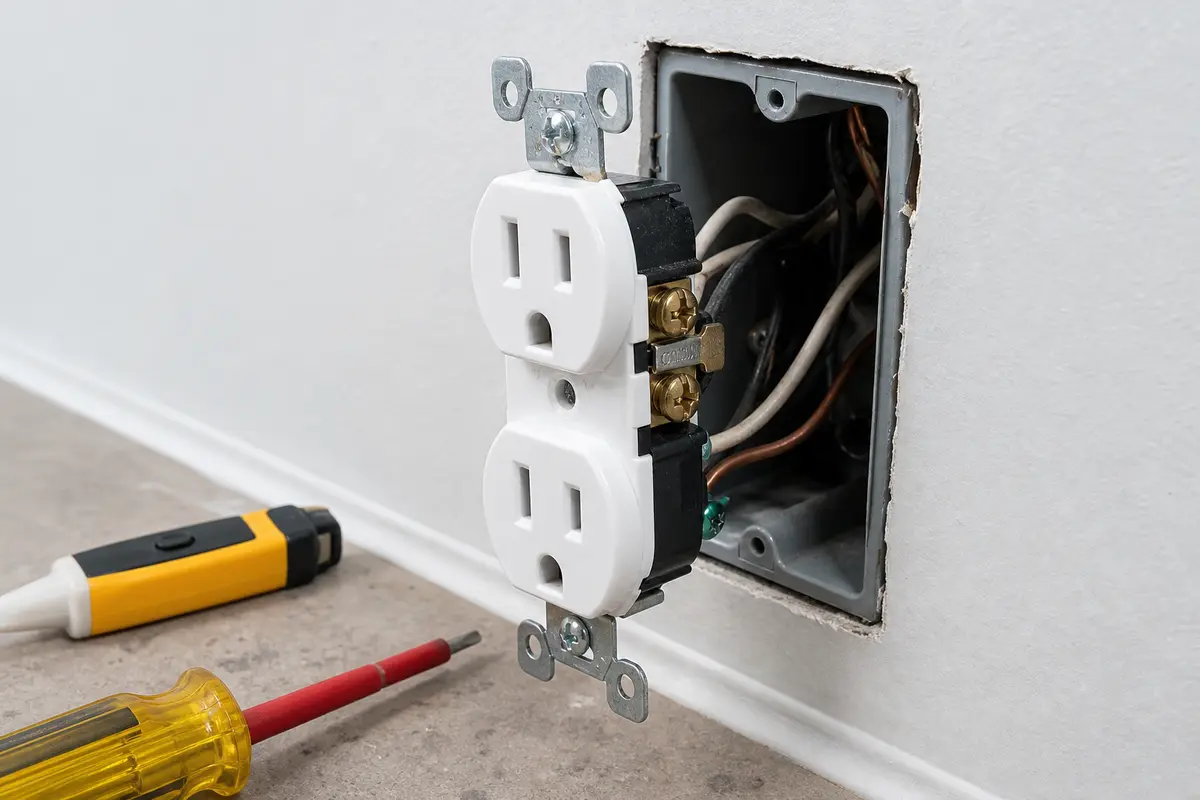
Keep the cart closed until the clues point at the receptacle. Test the top and bottom with the same lamp, try the wall switch, reset dry GFCIs, and reset the breaker once. Buy only after power-off inspection shows loose grip, heat marks, a cracked body, terminal damage, or a side-tab clue at that exact device. Match the old receptacle and circuit for amperage, tamper-resistant requirement, split-tab layout, grounding path, box space, and location rating.
A half-hot outlet has two jobs in one device: one half may stay live while the other waits on a wall switch. Start by testing the top and bottom with the same lamp, then note which half failed and whether nearby outlets or lights lost power too.
The wrong shortcut can hide the clue or create a hazard. Keep the first pass closed and observable.
These checks sort most half-hot outlet calls without opening the wall.
Let the lamp result decide the branch. One live half points toward the switch side or split receptacle; two dead halves send you back to GFCIs, the breaker, or a lost feed before replacing the outlet.
| What you find | What it usually means | Next move |
|---|---|---|
| One half works and the other works with the switch | The outlet may be behaving normally as a switched split receptacle. | Use it as designed or ask an electrician about changing the room layout. |
| One half works but the switched half stays dead | Switch contacts, the switched conductor, or the receptacle terminal/tab area moves up the list. | Turn power off before any inspection, or call a licensed electrician to trace the switch side. |
| Both halves are dead and nearby devices are out | Power was probably lost before this outlet. | Reset likely GFCIs and the breaker once; leave it off if it trips again. |
| A GFCI reset brings the outlet back | The half-hot outlet may be downstream of protection. | Do not replace the receptacle unless it is also worn, loose, damaged, or intermittent. |
| Plug fit is loose or power changes when the cord moves | Worn contacts or a loose connection can create heat. | Take it out of service and repair it only after power is off and verified. |
| The switched half stays live all the time after recent work | The split tab or switched conductor may have been reconnected incorrectly. | Do not guess at wire positions; document the symptom and have the wiring checked. |
Hands-on inspection belongs after the lamp, switch, GFCI, and breaker checks point back to the device.
These tools support closed checks and power-off verification. They do not make uncertain wiring safe.
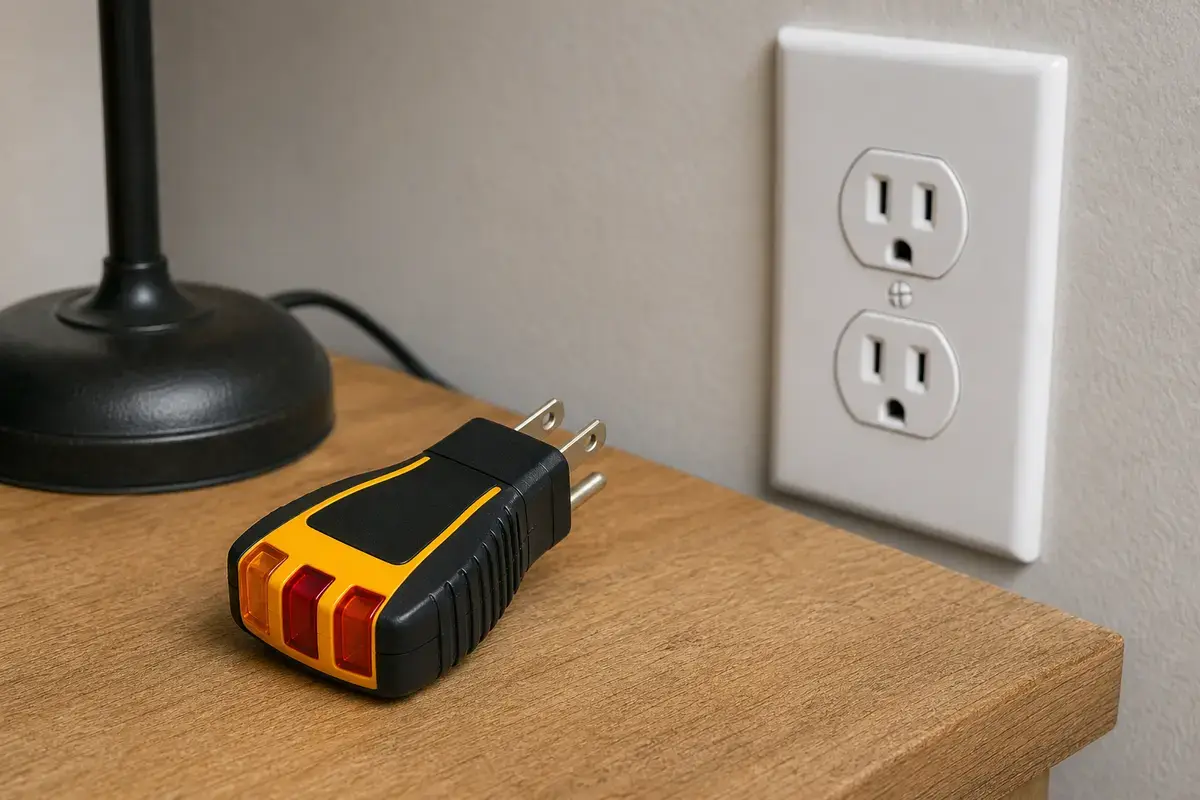
Helps when: You need to compare both halves and see whether power returns after switch, GFCI, or breaker checks.
Skip it when: The outlet is warm, loose, wet, scorched, buzzing, or the reading changes when the plug moves.
Compare outlet testers on Amazon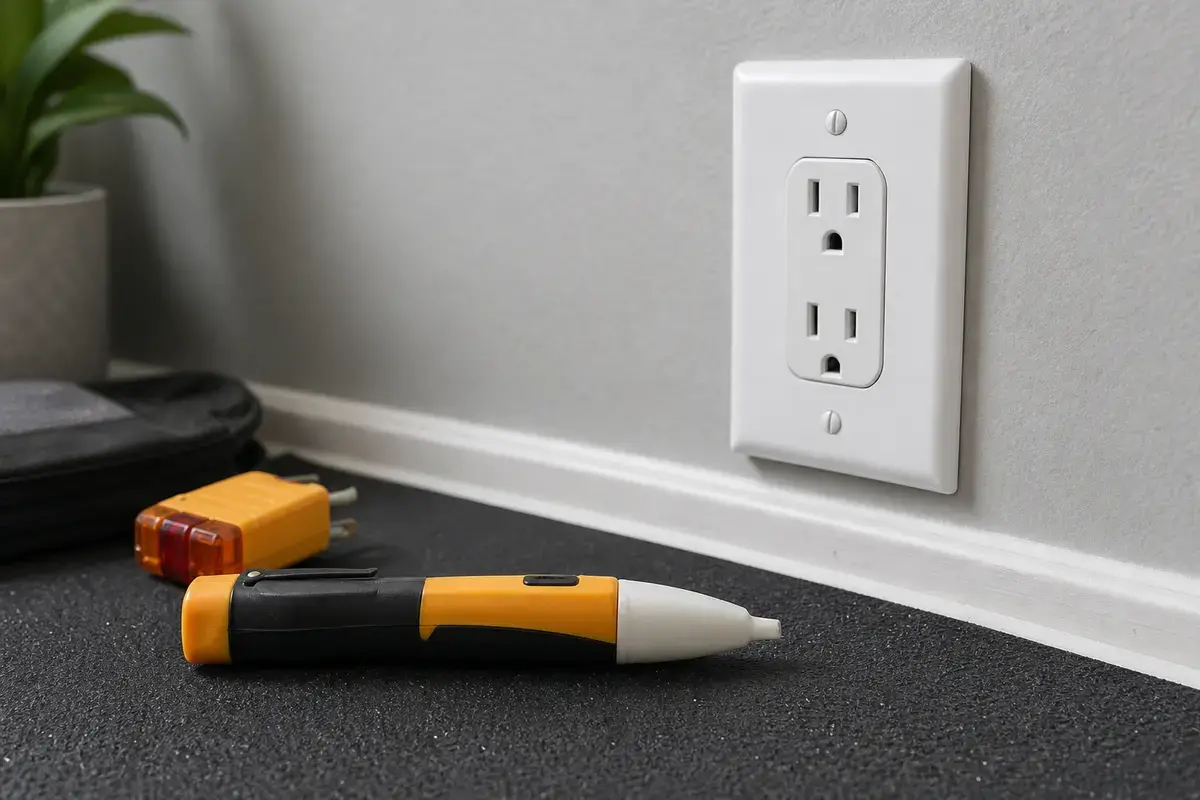
Helps when: You have turned off the breaker and need a no-touch warning check before cover removal.
Skip it when: You are not sure which breaker controls the outlet or the tester result is unclear.
Compare voltage testers on Amazon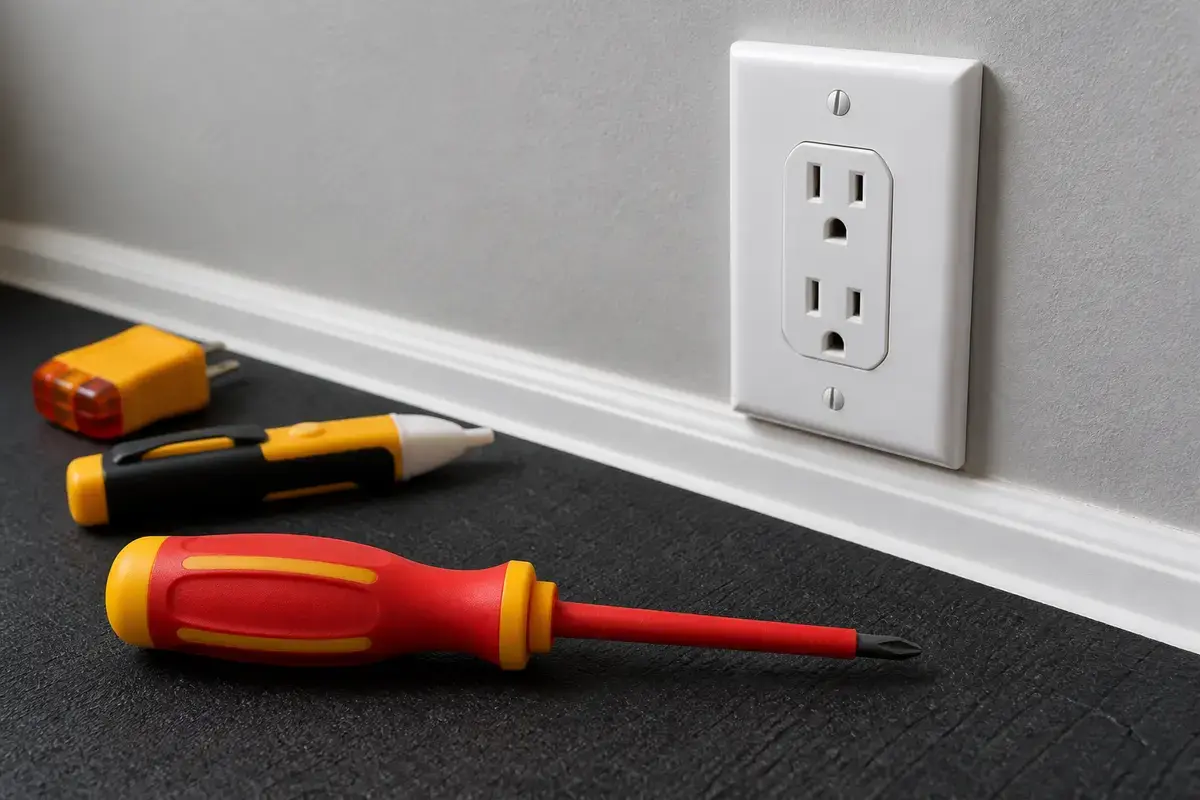
Helps when: You are removing the faceplate or device screws only after the circuit is off and verified dead.
Skip it when: The box is damaged, crowded, scorched, wet, or wired in a way you cannot confidently identify.
Compare insulated screwdrivers on AmazonAs an Amazon Associate I earn from qualifying purchases. Repair Riot may earn a commission at no extra cost to you.
Before a part goes in the cart, test both halves with the same lamp, check the switch and reset points, then inspect only with power off. A receptacle is a good buy only when you see loose grip, heat marks, cracking, or a terminal/tab clue.
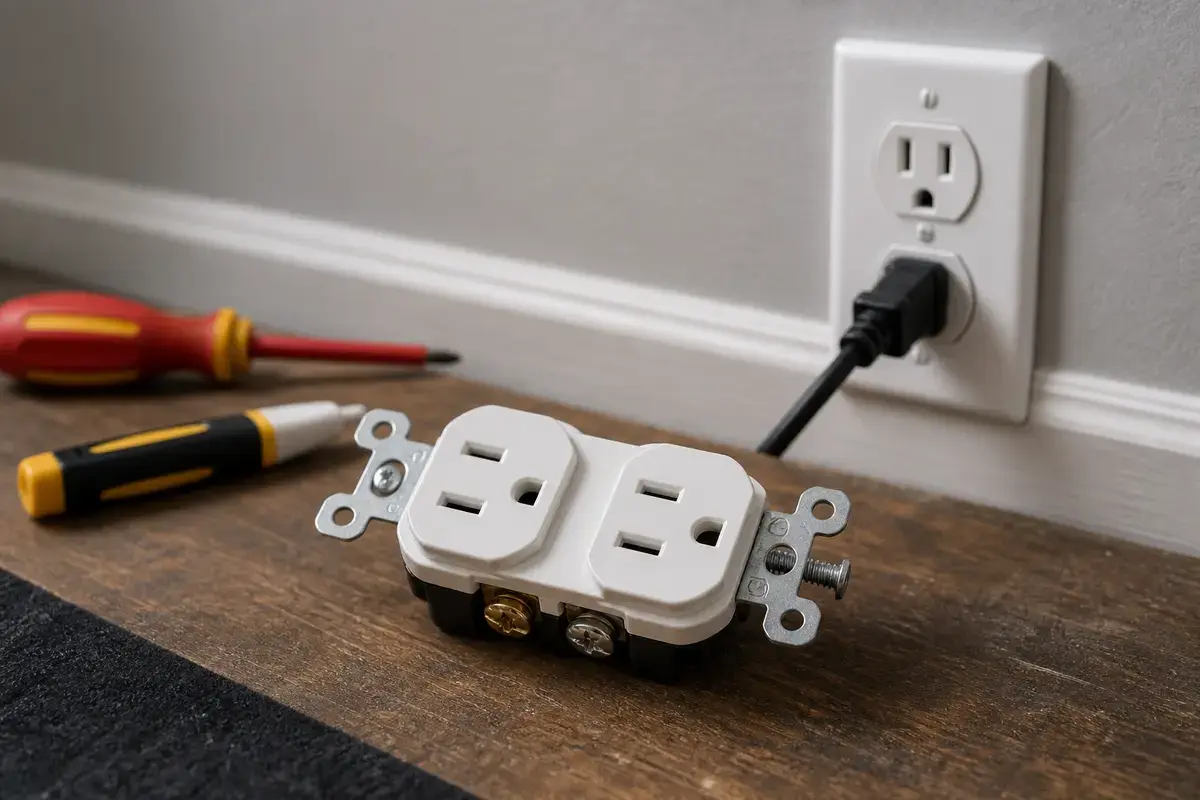
Helps when: The existing receptacle is confirmed worn, cracked, loose, or heat-marked and the split wiring layout is understood.
Skip it when: A switch or GFCI reset solved the symptom, or you cannot identify the switched conductor with power off.
Compare duplex receptacles on AmazonAs an Amazon Associate I earn from qualifying purchases. Repair Riot may earn a commission at no extra cost to you.
A half-hot outlet is not the place to learn live troubleshooting. Call for help when the clue points beyond a simple closed-device sort.
A half-hot outlet is a duplex receptacle where one half is always live and the other half is controlled by a wall switch. It is common in rooms where a switched lamp stands in for a ceiling light.
One working half means power is reaching the receptacle. Test the dead outlet half with the same lamp and check the wall switch. If nothing changes, the switched connection, outlet contacts, or tab area need power-off tracing.
Yes. The switch may control only one half of the outlet. A bad switch, loose switch-leg connection, or changed wiring can leave that half dead while the other half still works.
Yes. A standard-looking outlet can be downstream of a GFCI in another room or nearby wet-area location. Reset dry, intact GFCIs once before replacing the receptacle.
No. Test both halves with the same lamp, try the wall switch, and reset likely GFCIs or the breaker once. Replace the receptacle only when those checks point back to that exact device.
The removable side tab lets the two halves be fed separately, so one half can stay always hot while the other half is switched. The tab layout has to match the original wiring.
If the problem started right after a switch or receptacle swap, treat the wiring layout as the clue. The switched conductor may be on the wrong terminal, the tab may be wrong, or a copied-by-color wire move may be off. Stop guessing and trace it with power off.
Treat it as unsafe. Flicker, loose plug fit, buzzing, warmth, crackling, or scorch marks can point to a loose connection or arcing. Leave the outlet unused, turn the circuit off if you can identify it, and have it repaired before it goes back into service.
Sometimes the circuit can be reconfigured, but this is not a guess-and-swap job. A licensed electrician should confirm the wiring, switch leg, code requirements, and room lighting needs before changing it.
Call when the breaker trips again, a GFCI will not reset, the device is warm or scorched, the box has damaged or aluminum wiring, or you cannot prove the circuit is off before inspection.
Repair Riot built this page around homeowner-safe observations: lamp results at each half, switch behavior, reset behavior, visible heat damage, and power-off-only inspection. The sequence stays diagnosis-first and keeps breaker replacement and unclear wiring out of DIY scope.