Does it reverse within a few inches?
Start at the photo eyes. Clear the beam, clean the lenses, check steady indicator lights, and look for bumped brackets or damaged low-voltage wire.
A garage door that reverses before closing is usually reacting to a safety-sensor signal, track drag, or hard floor contact. Watch where it turns around, then check the photo eyes before changing opener force.
Fast reversal points to photo eyes; check the beam and lenses, then watch for steady sensor lights. Same-spot reversal points to drag. Floor bounce points to close travel or bottom seal contact.
Sort early reverse, same-spot reverse, floor bounce, and wall-button-only closing before buying opener parts.
Don’t start with: Do not loosen springs, cables, bottom brackets, or track mounts. Do not turn force way up to make the door stay shut.
Start at the photo eyes. Clear the beam, clean the lenses, check steady indicator lights, and look for bumped brackets or damaged low-voltage wire.
Treat that as a safety-sensor signal problem until proven otherwise. Stay on sensor alignment, sensor wiring, and bracket stability.
Look for a physical tight spot: packed debris, a bent track lip, a cracked roller, a loose hinge, or a section that shifts sideways.
Watch the bottom seal and door flex. A small close-travel reduction may be right if the door is driving hard into the slab.
Stop homeowner troubleshooting. Heavy, crooked, or uneven manual movement points toward springs, cables, or door balance.
Wait. Boards come late in this diagnosis, after clean sensor signals, smooth manual door travel, and correct close travel are confirmed.
Watch one closing attempt from inside the garage with people, pets, and vehicles clear. Where the door reverses tells you whether to start at the photo eyes, the track hardware, or the bottom landing.
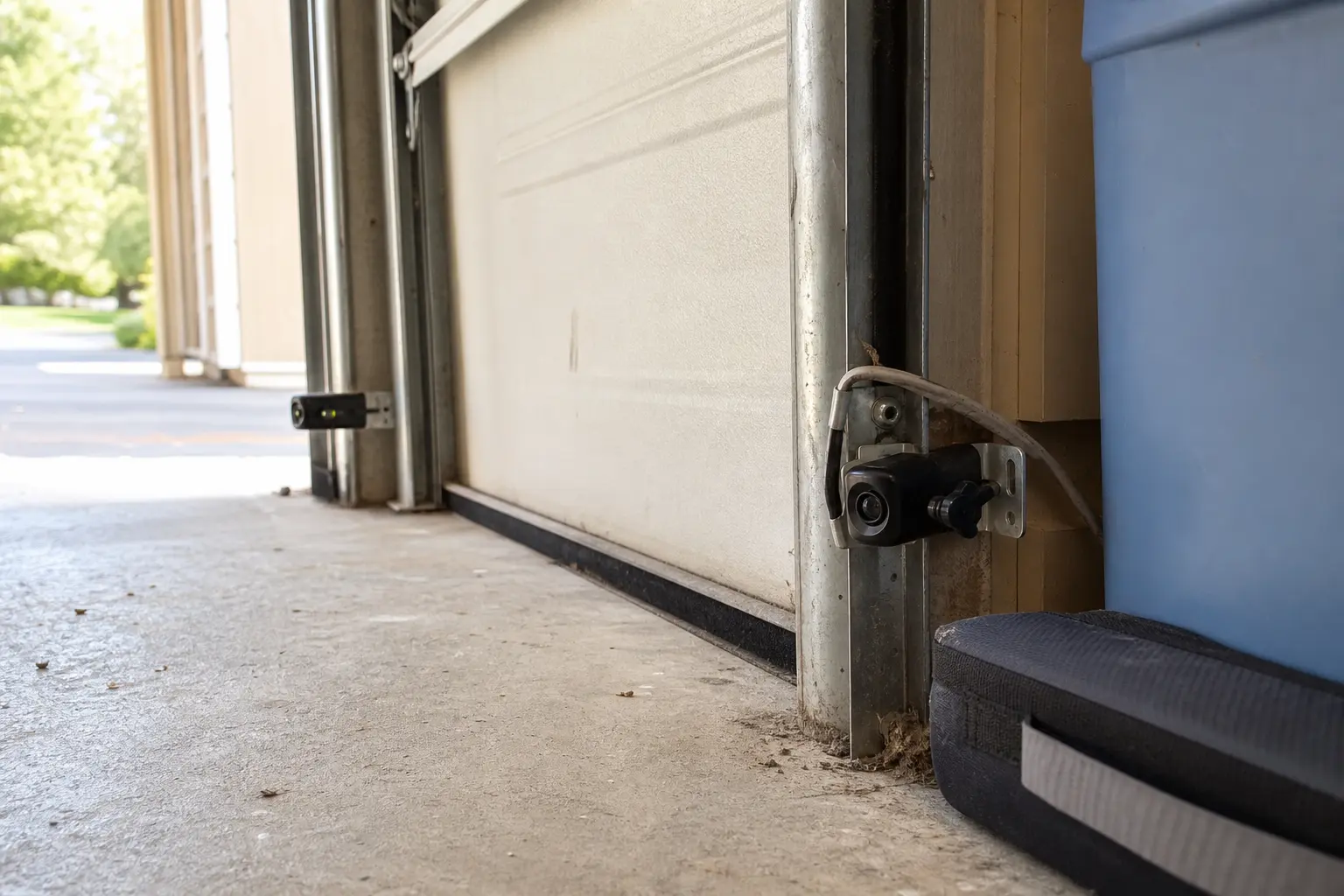
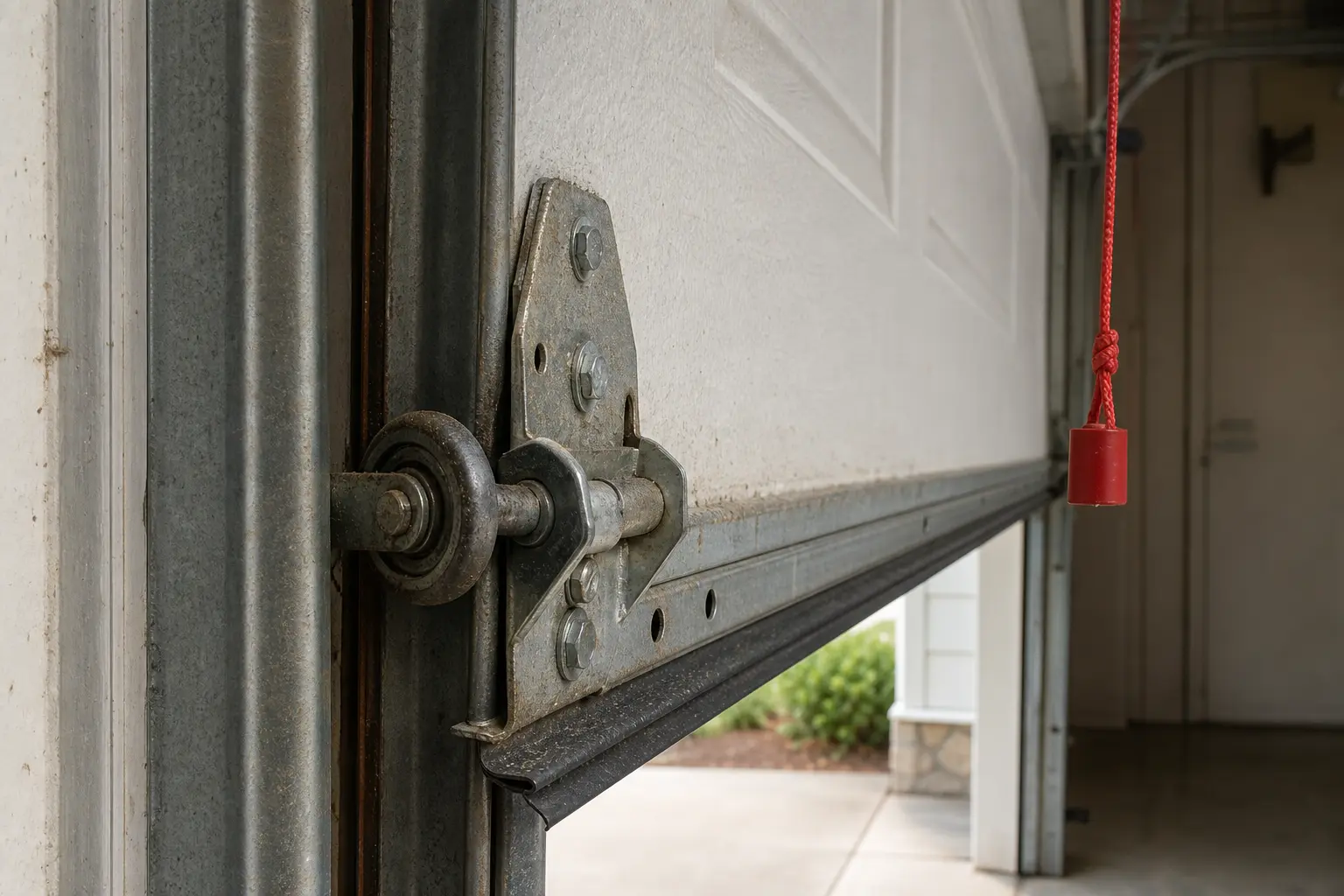
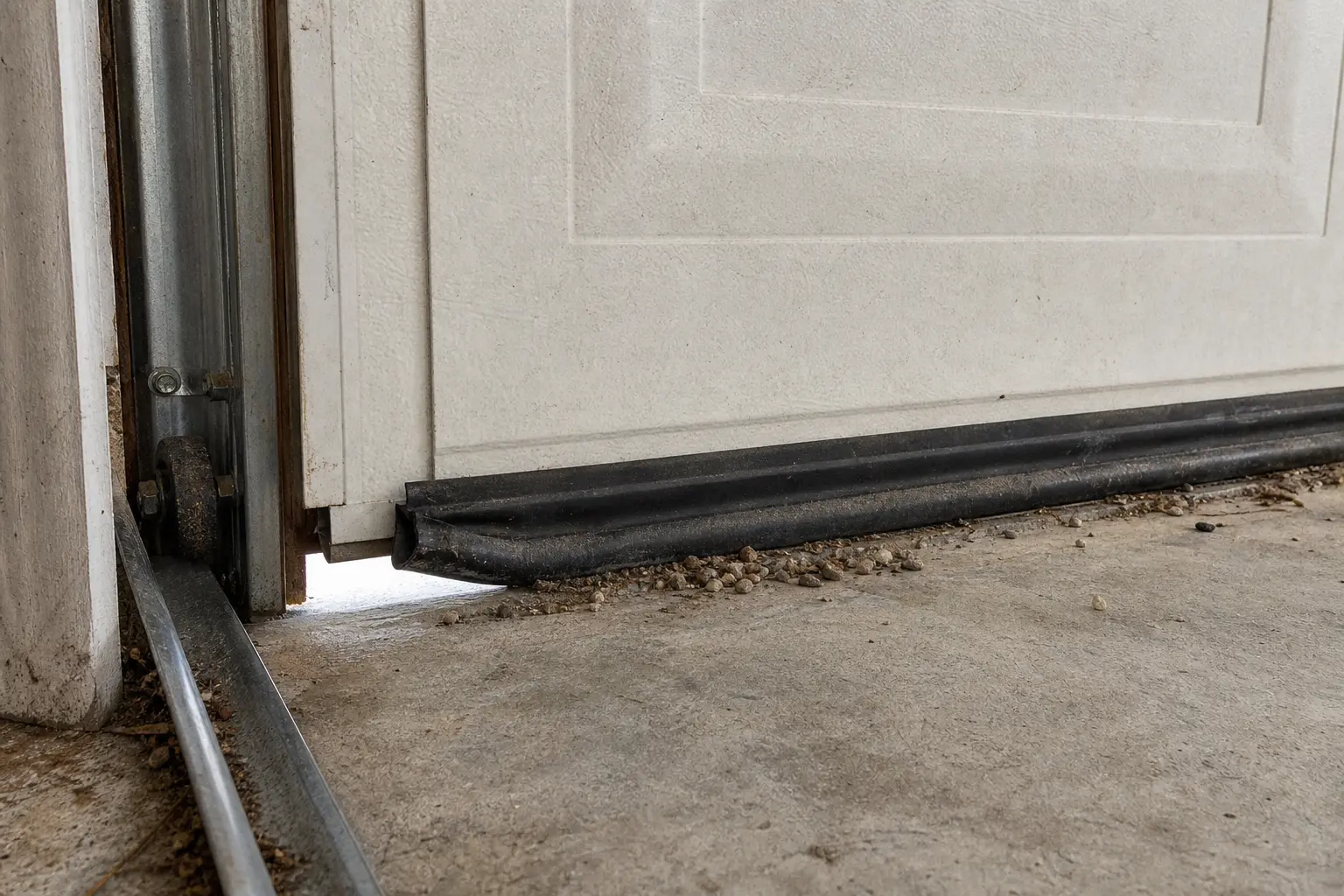
Match the part to the clue and the opener or door model. Safety sensors fit when the sensor light or wall-button test points there. Rollers or hinges fit when the door binds at that hardware. Bottom seal fits only when it is folded, hardened, or bunching at floor contact. Opener boards are not a first buy for this symptom.
The opener is reversing because it sees either a blocked safety signal, extra resistance, or too much force at the floor.
A reversing door can be made less safe by the wrong first move. Stay away from force, springs, and guess-and-buy parts until the symptom points there.
One careful closing attempt tells you more than repeated remote clicks. Stand inside the garage, stay clear of the door path, and watch where the reversal begins.
| What you see | What it usually means | Next move |
|---|---|---|
| Door starts down, then immediately reverses | The opener may not be seeing a clean safety-sensor signal. | Clean lenses, clear the beam, straighten brackets, and check both indicator lights. |
| Door closes only while the wall button is held | The remote close command is being blocked by sensor logic. | Stay on the sensor and sensor-wire path before checking parts. |
| Door reverses at the same middle height | A roller, hinge, fastener, or track lip may be adding resistance. | Disconnect the opener with the door closed and feel for the tight spot by hand. |
| Door touches floor, flexes, then opens | Close travel may be set slightly long or the bottom seal may be catching. | Watch bottom contact and make only a small close-travel change if your opener instructions are clear. |
| Door is crooked or suddenly heavy | Spring, cable, or balance trouble may be involved. | Stop and call a garage door pro. |
Photo eyes are the best first pass because the work is visible and low-risk. You are looking for a clean beam and stable alignment, not trying to defeat the system.
A same-spot reversal is often mechanical. Check it with the opener disconnected and the door closed; feel for the height where the door gets heavy, because the opener only feels that extra resistance.
A door that reaches the floor and then opens is a different failure than one that reverses halfway down. Watch the landing before adjusting anything.
These are for inspection, cleaning, light fastener checks, and opener travel adjustments only. Skip any job that leads toward springs, cables, or bottom brackets.
Parts belong after the clue, not before it. Most reversal problems are solved with alignment, cleaning, a small travel correction, or a visible hardware fix.
Helps when: One sensor light will not stay on, the door closes only with the wall button held, or alignment will not hold after bracket checks.
Skip it when: The door reverses at the same middle spot or feels heavy by hand; those clues point away from sensors.
Compare garage door safety sensors on AmazonHelps when: A roller is visibly cracked, flat-spotted, wobbling, or binding at the same point where the door reverses.
Skip it when: The only clue is a dirty sensor lens or floor bounce; rollers are not the first buy for those symptoms.
Compare garage door rollers on AmazonHelps when: The seal is folded, hardened, or bunching at the floor and the door reaches the slab before reversing.
Skip it when: The door reverses before touching the floor; start with sensors, drag, or travel instead.
Compare garage door bottom seals on AmazonAs an Amazon Associate I earn from qualifying purchases. Repair Riot may earn a commission at no extra cost to you.
That usually points to the garage door safety sensors. Start at the floor: clear the beam path, wipe the lenses, and watch whether both sensor lights stay steady. A blocked beam, dirty lens, crooked bracket, or damaged sensor wire can make the opener reverse almost immediately.
That is a strong clue that the opener is bypassing the normal safety-sensor close command only while you hold the button. Clean and align the garage door safety sensors first, then inspect the sensor wiring for damage.
Most often the close travel is set a little too far, so the opener keeps pushing after the door is already down. Watch the bottom seal as it lands. Hard seal crush, panel flex, a bunched bottom seal, or one corner landing first can all make the opener read floor contact as an obstruction.
Usually no. Too much force can hide a dirty sensor, a tight roller spot, or close travel that is driving the door into the floor. Check those clues first, then make only small adjustments if the opener manual points to the right control.
Yes. If a roller is cracked, flat-spotted, or wobbling, it can bind in the track and make the opener think the door hit something. This is especially likely when the door reverses at the same spot every time.
The sensors can look straight but still lose signal when the door moves. Watch the indicator lights during a close attempt. Flicker points to vibration, a loose bracket, dirty lens, weak connection, or damaged low-voltage wire.
Not first. A reversing opener is often responding to sensor trouble, track resistance, or close travel. Watch the sensor lights, then disconnect the opener with the door closed and lift the door by hand to feel for drag before pricing a new opener.
Call a pro if the door is heavy, crooked, off-track, tied to a cable or spring issue, or if you see damaged tension hardware. Those repairs can get dangerous fast and are not good DIY territory.
Repair Riot built this page around homeowner-visible checks: sensor signal, door resistance, floor contact, and clear stop points around spring-loaded hardware. Manufacturer instructions still control exact opener travel and force procedures.