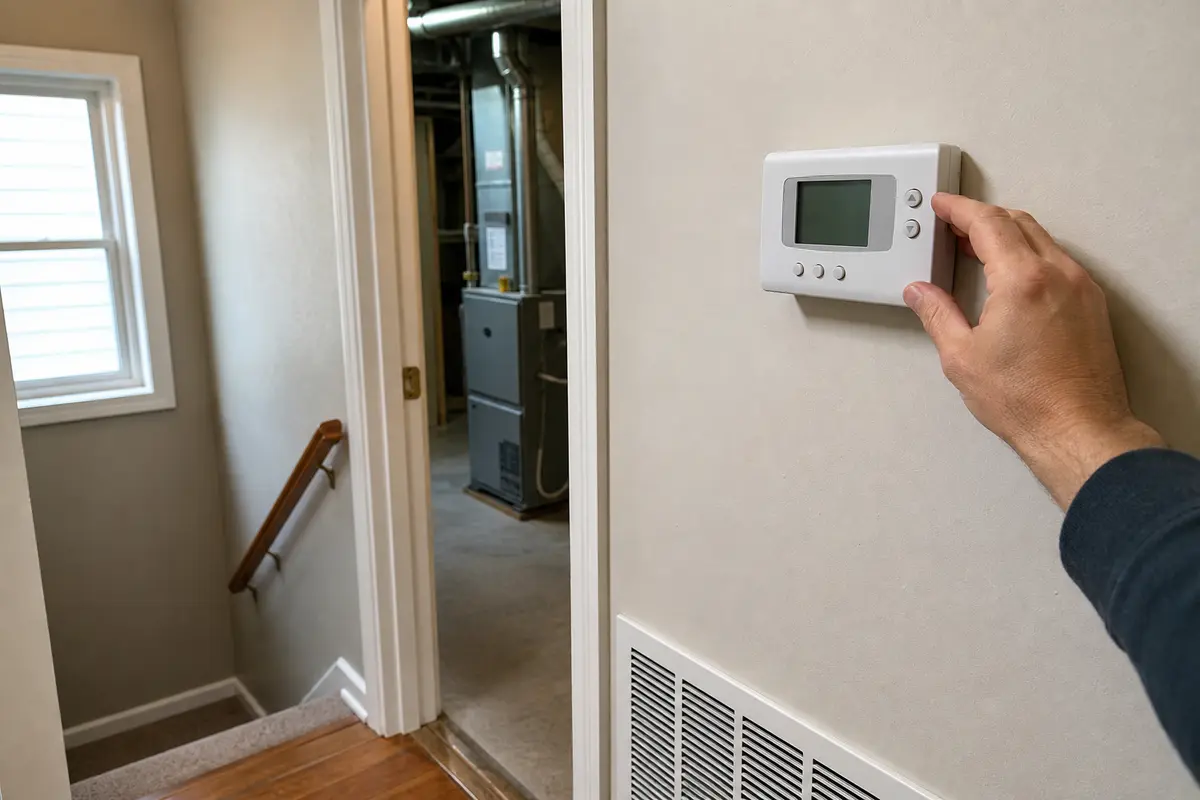
Is the thermostat blank or not in Heat mode?
Change batteries if your thermostat uses them, set Heat mode, raise the setpoint, and make sure the fan is on Auto for this check.
If your furnace will not turn on, start outside the burner area: set Heat, check the switch and breaker, seat the blower door, and inspect the filter. Watch for the clue: silence points to heat call or power; clicking, glow, or brief flame means stop before ignition work.
Most no-start checks begin with a missed heat call, lost power, loose blower door, packed filter, or a furnace that locks out after one failed ignition try.
Look for one of five patterns: blank thermostat, dead furnace, clicking start attempt, blower-only run, or brief flame.
Don’t start with: Do not open gas parts, shop for a board or igniter from the symptom alone, or keep cycling power after failed ignition.
Change batteries if your thermostat uses them, set Heat mode, raise the setpoint, and make sure the fan is on Auto for this check.
Check the nearby furnace service switch, the breaker, and the blower door fit before treating the furnace as failed.
Reset a clearly tripped breaker one time. Leave it off and call service if it trips again or anything smells hot.
Shut power off, seat the door flat, latch it fully, restore power, and try one normal heat call.
Replace it with the same printed size and airflow direction, then give the furnace one normal call for heat.
After the filter is checked, watch one safe startup attempt and note whether it clicks, hums, or stops. Repeated ignition attempts are not a reset-and-shop problem; stop cycling the furnace and call service unless a linked maintenance task fits exactly.
If the burners light for a few seconds and drop out, flame proving moves up the list, often a dirty flame sensor. Check filter and airflow first, then use the linked task only if the sensor is easy to reach with power off.
Stop using the furnace. Leave the area for gas odor and call the gas utility or an HVAC technician.
A no-start furnace is easier to sort when you look at the thermostat, cabinet door, and filter first. Leave burner, gas, and live electrical sections alone unless a safe, model-specific task clearly applies.
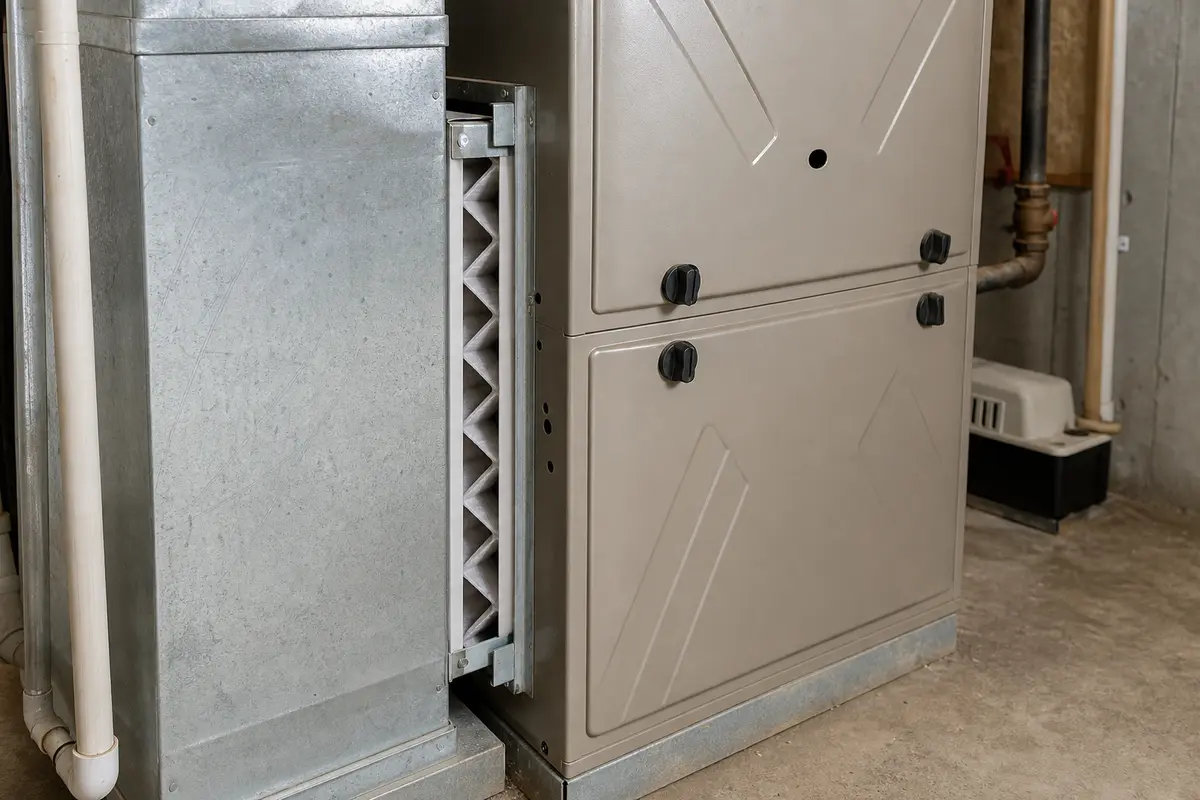
Do not buy a furnace board, igniter, flame sensor, gas valve, or thermostat from the no-start symptom alone. First sort thermostat call, power, blower door fit, filter condition, and one safe startup observation. Match filters by printed size; match electrical or ignition parts only after the failure pattern and furnace model support them.
A no-start furnace usually splits three ways: no heat call, an open power or door-interlock path, or an ignition sequence that starts and quits. Check Heat mode, the switch, breaker, door, and filter first. Then watch whether the cabinet stays silent, clicks, glows, lights briefly, or runs blower-only.
The wrong first move is treating every no-start furnace like a bad igniter or control board.
Work from the wall to the cabinet. Each step should either restore a normal heat call or tell you where to stop.
Use the first thing that changes. A silent cabinet, a dirty filter, and brief flame are three different repairs.
| What you find | What it usually means | Next action |
|---|---|---|
| Thermostat was Off, Cool, Fan On, or not calling. | The furnace may never have received a real heat call. | Correct the setting and run one normal cycle. |
| Service switch was off, breaker was tripped, or door was loose. | The furnace power or safety interlock path was interrupted. | Restore it once, then watch for a complete heat cycle. |
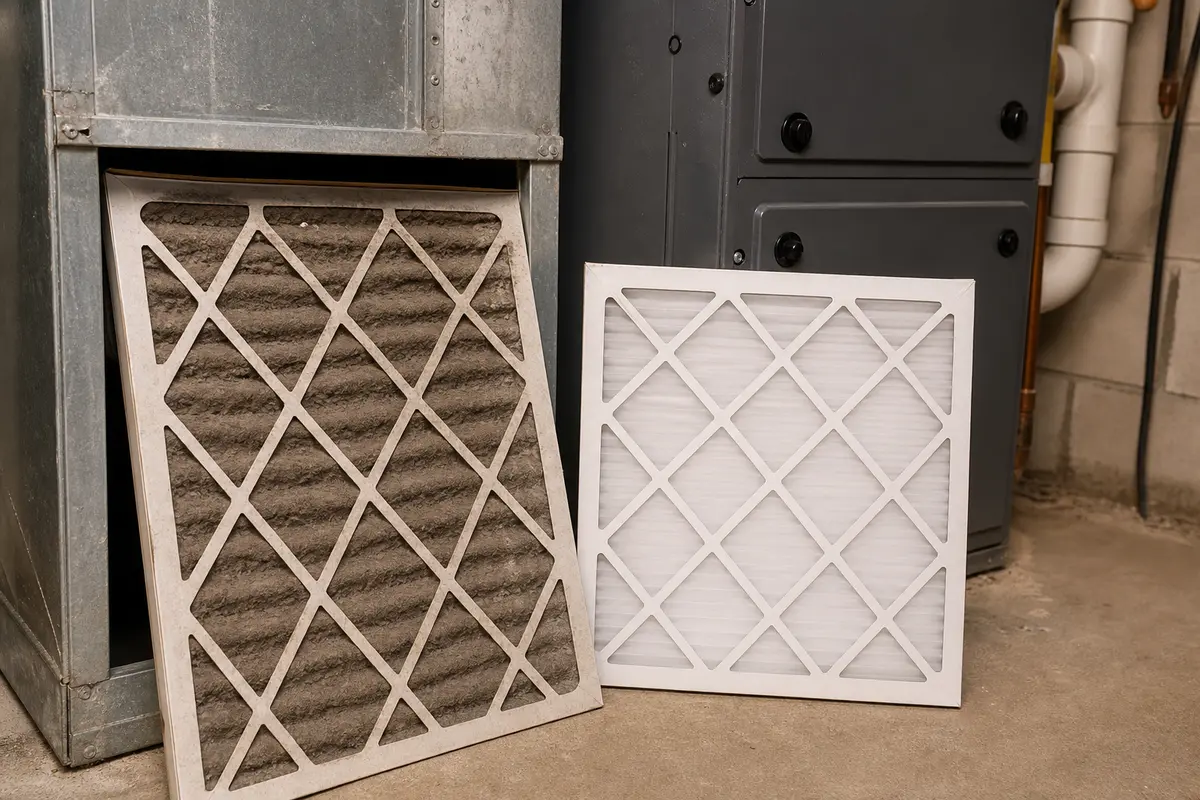
| Filter is packed, wet, bowed, backward, or wrong-sized. | Restricted airflow may have caused overheating or safety shutdown. | Install a matching filter and keep returns and registers open. |
| Furnace stays silent even with power and a heat call. | A control, safety, transformer, door switch, or wiring fault may need meter testing. | Call HVAC service instead of guessing at parts. |
| Clicking, glow, no flame, or repeated starts. | Ignition is not completing safely. | Stop cycling the furnace and arrange service unless a safe linked maintenance task fits exactly. |
| Flame lights for a few seconds and drops out. | Flame proving is the better clue. | Consider flame-sensor cleaning only when the sensor is easy to reach with power off. |
| Gas odor, soot, rollout, bang, or second breaker trip. | The repair has crossed into combustion or electrical risk. | Leave the furnace off and call the gas utility or an HVAC technician as appropriate. |
Let the symptom earn the part. A loaded filter or weak battery thermostat is maintenance. Ignition and control parts need a clear startup pattern, model match, or service diagnosis first.
Helps when: The current filter is dirty, wet, bowed, installed backward, the wrong printed size, or overdue and airflow is part of the no-start story.
Skip it when: The filter is clean, correctly installed, and the furnace is clicking, failing ignition, or tripping power.
Compare furnace air filters on AmazonHelps when: The thermostat is blank, weak, in the wrong mode, held by schedule, or cannot make a heat call after battery checks, and the replacement matches the furnace wiring and voltage type.
Skip it when: The furnace receives the heat call, starts a sequence, clicks, glows, or lights briefly and then shuts down.
Compare furnace thermostats on AmazonAs an Amazon Associate I earn from qualifying purchases. Repair Riot may earn a commission at no extra cost to you.
Use these for observation and basic access only. If continuing would require opening gas, burner, control board, sealed combustion, or energized electrical sections, stop and call HVAC service.
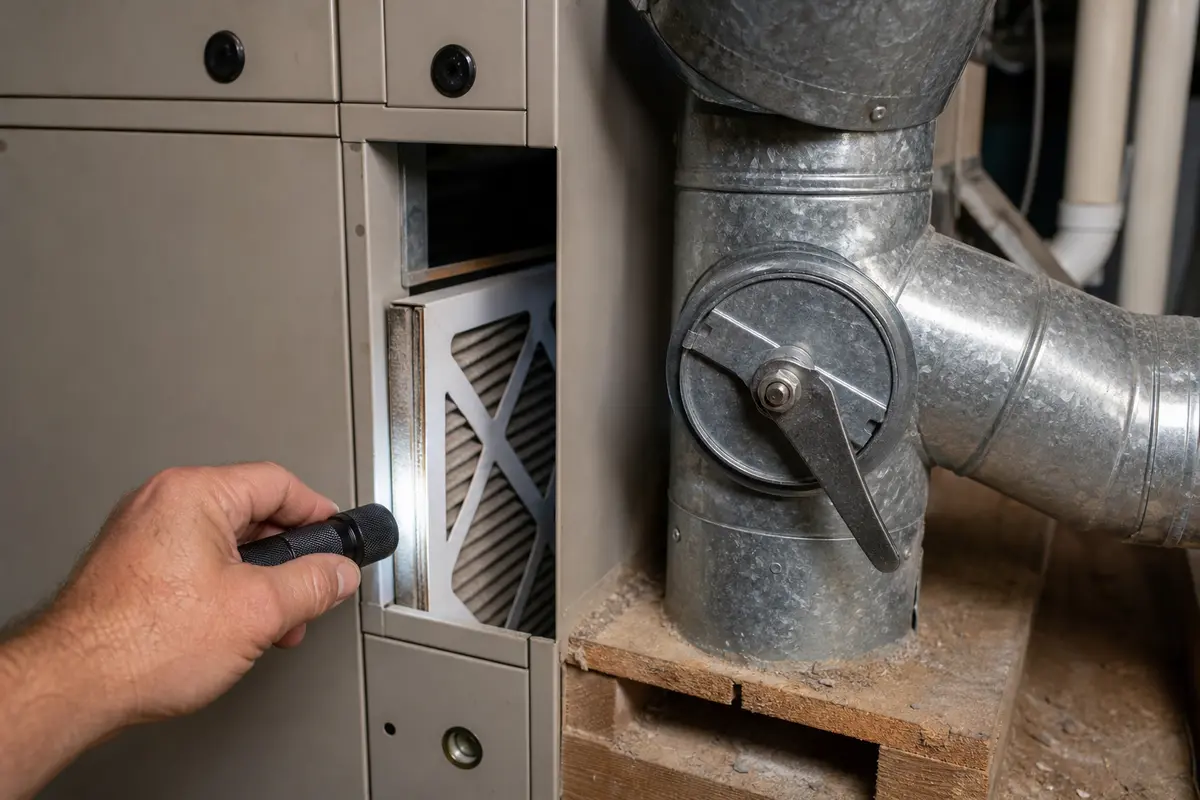
Helps when: You need a clear look at the filter slot, blower door fit, service switch, viewing window, or visible wiring from outside risky compartments.
Skip it when: The next step requires opening gas, burner, control board, sealed combustion, or energized electrical sections.
Compare inspection flashlights on AmazonAs an Amazon Associate I earn from qualifying purchases. Repair Riot may earn a commission at no extra cost to you.
A good service call starts with a clear symptom. Watch for the startup pattern and write down what the furnace did before you shut it off.
Start with the heat call and power path. Make sure the thermostat is in Heat mode, raise the setpoint, check the furnace service switch, reset a clearly tripped breaker once, and reseat the blower door with power off.
A powered thermostat does not prove the furnace is receiving a heat call. Check Heat mode, fan Auto, schedule holds, batteries if used, the furnace switch, breaker, and blower door fit before assuming an internal furnace part failed.
Yes. On battery thermostats, weak or dead batteries can leave the furnace with no heat call. A blank screen can also point to lost furnace power or a low-voltage issue, so check batteries first only when that is normal for your thermostat.
Yes. A packed, wet, bowed, or wrong-sized filter can restrict airflow enough to overheat the furnace or lead to safety shutdown behavior. Replace it with the same printed size and airflow direction before one normal restart.
Clicking or repeated starts mean the furnace is trying to run but cannot complete ignition. After thermostat, power, blower-door, and filter checks, watch one safe startup attempt, write down the first clue, and stop cycling it unless a linked maintenance task fits the exact symptom.
No. One careful reset after safe checks is enough. Repeated resets can hide the real fault, stress components, and make ignition problems more dangerous.
Blower-only operation can come from fan settings, a safety shutdown, or failed ignition. Set fan to Auto, inspect the filter and airflow, then watch one startup attempt through the viewing window if your furnace has one.
Brief flame followed by shutdown is a flame-proving clue. A dirty flame sensor is one possible cause, but the filter, airflow, power, and door checks should come first. Stop if access is not clearly safe.
Only on furnaces where the sensor is easy to identify and reach with power off, and only for the brief-flame-then-shut-off pattern. Do not remove gas parts or work around live electrical sections.
Sometimes, but do not buy an igniter from a no-start symptom alone. Watch one startup attempt first. If it clicks or glows but never lights, check the furnace model and match the igniter before ordering; the part is fragile and sits close to combustion parts.
Call for gas odor, hissing, soot, flame rollout, carbon monoxide alarm, delayed ignition, loud bangs, repeated clicking, a second breaker trip, scorched wiring, or a furnace that stays silent after the safe checks.
Share the thermostat setting, filter size and condition, and whether the breaker tripped or the blower door was loose. Also note any visible status-light pattern and the exact behavior: silent, clicking, glow, brief flame, or blower only.
Repair Riot built this page around homeowner-safe observations: thermostat call, power, blower door fit, filter condition, visible startup pattern, and clear stop points. The troubleshooting order is original Repair Riot guidance, with public safety and maintenance context checked against the sources below.