No air from the registers?
Look at thermostat mode, setpoint, furnace switch, breaker, and blower door fit before treating it as a heating failure.
Start with checks outside the furnace: Heat mode, fan Auto, setpoint, dirty filter or closed vents, power, and blower door fit. Then watch the startup pattern: no airflow, cool airflow, or burners that start and quit.
Start with the safe outside checks: Heat mode, fan Auto, setpoint, filter, open registers, service switch, breaker, and blower door fit.
Sort the symptom first: no airflow, cool airflow, short cycling, or burners that light briefly and quit.
Don’t start with: Do not order a control board, gas valve, igniter, or flame sensor from the symptom alone. Combustion and energized furnace work need a clear clue or an HVAC pro.
Look at thermostat mode, setpoint, furnace switch, breaker, and blower door fit before treating it as a heating failure.
Set fan to Auto, verify Heat mode, inspect the filter, and open several supply and return grilles.
A loaded filter or blocked airflow can trip the high limit and leave the blower running after the burners shut down.
That points toward flame proving. Stop at observation unless the linked flame-sensor task is clearly safe for your furnace.
Stop cycling the furnace. Failed ignition, delayed ignition, and gas concerns belong with an HVAC technician.
Leave the furnace off. Electrical faults are not a reset-and-try-again repair.
Use only listed temporary heat sources according to their instructions and arrange service rather than forcing the furnace.
Keep the cabinet closed until the visible pattern is clear: thermostat call, fan setting, register airflow, filter condition, door fit, and ignition stop signs.
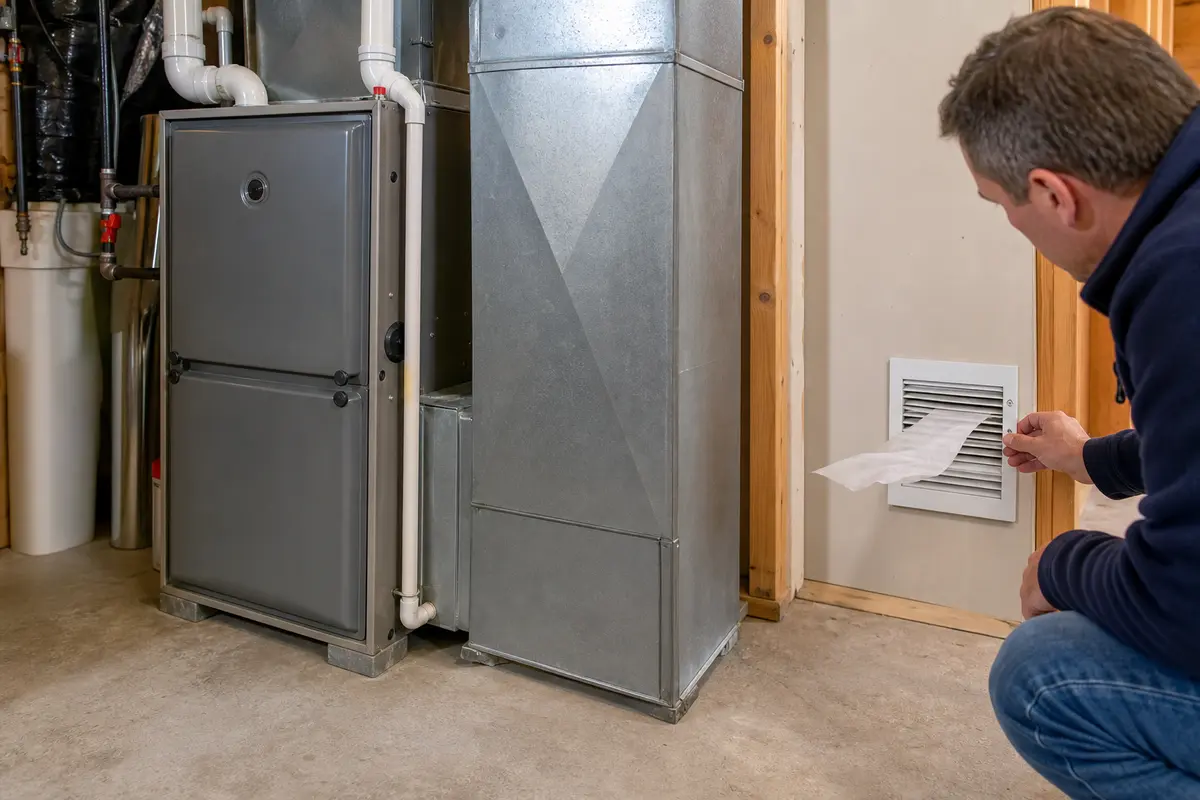
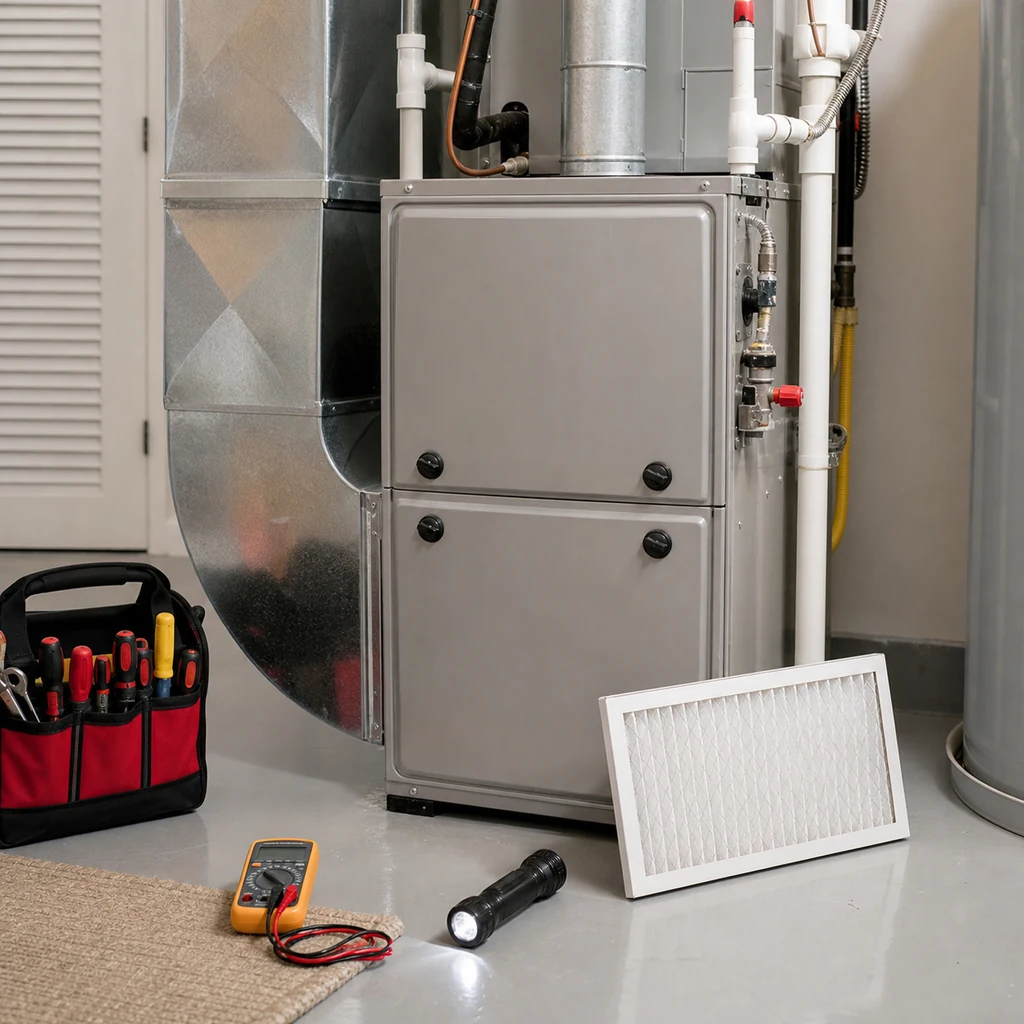
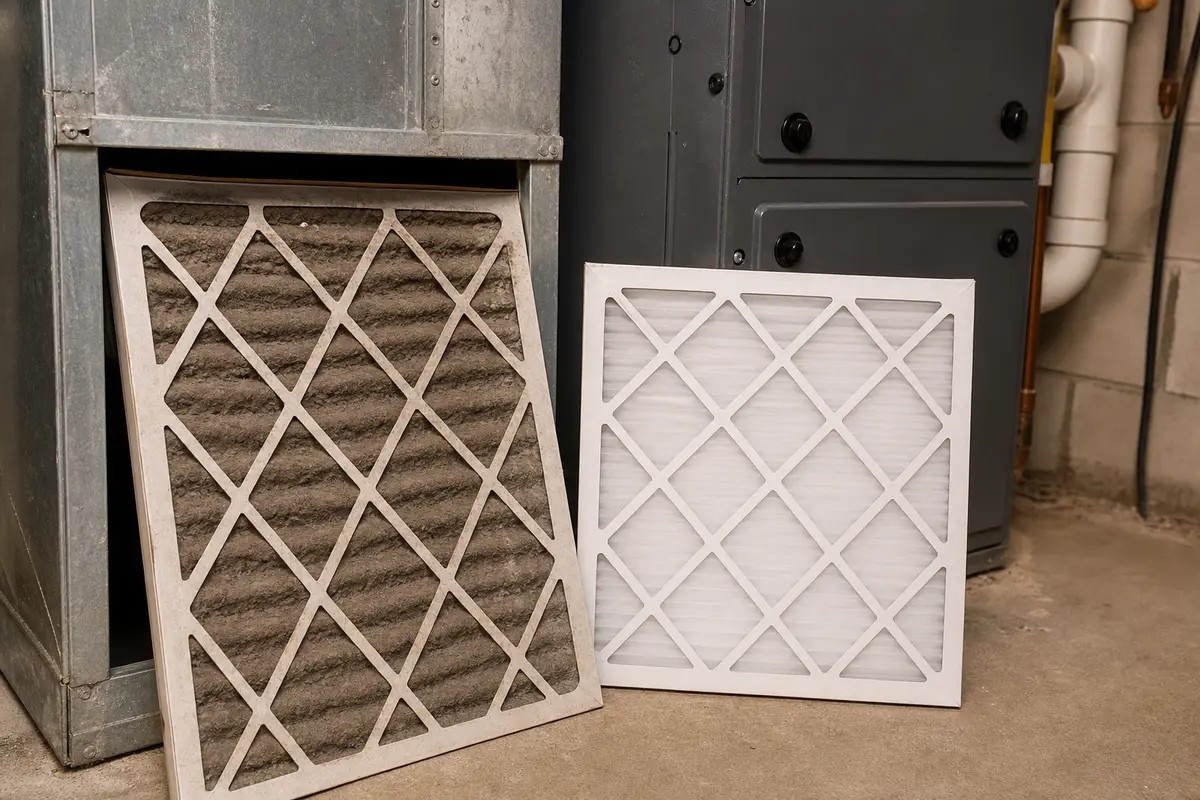
Do not buy furnace parts from the no-hot-air symptom alone. First sort the pattern: thermostat call, fan setting, filter condition, airflow at several registers, furnace power, door fit, and any visible startup clue. Match filters by printed size and type. Match thermostats and flame sensors by the furnace model and the actual failure pattern. Stop at gas valves, control boards, pressure switches, and burner work unless an HVAC tech has proven the part.
A furnace can sound alive and still send cool air to the rooms. A good clue is whether airflow is strong before the air turns warm.
Cool air is not enough of a clue to shop from. First separate no airflow, steady cool airflow, and a burner that lights briefly and quits.
Work from the wall and the air path back toward the furnace. Watch for the first change you can prove.
Use the first change you can prove. A furnace that responds to a thermostat setting is a different repair than one that tries to ignite and locks out.
| What you find | What it usually means | Next action |
|---|---|---|
| Fan was set to On. | The blower was moving unheated air between burner cycles. | Set fan to Auto and run one normal heat call. |
| Filter is packed, bowed, wet, or wrong-sized. | Airflow may be low enough to trip the limit. | Install the same printed size and a similar airflow type. |
| Airflow is weak at most vents. | The blower, return path, filter, or duct path needs attention. | Stop after filter and register checks if airflow stays weak. |
| Breaker or service switch was off. | The heating sequence may have been interrupted. | Restore power once and watch for a normal cycle. |
| Burners light for a few seconds, then quit. | Flame proving is the stronger clue. | Consider the flame-sensor guide only if access is safe. |
| No ignition, repeated clicks, gas odor, or banging. | The problem has crossed into combustion service territory. | Turn the system off if safe and call an HVAC technician. |
Let the pattern choose the part. A dirty, collapsed, wet, wrong-sized, or overdue filter is the quick buy; deeper furnace parts need the full model number and a proven failure clue.
Helps when: The old filter is loaded with dust, bowed, wet, damaged, the wrong size, or overdue and airflow improves after correcting it.
Skip it when: Skip if the filter is clean, fitted correctly, and the furnace is failing ignition or tripping power.
Compare furnace air filters on Amazon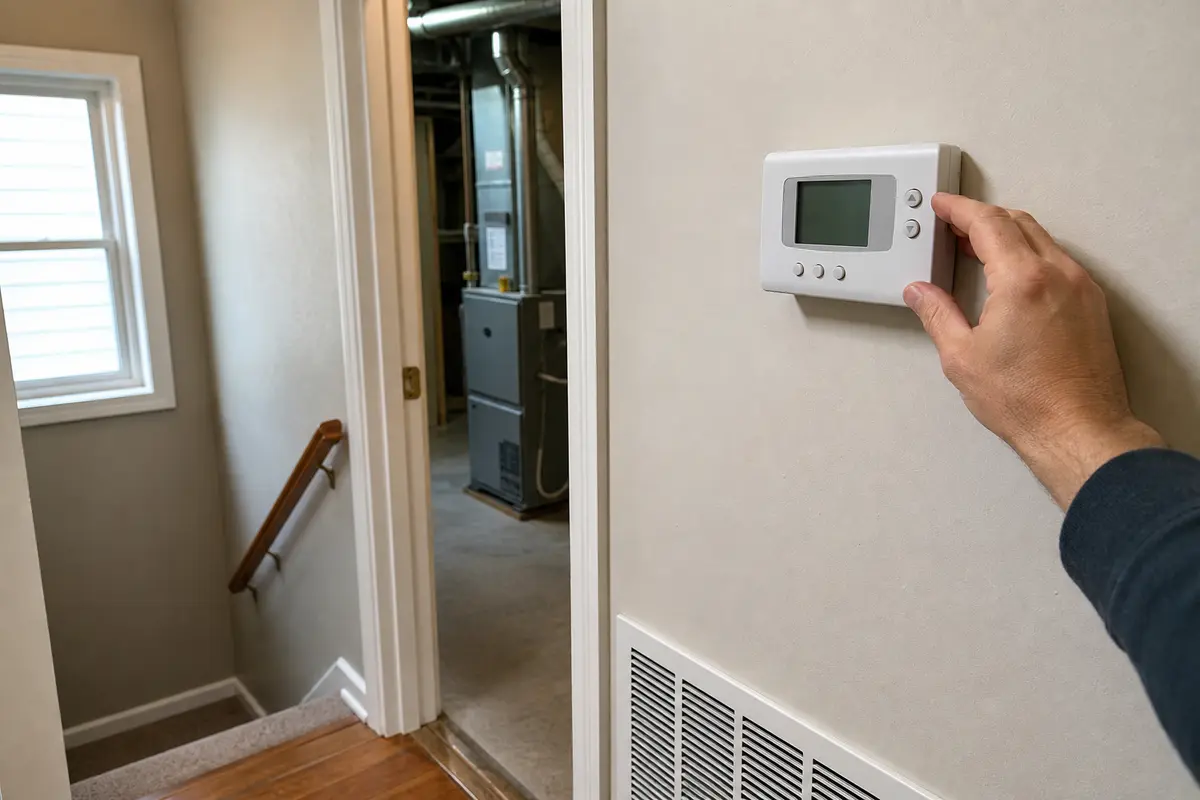
Helps when: The thermostat will not call for heat after Heat mode, setpoint, batteries, schedule, furnace power, and wiring compatibility are checked.
Skip it when: Skip if the thermostat calls normally and the furnace starts but shuts down during ignition or airflow problems.
Compare furnace thermostats on AmazonAs an Amazon Associate I earn from qualifying purchases. Repair Riot may earn a commission at no extra cost to you.
Use these for observation and simple homeowner checks. Keep the furnace closed and stop before gas, burner, control board, or energized electrical work. Call service when the next step crosses that line.
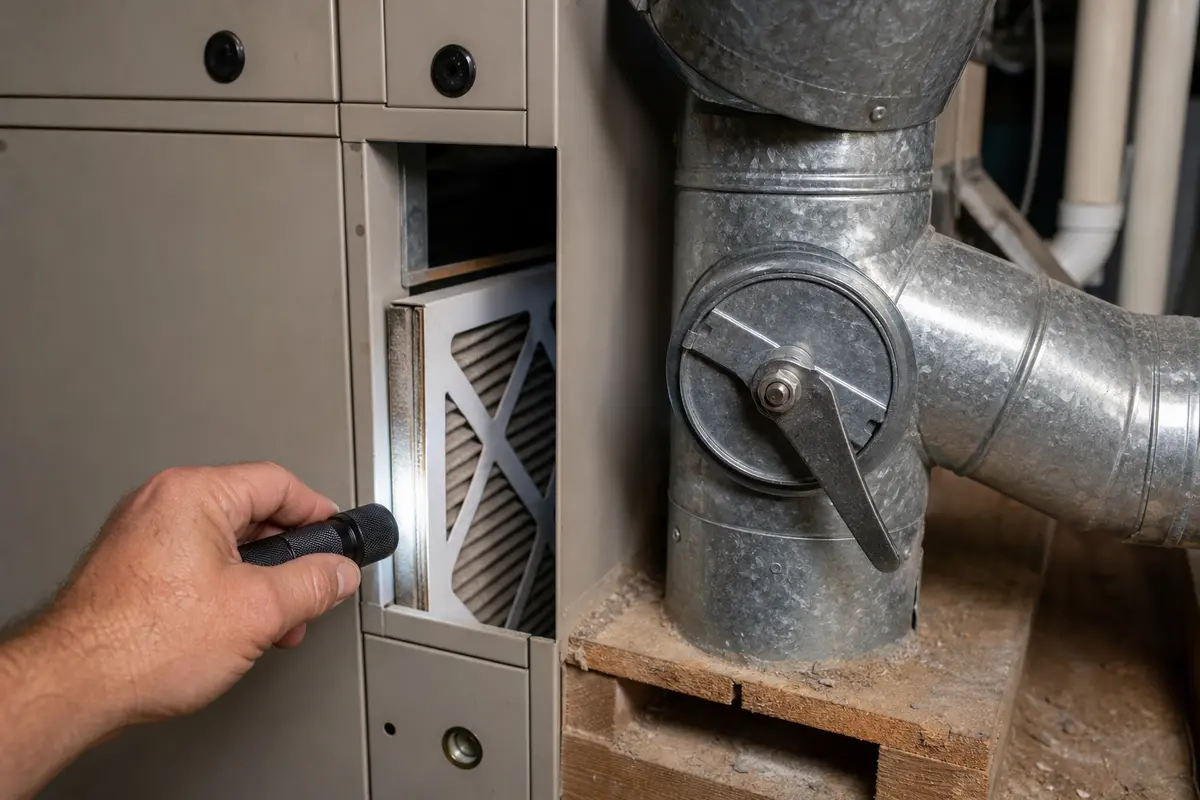
Helps when: You need a clear look at the filter slot, blower door fit, viewing window, register airflow clue, or status light from a safe position.
Skip it when: Skip if the next step requires opening burner, gas, control board, or energized electrical sections.
Compare inspection flashlights on Amazon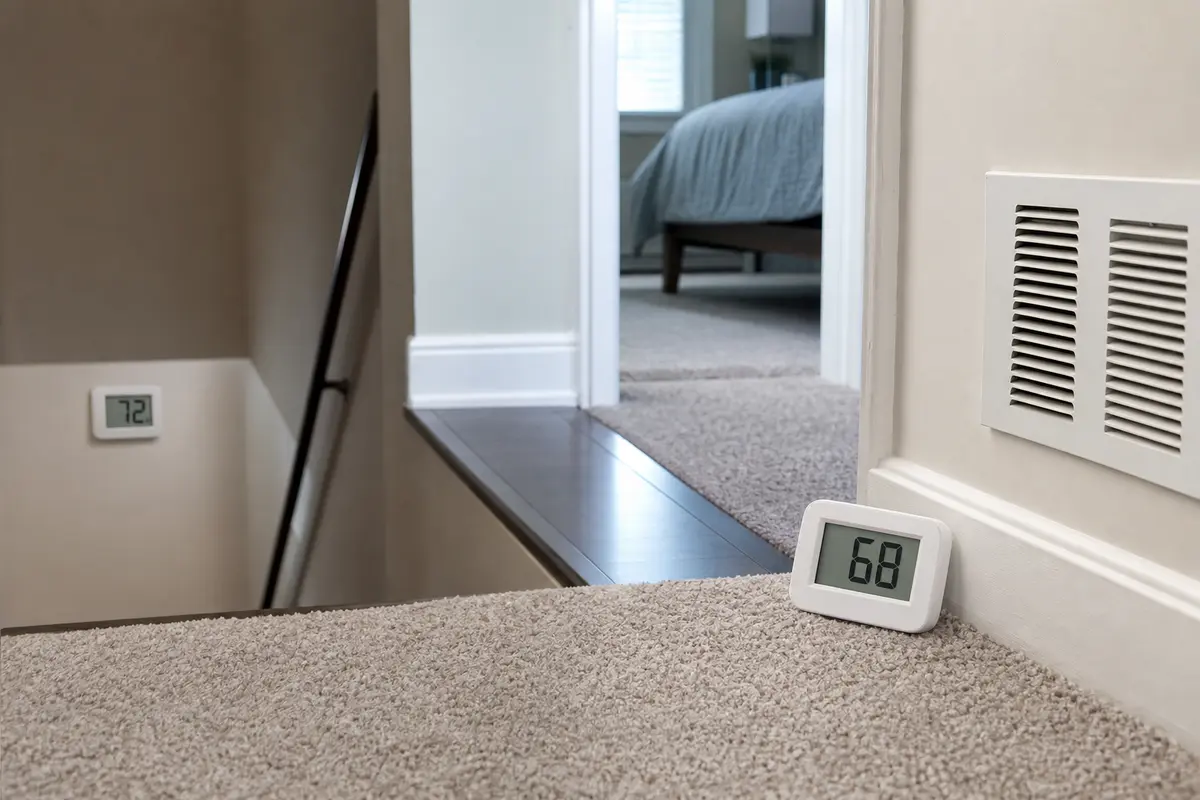
Helps when: You want to compare actual room temperature with the thermostat and see whether warm air is recovering the space through one normal cycle.
Skip it when: Skip if the furnace is failing ignition, tripping power, or showing any gas or carbon monoxide warning sign.
Compare room thermometers on AmazonAs an Amazon Associate I earn from qualifying purchases. Repair Riot may earn a commission at no extra cost to you.
A good service call starts with a clear symptom. Watch for the line where observation turns into gas, combustion, or electrical diagnosis.
Start with fan mode. Fan On can blow room-temperature air between heat cycles. After that, inspect the filter, open vents and returns, and watch whether the burners light and stay lit.
Yes. A clogged filter can restrict airflow enough to overheat the furnace. The burners may shut off on a high-limit safety while the blower keeps moving cooler air through the house.
Use Heat mode, raise the setpoint 3 to 5 degrees above room temperature, and set the fan to Auto. Replace thermostat batteries only if your thermostat uses them and the display is weak or blank.
Give the furnace several minutes. Many furnaces start an inducer first, then ignition, then blower. Stop waiting and start troubleshooting if the blower runs cool through the cycle or the furnace quits early.
Reset a clearly tripped furnace breaker once. A breaker that trips again points to an electrical fault, not a setting problem. Leave it off and call for service.
The useful clue is burners that light briefly and then shut off. That pattern can point toward flame proving, but rule out thermostat, filter, airflow, and simple power issues before touching flame-sensor work.
Not from the no-hot-air symptom alone. Igniters, boards, gas valves, pressure switches, and blower parts need a specific failure pattern and model match. Start with thermostat, filter, airflow, power, and visible startup clues.
No airflow is different from cool airflow. Look at thermostat call, service switch, breaker, blower door fit, and blower behavior. Stop if the breaker trips again or wiring smells hot.
A brief cool start can be normal while the furnace warms up. Air that stays lukewarm through the cycle, fades after a minute, or follows short cycling deserves filter, airflow, and startup checks.
Call for gas odor, hissing, soot, flame rollout, carbon monoxide alarm, banging ignition, repeated clicking, a second breaker trip, scorched wiring, or no steady heat after the safe checks.
Repair Riot built this page around homeowner-visible furnace clues: thermostat call, fan setting, register airflow, filter condition, power, door fit, startup pattern, and stop points before gas or electrical work.