Do both posts stay firm?
If either post rocks, leans, or lifts, switch to the loose-post path before spending money on panel parts.
Check the posts first when a fence panel is broken. If they stay steady, look for loose fasteners, split rail ends, broken pickets, bottom-edge rot, impact damage, or a panel pulled out of square.
Rock both posts, then lift the loose panel edge. If the post stays firm and screw holes still bite, replace the exterior fasteners. Split rails, broken pickets across the section, or a racked panel frame point to replacement.
Work in order: posts, connections, rails, then panel condition. Reattach only if the posts stay firm and the wood still holds a fastener.
Don’t start with: Do not start by buying a panel from the photo alone. Measure the opening and check the posts first, because a new panel will fail if the support is moving.
If either post rocks, leans, or lifts, switch to the loose-post path before spending money on panel parts.
If yes, the main failure may be fasteners or brackets. If no, the panel or opening may be distorted.
Fasteners will not hold long in split or soft rail ends. Treat that as panel failure.
A small localized repair may work if the rails and frame are still solid.
A twisted or out-of-square panel usually needs replacement, not more screws.
Fix moisture contact or drainage first, or the replacement panel can fail the same way.
Use three views: the broken panel, the connection point, and the post movement check.
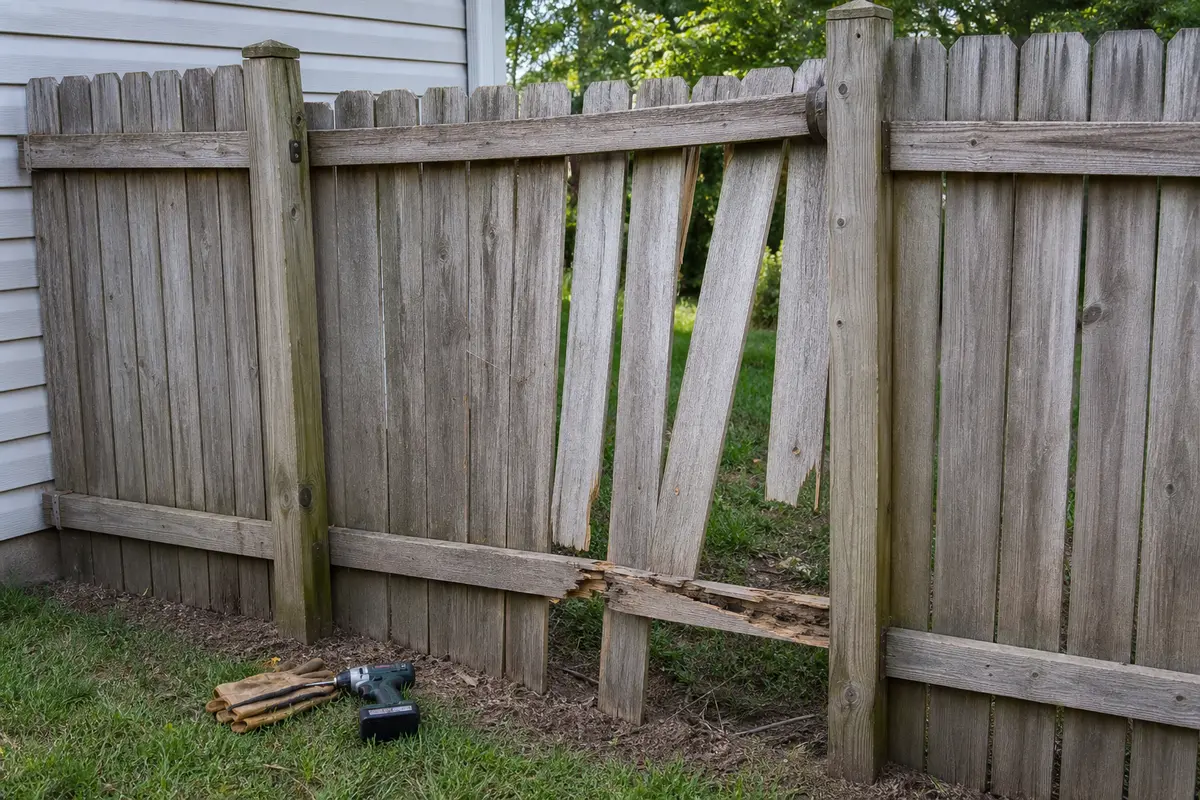
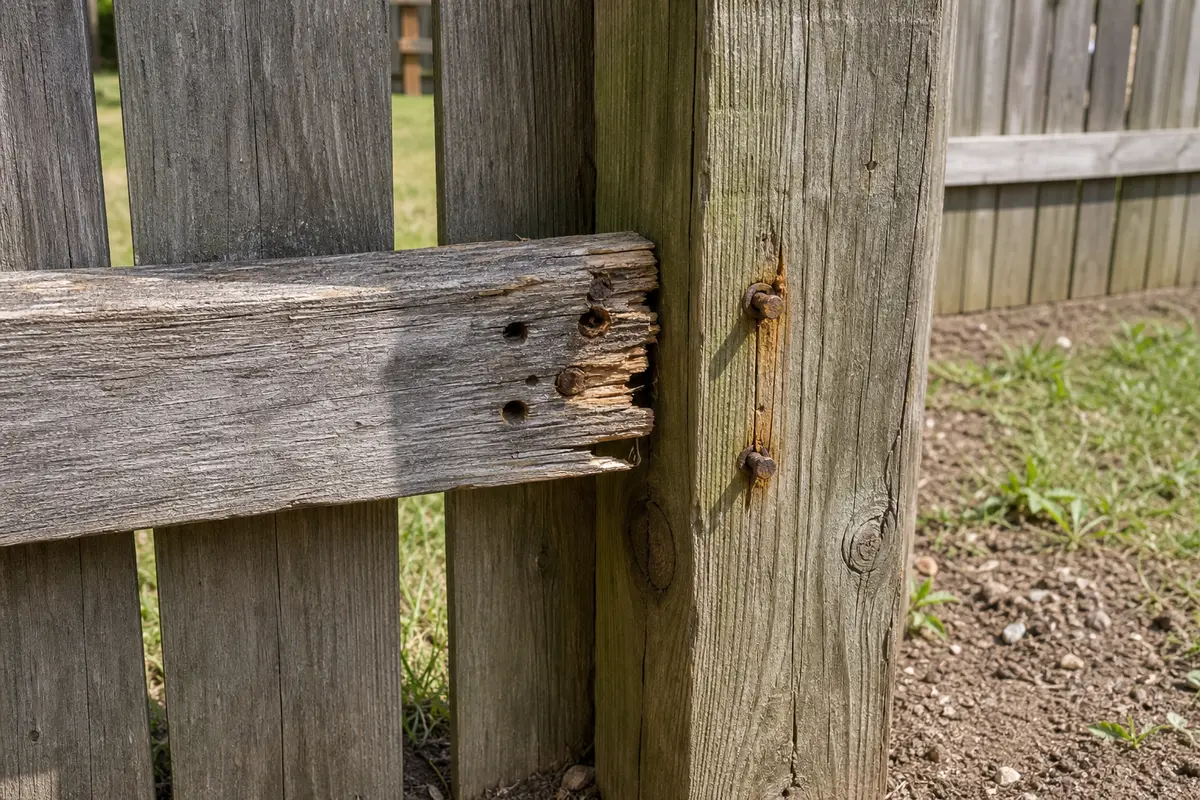
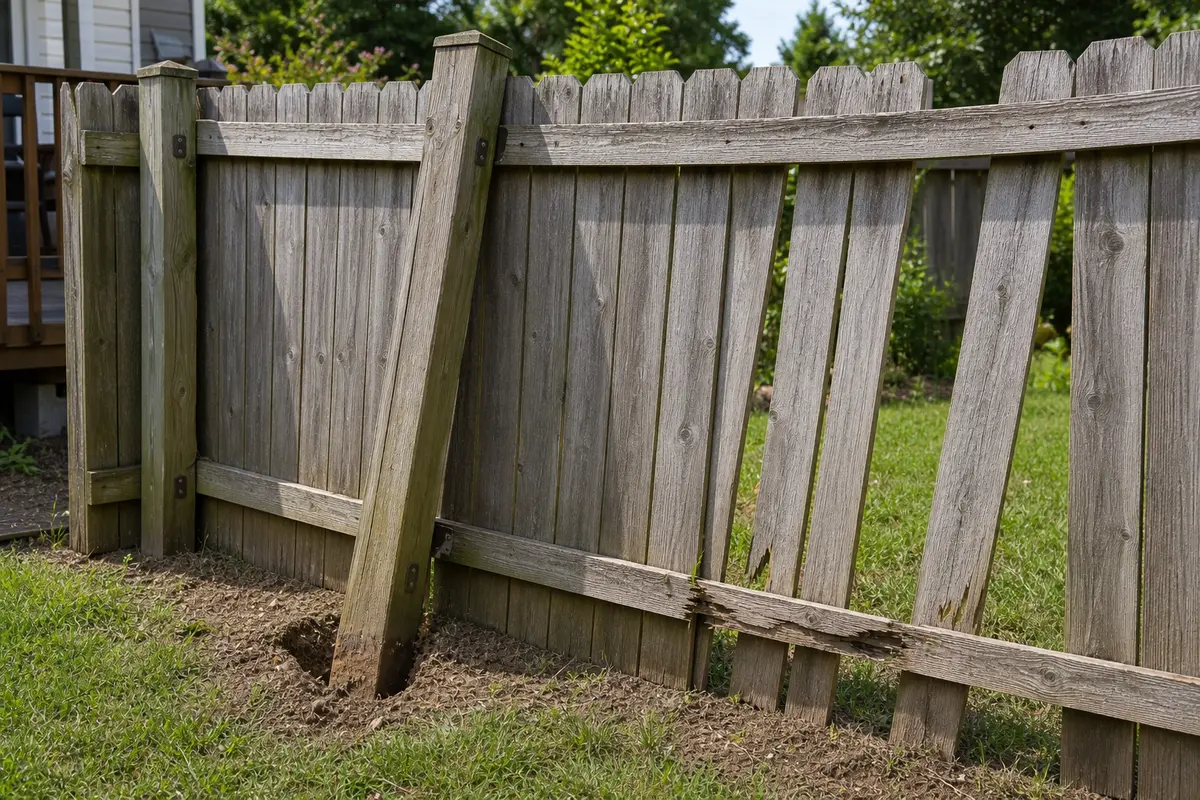
Match the exact diagnosis and the exact opening before buying. Measure post-to-post width, panel height, style, material, rail layout, picket spacing, fastener type, and ground clearance. Buy fasteners only when the wood is solid and the old hardware failed. Buy a panel only when rails, pickets, or the panel frame are structurally broken.
A panel repair only lasts if the posts beside it stay put. Test that before you add screws or order a replacement.
Check the first failure you can see, then push lightly where the panel is loose. If the post moves first, switch to post repair; if the panel shifts while the posts feel firm, keep checking fasteners, rails, and rot.
| What you see | Likely meaning | Next move |
|---|---|---|
| Panel lines up when lifted gently | Connection or fastener failure | Replace failed fasteners if the wood is solid. |
| Fasteners spin or pull out | Enlarged holes, split rail end, or soft wood | Do not keep upsizing screws into damaged wood. |
| Rail is cracked through | Panel structure has failed | Replace the damaged panel or rail assembly. |
| Several pickets are broken | Impact or age has weakened the section | Compare panel replacement with localized board work. |
| Panel racks out of square | Frame or posts are distorted | Measure the opening and check posts again. |
| Post moves before panel moves | Post or footing is the main failure | Switch to loose-post repair. |
Refastening works when the panel and rail ends are sound. It fails quickly when the screw bite is gone.
Check the full panel before adding screws. If you see broken rails, rot beyond one board, or a frame that twists when pushed, plan on replacement instead of another round of fasteners.
Fence panels are not interchangeable just because the height looks close. A mismatch can force the panel, split rails, or leave an uneven fence line.
Broken fence panels get worse when the first move is force instead of diagnosis.
These tools support inspection, support, measuring, and fastener work. They do not make a falling section safe to handle alone.
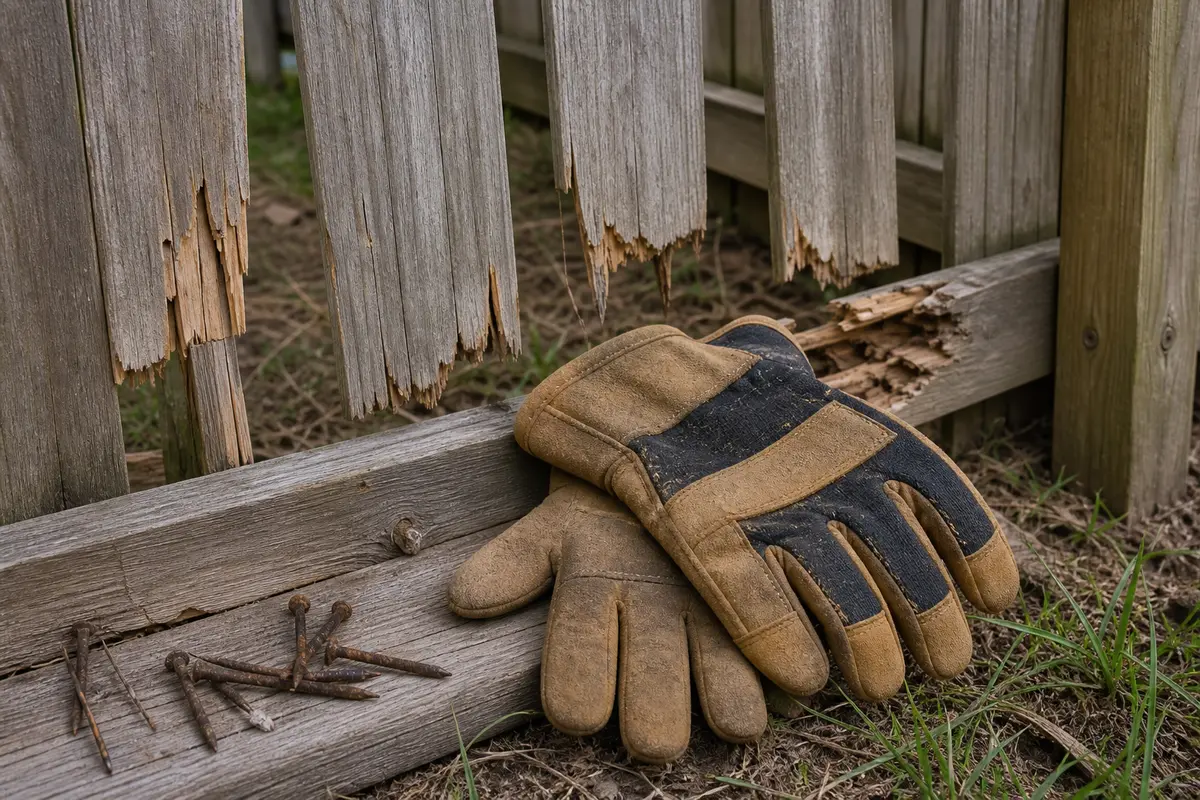
Helps when: Use them when handling split pickets, rusted fasteners, and rough panel edges.
Skip it when: Skip hands-on work when the panel is unstable enough to fall or too heavy to control.
Compare work gloves on Amazon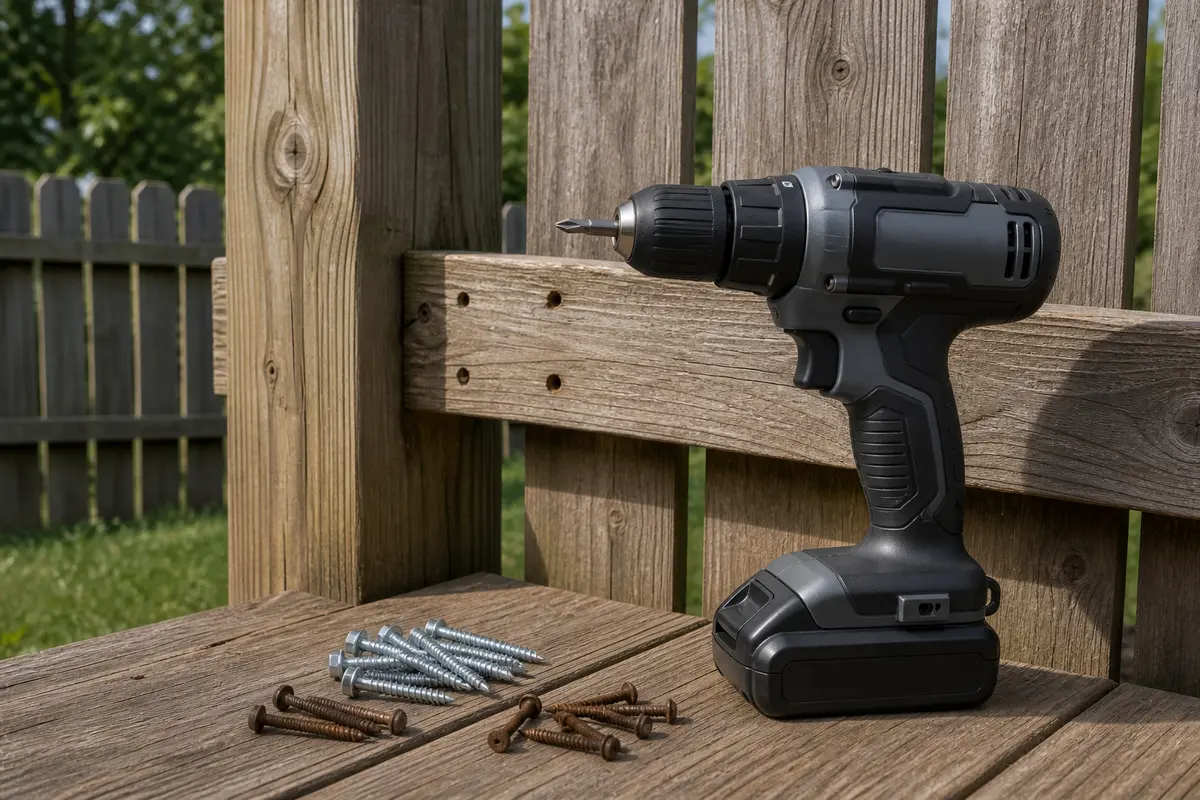
Helps when: Use one to remove failed hardware and install new exterior-rated fasteners into solid material.
Skip it when: Skip driving more screws when the rail end is split, soft, or already stripped out.
Compare drill drivers on Amazon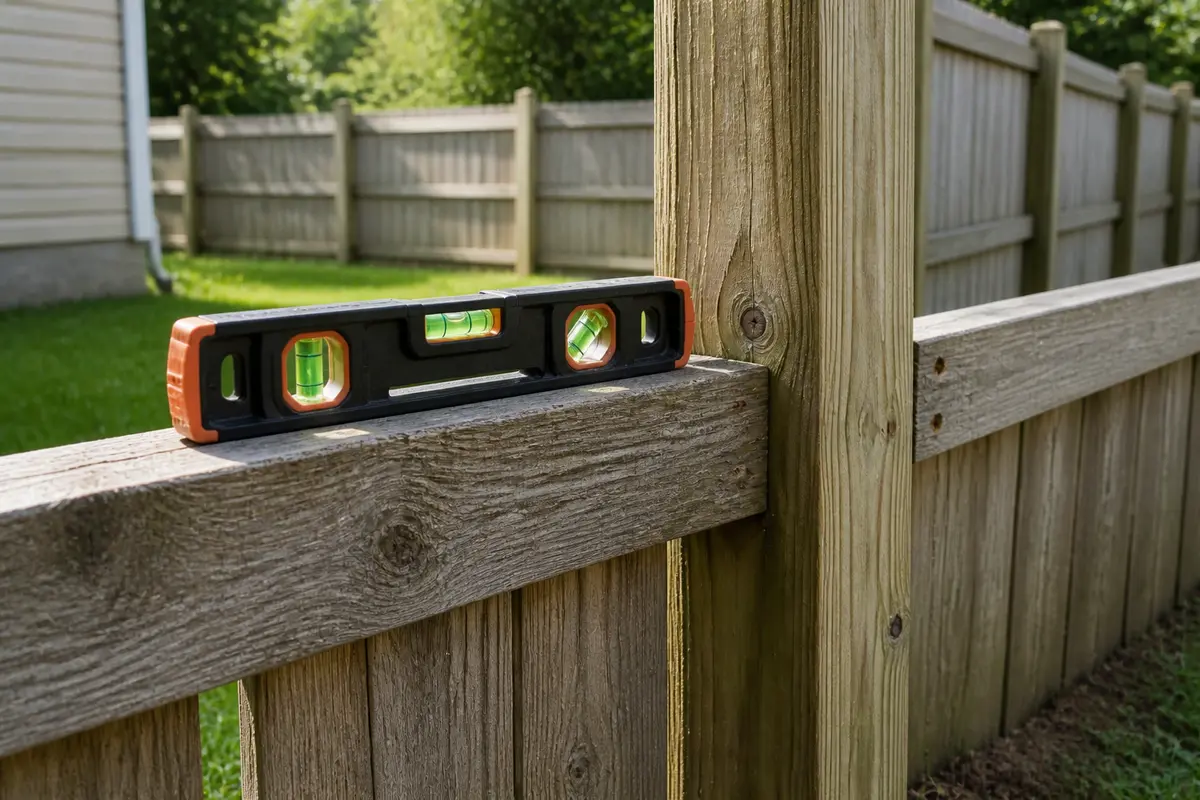
Helps when: Use one to compare the repaired panel and nearby posts before tightening everything down.
Skip it when: Skip chasing level when the yard grade or fence design intentionally steps between sections.
Compare torpedo levels on Amazon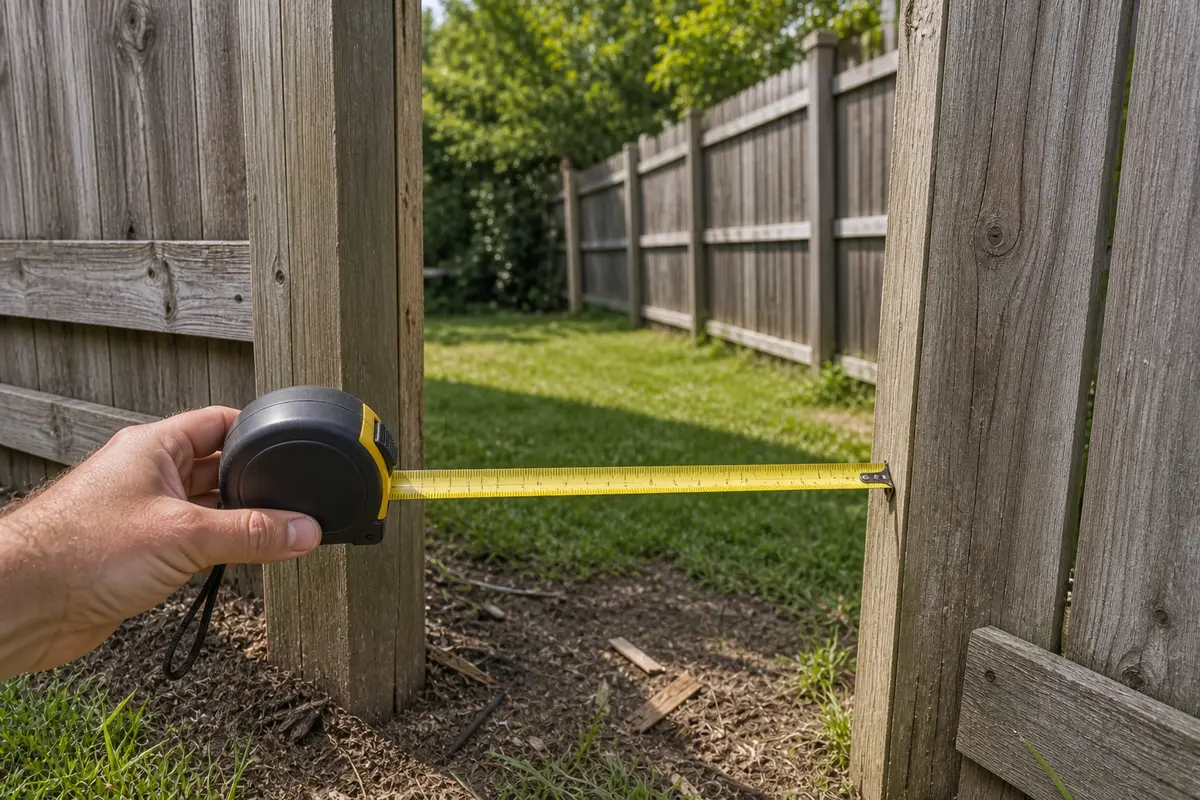
Helps when: Use one to confirm opening width, height, rail spacing, and ground clearance before ordering a panel.
Skip it when: Skip ordering when the opening measurements disagree because a post is leaning.
Compare tape measures on AmazonAs an Amazon Associate I earn from qualifying purchases. Repair Riot may earn a commission at no extra cost to you.
Buy only after the failure is proven. Use fasteners when the panel lines up and a screwdriver probe finds solid wood; choose a replacement panel only if you measure a matching opening and both posts stay steady.
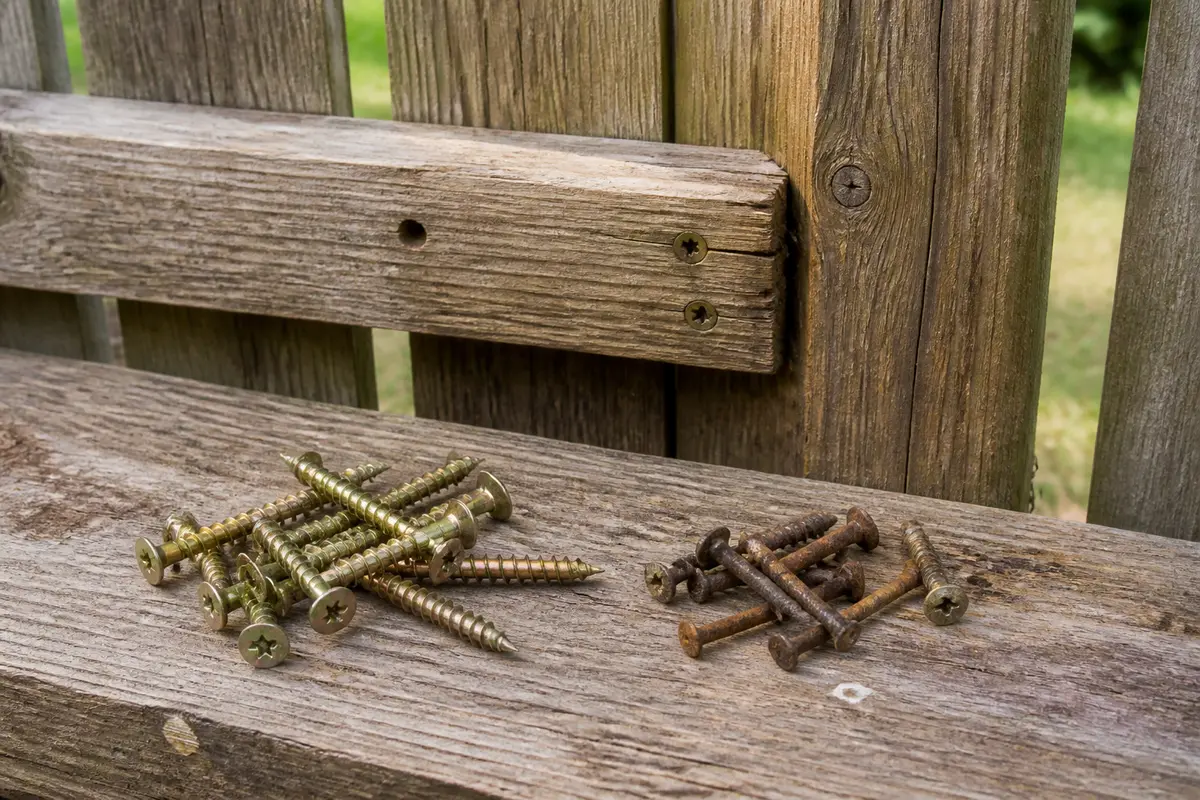
Helps when: Use them when the panel and posts are solid but old screws or nails pulled loose, rusted, or went missing.
Skip it when: Skip them when the rail end is split, the post moves, or the wood crushes under a screwdriver probe.
Compare fence fasteners on Amazon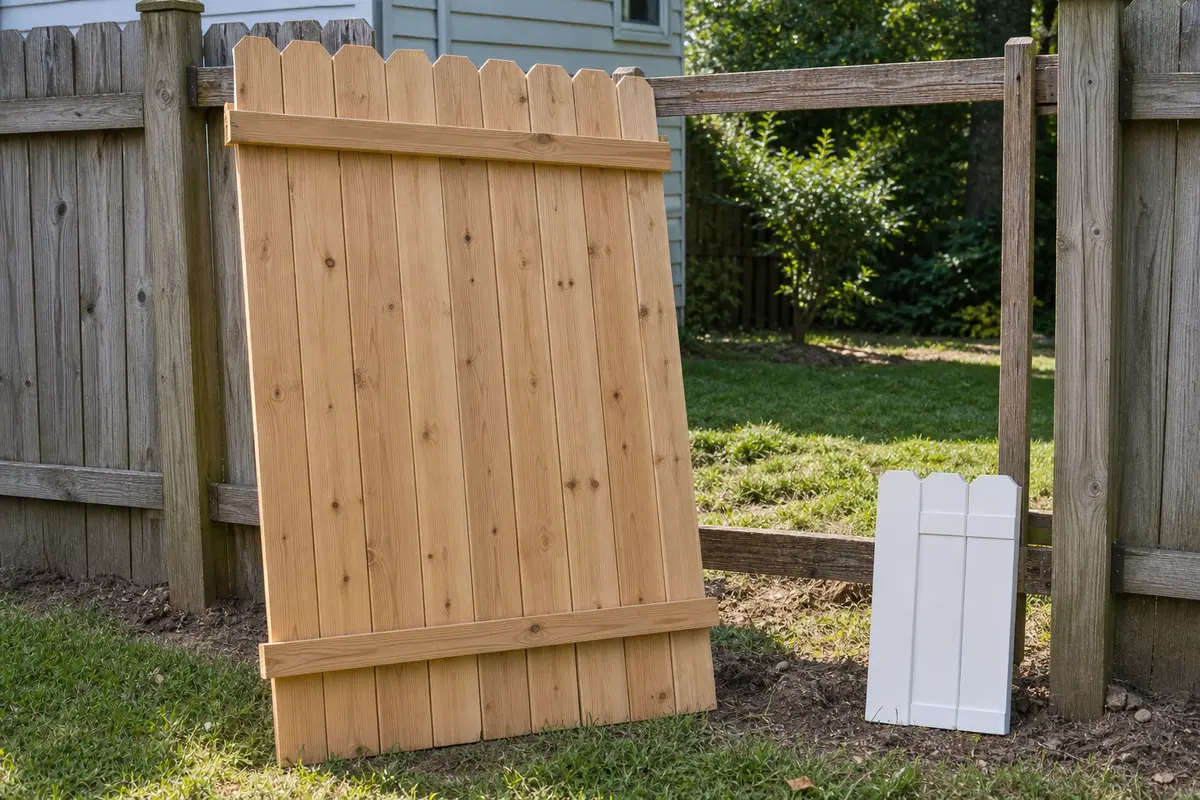
Helps when: Use one when the opening is measured, posts are stable, and the rails, pickets, or panel frame are too broken or racked to hold fasteners.
Skip it when: Skip it when the real problem is a moving post, a single loose connection, or a panel size/profile you cannot match.
Compare fence panels on AmazonAs an Amazon Associate I earn from qualifying purchases. Repair Riot may earn a commission at no extra cost to you.
Yes, if the panel lines up when you lift the loose edge gently and the wood around the connection feels solid. Replace fasteners when that is the only failure; if rails are split, wood is rotten, or several boards are broken, a replacement panel is usually stronger.
Push on the posts beside the damaged panel. If a post moves in the ground, leans noticeably, or has rot near the base, fix the post before the panel.
Only if the surrounding wood feels solid after you probe it. If holes are enlarged, rail ends are split, or the wood crushes under a screwdriver, extra screws usually will not hold long.
Check the rail and frame around that picket first. A small localized repair may work if those pieces feel solid and the panel stays square; if the break reaches a rail or the frame, replacing the full panel is usually stronger.
After a storm, look for the weak point that gave way: rusted fasteners, a softened rail end, hidden rot, or a loose post that rocks before the panel moves.
Yes. Rail ends and bottom edges can rot from the inside out. Probe dark or swollen areas with a screwdriver. Wood that crushes easily has lost strength.
Measure the opening between posts at the top, middle, and bottom. Then match height, material, style, rail pattern, picket spacing, and ground clearance.
Call when posts move, multiple panels lean together, the section could fall, the opening is badly out of square, or the panel is too heavy to handle safely.
Repair Riot built this page around visible fence-panel clues: post movement, rail-end condition, fastener bite, rot at grade, panel racking, opening measurements, and when a loose-post handoff comes first.