Is the hole small and contained?
A local patch is more realistic when one hole has firm surrounding pavement.
When driveway potholes appear, first check water, depth, and support around the hole. A small dry pothole with firm edges may be patchable. A wet, soft, spreading, or repeat pothole usually points to drainage or base failure under the surface.
Clean out loose chunks, then check the edges and measure the depth. If the edges stay firm and the bottom stays solid, patching has a chance. If water pumps up, the edges crumble wider, or the hole sits in a low spot, fix the water path first.
Sort the problem before buying material: pothole size, surrounding edge strength, water source, and whether traffic is loading an unsupported spot.
Don’t start with: Do not start by dumping patch material into a wet hole. Patch products need clean, firm boundaries, and they will not fix a washed-out base.
A local patch is more realistic when one hole has firm surrounding pavement.
Fix the water path first. Standing water is a common reason patches fail.
Keep cleaning back to solid material. Endless crumbling points to a wider failed area.
Do not patch yet. The support below the surface is part of the problem.
Use the material-specific patch path. Asphalt cold patch and concrete patch are not interchangeable.
Assume water, weak base, or poor prep until proven otherwise.
Use three views: the pothole, the water path, and nearby surface breakup that can change the repair.
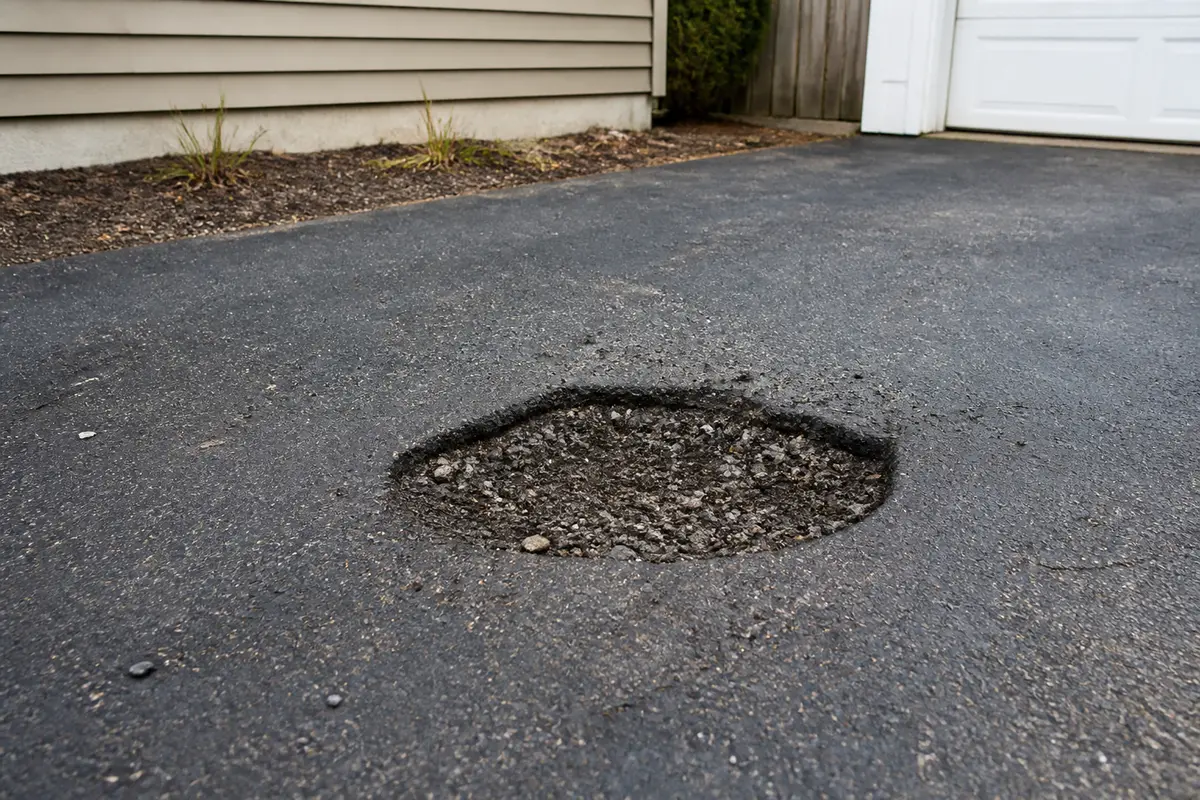
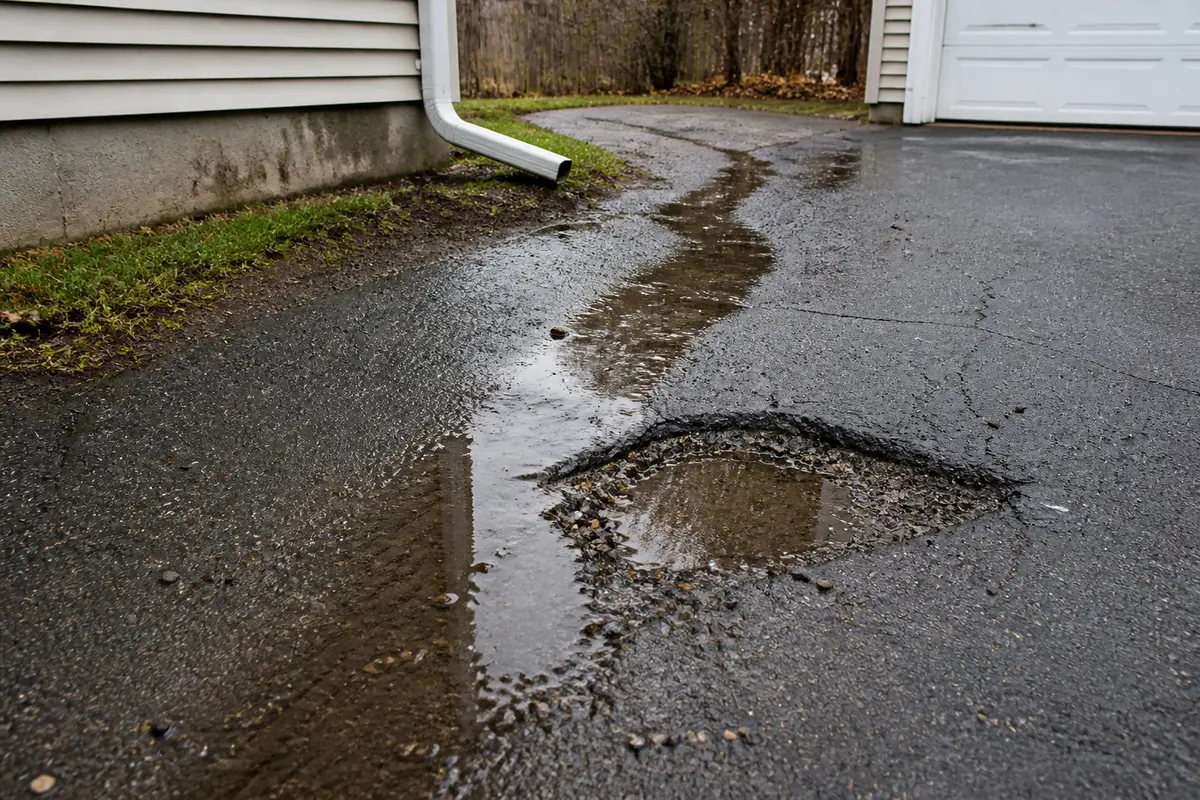
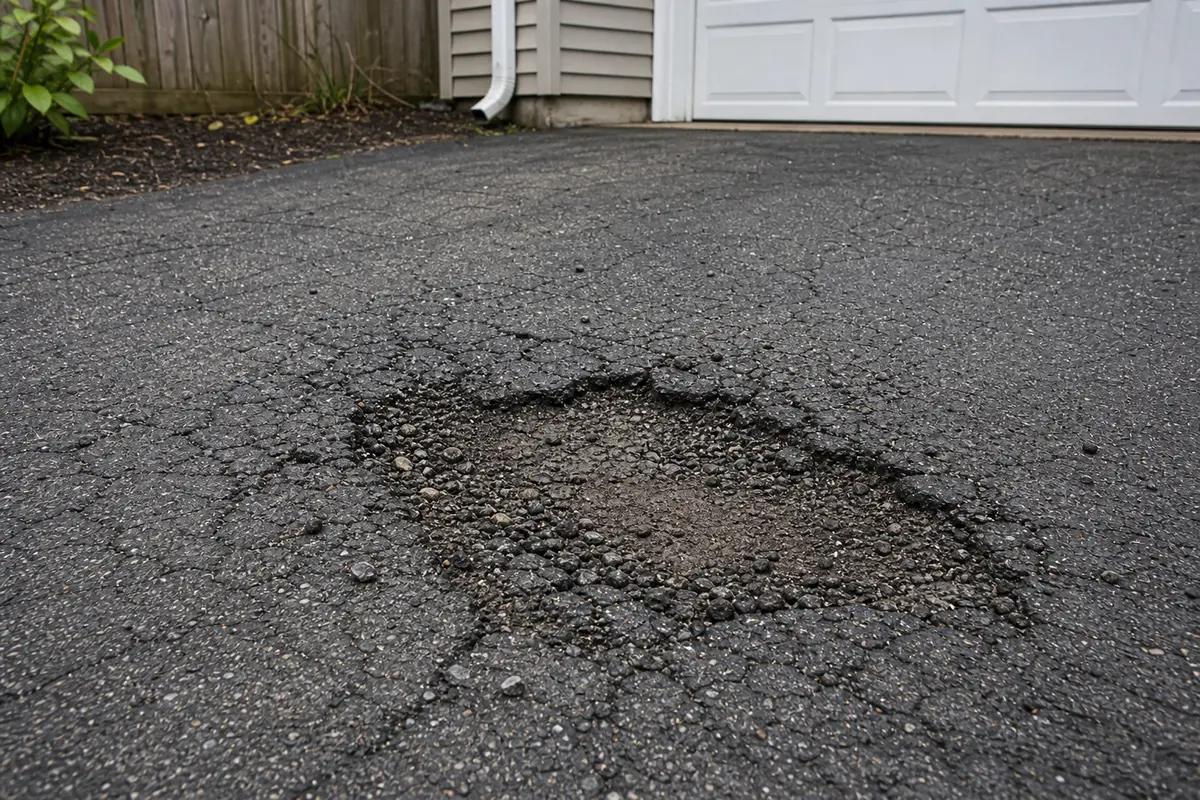
Match the exact driveway surface and the exact failure. Measure depth, width, edge condition, water exposure, and whether the bottom is firm. Buy asphalt patch only for asphalt potholes with clean boundaries. Buy concrete patch only for limited concrete surface loss with sound surrounding concrete. Do not use crack filler as pothole filler.
A pothole is patchable only when the damaged area can be cleaned back to firm material. Measure and press before you buy.
Use the first visible clue to decide whether to prep, drain, patch, or stop.
| What you see | Likely meaning | Next move |
|---|---|---|
| Small hole, firm bottom | Possible surface pothole | Prep the surface before choosing patch material. |
| Water ponds in the same spot | Drainage or low-spot problem | Improve the water path before patching. |
| Edges crumble wider | Weak surrounding surface | Clean back to solid material or plan a larger repair. |
| Surface pumps water or sounds hollow | Base or washout problem | Stop treating it as a simple patch. |
| Edge breaks beside the driveway | Shoulder support is gone | Correct edge support and runoff before filling. |
| Old patch failed quickly | Prep, water, or support issue | Remove failed material and diagnose again. |
Water is the usual repeat-failure clue. A patch can look good for a week and still fail if the low spot stays wet.
Most driveway patch failures start with weak prep. The patch needs clean sides, a stable bottom, and no mud left in the hole.
The right product depends on surface type, depth, support, and weather. Asphalt and concrete patch materials solve different problems.
| Patch condition | What it supports | What to buy or do |
|---|---|---|
| Asphalt hole, firm base, dry enough | Localized asphalt patch | Use asphalt pothole patch material and compact as directed. |
| Concrete breakout, sound slab around it | Localized concrete surface repair | Use exterior concrete patch material matched to depth. |
| Wet low spot | Drainage correction first | Improve the water path before buying patch. |
| Soft or hollow base | Larger repair | Do not rely on bagged patch as the final fix. |
| Only narrow cracks nearby | Separate crack repair | Use crack filler only for cracks, not the pothole cavity. |
A pothole patch is easy to waste when the hole is still wet, loose, or unsupported.
These tools support measuring, cleanup, drainage checks, and compaction. They do not make a soft or washed-out base patchable.
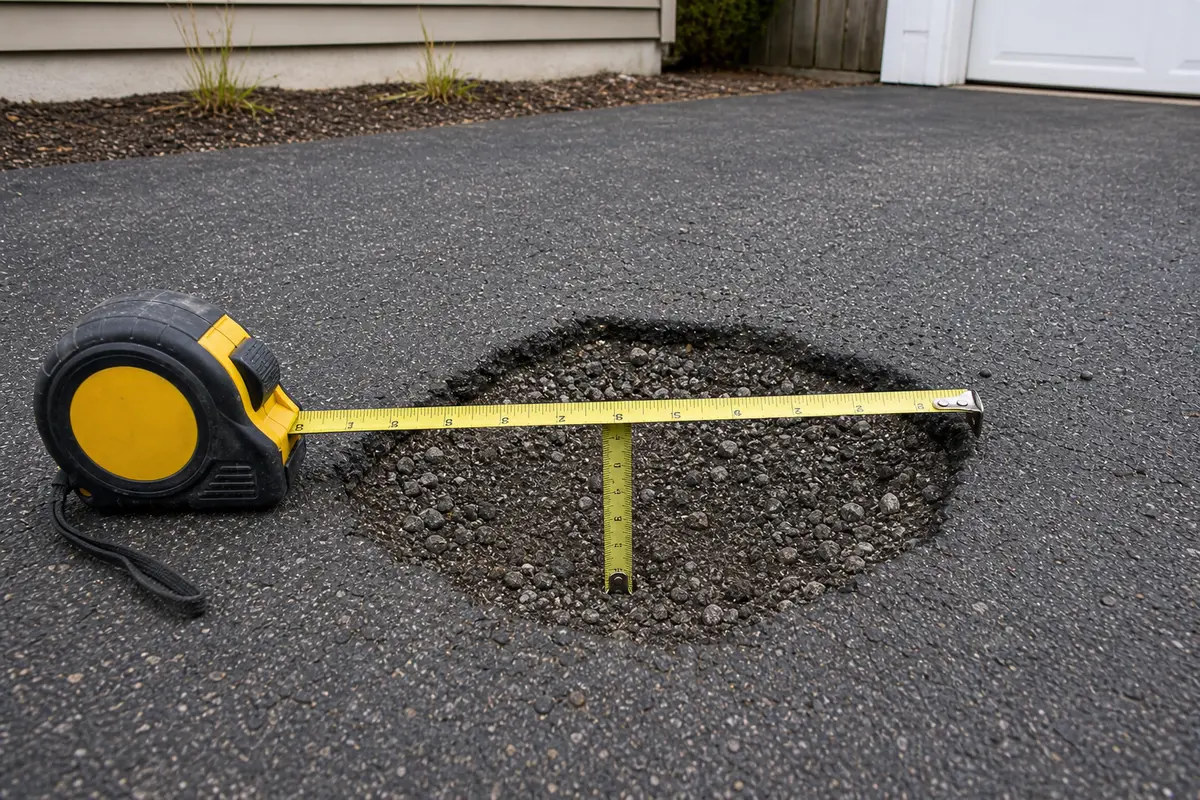
Helps when: Use one to check pothole depth, width, and whether cleanup has enlarged the repair area.
Skip it when: Skip guessing from photos. Measure the cleaned-out depth and confirm whether the driveway is asphalt or concrete before choosing patch material.
Compare tape measures on Amazon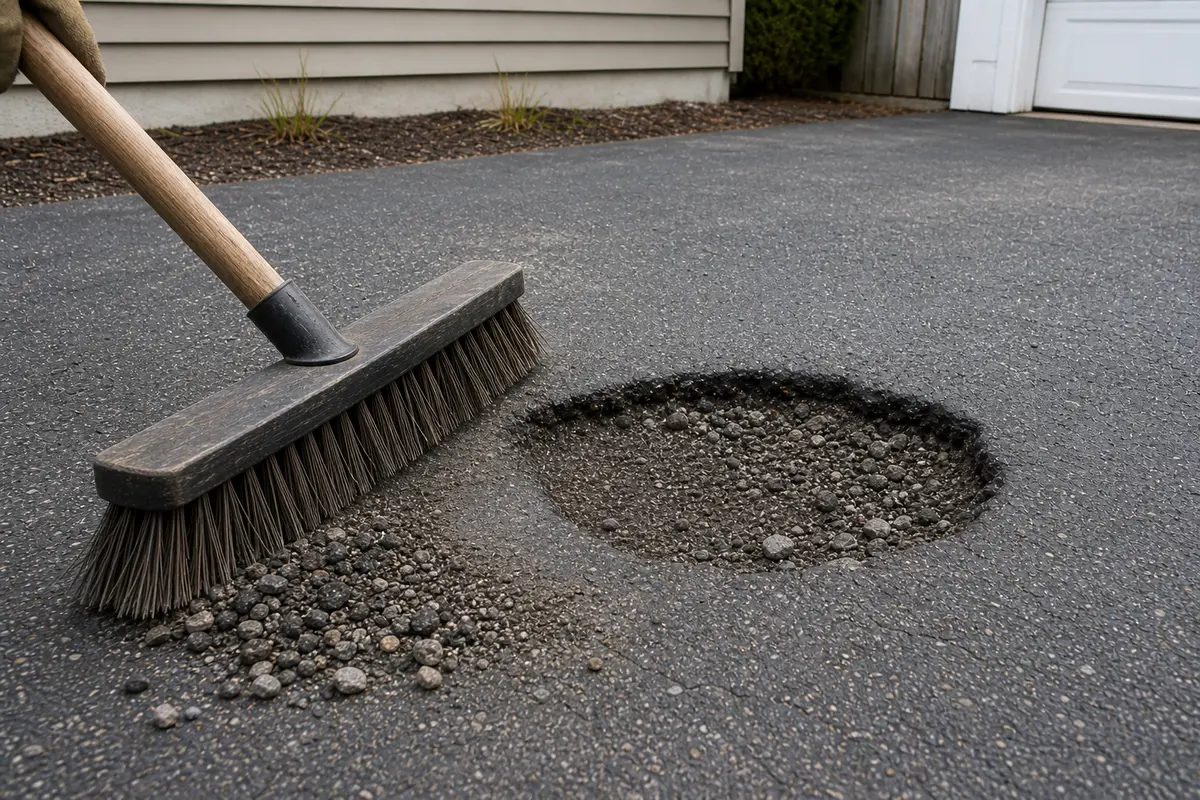
Helps when: Use one to remove grit and loose aggregate before judging the real edges.
Skip it when: Skip patching when sweeping keeps exposing more soft or crumbling material.
Compare stiff push brooms on Amazon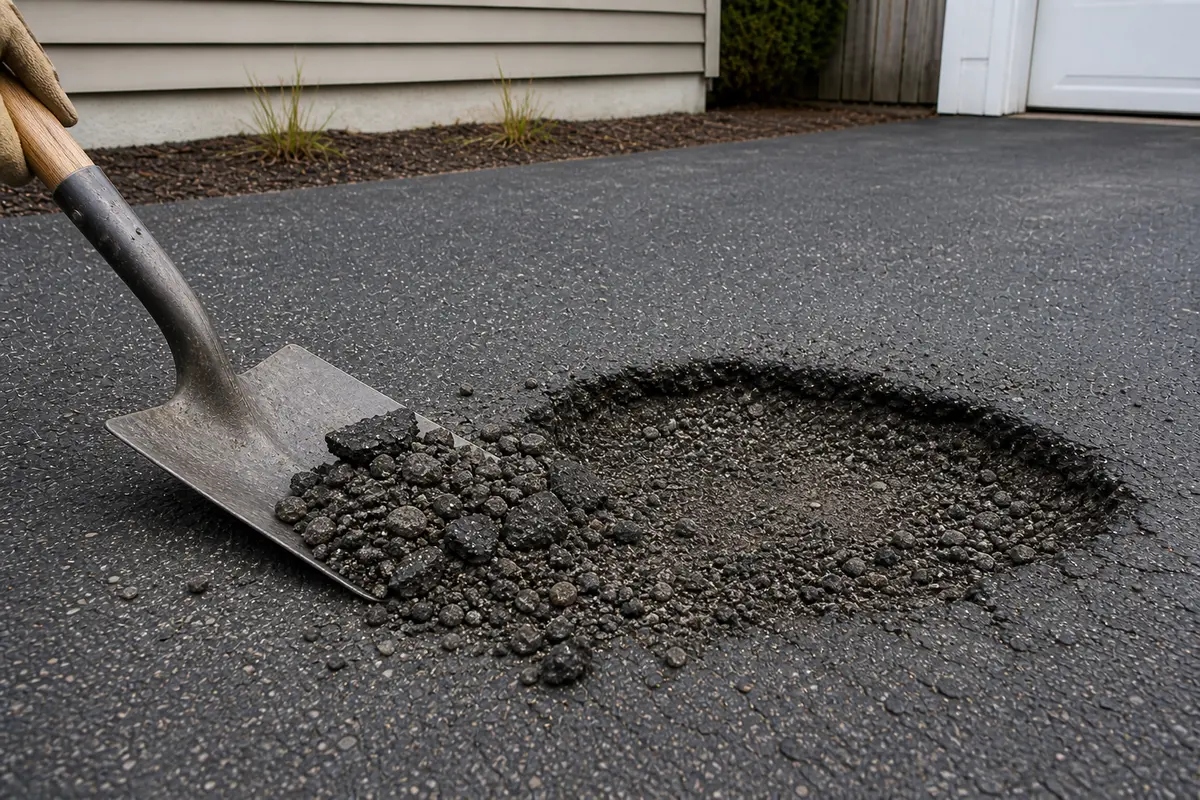
Helps when: Use one to lift loose chunks, old failed patch, wet debris, and edge material that is already detached.
Skip it when: Skip prying hard into stable pavement just to make the repair larger.
Compare flat shovels on Amazon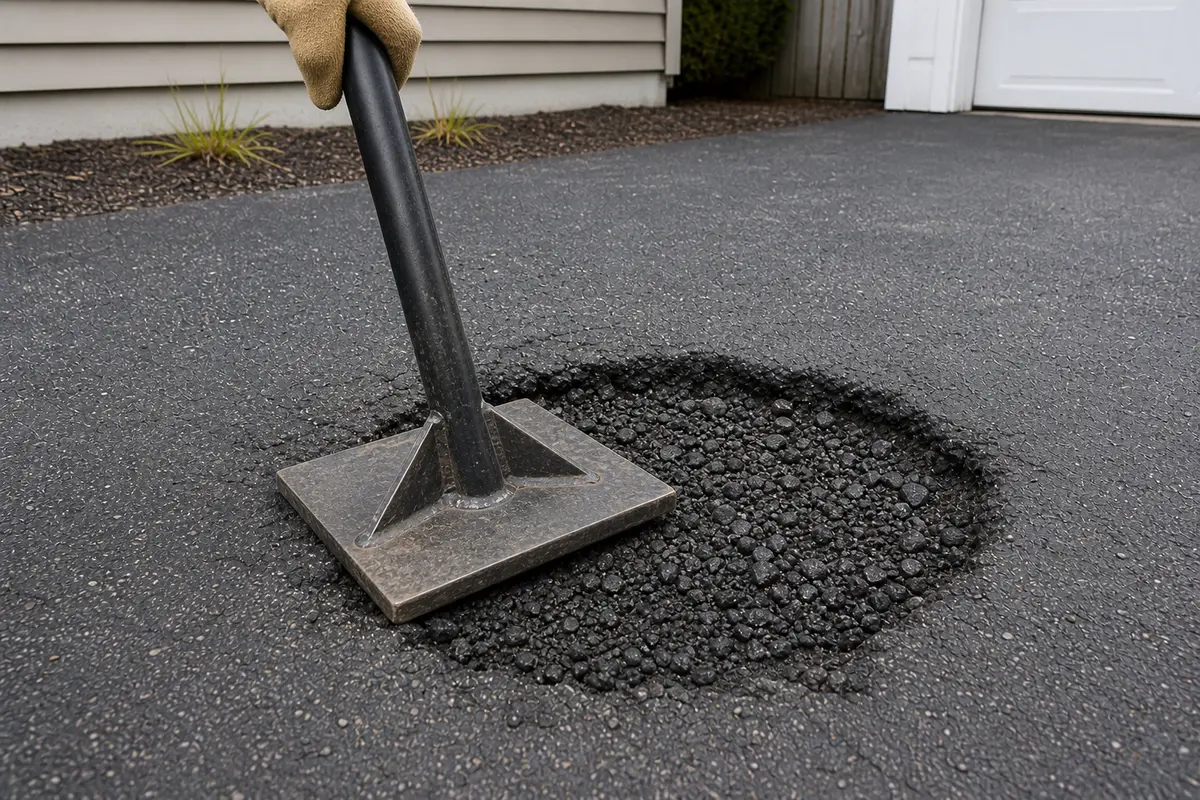
Helps when: Use one when the patch product calls for compaction in lifts.
Skip it when: Skip tamping when the base below the hole is muddy, hollow, or moving.
Compare hand tampers on AmazonAs an Amazon Associate I earn from qualifying purchases. Repair Riot may earn a commission at no extra cost to you.
Buy patch material only after the hole passes the support and water checks. The product must match asphalt or concrete, not just the word driveway.
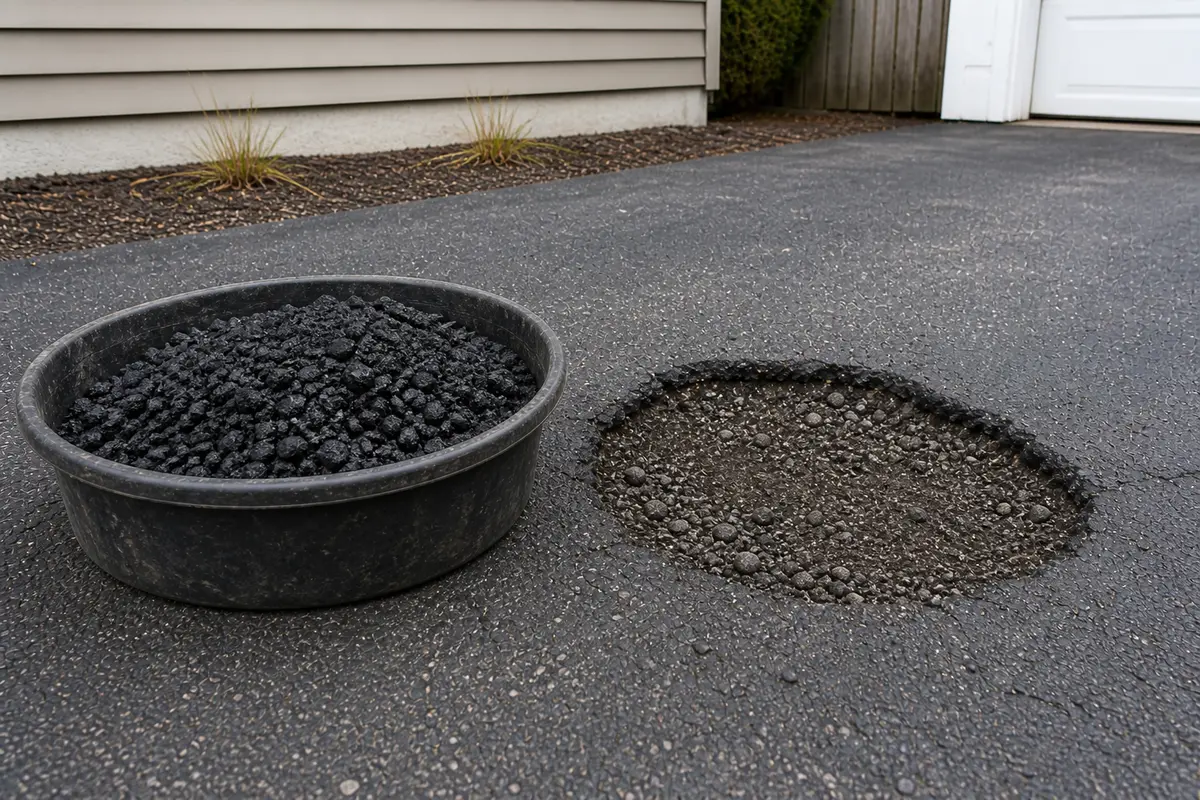
Helps when: Use it when the asphalt pothole is local, clean, firm at the bottom, and dry enough for the product.
Skip it when: Skip it when the driveway is concrete, the base is soft, or water still sits in the hole.
Compare asphalt patch materials on Amazon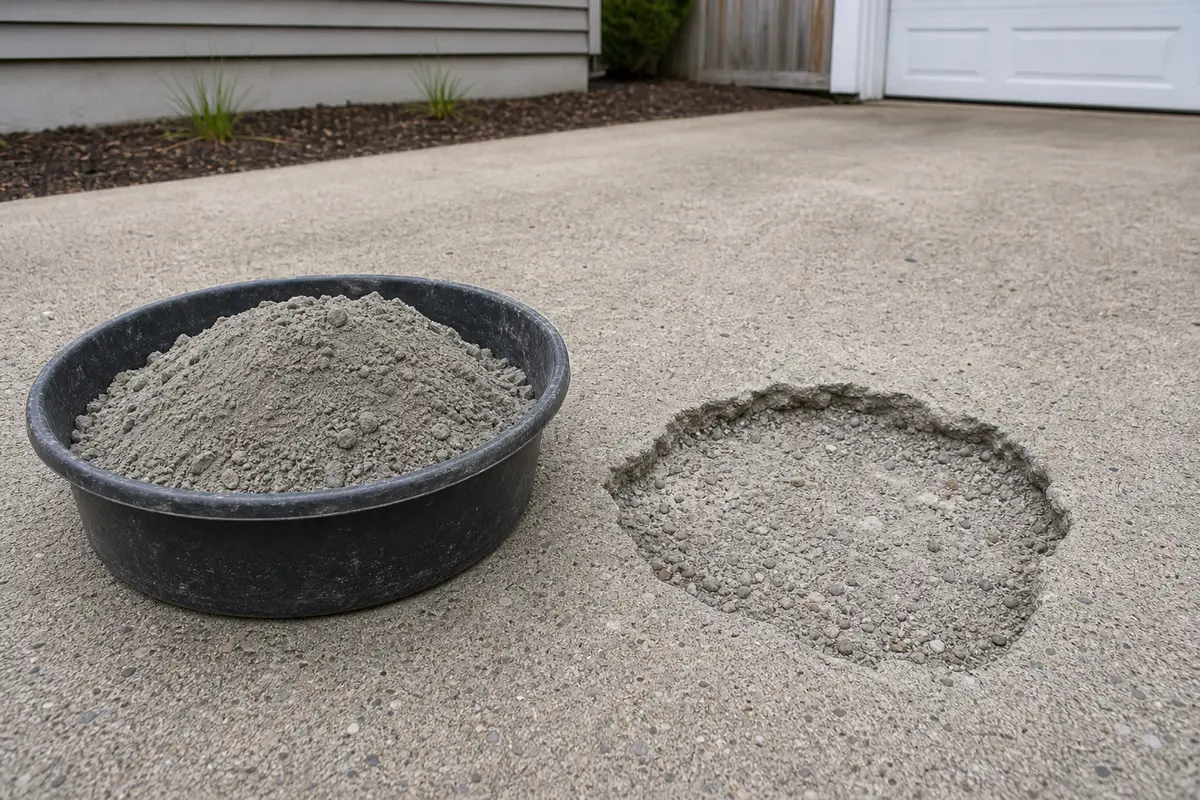
Helps when: Use it for a limited concrete breakout with solid surrounding concrete and product-matched depth.
Skip it when: Skip it for asphalt, moving slabs, broad settlement, or concrete that keeps crumbling wider.
Compare concrete patch materials on AmazonAs an Amazon Associate I earn from qualifying purchases. Repair Riot may earn a commission at no extra cost to you.
They usually come back when water, weak support, or loose prep material is still in play. Clean the hole out, then check for ponding, soft edges, or a hollow sound before adding more patch.
Often yes, if it is small, localized, dry enough for the product, and surrounded by solid driveway. DIY is less likely to hold when the area is soft, sinking, or broad.
No. A crack is a split in the surface. A pothole is a cavity where material has broken away. Sweep out loose material; if you can see a bottom and missing surface, check depth and support before you reach for crack filler.
No. If water still collects there, the patch is much more likely to fail. Clear simple blockages and correct obvious runoff problems first.
If the area feels soft, sounds hollow, pumps water, keeps settling, or has several potholes and low spots together, the problem is probably below the surface.
No. Match the patch material to the driveway surface. Asphalt and concrete move, bond, and cure differently.
Clean enough that the bottom and edges are firm and not shedding grit. Loose chunks, mud, dust, and old failed patch material should be removed.
Call when the damage is broad, soft, hollow, repeatedly sinking, draining toward the house, or tied to washout under the driveway.
Repair Riot built this page around homeowner-visible pothole clues: depth, water, loose edges, soft base, drainage path, surface type, patch prep, and repeat failure after traffic.