Does the panel go dark when it stops?
Look at house power, an under-sink switch, plug access if your model has one, and latch contact. Stop for repeat breaker trips or any hot electrical smell.
If a dishwasher ends cycle early, sort the stop pattern before buying parts. Door-latch dropouts, a stuck float, a loaded filter, or a blocked drain path are more common than a bad control board.
A good clue is what happens when it quits: dead panel, lights still on, water left in the tub, or an immediate drain-out.
Run one empty cycle nearby and watch for the first change. Then check the latch, filter, float, air gap, drain hose, and spray arms in that sequence.
Don’t start with: Do not start with the control board or hidden wiring. The first useful clues are at the door, tub floor, filter, air gap, and drain hose.
Look at house power, an under-sink switch, plug access if your model has one, and latch contact. Stop for repeat breaker trips or any hot electrical smell.
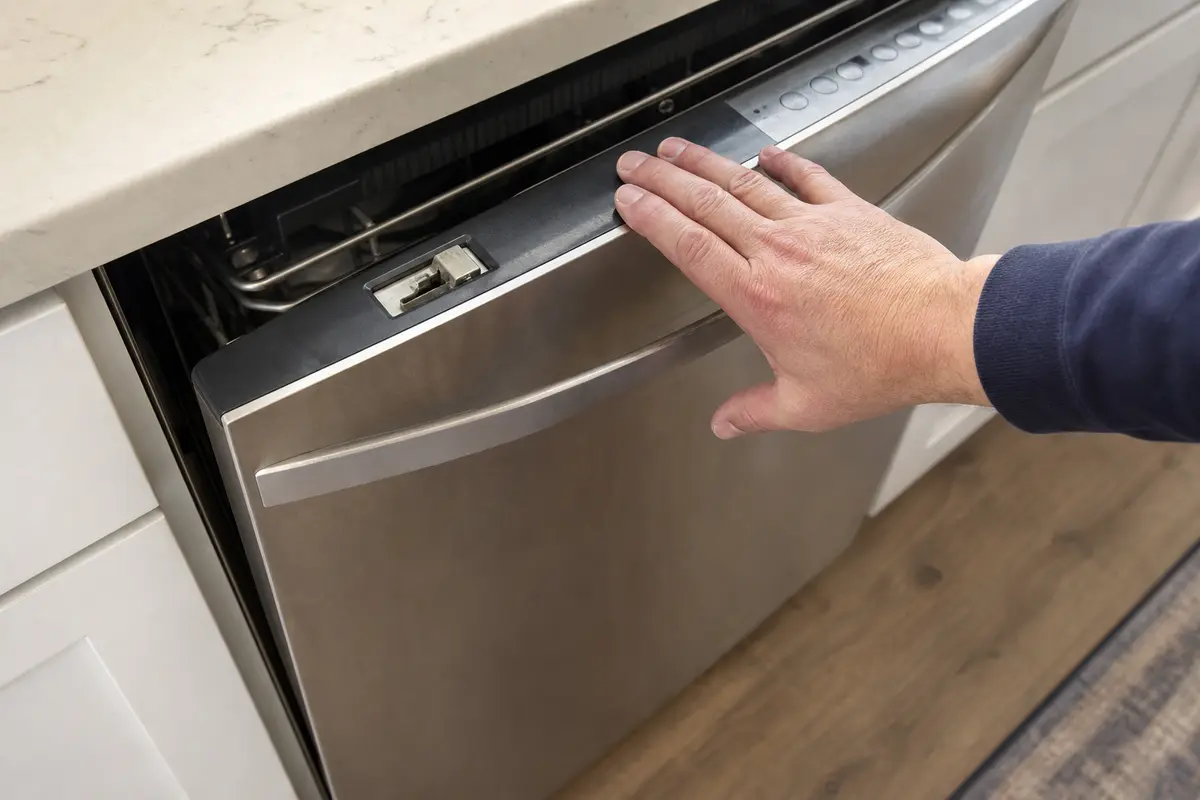
Press gently on the top corners of the closed door. A sound change points toward the latch, strike, gasket interference, or loaded racks pushing the door.
Clean the filter, look into the sump, lift the float gently, and clear the air gap or drain hose path before blaming the pump.
Treat water-level and drain clues as stronger than timer clues. A stuck float, blocked filter, or drain restriction can make the cycle look finished.
Spin the spray arms, clear plugged holes, and listen for strong wash action after fill. Weak circulation can leave the cycle looking short.
Stop guessing at pumps and boards. At that point the machine needs model-specific diagnosis before parts.
Door pressure, standing water, and the model label tell you which path is worth following. The control board belongs late in the diagnosis, after the visible latch, filter, float, and drain checks.
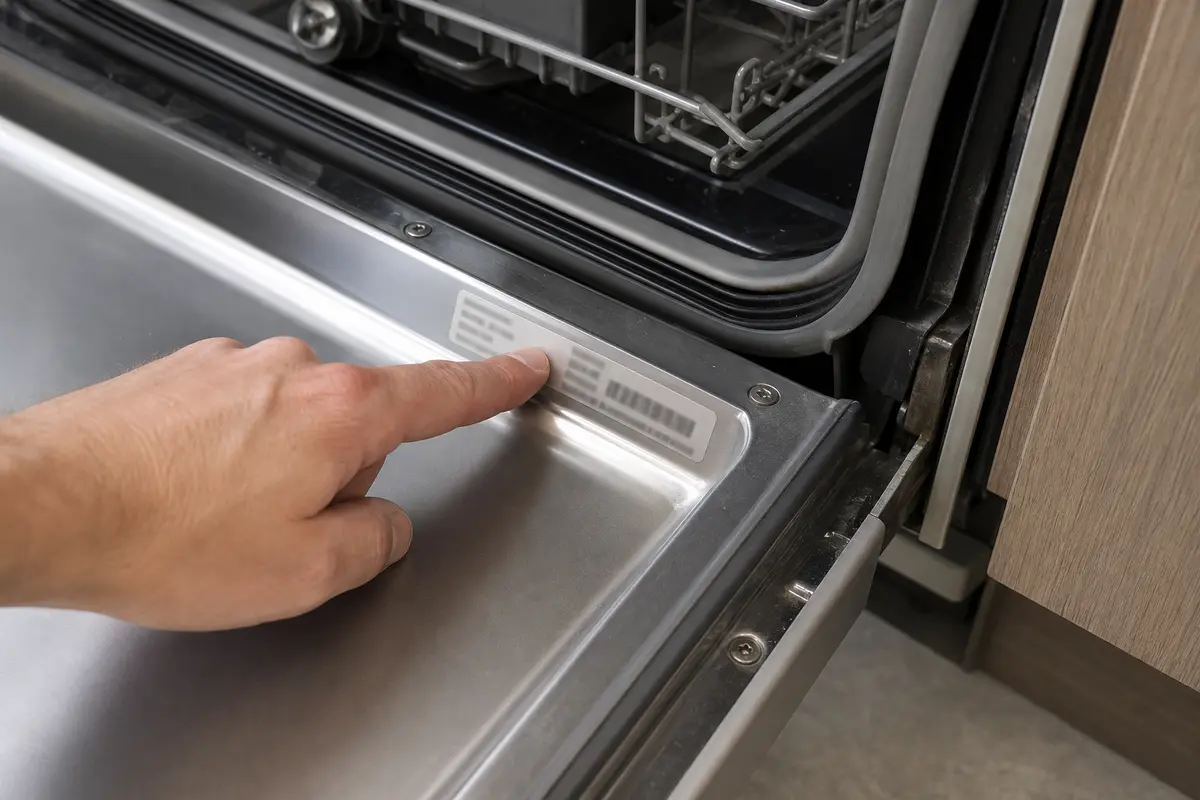
Make the failure repeat, write down exactly when the cycle stops, and copy the full model number from the door frame or tub edge. Buy a latch, float, drain hose, filter, or spray arm only when the symptom points there.
An early finish is usually an interruption, not a completed wash. Watch the first 10 to 15 minutes and look for the first clue: dark panel, standing water, door movement, or an early drain.
The wrong first move can turn a simple interruption into an expensive parts pile.
Run an empty normal cycle and stay close for the first 10 to 15 minutes. The moment it quits matters more than the time left on the display.
| What you see | Likely lane | What to do next |
|---|---|---|
| Panel dark or machine loses power | Power path or latch contact | Check breaker, switch, plug access, and latch behavior; stop for repeat trips or heat damage |
| Panel lit, water left in bottom | Filter, float, sump, air gap, or drain hose | Turn power off, clean the accessible water path, and free the float |
| Door pressure changes the wash sound | Latch, strike, gasket, or loading interference | Inspect rack position, tall dishes, gasket fit, and latch catch |
| Tub drains but dishes stay dirty | Weak wash circulation or blocked spray arms | Spin spray arms, clear holes, and listen for strong wash action after fill |
These checks stay in the homeowner-safe zone. Keep power off whenever your hands go into the sump or near a panel.
Use tools for inspection and cleaning, not for live electrical work or deep pump diagnosis.
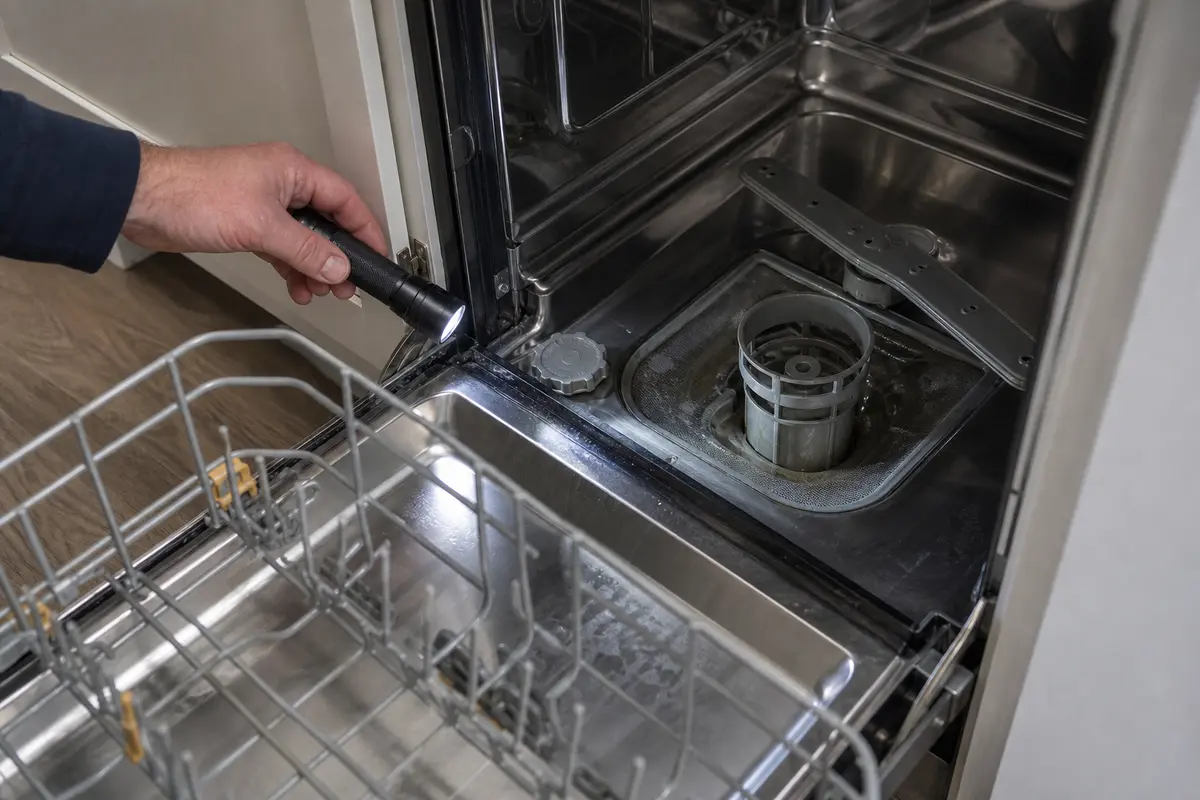
Helps when: You need a clear look at the latch pocket, standing water, float base, filter, air gap, and under-sink drain hose.
Skip it when: The inspection requires opening wiring areas or pulling the dishwasher out.
Compare inspection flashlights on Amazon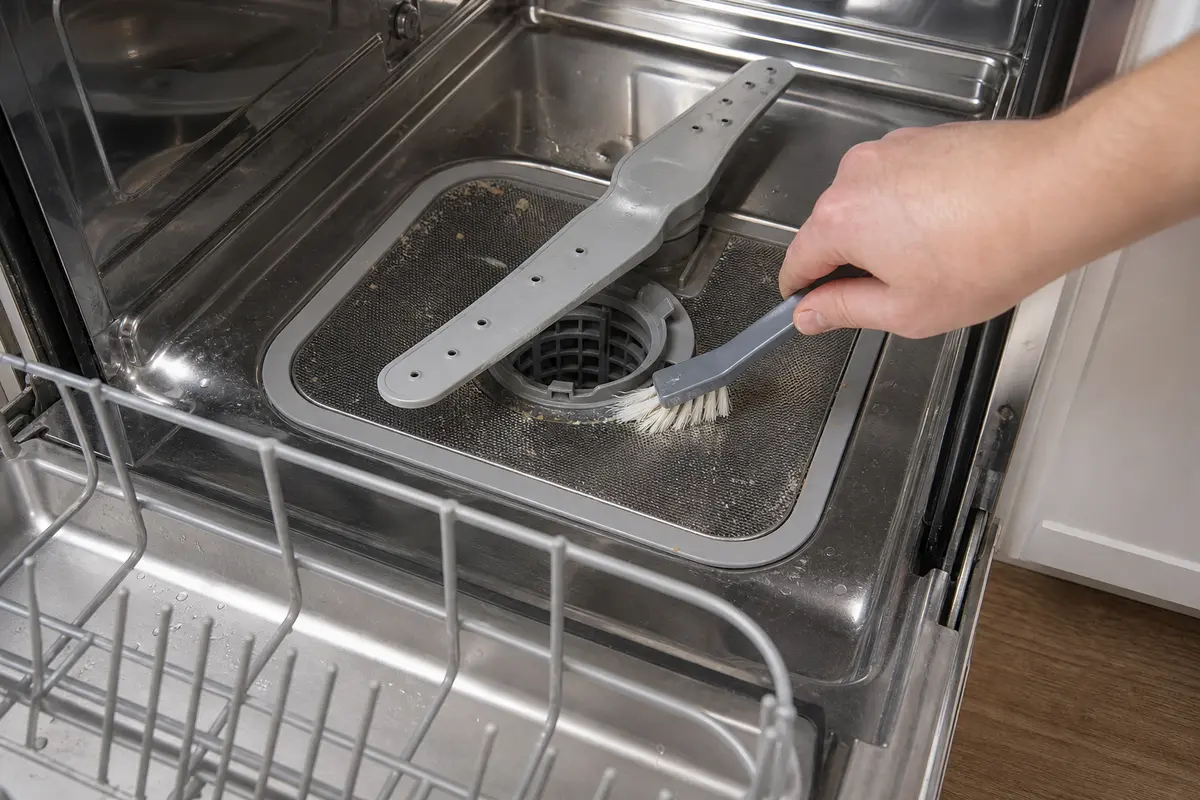
Helps when: You are clearing filter mesh, air-gap buildup, and spray-arm holes without gouging plastic.
Skip it when: You are tempted to scrape with a knife, drill bit, or anything that can enlarge spray holes.
Compare soft cleaning brushes on Amazon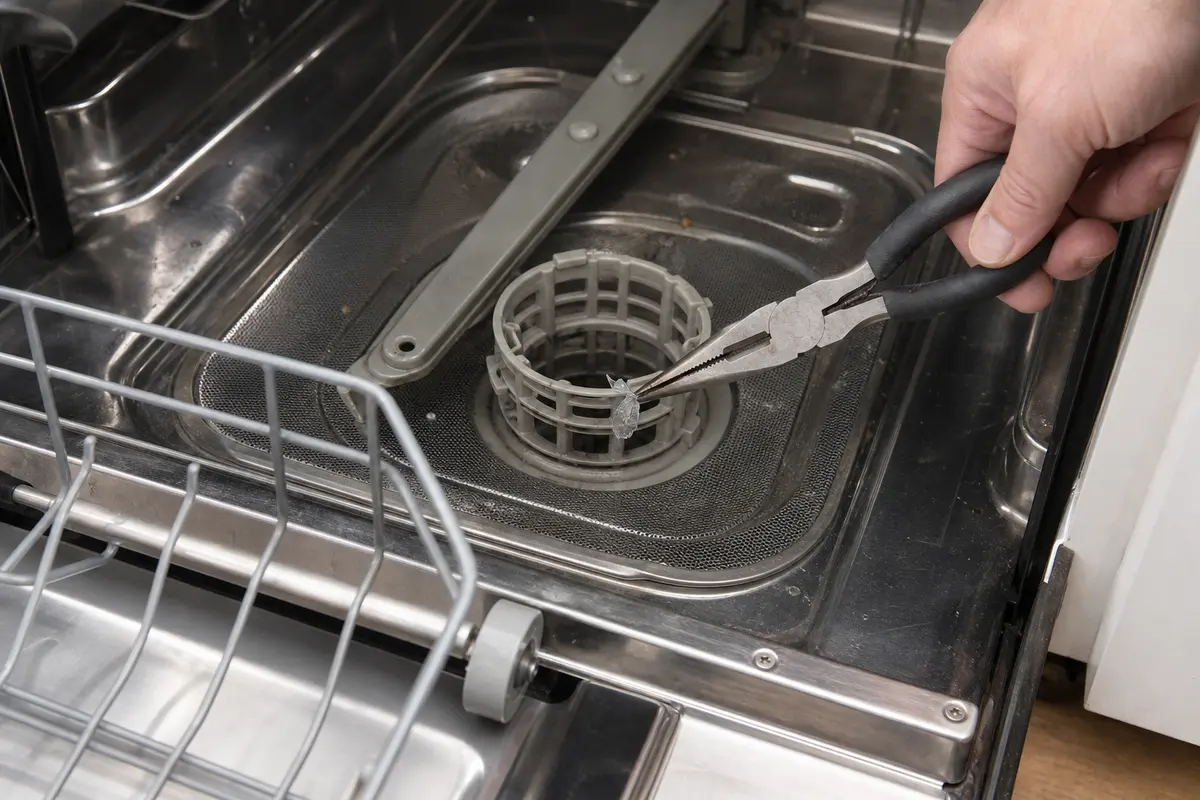
Helps when: You can see label scraps, glass, or small debris and need to lift it out without putting fingers into the sump.
Skip it when: Debris is buried under a guard, near wiring, or cannot be reached without disassembly.
Compare needle-nose pliers on Amazon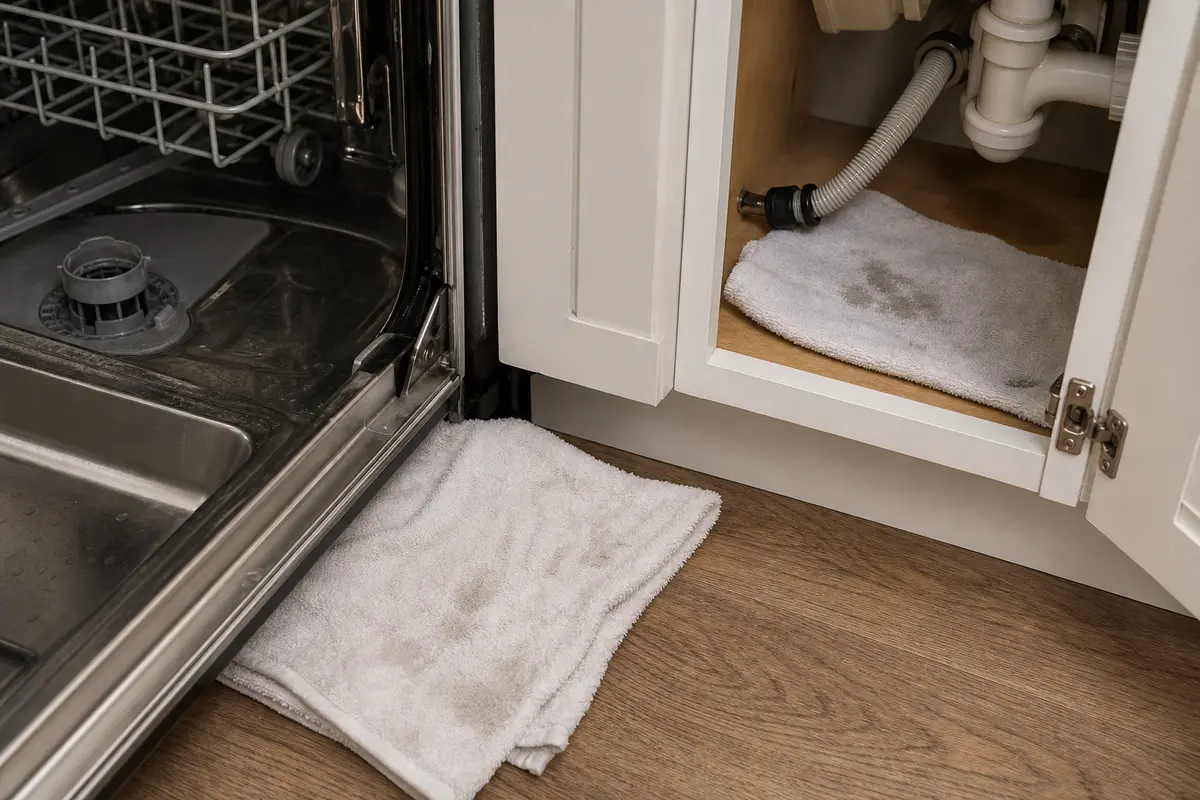
Helps when: You are checking the filter area, air gap, or drain hose and want to catch small spills.
Skip it when: Water is leaking under the dishwasher or into the cabinet. That is a stop point, not a towel job.
Compare absorbent work towels on AmazonAs an Amazon Associate I earn from qualifying purchases. Repair Riot may earn a commission at no extra cost to you.
Parts come after a visible clue. Match the full model number, not just the brand or a similar-looking photo.
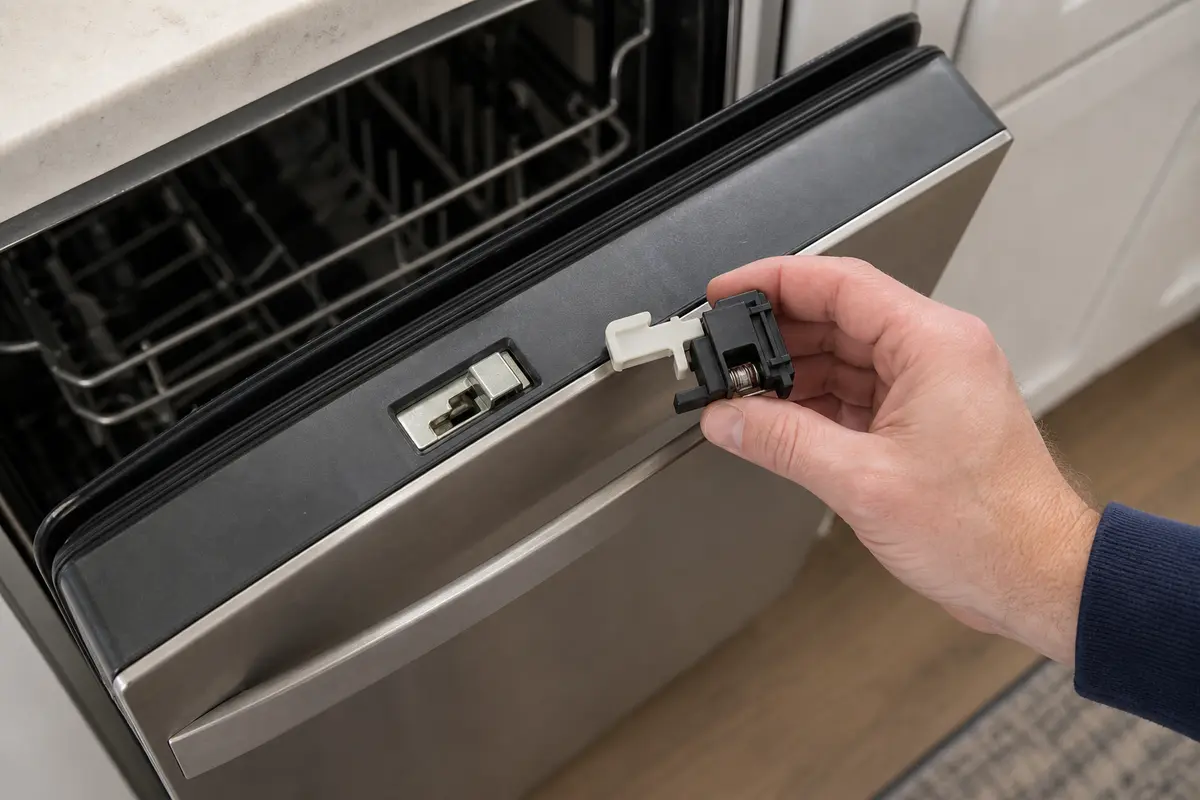
Helps when: The cycle cuts out when the door shifts, the latch feels loose, or firm door pressure makes the wash resume.
Skip it when: The panel is dark from an unconfirmed power problem, or the door-pressure clue is not present.
Compare dishwasher door latches on Amazon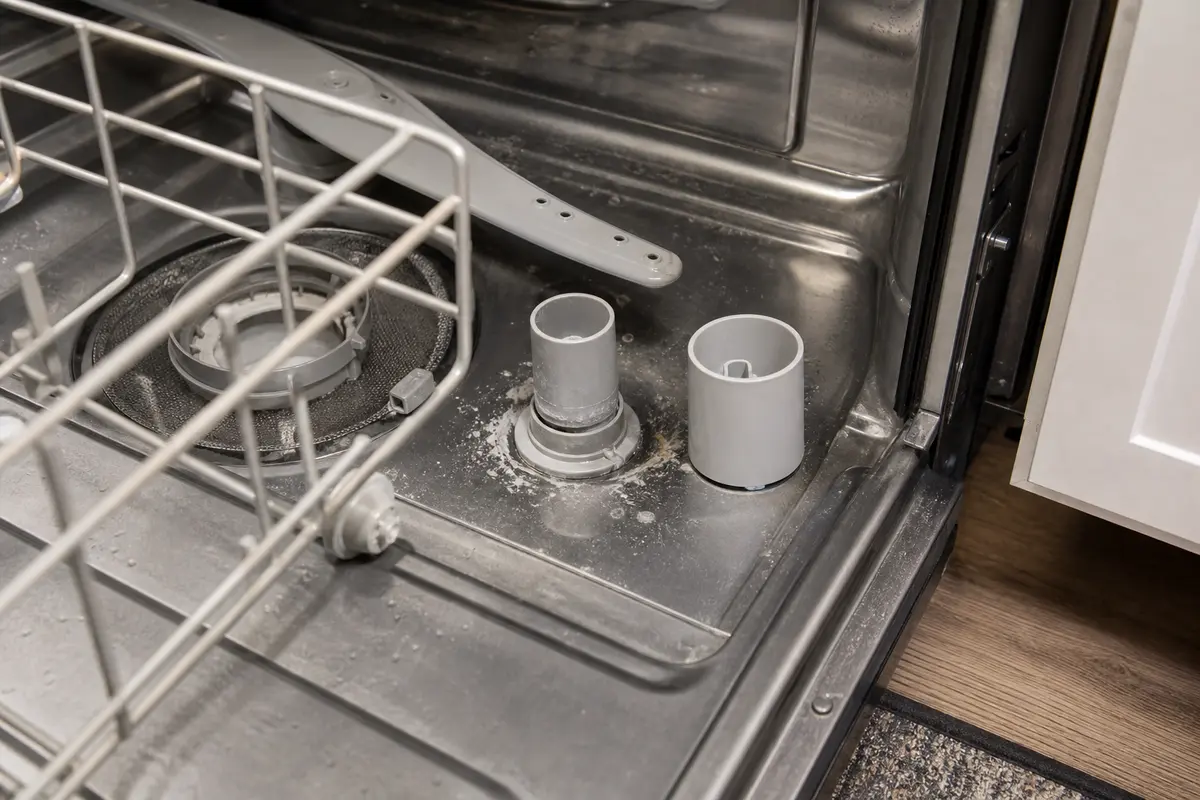
Helps when: The float is cracked, waterlogged, or still sticks after you clean around the base.
Skip it when: The float moves freely and the real clue is standing water from a drain restriction.
Compare dishwasher floats on Amazon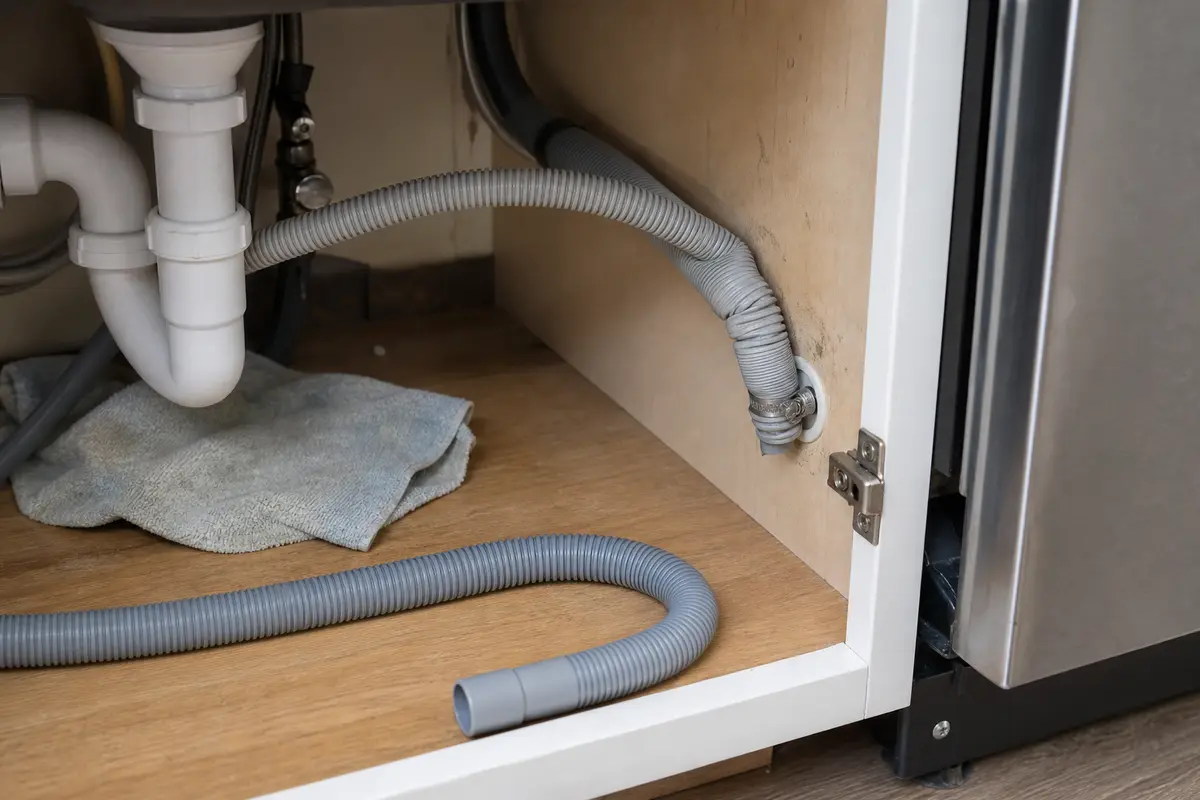
Helps when: The hose is kinked, crushed, leaking, or visibly blocked where it can be safely inspected.
Skip it when: The hose looks clear and the machine still stops early. Do not use a hose order to guess at a pump fault.
Compare dishwasher drain hoses on Amazon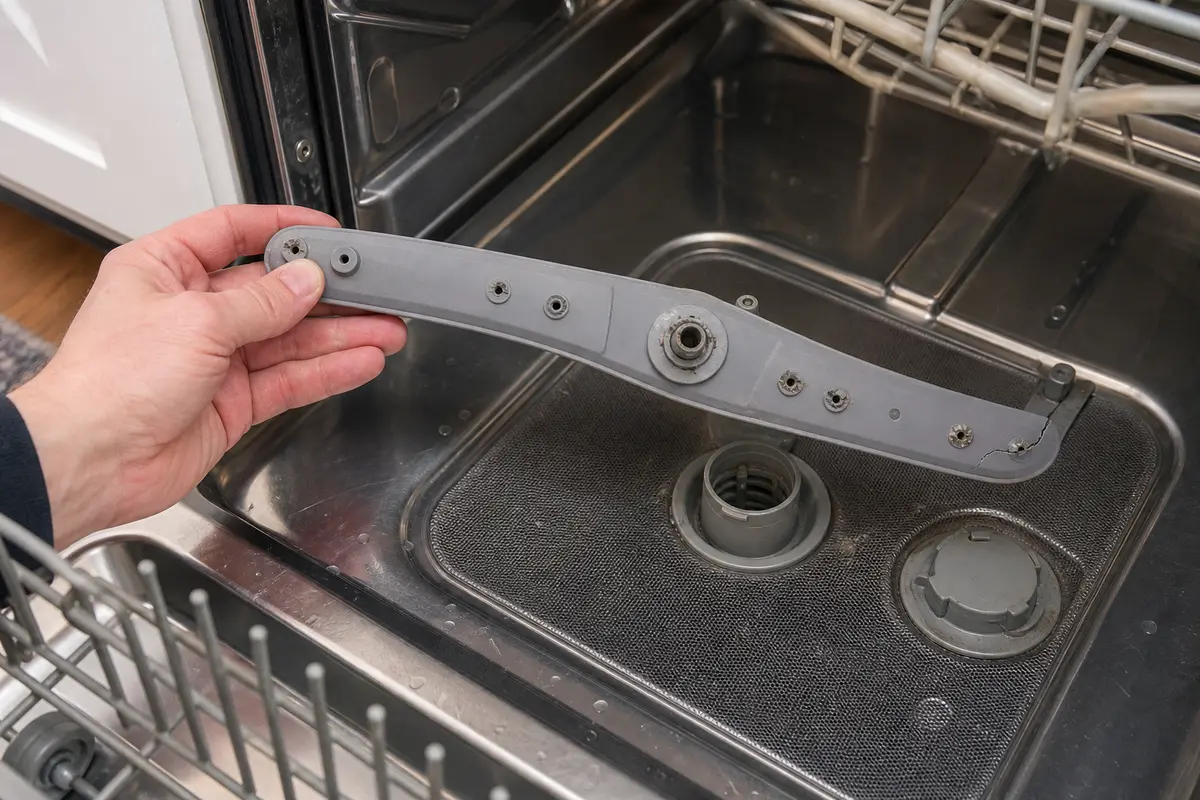
Helps when: A spray arm is cracked, warped, loose on its mount, or still blocked after cleaning.
Skip it when: The arms spin freely and the cycle is stopping because of door contact, standing water, or power loss.
Compare dishwasher spray arms on AmazonAs an Amazon Associate I earn from qualifying purchases. Repair Riot may earn a commission at no extra cost to you.
Most of the time it is not actually finished. The machine is usually losing the door-closed signal, seeing a water-level problem, or trying to clear a drain issue before it moves into the next part of the cycle.
Yes. A packed filter or debris in the sump can leave water in the bottom, slow wash circulation, and make the dishwasher stall or drain before the full wash develops.
Door movement is the useful clue. If the dishwasher stops when racks move, quits when the door is bumped, or changes sound when you press the top corners, inspect the latch and strike before buying electronics.
Not first. Control boards do fail, but a board belongs late in the diagnosis. Check whether the panel goes dark, water stays in the tub, the float sticks, the filter or drain is blocked, or door pressure changes the wash before pricing electronics.
The cleaning part likely never completed. Poor circulation, blocked spray arms, a drain interruption, or a door-latch dropout can leave dishes wet and dirty even if the machine acts finished.
Not if the same short cycle keeps returning. Repeated runs can leave dirty water in the sump, hide a leak, and keep straining a pump or latch problem that needs attention.
That pattern points toward water-level or drain clues before timer clues. Look for a stuck float, packed filter, blocked sump, dirty air gap, kinked drain hose, or water left in the tub.
Yes. A tripped breaker, loose plug if your model uses one, under-sink switch, or latch switch dropout can make the panel go dark or reset. Stop if the breaker trips again or anything smells hot.
None until the failure points somewhere specific. A latch needs a door-pressure clue. A float needs to still stick after cleaning. Replace a hose only when it is damaged or blocked. Spray arms belong on the list only when they are cracked or still plugged after cleaning.
Repair Riot built this page around the checks a homeowner can see before buying parts: latch behavior, filter and sump condition, float movement, air-gap or drain-hose restrictions, and spray-arm flow. Source links support basic dishwasher troubleshooting, control-lock context, and electrical safety stop points.