Is the panel completely dark?
Check breaker, under-sink switch, plug/outlet if safely accessible, and GFCI if present. Stop if the breaker trips again or heat damage is visible.
Start with what the panel shows. A dark panel usually points to lost power; a lit panel that ignores buttons more often points to Control Lock, Delay Start, the latch, or a wet or stuck key. Good clue: if one button still responds, power is reaching the controls.
The symptom tells you where to look. A completely dark panel is a different problem than a lit panel that ignores buttons, and a half-working keypad is different again.
Use the first minute to sort the failure: dark panel, lit but ignored buttons, Start-only trouble, repeatable dead keys, door-pressure clues, or moisture and ghost-beeping behavior.
Don’t start with: Do not defeat the door latch, open the inner door with power on, or order electronics until you have the exact model number.
Check breaker, under-sink switch, plug/outlet if safely accessible, and GFCI if present. Stop if the breaker trips again or heat damage is visible.
Check Control Lock or Child Lock, Delay Start, Sleep Mode, then reset power.
Check the door latch, rack or dish interference, Start/Resume sequence, delay wash, and latch click.
Touchpad, keypad, or user interface is more likely than house power.
Door latch, strike alignment, or rack interference is the likely path.
Treat moisture, a stuck key, or touchpad failure as the better clue.
Use the visible symptom first. A dead display sends you to power. A lit display that ignores buttons sends you to lock, latch, and keypad clues.
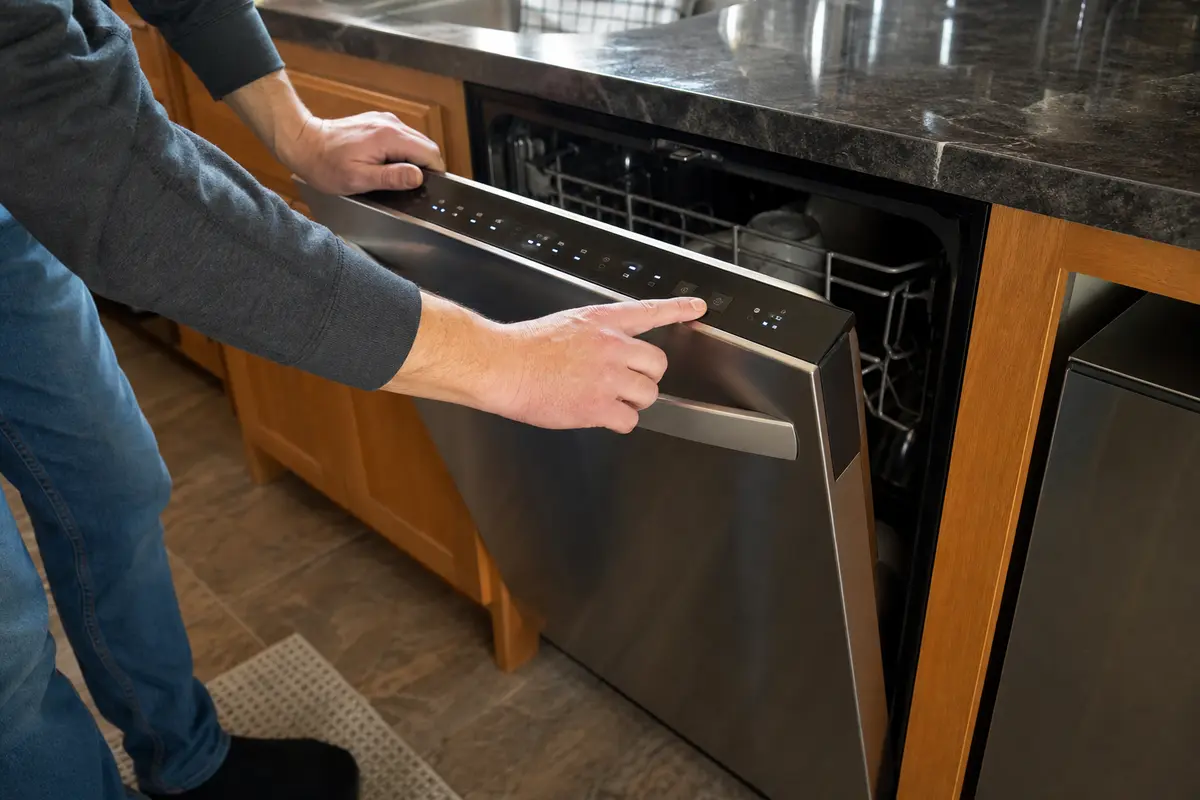
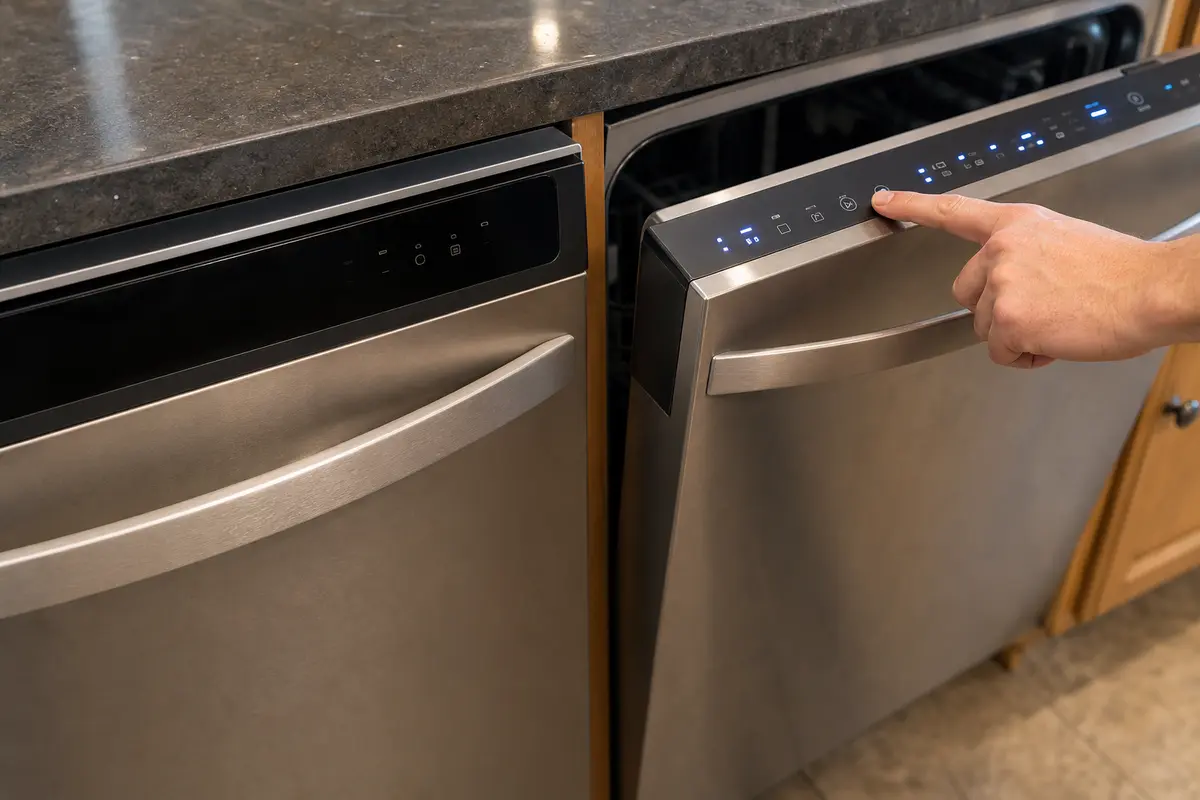
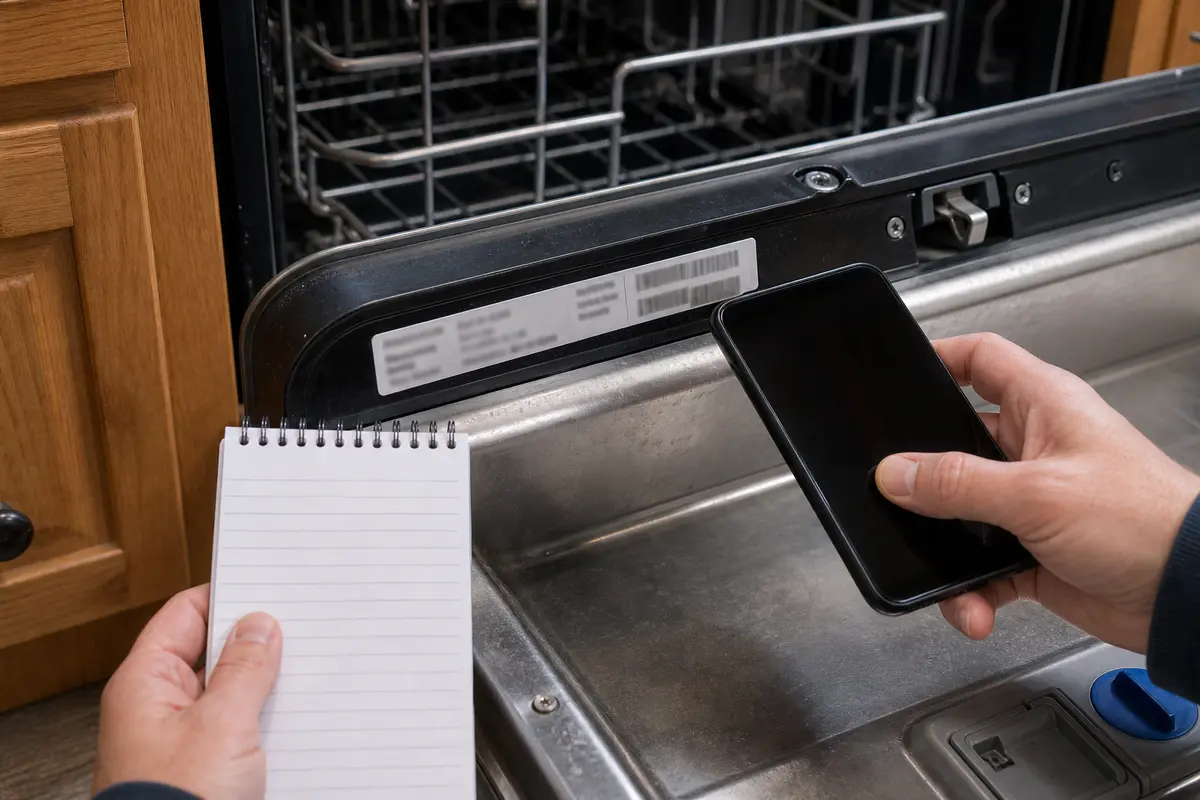
Before you buy parts: open the door and copy the full model number from the tub frame, door edge, or side label. Match the latch, touchpad, overlay, user interface panel, or control board by model; check warranty first.
The symptom tells you where to look. A dark panel and a half-working panel are different problems.
Do not turn a small lock, latch, or keypad problem into an expensive electronics guess.
Work from the outside in, and finish the branch that matches your symptom before moving on. No live-voltage testing inside the door or junction box is needed for these homeowner checks.
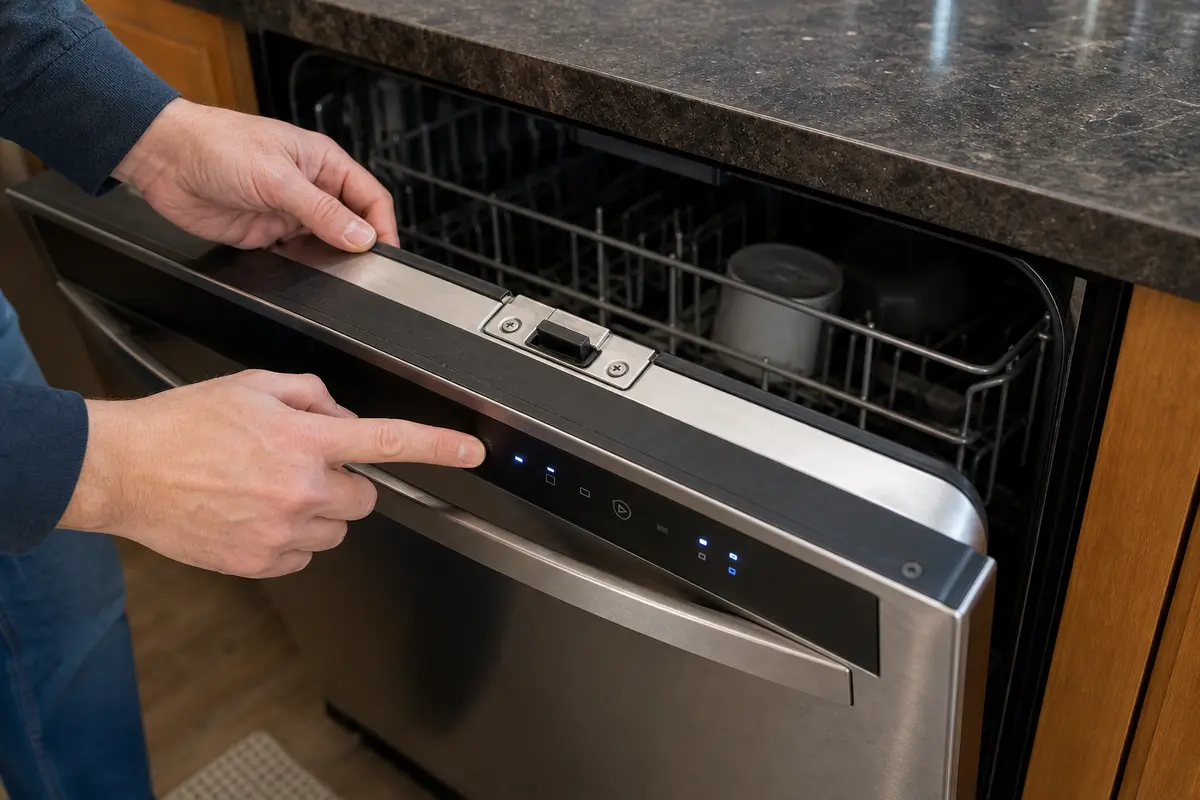
These are for basic, no-disassembly checks only. They are not permission to work on live wiring or open the inner door with power on.
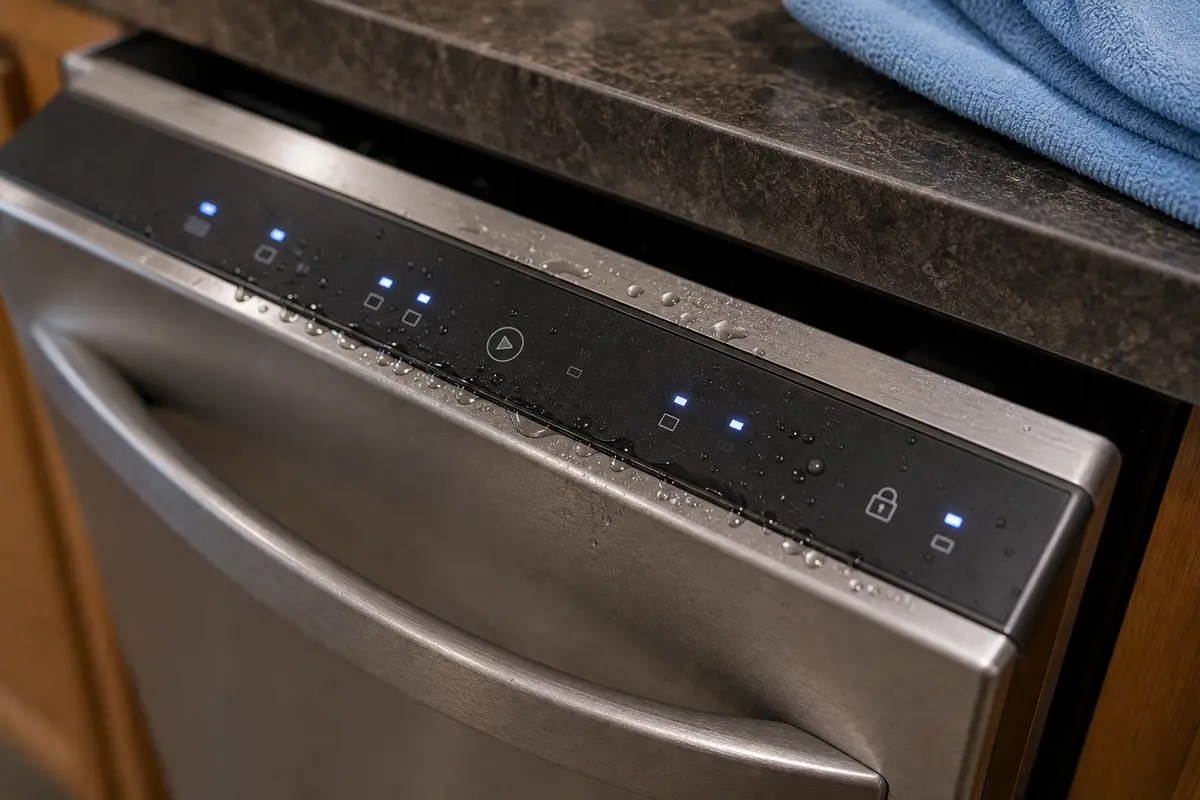
Water sitting on the control seam can create strange button behavior. Dry gently; do not force liquid into the panel.
Good notes prevent bad guesses.
Compare parts only after the symptom points somewhere specific. The latch path, touchpad path, user-interface path, and main-control-board path are different repairs. Dishwasher electronics are model-specific; a lookalike part can still be wrong.
When the lights stay on, check Control Lock or Child Lock, Delay Start, Sleep Mode, and the door latch before blaming the touchpad. A lock indicator, door-pressure response, or the same dead keys each time tells you which branch to follow.
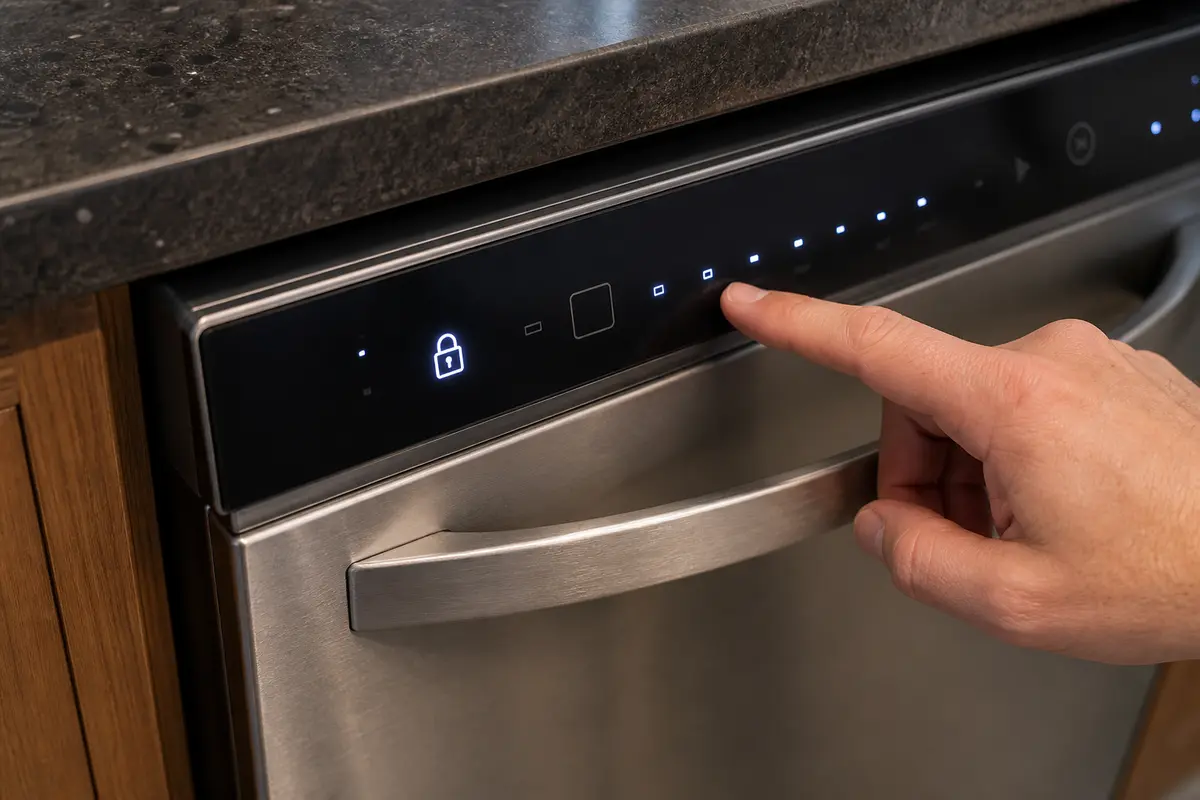
Look for a lock icon, Control Lock light, Child Lock message, or ignored buttons while the display panel stays awake. Check the manual or label near the icon; the button hold varies by model.
Start is often blocked by a door-latch signal, Delay Start, Control Lock, or a model-specific Start/Resume sequence. If the door pressure changes the symptom, inspect latch behavior first.
Yes. Some dishwashers light up but refuse Start when the latch switch does not confirm the door is closed. A strong clue is when it works only while you push or lift the door.
Usually no. Look at the clues first: power, lock settings, latch behavior, repeatable touchpad failures, and the model-specific reset. If the panel is dark after safe power checks, or the same keys fail every time, follow that clue before buying a board.
Treat a dark panel as a power-path problem first. Check the breaker, any under-sink switch, plug/outlet if safely accessible, and stop if the breaker trips again or heat damage is visible.
Yes. Moisture around the keypad seam can cause dead buttons, ghost beeping, or intermittent response. Dry the surface gently and do not spray cleaner into the control panel.
Manufacturer guidance commonly ranges from about one minute to several minutes depending on brand and model. Use your manual when available; do not keep resetting a breaker that trips again.
Open the door and look around the tub frame, door edge, or side label. Use the exact model number before ordering a latch, touchpad, user interface panel, or control board.
It can be if the fix is a setting, latch, or reasonably priced interface part and the dishwasher otherwise works well. Think harder if it is older, leaks, cleans poorly, or needs expensive electronics.
You can use one for basic no-touch checks around an accessible outlet or supply area. Do not use it as permission to perform live internal testing or open electrical covers while powered.
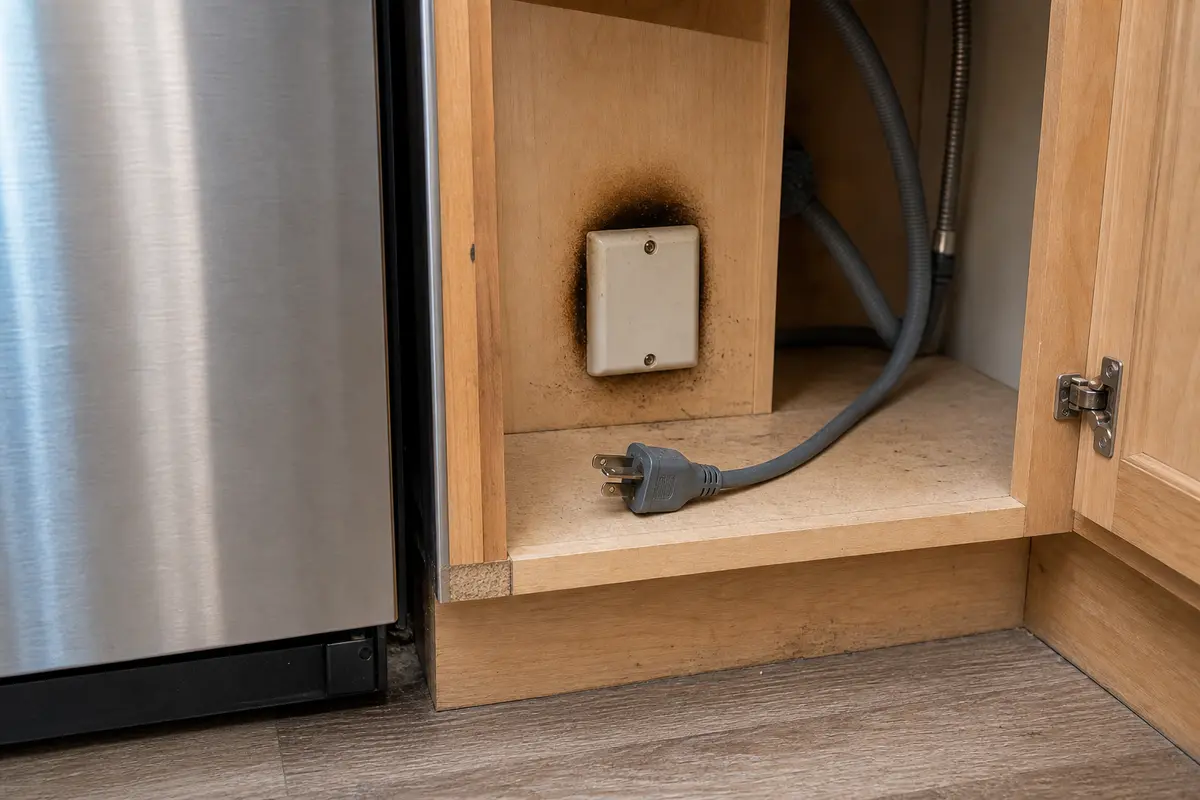
Stop for repeated breaker trips, burning smell, scorch marks, melted wiring, leaks near electrical parts, exposed wiring, or any diagnosis that requires live-voltage testing inside the door or junction box.
A reset can temporarily clear a stuck control state, but repeated failure points back to the latch, moisture, touchpad or user interface, power interruption, or control diagnosis. Do not keep resetting a breaker that trips.
No. The touchpad, keypad, or user interface is the part you press; the main control board is the deeper electronic control. Look for the clue: same dead buttons, bubbling, moisture, or hard presses point to the control surface. Check power first when the panel is dark.
Repair Riot builds each guide from what you can see: dark panel, lock light, latch clue, or failed control surface. The references below support model, safety, and public guidance.