Does only one board lift?
Start at that board's fasteners and ends. Look for backed-out screws, split holes, and unsupported ends.
Start by checking whether one board moves or a whole section moves. Watch one screw head under light pressure. Proud, spinning, or pulled-through screws usually point to a failed fastener hole, split wood, or soft board.
If several boards bounce together, inspect below before adding screws. A moving joist, hanger, ledger, or rotted frame means the loose boards are symptoms, not the repair.
Block off movement near stairs, rails, the ledger, or several boards. Check framing from stable ground or call a deck pro.
Don’t start with: Do not scatter extra screws across the deck or replace boards before you know whether the movement starts at the fastener, the board, or the framing underneath.
Start at that board's fasteners and ends. Look for backed-out screws, split holes, and unsupported ends.
The fastener is no longer clamping. Confirm the board and joist still hold before replacing screws.
Treat the board as damaged. More screw pressure can widen the split.
Probe gently and compare with nearby sound wood. Soft wood changes the repair from fasteners to board or framing work.
Inspect below for joist movement, loose connectors, rot, or missing hanger fasteners.
Stop. That area carries fall risk and needs a structural look before normal use.
Use three views: a lifted board at the surface, a split fastener area, and an underside joist or hanger check.
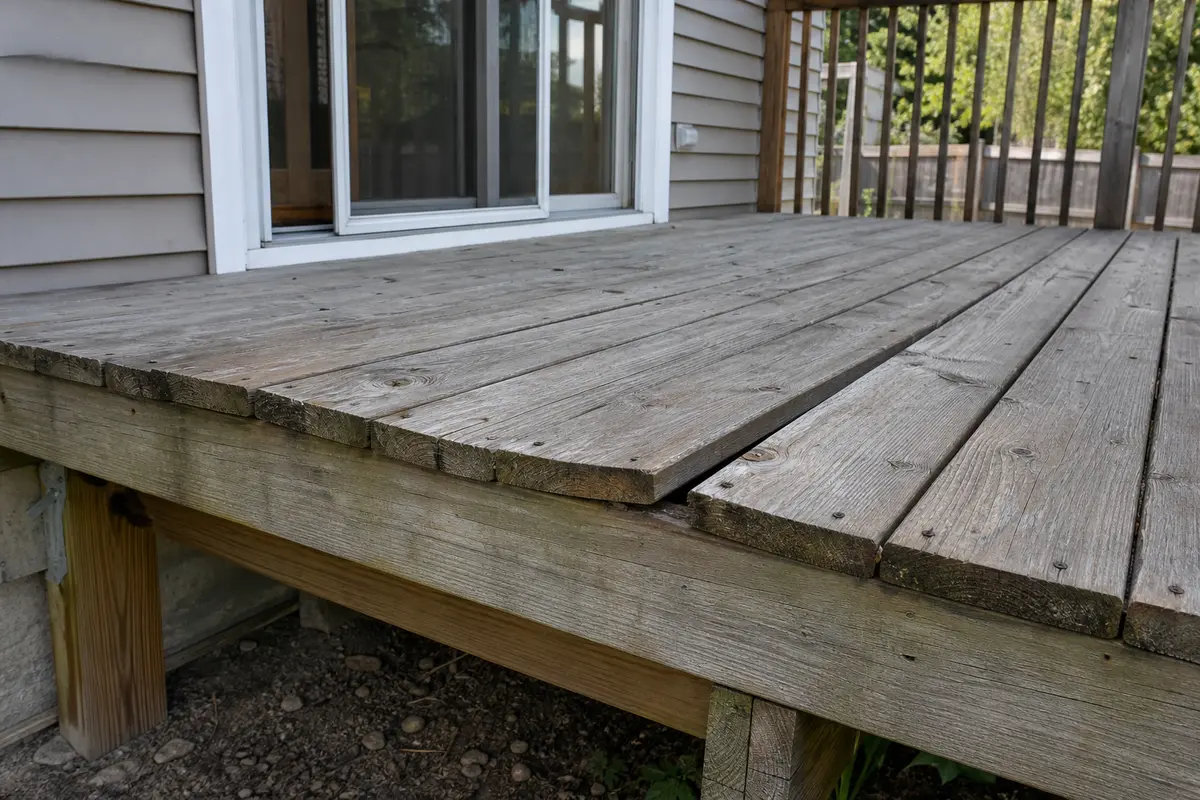
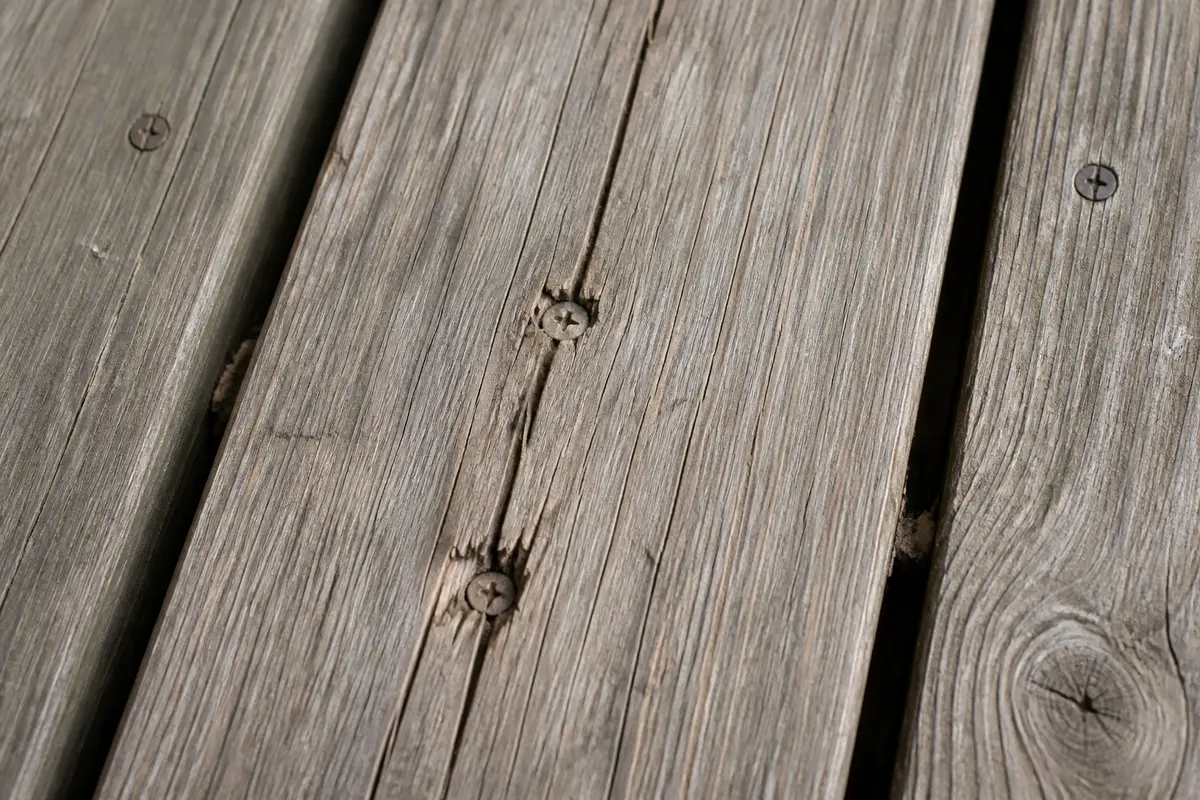
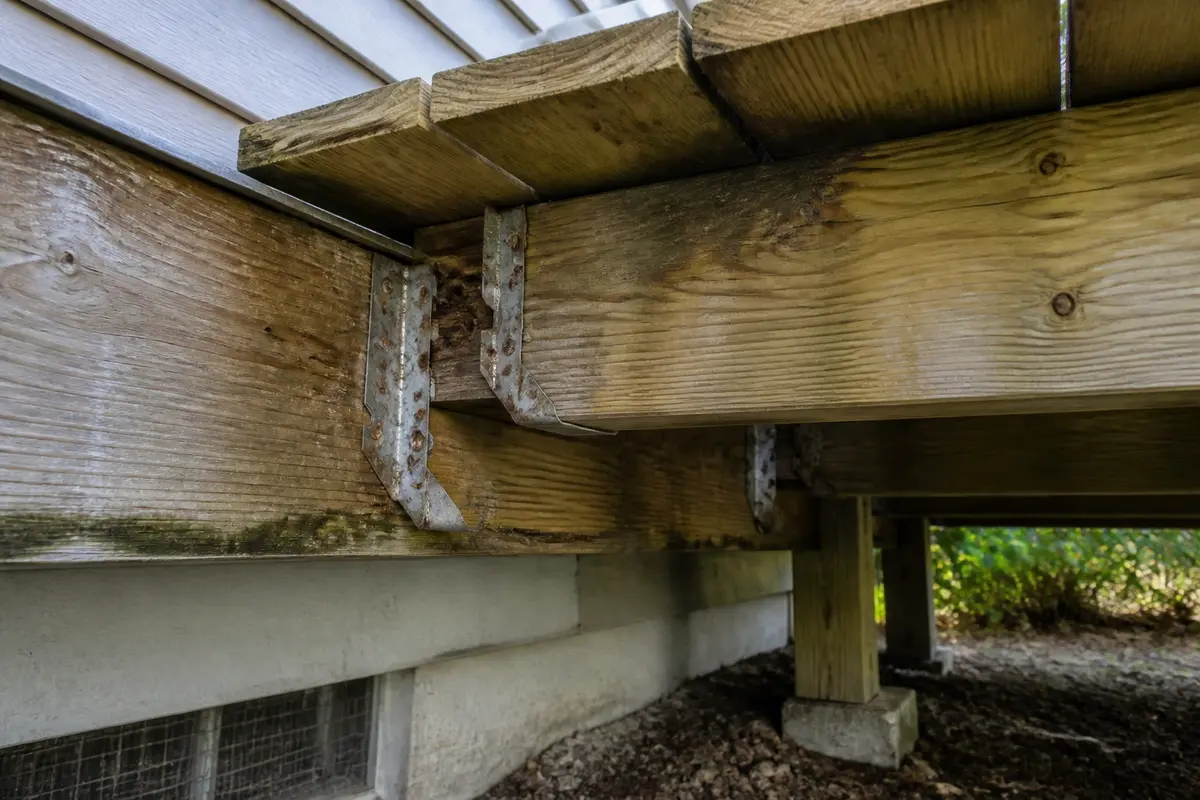
Press lightly beside the loose board, then watch the screw head and the framing below. A screw that tightens into firm wood can justify exterior deck screws. A split or soft board needs board repair. A moving joist or hanger needs connector work and the exact hanger size, joist depth, fastener type, and corrosion rating.
A loose board is not always a screw problem. The first check is whether movement stays in one board or spreads across a framing bay.
Use the first moving part to decide the next step. Surface movement and framing movement have different risk levels.
| What you see | Likely meaning | Next move |
|---|---|---|
| One screw head sits proud and tightens firmly | Localized failed fastener | Replace with compatible exterior deck screws in sound wood. |
| Screw spins without pulling the board down | Stripped hole, split board, or weak support below | Inspect the hole and wood before adding a new fastener. |
| Crack runs from the screw line | Board damage around the fastener | Treat it as a board repair, not a simple tightening job. |
| Board feels soft or breaks under a probe | Rot or moisture-damaged decking | Keep weight off that board and assess replacement. |
| Several boards bounce together | Joist, hanger, ledger, or framing movement | Inspect below and stop normal use until the support is understood. |
| Movement is near stairs or railing posts | Fall-risk area | Stop and get a deck contractor or carpenter involved. |
Good wood gives a screw something to clamp. Split, soft, or enlarged holes usually loosen again even when the new screw looks tight at first.
When one area bounces as a group, the boards may be showing you a support issue. Watch the joist, hanger, beam, and ledger area before buying surface parts.
Most bad deck-board repairs skip the clue that tells you whether the surface or support is actually moving.
These tools support inspection and small confirmed repairs. They do not make a questionable deck safe to stand on.
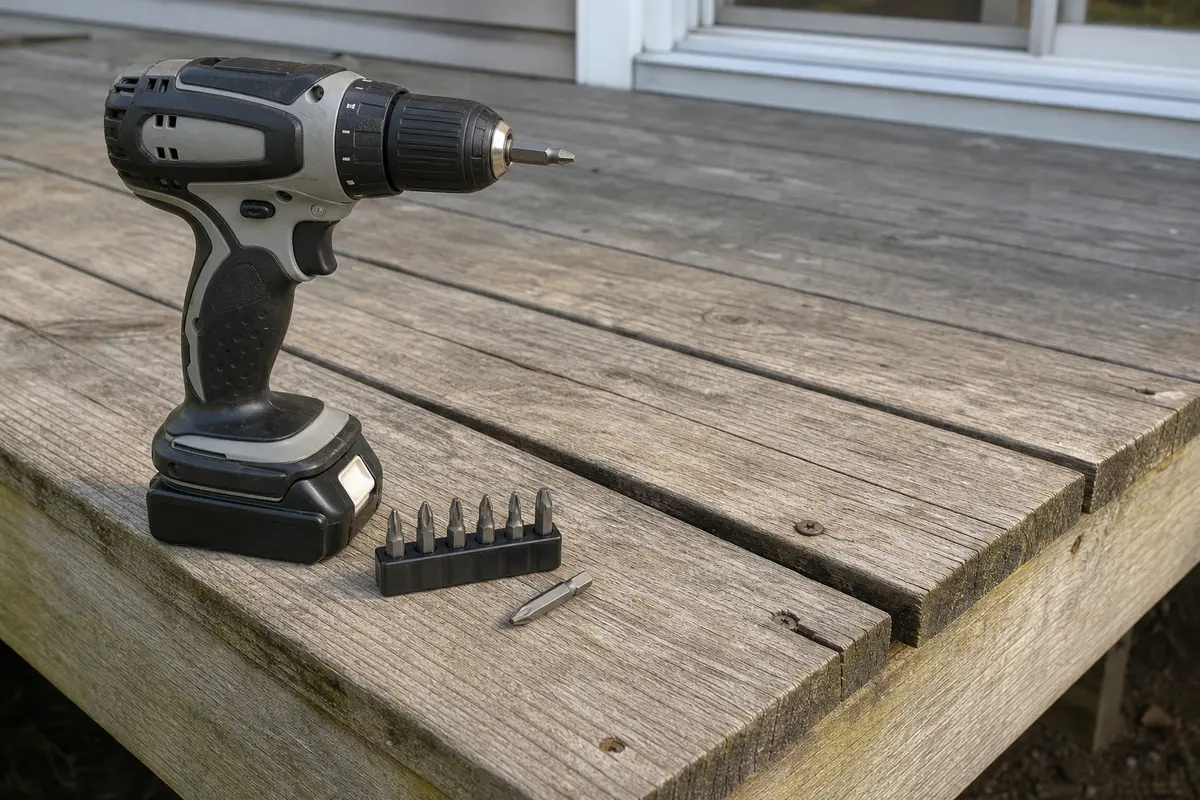
Helps when: Use it to test one suspect fastener on low torque and install confirmed replacement screws.
Skip it when: Skip driving screws when the board is split, soft, or several boards move together.
Compare drill drivers on Amazon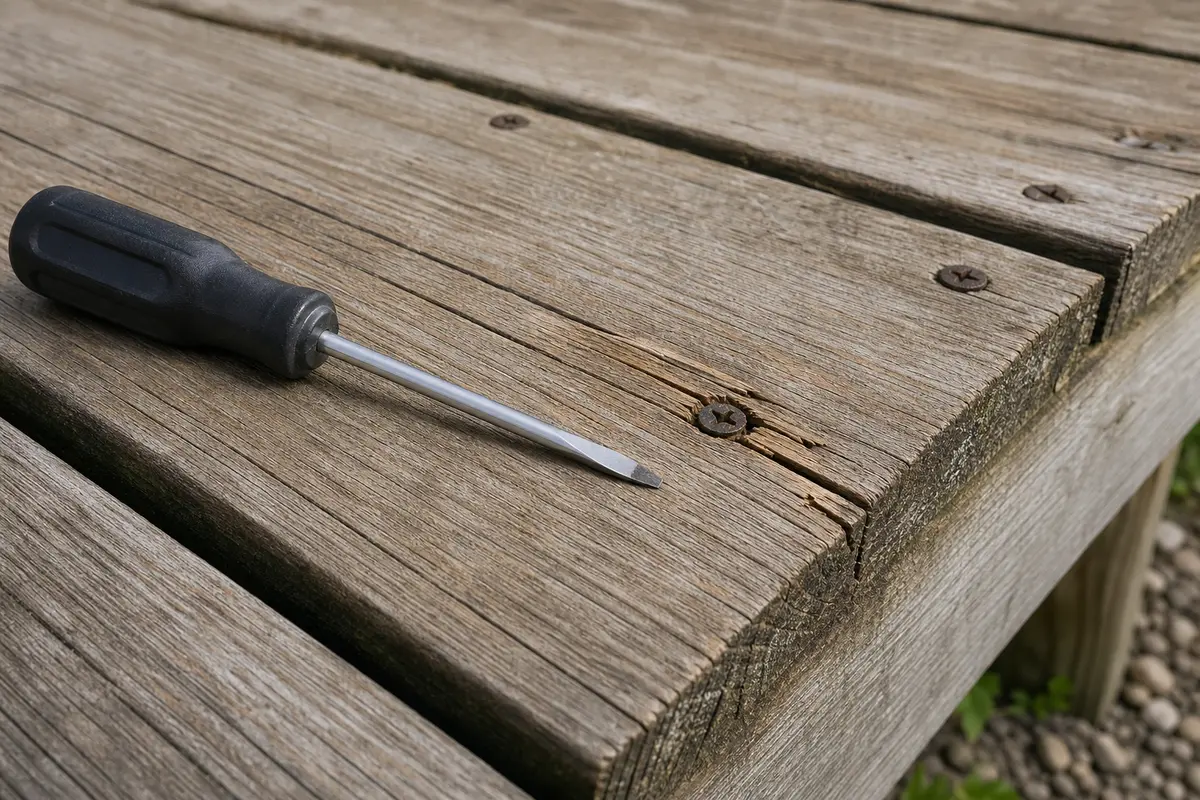
Helps when: A small probe helps confirm soft wood, split holes, and loose screw heads without prying hard.
Skip it when: Skip probing when the board is unsafe to stand near or breaks under light touch.
Compare screwdriver probes on Amazon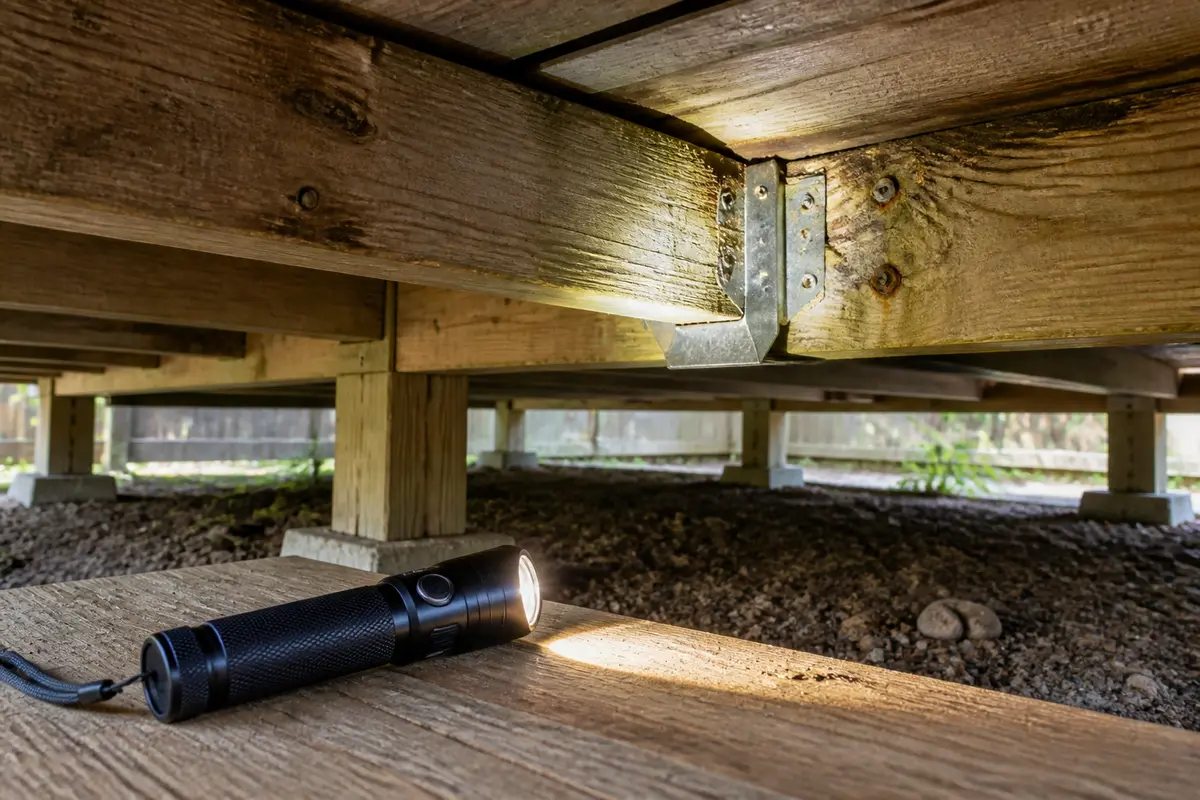
Helps when: Use it to see joists, hangers, rust, damp wood, and gaps below the deck.
Skip it when: Skip underside inspection when access is unstable, too tight, or under an unsafe elevated deck.
Compare inspection flashlights on Amazon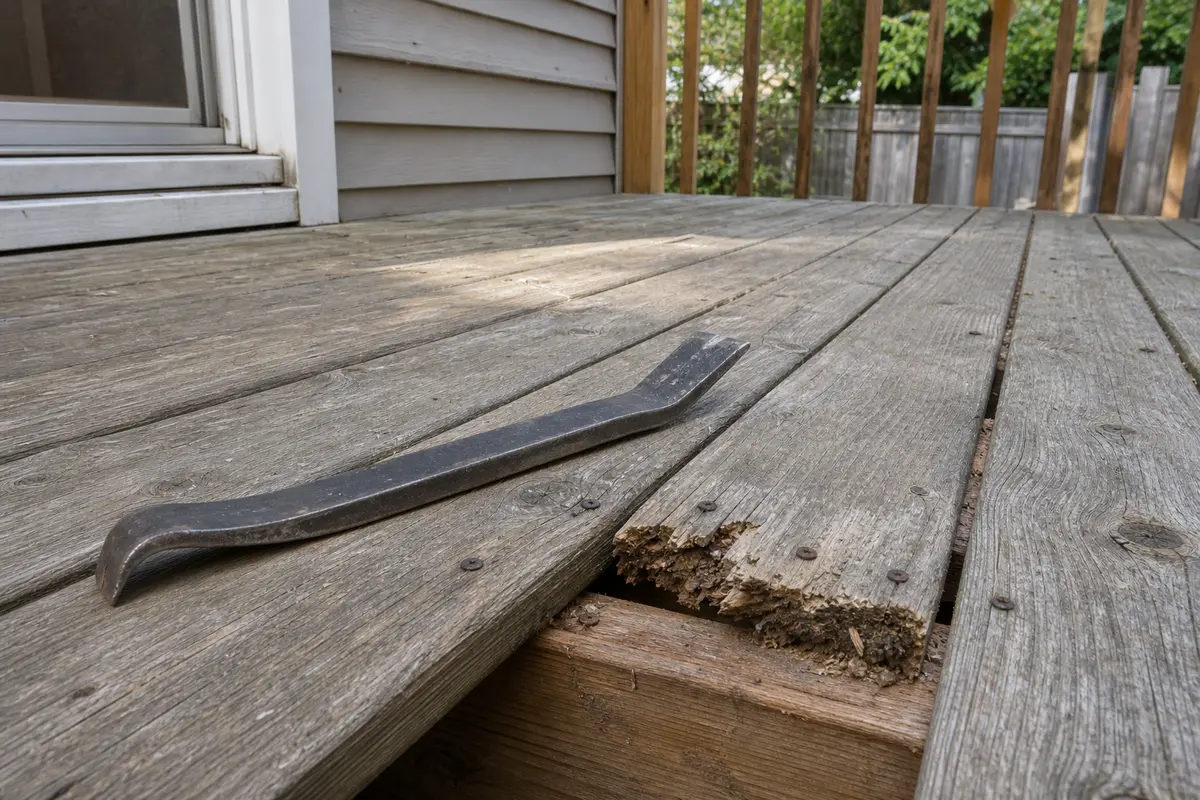
Helps when: A flat bar helps lift a damaged board carefully after board replacement is confirmed.
Skip it when: Skip prying when the board is still load-bearing, near a fall edge, or attached to questionable framing.
Compare flat pry bars on Amazon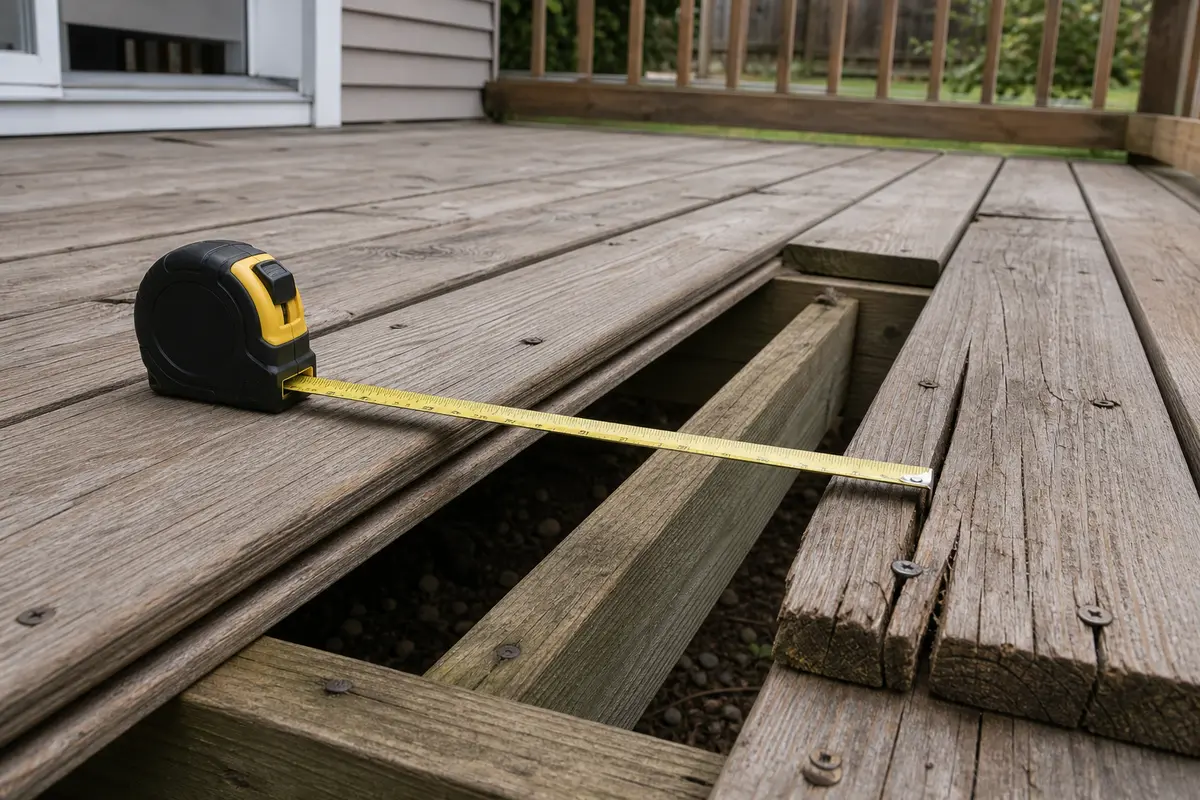
Helps when: Use it to match board width and thickness, screw length, joist size, and hanger dimensions.
Skip it when: Skip ordering from measurements if the framing is rotten or not safely accessible.
Compare tape measures on AmazonAs an Amazon Associate I earn from qualifying purchases. Repair Riot may earn a commission at no extra cost to you.
Parts come after the movement source is confirmed. Match exterior exposure, connector rating, board dimensions, and the actual repair path.
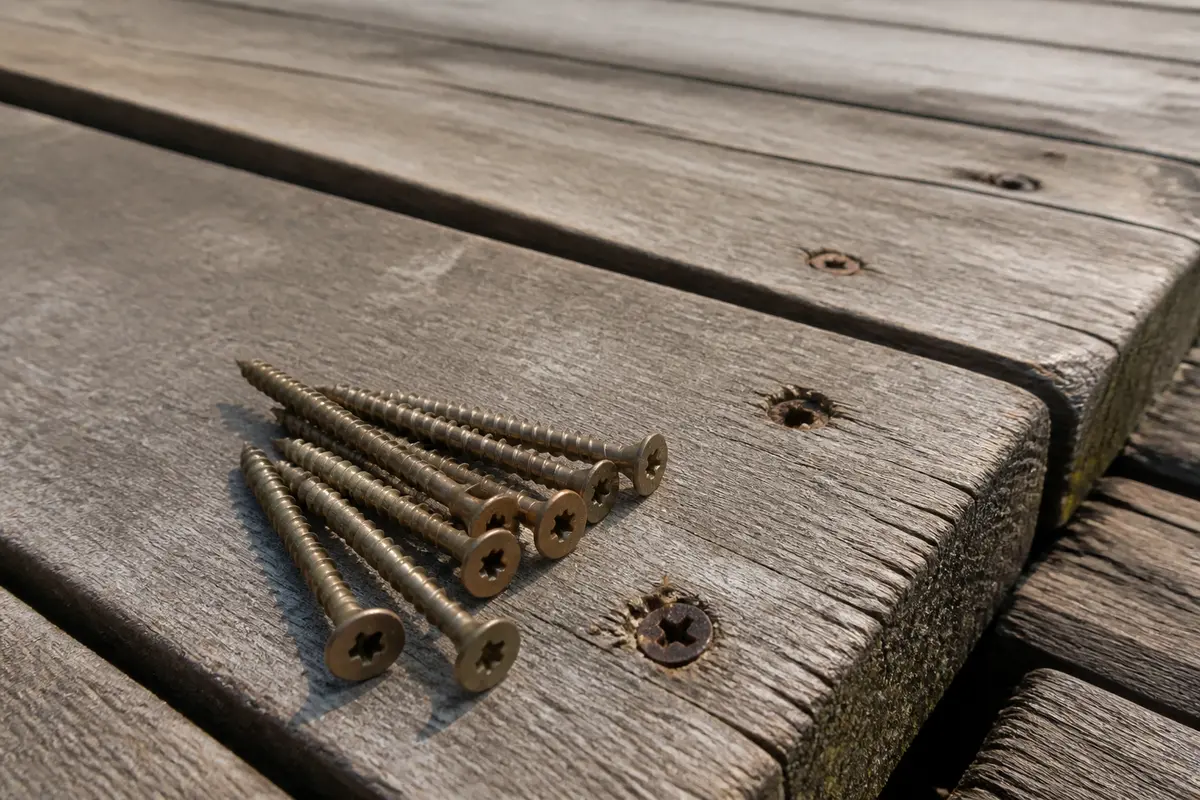
Helps when: Use them when the board and joist are sound but the old screws are loose, rusted, stripped, or missing.
Skip it when: Skip them when the screw hole is split, the board is soft, or the framing moves below.
Compare exterior deck screws on Amazon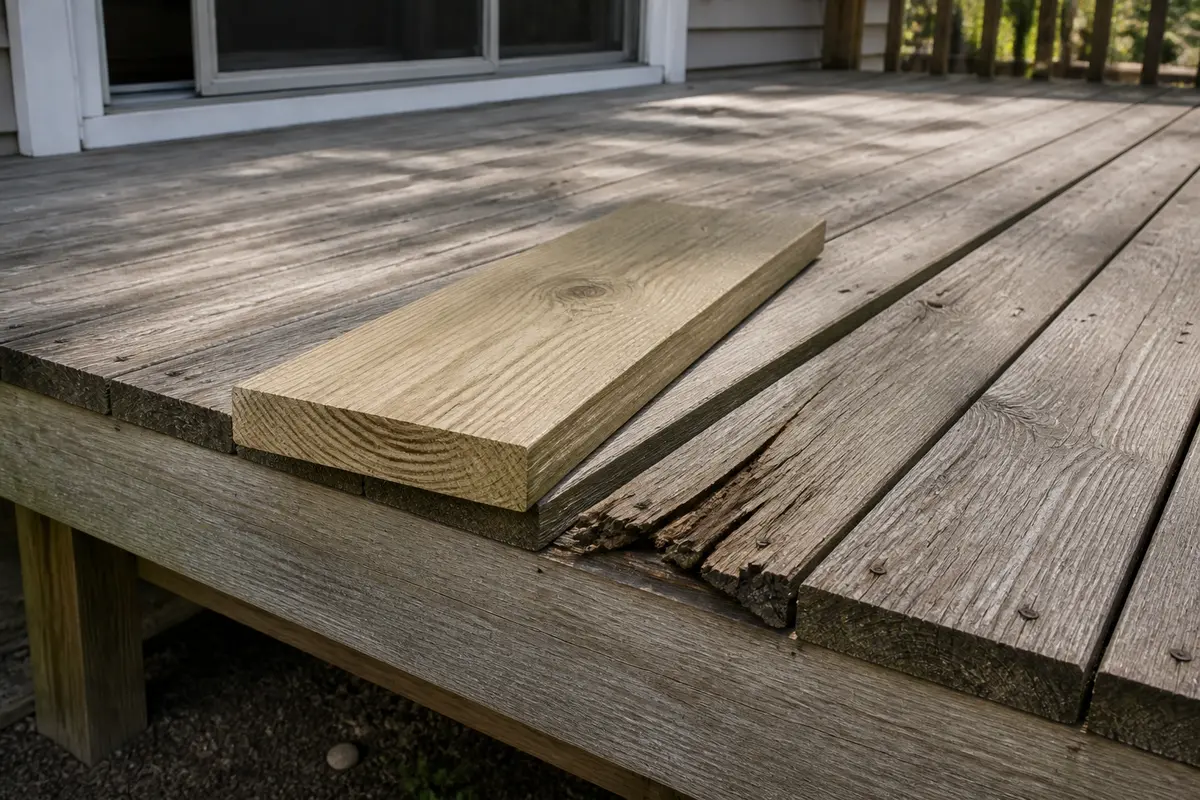
Helps when: Use a replacement board when one board is split, soft, rotted, or unable to hold fasteners.
Skip it when: Skip it when several boards move together or the joist support is the real source of movement.
Compare replacement deck boards on Amazon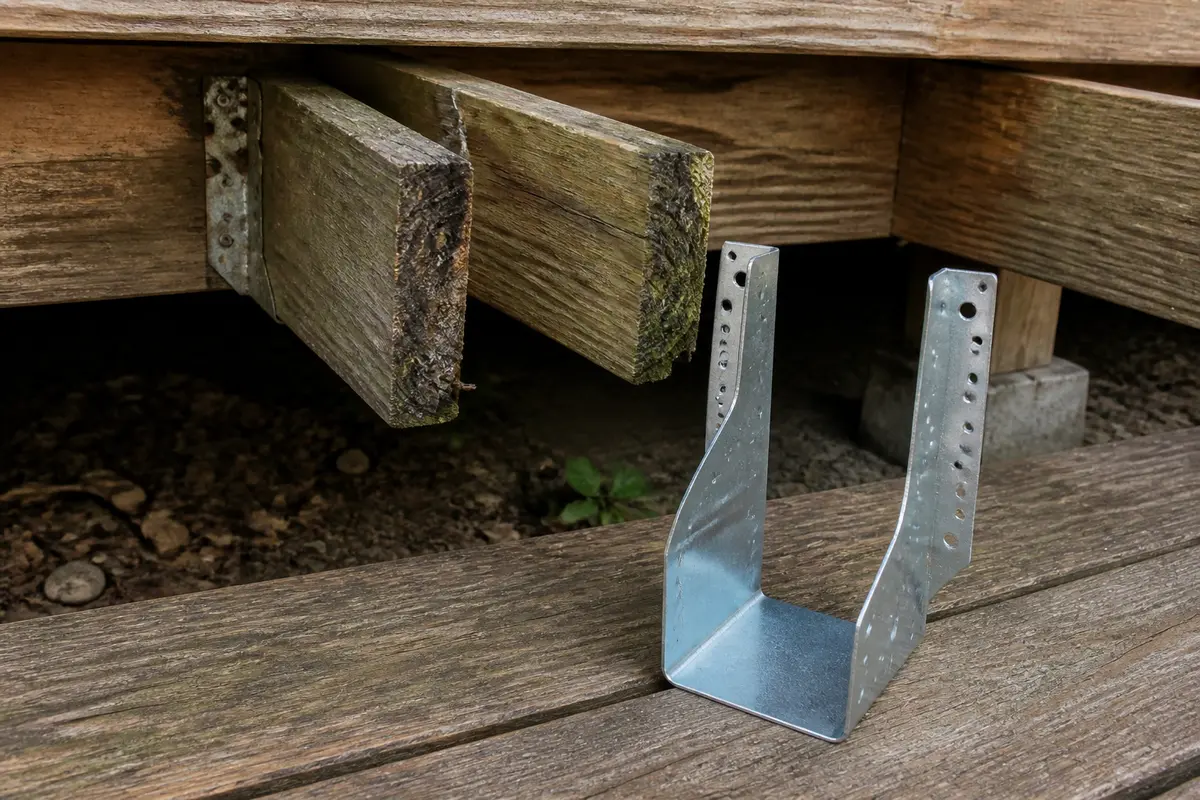
Helps when: Use a hanger only when the joist is sound and the existing hanger is loose, rusted, bent, or missing fasteners.
Skip it when: Skip it when the joist, ledger, beam, or support member is rotten or cracked.
Compare deck joist hangers on AmazonAs an Amazon Associate I earn from qualifying purchases. Repair Riot may earn a commission at no extra cost to you.
Only when the board and the joist below are still sound. Longer screws do not solve split decking, soft wood, enlarged holes, or movement in the framing.
The screws may be spinning in enlarged holes, the wood around them may be split, or the joist below may be moving. A visible screw head does not prove the board is clamped.
One loose board can be a small repair, but it becomes more serious near stairs, rails, door landings, or an elevated edge. Stop using the area if it moves under normal weight.
Replace the board if a split runs through the fastener area, a gentle probe finds soft or rotted wood, the end is broken, or a screw will not bite in sound material.
When several boards bounce together, the clue is shared movement, not one bad screw. Have someone step lightly while you watch from below; if a joist, hanger, beam, ledger area, or rotted framing moves, stop treating the boards as separate fastener problems.
Yes. If the joist shifts when someone steps above, or a hanger is rusted, loose, or missing fasteners, the board looseness is only a symptom.
For a confirmed surface repair, use exterior-rated deck screws after the board and joist check solid. They clamp better than nails and resist backing out; if a test screw spins or the wood feels soft, inspect the board and framing first.
Get help when movement involves multiple boards, stairs, rails, posts, the house ledger, elevated framing, widespread rot, or any connector or joist you cannot inspect safely.
Repair Riot built this page around visible deck clues: one-board movement, screw-head behavior, split or soft decking, group movement, underside joists, hangers, and where deck movement becomes a structural safety concern.