Does water pond around a dirty grate or packed basin?
Clean the grate, basin sump, and side openings first. Leaf matting and roof grit can make an open pipe look blocked.
If a buried drain overflows after a storm, check the inlet and outlet before digging. A packed catch basin, buried outlet, stuck pop-up emitter, pipe belly, or too much runoff can all flood the same grate.
The most common field find is simple: leaves and silt blocking the basin, or mud, mulch, turf, or a stuck emitter blocking the discharge end.
Watch what happens during rain and after it stops. Standing water hours later points to restriction; fast clearing after a cloudburst points more toward capacity.
Don’t start with: Do not start by digging up the whole line, adding another catch basin, or buying pipe. First look for a packed basin, weak outlet flow, water held in the line after rain, or runoff arriving faster than one inlet can carry it.
Clean the grate, basin sump, and side openings first. Leaf matting and roof grit can make an open pipe look blocked.
Go to the discharge end. A buried outlet, stuck pop-up emitter, or mud-packed pipe end can back up the whole run.
Treat it as a restriction or low spot until proven otherwise. Look for delayed outlet flow, gurgling, or one wet settled strip over the pipe route.
The line may be open but overloaded. Check whether roof water, slope runoff, or several low areas all feed one small inlet.
Look at the water path before buying drain parts. New flow directed at one basin can overwhelm a system that used to work.
Most overflow complaints start at the grate, catch basin, outlet, or pop-up emitter. Prove those are open before you blame the buried line.
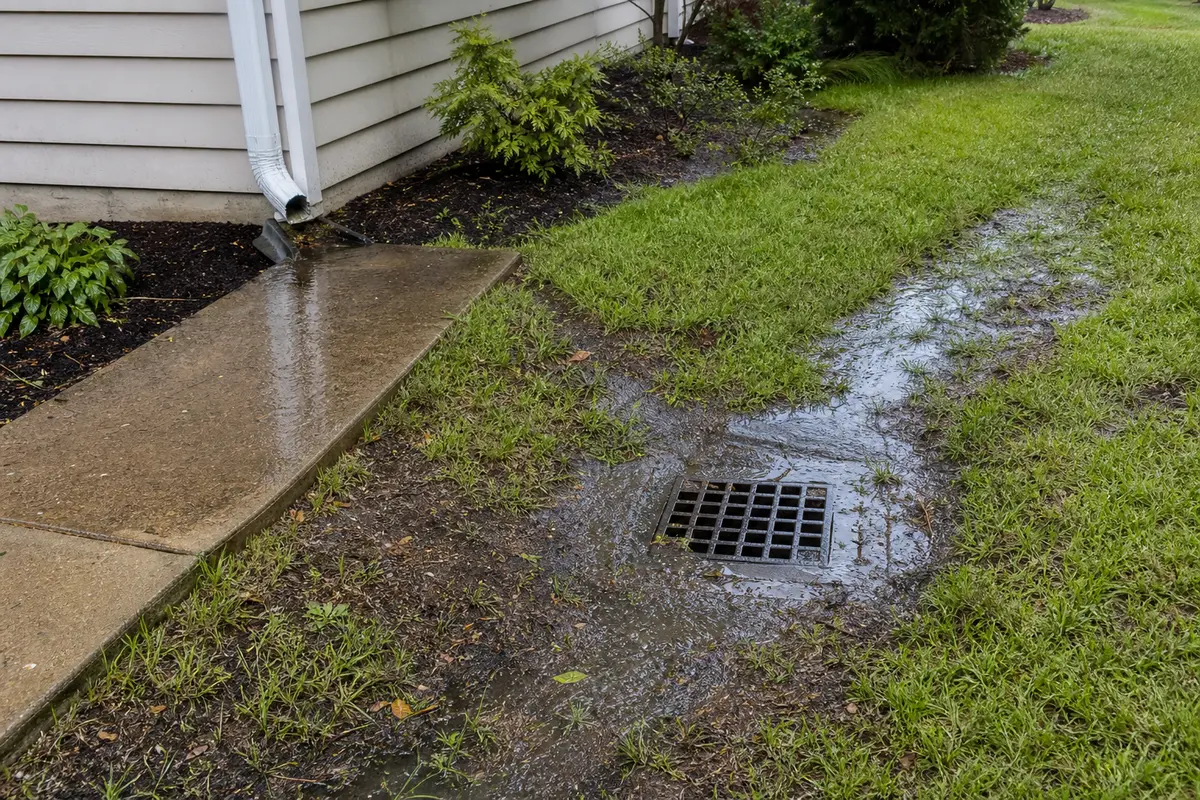
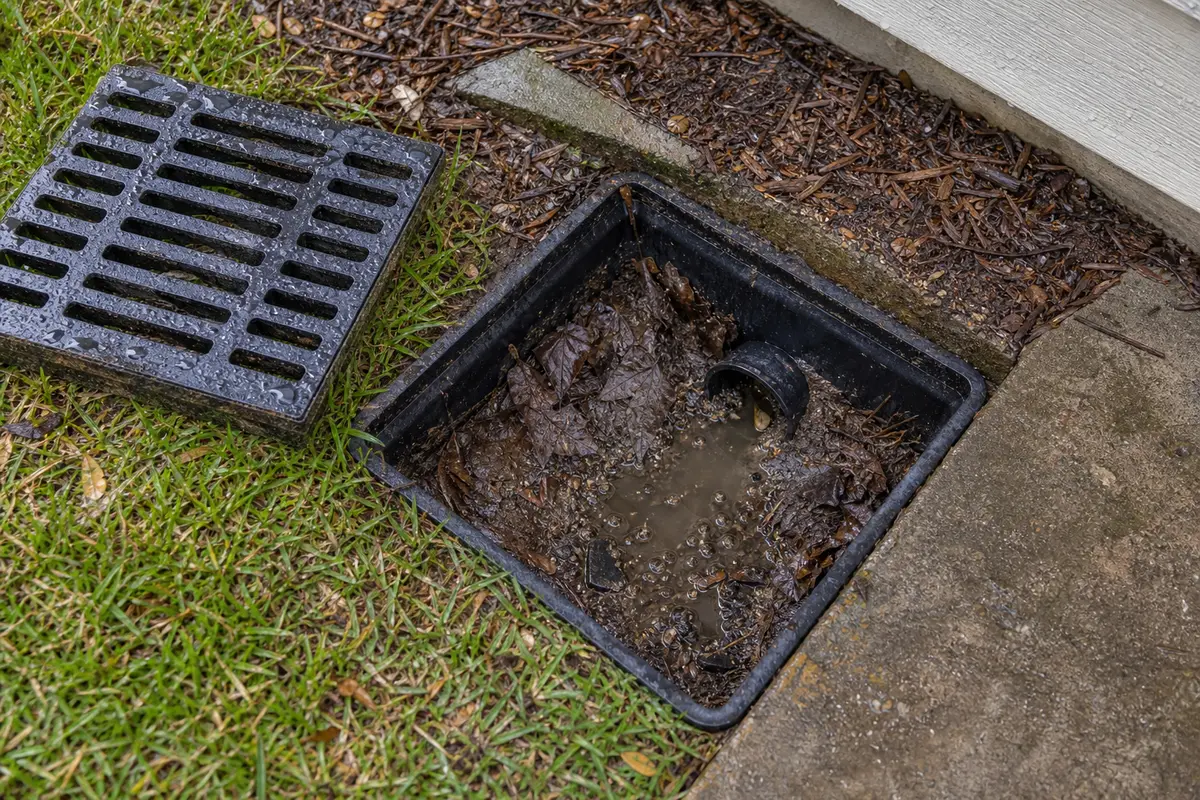
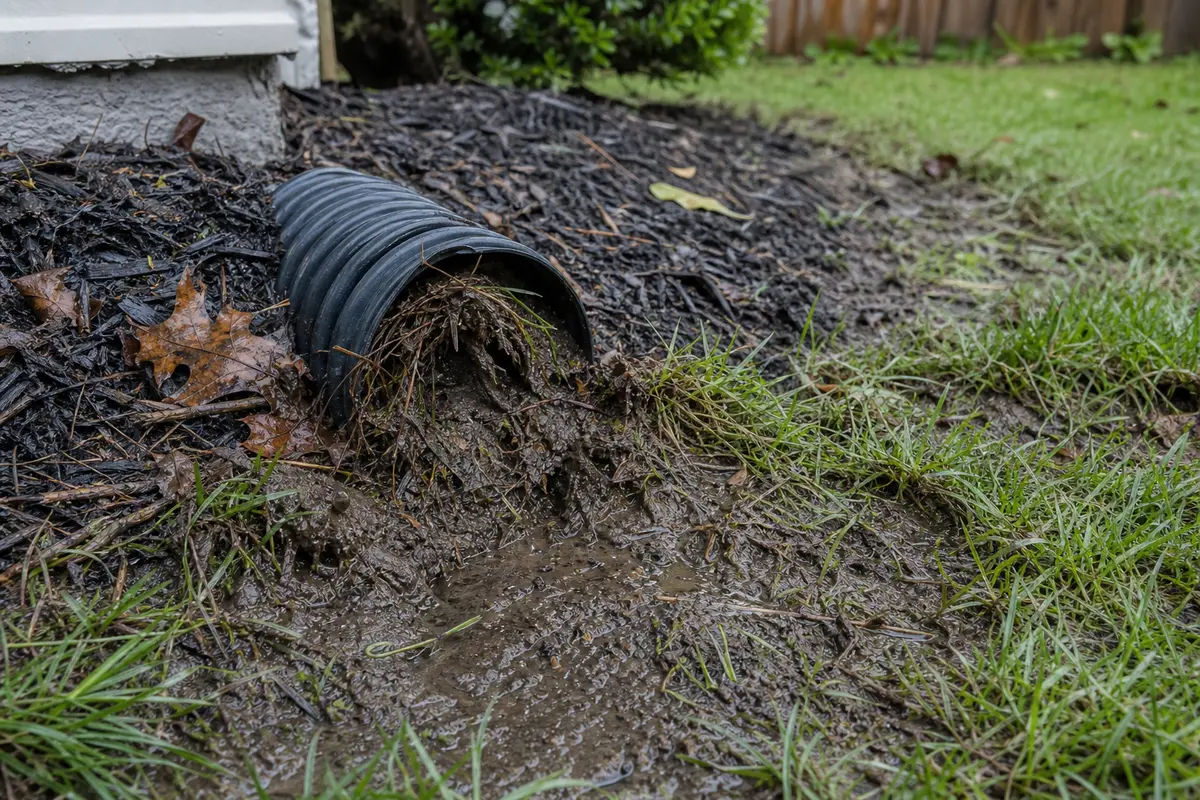
Buy parts only after the visible clue points there. Match the exact grate size, basin shape, pipe diameter, outlet style, and drainage diagnosis. A grate helps when the grate is broken or sunken. A pop-up emitter helps when the outlet cap is the failed part. More pipe or another catch basin does not fix a buried outlet, a belly holding water, or too much runoff sent to one line.
A storm overflow is easier to sort when you separate entry, exit, pipe, and capacity. Do that before you touch a shovel.
Most bad drainage repairs start with a guess. Keep the first pass small, visible, and reversible.
The inlet is the cheapest place to be wrong. Clean it enough that water can enter freely, then see whether the symptom changes.
A buried or jammed outlet backs up the whole system. Find that end before you decide the pipe underground is bad.
Use a hose as a sorting tool, not a pressure washer. The result tells you where to spend the next hour.
| What happens | What it points toward | Next move |
|---|---|---|
| Water drops in the basin and exits strongly | Inlet debris or a temporary outlet blockage | Clean both ends, then watch the next ordinary rain. |
| Basin rises quickly with little outlet flow | Restriction between inlet and outlet | Look for a clog, crushed section, root-packed area, or belly. |
| Outlet flow starts only after basin fills high | Low spot holding water in the buried run | Mark the route and look for one settled wet strip before digging. |
| Outlet runs hard but yard still ponds in heavy rain | Capacity or grading problem | Reduce runoff to that inlet or change the surface water path. |
| Water surfaces along the buried route | Broken, separated, or crushed pipe section | Stop broad flushing and isolate that short section for repair. |
Before you dig, mark the short section the test keeps naming. Look for a repeatable wet strip, water surfacing in one spot, or hose water stopping at the same place, then open only that area.
These tools are for safe inspection, cleaning, and light testing. They do not make deep excavation, utility-zone digging, or structural drainage work safe.
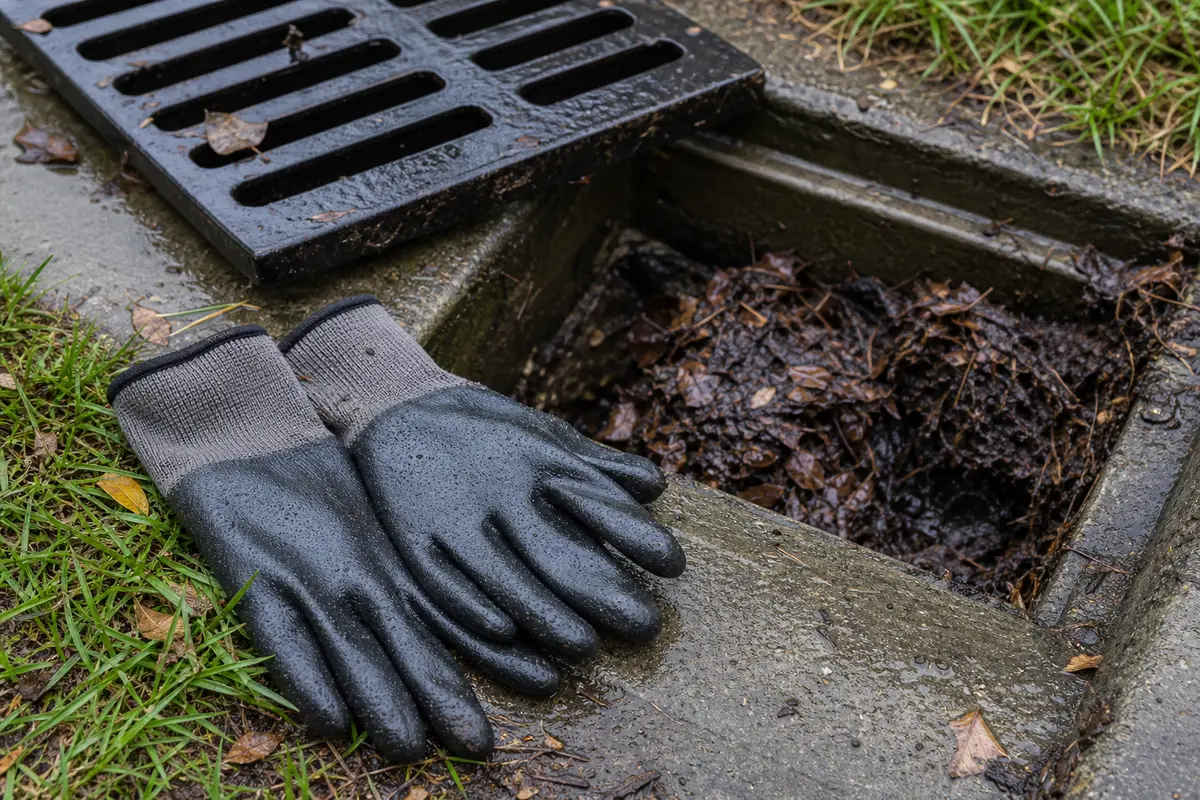
Helps when: Use waterproof work gloves for pulling wet leaves, grit, and sharp debris from a visible grate, basin, or outlet opening.
Skip it when: Skip hands-on cleanup if the basin is deep, you cannot see the bottom, or water is moving fast.
Compare waterproof work gloves on Amazon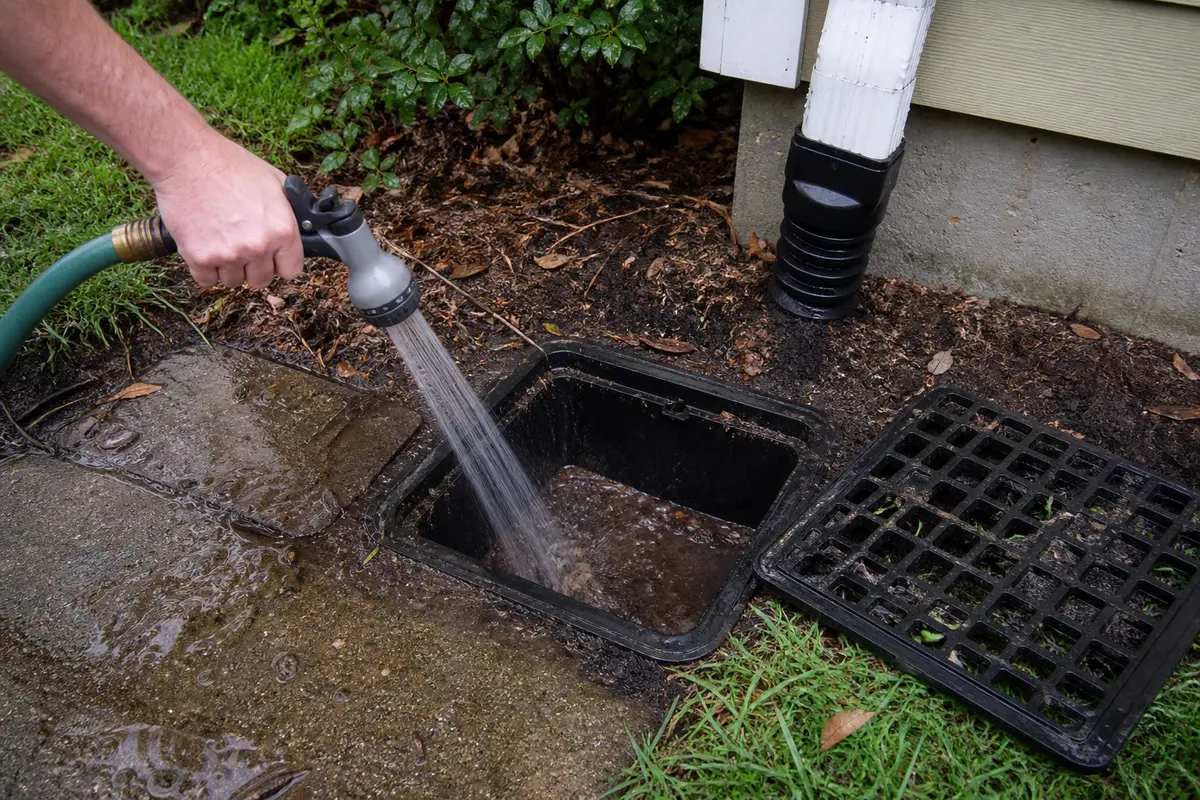
Helps when: Use a garden hose with gentle flow to prove whether water travels from the inlet to the outlet.
Skip it when: Skip forceful flushing if water backs up quickly, surfaces along the route, or threatens the foundation.
Compare garden hoses with spray nozzles on AmazonAs an Amazon Associate I earn from qualifying purchases. Repair Riot may earn a commission at no extra cost to you.
Drainage parts belong in the cart only after the clue names the failure. Match size, shape, outlet type, pipe material, and grade before ordering anything.
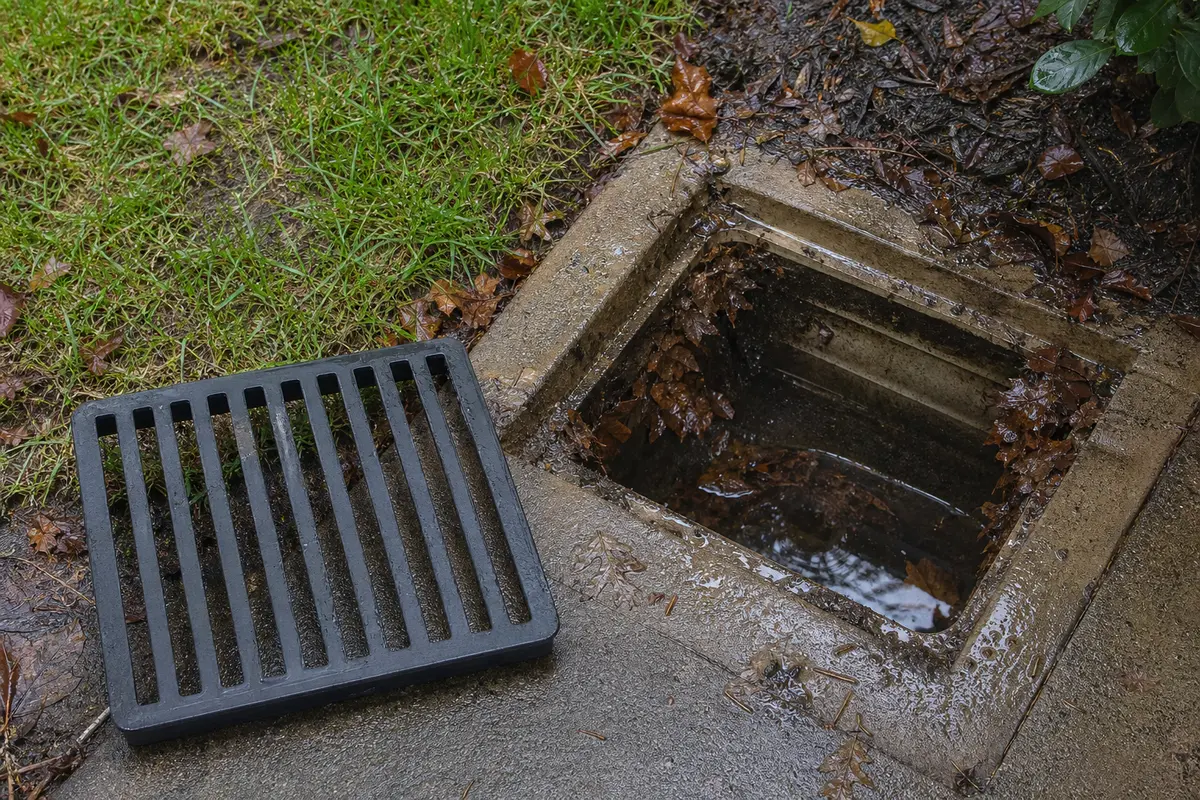
Helps when: Use a catch basin grate when the existing grate is cracked, missing, sunken, or shaped so it traps debris after the basin is clean.
Skip it when: Skip it if water enters the basin but cannot leave; a new grate will not clear a blocked outlet or sagged buried line.
Compare catch basin grates on Amazon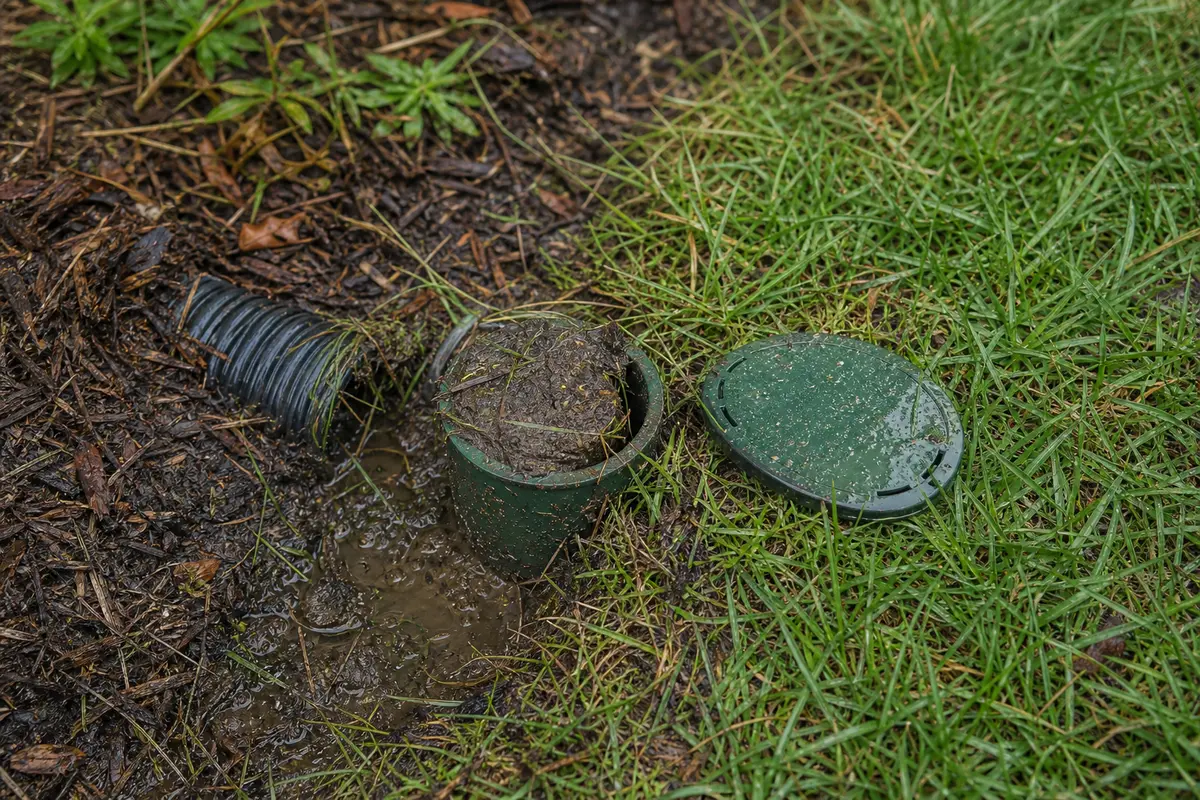
Helps when: Use a pop-up drain emitter when the buried line reaches a pop-up outlet and the cap is broken, jammed, or buried shut.
Skip it when: Skip it if the outlet flows freely or the blockage is somewhere in the buried run.
Compare pop-up drain emitters on Amazon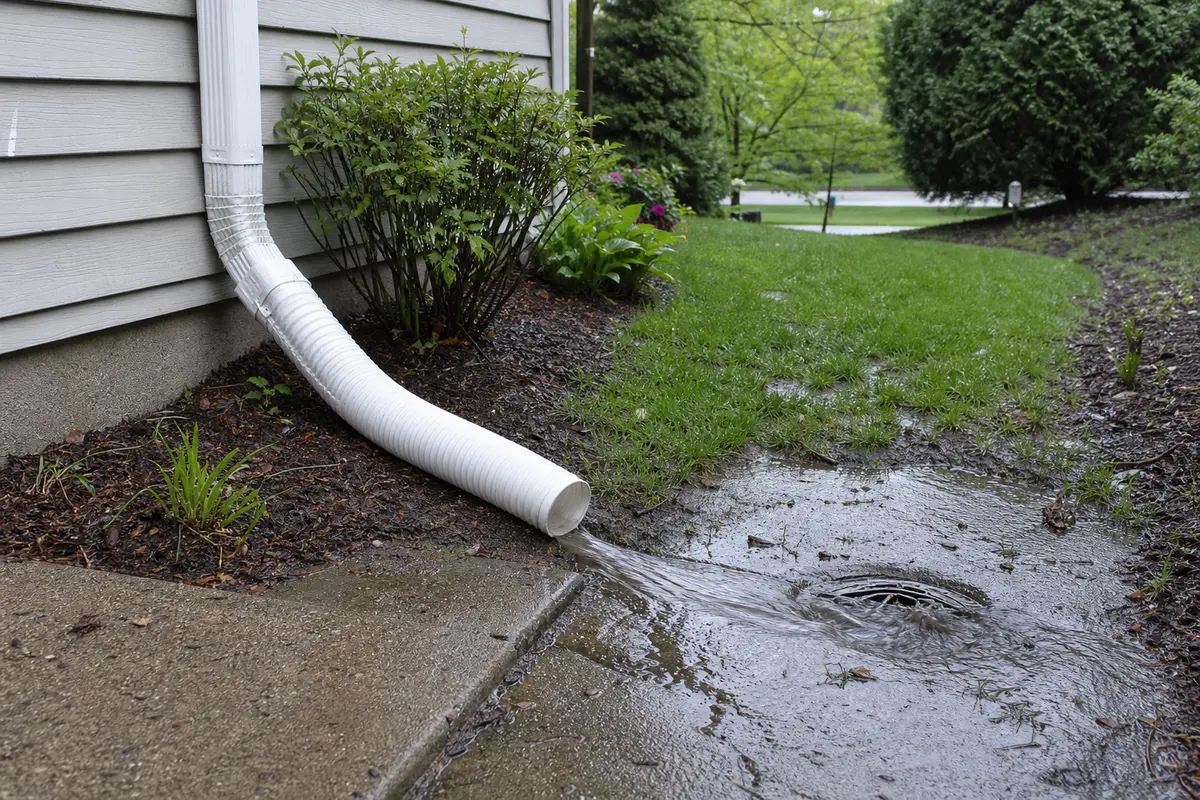
Helps when: Use a downspout extension when roof runoff is overloading this drain and can be redirected before it reaches the basin.
Skip it when: Skip it if the problem is a packed basin, blocked outlet, or broken buried pipe.
Compare downspout extensions on AmazonAs an Amazon Associate I earn from qualifying purchases. Repair Riot may earn a commission at no extra cost to you.
Usually because the line cannot move water out as fast as it arrives. That can be from a partially blocked outlet, a line that is only partly open, or simply too much runoff being sent to one drain during cloudbursts.
Not automatically. If the grate is clear but the basin still fills, check the outlet before blaming the underground pipe. Many buried drains back up because the discharge end is buried in mud, mulch, or turf, not because the whole line has failed.
Watch what happens after the storm. If the basin stays full for a long time, think restriction. If it drains down fairly soon and the outlet runs hard during the event, the line may be open but overwhelmed by the amount of runoff.
Yes, for basic testing and light debris. A hose is useful for proving whether water reaches the outlet and whether the basin drops normally. If water quickly backs up, bubbles out of the grate, or the line stays full, stop short of forcing the issue and move toward targeted repair or professional inspection.
Usually no. Start with the grate, basin, and outlet, then look for one localized bad section. Full replacement makes sense only after you know the line is broadly collapsed, badly settled, or too small for the runoff it handles.
Check the water path across the yard, not just the drain hardware. If the outlet runs hard but water still ponds around the grate, watch where sheet flow reaches the inlet. It may be too high, too small, or receiving more runoff than one point drain can capture.
Yes. A discharge end covered by sod, mulch, mud, leaves, or a stuck pop-up emitter can back up the entire buried run. Check the outlet before you assume the underground pipe has collapsed.
Dig only after you have a short suspected trouble spot, such as water surfacing along the route, a settled wet trench line, or hose water stopping at the same place from both ends. Call for utility locating before digging beyond a shallow surface check.
Repair Riot built this page around visible drainage clues: inlet blockage, outlet blockage, standing water after storms, runoff overload, and safe stop points before digging.