Will the GFCI hold with the disposal unplugged?
Yes points back toward the disposal, cord area, moisture, or motor load. No points toward the receptacle or wiring.
If a Frigidaire garbage disposal trips a GFCI, it usually means a jammed grind plate, moisture under the sink, or current leaking inside the motor. Unplug the disposal first; a GFCI that trips again is a stop sign, not a reset loop.
A good clue is simple: does the outlet hold with the disposal unplugged, or does it trip only when the switch asks the motor to start?
That one result tells you whether to look under the sink, clear a jam, or call for electrical help.
Don’t start with: a new outlet, wall switch, or disposal. First see whether the GFCI holds with the disposal unplugged and whether the powered-off jam check frees the grind plate.
Yes points back toward the disposal, cord area, moisture, or motor load. No points toward the receptacle or wiring.
Think jam or motor load first. Cut power and free the grind plate before you price a new outlet.
Power is reaching the motor, but the plate may be stuck. Stop holding the switch and clear the jam safely.
Treat moisture as the fault until proven otherwise. Dry the area, find the leak source, and keep electrical parts off.
No is electrician territory. The disposal cannot be diagnosed fairly until the receptacle circuit is stable.
The useful clues are under the sink. Look at the plug and GFCI-protected receptacle first, then check whether the bottom jam socket can move the grind plate with power off. Any fresh water near the cord, outlet, or lower housing changes the retest.
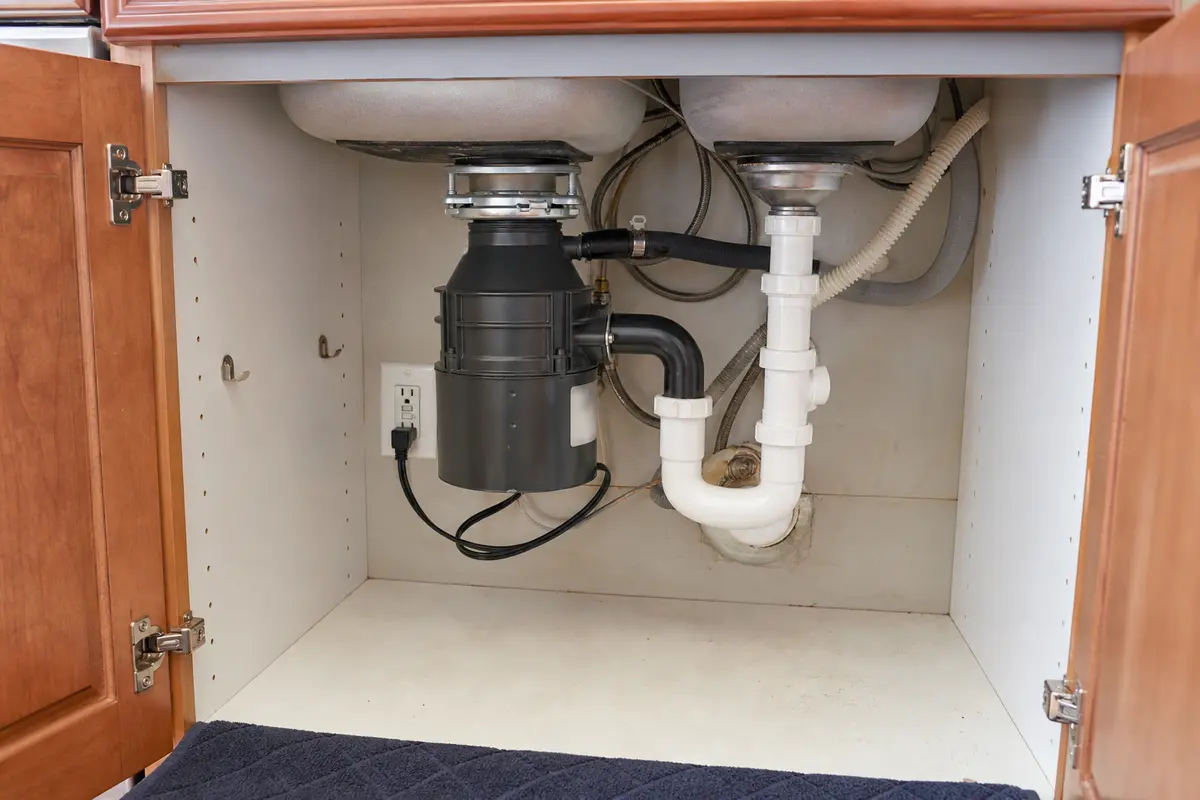
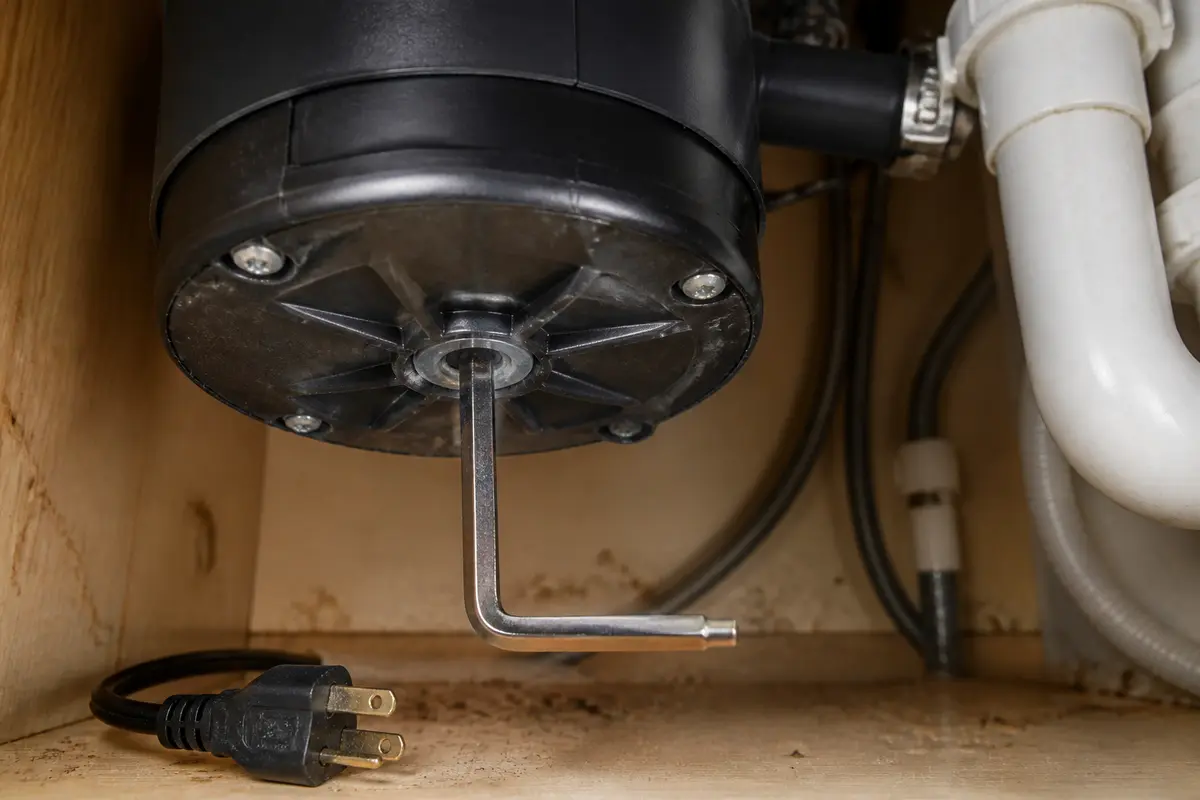
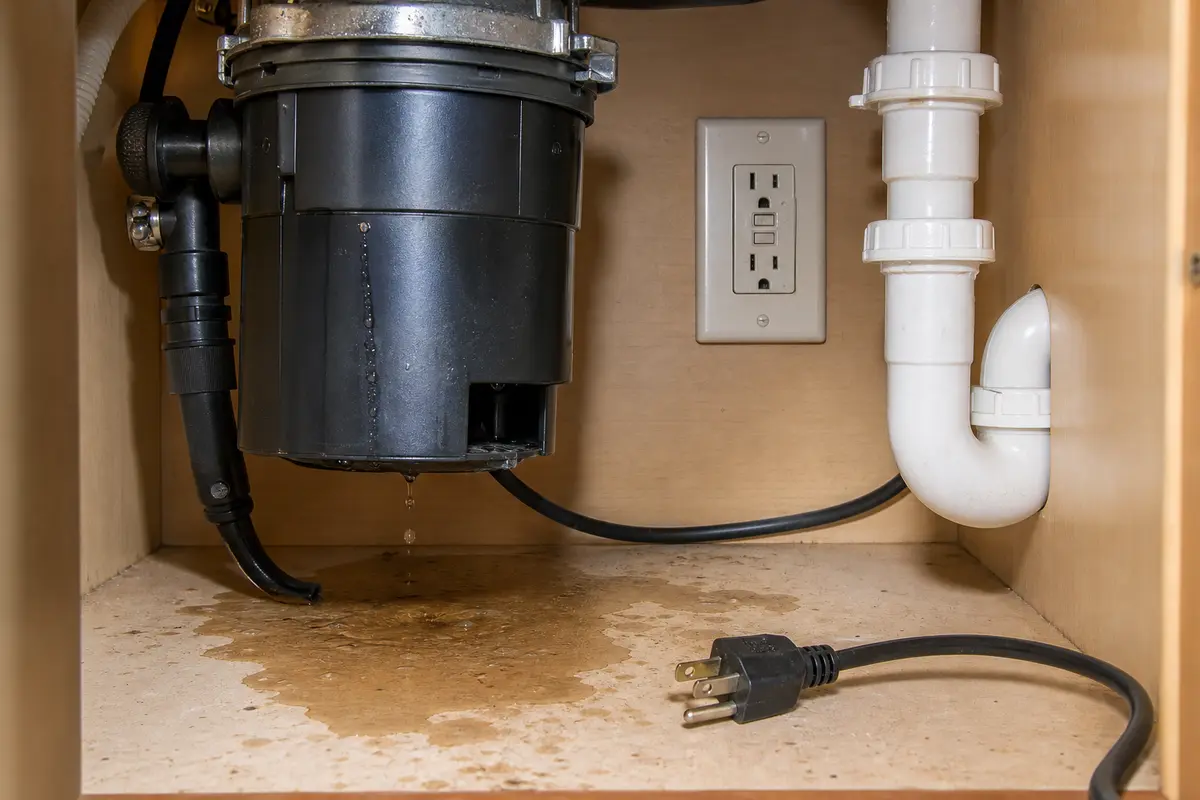
Do not buy a GFCI, switch, splash guard, mount, or full disposal until the result points there. First separate the outlet from the disposal, clear any jam, and look for moisture. If a part does make sense, match the exact model tag and wiring setup instead of trusting a similar-looking replacement.
A GFCI trip is not the same as a disposal reset trip. The outlet is watching for current leaking where it should not, while the disposal reset usually protects the motor from overheating.
Repeated resets do not diagnose a ground fault. A good clue comes from one controlled reset after the disposal is unplugged, then the result decides the next move.
Use this quick map after the disposal is unplugged or switched off. Watch for the first result because it should send you to one lane, not a pile of parts.
| What you see | Likely lane | Next move |
|---|---|---|
| GFCI resets and holds with the disposal unplugged | The outlet can hold with no disposal load. | Inspect the cord area, moisture, jam, and disposal before replacing the receptacle. |
| GFCI will not reset with the disposal unplugged and other loads removed | The receptacle or wiring needs attention. | Leave the circuit off and call a licensed electrician. |
| Trips only when the wall switch is flipped | A jammed grind plate or failing motor is more likely. | Cut power, free the grind plate, and retest briefly with cold water. |
| Hums for a second, then trips | The motor is loaded or stalled. | Stop the switch loop and clear a jam before another start attempt. |
| Trips after a leak, splash, or damp cabinet | Moisture may be creating leakage current. | Dry the area, fix the leak source, and do not use the outlet while it is wet. |
This is the first hands-on sort because it does not open the disposal or the wall box. A good clue is whether the outlet behaves with the disposal out of the picture.
A jammed grind plate is the repairable version of this complaint when the motor hums, stalls, or trips as it tries to start. Unplug the disposal, look for visible debris, free the bottom socket, then use one short cold-water retest.
Under-sink water changes the risk. A small drip at the flange, discharge pipe, dishwasher inlet, or cord entry can make a good disposal unsafe to run.
These are simple sorting tools. They keep hands out of the disposal and help you see whether water, debris, or a stuck plate is driving the trip.
Paid links. As an Amazon Associate I earn from qualifying purchases. Repair Riot may earn a commission at no extra cost to you.
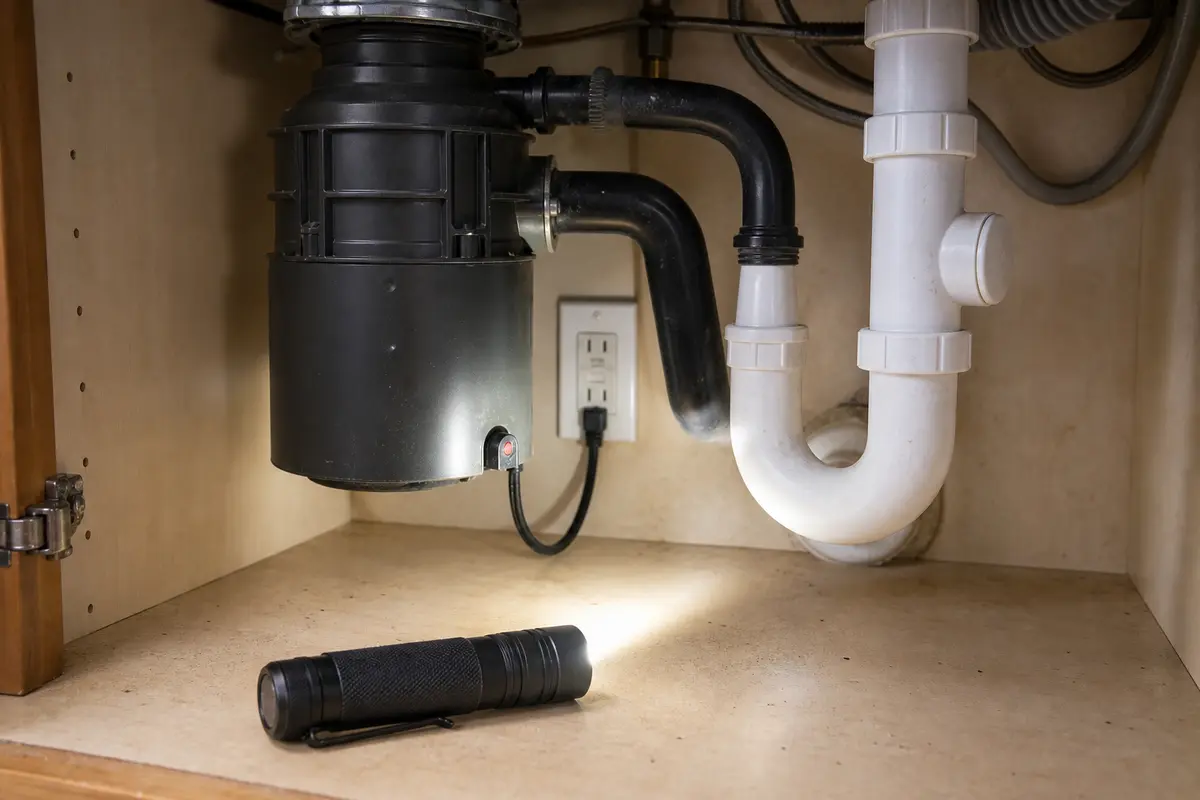
Helps when: You need to see the cord entry, reset button area, under-sink plumbing joints, and the disposal chamber without moving wiring.
Skip it when: The receptacle is wet, scorched, warm, or buzzing; leave the area powered off and call a licensed electrician.
Compare inspection flashlights on Amazon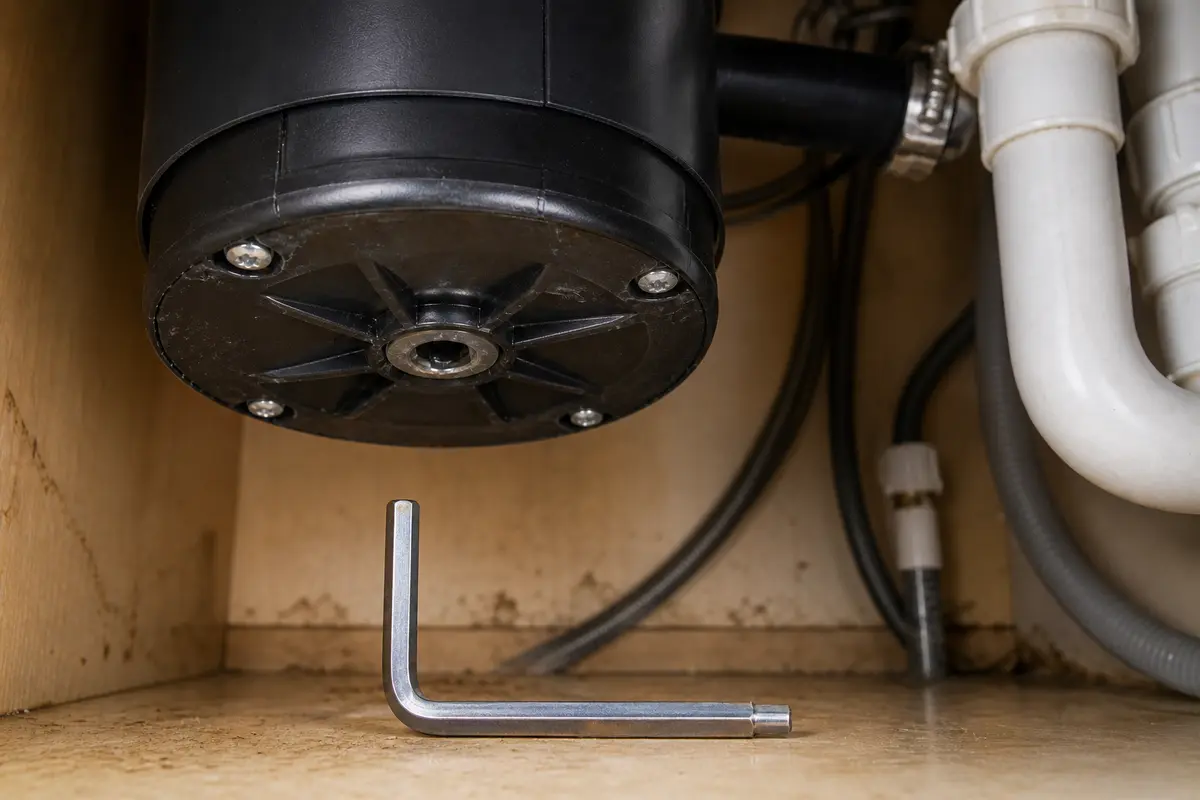
Helps when: The disposal has a bottom freeing socket and the motor hums or trips only when it tries to start.
Skip it when: Your unit has no bottom socket, the key will not seat, or the disposal body twists at the sink mount.
Compare jam keys on Amazon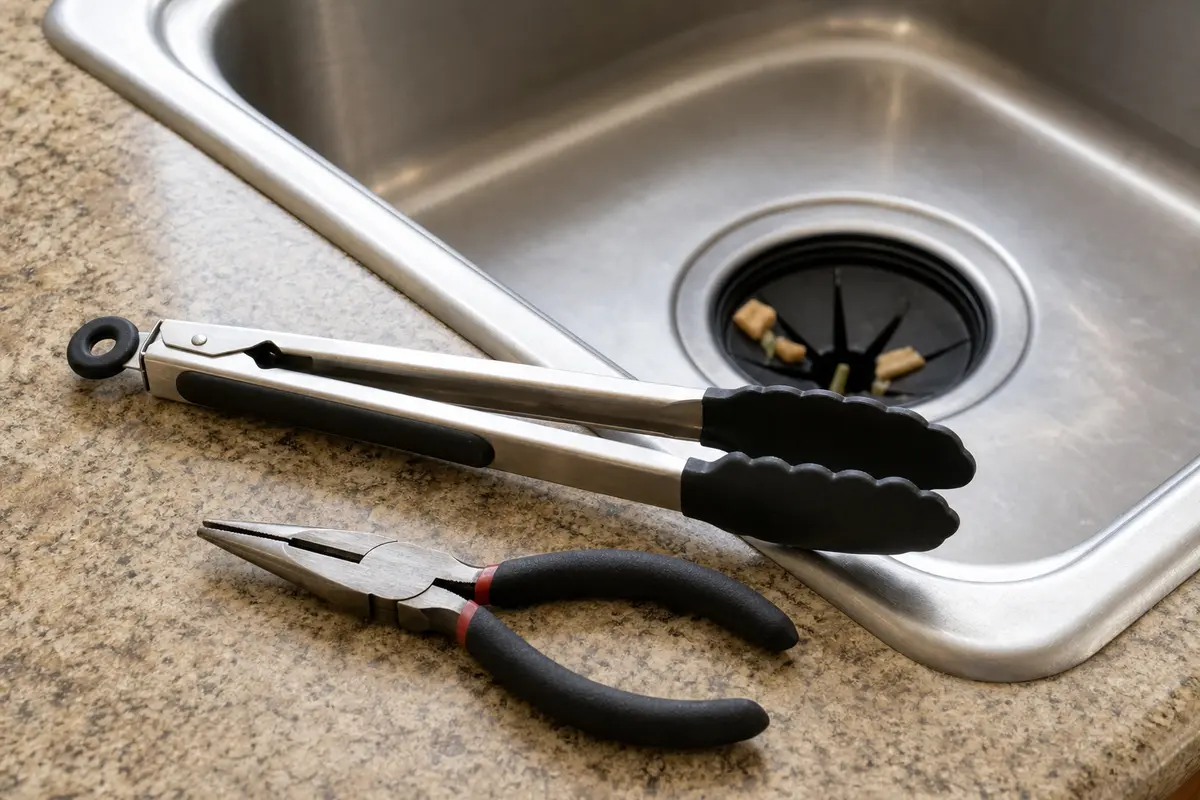
Helps when: Visible debris is sitting in the disposal opening and power is off, so you need a tool that keeps fingers out.
Skip it when: The object is glass, metal, or wedged below the splash guard where you cannot remove it safely.
Compare tongs and pliers on AmazonReplacement is a result, not a first guess. A disposal or GFCI belongs in the cart only after the unplugged-disposal split, jam clear, and moisture check point that way.
Paid links. As an Amazon Associate I earn from qualifying purchases. Repair Riot may earn a commission at no extra cost to you.
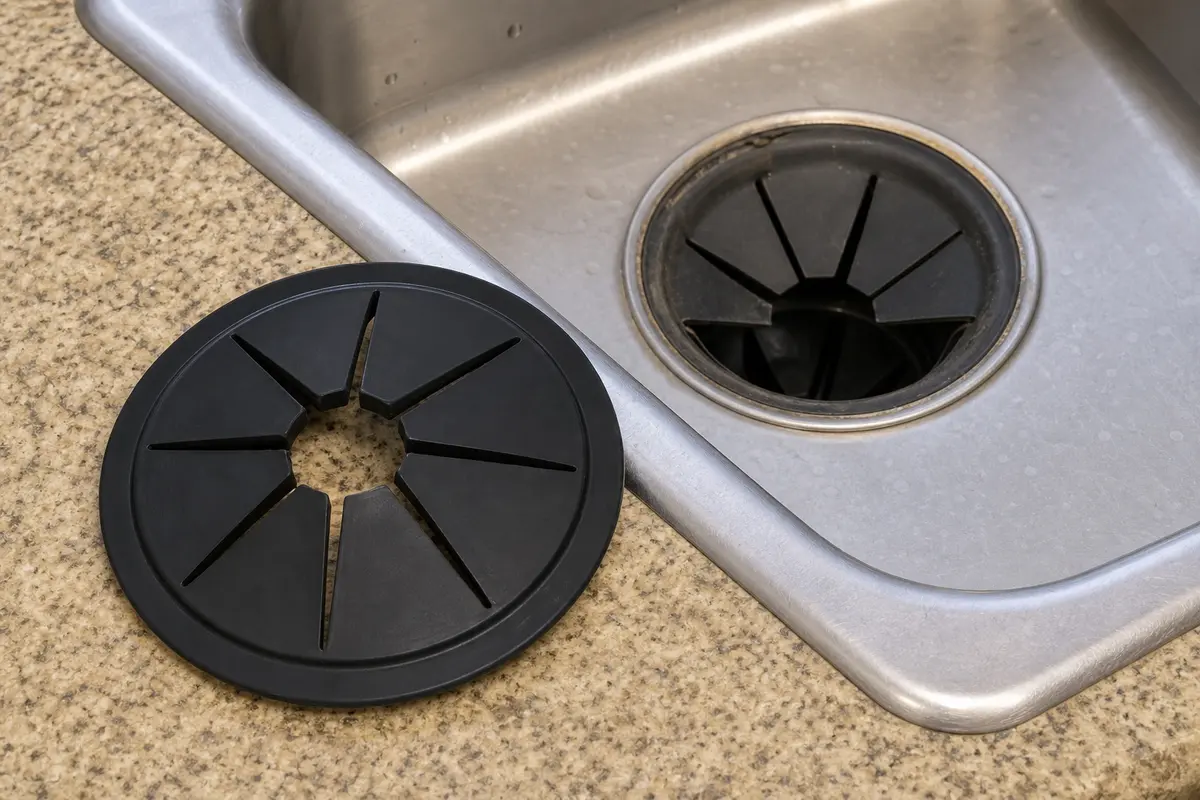
Helps when: The disposal runs normally and the only confirmed issue is a torn, hardened, or loose removable splash guard at the sink opening.
Skip it when: The GFCI is tripping, the motor hums, or water is coming from the lower housing; a splash guard will not fix those faults.
Compare splash guards on Amazon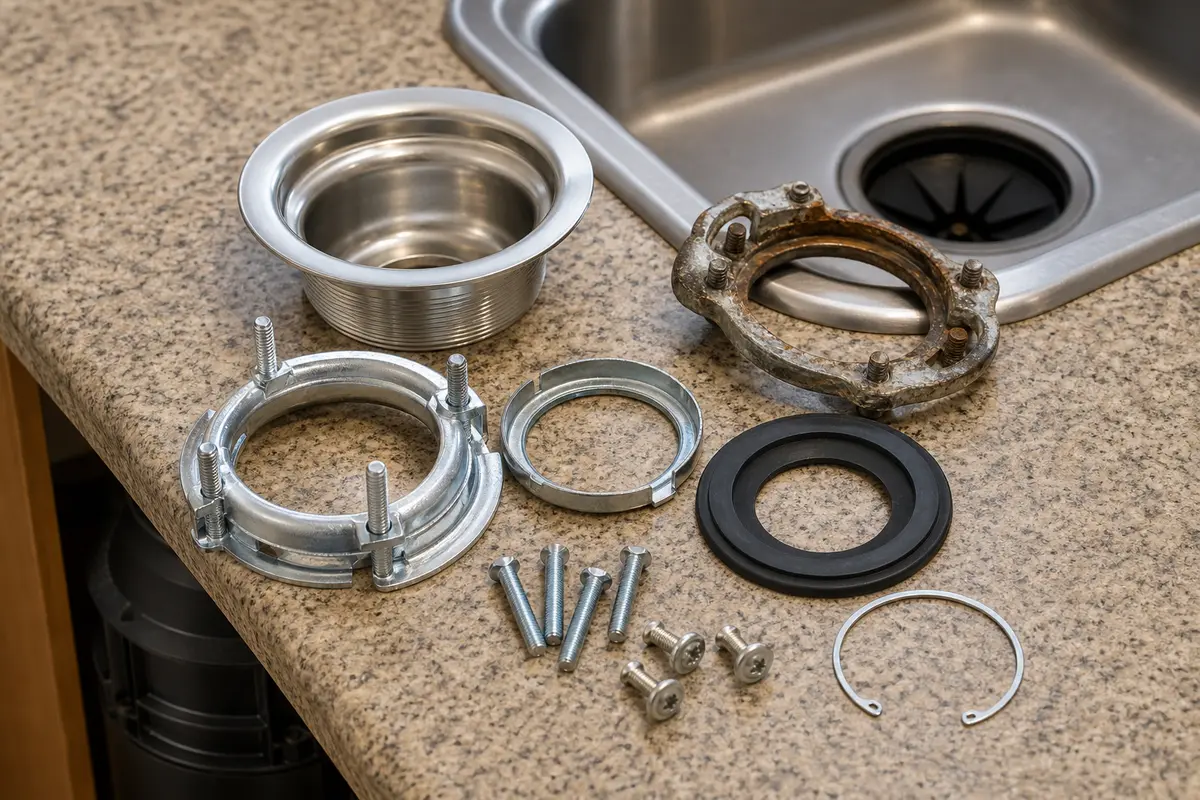
Helps when: You are replacing the disposal and the existing mount is corroded, damaged, loose, or leaking at the sink flange.
Skip it when: The disposal is just tripping the GFCI with no mount leak or looseness; finish the electrical and jam diagnosis first.
Compare mounting assemblies on Amazon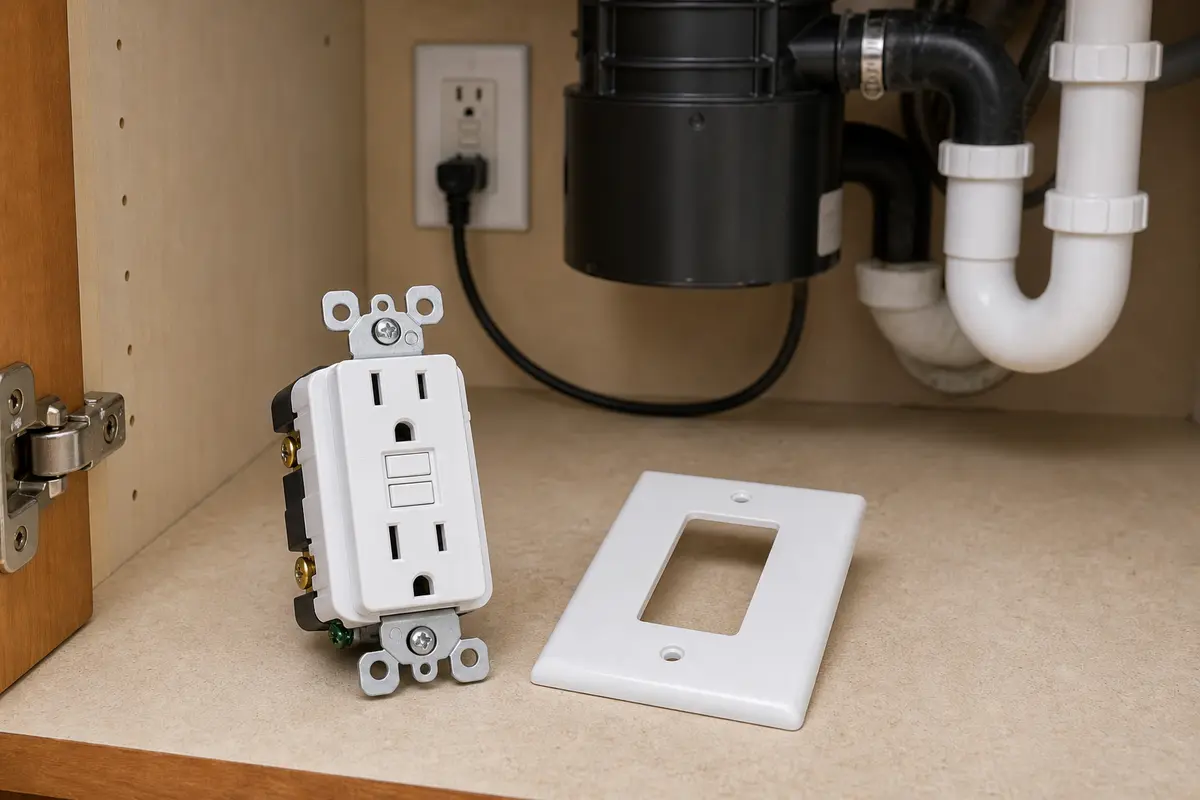
Helps when: A licensed electrician or qualified repair confirms the receptacle has failed and the disposal is not causing the trip.
Skip it when: The outlet holds with the disposal unplugged but trips when the disposal is connected or switched on.
Compare GFCI receptacles on AmazonThat pattern usually means the disposal is involved, not just the outlet. Start with power off, clear a jam, look for moisture around the cord and lower housing, then retest once. A repeat trip after those checks points toward disposal replacement or electrical service.
Yes. A jam can make the motor pull hard, hum, stall, and trip protection. Free it with power off, press the disposal reset only after it cools, and use one short retest with cold water running.
The outlet can hold with the disposal removed from the load. That makes the disposal, cord area, moisture, or motor fault the better clue. It does not prove the disposal is bad until you also sort jams and leaks.
Do neither first. Unplug the disposal and see whether the GFCI holds empty. An empty outlet that will not reset needs electrical diagnosis. An outlet that holds until the disposal is connected sends you back to the disposal path.
No. One controlled reset after unplugging, clearing a jam, or drying a damp area is enough for diagnosis. Repeated trips mean the protection is seeing a fault or overload that should not be forced.
Yes. Drips at the sink flange, discharge pipe, dishwasher inlet, cord entry, or lower housing can put moisture where it does not belong. Keep the outlet and cord dry, correct the leak source, and avoid retesting while anything electrical is wet.
A hum means power is reaching the motor, but the grind plate may be stuck or the motor may be failing. Shut it off quickly so the motor does not overheat. With power off, look for visible debris and try the bottom socket before blaming the wall switch.
Call a licensed electrician when the GFCI will not reset with the disposal unplugged, the receptacle is warm or scorched, wiring is damaged, or water reached the outlet. Replace the disposal only after the outlet side is known to be stable.
Repair Riot built this page around the checks a homeowner can make without opening the disposal or wall box. First see whether the GFCI holds with the disposal unplugged, then note whether the unit hums, stalls, or shows fresh water near the cord, receptacle, or lower housing. Those clues decide the next move: clear a jam, dry the area and fix the leak source, replace the disposal, or leave the circuit off and call a licensed electrician. The electrical safety references are linked below.