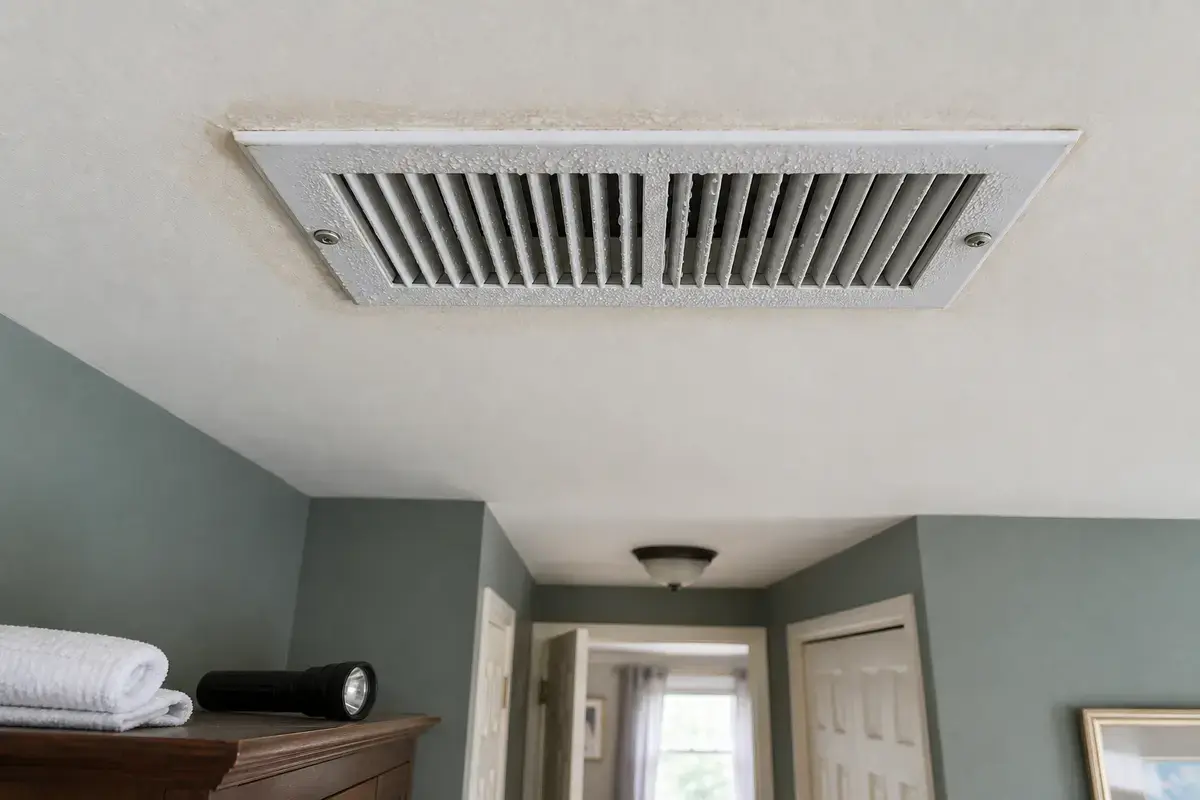
Are beads forming on the metal face?
Start with humidity, airflow, filter condition, and room-side condensation.
An air conditioner that drips at a supply register usually has condensation forming on a cold grille or inside the boot. Check whether water forms on the register face, then check humidity, airflow, boot gaps, and nearby duct insulation before replacing the grille.
Fine beads forming first on the metal face point to room-side sweating. Wipe the grille dry, run the AC, and watch whether water comes back on the face or tracks out from the boot; boot-edge tracks, ceiling stains, or several wet registers point upstream.
Find where the water starts: face, boot, attic, or duct path.
Don’t start with: a replacement register just because the grille is rusty. Wipe it dry and watch whether water starts on the face, boot edge, or ceiling before buying a new grille.
Start with humidity, airflow, filter condition, and room-side condensation.
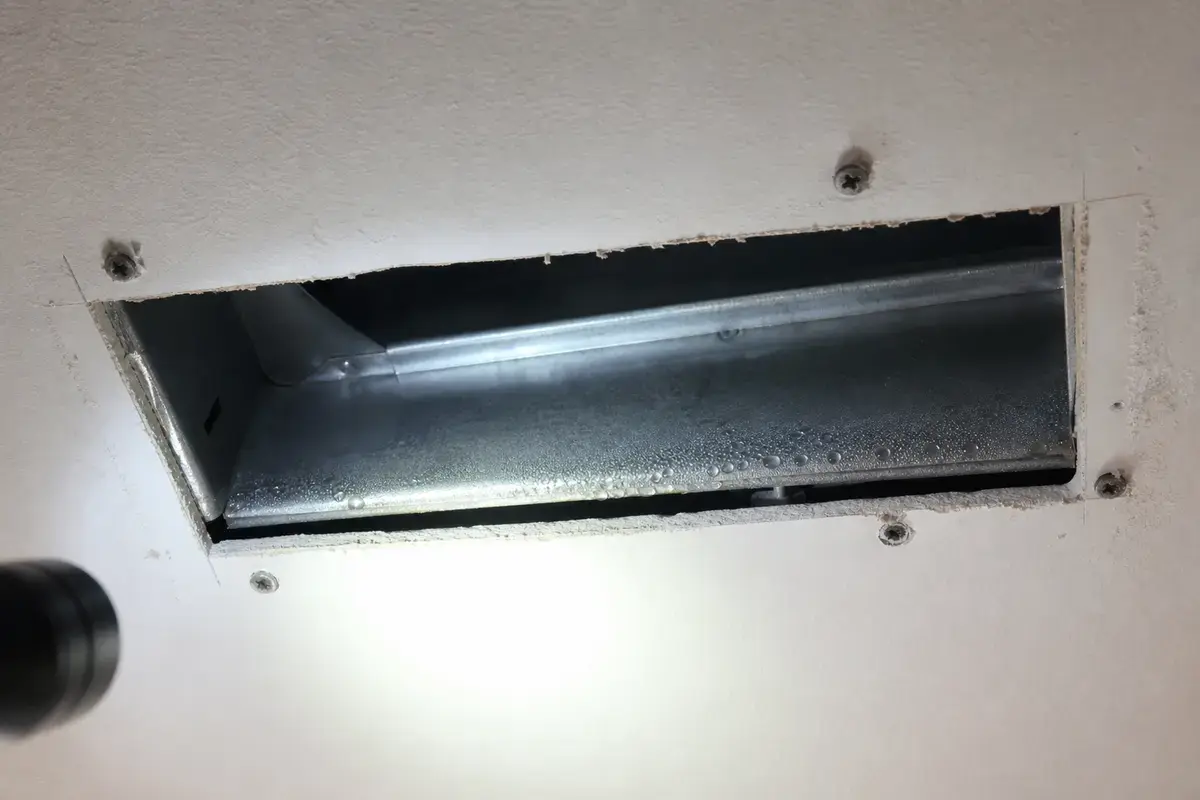
Remove the register safely and look for boot gaps, wet insulation, or water tracks.
Check system airflow, coil icing, drain issues, and indoor humidity before local parts.
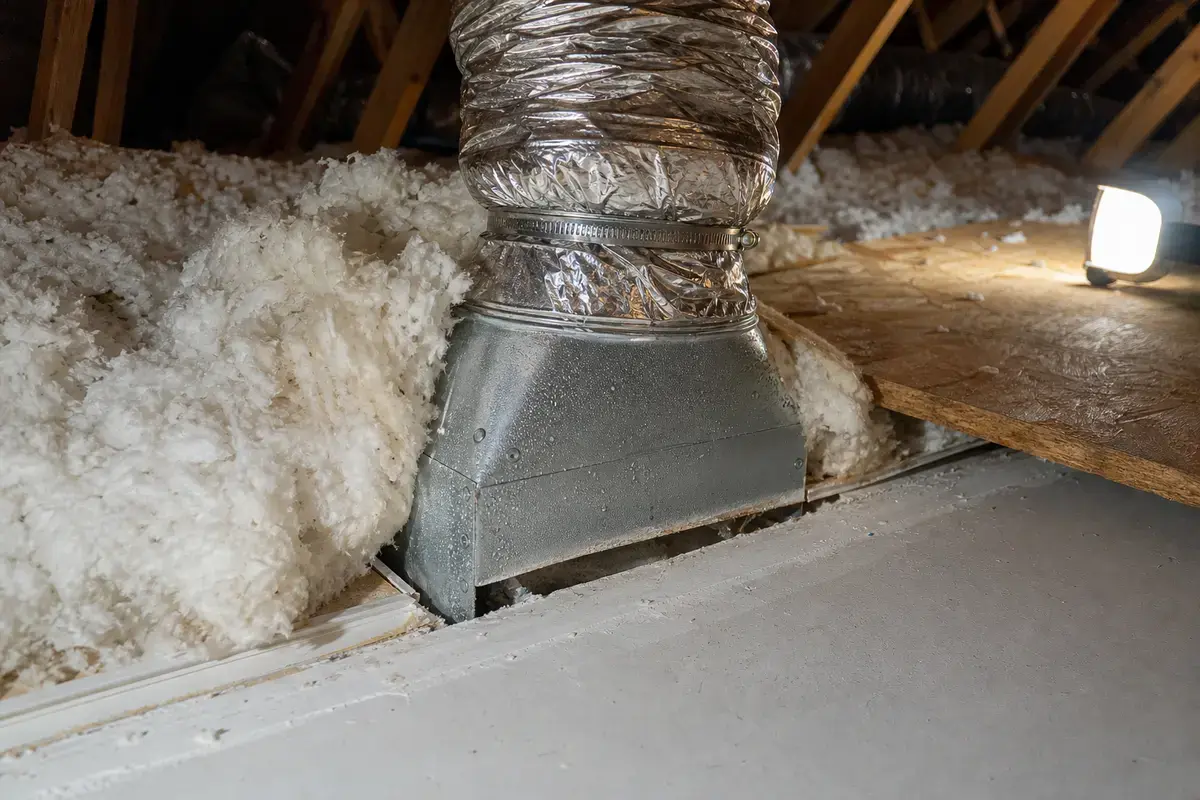
Inspect insulation and air sealing around that boot.
Replace the grille only after the source is corrected.
The repair changes when the water forms on the face versus arriving from the duct boot.
Prove the moisture diagnosis before buying anything. Only replace the register after the drip source is fixed, and then match the exact opening size, face style, mounting orientation, screw spacing, and damper layout.
The first split is where the water begins. Wipe the grille dry, run the AC, and watch the first wet spot.
Low airflow can make supply air colder and push the register below the room dew point.
| What you see | What it usually means | Next move |
|---|---|---|
| Water beads on face only | Register sweating from humidity and cold metal | Lower humidity and improve airflow. |
| Water tracks from boot edge | Duct boot gap, poor insulation, or upstream water | Inspect boot seal and attic/crawlspace area. |
| Several registers drip | System airflow, coil, drain, or humidity issue | Check filter and air handler clues. |
| Only one attic register drips | Local boot insulation or air sealing issue | Inspect insulation above that boot. |
Remove the register only after the area is safe and dry enough to handle.
Ceiling registers often drip because the boot or duct above them is cold and poorly insulated.
The register is where the symptom shows, not always where the repair starts.
Use these to locate the water source before buying grilles or dampers.
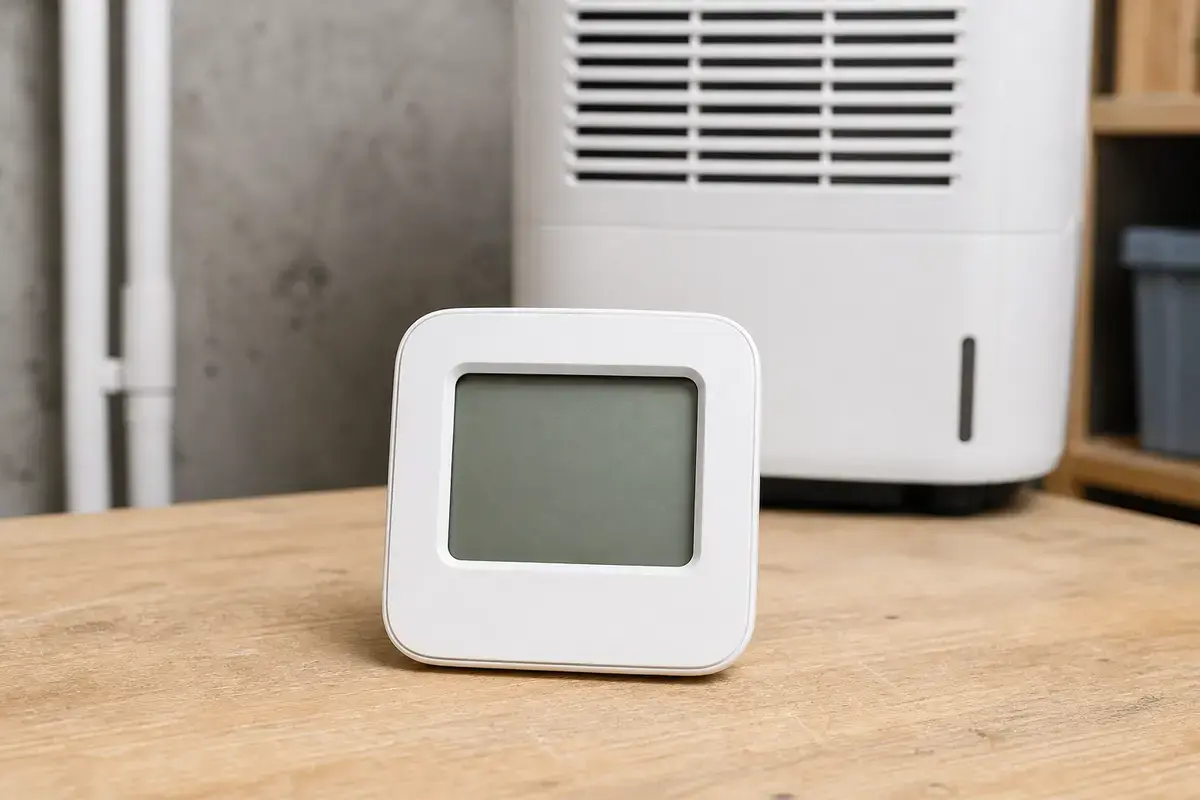
Helps when: Shows whether room humidity is high enough to sweat a cold register.
Skip it when: Skip it if several registers drip and the air handler has water or ice clues.
Compare room hygrometers on Amazon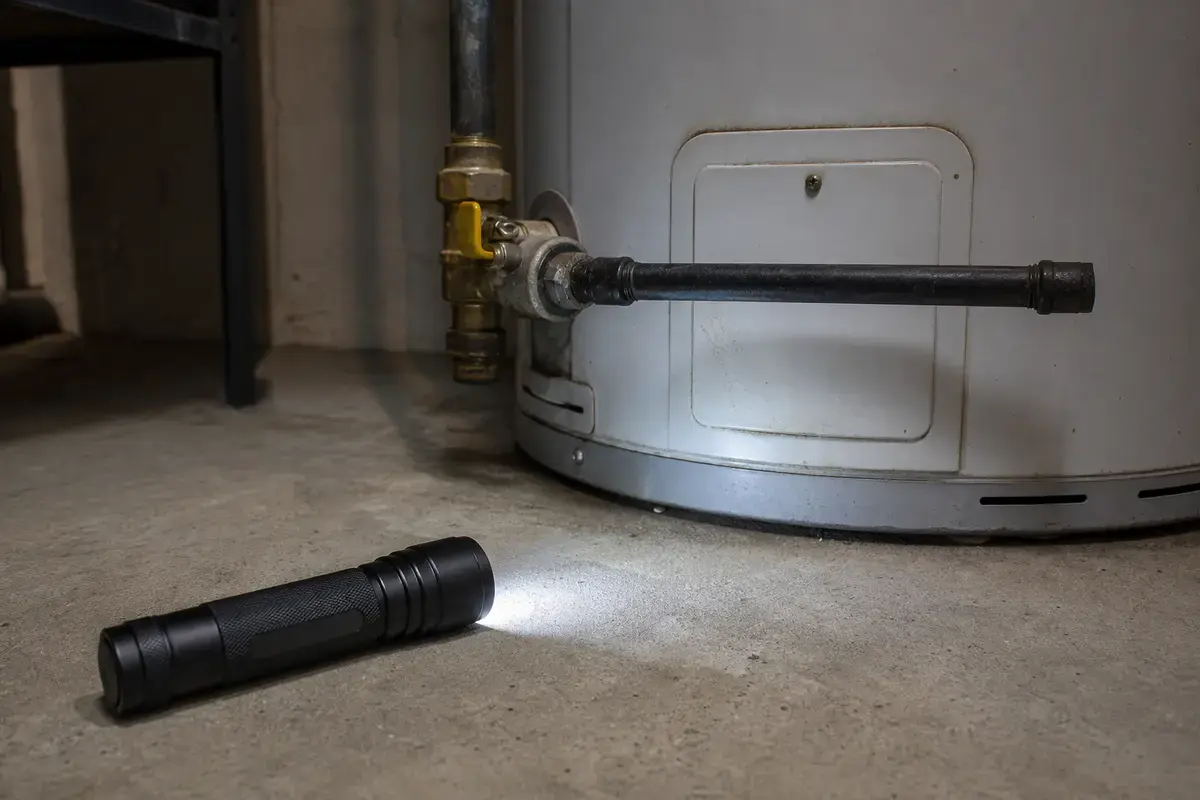
Helps when: Helps inspect boot gaps, rust lines, and wet insulation inside the opening.
Skip it when: Skip reaching into ductwork while the blower is running.
Compare inspection flashlights on Amazon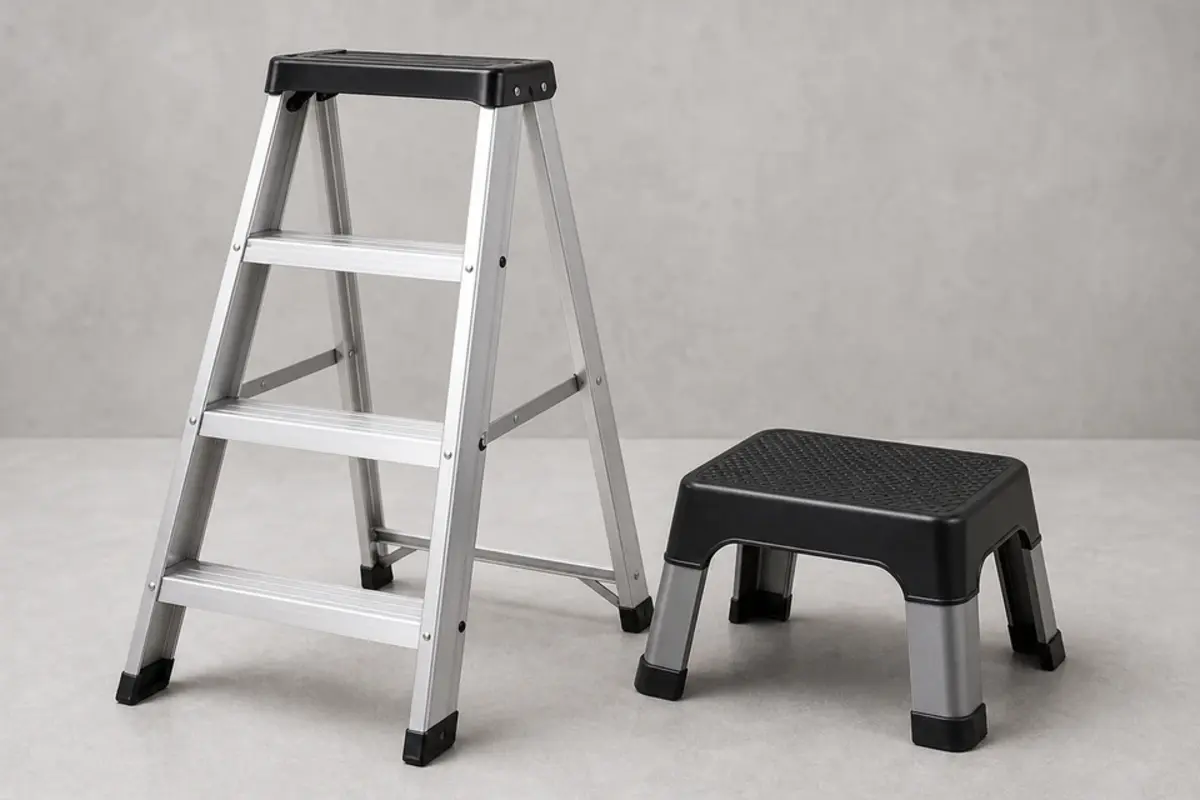
Helps when: Needed for safe access to ceiling and high wall supply registers.
Skip it when: Skip climbing if the floor is wet, the ladder cannot sit level, or water is near wiring.
Compare step ladders on AmazonAs an Amazon Associate I earn from qualifying purchases. Repair Riot may earn a commission at no extra cost to you.
Replace the visible part only after the moisture cause is corrected.
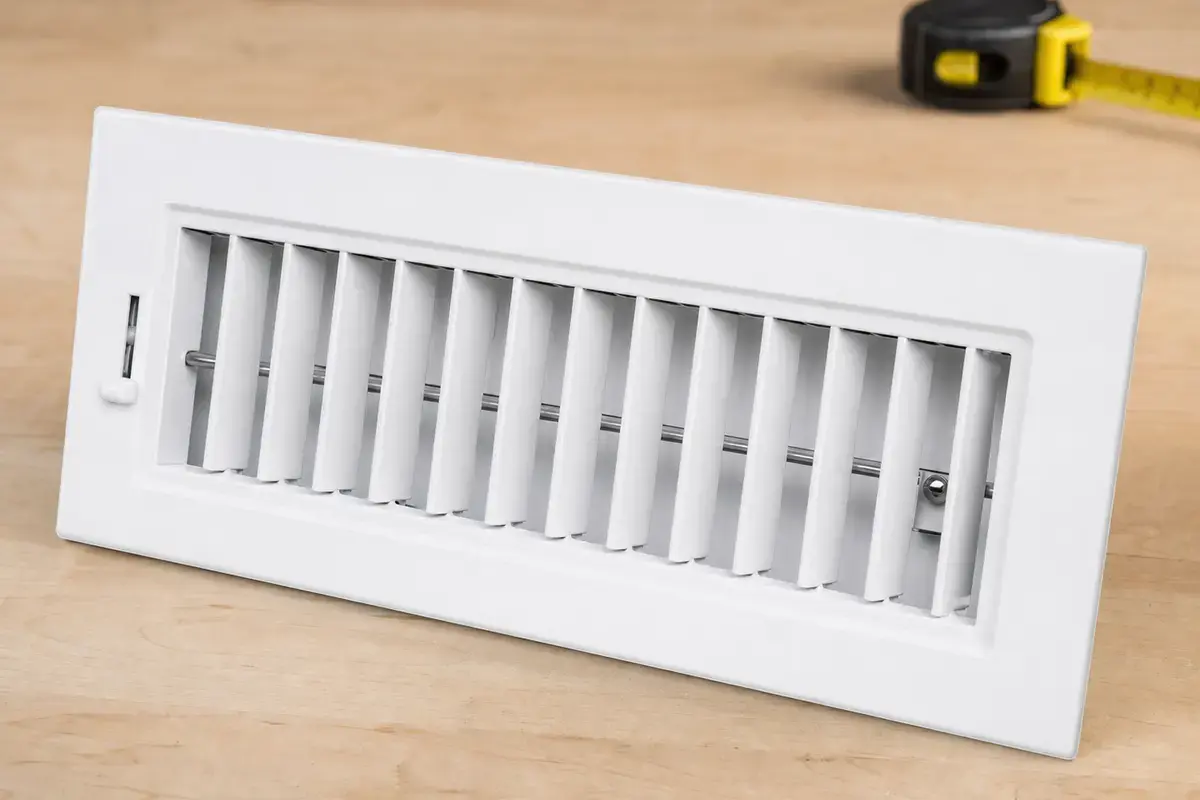
Helps when: Use it when the old register is rusted, warped, or will not sit flat after the drip is fixed.
Skip it when: Skip it when water is still forming on the boot or ceiling drywall.
Compare ceiling supply registers on Amazon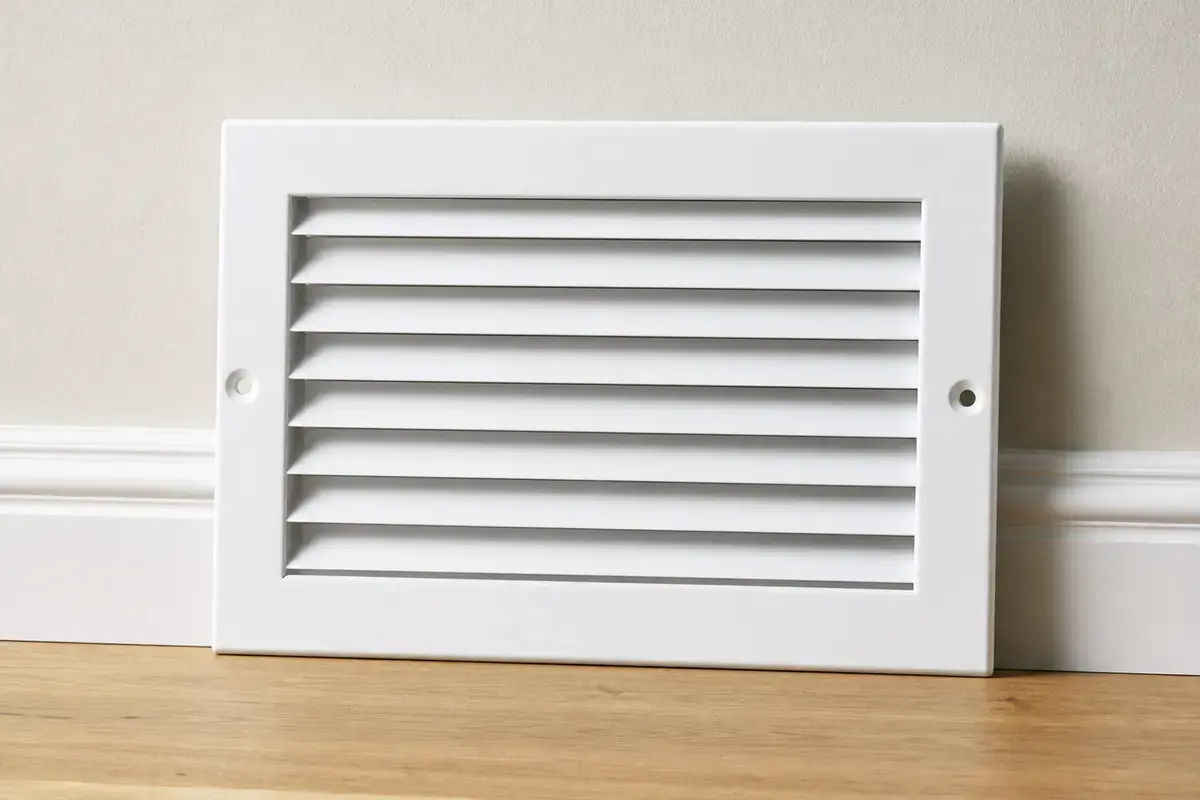
Helps when: Use it for a damaged wall grille after humidity, airflow, and boot checks pass.
Skip it when: Skip it when the grille is only wet because humid air is condensing on cold metal.
Compare wall supply registers on Amazon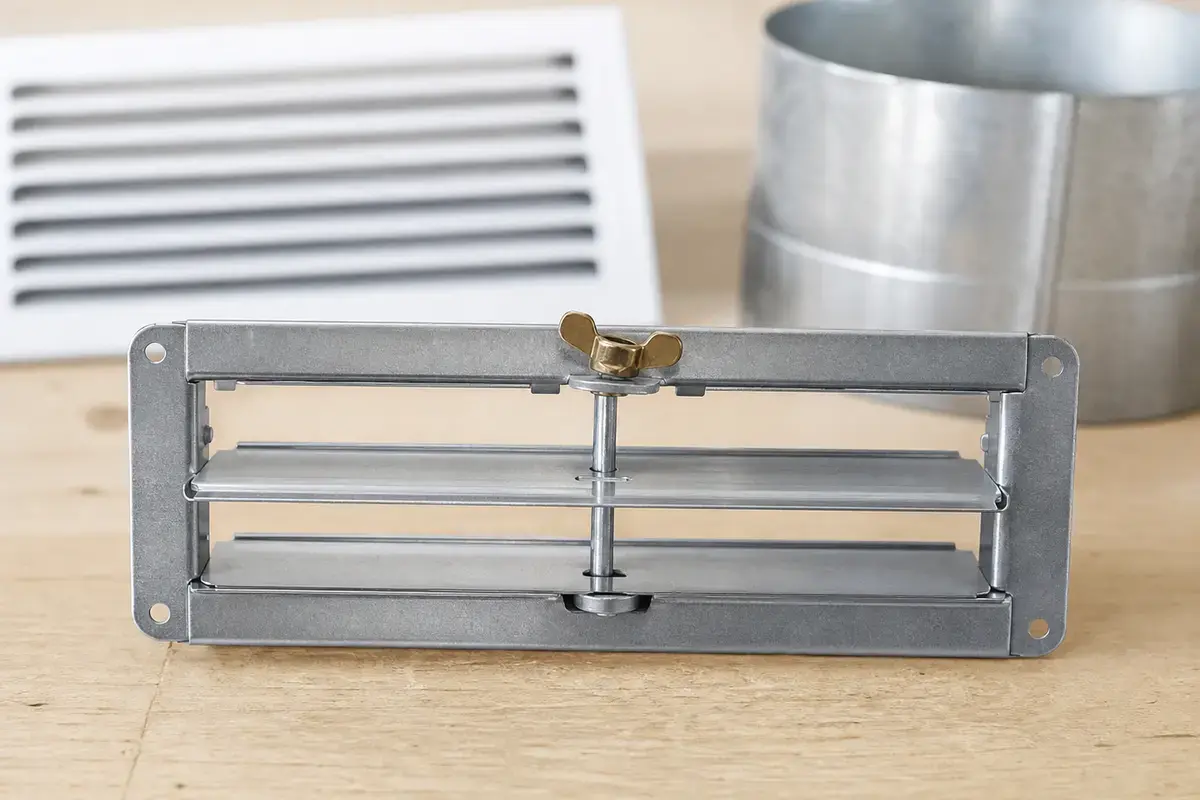
Helps when: Consider it when a local damper is bent, stuck, or missing after the opening is dry.
Skip it when: Skip it when the whole system has airflow, drain, or coil icing symptoms.
Compare register dampers on AmazonAs an Amazon Associate I earn from qualifying purchases. Repair Riot may earn a commission at no extra cost to you.
A short retest during the same weather proves whether the fix holds.
Usually, humid room air is condensing on a cold register or boot. Wipe the grille dry and watch the first wet spot; water that starts inside the duct points to a different path.
One room can have higher humidity, weaker airflow, a colder branch, or a poorly insulated boot.
Yes. Low airflow can make supply air and metal surfaces colder, which encourages sweating.
Only after the moisture source is fixed and the register is rusted, warped, or damaged.
Check system airflow, coil icing, condensate drain issues, and indoor humidity instead of one grille.
Yes. Missing or displaced insulation around a cold boot can let humid attic air condense on metal.
Not from one sweating grille alone. Ice at the coil or system-wide airflow problems need HVAC service.
Shut it off when water reaches wiring, lights, ceiling drywall, or when multiple registers drip heavily.
Repair Riot built this page around visible checks: where water starts, how many registers sweat, filter airflow, boot gaps, safe attic clues, and stop points for wet drywall or HVAC service.