Does the sound stop when you press the locked sash?
Look at the lock, keeper, sash alignment, and weatherstripping first. The window is moving even though it should be clamped tight.
A window that rattles in wind is usually moving at the sash, latch, trim, glass stop, or storm panel. Lock it first, press one area at a time with light hand pressure, and follow the spot that quiets down.
If the locked sash still wiggles at the meeting rail, check the keeper, latch screws, and weatherstripping first.
Sash clack, glass buzz, and trim chatter sound similar from across the room; your hand test separates them.
Don’t start with: Do not seal every edge with caulk. Moving sash joints need adjustment or weatherstripping, not a bead that blocks service.
Look at the lock, keeper, sash alignment, and weatherstripping first. The window is moving even though it should be clamped tight.
Press the casing, stool, and apron while the noise is happening. If the chatter stops under your hand and the sash stays firm, re-fasten the loose trim instead of replacing latch hardware.
Check loose stops, glazing, or a storm panel. Stop if the glass itself moves or you would need to remove retaining parts.
Hold the DIY repair. That points beyond a simple hardware rattle and can involve rot, fastening, flashing, or wall movement.
Compare side-to-side contact. A warped sash, misaligned keeper, or uneven weatherstrip can leave one corner loose while the rest feels solid.
Use these views to separate a sash rattle from trim chatter or loose glass hardware. The repair changes depending on which part actually moves.
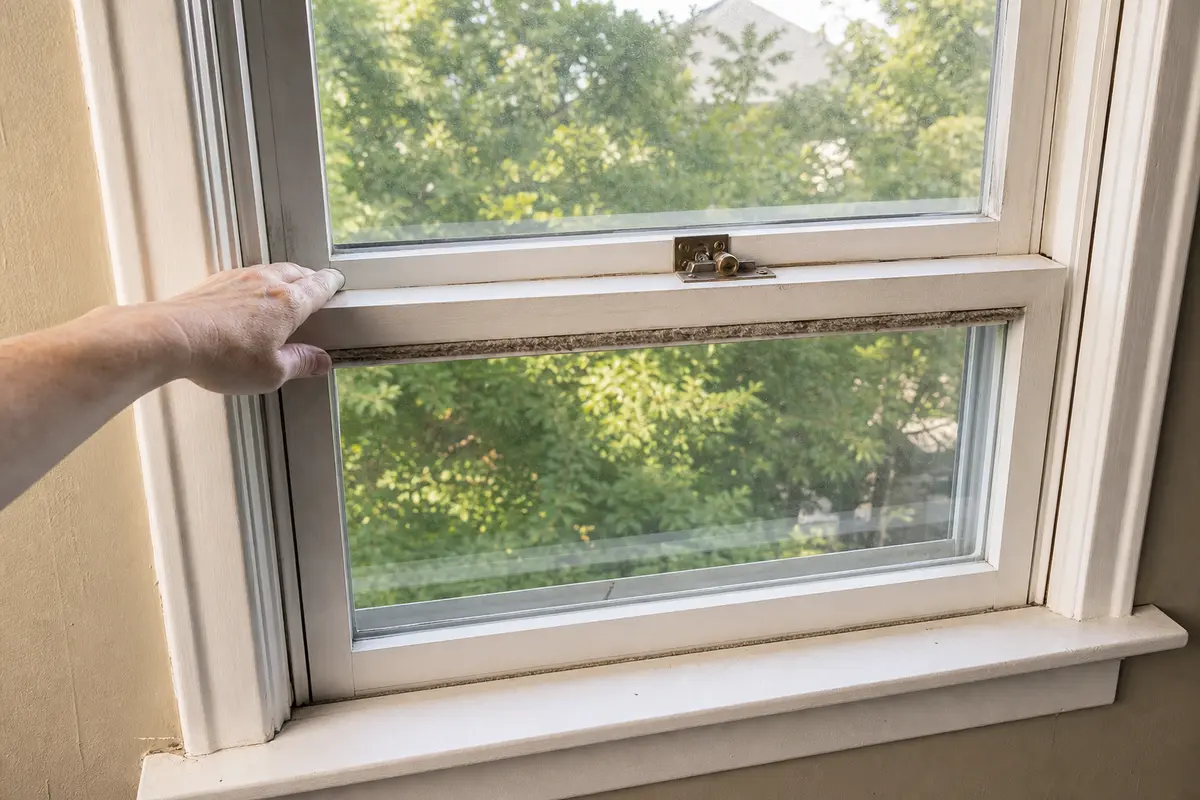
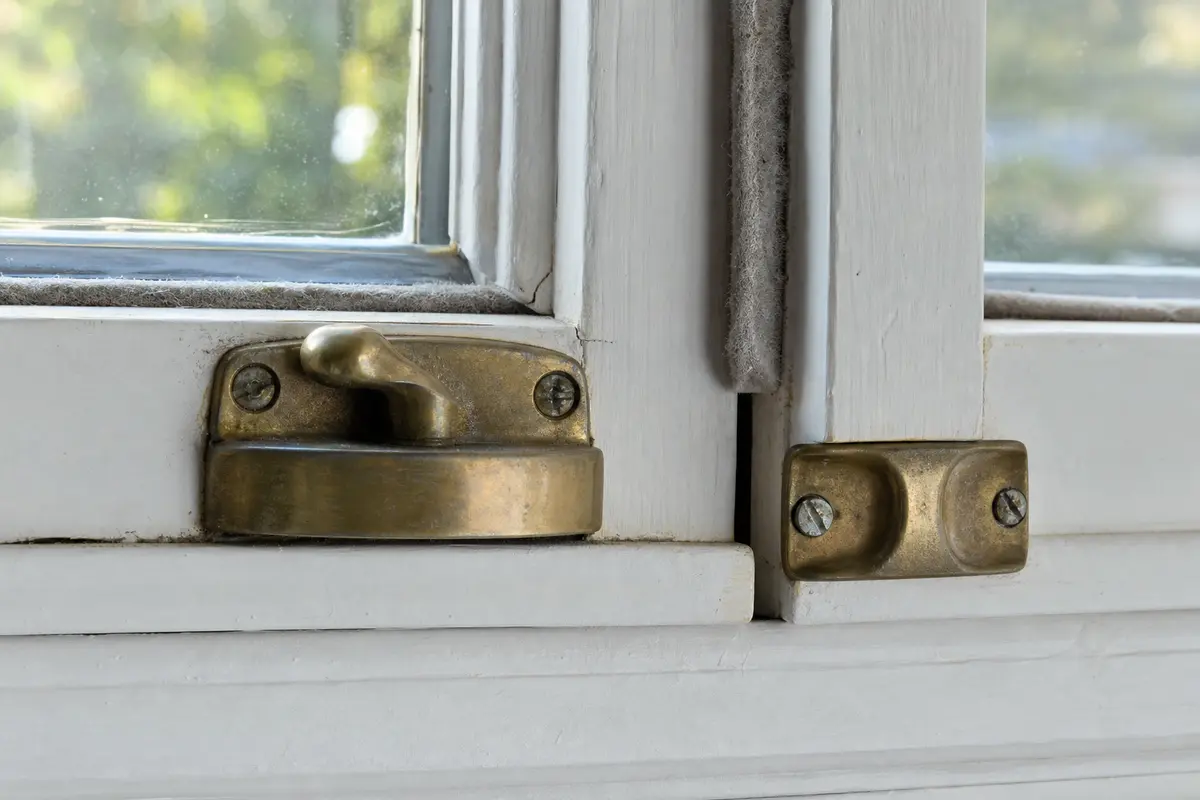
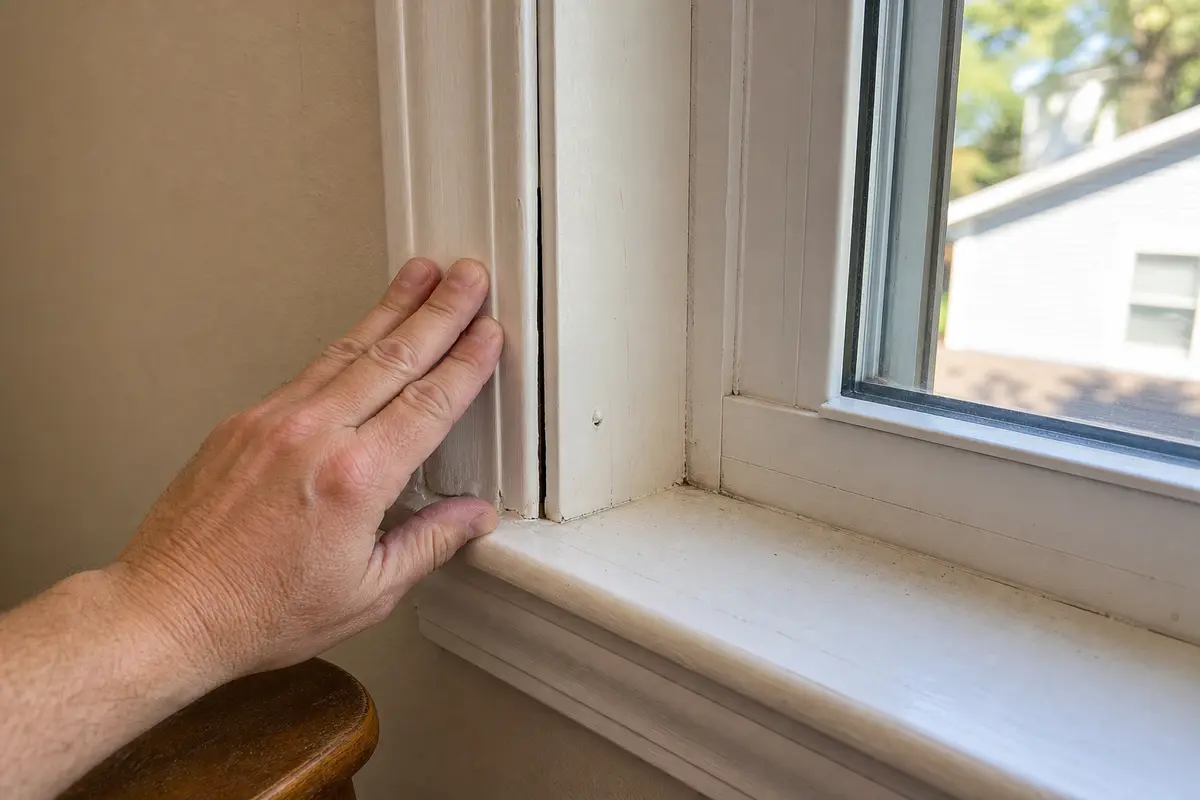
Run the pressure test before ordering, then match the exact window model or the confirmed diagnosis. If the locked sash still wiggles at the meeting rail, measure latch screw spacing and keeper position. If the strip is flat, torn, or leaves daylight at the contact point, match the weatherstrip profile and depth. If trim quiets down under your hand, measure the loose stop or molding instead.
A wind rattle is movement under load. Press the sash, glass edge, trim, and storm panel one at a time; the piece that quiets down is the repair target.
The fastest way to make this repair messy is to seal or replace parts before you know what is loose.
Stay inside for the first pass. Lock the sash, use light hand pressure at each corner, and only move outside if access is dry, stable, and out of the wind.
Use light hand pressure as a diagnostic tool. You are not forcing the window into shape; you are finding the loose contact point.
| What changes when you press | Likely repair path | Stop point |
|---|---|---|
| Sash quiets down at the meeting rail | Tighten or replace latch hardware, adjust keeper fit, or restore weatherstrip contact | Stop if the lock only catches when you force the sash out of square |
| Trim quiets down at the casing or stool | Re-secure loose trim, close open joints, and check for movement behind the finish piece | Stop if the wall or frame moves with the trim |
| Glass area buzzes or shifts | Loose stop, glazing, or storm-panel issue | Stop if the glass moves, cracks, or needs retaining parts removed |
| Frame shifts in the rough opening | Possible fastening, rot, water, or structural issue | Call a pro before cosmetic fixes hide the clue |
These are for inspection and simple tightening from inside. They do not make glass removal, upper-floor exterior work, or frame repair safe.
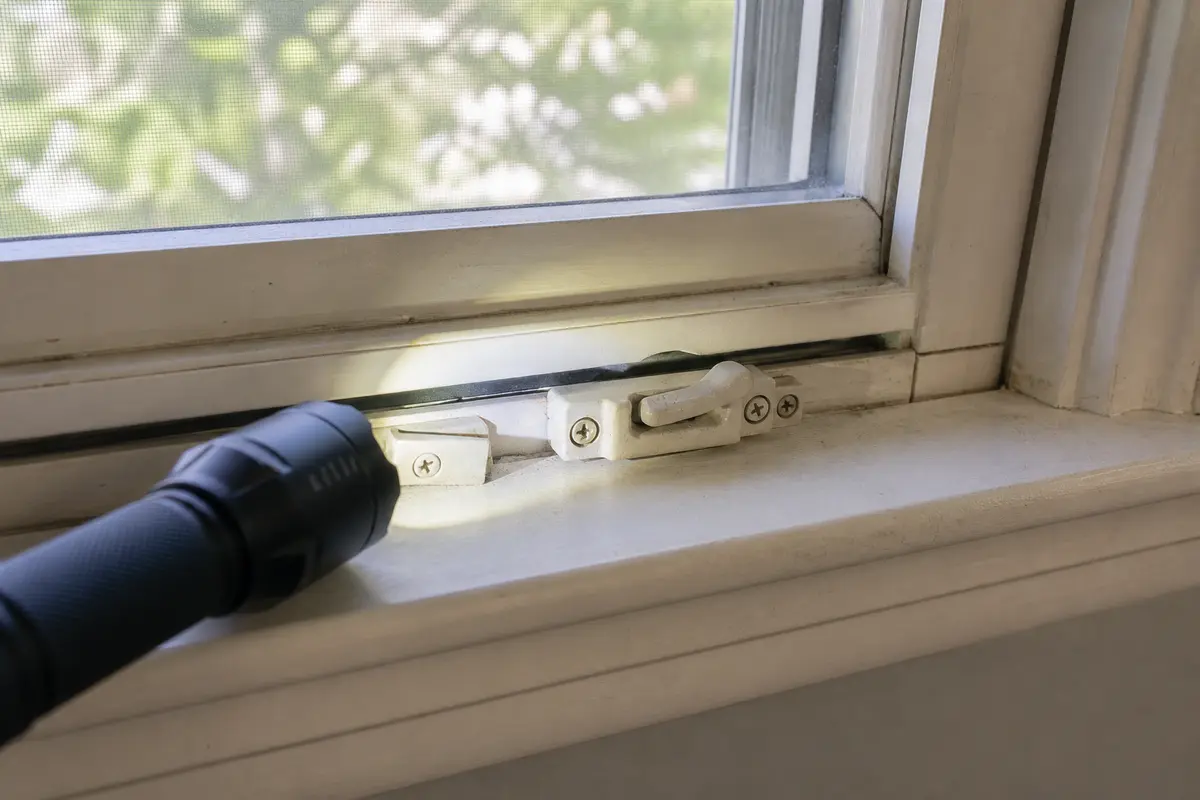
Helps when: You need to see weatherstrip condition, keeper alignment, trim gaps, or water staining inside the window opening.
Skip it when: The inspection requires leaning outside, reaching from a ladder in wind, or handling loose glass.
Compare inspection flashlights on Amazon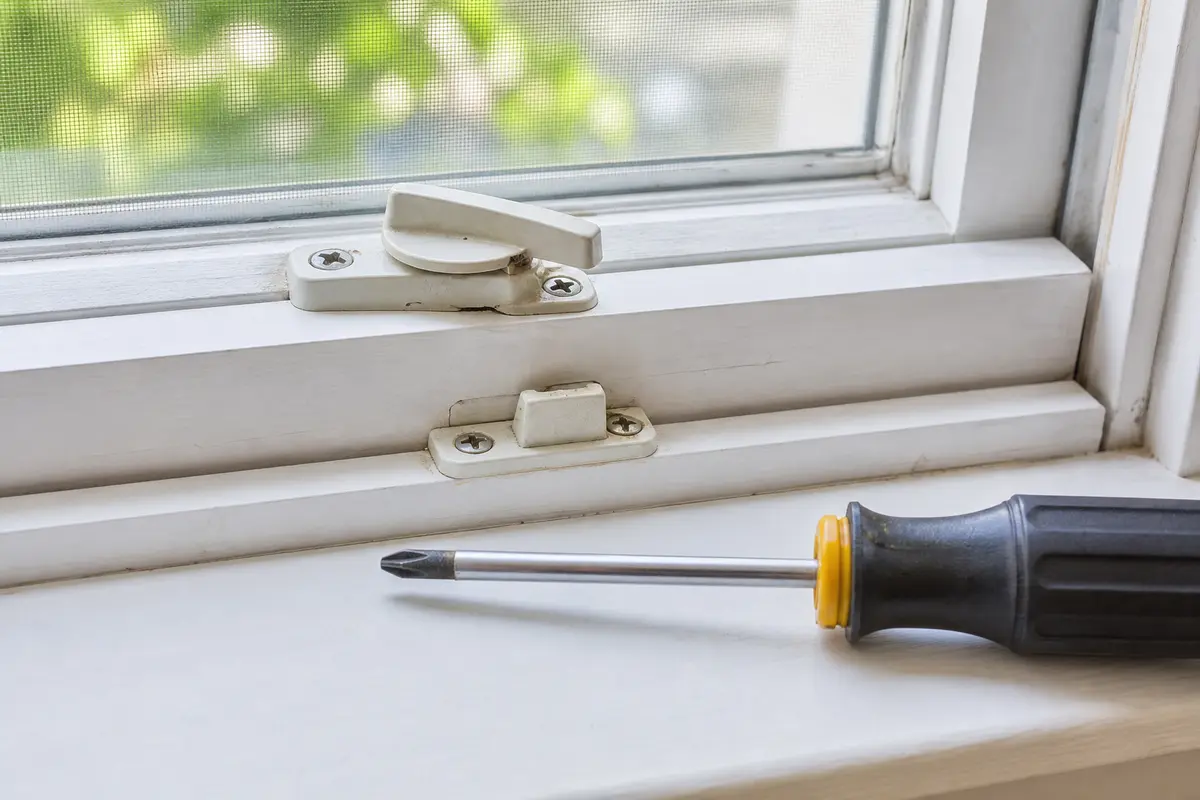
Helps when: The latch or keeper screws are visibly loose and you can tighten them by hand without forcing alignment.
Skip it when: Screws spin in damaged material, the sash must be forced to latch, or the glass is loose.
Compare Phillips screwdrivers on Amazon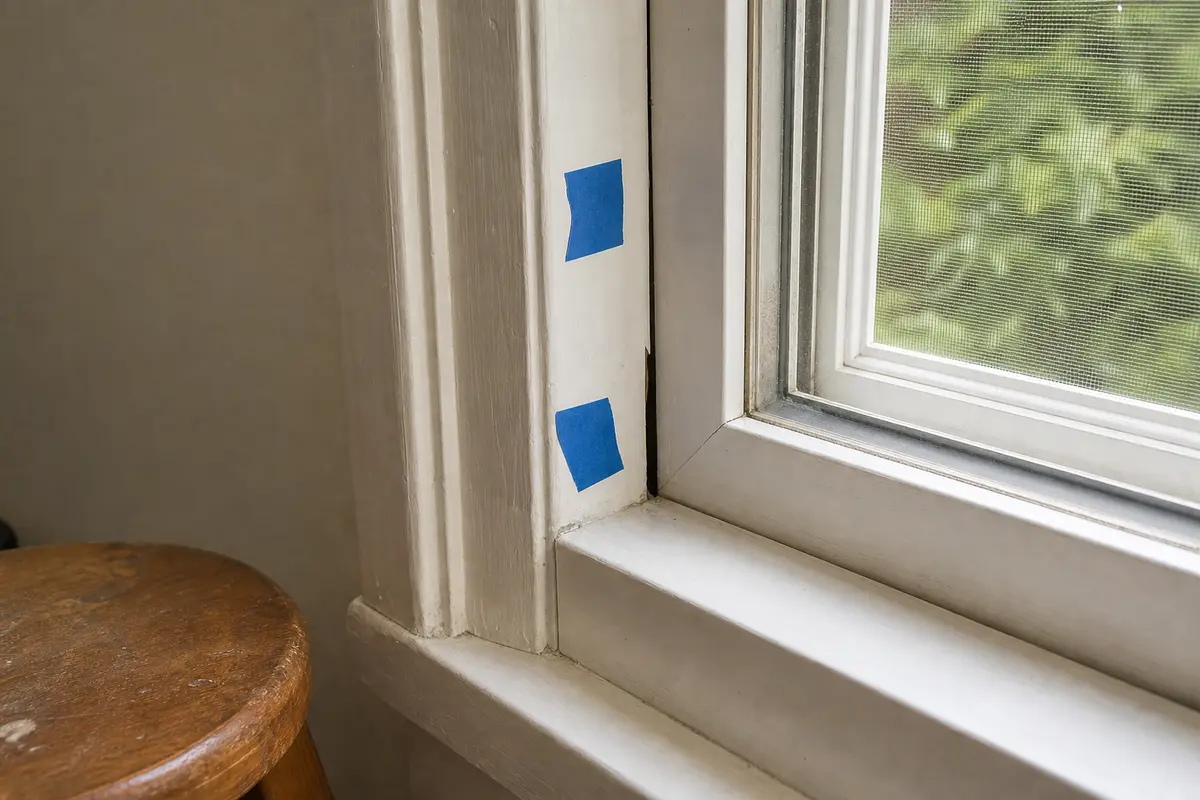
Helps when: You want to mark the exact trim, sash corner, or storm-panel spot that quieted down during the pressure test.
Skip it when: You are using tape as a permanent repair for a loose sash, loose glass, or open exterior joint.
Compare painter's tape on Amazon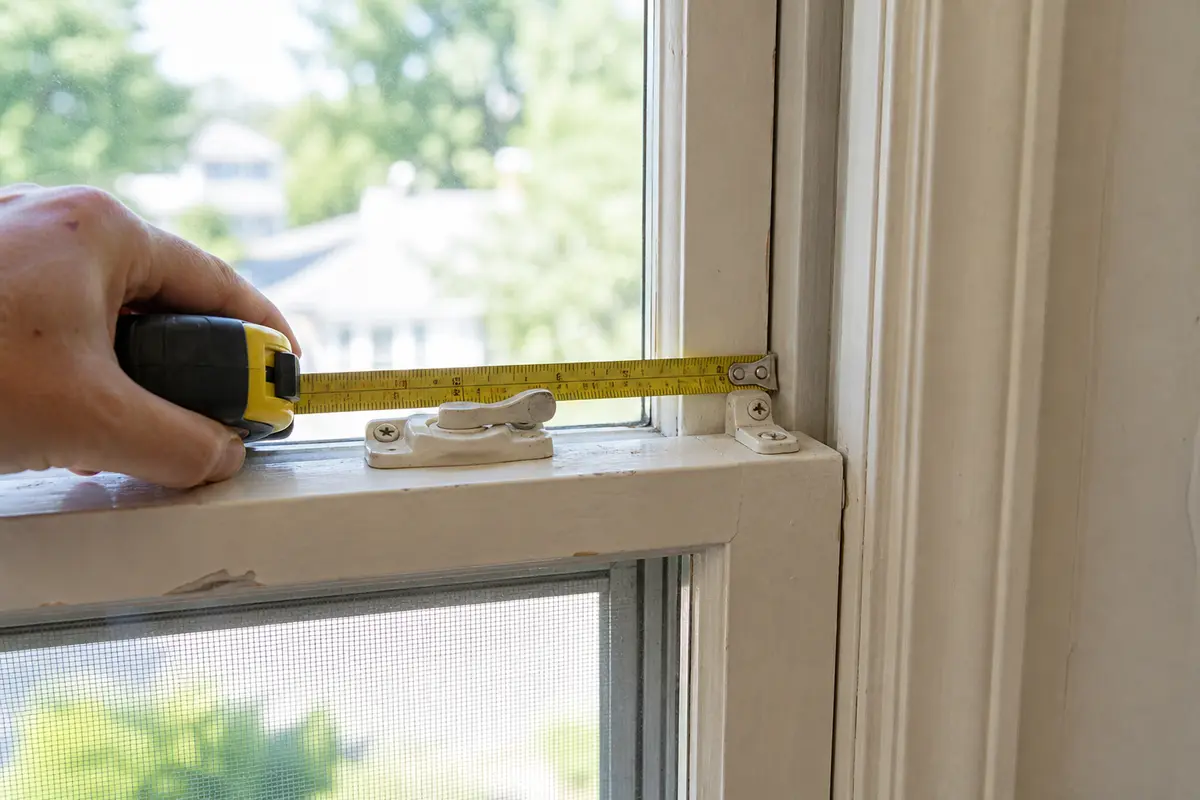
Helps when: You need screw-hole spacing, keeper dimensions, trim profile size, or weatherstripping width before buying replacements.
Skip it when: The part is still unidentified or you are measuring a warped sash that may need pro evaluation first.
Compare tape measures on AmazonAs an Amazon Associate I earn from qualifying purchases. Repair Riot may earn a commission at no extra cost to you.
Buy the smallest part that matches the test result. A latch fits a locked sash that still wiggles, a keeper fits poor latch catch, and weatherstripping fits a flat or torn seal.
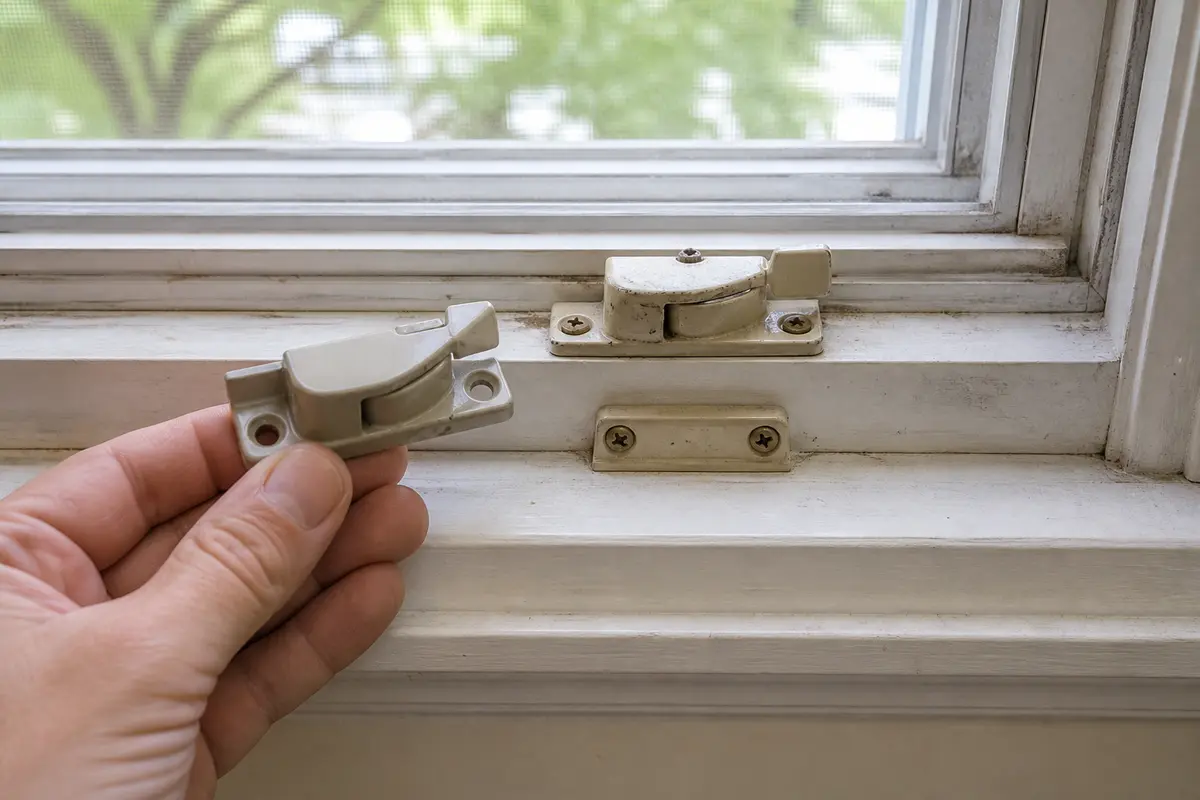
Helps when: The locked sash still wiggles and the latch no longer pulls the meeting rail tight.
Skip it when: The latch is solid and the rattle changes when you press trim, storm panel, or glass stops instead.
Compare window sash latches on Amazon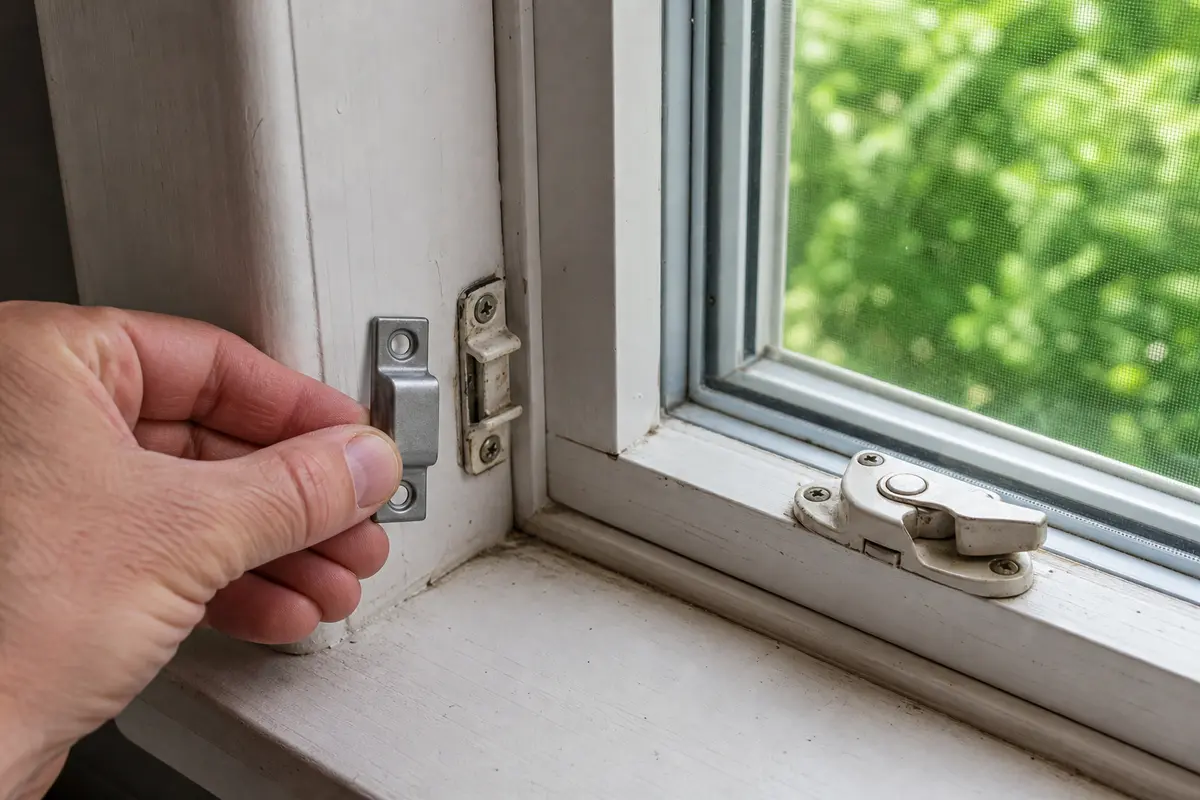
Helps when: The latch works but the keeper is bent, loose, worn, or set too far away to draw the sash tight.
Skip it when: The sash itself is warped or the screw holes are stripped badly enough that hardware will not hold.
Compare window lock keepers on Amazon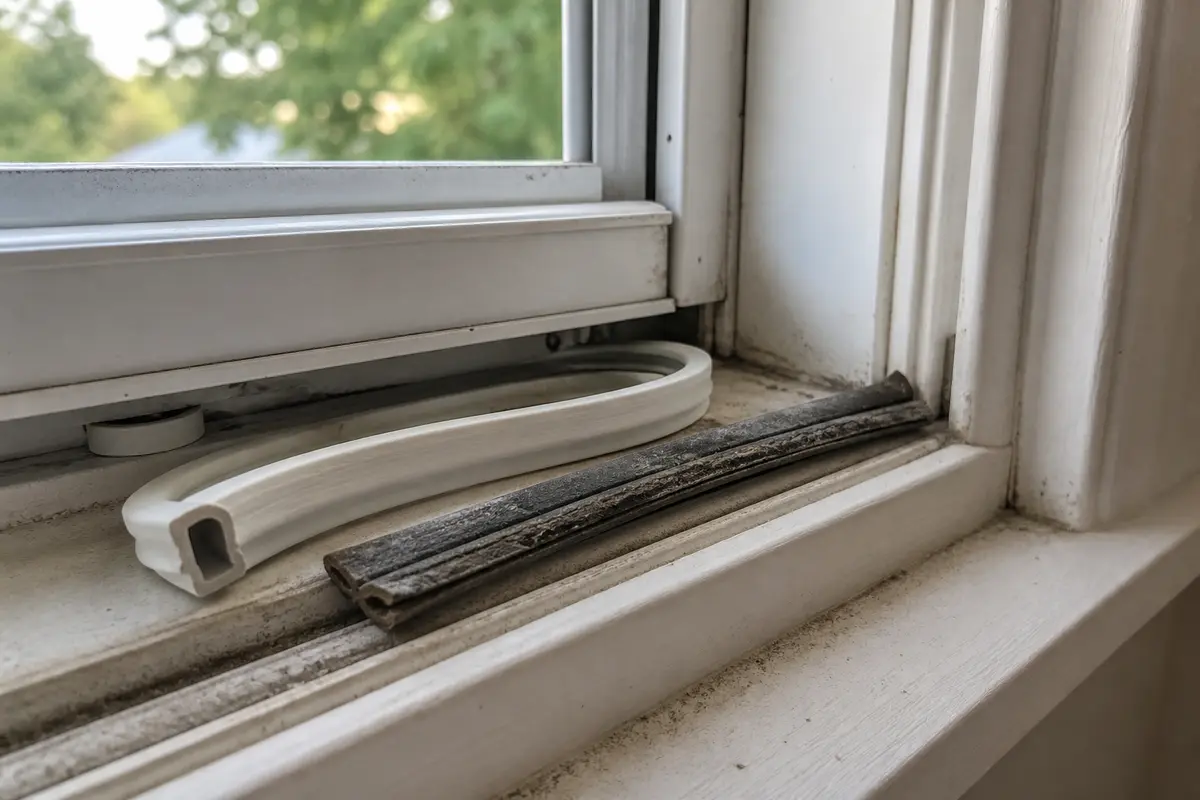
Helps when: The strip is crushed flat, brittle, missing, or no longer cushions the sash after cleaning.
Skip it when: You have not matched the profile, width, and mounting style to the original weatherstrip.
Compare window weatherstripping on Amazon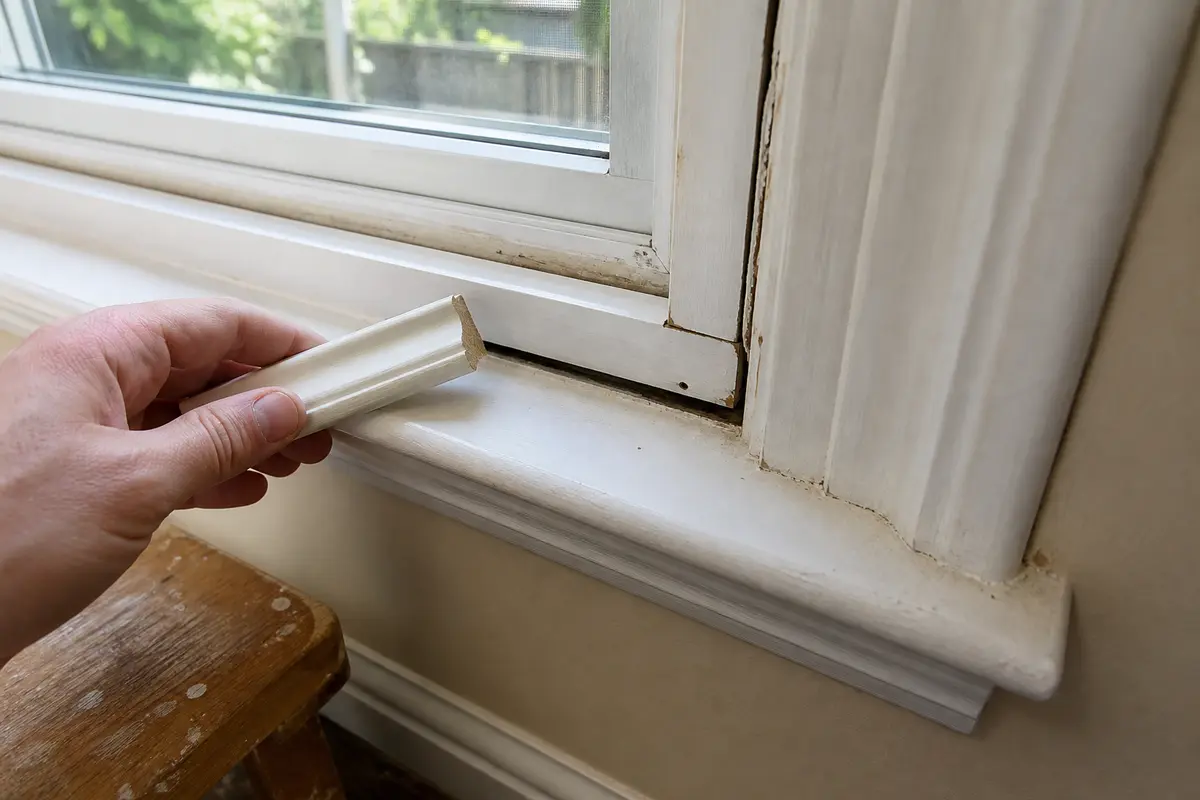
Helps when: A removable stop or small trim piece is cracked, loose, or still chatters after careful re-fastening.
Skip it when: The glass moves with the stop or the stop is part of a glass-retaining assembly you are not comfortable servicing.
Compare interior window stop molding on AmazonAs an Amazon Associate I earn from qualifying purchases. Repair Riot may earn a commission at no extra cost to you.
A simple rattle becomes a professional repair when the window or opening is no longer solid.
The repaired window should feel boring in the right way: firm, smooth, and repeatable.
Wind loads the glass and sash enough to expose a loose spot. A latch that feels fine in calm weather can let the sash chatter once gusts push against the window.
Yes, if the sash is sound and the rattle comes from extra clearance at the contact points. Fresh weatherstripping can take up the slack and reduce drafts at the same time.
Usually no. Interior caulk can hide a trim gap, but it will not tighten a moving sash, repair a loose latch, or secure a buzzing storm panel.
Not by itself. Most rattling windows need hardware adjustment, weatherstripping, trim tightening, or a storm-panel repair. Replacement makes more sense when the frame is loose, rotten, badly warped, or failing in several ways.
That points toward latch pull, keeper position, or sash alignment. Do not force the lock. Compare the screw spacing and keeper position, then tighten only what is obviously loose.
Secure the trim path first. Popped finish nails, open miters, or a loose stool can chatter even when the actual window works normally.
Yes. A loose storm panel can buzz or clack in wind. Check that it is seated and latched from a safe position, and avoid ladder work during gusty weather.
Stop if the glass shifts, the frame moves in the wall, you find rot or water damage, or the repair requires exterior access at height. Those are not simple noise-only fixes.
This page is built from Repair Riot diagnostic rules, common window-service patterns, and public building-science guidance about air sealing and weatherstripping. Sources are used for context, not copied wording.