Wasps are using the outside hood
You see insects landing on the vent cover or slipping behind the flap.
Start here: Treat it as active until proven otherwise. Do not remove the cover while wasps are still coming and going.
A wasp nest in a bathroom exhaust vent is usually right behind the exterior cap, where the flap gives shelter and then gets stuck open. First confirm whether wasps are active. If they are, stop and handle pest removal before vent work. If the nest is inactive, clear only reachable material at the outside opening, test airflow, and replace the vent cover if the flap will not close.
Most cases start with a stuck, cracked, warped, or loose bathroom exhaust vent cover that gave wasps a protected place to build.
Think like a contractor: find the entry point, do not make the duct dirtier, and prove the fan exhausts outside when you are done. A wasp nest is often a small exterior-cap repair, but only after you know it is not active.
Don’t start with: Do not start by running the fan hard, spraying through the bathroom grille, or poking blindly into the duct. That can move debris deeper and make a simple cap problem harder to clean.
Most wasp nests in bath vents sit behind the outside hood. Once activity is gone, the key check is whether the flap can close again.
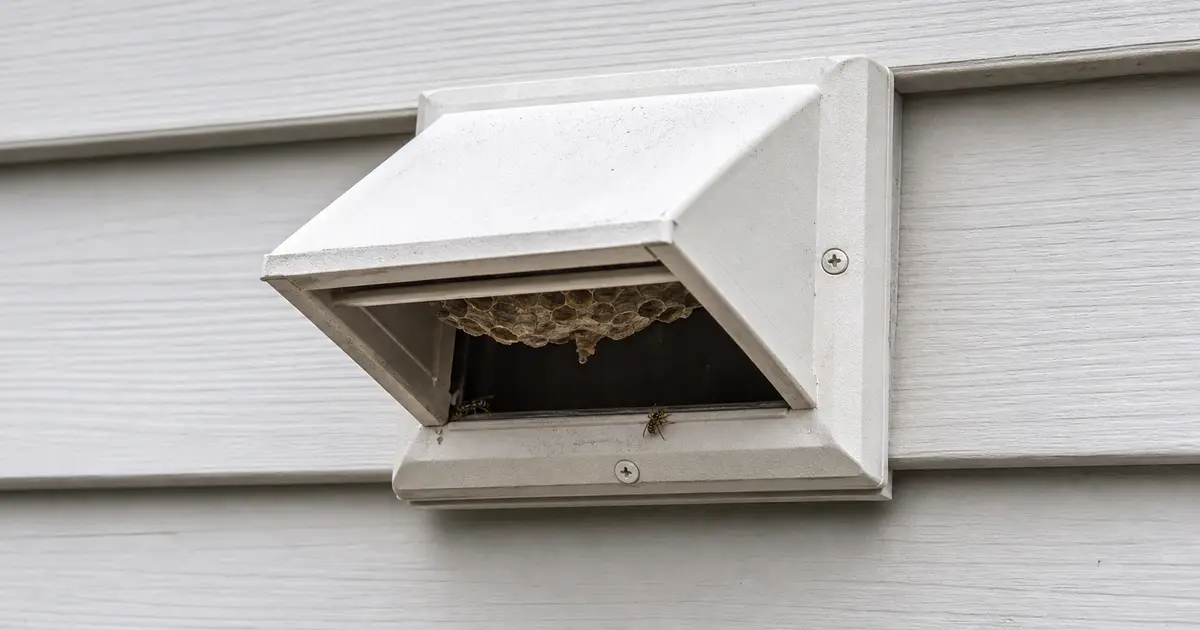
You see insects landing on the vent cover or slipping behind the flap.
Start here: Treat it as active until proven otherwise. Do not remove the cover while wasps are still coming and going.
The fan sounds normal, but steam hangs in the bathroom and the outside hood barely moves air.
Start here: Check the exterior cap for nest material, a stuck flap, or a broken cover before blaming the fan motor.
The outside flap hangs open, catches on nest material, or no longer sits flat when the fan is off.
Start here: Plan on cover or flap repair after the nest is inactive and the opening is clear.
You smell stale nest odor or see small bits of material at the interior bathroom grille.
Start here: The exterior cap may be only part of the cleanup. Check airflow and contamination after the outlet is open.
The hood is sheltered, warm, and easy for wasps to enter when the flap does not seal well.
Quick check: Watch from a safe distance for traffic at the hood, then look for papery comb or debris behind the flap once activity is gone.
A flap that stays open lets wasps rebuild even after the first nest is removed.
Quick check: With the fan off, the flap should sit closed without being held open by debris or a bad hinge.
Poking or vacuuming can shove loose comb past the cap, leaving weak airflow after the visible nest is gone.
Quick check: After the cap is clear, run a short fan test and confirm steady discharge outside with no rattling or falling debris.
Old nest material and insect remains can smell even when the fan path is open again.
Quick check: If airflow is good but odor remains, shift from parts replacement to duct and grille cleanup.
This decides whether you are doing pest control or vent repair. Do not guess.
If the nest is active, stop and get pest removal handled first. If repeated checks show no activity, you can inspect the cover and opening more closely.
Active wasps mean the vent cover can wait. The immediate job is not getting stung.
Most wasp nests in bath vents are not deep mysteries. They start at the exterior cap.
If the nest is at the cap and the cover is intact, cleanup may be enough. If the cover is damaged or loose, replace it after removal so the opening does not stay available.
A damaged cap is usually the reason the nest happened.
You want the blockage out of the outlet, not pushed deeper into the duct.
If the flap now moves freely and the opening is clear, test the fan next. If debris is deeper than you can reach or the flap stays jammed, stop and plan vent cleaning or cover replacement.
A fan can move air again while still leaving debris or smell in the vent path.
If airflow is strong, the flap works, and there is no odor or debris, the repair is nearly done. If airflow is weak or smell remains, the duct likely needs cleanup or inspection beyond the cap.
Removing the nest without fixing the open flap leaves the same invitation in place.
A good result: If the cover closes, airflow is strong, and wasps do not return, the vent is back in service.
If not: If the vent still smells, moves weak air, or attracts insects, bring in vent service or pest control to inspect the full path.
The lasting repair is a clean outlet and a working exterior closure.
As an Amazon Associate I earn from qualifying purchases. Repair Riot may earn a commission at no extra cost to you.
No. That usually does not clear the nest and can push debris deeper into the duct. Clear the exterior opening only after the nest is inactive, then test the fan.
Usually no. Most are right at the exterior vent cover, where the hood and flap provide shelter. Deep debris becomes more likely if someone has already poked or vacuumed at it.
Not usually. If the fan runs normally after the outlet is clear, the common repair is the exterior cover or flap, not the fan motor.
Then airflow may be fixed but contamination remains. Old nest material and insect remains can leave odor in the duct or grille area and need cleanup.
Replace it if the flap will not close flat, the hinge is broken, the hood is cracked, or the cover sits loose after cleanup.
Usually no. Start at the outside termination when it is safe. Working from inside tends to push material toward the cap or leave it lodged in the duct.