Is only one supply register noisy?
Open that register fully, check for bent louvers or a loose frame, and press the edge while the blower runs.
A whistling vent usually means air is squeezing through a restricted opening. Check the noisy register first, then the HVAC filter, closed supply registers, blocked returns, and loose vent screws before buying a cover.
If one vent whistles while nearby rooms sound normal, stay at that register: open the damper, press the grille edge, and check for loose screws. If several vents hiss at once, check the filter, returns, and closed supply registers first.
Listen once with the blower running, then sort the noise by location before touching ductwork.
Don’t start with: Do not close more vents to quiet the room. Reopen closed supply registers and check the filter first; if the pitch drops, the noise was airflow restriction, not a bad register.
Open that register fully, check for bent louvers or a loose frame, and press the edge while the blower runs.
Check the HVAC filter, reopen closed supply registers, and clear return grilles before buying any vent cover.
Clear the supply or return opening and run one full cycle. Crowded airflow can sound like a bad vent.
Replace it with the correct size and a rating your system can handle, then listen again before touching registers.
The register face, screw tension, or wall gap is likely part of the noise. Reseat it before replacing it.
Note it as a balancing clue. Adjust only an obvious accessible damper in small moves, or schedule an airflow check.
Stop the vent check. Shut the system off if safe and call HVAC service or the gas utility as appropriate.
Use the visible clue first. A partly closed register, loose grille edge, or loaded filter tells you more than the noise by itself.
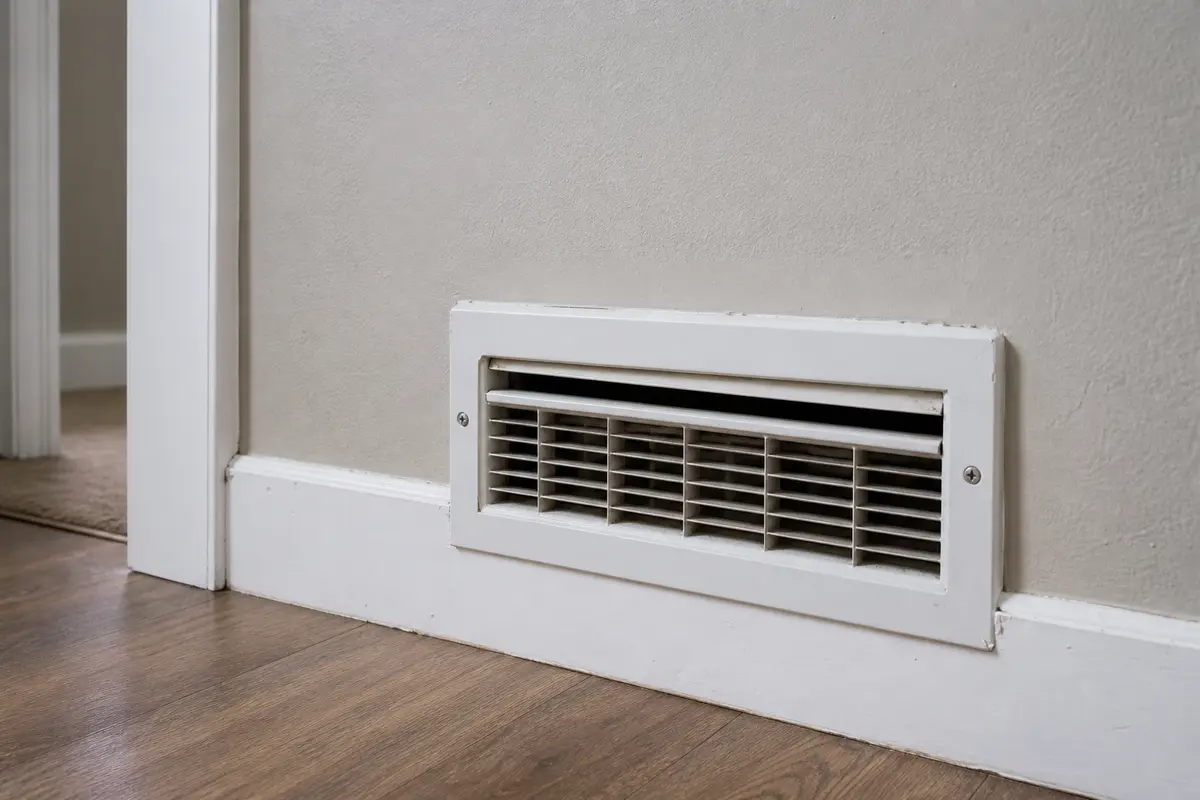
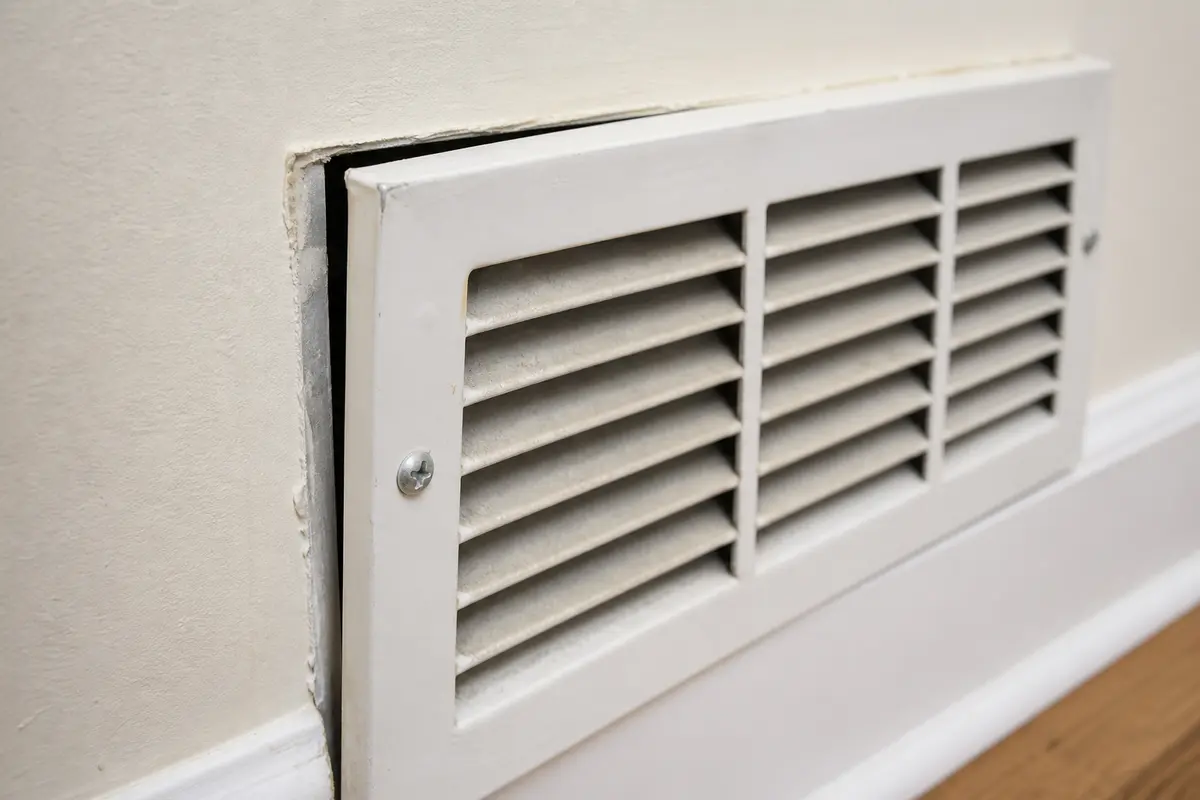
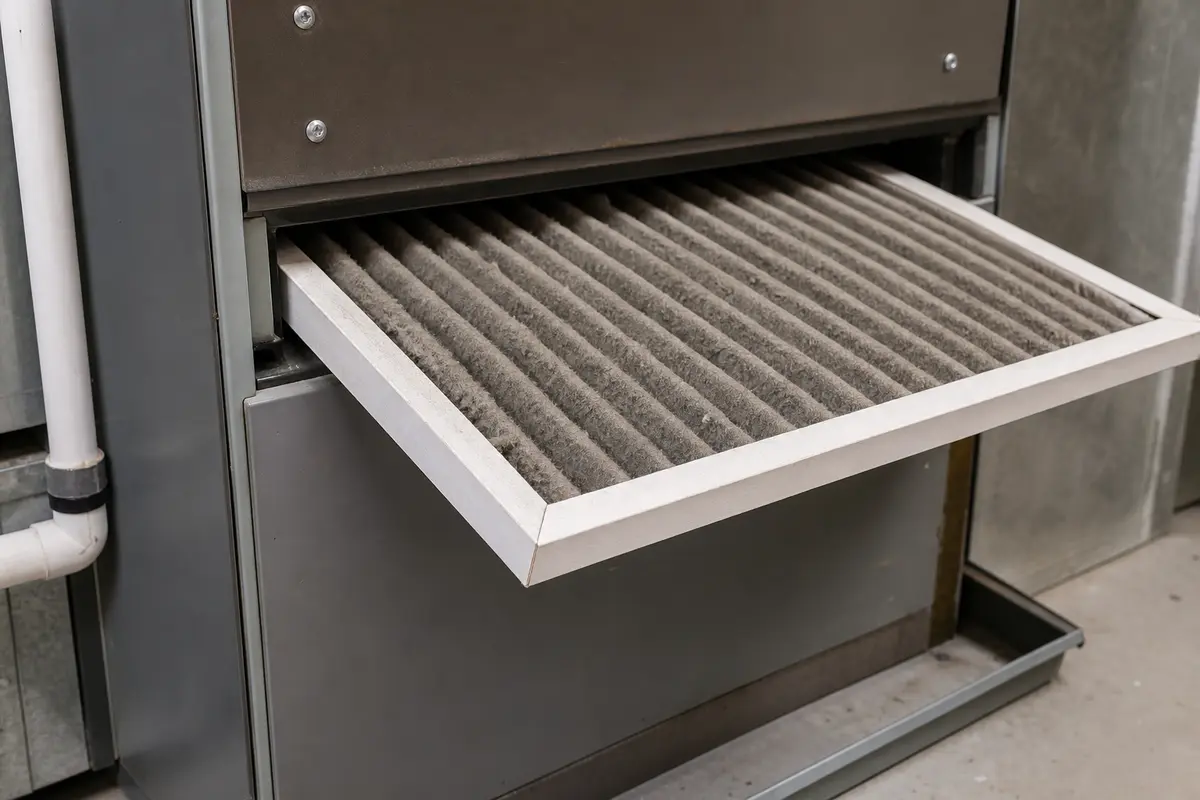
Prove the exact diagnosis before ordering a register. Open airflow, check the filter and returns, press the grille edge during a cycle, and measure the opening. A new cover will not fix a loaded filter, closed supply registers, hidden duct restriction, or room balancing issue.
A vent whistle is air speed and a narrow path. The useful split is whether that path is one register or the system is short of open airflow.
Do not quiet one room by choking the rest of the house. That can raise pressure and make the next vent start singing.
Work from the outside in. These checks stay at the vent face, filter slot, returns, and any obvious manual damper you can reach safely.
Use the change in sound as the clue. A whistle that changes right away is more useful than a guess about parts.
| What you find | What it usually means | Next check |
|---|---|---|
| One vent gets quiet when opened fully | The register damper was too tight | Leave it open and check comfort in that room |
| Several vents get quieter after a filter change | Return airflow was restricted | Keep the correct filter size and check it more often during heavy use |
| Pitch changes when you press the grille edge | The frame, screws, or wall gap is creating the sound | Reseat or tighten the cover before replacing it |
| One room has much stronger airflow than similar rooms | The room run may need balancing | Adjust only an obvious accessible damper, or schedule HVAC service |
| Whistle stays and airflow is weak across the house | The system may have deeper restriction or equipment trouble | Stop the vent work and call for diagnosis |
| Soot, moisture, burning smell, or breaker trips appear | This is no longer a simple vent-noise problem | Shut the system off if safe and call a licensed pro |
A new register earns its place only after the cover itself fails a check. The wrong size or style can make the noise worse.
These tools are for vent-face, filter, and visible-airflow checks. They are not permission to work inside energized HVAC equipment.
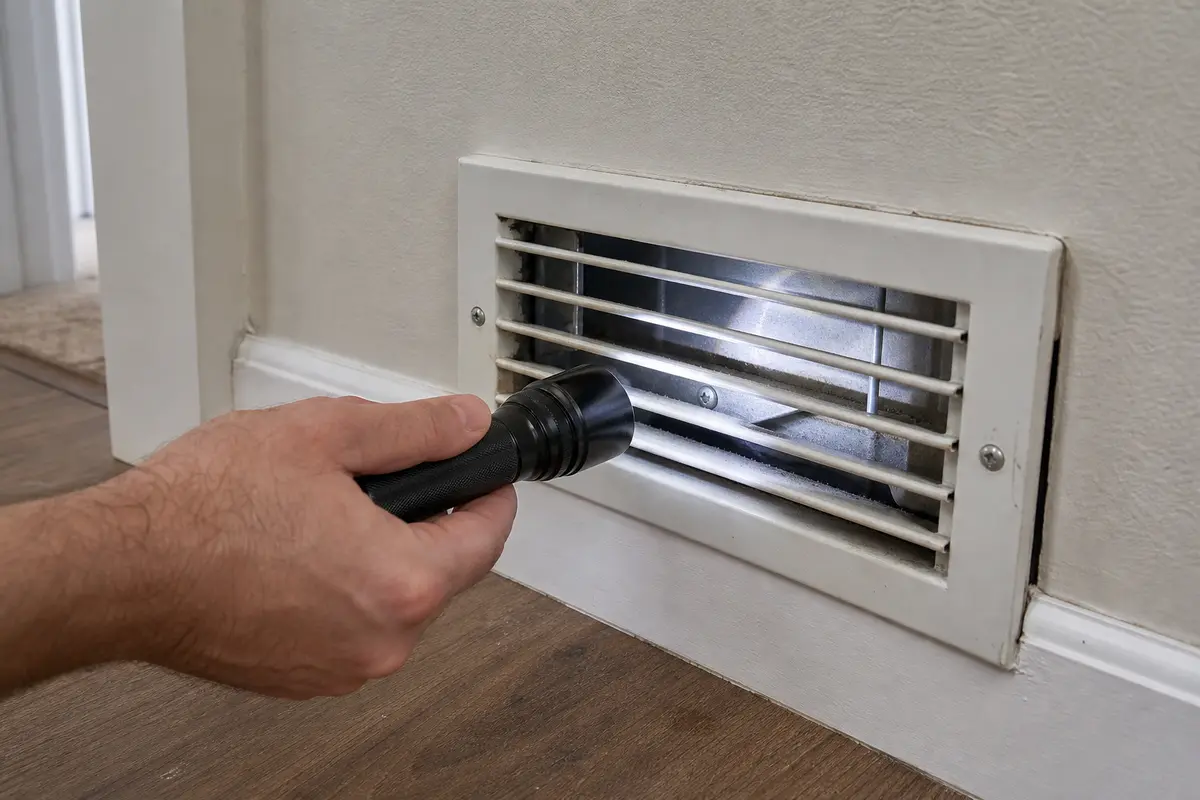
Helps when: You need to see the register damper, screw heads, wall gap, filter slot, or return grille without reaching deep into the duct.
Skip it when: The only place to inspect is inside the furnace or air-handler cabinet, near wiring, or behind wet insulation.
Compare inspection flashlights on Amazon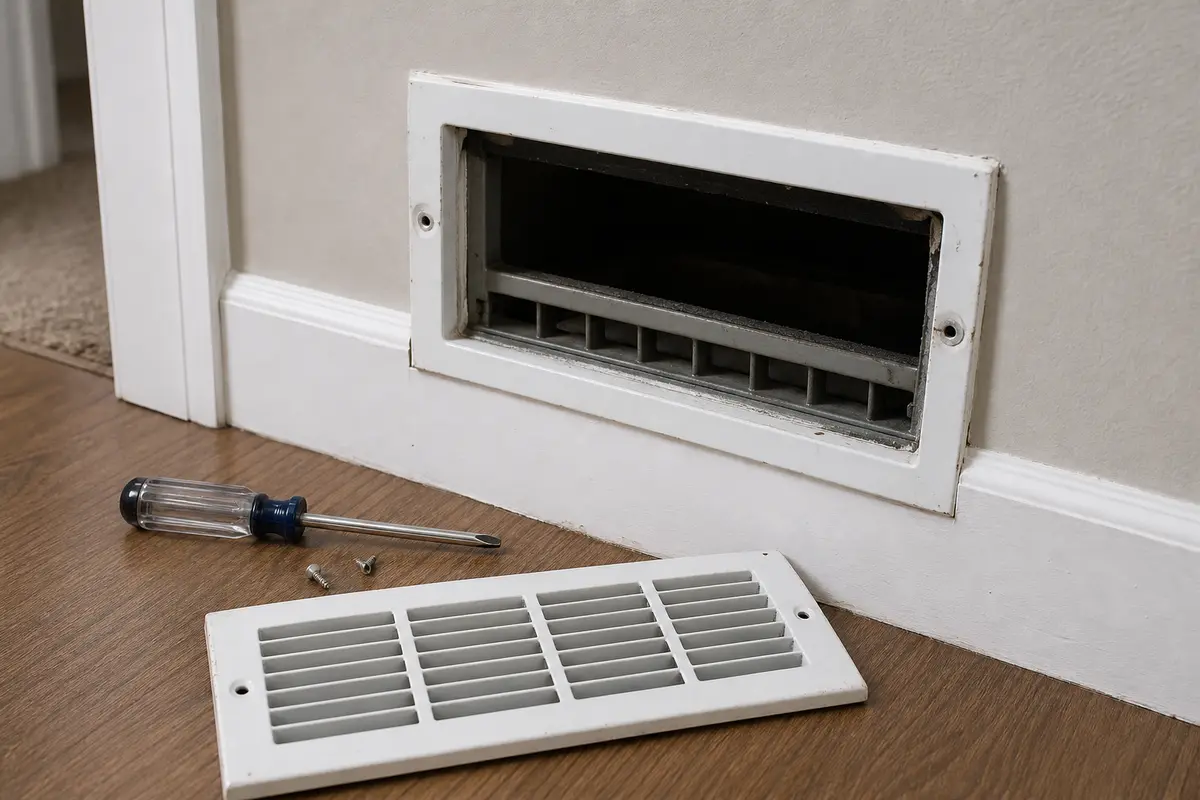
Helps when: You are tightening a loose register face or removing a vent cover after the thermostat is off and the cover comes free cleanly.
Skip it when: The register is painted in place, the screw is stripping, or removal starts tearing drywall, trim, or brittle plastic.
Compare screwdriver sets on Amazon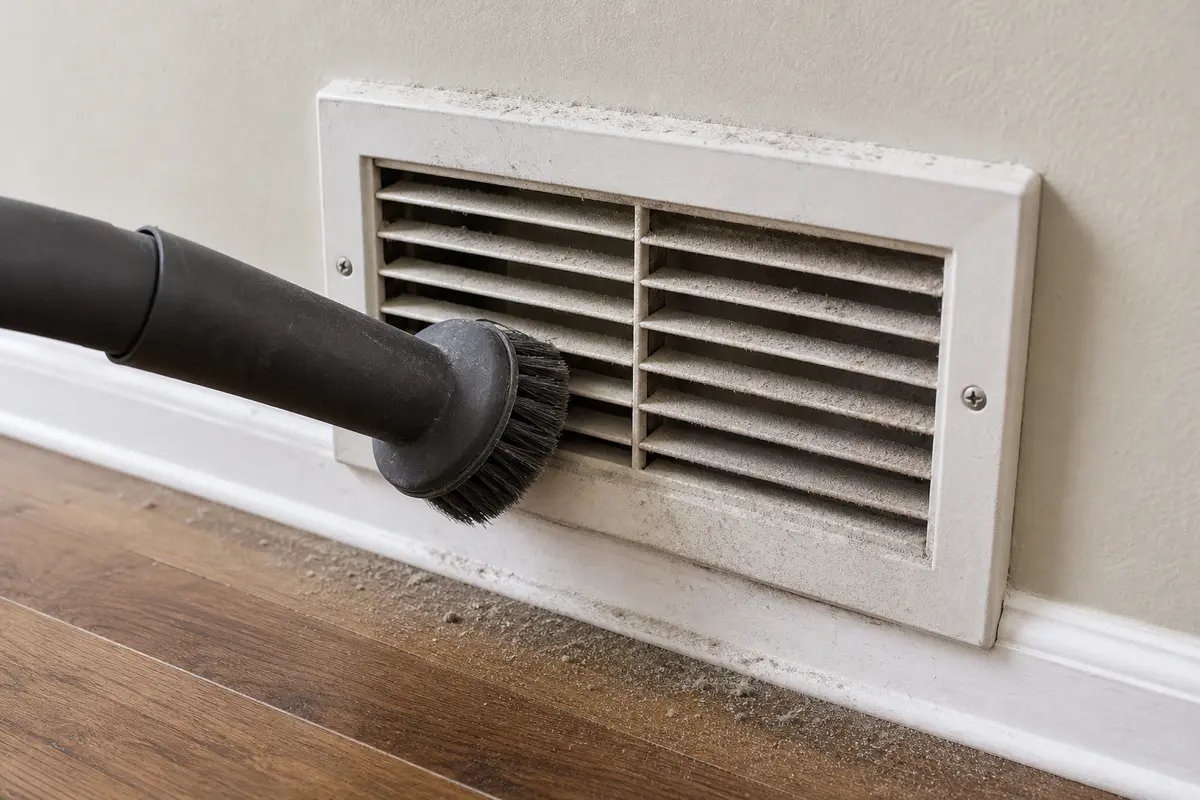
Helps when: You are clearing loose dust from the vent face, louvers, or nearby floor without pushing debris farther into the duct.
Skip it when: Stop and leave the opening alone if you see wet debris, mold-like growth, heavy duct buildup, damaged insulation, or anything that needs deeper duct cleaning.
Compare vacuum brush attachments on Amazon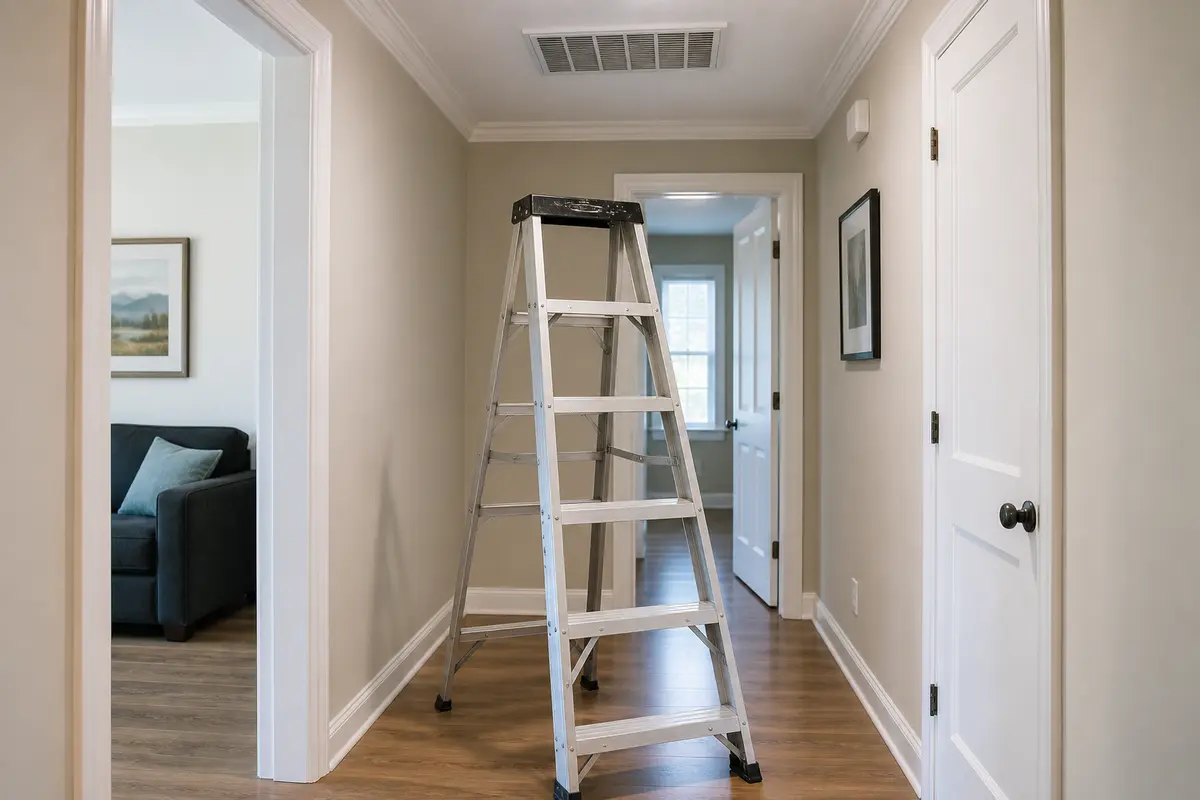
Helps when: You need a steady platform to reach a ceiling register or high wall grille while keeping both feet supported.
Skip it when: The floor is uneven, the register is above a stair opening, or you would need to lean sideways to reach the vent.
Compare step ladders on AmazonAs an Amazon Associate I earn from qualifying purchases. Repair Riot may earn a commission at no extra cost to you.
Buy the part that matches the failed visible hardware. If the filter, returns, or room balance caused the whistle, parts can wait.
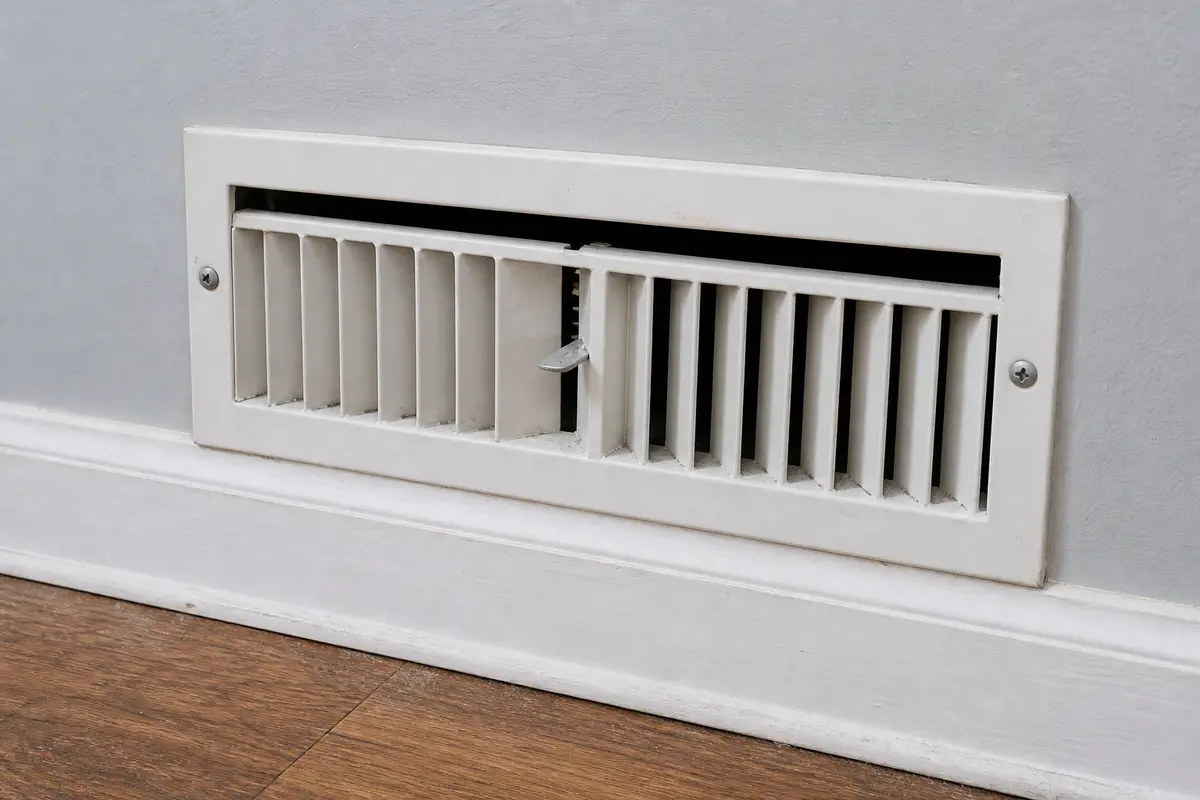
Helps when: The old supply register is bent, warped, cracked, missing screws, or its built-in damper will not stay fully open.
Skip it when: Several vents got quieter after changing the filter, opening supply registers, or clearing a blocked return.
Compare supply registers on Amazon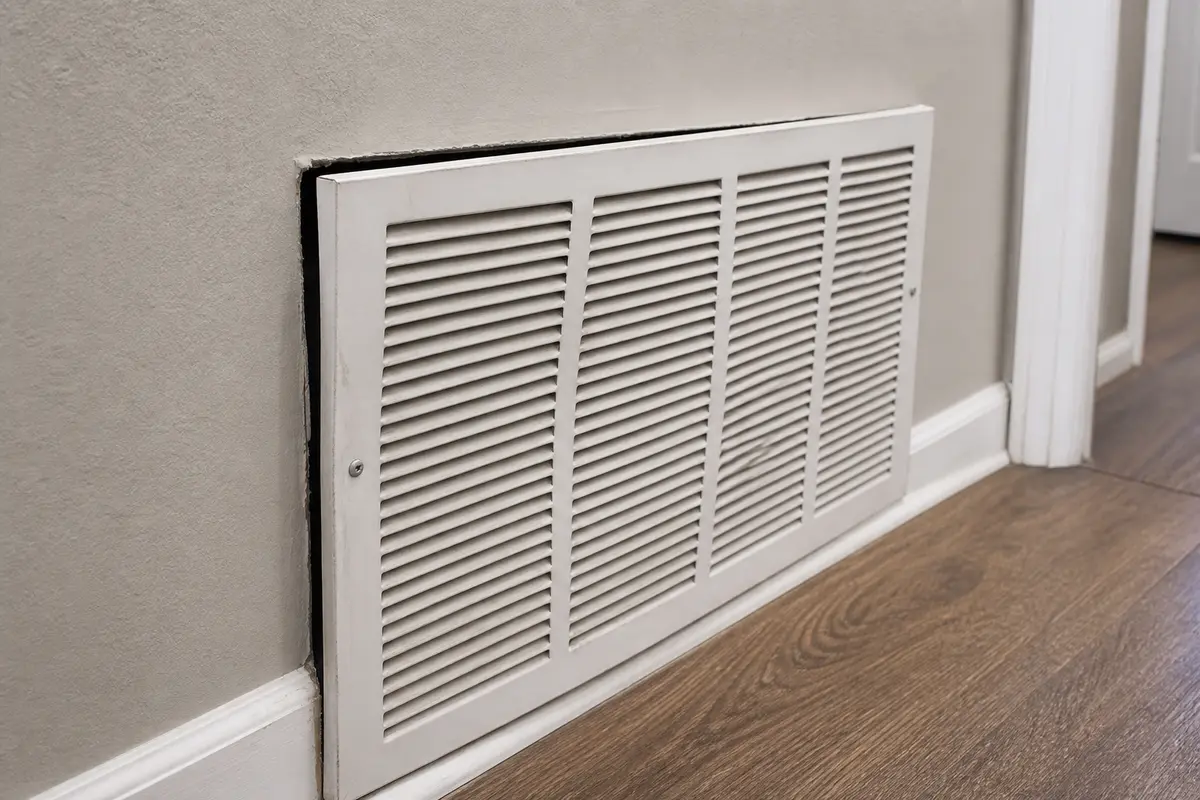
Helps when: A return grille is cracked, loose, distorted, or lifted from the wall and the pitch changes when you press the frame.
Skip it when: The noise is at a supply register with a damper, or the return path is blocked by furniture or a dirty filter.
Compare return grilles on Amazon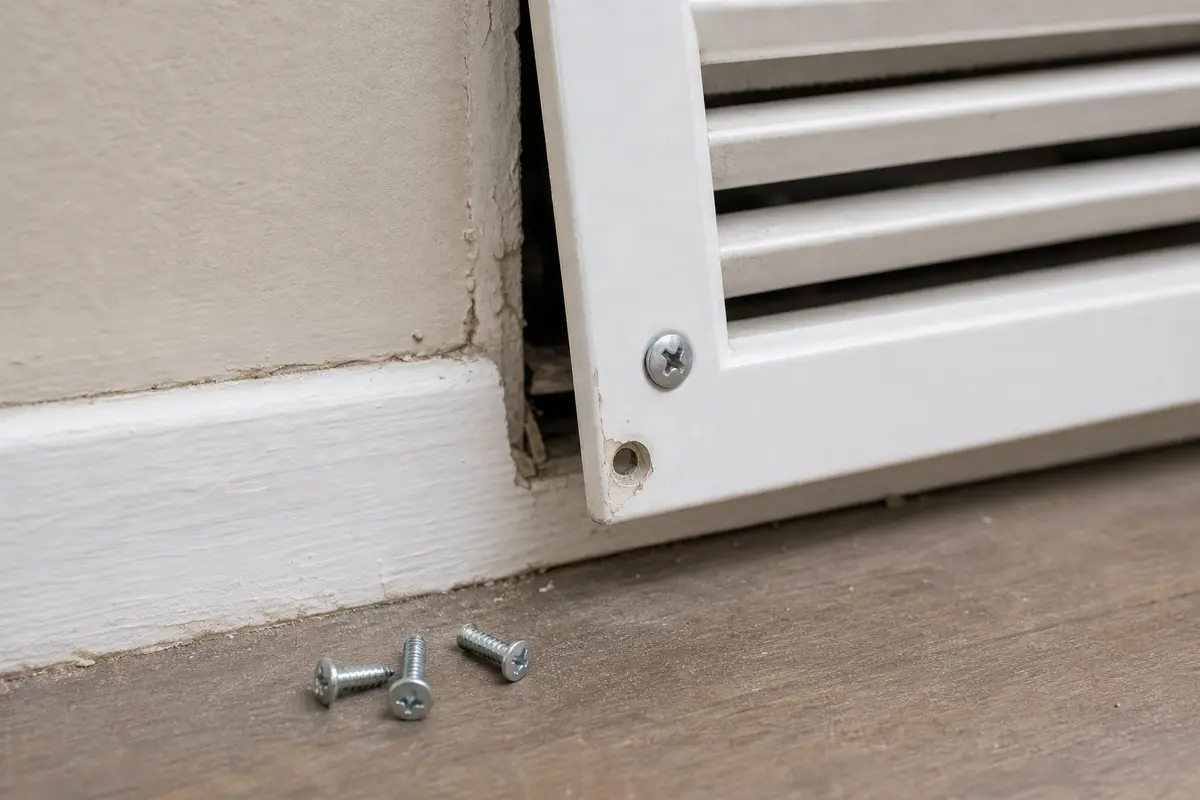
Helps when: The grille is sound but a missing, stripped, or mismatched screw lets the frame lift and whistle around the edge.
Skip it when: The wall material is crumbling, the frame is bent, or tightening the screw would pull through damaged drywall.
Compare vent screws on Amazon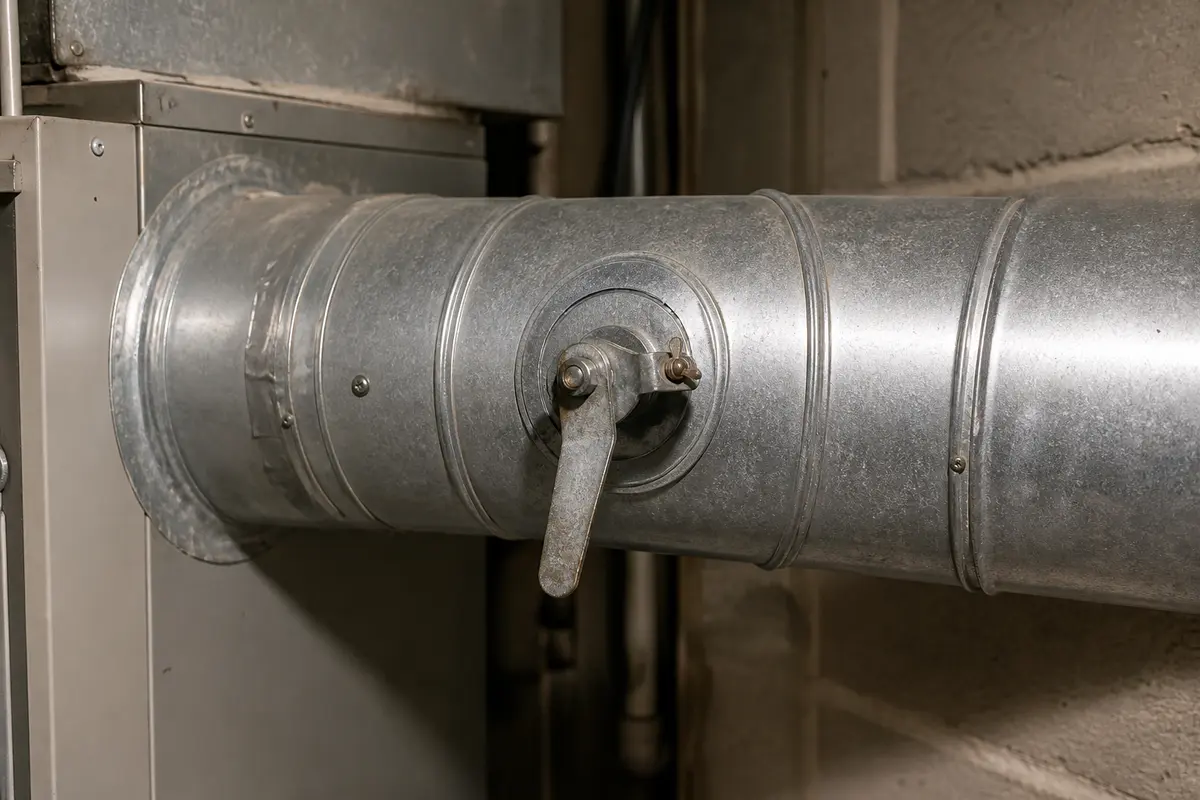
Helps when: An existing accessible damper is visibly damaged or will not hold position and that room is the clear airflow outlier.
Skip it when: You cannot identify the damper, it is hidden in finished space, or the work requires opening duct joints near equipment.
Compare balancing dampers on AmazonAs an Amazon Associate I earn from qualifying purchases. Repair Riot may earn a commission at no extra cost to you.
Startup airflow can be strongest right as the blower ramps up. If a register is partly closed or the system is restricted by a dirty filter, that first push of air can make the whistle stand out.
Yes. A loaded filter can restrict return airflow, which raises pressure and air speed through the openings that remain. That is why several vents may start hissing at once.
Usually no. Closing other vents often shifts the noise and can make airflow worse. Reopen the closed registers, check the filter, then deal with the one noisy vent.
It can if the filter is too restrictive for the system or does not fit the slot well. Use the correct size and a filter rating your HVAC system can handle, then listen again.
One room usually points to the local register, a blocked opening, a loose grille edge, or room airflow balance. Check that room before blaming the whole HVAC system.
Yes. A return whistle sends you toward filter fit, blocked return path, and grille restriction. A supply whistle sends you toward the register damper, louvers, frame gap, or room airflow.
Not as the first move. If the pitch changes when you press the frame, reseat and tighten the cover first. Do not put tape, foam, or sealant inside the duct opening to hide an unproven problem.
Replace the cover when it is clearly bent, cracked, loose, missing screws, or the built-in damper will not stay open. Call for service when the cover is sound but the whistle stays after filter, return, and airflow checks.
A whistling vent by itself usually is not dangerous, but it can point to restricted airflow. First note whether one register or several vents are noisy, then check the filter, returns, and closed supply registers. Stop and call a pro if you also notice burning smell, gas odor, breaker trips, equipment shutdowns, scorching, moisture, or very weak airflow.
Repair Riot built this page around visible homeowner checks: one vent versus several, filter condition, closed supply registers, blocked returns, loose grille edges, and safe stop points before duct or equipment work. The public references below support the airflow and filter-maintenance context; the diagnostic sequence is original Repair Riot guidance.