Is the pit near overflow?
Focus on water control first. Keep power and water separated, and call for help if the pit is rising faster than the pump can handle.
If the sump pump runs in winter but the pit barely drops, start outside. Clear the discharge outlet, look for snow or ice at the pipe end, and follow any above-grade hose or pipe before you blame the pump.
A good clue is where water stops. An iced-over outlet, a sagging extension, or a low spot that holds water between cycles can make a good pump sound strained.
Treat a rising pit as water control first. Once the basement is protected, sort ice blockage, backflow, and pump trouble in that order.
Don’t start with: Do not pour hot water into the sump pit or replace the pump first. Keep power and standing water separated, then prove whether the discharge path is blocked.
Focus on water control first. Keep power and water separated, and call for help if the pit is rising faster than the pump can handle.
Start at the outdoor outlet, then follow the exposed line for ice, snow cover, flat hose, or a frozen low spot.
Look at the check valve and vertical discharge pipe. Backflow can mimic a freeze problem and can leave more water available to freeze.
That hose may be holding water. Remove or reroute seasonal extensions for winter only after power is off and the pit is under control.
Stop forcing the pump. The blockage may be farther back, the line may be air locked, or the pump may need diagnosis.
Use the outside outlet and visible line shape first. Most winter discharge problems are easier to understand from the exit point than from the pump basin.
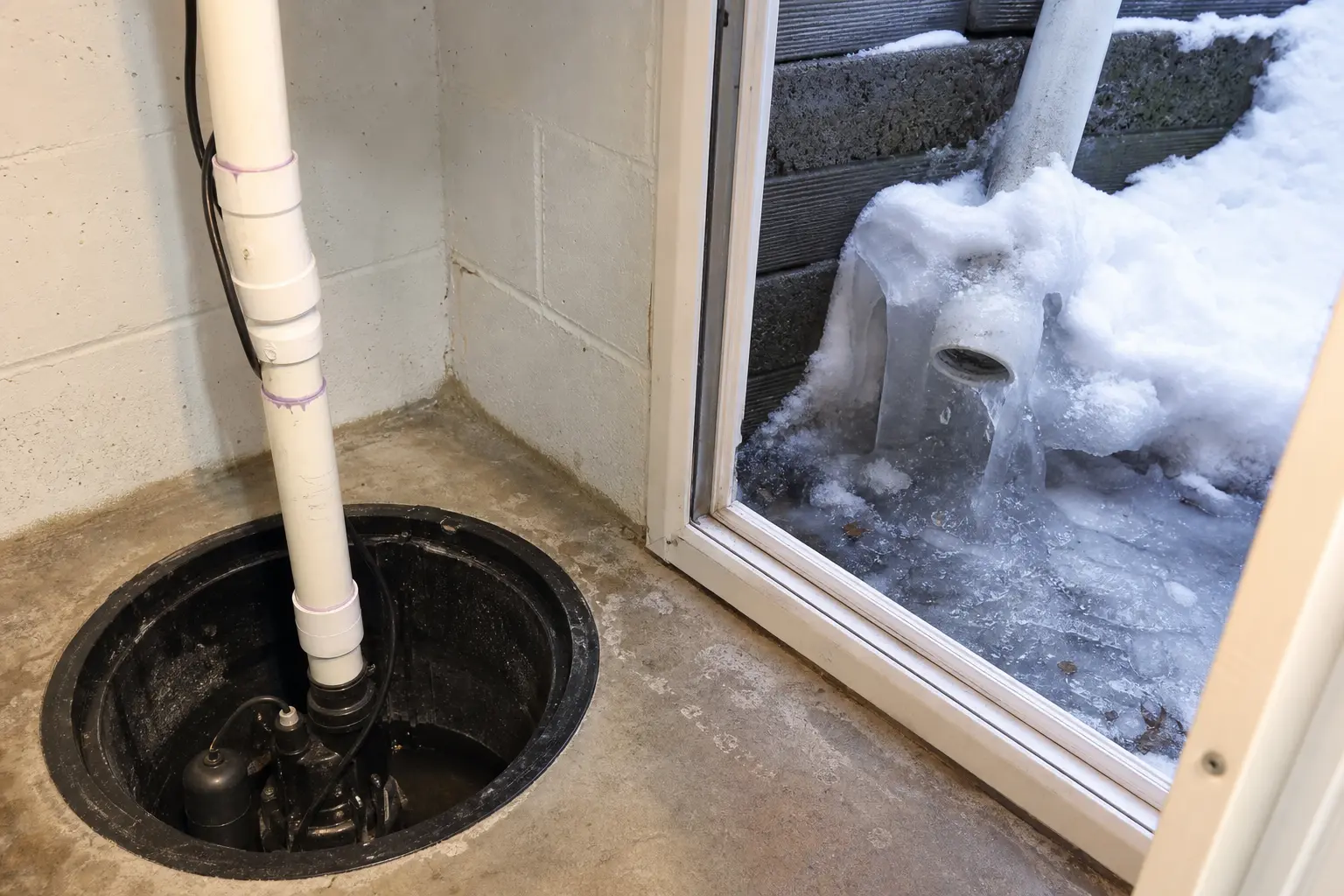
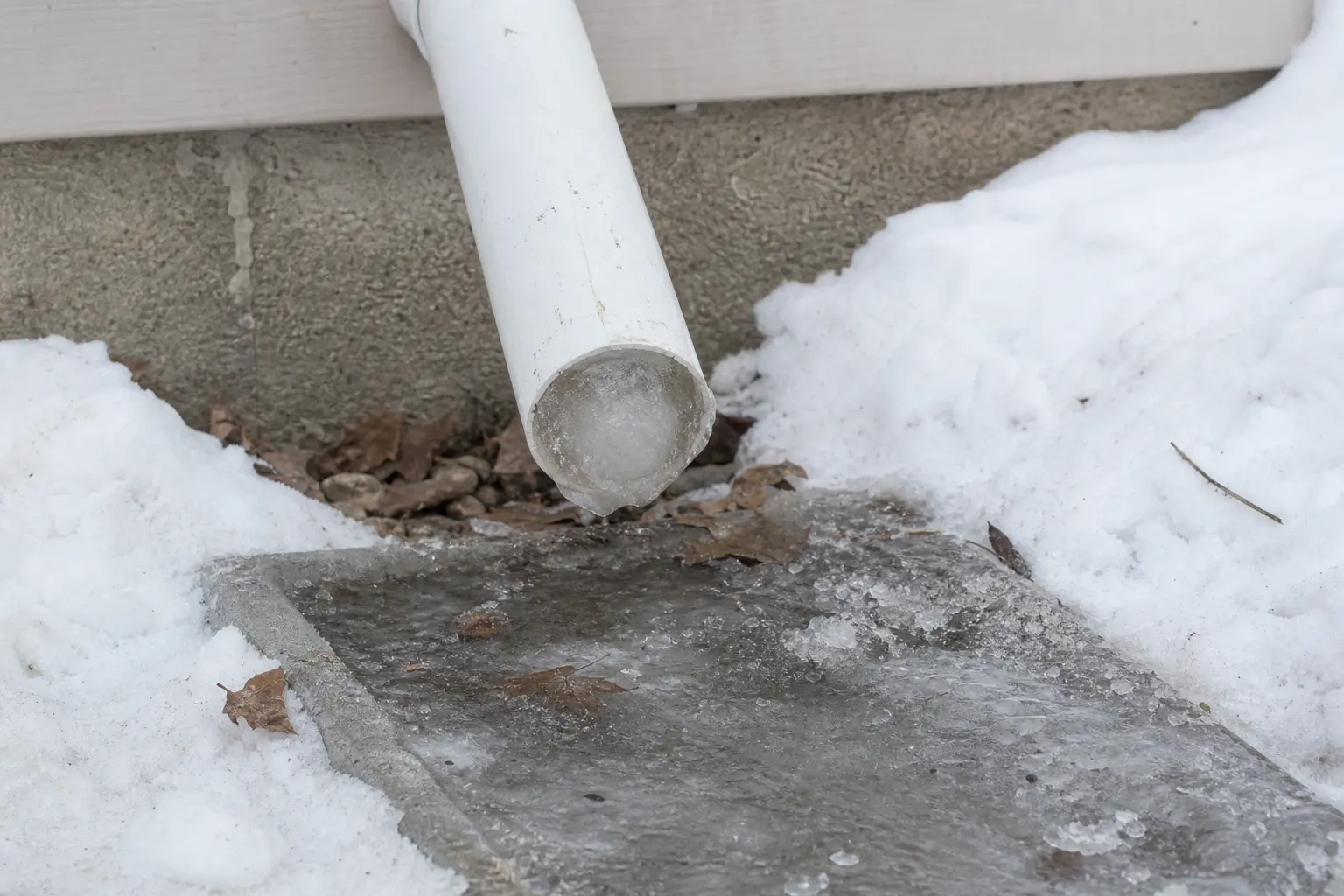
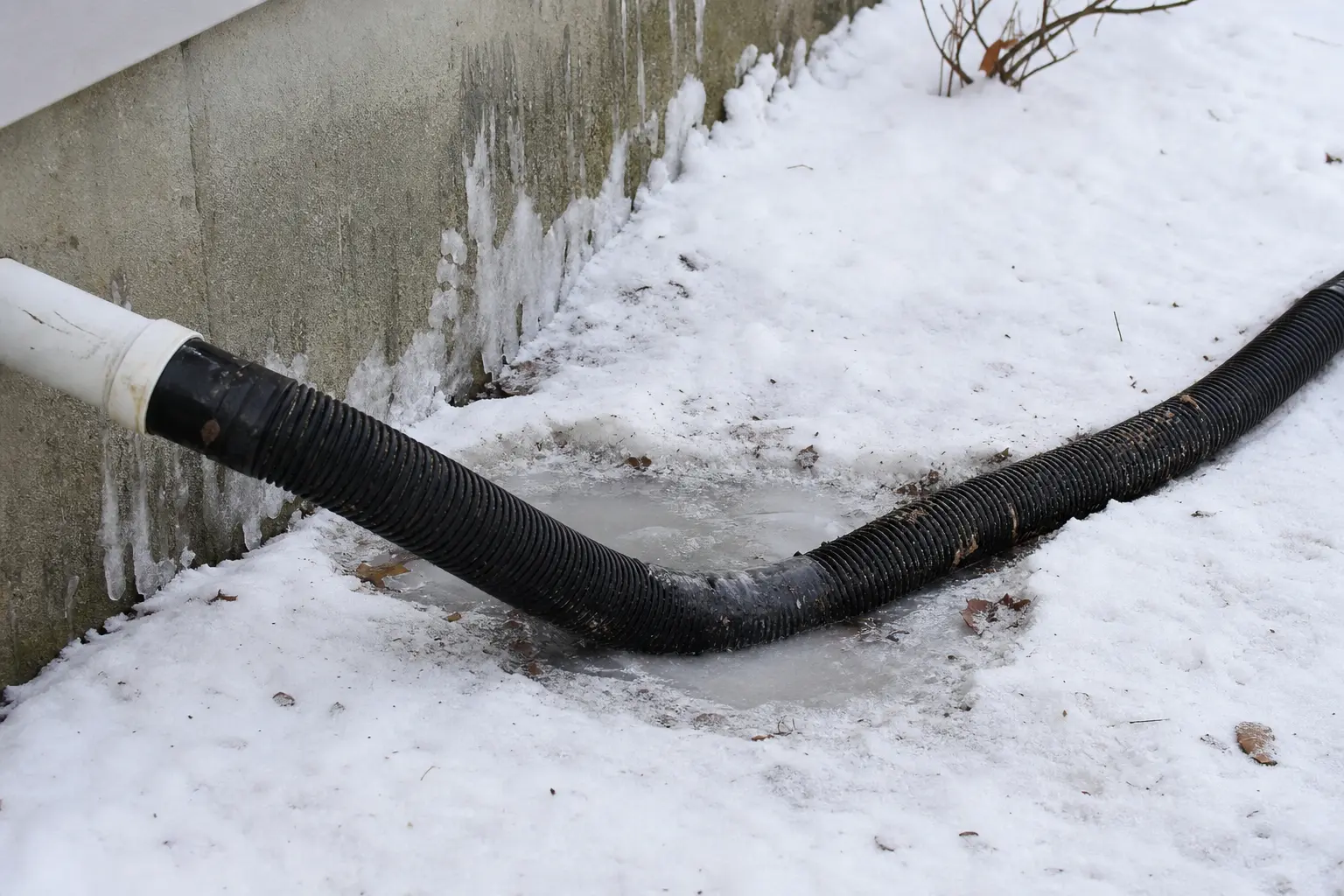
Write down the pump model if you can reach it safely, then note the outlet condition, line pitch, hose layout, check-valve direction, and whether water falls back into the pit. Buy parts only after the symptom points to a valve, hose, or fitting.
A winter sump problem usually starts where discharged water sits still long enough to freeze. Work from the outlet back toward the pump.
Winter discharge problems get worse when the pump keeps pushing against a closed path.
Keep the first checks simple and controlled. The goal is to find the blocked section without flooding the basement or cracking cold pipe.
Use the first clear clue before buying parts. Ice, backflow, and pump failure can look similar from the basement.
| What you see | What it points toward | Next move |
|---|---|---|
| Outlet is buried or iced over | Frozen discharge end | Clear the exit path gently and retest one cycle. |
| Hose or pipe has a sagging low spot | Trapped water freezing between cycles | Remove, support, or reroute the section so it drains dry. |
| Pit drops, then water falls back after shutoff | Check valve leaking, missing, or installed wrong | Check valve direction and size before buying a replacement. |
| Outlet is clear but flow is weak or sputtering | Partial blockage, air lock, or restriction farther back | Stop forcing the pump and inspect the line closer to the pit. |
| Pump hums, smells hot, or trips power | Possible motor/electrical issue after discharge checks | Leave power off and call a pro if the discharge path is open. |
These help with inspection and cleanup. They do not make wet electrical work or concealed frozen piping safe.
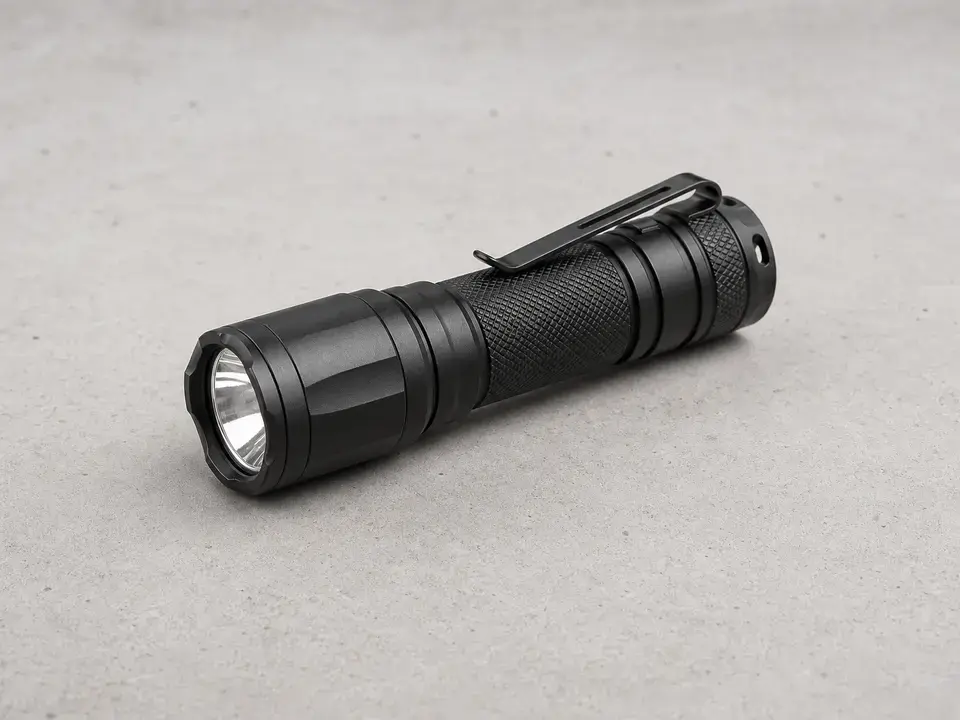
Helps when: Use it to see the pit water level, check-valve arrow, discharge couplings, and the outside outlet in low winter light.
Skip it when: Skip DIY inspection if water is near electrical parts or the pit is rising faster than the pump can handle.
Compare inspection flashlights on Amazon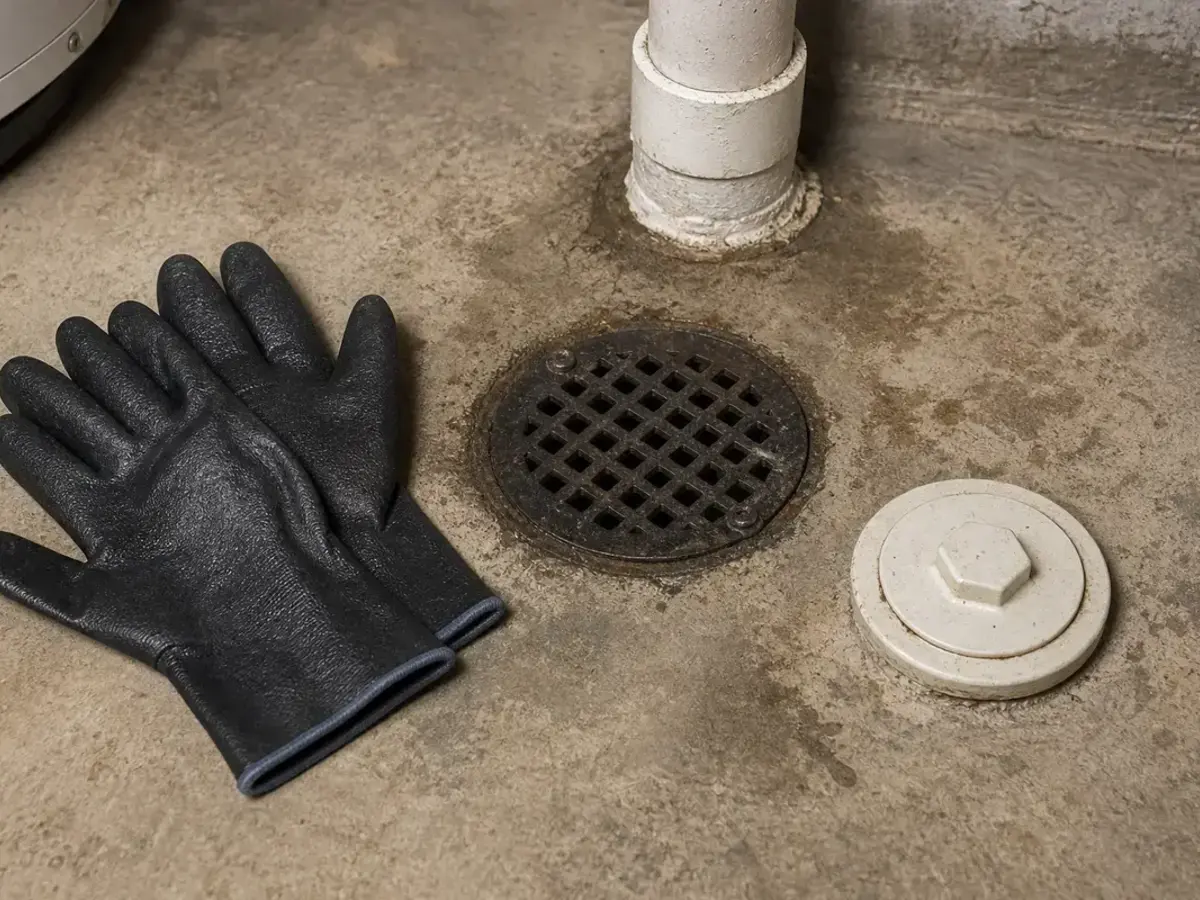
Helps when: Use gloves when clearing snow, slush, light ice, or rough pipe edges around the outside discharge point.
Skip it when: Skip hand clearing if the pipe is buried in hard ice, the grade is unsafe, or the fitting may crack.
Compare winter work gloves on Amazon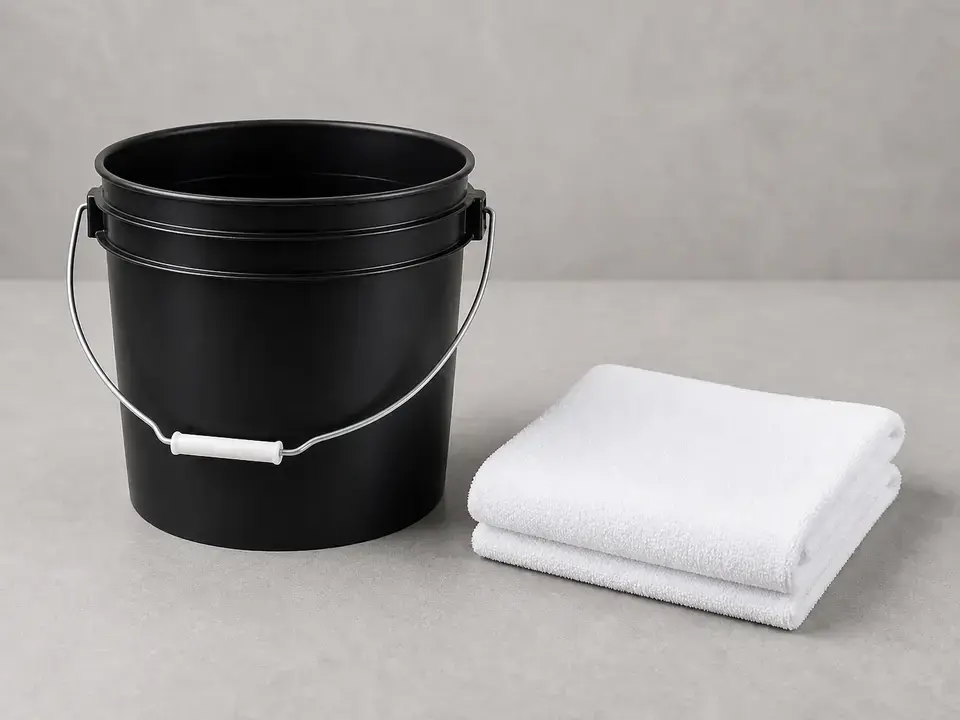
Helps when: Keep these ready before loosening an accessible discharge coupling or check-valve connection with trapped water above it.
Skip it when: Skip loosening piping if water could spill onto cords, receptacles, or a finished basement area you cannot protect.
Compare cleanup supplies on AmazonAs an Amazon Associate I earn from qualifying purchases. Repair Riot may earn a commission at no extra cost to you.
Parts come after the line tells you what failed. Match pipe size, hose diameter, clamp style, and flow direction before ordering.

Helps when: Compare a check valve only if water drops back into the pit after each cycle, the arrow points the wrong way, or the valve is cracked or leaking.
Skip it when: Skip it when the pit stays high and little water reaches the outdoor outlet; finish the outlet and line-restriction checks before buying a valve.
Compare sump pump check valves on Amazon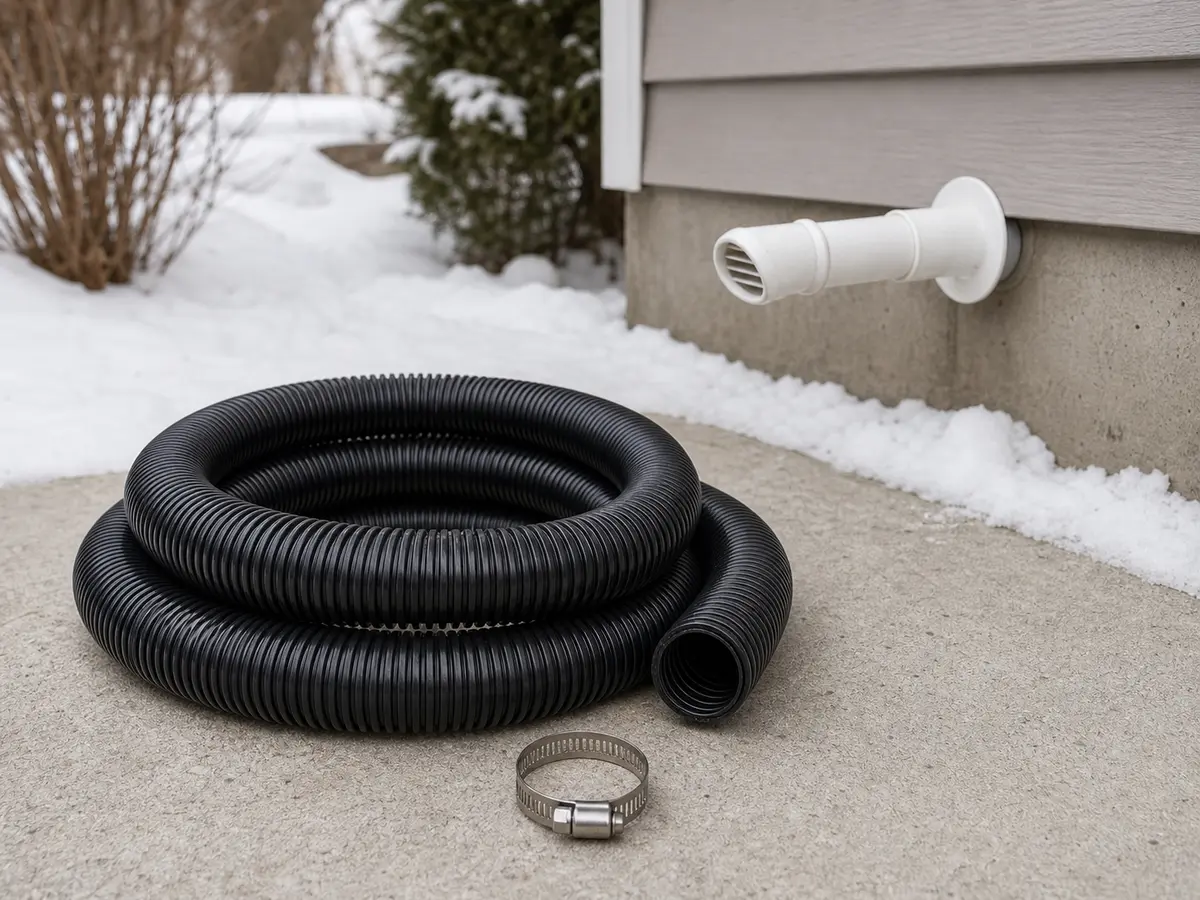
Helps when: Compare a discharge hose only if the outside hose is split, crushed, kinked, or keeps sagging enough to hold water and freeze.
Skip it when: Skip it when the fixed pipe is frozen in a concealed area or the pump still struggles with the outlet open and hose removed.
Compare sump pump discharge hoses on AmazonAs an Amazon Associate I earn from qualifying purchases. Repair Riot may earn a commission at no extra cost to you.
A good fix leaves the pump moving water without fighting a frozen line.
Yes. A pump can run loud or strain when it is pushing against a blocked discharge path. That does not prove the pump is bad until the outlet, hose, line pitch, and check valve have been checked.
No. The freeze point is usually outside or in a low section of the discharge line. Adding water to the pit can make the pump cycle more while the blockage is still there.
Water may be sitting in a hose, outlet, or low spot between cycles. When that standing water freezes, the next pump run has nowhere to discharge.
Watch the pit after the pump stops. Backflow down the vertical pipe moves the check valve higher on the list. Little or no water at the outdoor outlet points back to ice or a discharge restriction.
Only if it drains completely after every cycle. Long flexible hoses often sag, hold water, and freeze. A short clear path that sheds water is safer in freezing weather.
Stop forcing the pump and call a plumber or sump-pump service tech. Concealed frozen piping can split or send water back toward the house if it is thawed or opened carelessly.
Not first. Open the discharge path and retest. Replace the pump only if it still hums, overheats, trips power, or cannot move water through a known-open line.
Call when the pit is rising fast, water is near electrical equipment, the pipe is frozen in a concealed area, or the pump keeps humming or tripping after the outlet and line are clear.
Repair Riot built this page around visible homeowner checks: pit level, outside outlet condition, discharge pitch, check-valve backflow, and the point where wet electrical risk or concealed frozen pipe needs service.