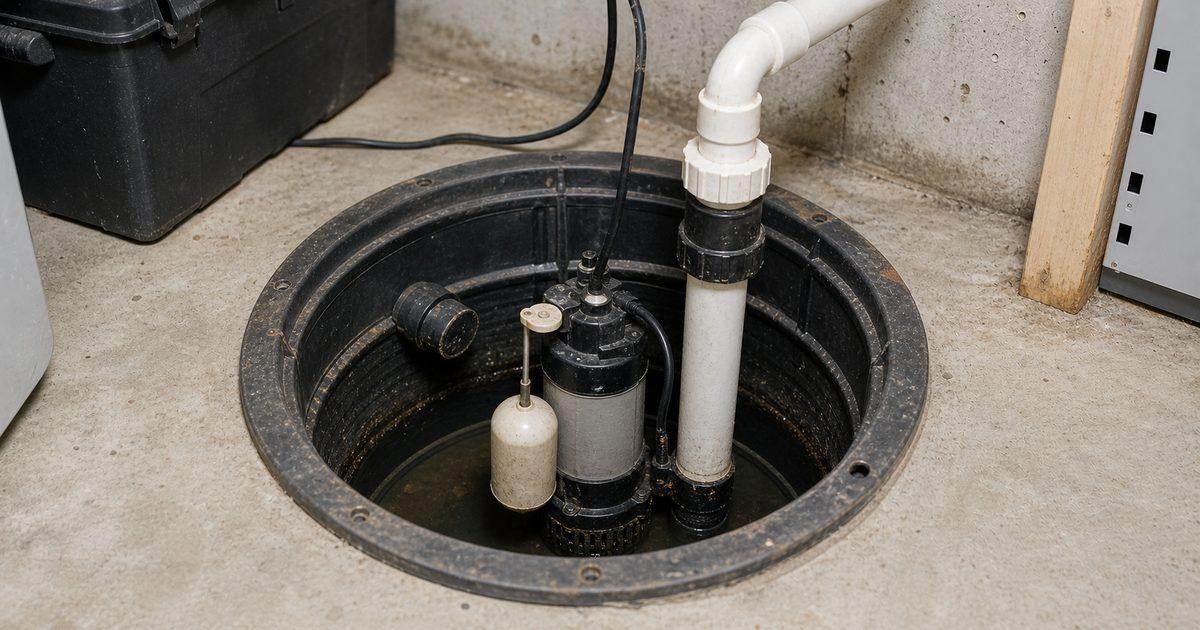
What this usually looks like
Hums immediately when plugged in
The pump makes a steady hum right away or as soon as the float is lifted, but the pump body does not really start moving water.
Start here: Start with power off, then inspect the intake area and impeller for gravel, sludge, or other debris locking the pump.
Hums only when the pit fills
The pump stays quiet until water rises, then you hear humming and little or no discharge outside.
Start here: Check whether the float is moving freely and whether the discharge line is blocked, frozen, or air-locked.
Hums, then stops on overload
You hear a hum for several seconds or a minute, then the pump goes quiet until it cools and tries again.
Start here: Suspect a seized pump motor or a hard mechanical jam. Stop repeated testing and inspect the pump before powering it again.
Hums and the pit water barely stirs
You may see slight vibration or a little swirl in the pit, but no real pumping action.
Start here: Look for a clogged intake screen, debris in the volute area, or a discharge restriction keeping the pump from moving water.
Most likely causes
1. Debris jammed in the sump pump impeller area
This is the most common reason for a humming pump. The motor has power, but the impeller cannot turn because gravel, mud, zip-tie tails, or stringy debris is locking the lower pump.
Quick check: Unplug the pump, lift it out if you can do so safely, and inspect the intake and impeller area. If the impeller is jammed, clear the debris before any more power tests.
2. Discharge line blockage or air lock
If the pump can start but cannot push water out, it may hum, strain, or trip on overload. This is more likely after freezing weather or after sediment buildup in the line.
Quick check: Check for a frozen or blocked discharge outside and listen for the pump straining with no steady water flow.
3. Stuck or misbehaving sump pump float switch
A float that hangs on the pump body, pit wall, or discharge pipe can hold the pump in an awkward run condition or cause erratic starts that sound like motor trouble.
Quick check: Move the float by hand with power off and make sure it swings or slides freely without rubbing anything.
4. Failed start circuit, seized bearings, or internal motor failure
An older pump that hums, gets hot, trips out, or spins freely by hand but will not start under power is often at the end of its life.
Quick check: If the pump is clear, the float is free, the discharge path is open, and it still only hums, treat the motor or start circuit as failed.
Step-by-step fix
Step 1: Shut it down and confirm you have a true hum-not-run problem
You want to stop overheating the motor and make sure you are not chasing a no-power issue or a backflow issue instead.
- Unplug the sump pump or switch off the receptacle if it is on a dedicated switch.
- Listen for what happened before shutdown: steady hum, brief buzz, repeated click-and-hum, or silence.
- Look at the pit water level and note whether it is rising, stable, or dropping back in after a cycle.
- If the pit is already close to overflowing, set up temporary water removal and keep testing brief.
Next move: If you confirmed the pump was definitely humming, move on to a mechanical jam or discharge restriction check. If there was no hum at all, you are likely dealing with a power, outlet, switch, or float-control problem instead of this symptom.
What to conclude: A humming pump usually has electrical power but cannot turn freely or cannot move water out.
Stop if:- The pit is actively overflowing and you cannot control water safely.
- You smell burning insulation or the pump housing is too hot to touch.
- The cord, plug, or receptacle shows melting, scorching, or arcing.
Step 2: Check the float and anything rubbing against it
A trapped float can make the pump run at the wrong time or keep it energized while the pump is in a bad position. This is a quick check and often obvious once you look closely.
- With power still off, inspect the float path from bottom to top.
- Make sure the float is not pinned against the pit wall, discharge pipe, power cord, or pump handle.
- Untangle cords so the float cord and pump cord are not wrapped together in a way that limits movement.
- Lift and lower the float by hand to feel for sticking, scraping, or a dead spot.
Next move: If the float was hanging up and now moves freely, restore power and test one short cycle with close supervision. If the float moves freely and the pump still hums, the problem is more likely in the pump or discharge path.
What to conclude: A free-moving float rules out one of the easiest fixes and points you toward a jam, blockage, or failing pump.
Step 3: Pull the pump and inspect for a jammed intake or impeller
This is the highest-probability fix when a sump pump hums. Small stones, heavy sludge, and pit debris can lock the impeller hard enough that the motor only hums.
- Unplug the pump and close or loosen the discharge connection as needed so you can lift the pump out.
- Set the pump in a bucket or tray because it will drain dirty water.
- Rinse mud off with plain water and inspect the intake openings and lower pump housing.
- Remove any gravel, stringy debris, or packed sludge you can reach without prying on sealed motor parts.
- Turn the impeller only if the design allows safe access without disassembling sealed electrical sections. It should not feel locked solid or gritty.
- If the impeller spins freely by hand, do not assume the pump is fixed. That only rules out a hard jam; it does not prove the motor can start under power.
- Clean the pit bottom enough that the pump will not sit back down in loose gravel or heavy debris.
Next move: If debris was locking the pump and it now pumps normally, reinstall it and keep the pit cleaner. If the pump is clean but still hums, check the discharge path next. If that is open too, suspect the motor or start circuit.
Step 4: Check the discharge line for blockage, freezing, or backpressure
A pump can hum and strain when it cannot push water out. This is especially common in cold weather, after sediment buildup, or when the check valve or discharge hose is restricted.
- Inspect the discharge line outside for ice, a blocked outlet, or a crushed section of hose or pipe.
- If the system uses a sump pump check valve, look for a stuck flap, wrong installation direction, or obvious clogging around it.
- Make sure any flexible discharge hose is not kinked or flattened.
- If you recently had gurgling, sputtering, or poor flow, consider whether the line may be air-locked or partially blocked.
- Reconnect everything securely and run one short supervised test cycle.
Next move: If flow returns after clearing the line or correcting a stuck check valve, the pump was being held back by discharge restriction rather than internal failure. If the line is open and the pump still only hums, the motor is likely seized or failing under load.
Step 5: Replace the failed component you actually confirmed
By this point you have narrowed it down to the part that fits the evidence instead of guessing. That saves time and avoids swapping good parts.
- Replace the sump pump float switch only if the float is damaged, waterlogged, or clearly not operating correctly while the pump itself is otherwise free and able to run.
- Replace the sump pump check valve only if it is stuck, installed backward, leaking back, or visibly obstructed and cleaning does not fix it.
- Replace the sump pump discharge hose only if it is split, kinked, crushed, or repeatedly clogging from damage.
- Replace the sump pump itself if it still hums with a free float, clear intake, freely turning impeller, and open discharge path, or if the motor overheats and trips out repeatedly.
- After the repair, run several supervised fill-and-pump cycles and watch for strong discharge, normal shutoff, and no backflow into the pit.
A good result: If the pump starts cleanly, moves water fast, and shuts off normally, the repair path was correct.
If not: If a new or repaired component still leaves you with weak pumping, fast backflow, or rising pit water, stop and reassess the pit size, discharge layout, and drainage load before more parts.
What to conclude: A pump that still only hums after the simple checks is usually done. A confirmed float, check valve, or hose problem is worth fixing on its own when the pump motor is otherwise healthy.
Replacement Parts
As an Amazon Associate I earn from qualifying purchases. Repair Riot may earn a commission at no extra cost to you.
FAQ
Why does my sump pump hum but not pump water?
Usually because the motor has power but the pump cannot start, cannot turn under load, or cannot move water out. The most common reasons are debris jammed in the impeller area, a blocked discharge line, a stuck check valve, or a failed motor.
What if the impeller spins freely but the sump pump still hums?
That rules out a hard impeller jam, but it does not prove the pump is healthy. If the float is free, the discharge path is open, and the pump still only hums under power, the start circuit or motor is the likely failure.
Can a bad float make a sump pump hum?
Yes, but usually indirectly. A float that sticks or hangs up can keep the pump energized at the wrong time or cause erratic cycling. If the float is damaged or trapped, fix that first before blaming the pump motor.
Should I keep letting it run to see if it clears itself?
No. A sump pump that sits there humming can overheat fast and trip on overload. Shut it down, inspect it, and correct the jam or blockage before testing again.
Do I need to replace the whole sump pump if it hums?
Only after the simple checks are ruled out. If the float moves freely, the intake is clear, the discharge path is open, and the pump still hums without spinning or pumping, then replacement is usually the right call.
Does pump horsepower change the diagnosis?
Not much. A small 1/8 hp sump pump and a larger pump can both hum from a jam, blocked discharge, stuck float, or failed motor. Use the symptom pattern and checks instead of replacing parts based on horsepower alone.