Drain / Sewer Odor

Sewer Smell Only When Windy? Check the Drain and Trap First

If the sewer smell only shows up when it is windy, check the nearest floor drain, little-used fixture trap, and cleanout cap first. Refill a dry trap, look for a loose cap seam, and stop if the odor is strong or might be natural gas.

A dry floor drain trap, little-used fixture trap, loose cleanout cap, or small gap at an exposed drain joint is more likely than a broken underground line.

Treat the first hour as smell mapping: find the strongest low spot, restore water seals, then separate odor-only trouble from gurgling or backup.

Don’t start with: Do not pour drain cleaner, climb onto the roof in wind, or buy sewer parts before one indoor clue points to the opening. That clue might be a dry trap that improves after water, a loose cleanout cap, or gurgling that pushes the job toward drain service.

Smell strongest near one drain or in the basement?Check that spot first before chasing roof vents or the whole main line.
Smell comes with gurgling, slow drains, or backups too?Move quickly toward a clog or vent restriction check instead of treating it as a simple odor leak.

Do this first

  • Ventilate the room if the odor is strong, then work from clean, visible areas first.
  • Stop if any drain has sewage, standing wastewater, bubbling backup, or water rising from the floor drain.
  • If you are not sure whether the smell is sewer gas or fuel gas, leave the area and call the gas utility or a licensed pro.
  • Do not open a cleanout cap that looks wet, pressurized, or backed up.
  • Do not climb onto a roof during wind or wet weather to inspect a plumbing vent.
  • Do not mix drain chemicals or pour cleaner into drains just to chase the odor.
Last reviewed: 2026-06-16

60-second odor sort

Is the smell strongest at one floor drain or little-used fixture?

Refill that trap with clean water and recheck the same spot. A dry trap is the first safe indoor fix.

Is the smell strongest at a cleanout cap or pipe opening?

Look for looseness, cracks, crossed threads, residue, or a missing seal. Snug only what is dry and safe to touch.

Does the smell spread evenly through the room?

Map low spots first. Odor can drift, so compare the floor drain, utility sink, laundry standpipe, and exposed drain joints.

Do drains gurgle, toilets move, or more than one fixture drains slowly?

Treat the odor as a vent or sewer-line symptom and stop buying local parts.

Did water in the trap make the odor disappear, then it came back fast?

The trap may be evaporating, leaking, or getting siphoned. Watch for gurgling and plan a plumbing inspection if it repeats.

Start where wind can pull odor indoors

Useful photos are low and close, not roof-vent glamour shots. Look near floor drains, cleanout caps, utility sinks, and exposed drain joints where a small opening can leak sewer gas; ventilate and stop if the room smells strong.
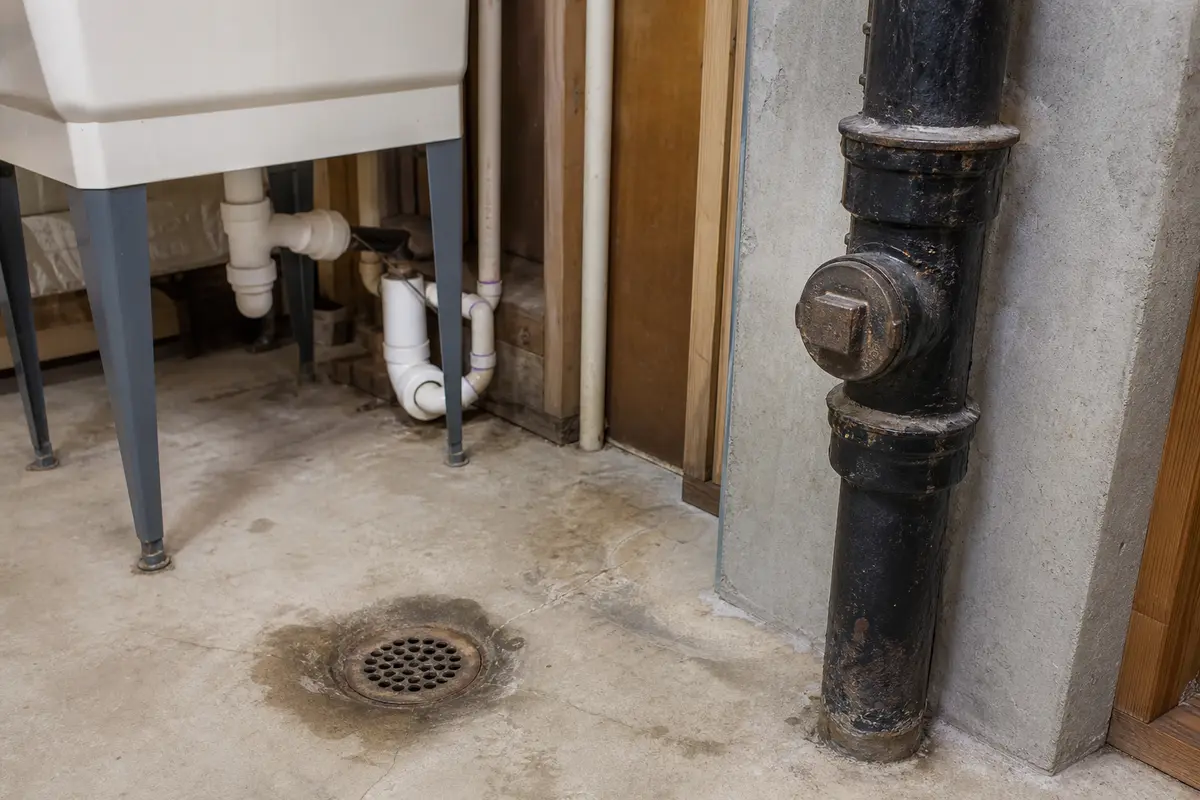
Basement utility area with floor drain, cleanout cap, and exposed plumbing for windy day sewer smell checks
Start with the local openings you can inspect safely: the floor drain trap, the utility sink trap, and any visible cleanout cap nearby.
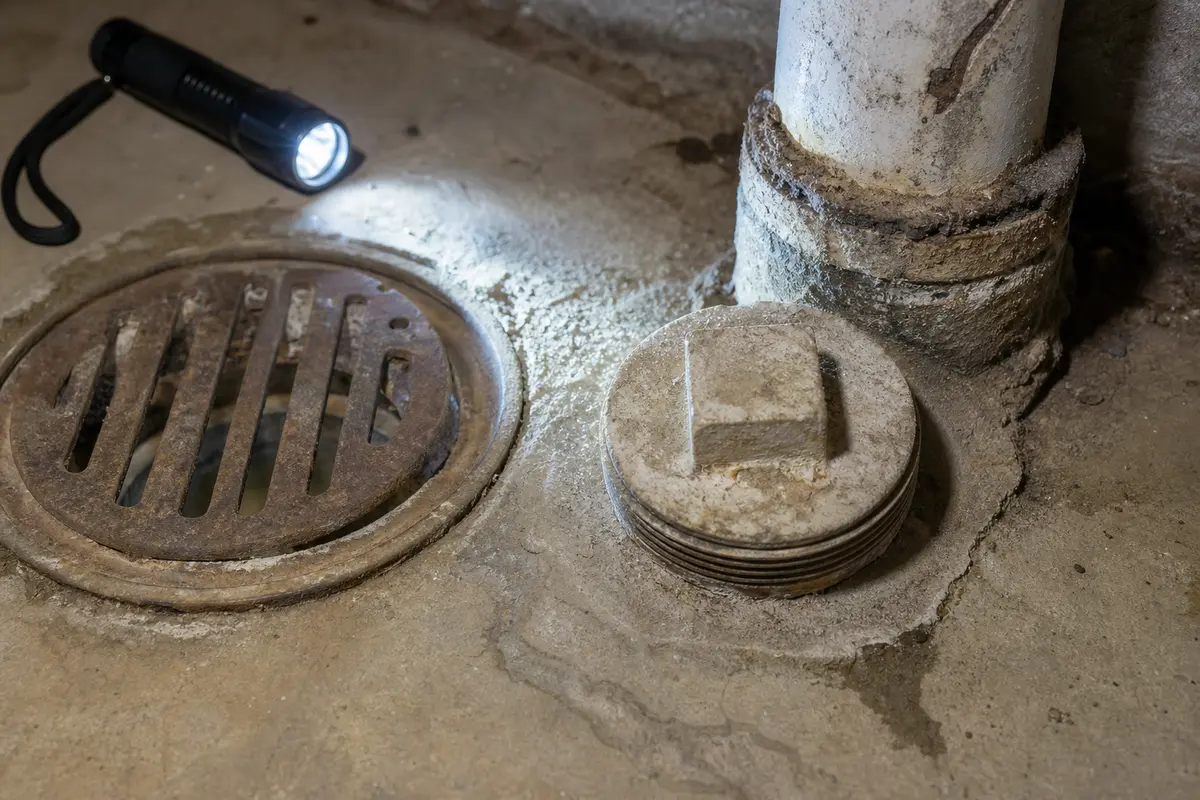
Close view of floor drain and cleanout cap seam checked for sewer smell when wind changes pressure
A loose cap or low trap seal can smell strong without leaking water. Wind just makes the weak path easier to notice.

Before you buy anything

Make the source exact before ordering parts: dry trap, cracked cleanout cap, damaged exposed trap, or multi-fixture drain trouble. Match cap size, thread style, pipe size, and connection type; skip parts when the clues point to venting or backup.

What wind is changing

Wind changes pressure around the house and roof vent. Keep the first repair decision local: look for the opening where sewer gas can enter, and stop if the smell is strong or hard to identify.

  • Dry trap: a floor drain, guest shower, utility sink, or laundry standpipe that sits unused may not have enough water left to block sewer gas. Check it with clean water first and stop if the drain backs up.
  • Loose cleanout cap: a cap can leak odor through damaged threads or a bad seal without leaking wastewater onto the floor.
  • Small pipe opening: a loose slip-joint, cracked exposed trap, missing branch cap, or open pipe chase can leak sewer gas when the house is under slight negative pressure. Wear gloves around dirty piping and stop if you find wastewater.
  • Venting or line trouble: gurgling, toilet water movement, slow drains, or backup means the odor is no longer a simple windy-day smell.

What not to do on a windy sewer smell

A strong smell can make the problem feel bigger than it is. Keep the first checks clean, visible, and reversible.

  • Do not pour drain cleaner into every drain. It will not restore a missing trap seal or seal a loose cleanout cap.
  • Do not climb onto the roof in wind to look at the plumbing vent. Roof vent work belongs later, and only when access is safe.
  • Do not remove a cleanout cap if the floor drain is bubbling, wet, stained with sewage residue, or draining slowly. Stop there and call a licensed plumber because the line may release wastewater.
  • Do not seal random pipe gaps with caulk before you know whether the opening is active drain piping, a chase gap, or an abandoned branch.
  • Do not buy a trap kit, cleanout cap, or vent part before the odor is strongest at that exact location. The fit clue should be visible: a dry trap, cracked cap, loose threads, or damaged exposed trap.

Map the strongest odor

Odor drifts. The useful clue is the first tight spot where it gets stronger, not the corner of the room where it collects.

  • Walk the basement, utility room, laundry area, and little-used bathrooms while the odor is present.
  • Smell low first: floor drains, shower drains, laundry standpipes, utility sinks, and cleanout caps.
  • Compare each spot from the same close distance. If one drain, cap seam, or joint smells much stronger within a foot or two, mark that spot. Check it before moving around the room.
  • If the whole area smells the same, open the door or window briefly, then recheck low openings before blaming the roof vent.
  • Stop mapping if you find wastewater, sewage residue, or a fuel-gas smell you cannot identify.

Refill dry traps

A trap only blocks gas when water sits in the bend. Little-used drains are the easiest, safest win on this page.
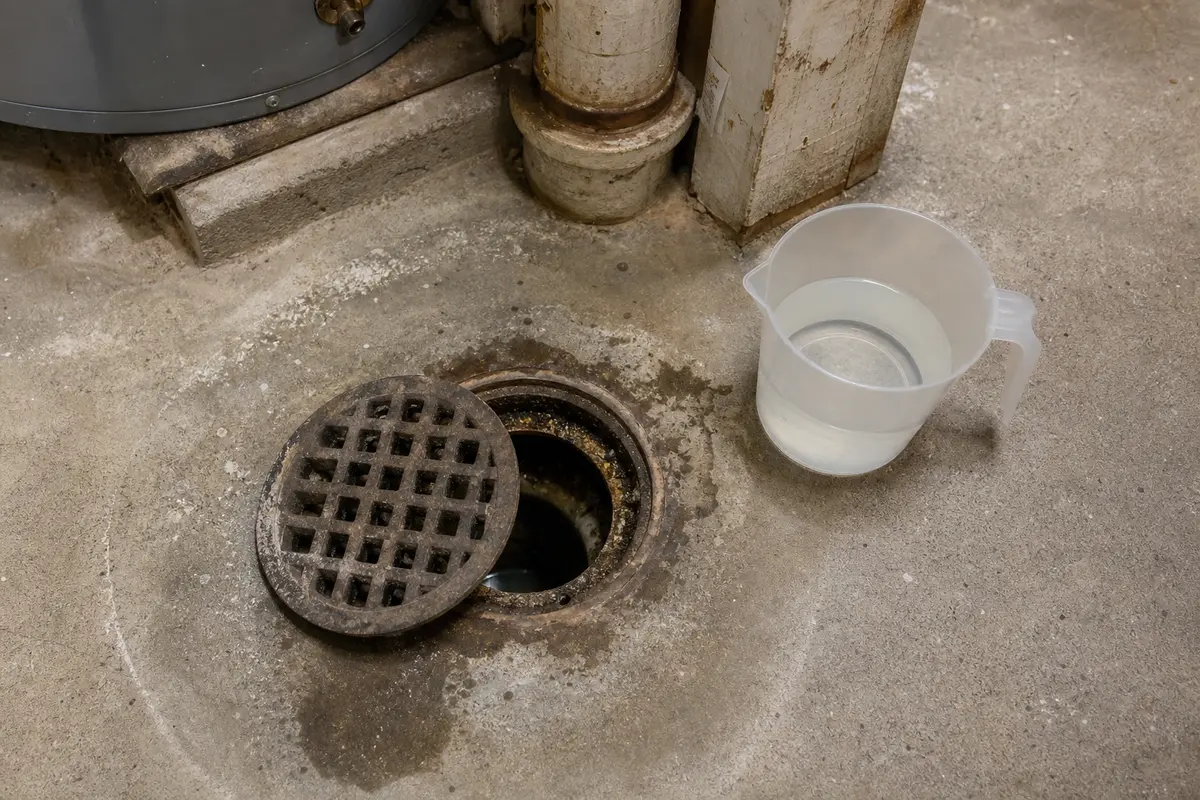
Floor drain grate moved aside with clean water ready to refill a dry trap after windy sewer smell
Use clean water to restore the trap seal. A quick splash may not fill a floor drain trap enough to prove anything.
  • Pour clean water slowly into each floor drain, shower drain, utility sink, and other rarely used drain near the odor.
  • Use enough water to refill the trap, not just wet the grate. If the floor drain still smells after more than a cup, wait several minutes and check that same drain again before moving on.
  • Wait several minutes, then smell at the same drain again during the windy period.
  • If the odor drops, keep that drain filled and recheck it after the next windy day.
  • If the trap loses water again within a day or two, watch for gurgling or slow drainage. That can point to siphoning, leakage, or a vent problem.

Check caps and exposed joints

A cleanout cap or exposed drain joint can leak sewer gas with no puddle. Work gently, wear gloves around residue, and stop if old plastic or corroded metal will not move.

  • Look for threaded cleanout caps on the floor, at the base of a stack, along foundation walls, or near a basement utility sink.
  • Sniff around the cap seam and look for cracks, crossed threads, missing gasket material, old tape, or residue.
  • If the cap is dry and obviously loose, snug it gently by hand first. Use tools only lightly.
  • Look at nearby trap joints and slip nuts for staining, dampness, mineral tracks, or a concentrated odor at one joint.
  • Stop if the cap is seized, wet, pressurized, or likely to release wastewater when opened.

When it stops being odor-only

Wind can expose a local leak path, but drain behavior decides when the job moves past homeowner checks.

  • One drain smells strong and drains normally: stay with dry-trap, dirty-opening, cap, and exposed-joint checks.
  • Two or more fixtures gurgle or drain slowly: stop odor-only fixes and call for drain diagnosis.
  • Toilet water moves when another fixture drains: pressure is changing in the drainage system, so the vent or branch line needs attention.
  • Floor drain bubbles, rises, or shows sewage residue: avoid opening cleanouts and call a licensed plumber.
  • Odor returns after a confirmed local fix: ask about a smoke test or camera inspection instead of guessing at another part.

Tools You May Need

These tools support the indoor checks. You do not need specialty drain equipment to decide whether this is a dry trap, a loose cap, or a pro-level line problem.

  • Flashlight: use it to look into floor drains, behind utility sinks, and around dark pipe runs.
  • Rubber gloves: wear them when touching drain grates, caps, or residue around sewer piping.
  • Small bucket or measuring container: use it to pour enough clean water into a trap without splashing.
  • Paper towels: wipe the cap area dry so fresh dampness or residue is easier to spot.

Replacement Parts

Parts come after the source is clear. If the smell comes with gurgling, slow drains, or backup, buy no local parts yet.

  • Cleanout cap: buy one only when the odor is strongest at the cap and the old cap is cracked, stripped, missing, or will not seal.
  • Local P-trap assembly: buy one only for an accessible sink or exposed branch trap that is cracked, leaking, or not holding a water seal.
  • Do not buy roof vent caps, sewer-line additives, or random trap kits for a smell that has not been traced to one opening.
  • Before ordering, confirm pipe size, thread style, material, and whether the connection is threaded, slip-joint, or solvent-welded.

FAQ

Why does the sewer smell only show up when it is windy?

Wind changes pressure around the house and plumbing vents. That can pull sewer gas through a dry trap, a loose cleanout cap, or a small opening around a drain connection. Start at the strongest low spot, and stop if the odor is severe or might be a natural gas smell.

Can a dry floor drain really smell that strong?

Yes. A dry floor drain trap is basically an open path into the drain system. In a basement or utility room, that can create a strong sewer smell fast, especially when wind helps move air through the house.

Should I go on the roof and check the vent first?

Not first. Start inside with dry traps, cleanout caps, and exposed local drain connections because those are more common and much safer to inspect. Move to vent concerns only if you also have gurgling, slow drains, or repeated trap loss.

Will drain cleaner fix a sewer smell?

Usually no. Sewer odor is most often an opening problem, not a buildup problem. Drain chemicals will not fix a dry trap, a loose cleanout cap, or a venting issue, and they can make later service messier and less safe.

When is this likely a main sewer or vent problem instead of a local smell leak?

Treat it as a bigger problem when multiple fixtures gurgle, toilets show water level movement, drains are slow on more than one fixture, or a basement floor drain starts backing up. At that point, odor is just one symptom of a vent restriction or sewer line issue.

Is sewer smell on windy days dangerous?

Take it seriously, especially in a small or poorly ventilated room. Open a door or window before touching any drain. Leave if anyone feels sick. Call a pro or the gas utility if the odor is severe or you cannot tell sewer gas from fuel gas.

Why does the smell disappear when the wind stops?

Wind can change pressure around the house and plumbing vent. When the pressure relaxes, less sewer gas gets pulled through the weak opening, so the source may seem gone. Check the same drain, cap, or joint on the next windy day, and stop if it comes back severe.

What if pouring water into the floor drain only helps for a day or two?

A quick return means the trap may be drying fast, leaking, or losing water because of venting or drainage pressure. Refill it once, watch for gurgling or slow drains, and call a plumber if it keeps happening.

Sources and method

This page follows standard trap, cleanout, venting, and sewer-gas safety principles. The order stays local first: check indoor traps and caps, ventilate if the odor is strong, and leave roof access or sewer-line work to a licensed plumber.