Only one fixture acts up?
Start at that shower or faucet. Remove an accessible aerator, look for a low-flow showerhead, and suspect the cartridge or balancing valve before heater parts.
If a Rinnai tankless heater goes hot-cold-hot, start with flow: test more than one fixture, run a full-hot draw, then inspect the cold-water inlet screen before buying parts.
Usually the burner is dropping out because flow falls below what the unit needs. The clue is hot-cold-hot cycling that steadies during a full-hot draw; check the inlet screen, scale history, low-flow fixtures, and cold-water cross-mixing before parts.
First split the symptom: one fixture, every fixture, or only when another tap opens.
Don’t start with: Do not open gas, burner, combustion, or live electrical sections for a temperature swing. Stop at exterior water-side checks unless a licensed pro is handling the unit.
Start at that shower or faucet. Remove an accessible aerator, look for a low-flow showerhead, and suspect the cartridge or balancing valve before heater parts.
Move to the heater water path: valve position, full-hot flow, cold-water inlet screen, scale history, and any displayed code.
Low flow is the lead clue. The burner may be right on the edge of staying lit. Clean restrictions before changing settings.
Revisit service-valve position and inlet-screen debris. Work can knock sediment loose or leave a valve out of normal position.
Scale moves up, especially when the swing is house-wide, worse during long draws, or paired with weaker hot-side flow.
Stop at homeowner checks. Record the code or sequence and call a qualified tankless technician or licensed gas pro.
A temperature swing gets easier to sort when you can see the lower service area, the inlet screen, and the fixture-side flow clue. Do those water-side checks before parts.
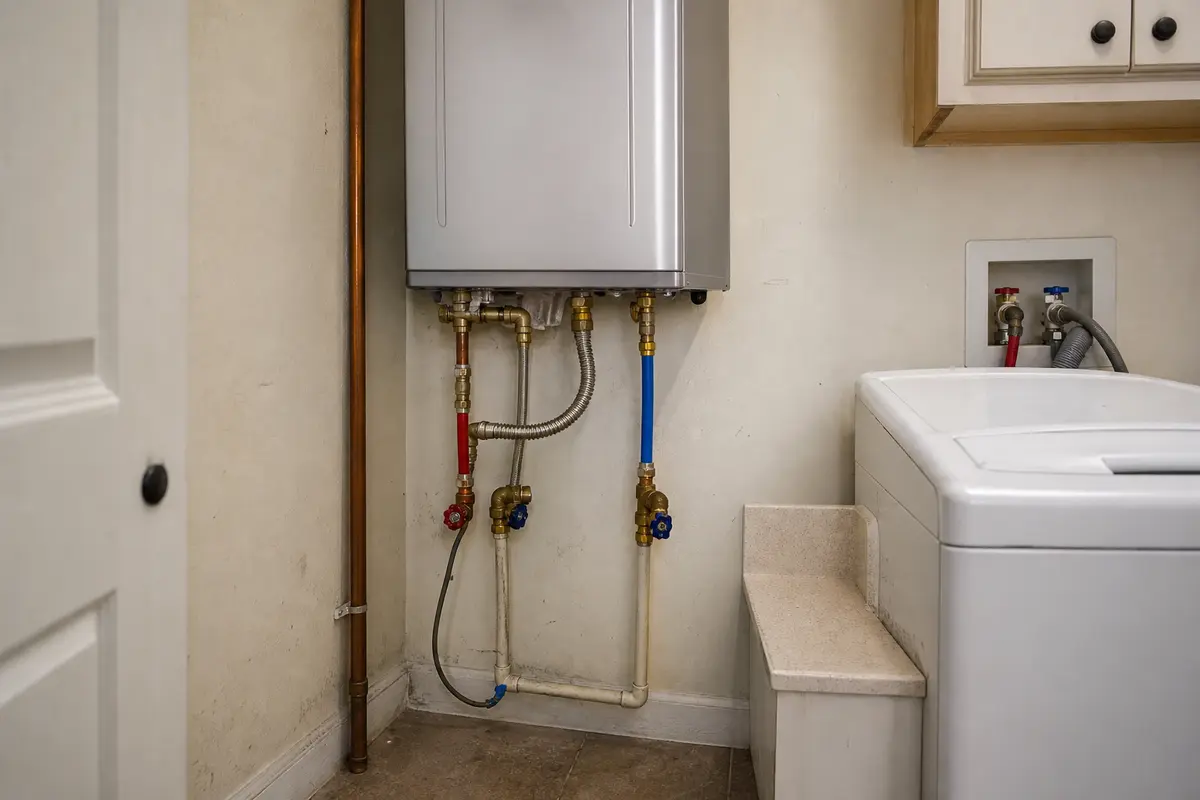
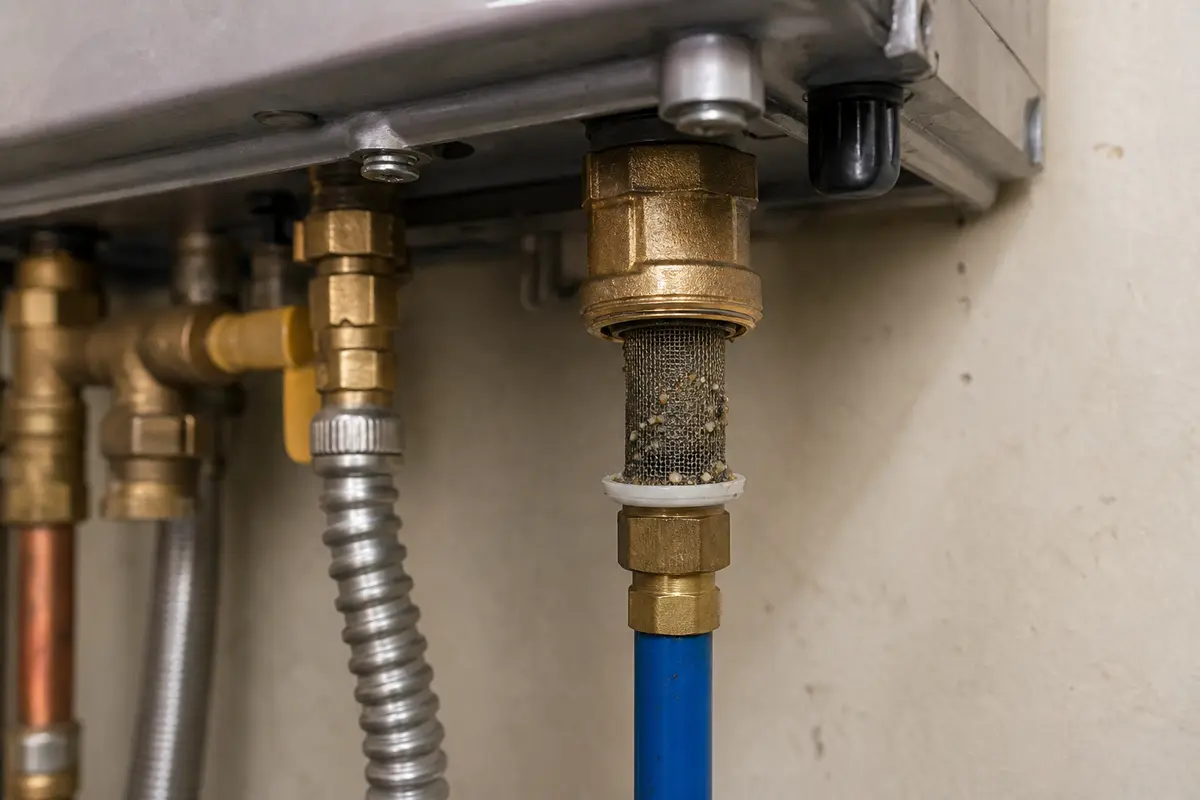
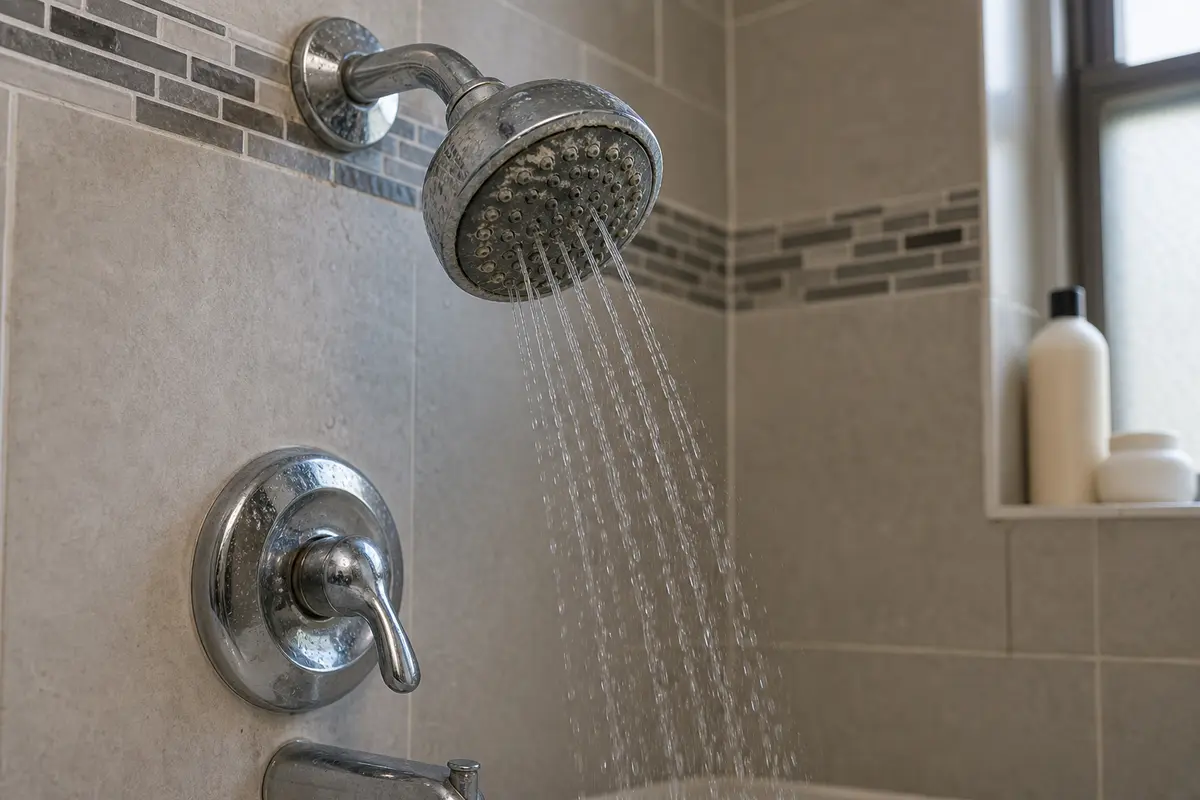
Prove the side of the failure first. Run hot-only water at more than one fixture, inspect the accessible inlet screen, and copy the exact Rinnai model number before ordering a screen, cartridge, sensor, or control part.
A tankless heater has to see steady water movement before it can hold steady heat. First useful check: test a sink and a shower on hot only. If one fixture is weak or cold while another stays hot, stay at the fixture before heater parts.
Temperature swings invite expensive guesses. Stay with visible flow clues before you touch parts that need model-specific testing.
Work from the fixtures back to the heater. You are trying to prove one-fixture trouble, low-flow trouble, maintenance trouble, or a service fault that should not be handled as DIY.
The result after each water-side check matters more than the first guess. Use the change in flow, timing, and fixture behavior to choose the next move.
| What you see | What it usually means | Next move |
|---|---|---|
| Only one shower swings | Fixture mixing or restriction is likely | Clean the showerhead if practical, then service the cartridge or balancing valve |
| Higher hot flow steadies the water | The heater was near its minimum firing flow | Clear restrictions and avoid heavy cold blending at that fixture |
| Screen has grit or scale flakes | Incoming water is restricted at the heater | Clean or replace the screen, restore water slowly, and watch for leaks |
| Screen is clean but long draws fade | Scale inside the water path moves up | Descale the unit if the setup supports it, or schedule tankless service |
| Fault returns after flow and maintenance checks | Sensor, control, ignition, gas, vent, or internal water-path diagnosis may be needed | Stop guessing at parts and call a qualified tankless technician |
| Gas smell, soot, or exhaust concern appears | This is a safety stop, not a troubleshooting clue | Leave the area and call the gas utility or a licensed pro |
A bad shower valve can make a good tankless heater look unstable. The giveaway is that another fixture can still run steady hot water while the shower swings.
Scale moves up when the symptom is house-wide, hot-side flow has been getting weaker, or long draws fade after a few minutes. Check the inlet screen first; internal faults move up only after that water path is clean.
Use tools only for visible fixture and water-side work. If the job turns into gas, combustion, venting, or live electrical diagnosis, stop there.
Paid links. As an Amazon Associate I earn from qualifying purchases. Repair Riot may earn a commission at no extra cost to you.
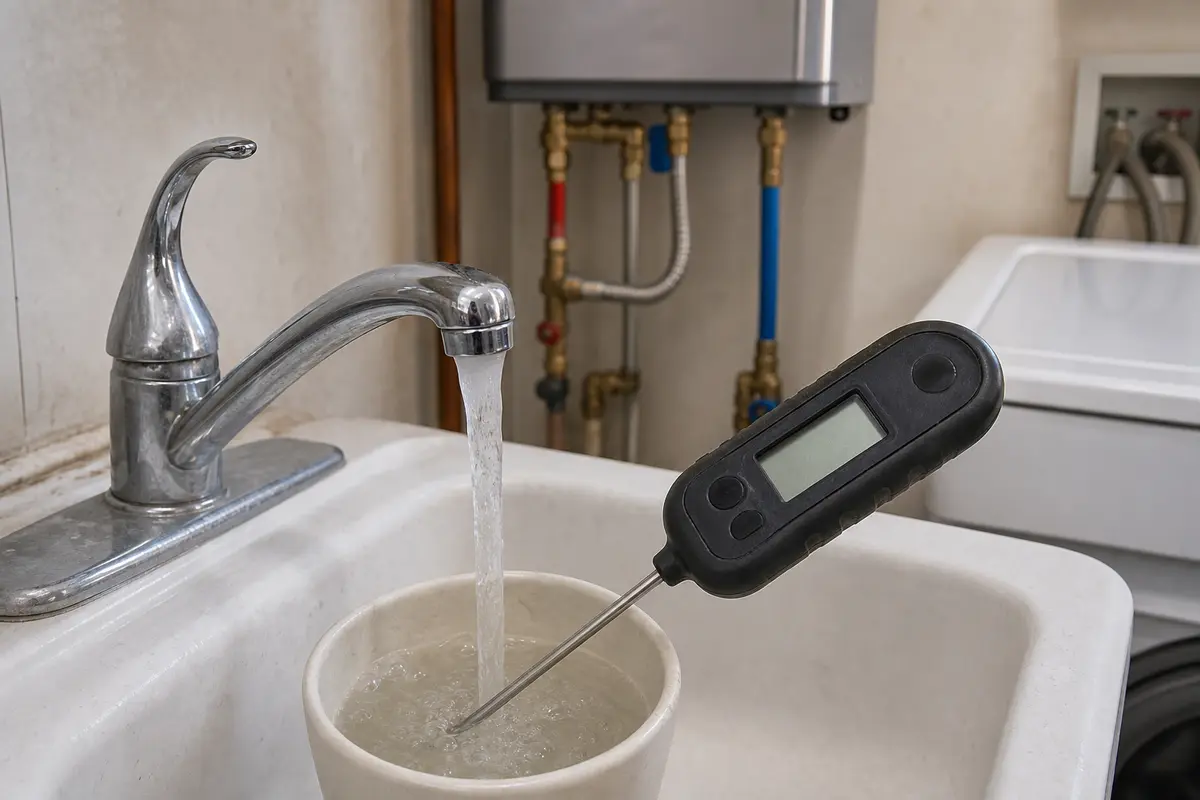
Helps when: You want a simple way to see whether the swing is real at two fixtures instead of relying on shower feel.
Skip it when: The unit is showing a fault, smells like gas, or the issue clearly needs professional service.
Compare faucet thermometers on Amazon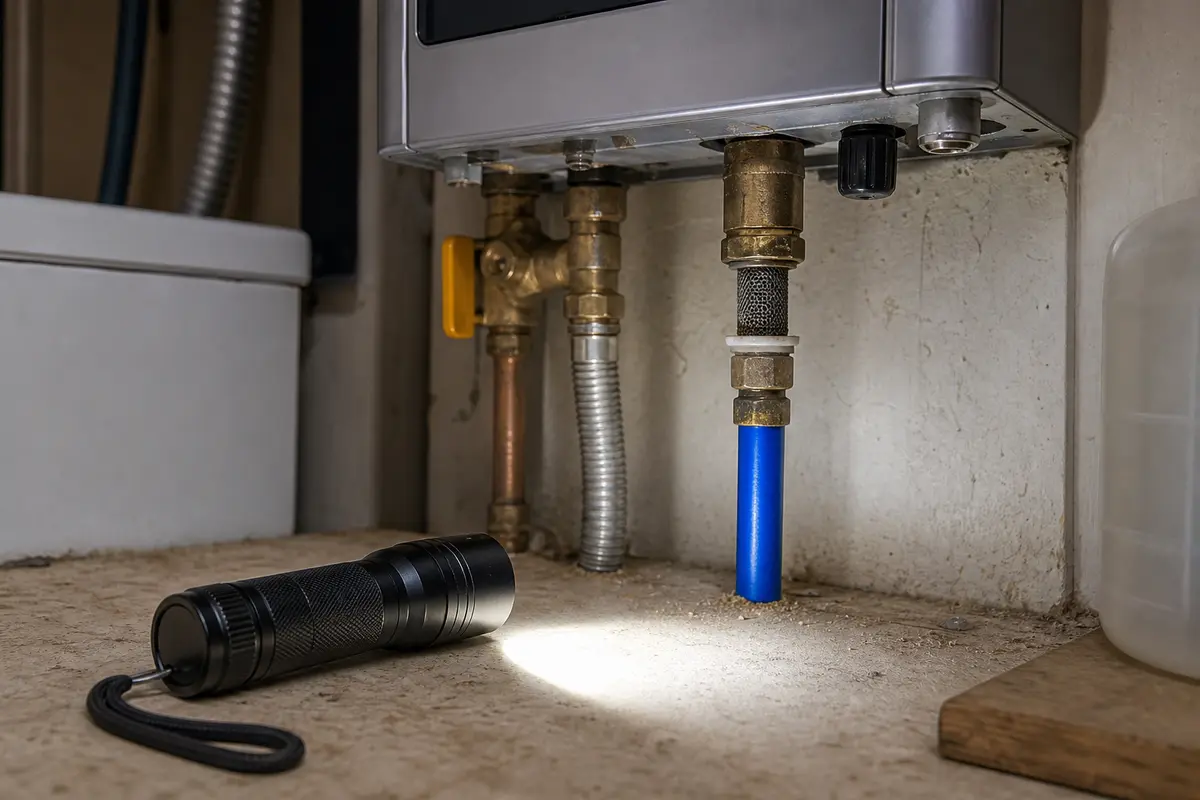
Helps when: You need to read valve handles, see the display, and look for drips around the inlet-screen area.
Skip it when: Access requires opening sealed combustion areas, reaching live wiring, or working near a gas smell.
Compare inspection flashlights on Amazon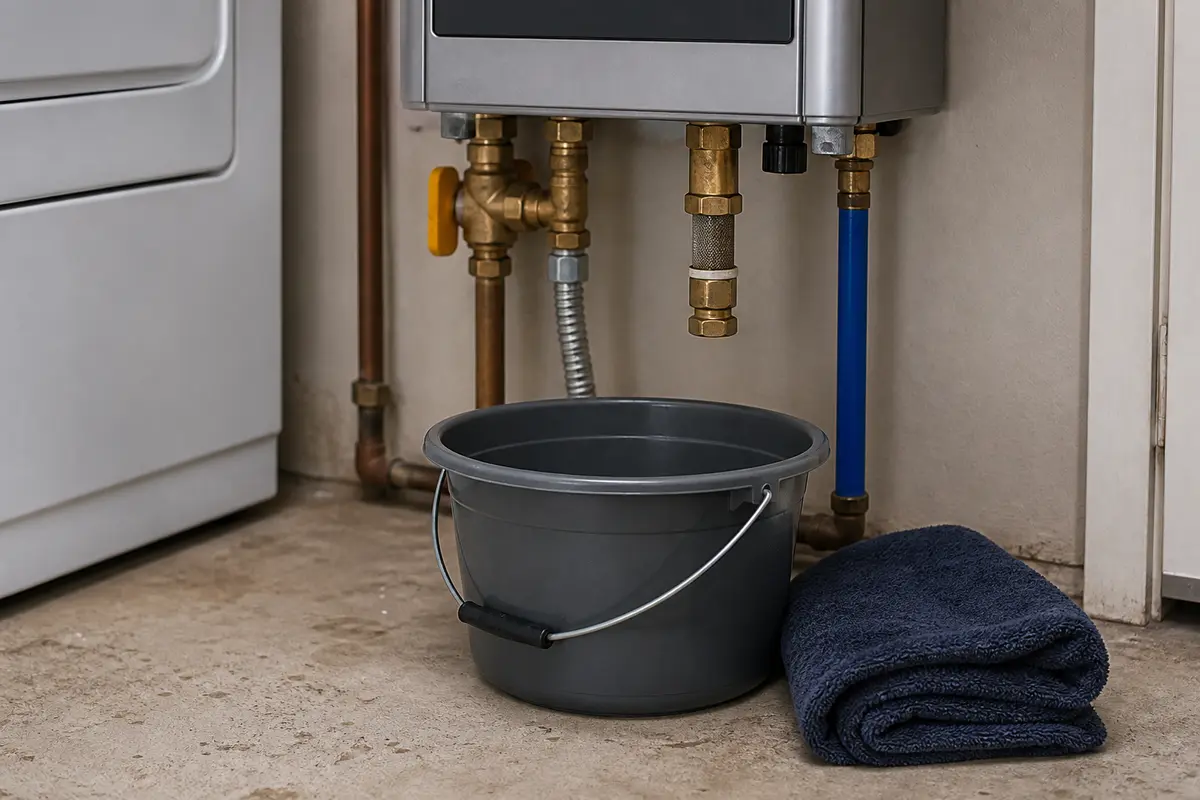
Helps when: You can isolate water safely and need to catch the small amount released at a screen fitting.
Skip it when: Water will not shut off cleanly, the fitting is seized, or water appears inside the heater cabinet.
Compare buckets and towels on Amazon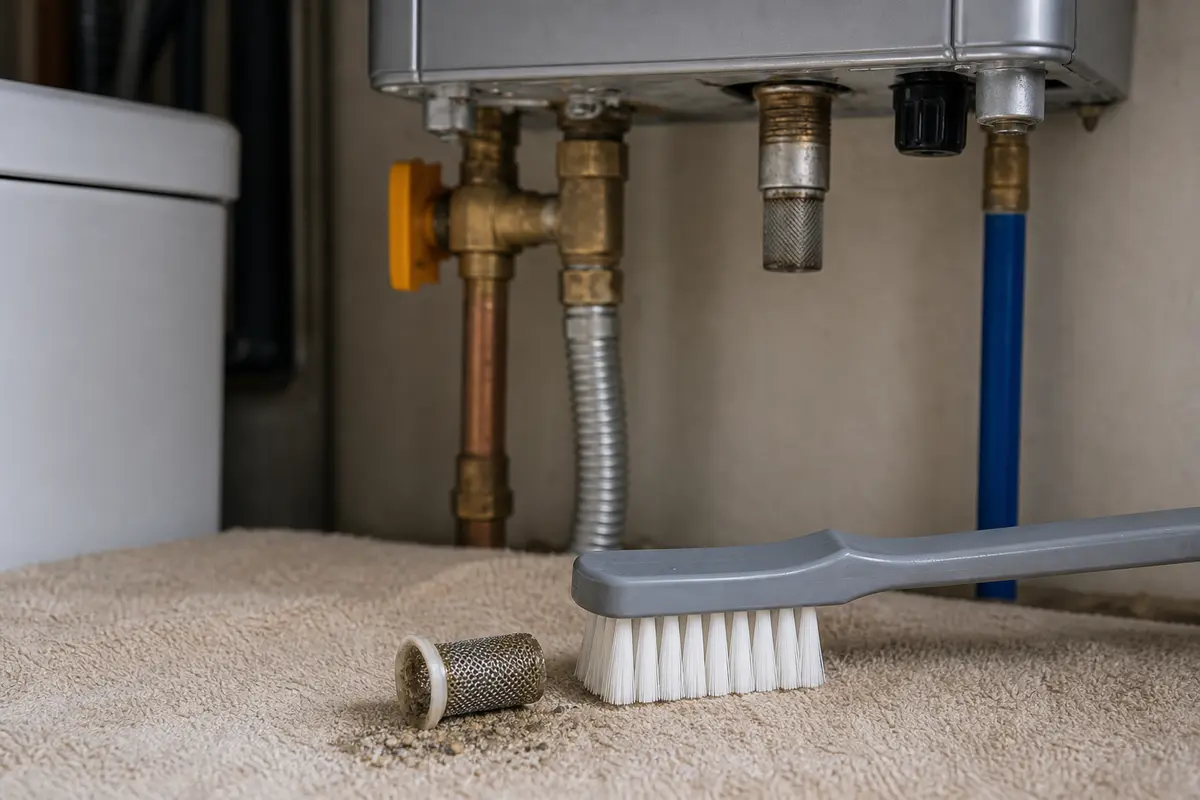
Helps when: The removed inlet screen is intact but has grit or light mineral film that needs gentle cleaning.
Skip it when: The screen mesh is torn, crushed, missing, or the cap will not loosen without force.
Compare soft brushes on Amazon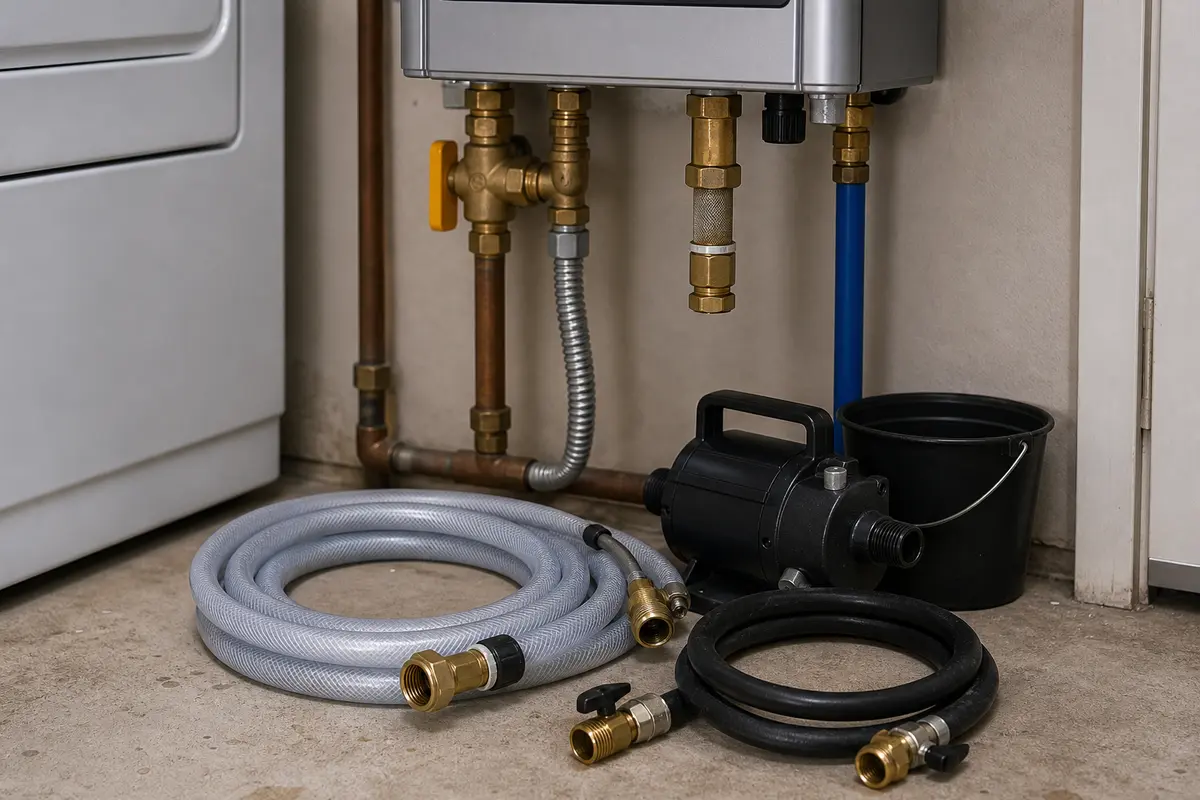
Helps when: Your unit has service valves, maintenance is overdue, and scale clues match the hot-cold pattern.
Skip it when: You cannot isolate the heater safely or the model instructions for flushing are not clear to you.
Compare tankless flush hose kits on AmazonBuy parts only after the symptom points there. Replace the inlet screen only if the mesh is torn, crushed, missing, or still clogged after cleaning. Buy a shower valve cartridge only when one shower fails and other hot taps stay steady.
Paid links. As an Amazon Associate I earn from qualifying purchases. Repair Riot may earn a commission at no extra cost to you.
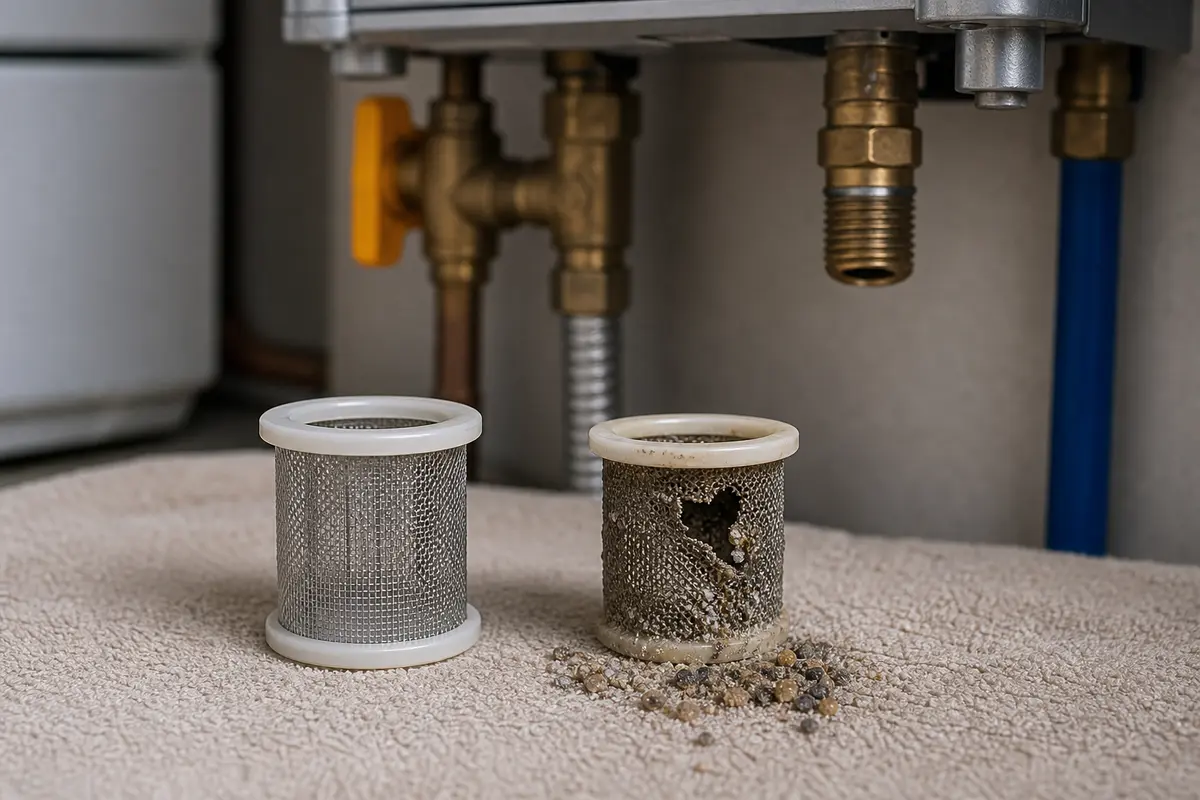
Helps when: You removed the screen and found torn mesh, a crushed frame, missing pieces, or debris that will not clean out well enough to reuse.
Skip it when: The screen rinsed clean, sealed normally, and the heater still fluctuates after flow and scale checks.
Compare Rinnai inlet screens on Amazon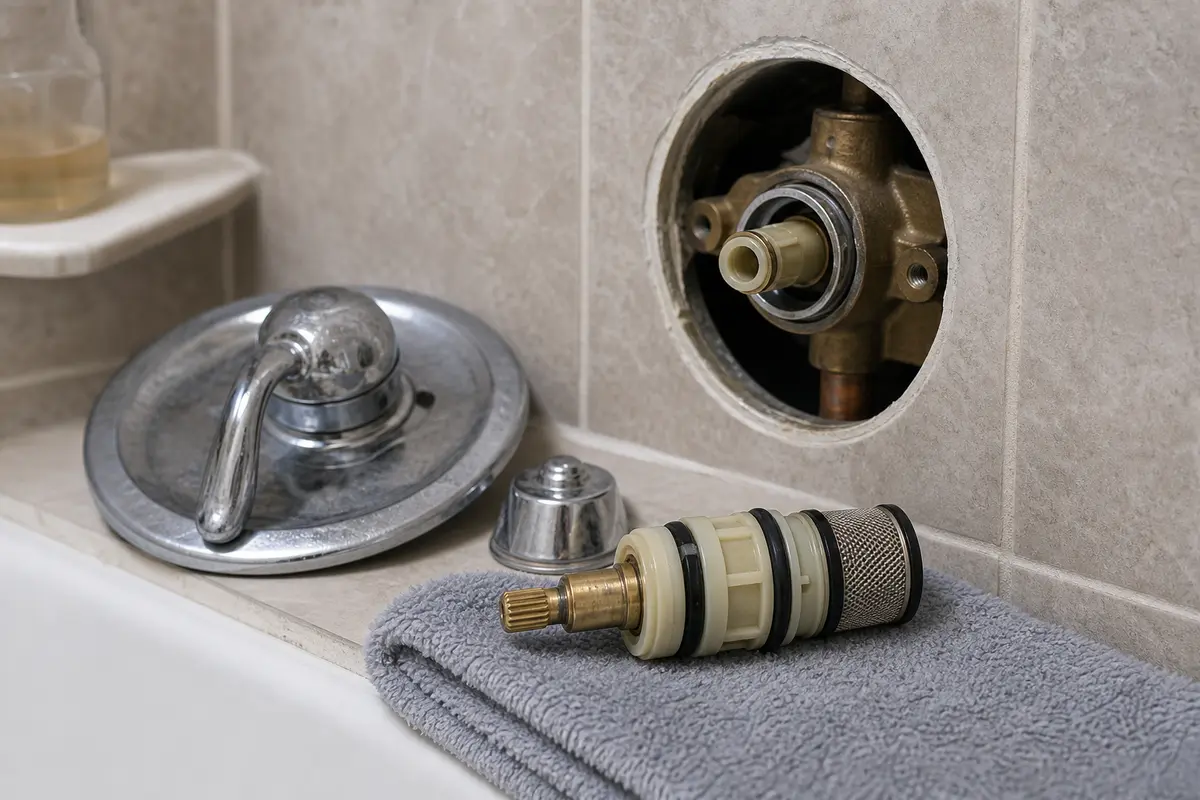
Helps when: Only one shower swings hot and cold after other fixtures run steady hot water from the heater.
Skip it when: Every fixture fluctuates or the heater shows a code; that points back to heater flow or service diagnosis.
Compare shower cartridges on AmazonUsually the heater is losing steady flow, so the burner drops out and relights. If a full-hot draw steadies it, look for a clogged inlet screen, scale, a low-flow fixture, or a mixing valve before parts.
No, not as a first move. Prove flow, inlet-screen condition, scale history, fixture mixing, and any displayed code before pricing electronics.
Yes. A sticking pressure-balance cartridge can blend cold water into the hot side. If every other fixture gets steady hot water, start with that shower.
It can. Debris at the cold-water inlet cuts flow before water reaches the heat exchanger, which can make the burner fire inconsistently.
Usually not. If the cause is low flow, scale, or fixture mixing, a higher set point only changes how the swing feels. It does not clear the restriction.
Scale moves up when the issue is house-wide, worse during long draws, paired with weaker hot-side flow, or the heater has gone too long without a flush.
That points to total demand, pressure changes, or fixture mixing. Check two hot-only fixtures: if the swing follows one shower, stay there; if it shows up house-wide, move back to the heater.
Call when fixture, flow, screen, and scale checks do not stop the swing. Call immediately for gas smell, soot, exhaust concern, cabinet leaks, recurring fault codes, or gas, vent, combustion, or live electrical work.
Repair Riot built this page around homeowner-visible checks: compare one fixture with the whole house, run full-hot flow, inspect inlet-screen debris, and use scale history. The stop points stay close to gas, combustion, venting, carbon monoxide, leaks, and live electrical work.